
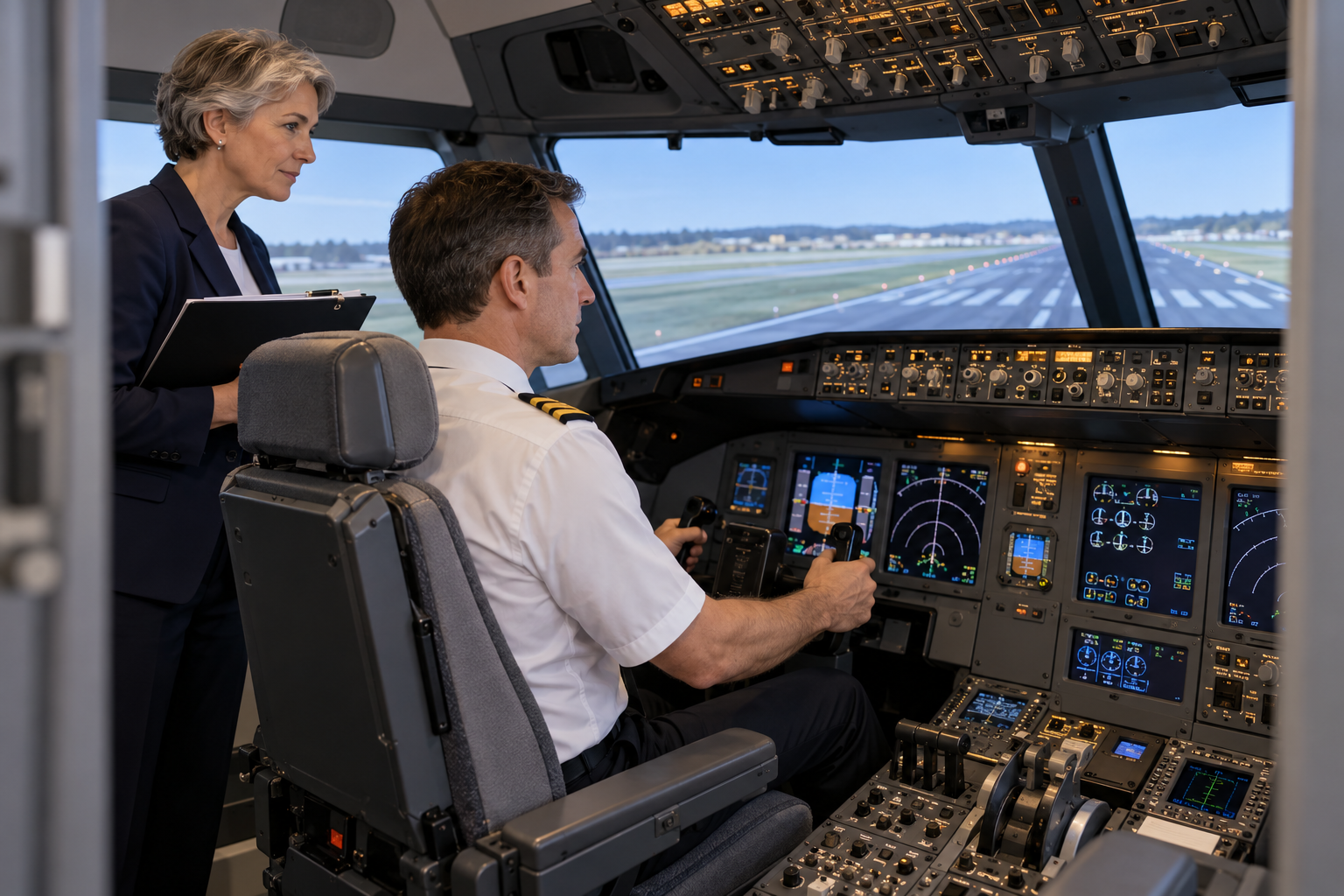
It is the kind of headline that makes a nervous flyer’s stomach drop. At the end of September 2026, on a FlyDubai flight from Dubai bound for Tel Aviv with 174 people aboard, the co-pilot attacked the captain, the plane plunged thousands of feet in under a minute, and yet, astonishingly, it landed safely and everyone survived.
For anyone who already grips the armrest at takeoff, it sounds like the realization of the worst imaginable fear, the sort of thing the anxious part of the brain conjures and the rational part dismisses as impossible. And yet the ending is the part worth dwelling on: the plane landed, the passengers walked away, and the system, in the end, held. That ending is not an accident of luck, and understanding why is genuinely reassuring for anyone who flies. Here is what happened, soberly, and then the question that matters most for the rest of us who fly: how is it even possible for a plane to survive something like this, and what does it tell us about how safe flying really is. The answer, it turns out, is more reassuring than the headline suggests.
What follows is a careful account of the incident, why having two pilots matters so much, how the aircraft itself resists disaster, the role of the cockpit door and the people behind it, and what it all means for an ordinary nervous flyer.
What Happened
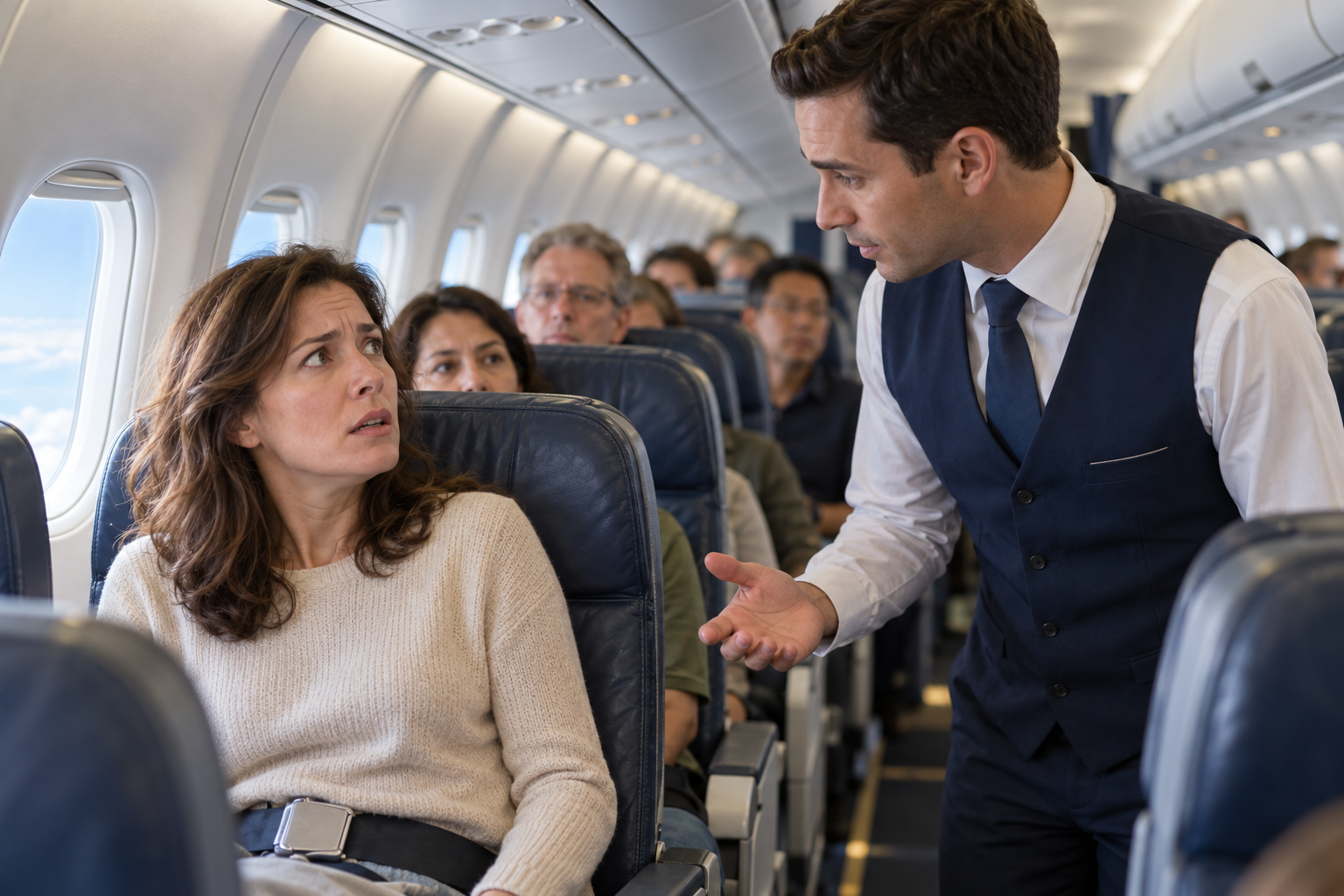
The facts, as reported by officials and passengers in the days afterward, are harrowing but worth stating plainly. On a flight from Dubai to Tel Aviv, the co-pilot, according to Israeli and other officials, attacked the captain and attempted to bring the aircraft down, and in the struggle the plane dropped from around thirty-three thousand feet to seventeen thousand feet in roughly a minute. The captain, Smit Machchhar, an Indian pilot, was seriously injured but managed to open the cockpit door, and passengers and crew forced their way in and subdued the attacker, after which the aircraft was brought under control and landed at an airport in Tabuk, Saudi Arabia. All 174 people on board survived. The captain was hospitalized and later reported to be recovering, and the co-pilot was detained, with investigators still working to establish what happened and why. The passengers, badly shaken, were flown on to their destination on another aircraft.
Two things are worth saying before going further. The first is that the motive remains under official investigation, and it would be irresponsible to speculate about the reasons behind the attack while that inquiry is ongoing, so this piece does not attempt to. The second is that the captain has been widely described as a hero, and rightly so: gravely hurt, he nonetheless acted to open the door and let help reach the cockpit, which is very likely what saved the flight. That single decision, made by an injured man under unimaginable pressure, turned a sealed and deadly situation into a survivable one. What follows is not about the attacker or his reasons, which are for the investigation to determine, but about the broader and more useful question that so many people watching the news have asked: how on earth did that plane not crash, and what does its survival reveal about the machinery of air safety that the rest of us rely on every time we fly. Because the survival was not a fluke; it was, in large part, the safety system doing exactly what it was built to do.
Two Pilots, and Why That Matters
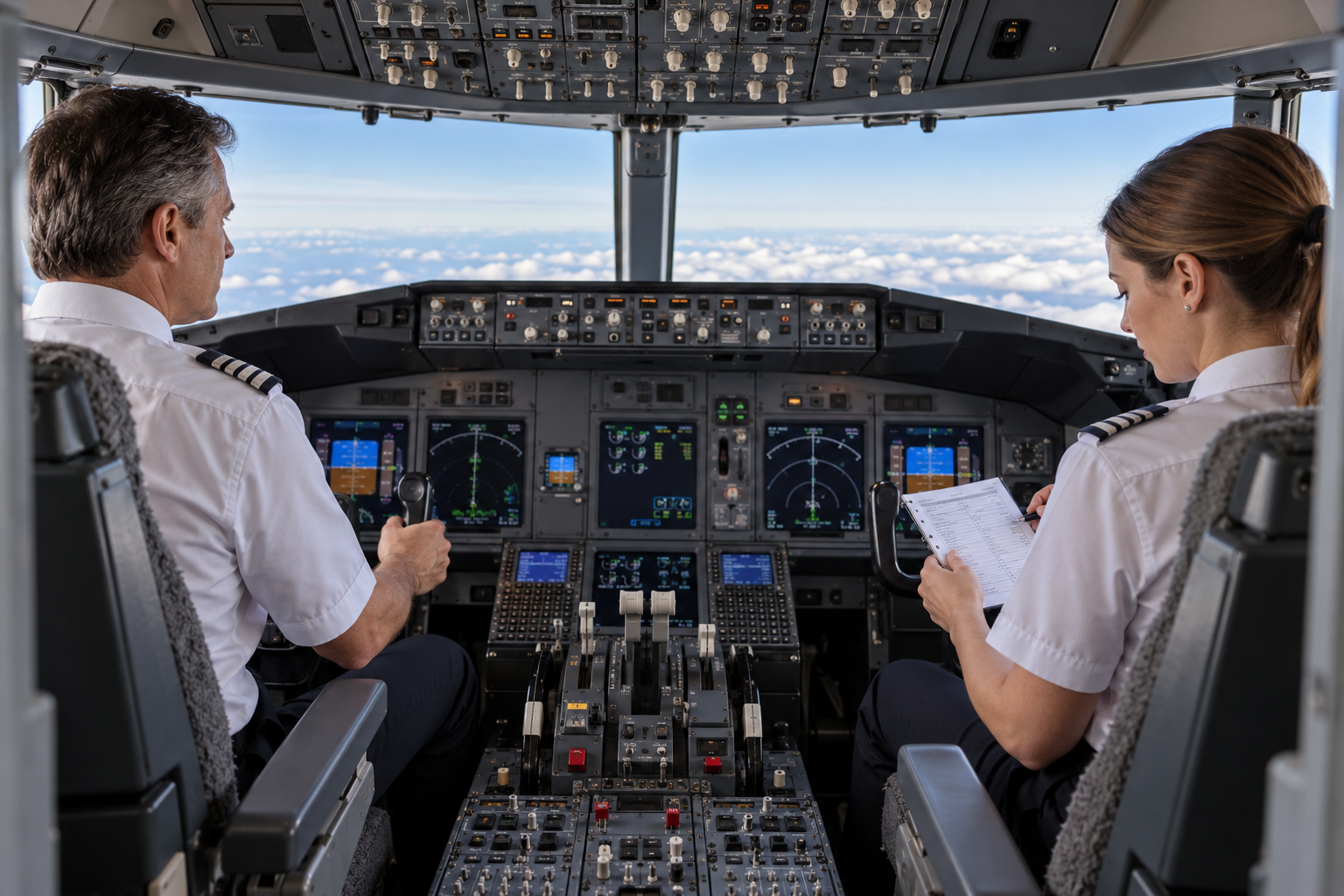
The single most important answer begins with something you already know but may never have thought hard about: airliners carry two pilots, and this is not merely for convenience. The two-pilot system is a deliberate, foundational safety design built precisely around the possibility that one pilot might become unable, for any reason, to fly the plane. The entire structure of commercial aviation assumes that at any moment, one of the two people at the controls could be lost, through sudden illness, incapacitation, or, in the rarest and darkest case, deliberate action, and it is built so that the other can still bring everyone home.
This redundancy is the quiet genius of the system. In normal flight, the two pilots share the work and cross-check each other, but the deeper purpose is that either one, alone, is capable of flying and landing the aircraft. So when one pilot is removed from the equation, whatever the cause, the design intent is that the aircraft is still flyable by the person remaining, or by other qualified crew. The plane is never meant to hang on a single pair of hands, and that principle runs through everything from how crews are scheduled to how cockpits are built. It is the same logic that puts two engines on a jet and two of so many critical systems: never one point of failure where a second can be had.
In the FlyDubai case, the reporting indicates that the aircraft was ultimately secured and landed by on-duty crew, exactly the kind of fallback the system exists to provide. The lesson for the nervous flyer is reassuring in its ordinariness: the reason a plane can survive the loss of one pilot is that it was never designed to depend on only one. Two pilots is not a luxury but a safeguard, and it is the first and most powerful reason this flight ended the way it did rather than in catastrophe.
The Plane Itself Resists Disaster
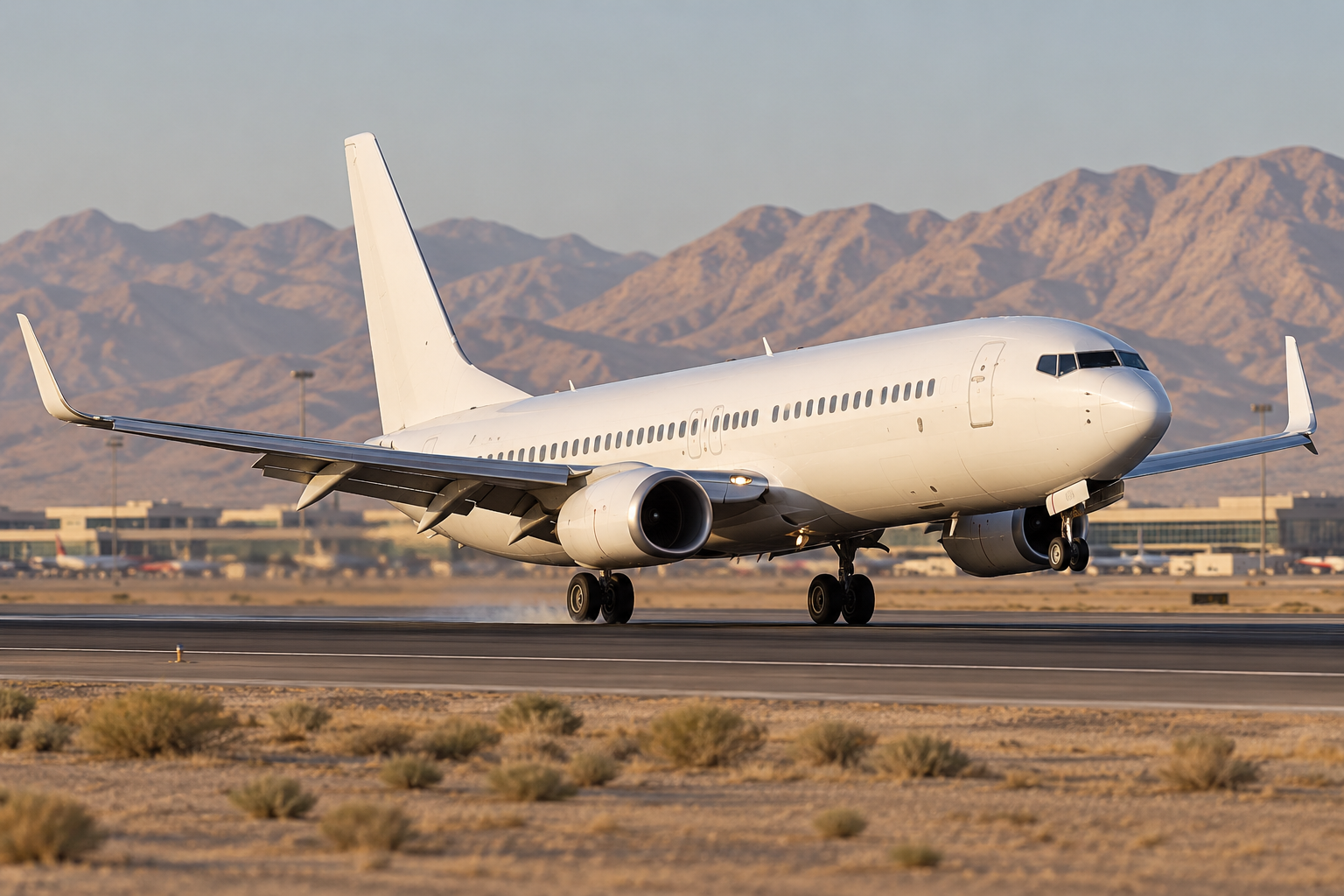
The second reason is the aircraft, because a modern airliner is far more stable and forgiving than most passengers imagine, and it is genuinely difficult to make one crash. Commercial jets are engineered to be aerodynamically stable, meaning that left to themselves they tend toward steady, level flight rather than toward disaster, and they are flown for most of a journey by sophisticated autopilot systems that hold altitude and course with a precision no human could match. A healthy airliner at cruise is doing most of the work of staying safely in the sky on its own. The plane, in a real sense, wants to keep flying, and it takes sustained, deliberate effort to override that.
This matters enormously when you consider a violent event in the cockpit. Even a frighteningly steep descent is not the same as a crash, and a modern airliner has altitude and aerodynamic margin that can allow it to be recovered from a dive that looks terrifying from a passenger seat.
Aviation experts noted that the aircraft endured an extreme descent and still flew, which speaks to how much punishment these machines are built to absorb. An airliner is engineered with large margins of strength and stability precisely so that it can take a severe upset and still be recoverable. None of this makes an attack on a pilot anything less than deadly serious, but it does explain part of the mystery of survival: the airplane is not a delicate thing poised constantly on the edge of falling. It is closer to the opposite, a machine that has to be actively and continuously forced out of safe flight, and that fights to return to it. It is a robust, stable, heavily engineered machine with multiple systems working to keep it aloft, and that inherent resilience buys precious time and margin for the human beings aboard to regain control, which is exactly what happened here.
The Locked Door and the People Behind It
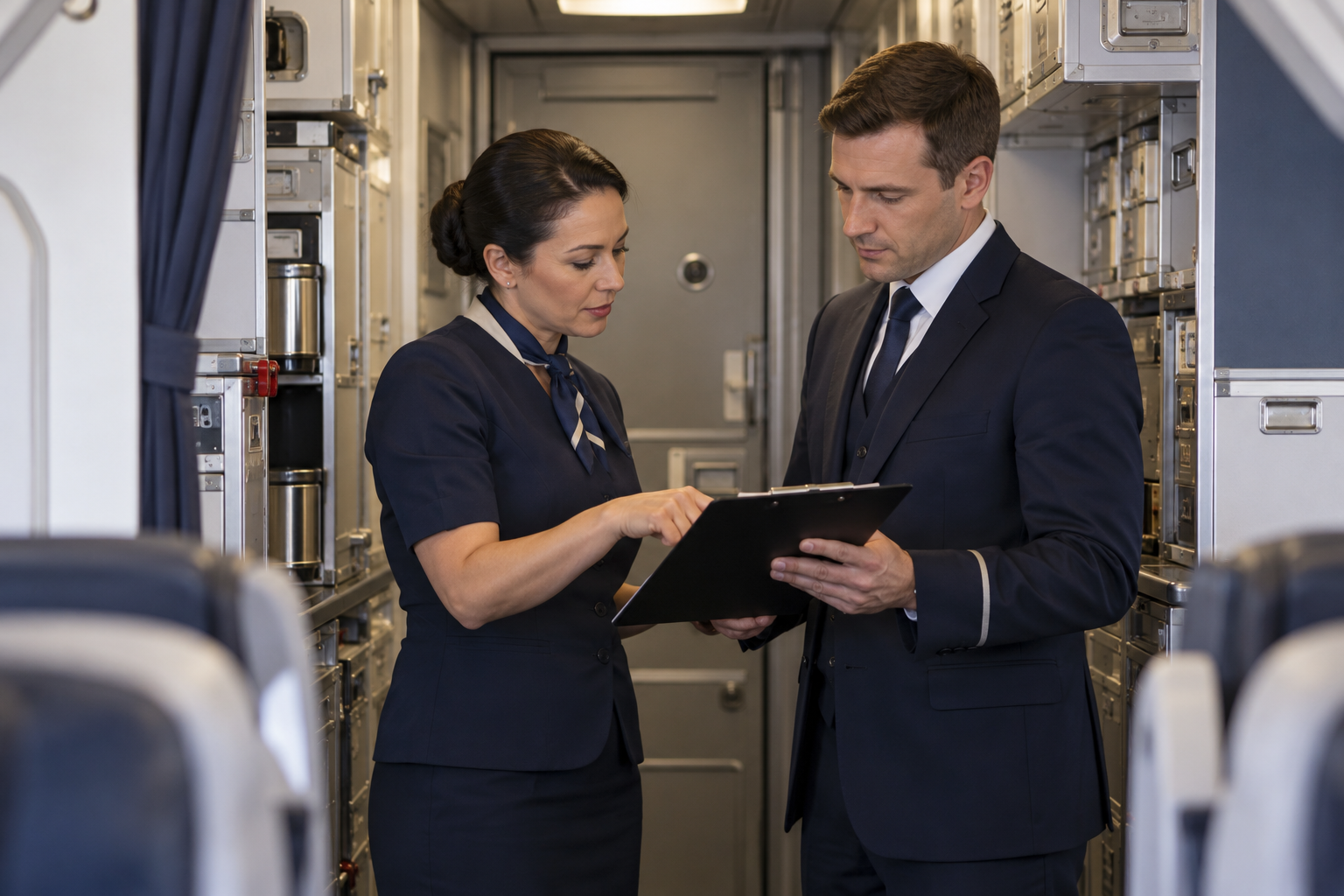
The third element is the cockpit door and, more importantly, the people on both sides of it, because the human response aboard this flight was decisive. Since the early 2000s, airliner cockpit doors have been reinforced and lockable from the inside, a security measure introduced to prevent intruders from storming the flight deck. That design is a double-edged thing, as it can also, in a nightmare scenario, keep help out, which is why it mattered enormously that the injured captain was able to open the door. By doing so, he turned a sealed cockpit into one that passengers and crew could reach.
And reach it they did. According to the accounts, passengers and crew forced their way in and overpowered the attacker, an act of collective courage under unimaginable pressure that was essential to the outcome.
This is the part of air safety that no engineering can fully account for: the ordinary people aboard, and the trained crew, who respond in a crisis. Flight attendants are trained for security threats and emergencies, and passengers, as this incident and others before it have shown, are often willing to act decisively when lives are at stake. The instinct of a cabin full of strangers to rush toward danger to save the plane is not something any engineer can design, but it is a real and repeated part of how these rare crises end.
The combination, a door the captain could open, a crew trained to respond, and passengers prepared to help, formed a last line of defense that worked when it was needed most. No one of those elements would have been enough alone; together they were. It is a reminder that the safety of a flight is not only in the machine and the systems but in the humans aboard, who remain the final and often decisive safeguard when everything else is under threat. The engineering buys the time; the people use it.
A System That Learns From Everything
There is one more feature of aviation safety that this incident quietly illustrates, and it is perhaps the most reassuring of all: the industry treats every serious event as something to be studied and learned from, and it feeds those lessons back into the rules, the training, and the design. Flying has become steadily safer over the decades precisely because aviation refuses to let any incident go unexamined. When something goes wrong, investigators reconstruct exactly what happened, and the findings become new procedures, new safeguards, new training, applied across the whole industry so that the next flight benefits from the last one’s hard lessons.
This is why air travel improves rather than merely holding steady. A rare and shocking event like this one will be investigated thoroughly, and whatever is learned about how it happened, and how it was survived, will be absorbed into the system, strengthening the layers of protection still further. It is the opposite of complacency: an entire global industry built around the assumption that it can always be safer, and a culture that turns even the worst moments into improvements. Nowhere else is failure studied quite so relentlessly, or its lessons shared quite so widely, as in the business of keeping planes in the air.
For the passenger, this means the safety record you are trusting when you board is not a static thing but one that has been refined by every incident that came before, each tragedy and each near-miss making the whole enterprise a little more robust. The plane that landed safely did so partly because of lessons written into its design and procedures by events long past, and the lessons of this flight, in turn, will help protect the flights still to come. Every passenger benefits, silently, from a century of such hard-won learning. A system that learns from everything is, in the end, the deepest reason flying keeps getting safer.
What It Means for the Nervous Flyer
So what should an ordinary person, the kind who reads a headline like this and reconsiders an upcoming trip, actually take from it? The most important thing is perspective. An event like this is extraordinarily, vanishingly rare, so far outside the normal experience of flying that it becomes global news precisely because it almost never happens, and it should not be mistaken for a representative picture of what air travel is like. The very fact that it dominated headlines around the world is itself proof of its rarity, because the routine and the safe do not make news. Flying remains statistically one of the safest things a person can do, safer by far than the drive to the airport, and nothing about this incident changes that underlying reality. One shocking event, however frightening, does not move a safety record built on tens of millions of uneventful flights a year.
What the incident actually demonstrates, read correctly, is not that flying is dangerous but that its safety is built in layers, each one a backstop for the others.
This is the single most important idea to take away, because it is the idea that makes the whole terrifying episode, properly understood, into a story of safety working rather than failing.
There is the screening and vetting that applies to crew and passengers, the two-pilot redundancy that assumes one pilot could be lost, the stable and heavily engineered aircraft that resists going down, the reinforced cockpit and the trained cabin crew, and finally the passengers themselves. In this case, the worst happened at one of those layers, and the others held, which is precisely what a layered safety system is designed to do: to survive the failure of any single part. The plane landed and everyone lived not through luck alone but because the system has depth. For the nervous flyer, that is the real and honest reassurance to carry onto your next flight, not that nothing can ever go wrong, but that an enormous amount has to go wrong, all at once, past layer after layer, for a disaster to occur, and that even when something terrible happens at one layer, the others are there, as they were here, to bring the plane home. You can board your next flight knowing that the same deep, redundant, hard-earned safety that saved this one is quietly wrapped around you too.

About the Author: Ruben, co-founder of Gamintraveler.com since 2014, is a seasoned traveler from Spain who has explored over 100 countries since 2009. Known for his extensive travel adventures across South America, Europe, the US, Australia, New Zealand, Asia, and Africa, Ruben combines his passion for adventurous yet sustainable living with his love for cycling, highlighted by his remarkable 5-month bicycle journey from Spain to Norway. He currently resides in Spain, where he continues sharing his travel experiences with his partner, Rachel, and their son, Han.