

Most retire-abroad stories start with a comfortable nest egg and a traditional retirement age, a paid-off house sold and a pension in hand at sixty-five. This one does not. The couple in this account, a composite drawn from the real patterns of Americans who have made this particular leap, retired early, at fifty-eight, with a hundred and sixty thousand dollars, which is genuinely not a lot, and they did it not on the sunny Mediterranean coast where everyone pictures a Spanish retirement, but on the cool, green, rainy Atlantic north, the region Spaniards call Green Spain. Three years on, at sixty-one, with their Social Security still not yet flowing, the obvious question is whether the money held up. So here is their situation laid out honestly, the region they chose and why, the monthly ledger line by line, and where the balance actually stood at sixty-one. It is a tighter, braver version of the retire-abroad story than most, and precisely for that reason a more useful one.
What follows is why they chose Green Spain, the tight starting position they began from, the monthly budget in detail, the balance three years later, and what the whole experiment taught about retiring early on a modest sum.
Why Green Spain

The first and most important choice they made was where to land, and it ran against the usual script. When Americans imagine retiring to Spain, they picture the Mediterranean, the Costa del Sol, Alicante, the sun-baked south and east, and those places are lovely but increasingly expensive and crowded with other foreigners. Green Spain is the opposite corner of the country, the northern Atlantic strip of Galicia, Asturias, and Cantabria, so called for the lush, almost Irish greenery that comes from a cool, wet, mild climate utterly unlike the dry south. It is a region of dramatic coastline, serious food, historic cities, and, crucially for this couple, noticeably lower costs than the famous retirement coasts. Think green hills tumbling to the Atlantic, fishing villages, Romanesque churches, and some of the best seafood in Europe, all at prices that would seem impossible on the sunny side of the country.
The trade-off is the weather, and it is a real one. Green Spain is green because it rains, a lot, and the summers are mild rather than scorching, so anyone dreaming of year-round sunshine should look elsewhere. But for a couple who disliked extreme heat, loved the ocean and the walking and the seafood, and above all needed to make a modest sum stretch as far as it possibly could, the north was close to ideal.
Costs there run well below the Mediterranean hotspots: a comfortable life for a couple in the cheaper parts of Galicia, Asturias, or Cantabria can be had for around two thousand to twenty-five hundred dollars a month all in, where the fashionable south would demand considerably more. They deliberately avoided the one expensive exception, the Basque Country around San Sebastian and Bilbao, which is beautiful but pricey, and settled instead in a mid-sized northern city where the rent was reasonable and the life was rich. The choice of Green Spain over the costas was, in the end, the single decision that made the whole early retirement possible. Everything downstream, the manageable rent, the modest drawdown, the surviving nest egg, traces back to that one unfashionable choice of where to live.
Why Almost No One Looks North

Part of what made the north affordable is precisely that so few foreign retirees consider it, and the reason is simple: they are chasing the sun. The entire gravitational pull of the retire-in-Spain dream is toward warmth, toward the Mediterranean and the long dry summers, so the costas fill up with foreigners and their prices rise accordingly, while the green north, lacking that guaranteed sunshine, stays comparatively quiet and cheap. The crowd that drives up the cost of the south simply does not come to Galicia or Asturias, and that absence is exactly what keeps the north a bargain.
For a couple willing to think differently about climate, this is an opportunity hiding in plain sight. The north offers much of what makes Spain wonderful, the food, the healthcare, the pace of life, the safety, the deep culture, the walkable cities, often in more authentic and less touristy form than the foreigner-heavy south, and at a meaningfully lower price. The thing it does not offer is reliable sunshine, and that single deterrent is enough to keep the prices low, which means the trade-off is really between weather and money. A retiree who genuinely does not need to bake in the sun, who even prefers a mild, green, four-season climate, gets to collect the discount that everyone chasing the Mediterranean is effectively paying to avoid. This couple understood that the north’s biggest drawback, its weather, was also the source of its biggest advantage, its affordability, and they chose accordingly.
The Tight Starting Position
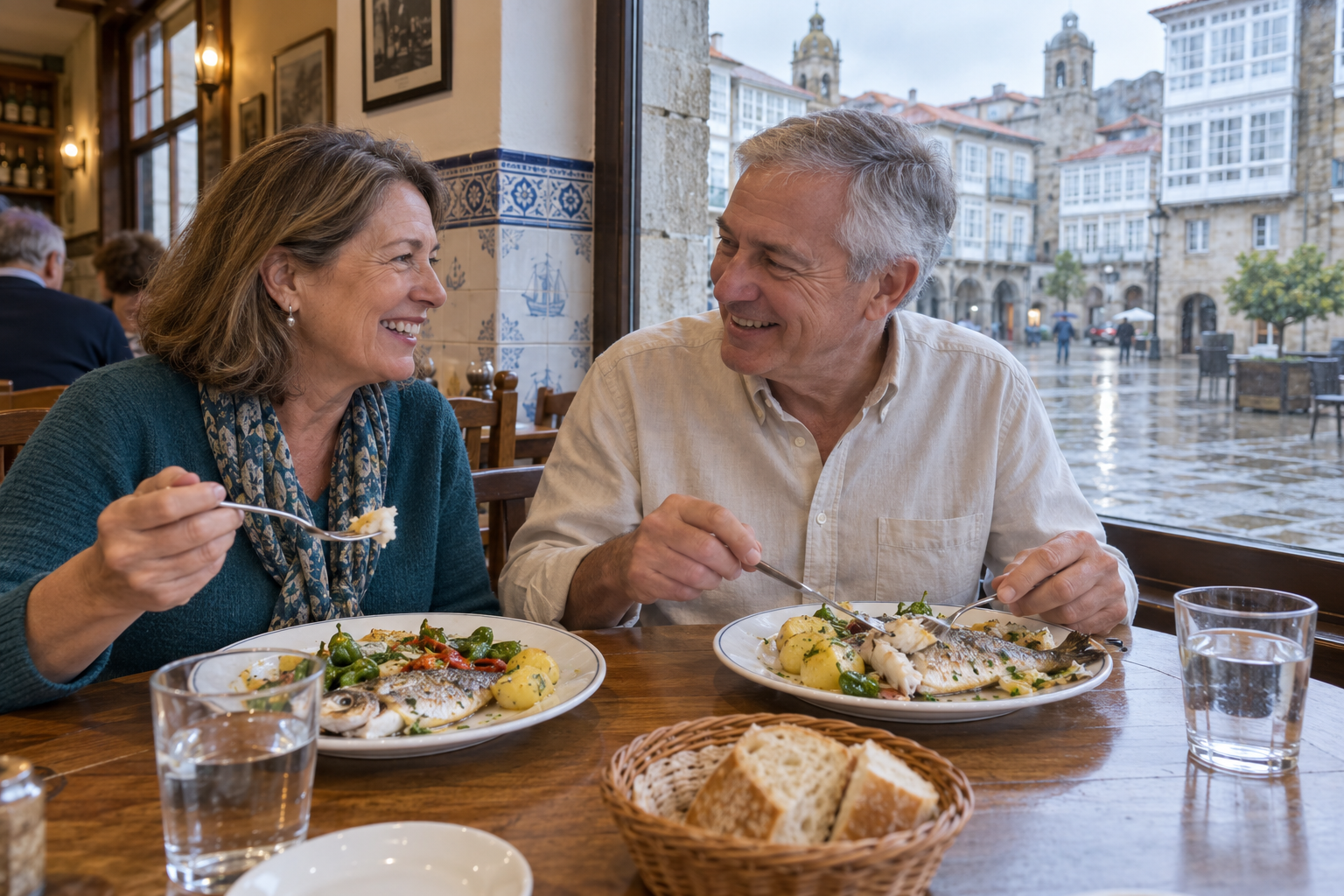
It is worth being clear-eyed about just how tight their position was, because this is not a story of comfortable abundance. At fifty-eight, with a hundred and sixty thousand dollars, they were attempting something genuinely ambitious: retiring four years before they could claim US Social Security, with a sum that would not last long at an American cost of living. In the United States, a hundred and sixty thousand dollars is a frighteningly thin cushion to retire on at fifty-eight; the whole plan depended on moving somewhere it would go much further, and on bridging the gap to their Social Security years without exhausting it.
Their income in those bridge years was modest and came from two sources. A small early pension brought in a little over a thousand dollars a month, and the savings themselves, invested conservatively, threw off a few hundred more in dividends and interest. Together that gave them roughly fifteen hundred to seventeen hundred dollars a month of income without touching the principal, which in Green Spain covered a meaningful share, though not all, of their costs.
That coverage ratio, income against spending, was the hinge of everything: in an expensive country the same income would have covered barely half their life, but in the cheap north it covered most of it, shrinking the drawdown to something survivable. The gap between that income and their spending would have to come out of the hundred and sixty thousand, drawn down month by month, and the entire question of whether the plan worked came down to how large that drawdown turned out to be and whether the principal could survive until Social Security arrived to stabilize everything. A gap of a few hundred dollars a month would be comfortably survivable for years; a gap of a thousand or more would eat the nest egg before the bridge was crossed. It was, in short, a calculated bet that a cheap region and a modest income could bridge four lean years, and the ledger is where you see whether the bet paid off. The margin was thin enough that the exact numbers mattered, which is why it is worth walking through them in detail.
Where Every Dollar Went

Here is where their money actually went, in a representative month in Green Spain, converted to dollars for clarity. Rent for a comfortable two-bedroom apartment ran about eight hundred dollars in their northern city, not in the dead center but in a pleasant neighborhood, ran about eight hundred dollars. Utilities, and here the northern climate bites, since the damp and the cooler winters mean real heating bills, came to around two hundred and fifty dollars, higher than they would have been in the warm south. Groceries, drawing on the north’s superb and cheap seafood, produce, and markets, ran about four hundred dollars for the two of them, eating very well. Private health insurance cost around two hundred dollars a month for the couple, a fraction of the American equivalent.
The rest filled in a modest but genuinely pleasant life. Transport, mostly walking and the occasional bus or train, with no car, came to perhaps seventy-five dollars, since in a walkable European city a car is a luxury rather than a necessity, and dropping it removes one of the largest hidden costs of American life. Phone and internet together ran about sixty.
And dining out, the odd leisurely lunch of the local menu del dia, a daily coffee and pastry habit, small pleasures and entertainment, they budgeted around three hundred dollars a month, enough to feel they were living rather than merely surviving. In Green Spain that three hundred dollars stretches a long way, since a hearty three-course set lunch with wine can be had for ten or twelve, which is part of why the modest budget never felt like deprivation. Totaled up, a typical month came to around twenty-two hundred dollars, call it twenty-two hundred, for a life that included a nice apartment, superb food, good healthcare, and real enjoyment. Against their roughly sixteen hundred dollars of monthly income, that left a gap of around six hundred dollars a month drawn from savings, or about seven thousand dollars a year of net drawdown, which is the number on which the entire plan turned.
The Balance at Sixty-One
So, three years on, where did the hundred and sixty thousand stand? The arithmetic is more encouraging than the tight starting position might suggest. Drawing down roughly seven thousand dollars a year to cover the gap, over three years they pulled somewhere in the region of twenty to twenty-two thousand dollars from the principal. But the principal was not sitting idle; the portion still invested continued to earn, and over those three years investment growth offset a good part of the drawdown, so the balance did not simply fall by the full amount withdrawn. Netting the drawdown against the growth, they arrived at sixty-one with around a hundred and forty-five to a hundred and fifty thousand dollars still in savings, down only modestly from where they started. In a bad market the number would have been lower and in a good one higher, but the central point holds: the nest egg survived the bridge years largely intact rather than being consumed by them.
That outcome is the quiet triumph of the whole plan. They had retired four years early on a sum that looked impossible, lived a genuinely good life for three years in a beautiful part of Spain, and arrived at sixty-one having spent only ten or fifteen thousand of their principal, with the balance largely intact and Social Security now just a year away.
When that Social Security does begin at sixty-two, it will more than cover the six-hundred-dollar monthly gap, at which point their drawdown stops entirely and the nest egg can even begin to grow again. The whole structure of the plan was always to survive to that moment with savings intact, and they did, which turns the frightening early years into a bridge successfully crossed rather than a gamble lost. The three lean bridge years, the whole risky early-retirement bet, turn out to have cost them only a sliver of their savings, because Green Spain was cheap enough that a modest income nearly covered the whole life. Had the gap been twelve hundred a month instead of six, the story would read very differently, which is exactly why the cheap region was the whole game. The balance at sixty-one, in other words, says the gamble worked.
What the Three Years Taught
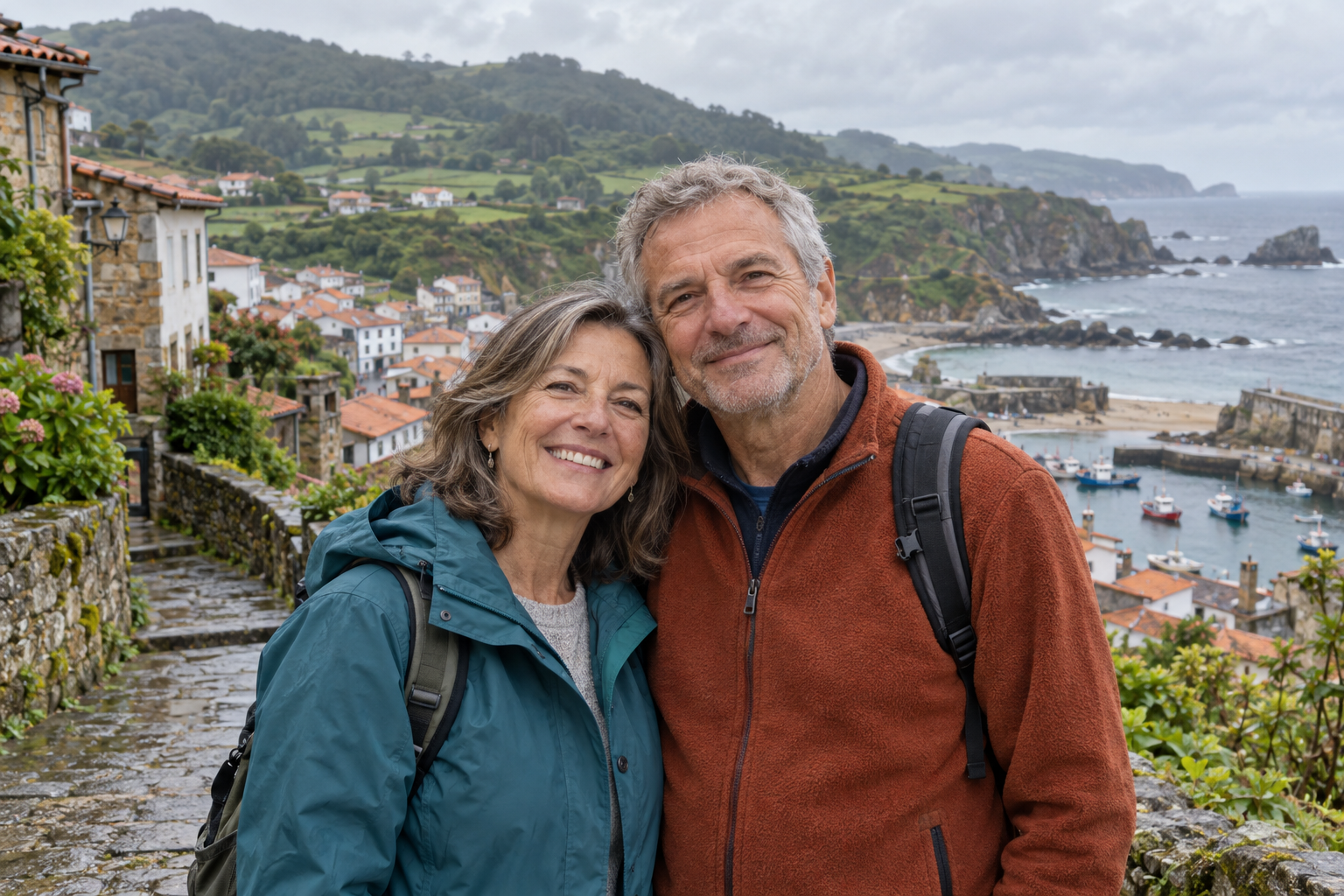
The lesson of their experience is not that anyone can retire at fifty-eight on a hundred and sixty thousand dollars, because they plainly cannot do it in most places. The lesson is narrower and more useful: that the right choice of location can transform what a modest sum makes possible, turning an impossible American retirement into a comfortable European one. Everything in their plan flowed from the decision to live somewhere genuinely cheap, and Green Spain, overlooked precisely because it lacks the Mediterranean sunshine everyone chases, delivered a high quality of life at a cost low enough to make the arithmetic work. The same couple with the same money in Marbella would likely have run out; the location did not just help at the margin, it was the difference between the plan working and failing. Had they insisted on the Costa del Sol, the same hundred and sixty thousand would have drained far faster and the bridge to Social Security might not have held. The sunshine would have cost them, quite literally, their margin of safety.
Several honest caveats belong with the happy ending. Their plan depended on having some income in the bridge years, the small pension and investment income, not purely on savings, and a couple with no such income would have drawn down far faster. It depended on the exchange rate between the dollar and the euro, which can swing and which quietly helps or hurts a dollar-funded life in Europe every year.
It depended on good health, since a major uncovered medical event could have blown the budget, though Spain’s cheap healthcare limited that risk. And it depended on genuinely embracing a cooler, wetter, less touristy corner of Spain, which not everyone would enjoy. But within those caveats, their story is a real and encouraging one, and its core truth is worth holding onto: for an American willing to retire somewhere unfashionable and affordable, a modest nest egg can stretch, through the lean early years, into a genuinely good life. The balance at sixty-one proved it, not as a lucky escape but as the predictable result of matching a modest life to a modest place.

About the Author: Ruben, co-founder of Gamintraveler.com since 2014, is a seasoned traveler from Spain who has explored over 100 countries since 2009. Known for his extensive travel adventures across South America, Europe, the US, Australia, New Zealand, Asia, and Africa, Ruben combines his passion for adventurous yet sustainable living with his love for cycling, highlighted by his remarkable 5-month bicycle journey from Spain to Norway. He currently resides in Spain, where he continues sharing his travel experiences with his partner, Rachel, and their son, Han.