
Spend time in an Italian home, especially one run by a grandmother of the old school, and you quickly realize that cleanliness there is a whole philosophy, a set of daily rituals passed down through generations and followed with a seriousness that can make an American feel faintly grubby by comparison. Italian nonne have firm, unshakeable ideas about hygiene, about the body, the bathroom, the laundry, and the home, and many of these habits are things American bathrooms and American households quietly abandoned or never adopted at all. Some are practical, some are rooted in old beliefs about health, and nearly all of them leave visitors wondering why they ever did it any other way. So here are nine hygiene habits that Italian grandmothers have always insisted on, and that much of America has simply forgotten or never knew in the first place.
What follows is the bidet, the towel rules, the house slippers, the morning airing, the line-dried laundry, the daily floor-washing, the changing of clothes, the separate cloths, and the fear of the draft.
1. The Bidet, Which America Never Installed
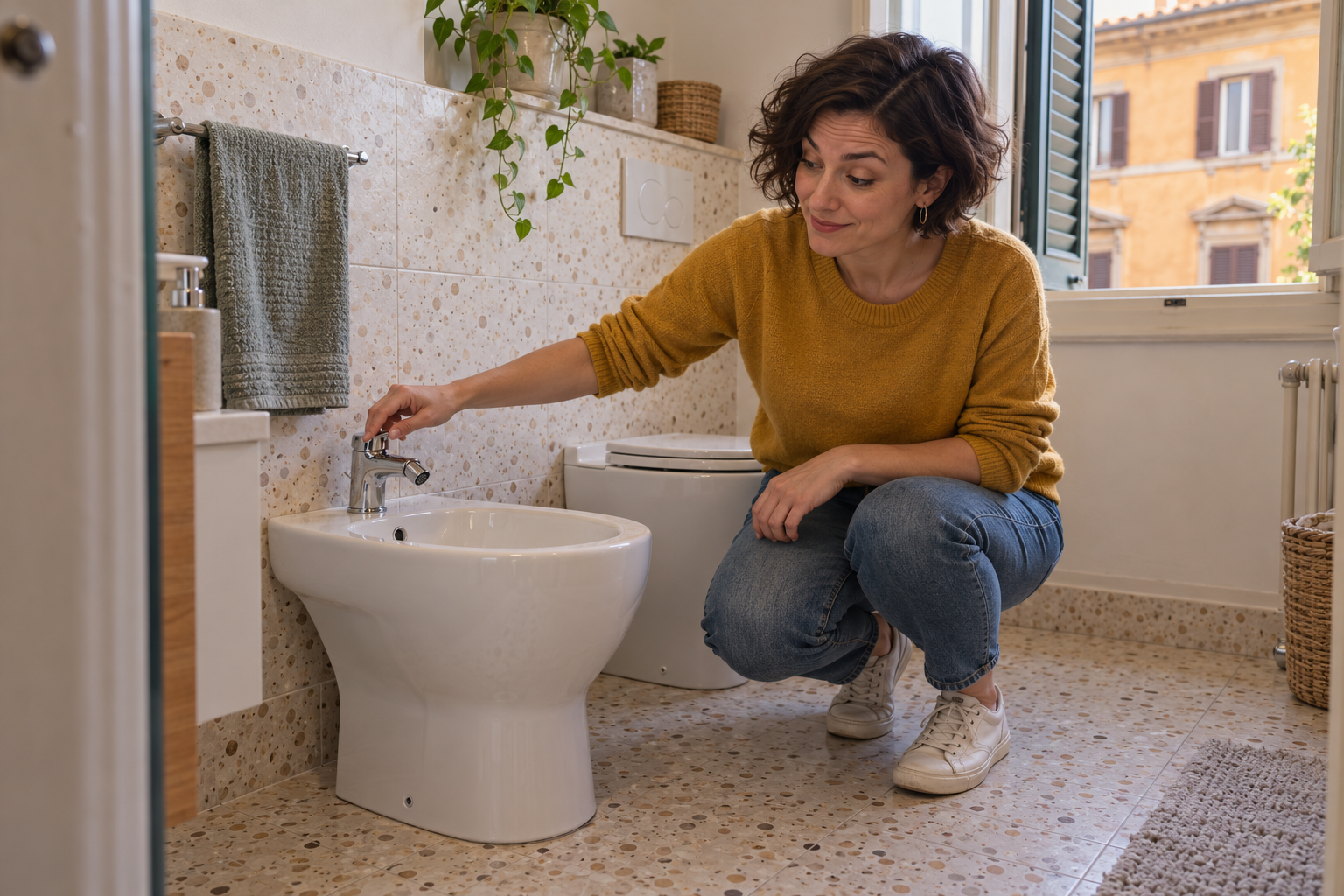
The single most famous difference, and the one that mystifies Americans most, is the bidet. In Italy it is not an exotic luxury or a curiosity; it is a standard fixture found in essentially every bathroom, so universal that Italian building regulations require one in residential bathrooms. the idea of cleaning yourself with dry paper alone strikes her as inadequate, even a little unhygienic, and the bidet is the obvious, sensible solution she has used her entire life.
Americans, by contrast, abandoned or never adopted the bidet, and American bathrooms are built without the space or plumbing for one, which is why the device remains a source of bafflement and jokes rather than a normal part of life. The Italian view is straightforward and hard to argue with once stated plainly: you would not clean any other part of your body with only dry paper, so why that part? For the nonna, the bidet is a matter of basic daily cleanliness, used after the toilet and for a quick freshen-up, and the American bathroom’s lack of one strikes her as a genuine gap in hygiene rather than a mere cultural difference. It is the habit America most conspicuously forgot, and the one returning visitors most often wish they could bring home, to the point where a small industry of add-on bidet attachments has sprung up for Americans who have seen the light.
2. A Towel for Every Person and Every Purpose
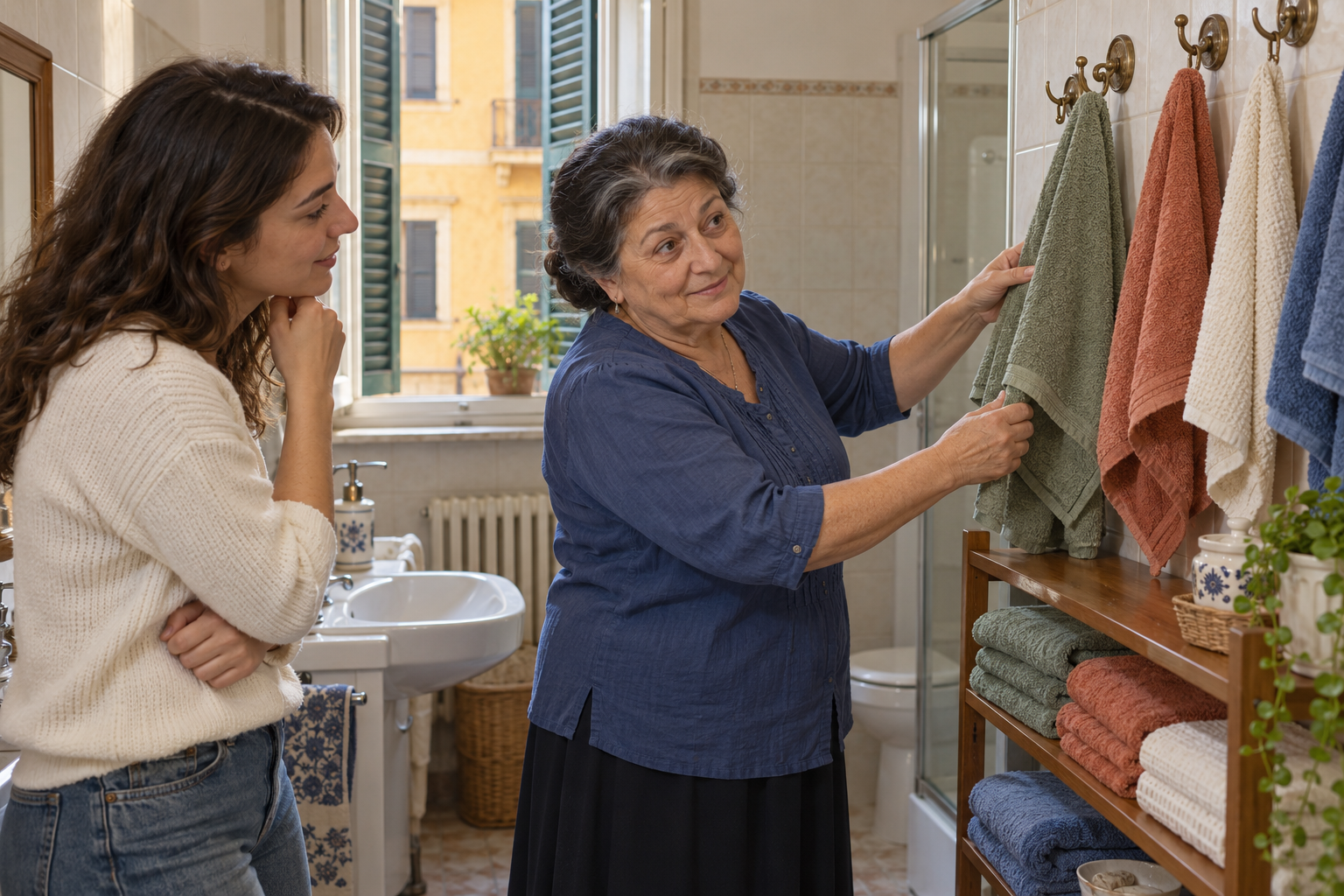
In the Italian grandmother’s bathroom, towels are not communal and not interchangeable, and woe betide the guest who dries the wrong part of themselves on the wrong cloth. Each person has their own towels, often color-coded so there is no confusion, and crucially there are separate towels for separate jobs: a towel each for face, hands, body, and feet, with the bidet having its own small dedicated towel as well. Mixing them up is a small domestic crime.
The logic is a refusal to spread what should be kept separate. The face is not the feet, the hands that have been out in the world are not the clean body fresh from the shower, and the nonna’s system of dedicated towels keeps each zone to its own cloth, a level of hygienic separation that the typical American habit of grabbing whatever towel is nearest, and sharing it around the household, entirely ignores. It can seem fussy to an outsider, all those towels, all that laundry, until you consider that the American alternative is often several people and several body parts sharing a single damp towel for days. Seen that way, the grandmother’s color-coded regiment of towels looks less like fussiness and more like simple good sense, and it is a habit worth stealing even if you stop short of the full feet-and-face segregation.
3. House Slippers, and Never Bare Feet
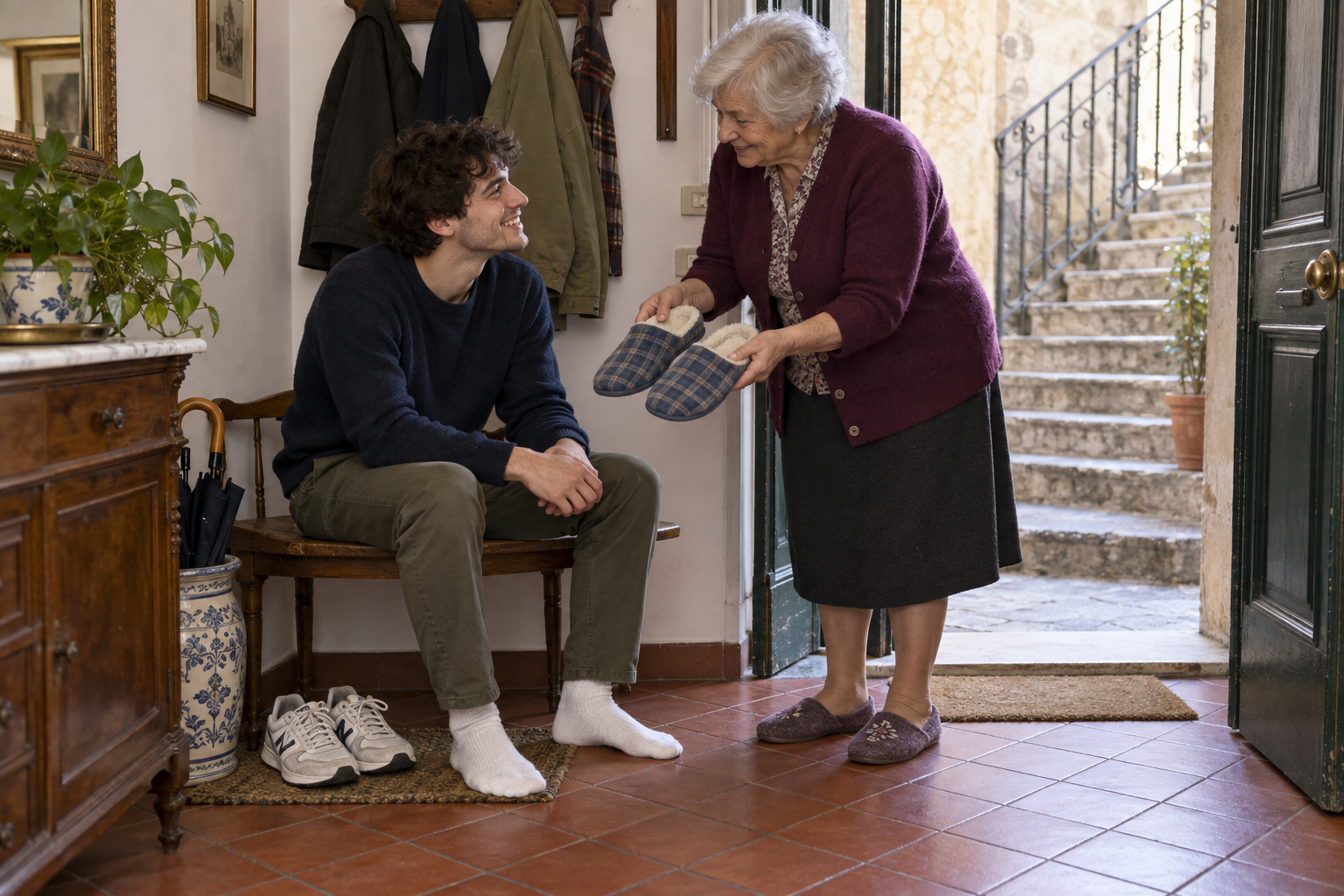
Cross the threshold of an Italian grandmother’s home and your shoes come off, but so, crucially, does the option of walking around barefoot. The rule is house slippers, the ciabatte, worn indoors by everyone, and the two things it guards against are both taken very seriously: the dirt that street shoes track in from outside, and the cold that bare feet draw up from the floor. To the nonna, walking barefoot on a cold floor is, to her, a genuine health risk, a way of inviting illness in through the soles of your feet.
This reflects a broader Italian conviction, which we will meet again, that cold and chills cause sickness, and that the body must be protected from them. But it is also just sound hygiene: street shoes carry in whatever they have walked through, and leaving them at the door while switching to clean indoor slippers keeps the home’s floors far cleaner than the American habit of wearing outdoor shoes throughout the house. The grandmother’s insistence on slippers thus does double duty, keeping the floors clean and the feet warm, and the sight of a guest padding around barefoot or, worse, in their street shoes will reliably prompt a scandalized offer of a spare pair of ciabatte. It is one of the first rules a visitor learns and one of the easiest to adopt.
4. Airing the House and the Bed Every Morning
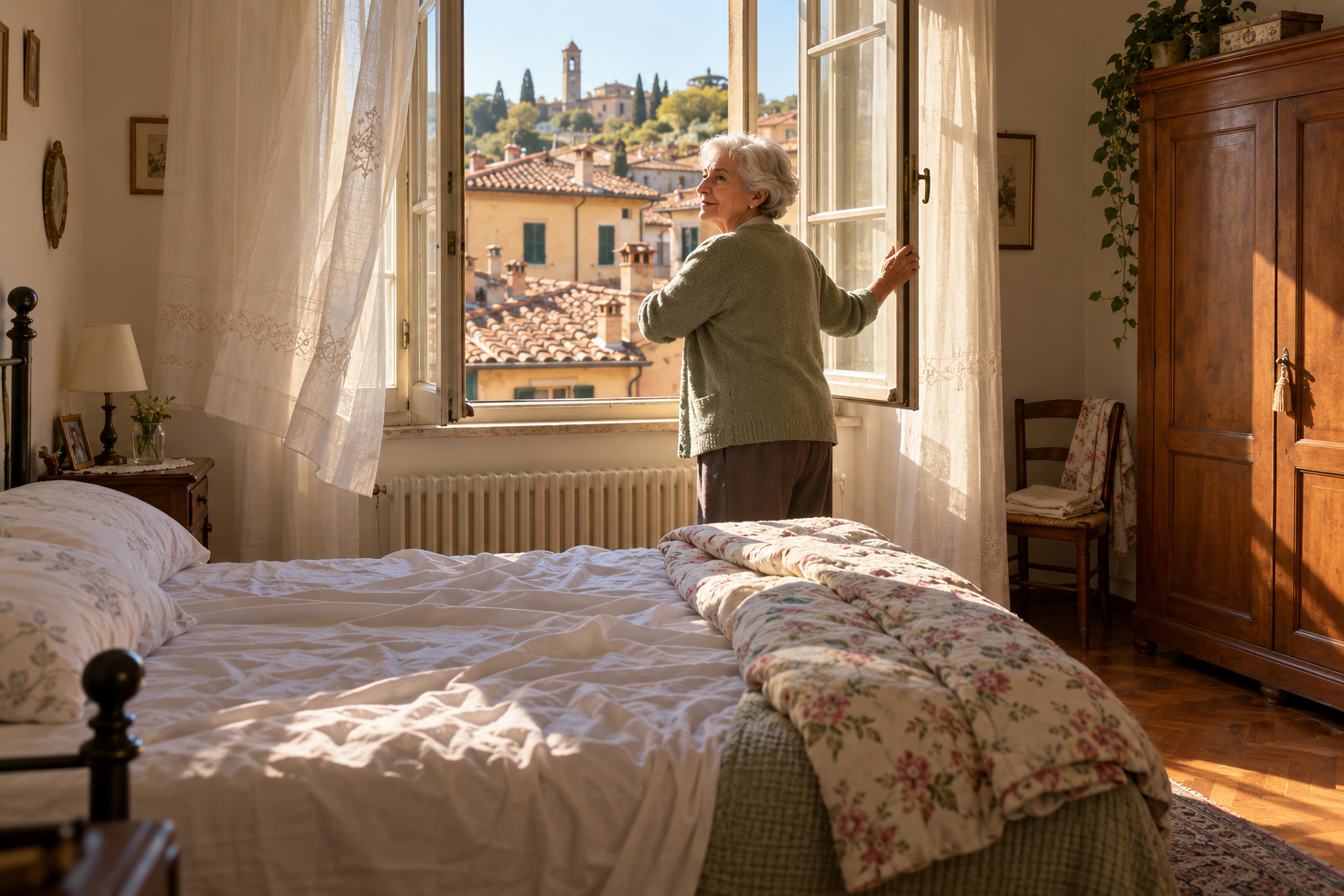
Every morning, in the Italian grandmother’s home, the windows are flung open and the house is aired, a daily ritual as fixed as the morning coffee. Fresh air is let to move through the rooms, and the beds are stripped back and left open to breathe, the covers folded down and the sheets and mattress allowed to breathe in the air and light before being made up later. To close up a bed immediately on rising, sealing in the night’s warmth and moisture, strikes the nonna as unhealthy and slovenly.
The belief behind it is that a home needs fresh air circulating through it to stay healthy, that stale, closed-up air breeds damp and sickness, and that a bed in particular must be aired to drive off the moisture a sleeping body leaves in it overnight. Whatever the science, the practice keeps homes fresher and beds drier than the American habit of making the bed the instant you leave it and keeping the windows shut, and it reflects a general Italian faith in the cleansing power of fresh air that the climate-controlled, sealed-window American home has largely lost. The grandmother airs the house because her mother aired the house, and because a home that has not been opened to the morning air does not, to her, feel truly clean.
5. Laundry Dried in the Open Air
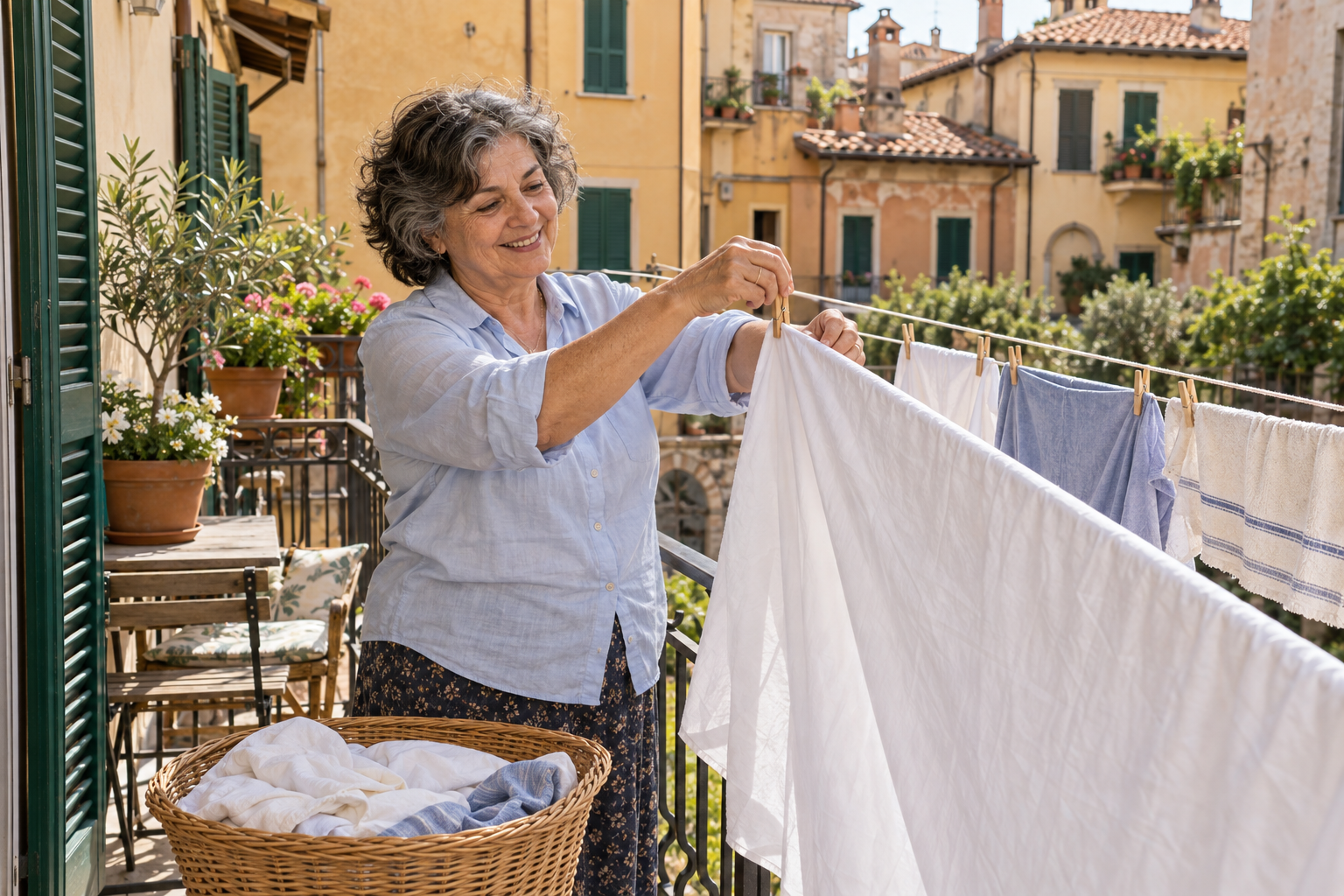
You will not find a tumble dryer in most Italian grandmothers’ homes, and not merely for reasons of cost or space, but because drying laundry in the fresh air is simply how it is properly done. Washing is hung out, on balconies, in courtyards, from lines strung across the room in bad weather, and left to dry in the sun and the breeze, which the nonna considers both more natural and more hygienic than tumbling it in a hot machine. The sun is trusted as a gentle disinfectant.
There is real sense in this beyond tradition. Sunlight genuinely helps freshen and sanitize fabric, line-dried laundry smells of the outdoors in a way machine-dried never does, and avoiding the dryer is gentler on clothes and on the bill alike. The American reflex to throw everything in the dryer would seem to the grandmother both wasteful and faintly unclean, denying the laundry the fresh air and sunlight that she believes make it truly fresh. The forest of laundry lines strung across Italian windows and courtyards is not a sign of households that cannot afford dryers but of a settled conviction that the open air does the job better, and anyone who has ever slept in sheets dried in the sun, with that unmistakable fresh smell no machine can reproduce, tends to see her point at once.
6. Washing the Floors, Not Just Sweeping Them
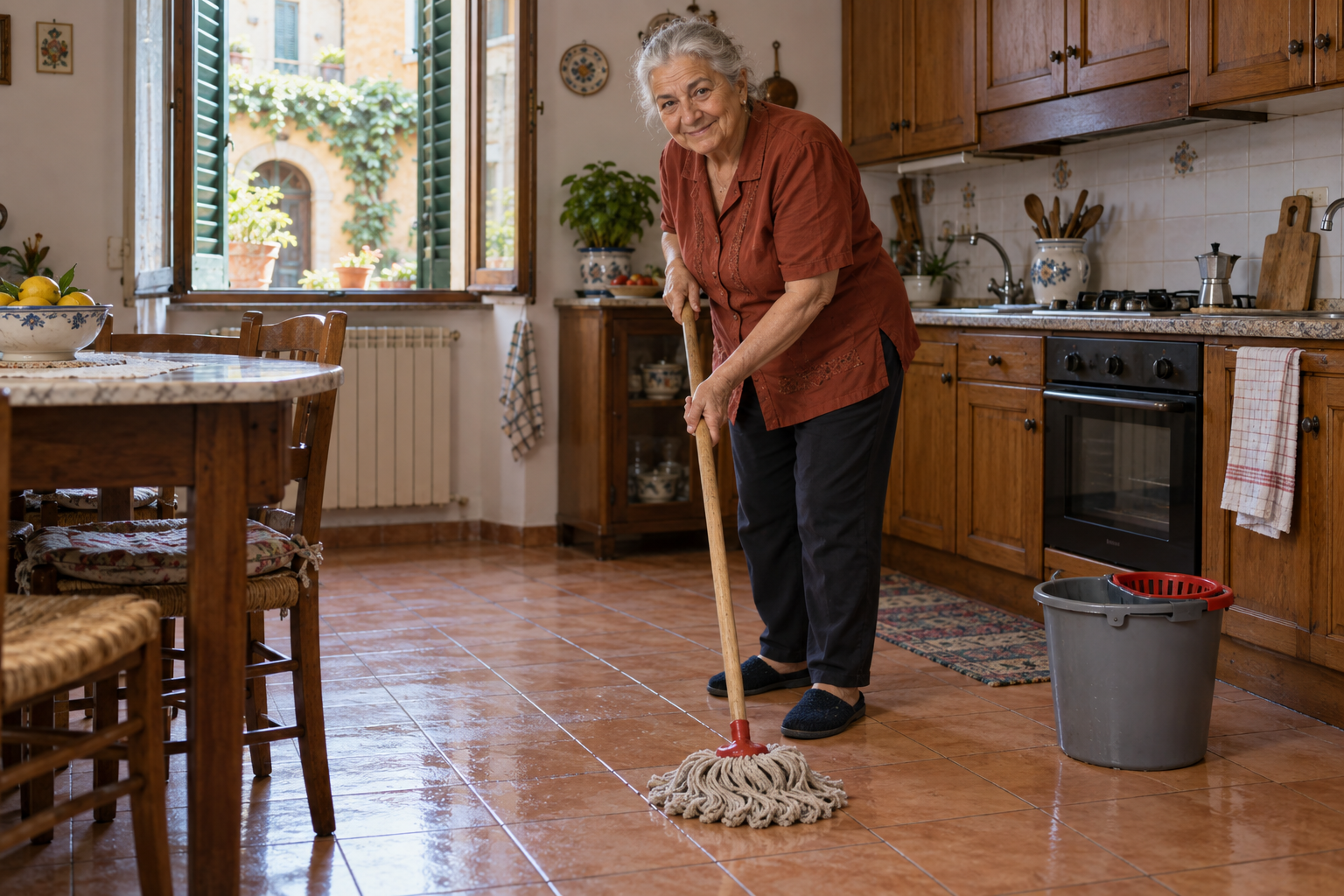
The Italian grandmother does not consider a floor clean because it has been swept or run over with a vacuum; a floor is clean only when it has been washed with water and a mop, and this is done often, frequently every day. Sweeping or vacuuming merely removes the loose debris; washing the floor, lavare per terra, is what actually cleans it, lifting the grime that dry cleaning leaves behind, and to the nonna the two are not remotely the same thing.
This is a higher and wetter standard of floor cleanliness than the typical American home keeps, where vacuuming is often considered sufficient and a proper wet mopping happens only occasionally. For the grandmother, a home’s floors, walked on by those slippered feet all day, need regular washing to be genuinely clean, and the daily or near-daily mop is simply part of keeping house. The habit connects to the slippers and the shoes-off rule, all part of a single system for keeping the floors, and therefore the home, truly clean rather than merely tidy. It is more work than running a vacuum around, but it produces a cleanliness the American standard does not, and it is central to why an Italian grandmother’s home so often feels immaculate underfoot.
7. Changing Out of Your Street Clothes at the Door
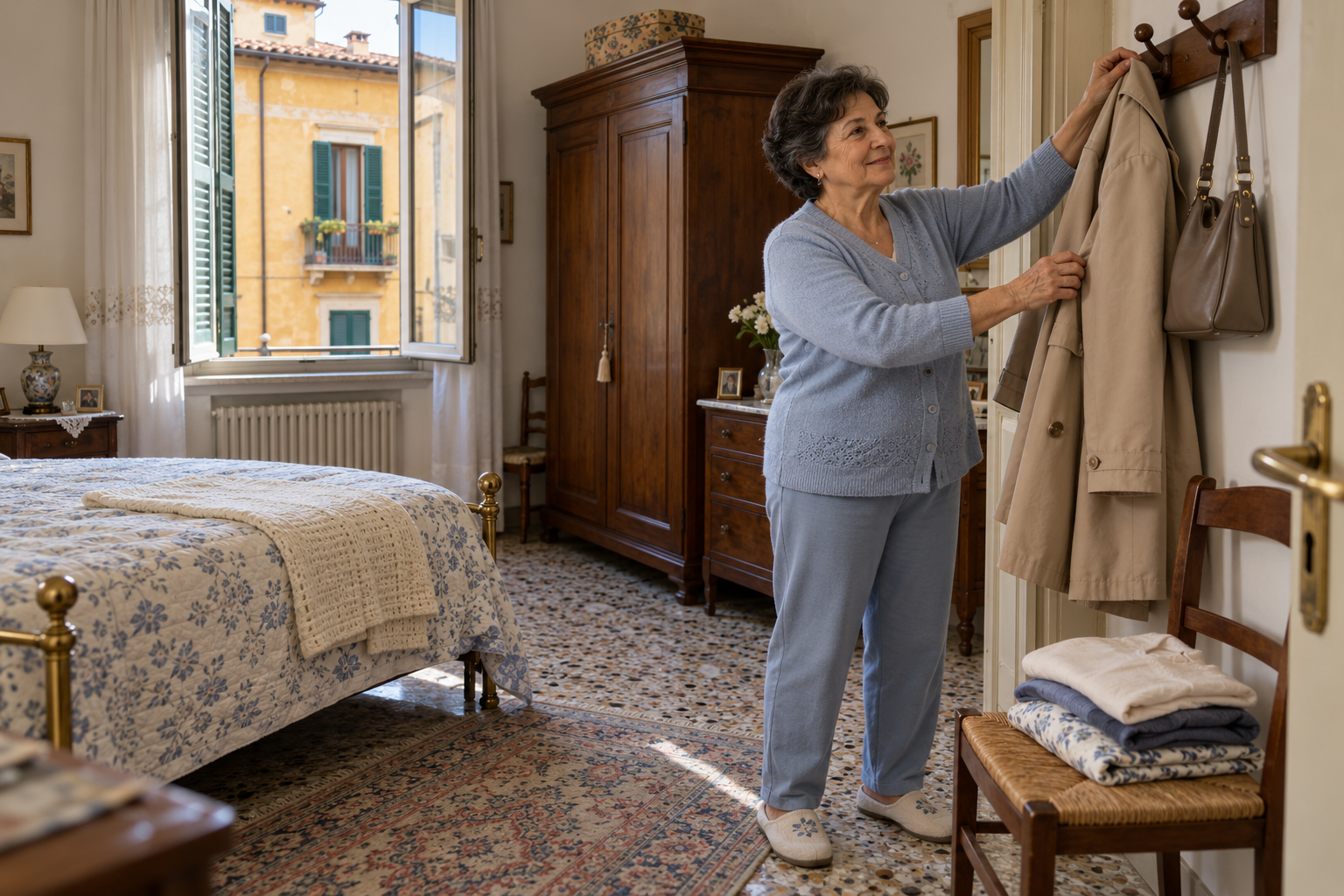
Just as street shoes come off at the threshold, so, in the stricter version of the grandmother’s regime, do street clothes, or at least the day is divided between clothes worn outside and clothes worn at home. The clothes you have worn out into the world, on public transport, in shops, through the dirt and crowds of the day, are considered to carry that outside world on them, and the tidy nonna changes out of them on coming home, into clean house clothes, rather than sitting on the furniture in them.
The reasoning is the same instinct that governs the shoes and the slippers: what has been outside should not be spread onto the surfaces where you rest. Flopping onto the bed in the same clothes you wore on a crowded bus would strike the grandmother as bringing the street into the bedroom, and changing into dedicated indoor clothes keeps the outside world where it belongs. It is a habit many Americans have never considered, wearing the same clothes from morning to night wherever they go, and while few American households keep it as strictly as an Italian nonna, the core idea, that outdoor clothes carry the outdoors and are best not spread across your clean home, is a quietly sensible one that the American routine simply never built in.
8. A Different Cloth for Every Surface
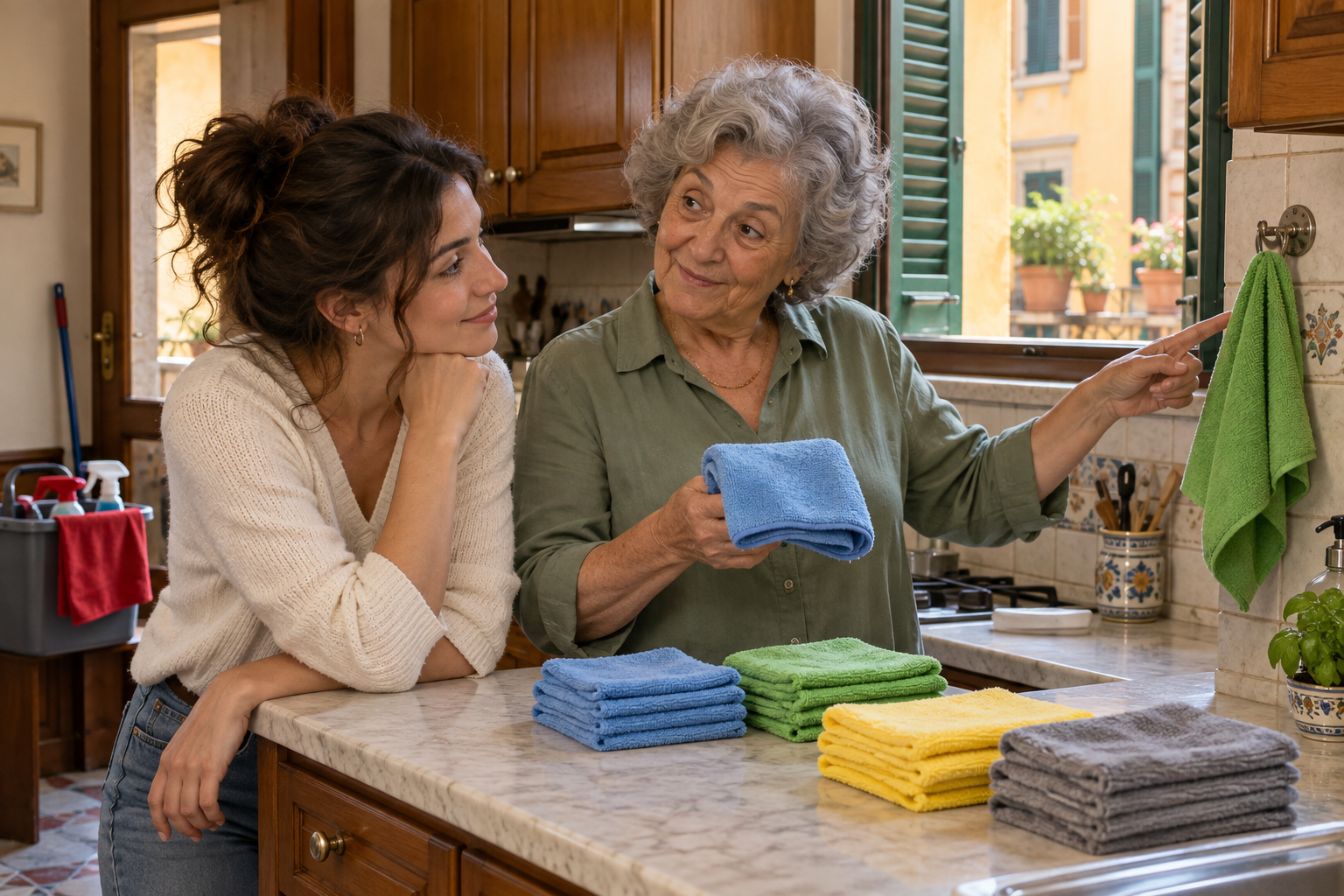
In the Italian grandmother’s kitchen and bathroom, there is never just one all-purpose cloth or sponge doing every job, because using the same cloth on the toilet and the kitchen counter is, to her, an unthinkable spreading of filth. Instead there is a strict system of separate, color-coded cloths and sponges, each dedicated to its own zone: one for the dishes, a different one for the kitchen surfaces, another entirely for the bathroom, and never the same cloth crossing from one to the other.
This is the same logic as the towels, applied to cleaning. The point is to avoid carrying germs from a dirty area to a clean one, and the single multipurpose sponge that wipes the counter and then the sink and then who-knows-what, common in many American kitchens, is exactly the cross-contamination the grandmother’s system is designed to prevent. To her, cleaning with one cloth everywhere is not cleaning at all but merely moving the dirt around, and the small discipline of keeping separate, clearly distinguished cloths for separate jobs is basic hygiene. It costs almost nothing, a few extra cloths and a moment’s attention, and it is one of the most genuinely hygienic of all her habits, the kind of thing that, once pointed out, makes you look at your own lone kitchen sponge with new suspicion.
9. The Fear of the Draft
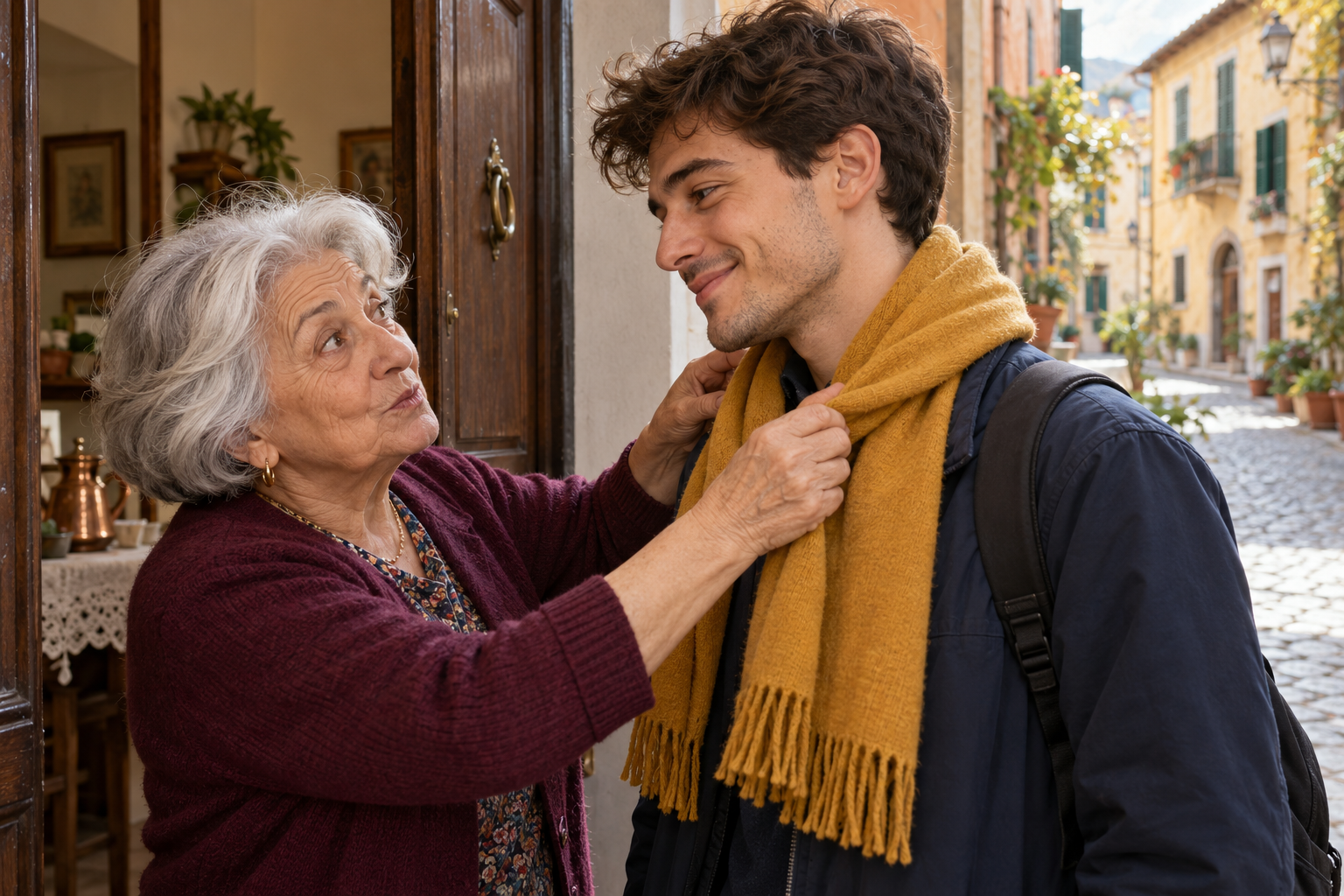
Running underneath many of these habits is a belief so central to the Italian grandmother’s worldview that it deserves its own place: the conviction that cold air, and above all a draft, the dreaded colpo d’aria, or hit of air, can make you ill. A draft on the back of the neck, a chill on the stomach, going out with wet hair, sitting on a cold step, letting cold air strike a sweaty body, all of these are, to the nonna, genuine routes to sickness, to be guarded against with scarves, with closed car windows, with stern warnings, and with an endless supply of advice.
Modern medicine does not support the idea that a draft itself causes illness, and this is the one habit that is more folklore than hygiene in the literal sense. But it is so woven into Italian domestic life, and so fiercely held by grandmothers, that no account of their rules would be complete without it, and it explains a great deal of the rest: the slippers against the cold floor, the care about wet hair, the layering, the horror of the sweaty chill. And there is a gentler truth inside the folklore, which is an attentiveness to the body, a habit of not letting yourself get chilled and run-down, that is not bad advice even if the specific mechanism is wrong. The grandmother guarding you from the colpo d’aria is, in her way, simply insisting that you take care of yourself, and if her science is shaky, her affection and her vigilance are entirely real. It is the most Italian of all her habits, and the one visitors remember most fondly, usually while being wrapped in an extra scarf whether they wanted one or not.
Taken together, these nine habits add up to a way of keeping house that is more deliberate and more ritualized, and in most respects more genuinely hygienic than the American default, and a visitor who adopts even a few of them tends to find their own home, and their own routines, quietly improved.

About the Author: Ruben, co-founder of Gamintraveler.com since 2014, is a seasoned traveler from Spain who has explored over 100 countries since 2009. Known for his extensive travel adventures across South America, Europe, the US, Australia, New Zealand, Asia, and Africa, Ruben combines his passion for adventurous yet sustainable living with his love for cycling, highlighted by his remarkable 5-month bicycle journey from Spain to Norway. He currently resides in Spain, where he continues sharing his travel experiences with his partner, Rachel, and their son, Han.