
Most Americans arriving in Europe expect the border to be a formality: hand over the passport, get it stamped, or these days scanned, and walk through. What almost none of them expect is that the officer at passport control has the legal right to ask a more personal question, which is whether they can prove they have enough money to pay for their own trip. It is a rule that has existed for years and is rarely invoked, so millions of travelers pass through never knowing it is there, but it is real, it is being enforced more actively than it used to be, and being unable to answer it can, in the worst case, get you turned around at the airport. There is also a second, entirely separate money question at the European border, about carrying large amounts of cash, that trips up a different set of travelers. Here is what both of these rules actually are, how likely you are to meet them, and how to make sure neither one ever causes you a problem. Neither is cause for alarm once you understand it, but both are the kind of thing you would much rather know about before you are standing at the desk than after.
What follows is the funds question most Americans do not know exists, how likely you really are to be asked, what actually counts as proof, the separate matter of the ten thousand euro cash rule, and how to sail through without worry.
The Question Most Americans Don’t Know Exists

The rule sits in the Schengen Borders Code, the common rulebook for the passport-free zone that covers most of Europe, and it applies to travelers from outside the EU, which includes Americans, Britons, Canadians, and other non-EU visitors arriving as tourists. Among the conditions for entry is that you must have sufficient means of subsistence for your intended stay, which in plain terms means enough money to support yourself for the length of your visit without working or becoming a burden, and a border officer is entitled to ask you to demonstrate it. Most people have simply never heard of this, because it is so seldom applied to obvious holidaymakers, but it is a genuine condition of entry, not a formality. It sits quietly in the rulebook alongside the passport and the onward ticket, one of several boxes an officer is entitled to tick, and the fact that they usually do not does not mean they cannot.
Each country sets its own figure for what counts as sufficient, expressed as an amount per day, and the numbers are higher than most travelers would guess. Spain has set its 2026 requirement at around a hundred and twenty euros per person per day, with a minimum floor of roughly eleven hundred euros per person for a trip regardless of how short it is, so even a long weekend is expected to be backed by over a thousand euros of demonstrable funds. Other countries set their own daily figures, some lower, but the principle is the same across the zone. It is worth being clear that this is not money you have to spend or hand over; it is money you must be able to show you have access to, a demonstration of means rather than a fee. Nobody at the border wants your money; they want evidence that you have enough of it not to become their problem during your stay. And crucially, coming from a wealthy country grants no automatic exemption, since the rule applies to all non-EU visitors regardless of nationality, and border officers are within their rights to ask an American exactly as they would anyone else.
How Likely You Really Are to Be Asked

Now the reassurance, because it matters for keeping this in proportion: the overwhelming majority of tourists are never asked, and you could travel to Europe many times over a lifetime and never once face the question. Border officers are not required to check everyone, and in practice they exercise discretion, waving through the vast majority of ordinary-looking travelers without a second thought. Plenty of people who have visited Europe dozens of times will tell you, correctly, that they have never been asked, and that is the normal experience. The mistake is to conclude from that common experience that the rule does not exist or cannot be enforced, because the people it does catch tend not to be the ones posting reassuringly on travel forums afterwards.
The catch is that this is changing at the margins, and the trend is toward more enforcement rather than less. After years of relaxed checks, some countries have been visibly tightening up, with Spain in particular issuing public reminders in 2026 that its officers may ask non-EU travelers to show funds, following well-publicized cases in which tourists were actually denied entry for failing to meet the daily threshold. The broader modernization of Europe’s borders is part of the backdrop here, with the new biometric Entry Exit System now recording arrivals digitally and a travel-authorization scheme on the way, all of which makes the border a more systematic place than the casual passport-stamp of old. So the honest picture is a balance: the question remains unlikely for a normal tourist, but it is no longer merely theoretical, the consequences of failing it are serious, running as far as refused entry and a black mark on your record, and the sensible response is not to worry but simply to be quietly prepared, since preparation costs nothing and removes the risk entirely. Think of it the way you think of travel insurance you never claim on, a small, easy precaution against an unlikely but genuinely bad outcome.
Why the Rule Exists at All
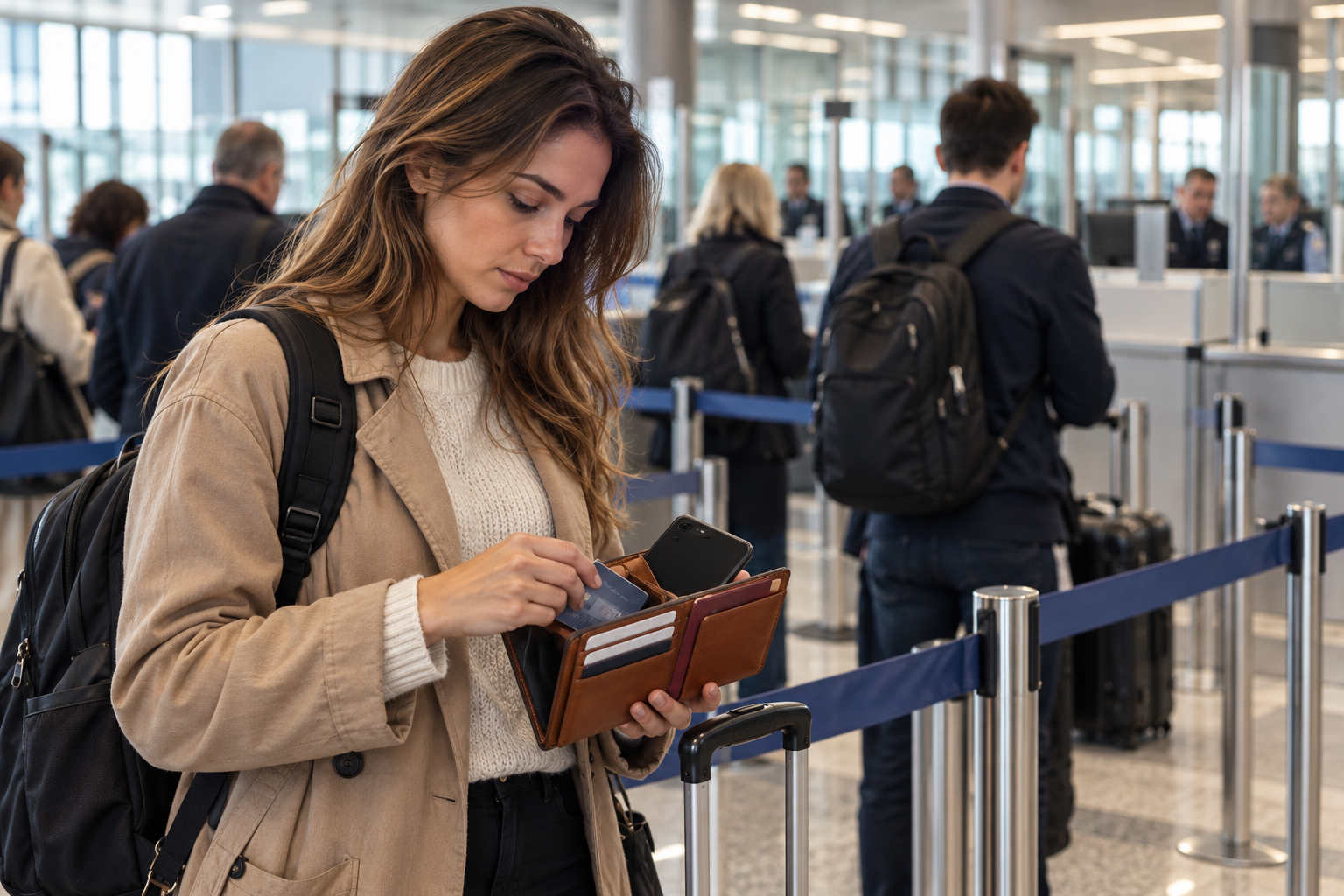
It helps to understand why this requirement is on the books, because once you see its purpose it stops feeling like a personal affront and starts looking like the routine screening it actually is. The rule is not designed to check whether tourists are rich; it is designed to filter out people who might overstay their welcome, work illegally, or run out of money and become stranded or destitute in a foreign country. A visitor who arrives with no evident means and no return ticket is exactly the profile the rule is meant to catch, because such a person might be planning to stay and work rather than to holiday and leave, and the funds check is one of the tools officers use to distinguish a genuine short-term visitor from a potential problem.
Seen that way, the question is less about you personally and more about the category you fall into, and the ordinary tourist with a card and a hotel booking sails through precisely because they so obviously are what they claim to be. This is also why the checks tend to fall harder on travelers who look, for whatever reason, like they might not leave on schedule, and more lightly on those who present as unmistakable holidaymakers. It is not a perfect or an especially comfortable system, and there is a real element of officer discretion in it that can feel arbitrary, but its logic is straightforward and worth holding in mind, because it tells you exactly what to do: make it easy and obvious that you are a genuine visitor with the means to fund your trip and a clear plan to go home, and you remove yourself from the category the rule is hunting for.
What Actually Counts as Proof
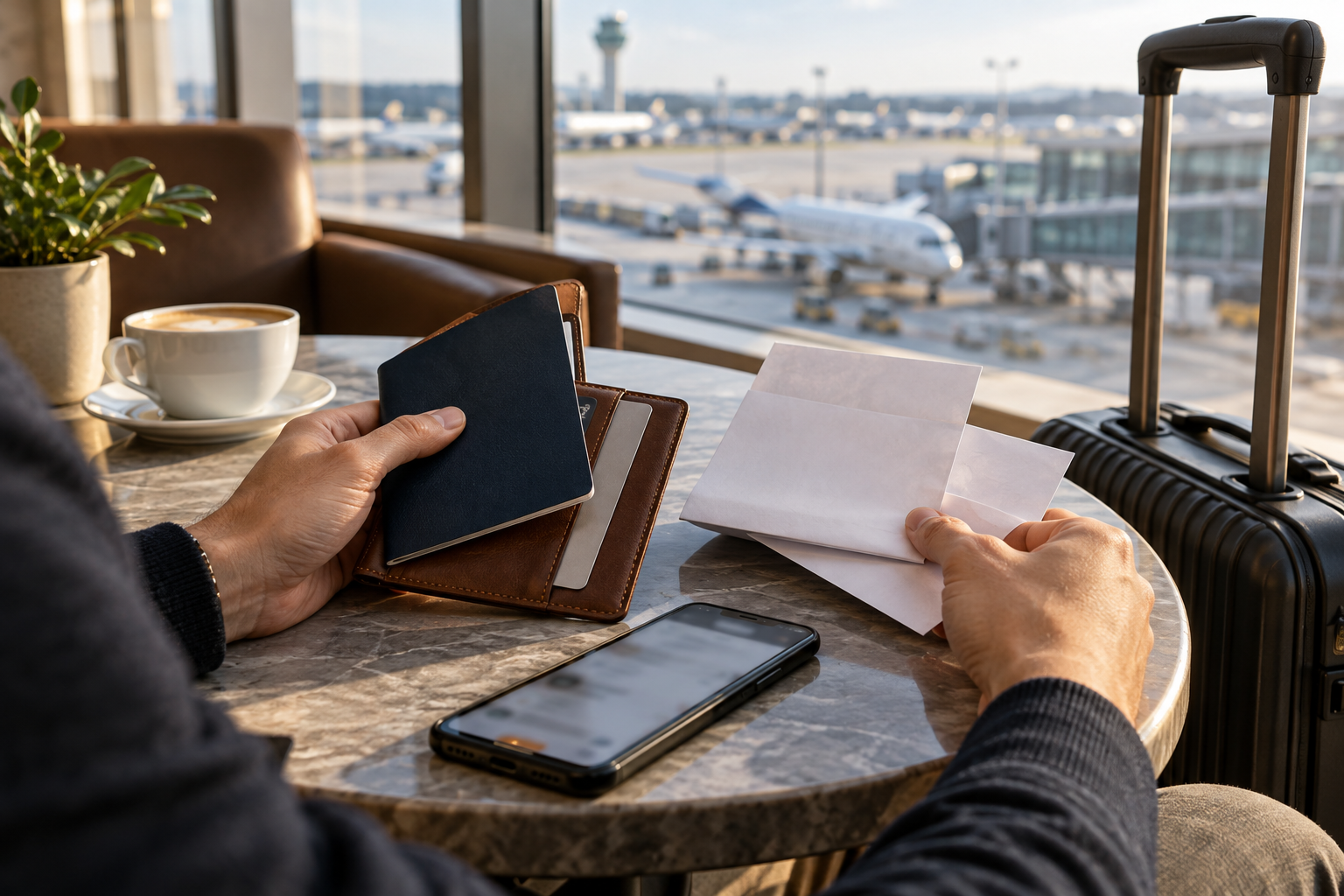
The good news is that satisfying this requirement, if you are ever asked, is easy, and it does not mean walking around with a brick of cash. The accepted forms of proof are broad and practical, and for most travelers they are things you would have anyway. A credit or debit card, ideally shown with a recent bank or card statement demonstrating the funds available on it, is perfectly acceptable, and for most people that alone settles the matter. Actual cash and traveler’s cheques count too, of course, but you are under no obligation to carry the whole sum in notes, and it is generally unwise to. Walking around a strange city with over a thousand euros in your pocket to satisfy a check you will almost certainly never face would be trading a tiny risk for a much larger one, which is exactly why the card-and-statement route is the sensible one.
Beyond the money itself, it helps to understand that the funds question usually comes as part of a small cluster of things an officer may ask to see, all aimed at confirming you are a genuine short-term visitor who will leave when you should. They may ask for your return or onward ticket, showing you plan to depart within your allowed time, for proof of your accommodation, such as a hotel booking or the address where you are staying, and sometimes for travel insurance. None of this is hard to provide if you have it ready, so the practical preparation is simply to travel with a payment card that has real funds behind it, to be able to pull up your return flight and your accommodation booking on your phone, and, if you want belt and braces, to have a bank statement accessible. Do that, and you can answer the entire cluster of questions in under a minute. The travelers who run into trouble are almost always those who arrive with a vague plan, no onward ticket, and no evident means, which understandably raises an officer’s suspicions, and not the ordinary tourist with a card and a hotel booking. If your trip looks organized and temporary, which for most holidays it genuinely is, you have very little to worry about; the checks are looking for disorganization and open-ended intentions, not for a fat bank balance.
The Separate Matter of the Ten Thousand Euro Rule
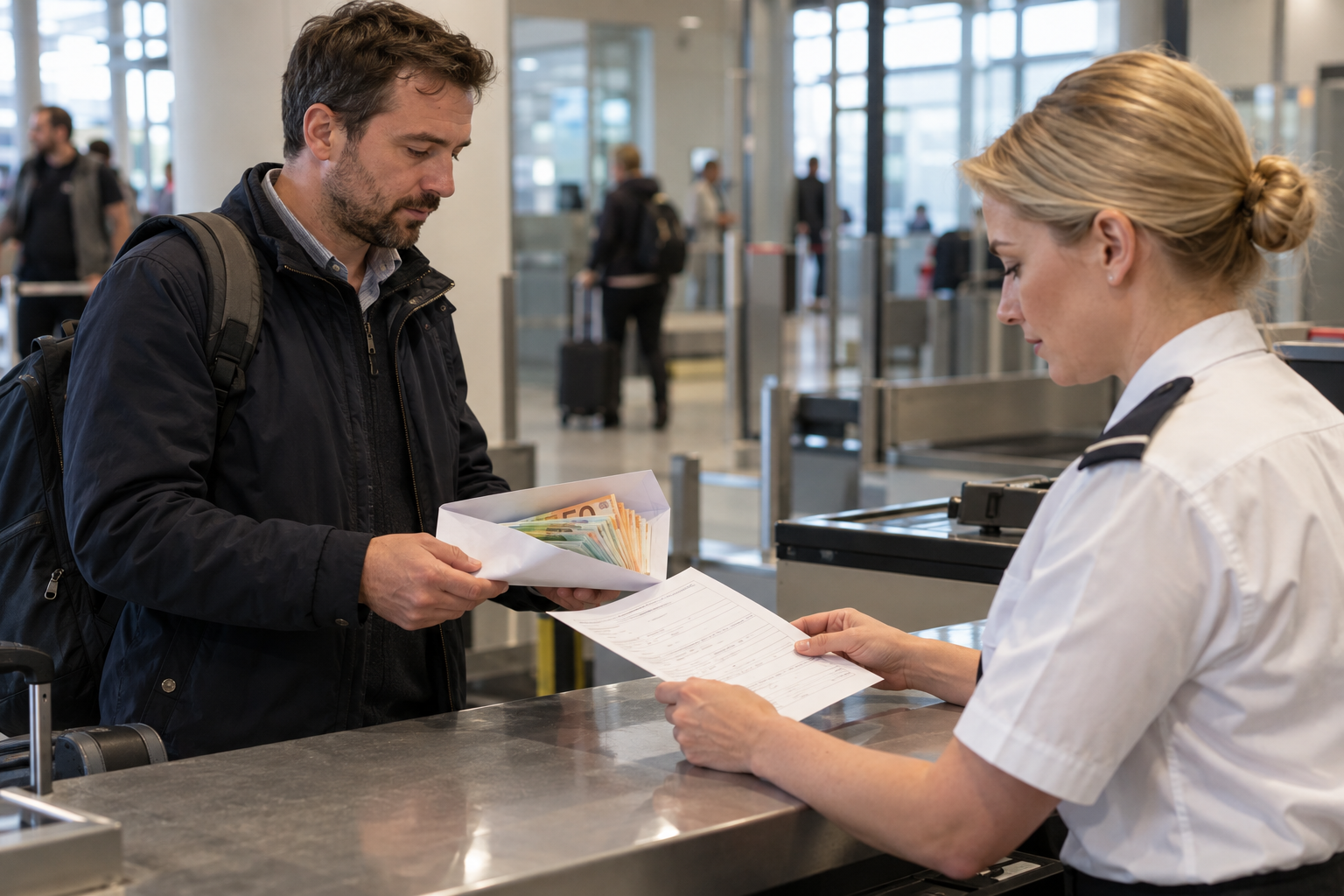
Now the second, entirely different money question at the European border, which catches a quite different traveler and is often confused with the first. If you are carrying ten thousand euros or more in cash, or the equivalent in another currency, into or out of the European Union, you are legally required to declare it to customs. This has nothing to do with proving you can afford your trip; it is an anti-money-laundering measure, aimed at tracking large movements of cash across the EU’s external border, and it applies to everyone, residents and visitors alike.
The key things to understand are that this is a declaration, not a tax or a charge, so declaring the money costs you nothing and you keep every cent of it; the requirement is simply that the authorities know it is moving.
The ten thousand figure covers not just banknotes but equivalents such as traveler’s cheques and certain other bearer instruments, and it is a threshold for the whole amount you are carrying, so it is worth counting everything. It is also, in most cases, a per-person threshold within a traveling group, but the rules on that can be strict about families pooling amounts to stay under the line, so anyone genuinely near the figure should check the specifics rather than assume. The consequence of failing to declare, on the other hand, is serious: undeclared cash over the threshold can be seized, and you can face substantial fines, all for the failure to fill in a simple form. For the ordinary tourist this rule is irrelevant, since almost no one travels with that much cash, but it matters a great deal to the particular travelers who do, perhaps carrying savings, a large cash gift, or funds for a major purchase abroad, and for them the rule is simple and absolute: if you are at or over ten thousand euros in cash, declare it, and the whole thing is a non-event. It is only hiding it that turns it into a problem. Customs officers are far more interested in cash that someone tried to sneak through than in cash that was declared openly, so the declaration is genuinely in your own interest as much as theirs.
How to Sail Through Without Worry

Put both rules together and the way to handle the money questions at the European border comes down to a short, easy checklist that takes the anxiety out of the whole thing. For the funds question, travel with a payment card that genuinely has money behind it, keep your return ticket and accommodation booking easy to reach on your phone, and know roughly the daily figure for the country you are entering, so that if you are the rare traveler who gets asked, you can answer calmly and completely. You do not need to carry the cash; you need to be able to show the means, and a card plus your bookings does that. It is genuinely that simple, and the whole thing can be handled with what is already in your wallet and on your phone, with nothing special to arrange in advance.
For the cash rule, the checklist is even simpler: if you happen to be carrying ten thousand euros or more, declare it to customs, and otherwise forget the rule exists. Neither of these should cast a shadow over a trip, because for the vast majority of travelers the funds question never comes and the cash rule never applies, and for the few who meet either, a minute of preparation or a single form is all it takes. The point of knowing about them in advance is not to travel in fear but the opposite: to strip away the small risk of an ugly surprise at the border, so that you can walk up to passport control knowing that whatever the officer asks, you have the answer ready. That quiet confidence, rather than any amount of worry, is what these rules really call for.

About the Author: Ruben, co-founder of Gamintraveler.com since 2014, is a seasoned traveler from Spain who has explored over 100 countries since 2009. Known for his extensive travel adventures across South America, Europe, the US, Australia, New Zealand, Asia, and Africa, Ruben combines his passion for adventurous yet sustainable living with his love for cycling, highlighted by his remarkable 5-month bicycle journey from Spain to Norway. He currently resides in Spain, where he continues sharing his travel experiences with his partner, Rachel, and their son, Han.