
Like a lot of people, I wear a watch that quietly counts my steps all day, a number I have always mostly ignored. But on a recent trip to Europe I happened to glance at it one evening and did a genuine double take, because the figure was one I had genuinely never come close to at home. Curious, I started paying attention, and then I compared it to a normal week back in the United States, and the gap was so large it stopped me in my tracks. On a good day sightseeing my way around a European city, I was walking several times as much as I did in an entire ordinary American day, and across the week the difference ran into the tens of thousands of steps.
Nobody had warned me about this, and yet once I saw it I could not unsee it, because it explained so much about why I always seem to feel so much better on these trips. Here is what the numbers actually showed, and why the gap has almost nothing to do with willpower. It turns out to be one of the more quietly useful things a fitness tracker has ever told me, and it changed how I think about both my trips and my ordinary days.
What follows is the numbers that stopped me, why the vacation figure runs so high, why the home figure sits so low, why none of it is about discipline, and what to actually do with the gap once you have seen it.
The Numbers That Stopped Me

Start with the baseline, because it is more sobering than most Americans realize. The average American walks somewhere between about three thousand and five thousand steps a day, a figure that sits below the threshold researchers use to define a sedentary lifestyle, and that puts the United States near the bottom of the developed world for daily walking. On my ordinary weeks at home, tracked honestly, I was right in that range, logging maybe four thousand steps on a typical workday spent mostly at a desk and in a car, and I had assumed that was simply what a normal day looked like. It had never occurred to me to question the figure, because everyone around me was living the same way, so four thousand steps felt not low but simply normal, the unremarkable baseline of an ordinary American life.
Then came the vacation. On my walking days around European cities, the watch regularly showed fifteen thousand, eighteen thousand, once even more than twenty-five thousand steps, without any of it feeling like exercise. I was not going to a gym or forcing myself to jog. I was just seeing the sights, wandering neighborhoods, walking to dinner, and getting from place to place the way you do in a European city, and the steps piled up on their own. Some evenings I would collapse into a chair pleasantly tired and only then look at the watch, genuinely surprised to find I had walked eight or ten miles without once thinking of it as effort.
Set a big sightseeing day of twenty-five thousand steps against a sedentary American day of three or four thousand, and you get a gap of well over twenty thousand steps in a single day, the twenty-two-thousand-step gap that nobody mentions when they talk about travel. It was the same body and the same person, moving several times as much, simply because of where I happened to be. That is the part worth sitting with, because it means the difference was not in me at all but in my surroundings, which is either liberating or a little unsettling depending on how you look at it.
Why the Vacation Number Runs So High
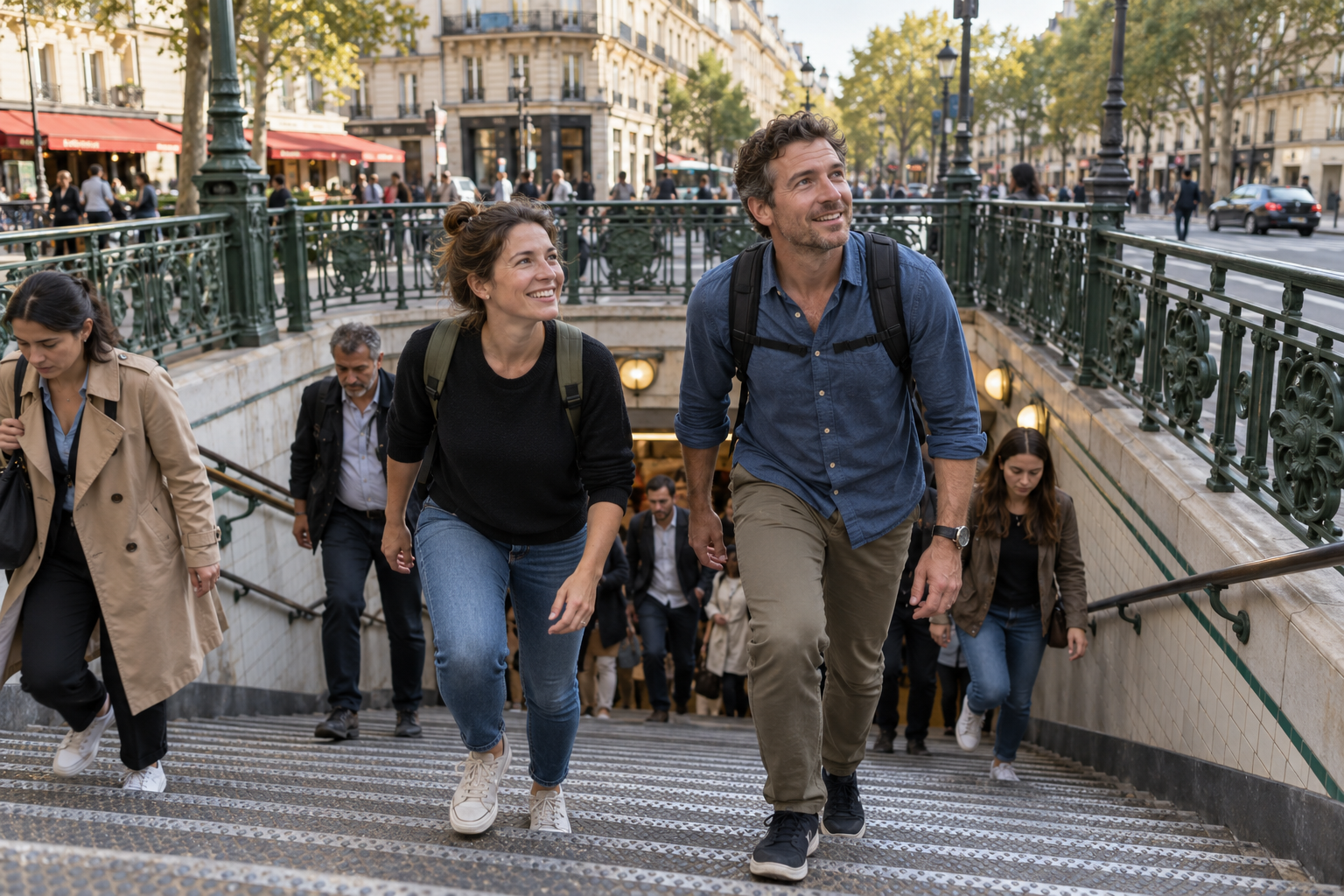
The reason the vacation figure soars is not that tourists are unusually energetic but that European cities are built for walking in a way most American places are not. In a typical European city, the things you want are close together and reachable on foot, the streets are made for pedestrians rather than cars, and the most natural and pleasant way to experience the place is simply to walk through it. You step out of your hotel and the cafe, the museum, the market, and the old quarter are all within a stroll, so you cover enormous distances without ever deciding to exercise, just by doing what you came to do. The city hands you the movement rather than asking you to schedule it, which is a completely different relationship with walking than the one most Americans have, where a walk is a deliberate act you have to carve time out for.
Sightseeing amplifies this enormously, because the whole activity of a city break is essentially walking with purpose, drifting from one sight to the next, ducking down interesting side streets, walking off a big lunch, strolling after dinner in the long European evening. The distances add up almost invisibly precisely because none of it registers as effort, since walking a mile to a beautiful square to see something you traveled across the world for does not feel like a workout, it feels like a holiday. Add in the fact that many European cities are best navigated by a combination of walking and public transport rather than by car, and every trip involves a walk to and from the station on top of everything else. The high number, in other words, is not a triumph of the traveler’s discipline but a gift of the place, which does the walking for you by making it the obvious thing to do.
Why the Home Number Sits So Low

The mirror image explains the low American figure, and it is just as much about the environment as the high one. American life, especially in the suburbs, is built around the car in a way that quietly designs walking out of the day. The distances between home, work, shops, and school are too great to walk, the roads often lack sidewalks entirely, and the whole landscape assumes you will drive from one parking lot to the next, so a person can go through an entire busy day and barely walk beyond the distance from a car door to a building door.
Layer a desk job on top of that car-dependent geography and the steps almost vanish. A day of sitting at a computer, bracketed by a drive to and from the office, offers almost no opportunity for incidental walking, the small journeys on foot that fill a European day simply do not exist, and even a person who feels busy and tired by evening may have physically moved very little.
The exhaustion of an American workday is real, but it is largely mental and logistical rather than physical, the tiredness of screens and traffic rather than of a body that has actually moved through the world. This is the crucial and slightly uncomfortable point, that the low number is not a sign of laziness or a lack of willpower any more than the vacation number is a sign of virtue. It is the built environment expressing itself through your legs, a landscape that makes driving the default and walking the exception, and it produces a sedentary day almost regardless of the person’s intentions. The place does the not-walking for you, just as surely as Europe does the walking. It is a strange thing to realize that the same person can be an active walker or a sedentary one depending on nothing more than which country they wake up in, but the numbers on the watch leave little room for doubt.
It Was Never About Willpower
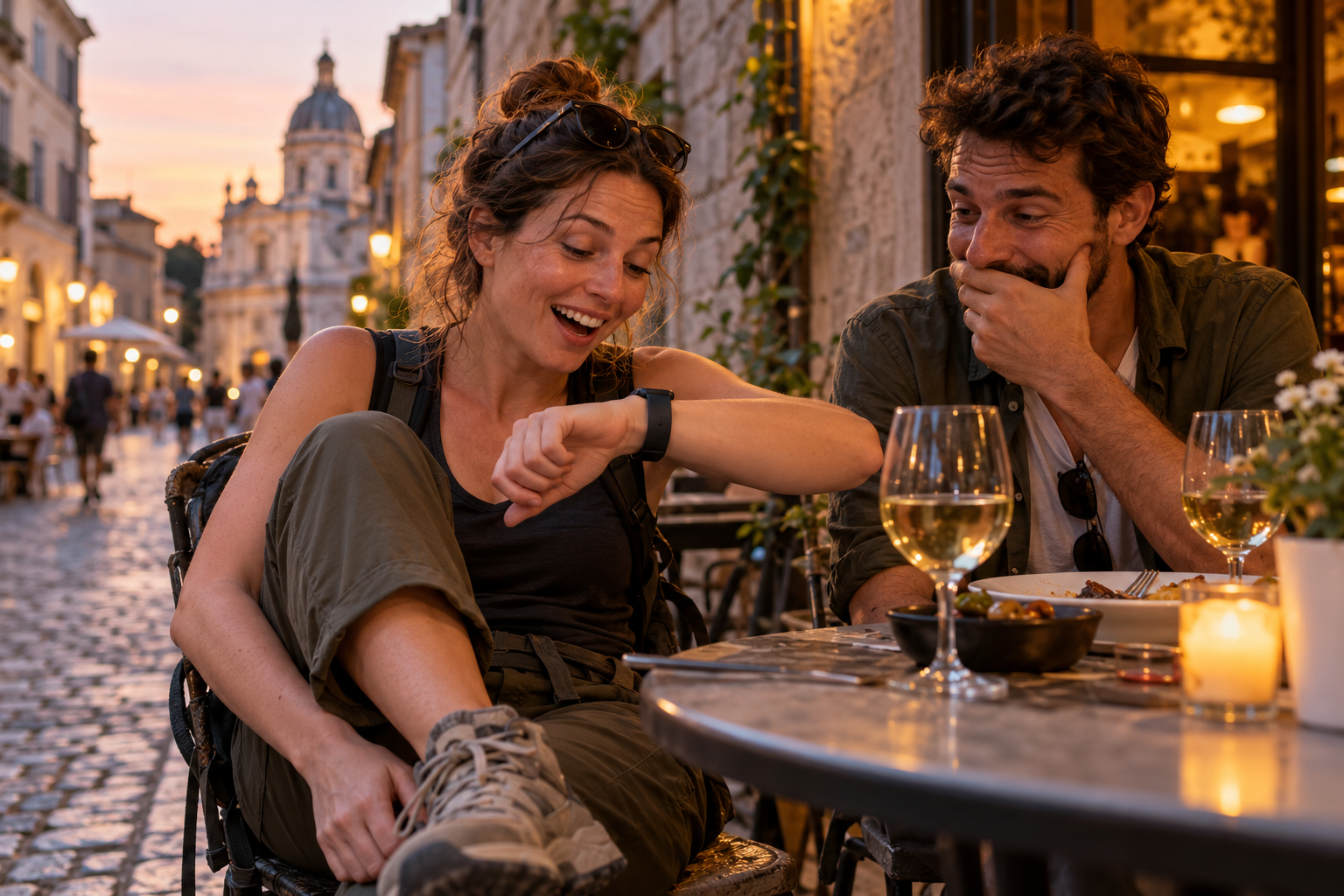
Once you see the gap clearly, the most important realization is that it was never a matter of discipline, and that reframing is genuinely freeing. On vacation you did not suddenly become a more motivated or health-conscious person who pushed themselves to move more. You simply spent time in a place that made walking the natural thing to do, and your step count quadrupled without any effort of will. Back home you are not failing to walk through laziness, you are living in a place that offers few chances to walk in the first place. Blaming yourself for a low step count in a car-dependent suburb is a bit like blaming yourself for getting wet in the rain without an umbrella, when the more useful thing is to notice the weather you are standing in. In both cases the environment, not the person, is doing most of the work.
This matters because so much health advice is framed as a personal failing to be fixed by trying harder, when a great deal of it is really about the world we move through. It also puts the famous step targets in useful perspective, since the widely quoted ten-thousand-step goal turns out to be a number invented for a marketing campaign rather than a medical necessity, and research suggests that the real health benefits arrive well below that, around seven thousand steps, with even modest amounts of extra walking helping meaningfully. The point is not to hit a magic figure or to burn a certain number of calories, and certainly not to feel guilty about the home number, but simply to notice how powerfully your surroundings shape how much you move, and how good all that effortless European walking makes you feel. Steps are just a convenient way of seeing something that was always true, that a life with more gentle movement folded into it tends to be a healthier and happier one, however you happen to arrange it. The vacation glow you come home with is, in large part, all those uncounted steps.
The Feeling You Bring Home

Numbers aside, the step gap explains something most travelers feel but rarely name, which is how unusually good the body feels on a European trip. People come home from these holidays talking about how well they slept, how their clothes seemed to fit a little better despite all the bread and wine, how they had more energy by the end of the trip than the start, and they tend to credit the food, the sunshine, or simply the break from work. Almost nobody says the real reason out loud, which is that they walked the equivalent of a half-marathon spread across most days without ever thinking of it as exercise. All of those help, but a huge and overlooked part of it is the walking, ten or fifteen thousand uncounted steps a day quietly doing what no gym membership at home ever quite manages.
This is the hidden engine of the vacation glow. Moving that much, gently and continuously, through pleasant surroundings is close to the ideal form of exercise, and doing it day after day for a week or two has real effects on sleep, mood, digestion, and energy that people feel clearly even if they never connect them to their step count. It is why a trip that involves indulgent meals and plenty of wine can still leave you feeling lighter and better than your careful life at home, because underneath the indulgence you were moving several times as much as usual. The meals get the credit and the blame, but the legs were quietly doing the real work all along. The irony is sharp: many people diet and go to the gym at home and feel worse than they do on a holiday where they eat richly and never exercise on purpose at all, and the difference is very largely those effortless European steps. Once you understand that, the vacation glow stops being a mystery and becomes something you can partly chase in ordinary life.
What to Do With the Gap

The natural question is what, if anything, to do with this knowledge, and the honest answer is that you cannot simply relocate your American life into a Spanish old town, much as some days you might like to. Most people are not going to move, and the car-dependent shape of American life is not something an individual can fix. So the first and most useful thing to do with the gap is simply to understand it, to stop treating your home step count as a personal shortcoming and start seeing it as the predictable output of where you live, which takes the guilt out of it and puts the attention where it belongs. Guilt rarely moves anyone; understanding sometimes does, and it is a far kinder place to start.
From there, a few gentle things follow without any need for grim discipline. You can look for the walkable corners of your own world and lean into them, choosing the neighborhood or the errand or the weekend outing that lets you move the way a European city makes you move, since the pleasure of that effortless walking is available at home too if you seek it out.
You can treat your travels as a reminder of how much better your body feels when the day is full of movement, and let that carry into small changes, a walk after dinner, parking farther away, a habit of going somewhere on foot when you reasonably can. None of these will turn a suburb into Seville, but they nudge the number up and, more to the point, bring back a little of that easy, pleasant motion the trip reminded you your body enjoys. And above all you can enjoy the vacation spike for what it is, one of the quiet reasons a trip to Europe leaves you feeling so unexpectedly well, and let the twenty-two-thousand-step days be part of what you go for. There is no need to turn any of it into a project or a guilt trip; noticing the gap, enjoying the movement, and carrying a little of it home is more than enough. The gap is real, it is mostly about the map rather than the man, and simply seeing it clearly is the first and best step.

About the Author: Ruben, co-founder of Gamintraveler.com since 2014, is a seasoned traveler from Spain who has explored over 100 countries since 2009. Known for his extensive travel adventures across South America, Europe, the US, Australia, New Zealand, Asia, and Africa, Ruben combines his passion for adventurous yet sustainable living with his love for cycling, highlighted by his remarkable 5-month bicycle journey from Spain to Norway. He currently resides in Spain, where he continues sharing his travel experiences with his partner, Rachel, and their son, Han.