
Renting a car in Europe promises freedom, the open road, the hill towns and coastlines no train reaches. Then you actually pull out of the rental lot, and within about ninety seconds you discover that driving in Europe is its own set of rules, reflexes, and habits, many of which run directly against everything an American driver takes for granted. It is not that European driving is worse, just that it is different, and some of those differences can genuinely rattle a visitor who was expecting driving to be driving. The good news is that none of it is beyond an ordinary driver once you know what is coming, and most of the terror comes from being surprised rather than from any real difficulty. Here are nine European driving habits and rules that unnerve American renters, and what you actually need to know about each. Read them before you pick up the keys and the ninety-second panic in the rental lot turns into quiet confidence instead.
What follows is the manual gearbox, priority to the right, the roundabouts, the ban on turning at red, the sacred passing lane, the tailgating and flashing, the restricted city zones, the tolls and stickers, and the impossibly narrow roads.
1. Almost Every Car Is a Manual
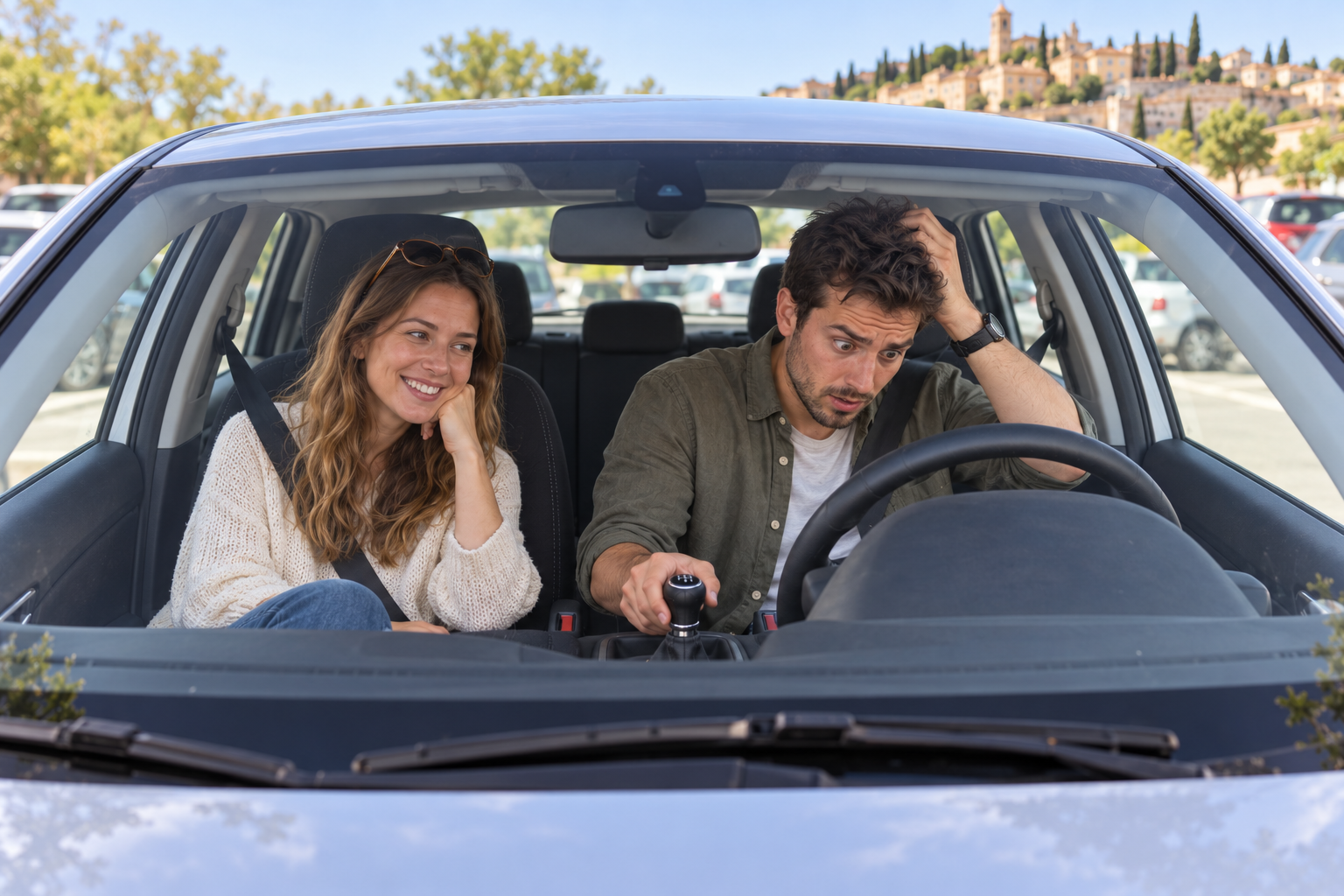
The first shock arrives before you have even left the lot, when you discover that the standard rental car in Europe has three pedals and a stick. Manual transmissions are the default across Europe, automatics are the minority and cost noticeably more to rent, and if you did not specifically book and pay for an automatic, you may find yourself facing a gearbox you have not touched since a nervous afternoon in your teens, or never learned at all. For an American, most of whom have driven nothing but automatics their whole lives, being handed a manual for a mountain road in a foreign country is a genuine jolt.
The practical answer is simple: if you cannot confidently drive a stick, book an automatic specifically and well in advance, accept that it will cost more, and confirm it on the reservation, because turning up expecting one and finding a manual is a real and common way to start a trip badly. There is a whole deeper story to why Europe stuck with manuals when America went automatic, bound up with fuel costs, driving culture, and history, but for the renter the point is purely practical: check what you are getting, and do not assume an automatic is standard, because it emphatically is not.
2. Priority to the Right
Of all the rules that catch Americans out, this is the one most likely to cause an actual accident, because it is both unfamiliar and absolute. In much of continental Europe there is a default rule called priority to the right, under which, at an unmarked intersection, you must yield to any vehicle approaching from your right, regardless of which road looks bigger or more important. An American instinct that the larger road has the right of way is simply wrong here, and drivers have been found fully at fault in crashes for failing to yield to a car emerging from a small street on their right.
The rule is the underlying default that applies wherever signs or lights do not say otherwise, so on major roads and at signaled junctions you generally will not need it, but on smaller streets and in towns it is live and it is strict. The safe habit is to treat every unmarked junction with real caution and to glance right before proceeding, assuming that a car coming from your right has the right to go first unless something clearly tells you otherwise. It feels counterintuitive to an American used to stop signs and the primacy of the through road, which is exactly why it causes so much trouble, and why it is worth fixing firmly in mind before you drive. When in doubt at a junction with no signs and no lights, yield; caution here costs you a couple of seconds, while confidence can cost you a fender and the blame.
3. Roundabouts Instead of Intersections
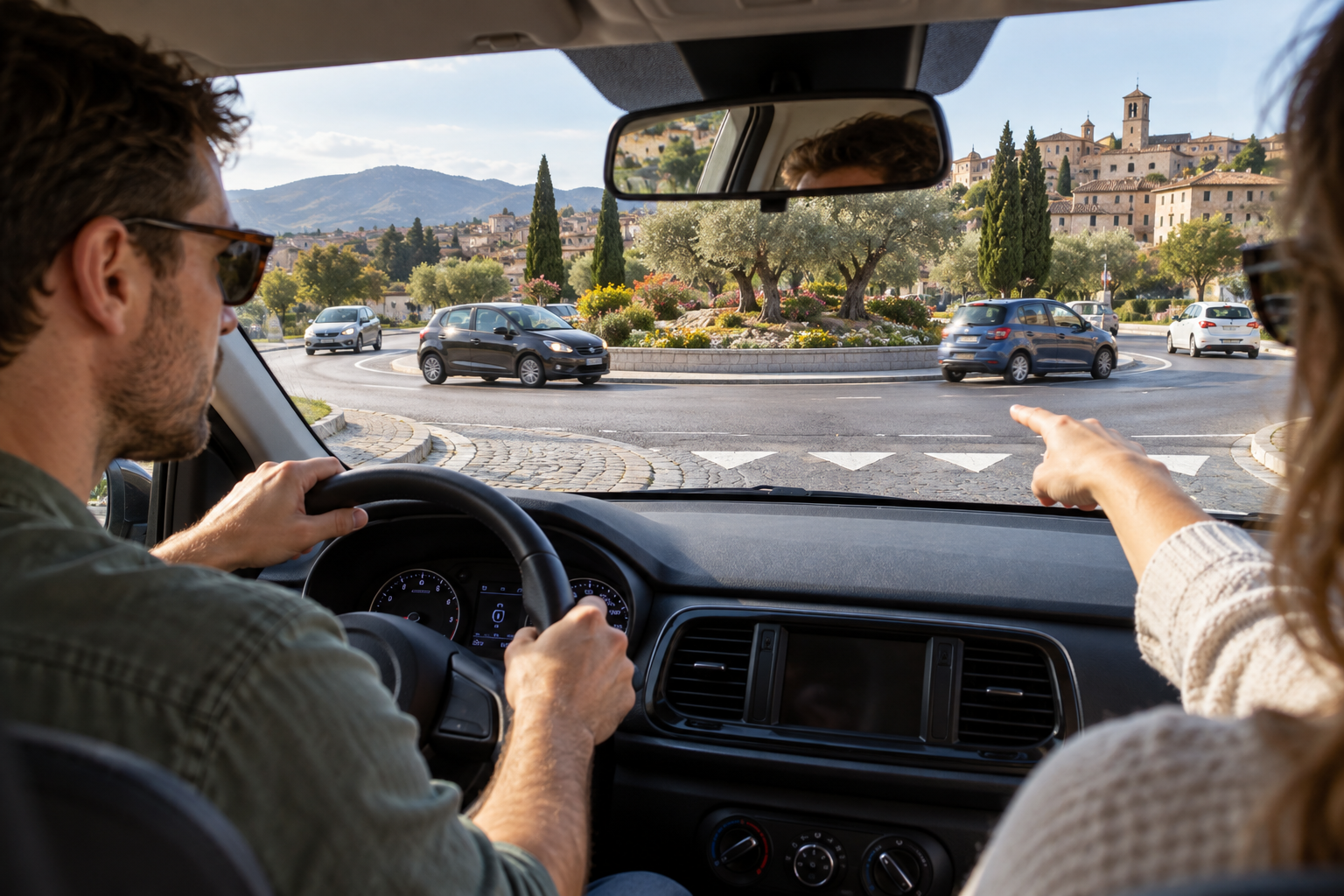
Where an American city puts a four-way stop or a set of traffic lights, Europe very often puts a roundabout, and for a driver who did not grow up with them they can be genuinely intimidating the first few times. Traffic flows continuously around a central island, and the basic rule in the modern European roundabout is that traffic already in the circle has priority, so you yield to your left as you enter and merge into the flow when there is a gap, rather than stopping and taking turns as at an American four-way.
For the uninitiated, the combination of yielding, merging, choosing the right lane, and picking your exit all at speed can feel like a lot at once, especially at the larger multi-lane roundabouts. But roundabouts are, once you get the hang of them, genuinely efficient and rather satisfying, keeping traffic moving without the stop-start of intersections, and many Americans who arrive dreading them leave rather fond of them. The keys are to slow down and yield on entry, signal your exit as you leave, and, if you miss your exit, simply go around again rather than panicking, which is one of the quiet pleasures of the roundabout: a mistake just means another lap.
4. You Cannot Turn on Red
A small but genuinely dangerous habit to unlearn is the American right turn on red. In the United States, turning right at a red light after stopping is legal almost everywhere and completely automatic for most drivers. In Europe, it is generally not allowed at all: a red light means stop and wait, full stop, and there is usually no turning on red in any direction. An American who rolls through a right on red out of pure habit is running a red light as far as European law and other drivers are concerned.
This one is dangerous precisely because it is so deeply ingrained that you can do it without thinking, so the habit to build is to treat every red light as an absolute stop until it turns green, no matter how clear the road looks. There are occasional local exceptions, such as a separate flashing amber arrow in some countries that permits a filtered turn without priority, but these are clearly signaled and rare, and the safe default everywhere is simply that red means stop and you do not turn. Catch yourself the first few times, and it quickly becomes second nature. It helps to say it out loud on the first day, no turning on red, until the old reflex is safely overridden.
5. The Left Lane Is Sacred
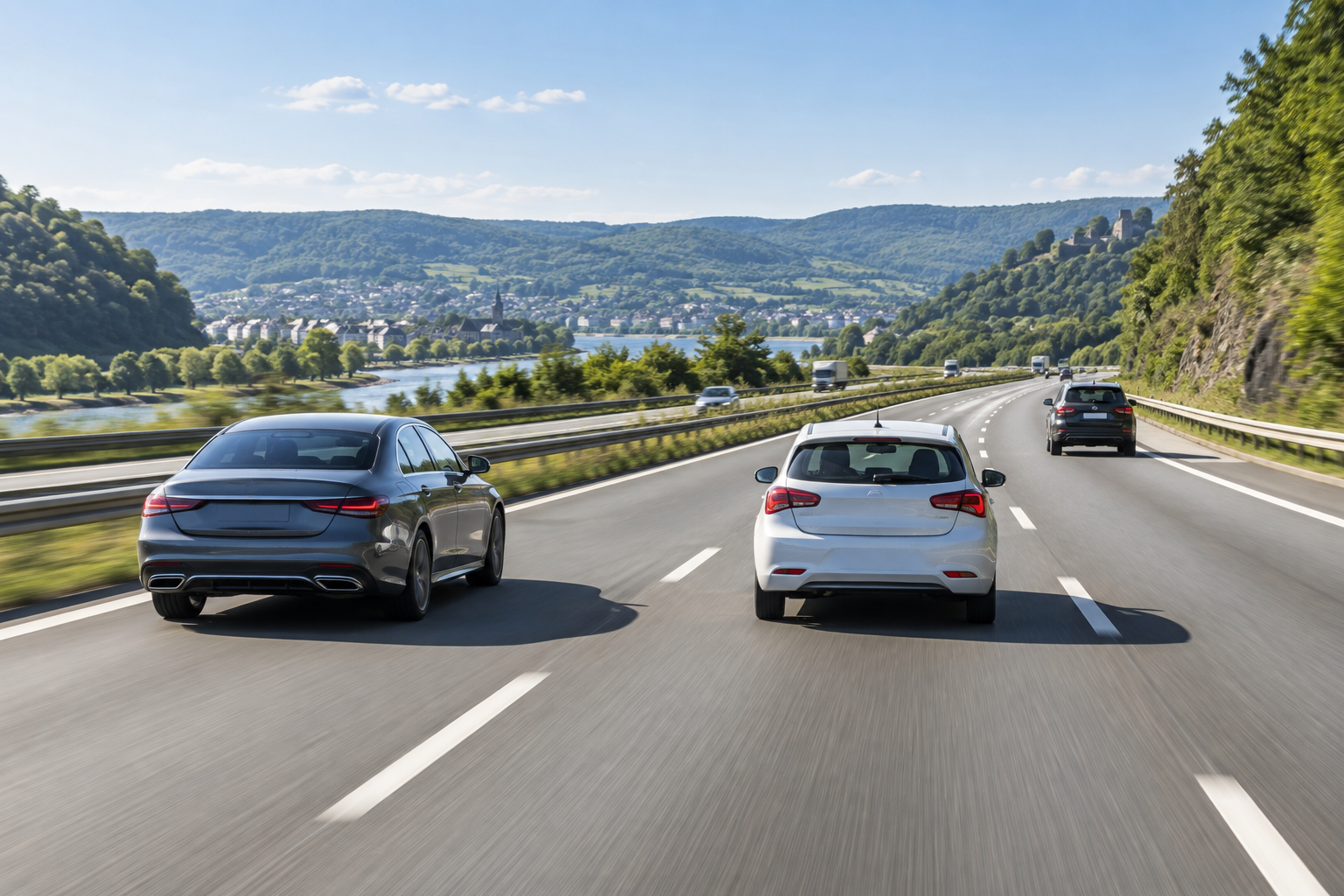
On European motorways, the left lane is for passing and for passing only, and treating it as a general cruising lane, as many Americans do at home, will earn you angry lights and gestures and is genuinely unsafe. The rule, followed with real discipline across the continent and especially in Germany, is that you drive in the rightmost available lane and move left only to overtake, returning to the right as soon as you have passed. Lingering in the left lane is considered both rude and dangerous, and on faster roads it is actively hazardous.
That hazard is sharpest on the German autobahn, where many stretches have no general speed limit and cars can close on you from behind at astonishing speed, so a car dawdling in the left lane is a serious danger to everyone. Even where there are limits, the left-lane discipline holds, and the American habit of settling into the left lane for miles marks you instantly and dangerously as someone who does not understand the system. The habit to adopt is strict: overtake, then move right, every time, and always check your mirrors carefully before pulling out, because something may be coming up behind you far faster than you expect.
6. The Tailgating and the Flashing Lights
Drivers in parts of Europe, Italy above all, drive with an assertiveness that can genuinely alarm a visitor, and two habits in particular unnerve Americans: close tailgating and the flashing of headlights. You will be driving along, glance in the mirror, and find a car sitting alarmingly close behind you, and moments later its headlights will flash at you. To an American, flashing headlights can read as a warning or an aggression, but here it usually means something practical: move over and let me pass.
Understanding this defuses most of the alarm. The flashing driver is not threatening you; they are, in their own direct way, asking you to move right so they can overtake, which ties directly back to the left-lane rule, and the correct response is to move over when you safely can. The tailgating, while genuinely too close by American standards and not a habit to imitate, is usually just the local driving culture rather than road rage aimed at you personally. The right approach is not to be intimidated into unsafe driving, but to keep calm, stay in the right lane where you are not in anyone’s way, let the fast and impatient go past, and drive your own steady drive, which keeps you both safe and out of the little dramas playing out around you.
7. The Zones You Get Fined for Entering
Here is the habit that costs American renters the most money, often without their ever knowing they did anything wrong until a fine arrives months later. Many European cities, most famously in Italy, where they are called ZTL, or limited traffic zones, restrict the historic center to authorized vehicles only, and the boundaries are watched by cameras that automatically fine any unauthorized car that drives in. Drive into one, even by accident, even for a moment, even just once, and you are fined, and a rental driver who wanders into a ZTL is committing what is by some measures the single most common fine that tourists incur, more than speeding or parking.
The cruelty of it is the delay and the ignorance: the fine is issued automatically by camera, passed to the rental company, and forwarded to you weeks or months later with an added administration fee, so you often do not even realize you did anything until the charge appears long after you are home. These zones exist in Italy, Spain, France, Portugal, and elsewhere under various names, usually marked by signs that mean little to a foreign eye. The only safe habit is caution: do not drive into historic city centers unless you are certain you are allowed, park outside the old town and walk or use transit in, and if you see a sign you do not understand near a city center, assume it may be restricting entry and do not proceed. When in doubt, stay out.
8. Tolls, Stickers, and Mystery Payments
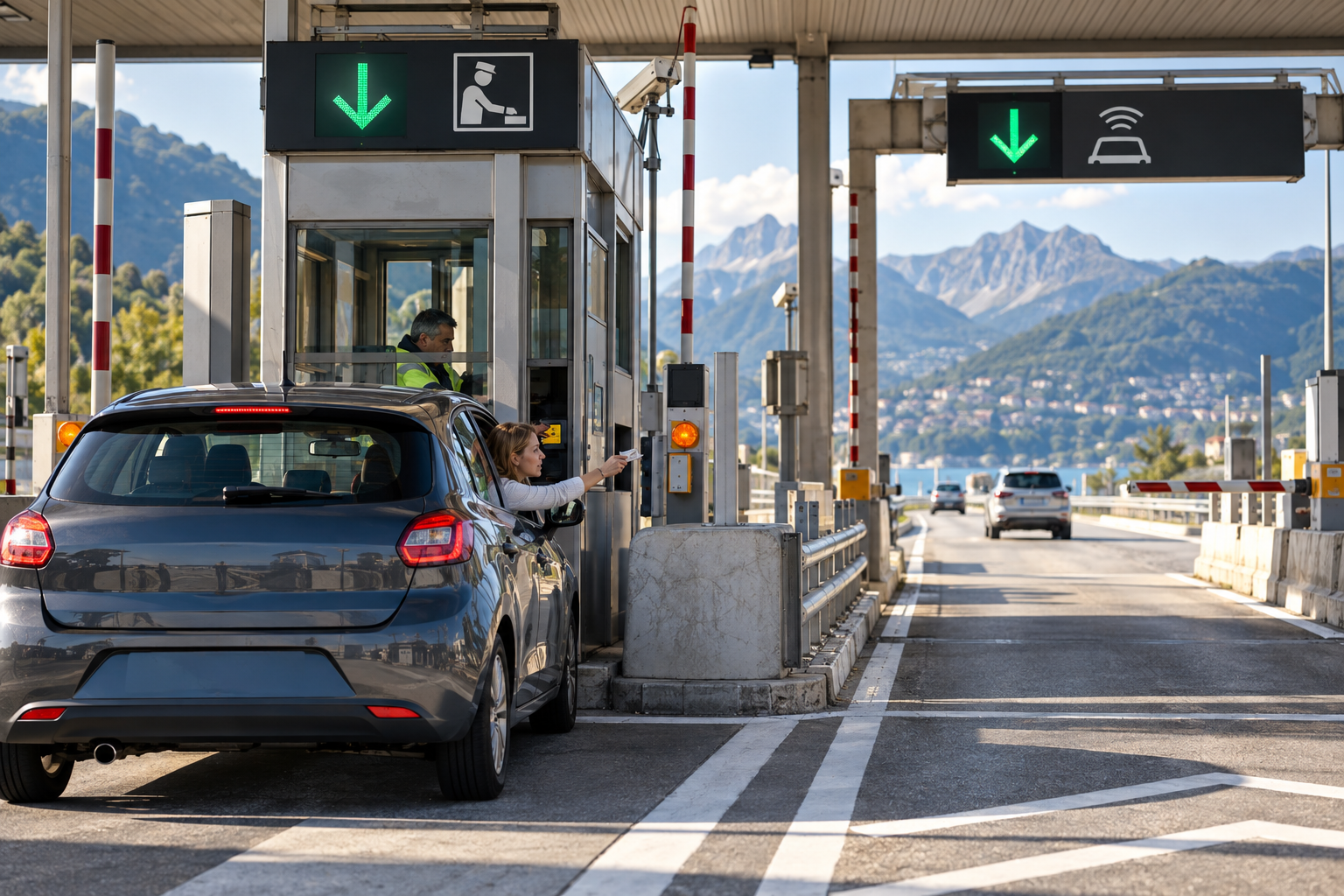
Paying to use the roads in Europe is more varied and more confusing than in America, and getting it wrong ranges from awkward to expensive. Some countries charge tolls on their motorways through booths or electronic systems, as in Italy, France, Spain, and Portugal, where you take a ticket and pay on exit, or where cameras and transponders bill you automatically. Others do not use tolls but instead require you to buy and display a sticker called a vignette on your windshield to use the motorways at all, as in Switzerland, Austria, the Czech Republic, Hungary, Slovenia, and more, with real fines for driving the motorway without one.
The traps here are specific and worth knowing. Do not drive into a country that requires a vignette without buying one first, since the fine for going without dwarfs the modest cost of the sticker. At toll plazas, do not stray into the electronic-only lanes reserved for transponders you do not have, a common and embarrassing mistake, and keep a card or some cash ready for the manual lanes. And be aware that some rental cars come with a toll transponder that bills you conveniently but with fees attached. The overall habit is to research, before you drive, exactly how the country or countries on your route charge for their roads, because the systems differ from border to border and the assumptions you carry from one will not hold in the next.
9. The Roads Are Impossibly Narrow
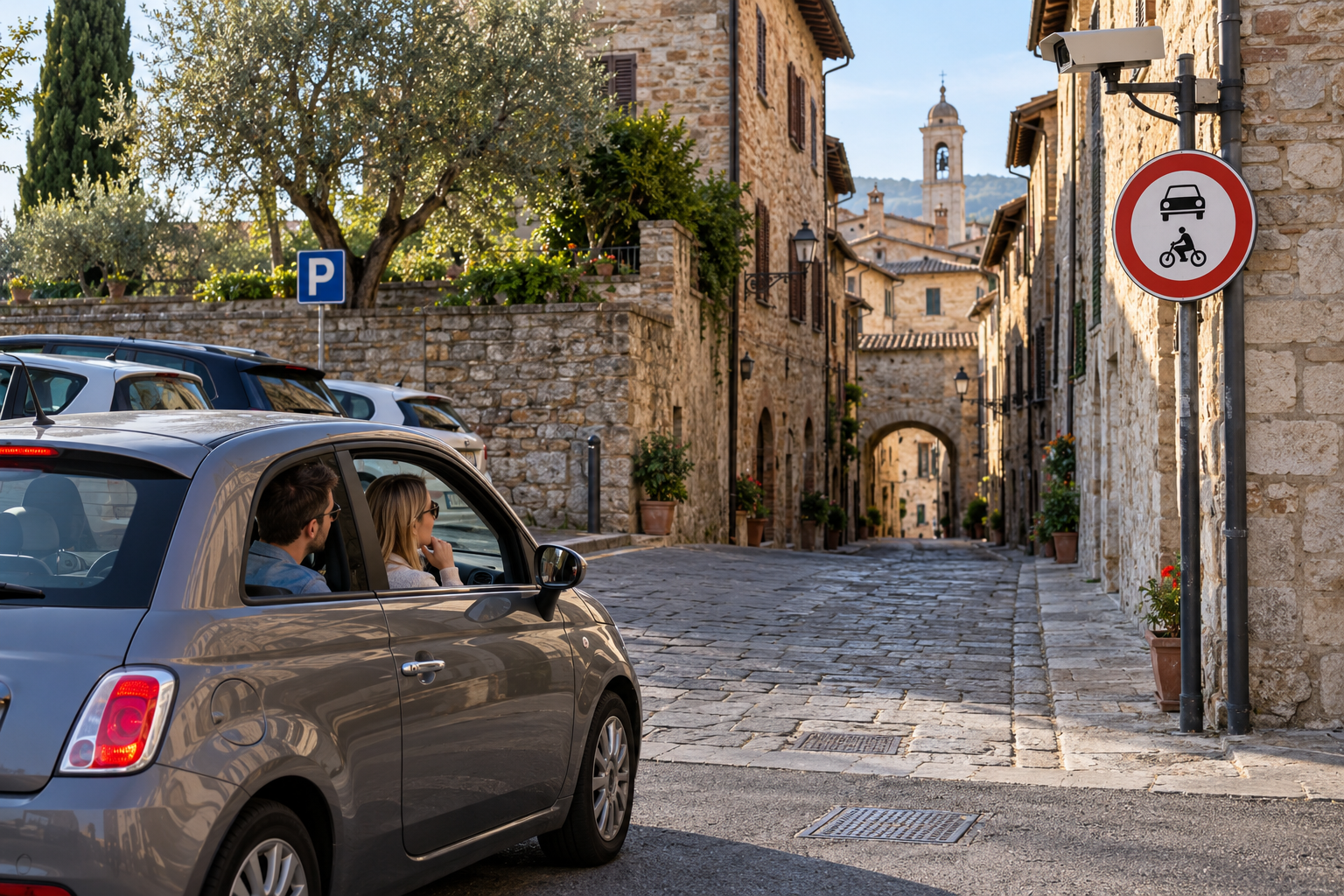
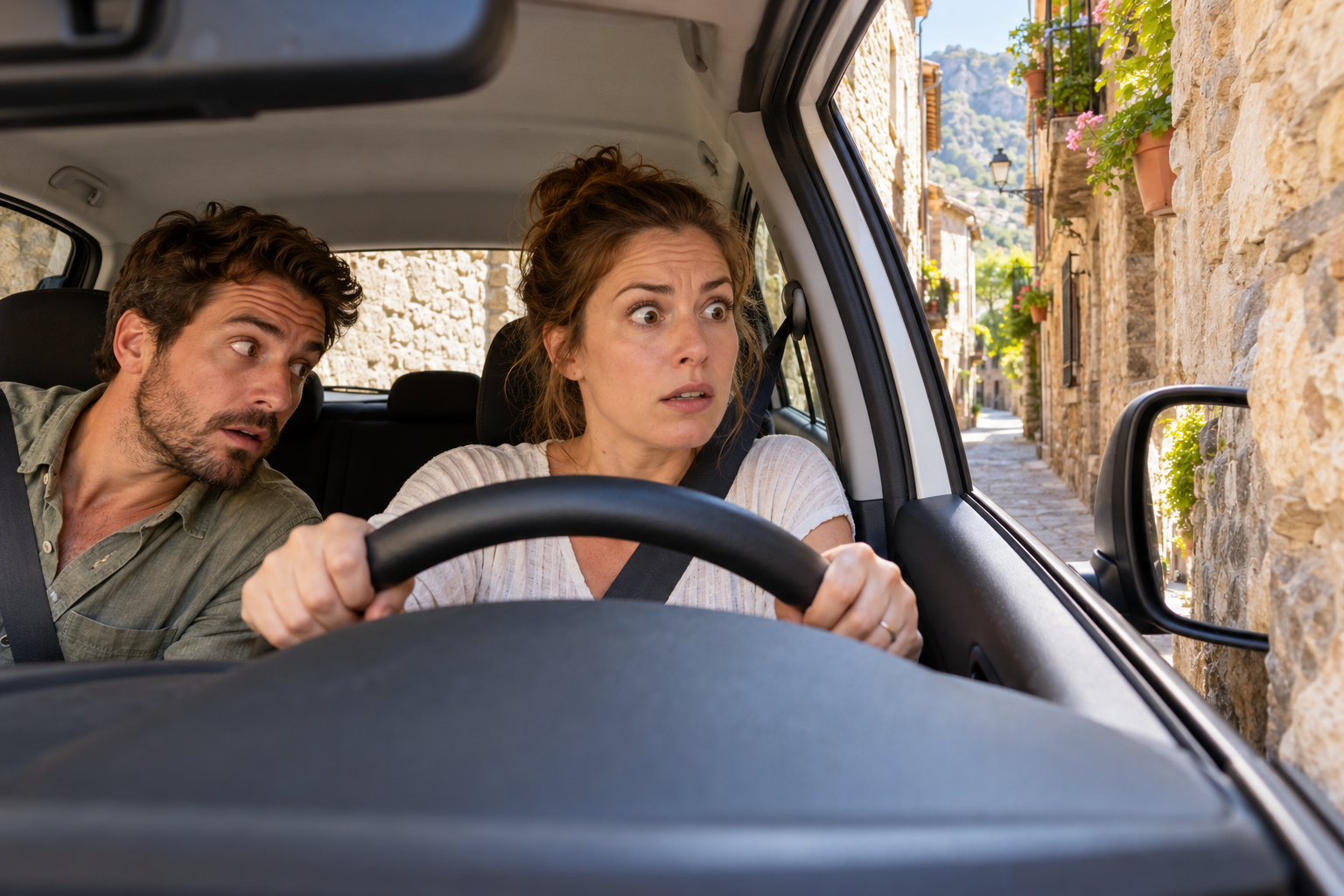
Finally, there is the sheer, physical narrowness of a great deal of European road and parking, which can unnerve an American used to wide lanes and generous spaces more than any rule. The historic centers of old towns, all those beautiful medieval streets, were built for carts and pedestrians, not for cars, and driving a rental through them can mean inching down a stone lane with wing mirrors nearly brushing the walls on both sides. Rural and mountain roads add their own challenges, often narrow, winding, and steep, with sharp bends and sometimes little between you and a considerable drop.
Parking, too, is frequently a test, with spaces sized for the small cars Europeans favor and often none of the room an American expects. The habits that help are to rent the smallest car that suits your needs rather than the big one instinct suggests, since a smaller car is dramatically easier on these roads and in these spaces, to slow right down and take narrow and mountain roads with patience and care, and to be ready to fold in your mirrors and to reverse to a passing place on single-track lanes.
Much of the anxiety here comes from driving too fast for the conditions; slow down, respect the width, choose a small car, and the narrow road that terrified you becomes simply the price of reaching some of the most beautiful places in the world, which no wide American highway could ever take you to. And that, in the end, is the whole bargain of driving in Europe: a handful of unfamiliar habits to learn, in exchange for the villages, coasts, and mountain roads that are the entire reason you rented the car in the first place.

About the Author: Ruben, co-founder of Gamintraveler.com since 2014, is a seasoned traveler from Spain who has explored over 100 countries since 2009. Known for his extensive travel adventures across South America, Europe, the US, Australia, New Zealand, Asia, and Africa, Ruben combines his passion for adventurous yet sustainable living with his love for cycling, highlighted by his remarkable 5-month bicycle journey from Spain to Norway. He currently resides in Spain, where he continues sharing his travel experiences with his partner, Rachel, and their son, Han.