
Ask an American what they expect from taxes in Europe and they will tell you, with some confidence, that Europeans are taxed to the hilt, that everything costs more once the government takes its cut, and that moving there simply means handing over a bigger slice of just about everything you earn and own.
So it comes as a genuine jolt to run one particular comparison and find the opposite. Take a house worth four hundred thousand dollars in Ohio and then a broadly comparable one in the Andalucia region of southern Spain, look only at the plain annual property tax bill on each of them, and the American house turns out to be taxed dramatically more heavily than the Spanish one, often by several times over. It is the reverse of what almost everyone assumes, a small hole blown in the belief that Europe always taxes more, and it is worth walking through carefully, because the full picture is more interesting than the headline. The headline alone could mislead as easily as it enlightens, so the honest version needs both the striking number and the context around it. Here are the two bills side by side, and what they do and do not tell you. The comparison is a useful one precisely because property tax is so concrete and so universal, a cost every homeowner knows in their bones, which makes the gap impossible to wave away.
What follows is the two tax bills compared, why the Spanish one is so low, why it is such a shock to American assumptions, the ways Spain does get you elsewhere, and what it all means for someone thinking of buying abroad.
The Two Bills, Side by Side
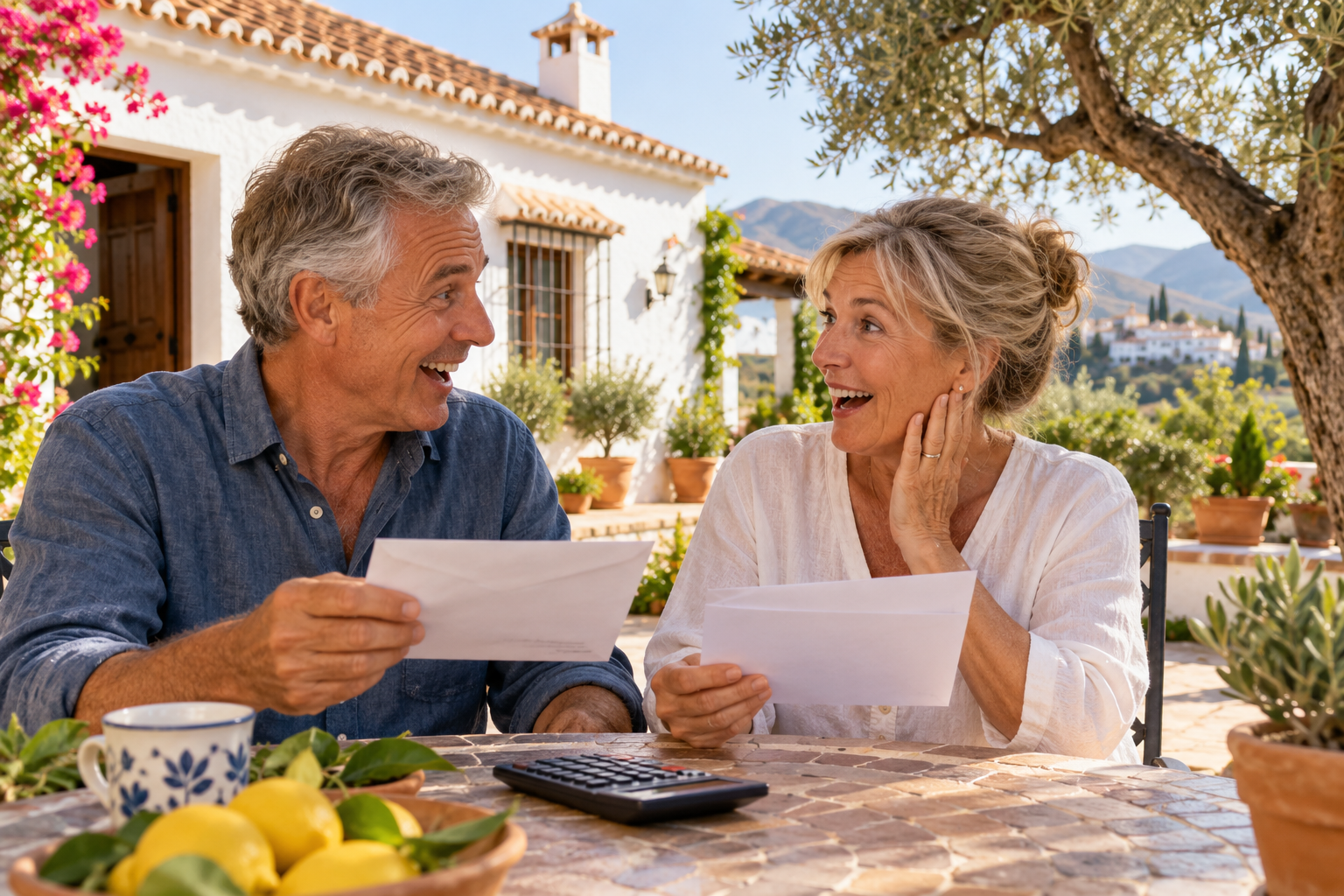
Start with Ohio, a fairly ordinary American state for property taxes, neither the very highest nor the lowest. Ohio’s effective property tax rate averages somewhere around one and a third to one and a half percent of a home’s market value, with plenty of variation by county, and some areas, like the counties around Cleveland, running higher still. On a four hundred thousand dollar house, that translates to an annual property tax bill of roughly five to six thousand dollars, year after year, for as long as you own the home. That is a normal, unremarkable American property tax bill, the kind millions of homeowners budget for without a second thought. It arrives every year regardless of income, whether you are working or retired, flush or struggling, which is part of what makes a high property tax such a persistent weight, especially on older people living on fixed incomes in homes they long ago paid off.
Now cross to Andalucia and look at the Spanish equivalent, the annual property tax known as the IBI, and the number drops steeply. Depending on the municipality and the specifics of the property, the annual IBI on a comparable four hundred thousand euro home in the region commonly lands in the low hundreds to perhaps fifteen hundred euros a year, frequently well under half what the Ohio house pays, and sometimes far less than that. The exact figure varies, and Spanish property tax has its own complexities, but the broad comparison is not close: the annual tax of simply owning the home is dramatically lower in southern Spain, on the same rough value of house. An American selling up in Ohio and buying in Andalucia could find their annual property tax bill cut to a fraction of what it was, which is precisely the reverse of what they braced for. For someone who has spent decades watching a five-figure property tax bill arrive every single year, the arithmetic can be genuinely startling, the kind of number you double-check because it seems too good to be true.
Why the Spanish Bill Is So Low

The reason the Spanish number comes out so low is not that Spain forgot to tax property but that it taxes it on a different and much lower basis, and understanding this is the key to the whole comparison. The Spanish IBI is not calculated on the market value of your home, the price you actually paid or could sell for, but on something called the cadastral value, an official value assigned to the property by the national land registry. Crucially, that cadastral value is typically set well below the real market value, often a third to two thirds of it, so the tax is applied to a much smaller number than the home is actually worth.
On top of that lower base, the tax rates themselves are modest, generally a fraction of a percent to around one percent of the cadastral value, set by each municipality. Put the two together, a rate that is already low applied to a value that is already well below market, and the effective tax on what the house is really worth becomes very small indeed, which is why the annual bill can be so startlingly modest. This is the mechanism behind the reverse shock: it is not that Spain is uniquely generous but that its property tax is structured to fall lightly, on a discounted value at a modest rate, in a way that produces bills a fraction the size of the American equivalent. There is nothing sneaky about it; the cadastral value is a matter of public record and the rates are published, so the low bill is simply the transparent result of how the system is built, not a loophole or a trick. Because the cadastral values are updated only periodically and often lag well behind rising market prices, the gap between what a home is worth and what it is taxed on can grow even wider over time, keeping Spanish property tax low almost by design. A house whose market value has doubled may still be taxed on a cadastral value set years earlier, so the effective rate quietly falls as prices climb, the opposite of what many American homeowners experience when rising values drag their tax bills up with them.
The Reverse Shock
It is worth sitting with just how thoroughly this upends the standard American assumption, because the assumption is so deeply held. The mental model most Americans carry is simple: the United States is a relatively low-tax country, and Europe, with its generous public services, pays for them by taxing its people heavily across the board. From that starting point, it seems obvious that property, like everything else, must be taxed more heavily in Europe, and an American contemplating a move abroad often braces for a bigger annual bill on their home.
The property tax comparison stands that expectation on its head. Here is one very concrete, very ordinary cost of owning a home, and on this particular measure the supposedly high-tax European country charges a small fraction of what the supposedly low-tax American state does.
It is a genuine reverse shock, the discovery that on your annual property tax bill, at least, you may be far better off in southern Spain than in Ohio. And because it runs so directly against expectation, it tends to stick in the mind, one of those facts that quietly rearranges how a person thinks about the whole question of moving abroad. This does not mean the whole American mental model is wrong, since there is real truth in it on other taxes, but it does mean the model is too crude, and that Europe does not simply tax everything more. Some things it taxes less, sometimes dramatically so, and annual property tax turns out to be one of the clearest examples, which is exactly why it makes such an effective jolt to a lazy assumption. The lesson is not that Europe is secretly cheap but that tax systems are made of very different pieces, and comparing one country to another only makes sense piece by piece rather than as a single vague verdict.
It’s Not Just Ohio
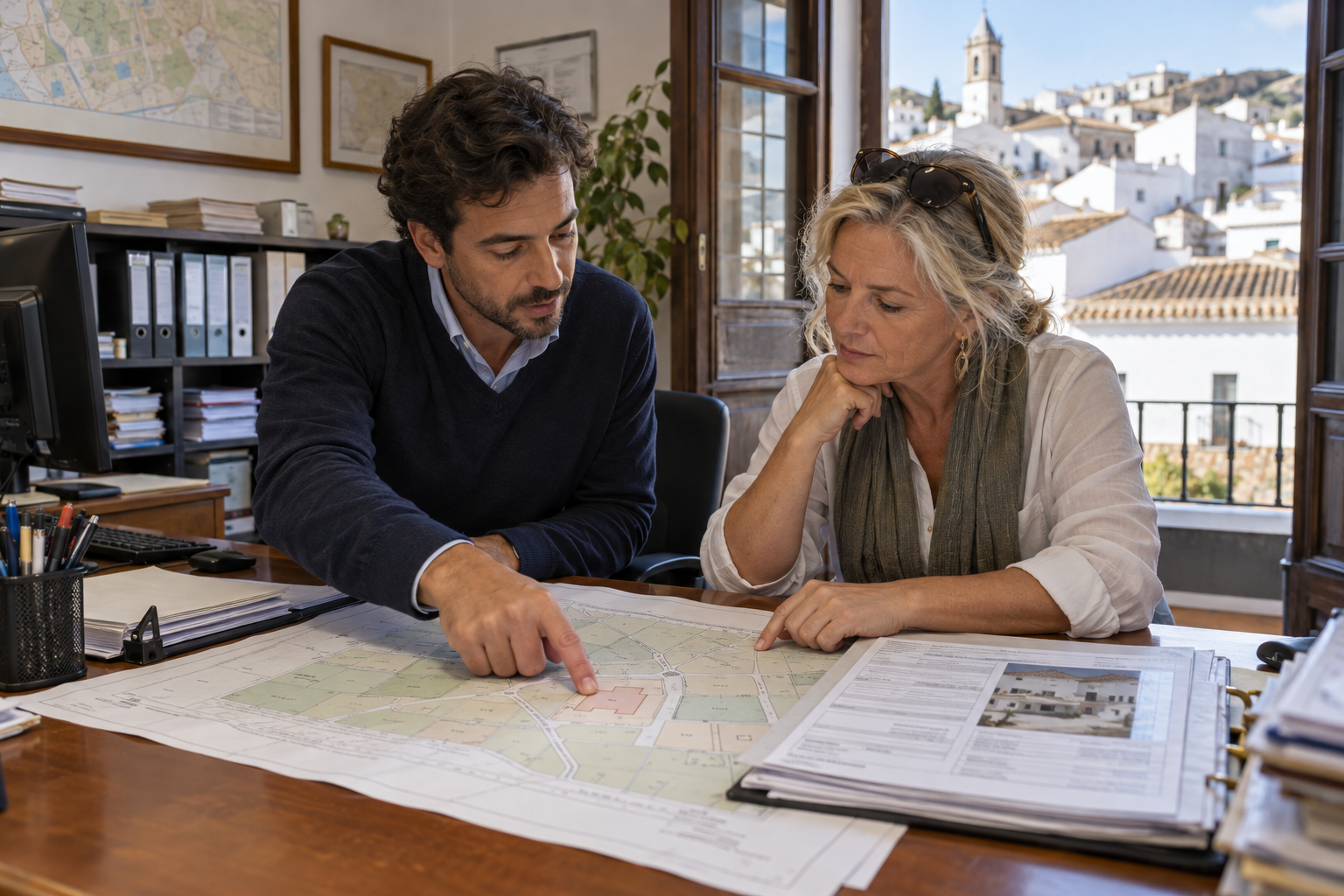
Before anyone dismisses this as a quirk of one particular state, it is worth knowing that Ohio was chosen precisely because it is unremarkable, a middle-of-the-road American state for property taxes, neither a notorious high-tax outlier nor a bargain. The reverse shock is not an artifact of picking an unusually taxed place; if anything, Ohio understates it, because plenty of American states tax property considerably more heavily still.
In states like New Jersey, Illinois, New Hampshire, and parts of Texas, effective property tax rates run well above two percent, which on a four hundred thousand dollar home would mean an annual bill of eight or nine thousand dollars or more, dwarfing the Spanish figure many times over. Run the same comparison from one of those states and the gap becomes almost comical, a difference not of degree but of kind. The point is that the low Spanish property tax is not being flattered by a cherry-picked American villain; it is genuinely, structurally low, and it comes out far ahead against a typical American state and further still against a high-tax one. Whichever American state a would-be expat is leaving, the annual property tax on their new Spanish home is very likely to be a fraction of what they were paying, and the more heavily taxed their home state, the more dramatic the relief.
But Spain Gets You Elsewhere
Honesty requires the other half of the picture, though, because it would be misleading to conclude from the property tax alone that Spain is simply the lower-tax place to own a home. It is not that simple, and the low annual IBI sits alongside other taxes that an American buyer needs to know about, several of which run higher than their American equivalents. The most immediate is the tax on buying in the first place, since purchasing a property in Spain triggers a substantial one-time transfer tax, often in the high single digits as a percentage of the price, a serious upfront cost with no real Ohio equivalent of the same size. On a four hundred thousand euro home that transfer tax alone can run to tens of thousands of euros at the moment of purchase, which is a very different kind of shock and one worth bracing for.
Beyond the purchase, Spain has levies that will be unfamiliar to Americans. There is an annual wealth tax that can apply to higher-value estates, a thing most US states do not have at all.
There is a quirk whereby a non-resident who owns a Spanish property owes an annual imputed income tax on it, a tax on the theoretical benefit of owning it, even if it sits empty and earns nothing. And more broadly, Spain funds its generous public services through higher income taxes and a hefty value-added tax on most purchases, so the overall tax burden of living there is real and should not be underestimated. The money for the healthcare and the pensions and the rest has to come from somewhere, and in Spain it comes rather more from what you earn and spend than from what your house is worth. It is also worth remembering that Ohio’s high property tax is not money into a void, since in America property taxes are the main way local public schools are funded, so that big annual bill is buying something specific. The honest summary, then, is not that Spain is cheaper on tax overall, but that the two countries tax different things differently, and that Spain happens to go remarkably easy on the one tax, annual property tax, that looms largest in the American homeowner’s mind.
What It Means for a Would-Be Expat

For an American weighing a move, the practical lesson is to look past the single headline number, striking as it is, to the whole shape of the tax picture. The low annual property tax in Spain is genuinely good news and a real, recurring saving, the kind of thing that meaningfully lowers the cost of simply owning and holding a home year after year, and for a retiree on a fixed income that predictable annual relief is not trivial. If the big Ohio property tax bill has been a persistent drain, discovering that the Spanish equivalent is a fraction of it is a legitimate point in favor of the move, and one that compounds year after year for as long as you own the home. Over a long retirement, the difference between a six-thousand-dollar annual bill and a few hundred euros adds up to a very large sum indeed.
But it should be weighed with the rest of the picture in view rather than in isolation. Budget for the substantial one-time purchase taxes, which can take a real bite at the moment of buying, and understand the wealth tax and non-resident obligations if they might apply to you.

Recognize that the low property tax coexists with higher taxes elsewhere in Spanish life, so the overall tax burden depends heavily on your particular situation, your income, your assets, and how you structure things. And know that all of these numbers vary by region and municipality on both sides of the Atlantic, so the specifics of your actual house in your actual town are what matter, not the averages. Two towns an hour apart can charge noticeably different rates, and the only figure that truly counts is the one on the actual property you are considering, which is worth looking up directly rather than assuming.
The reverse shock is real and worth savoring, but it is one piece of a larger puzzle, and the wise buyer looks at the whole board rather than falling in love with a single number. Handled that way, with eyes open, the low Spanish property tax becomes a genuine and lasting perk of the move rather than a half-truth that hides a nasty surprise.

About the Author: Ruben, co-founder of Gamintraveler.com since 2014, is a seasoned traveler from Spain who has explored over 100 countries since 2009. Known for his extensive travel adventures across South America, Europe, the US, Australia, New Zealand, Asia, and Africa, Ruben combines his passion for adventurous yet sustainable living with his love for cycling, highlighted by his remarkable 5-month bicycle journey from Spain to Norway. He currently resides in Spain, where he continues sharing his travel experiences with his partner, Rachel, and their son, Han.