
Budapest is built on hot springs, and bathing in them is not a tourist novelty but one of the central rituals of the city, so much so that Hungarians proudly call their capital the city of spas. Walk into Szechenyi, the vast, canary-yellow, neo-baroque bathhouse that is the most famous of them all, and you step into a world with its own deeply ingrained code of behavior, a set of customs everyone seems to know instinctively and that no one bothers to write down anywhere. For an American, used to the private, hushed, treatment-based idea of a spa, the whole thing can be quietly bewildering, a grand public institution running on rules you are expected to follow but were never told.
You sense, within minutes of arriving, that there is a right way to do all this and that everyone but you already knows it. Get those rules wrong and you will feel, and unmistakably look, like a clueless tourist; get them right and you quietly unlock one of the great experiences in all of Europe. Here is the unwritten code of the Budapest baths, the Szechenyi customs that surprise Americans, so you can slip in as if you belong. None of it is difficult once you know it, but almost all of it is invisible until someone tells you, which is exactly why first-timers stumble.
What follows is why this is not the spa you are expecting, the shower rule that comes before everything, the truth about swimsuits and swim caps, how to behave in the water itself, and the practical business of tickets, cabins, and what to bring.
Not the Spa Americans Expect
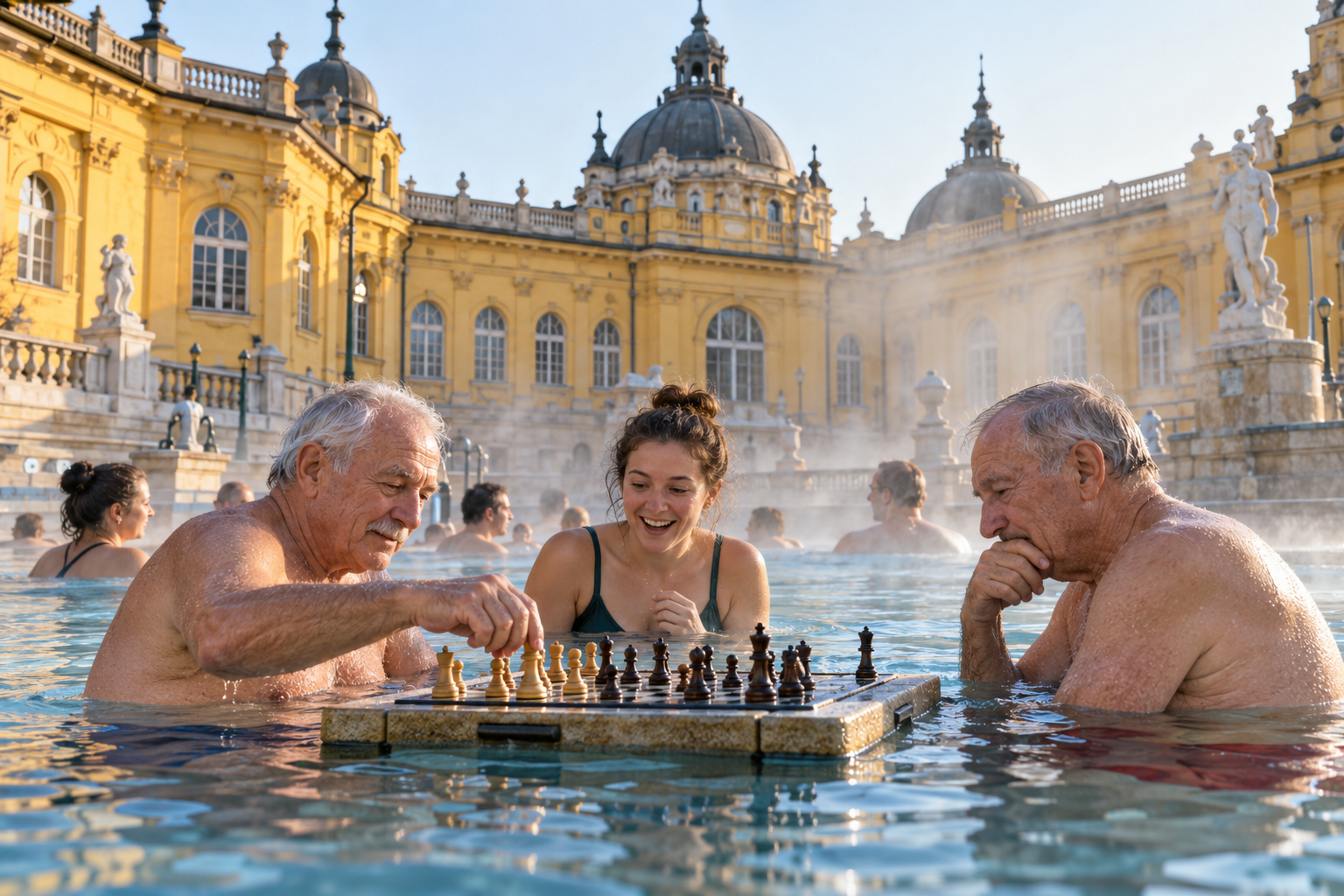
The first adjustment is mental, because the word spa sets up entirely the wrong expectation. An American hears spa and pictures a quiet, private, dimly lit place of massages and treatments, a retreat for pampering. A Budapest bathhouse is something else entirely: a large, lively, public bathing complex, closer to a grand municipal swimming establishment than to a boutique day spa, where people of every age come to soak in the thermal waters as an ordinary part of life. At Szechenyi you will find pensioners playing chess on floating boards in the steaming outdoor pools, families, groups of friends, locals on their weekly visit, and tourists all sharing the same great pools under the open sky.
This changes the whole character of the experience, and understanding it is the key to enjoying it. This is a communal, social, faintly institutional place, not a temple of silence and pampering, and it has the busy, slightly worn, public feel of somewhere that has been serving the whole city for a century. The scale surprises people too, since Szechenyi alone has around a dozen and a half pools of different temperatures, indoor and outdoor, plus saunas and steam rooms, a sprawling complex you could easily spend half a day in. The grand outdoor pools, steaming in the cold air with the yellow palace facade rising around them, are the image most people carry away, and on a chilly day the sight of the steam curling up off the water while snow sits on the balustrades is genuinely magical. Coming in expecting a hushed boutique retreat and finding instead a vast, echoing, crowded public bath is the first small shock, and the visitors who enjoy it most are the ones who arrive ready for a lively communal soak rather than a private pampering, and who treat it as the locals do, as a normal, sociable, slightly ritualistic way to spend a few hours in hot water.
A Ritual Older Than Almost Anything
Part of why the customs run so deep is that bathing in Budapest is genuinely ancient, a tradition with roots going back the better part of two thousand years, and knowing a little of that history makes the reverence around it make sense. The Romans, who founded a settlement here precisely because of the hot springs, built the first bath complexes, and the ruins of their baths still sit in the city. Centuries later the Ottomans, during their long occupation, built the domed Turkish baths that survive and still operate today, some of them four and a half centuries old, so that soaking in Budapest can mean lowering yourself into a pool under a stone dome built when Shakespeare was alive.
This long lineage is why the baths are treated as an institution rather than a leisure attraction, and why the etiquette is so settled. Crucially, the waters are regarded as genuinely medicinal, not merely relaxing, and the baths sit at the heart of a Hungarian and Central European tradition in which thermal bathing is considered good for the body, for aching joints and circulation and much else, to the point that doctors there can and do prescribe courses of it. To bathe in Budapest, then, is to take part in something people have done on the same spots for two millennia, for their health as much as their pleasure, and that weight of history is exactly why the regulars care that you shower properly and behave in the water. You are not using a facility; you are joining a very old ritual, and the unwritten rules are its quiet liturgy.
Shower First, and Really Shower
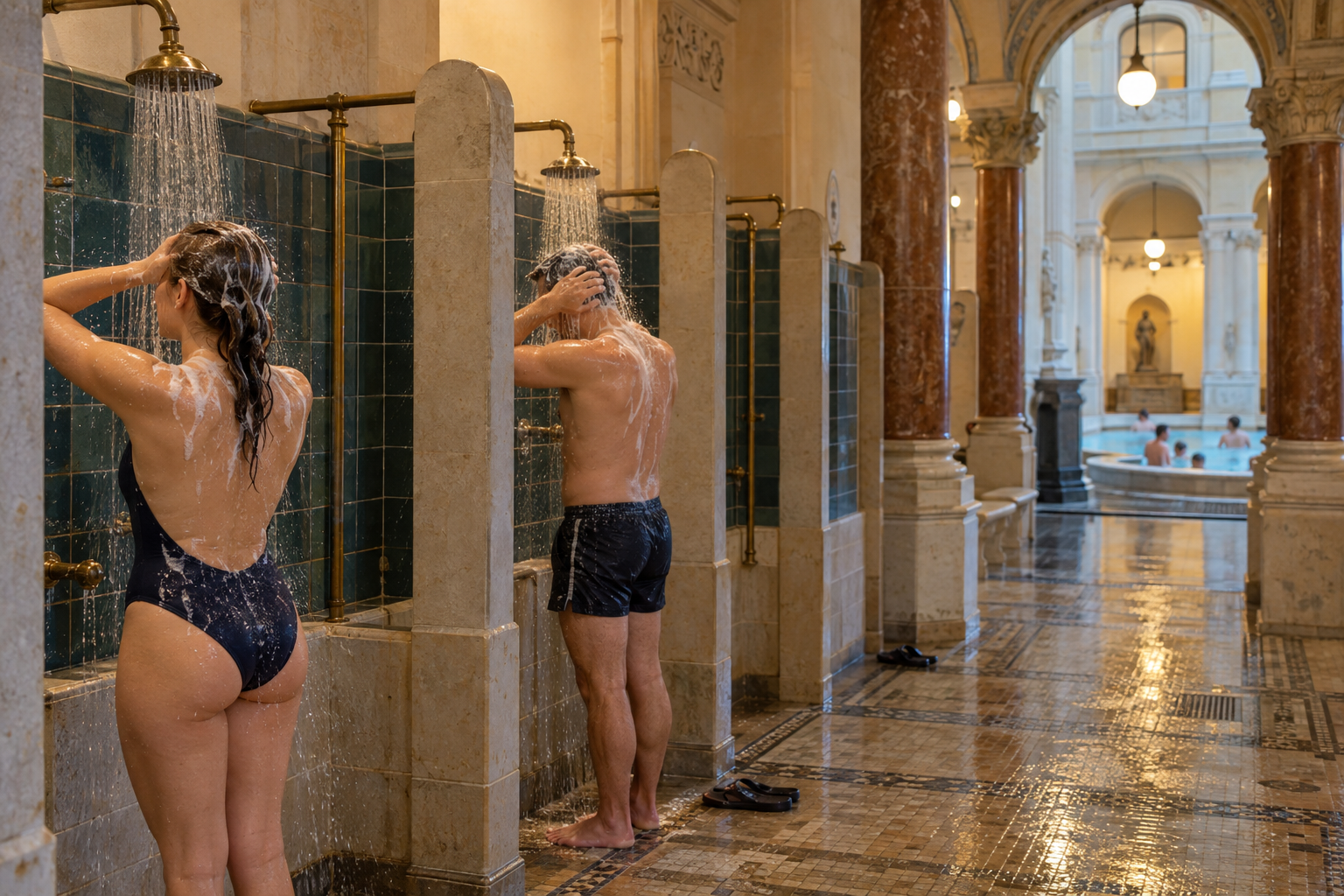
If there is one rule above all others in the Budapest baths, the single custom that locals care about most and tourists most often violate, it is this: you must shower, properly, before you get into any pool. This is not the token rinse an American might give themselves at a swimming pool but a thorough wash with soap in the changing area showers before you go anywhere near the thermal water, and it is treated as a matter of basic hygiene and respect for everyone else sharing the pools. Skipping it is the mark of someone who does not know the code, and at some baths staff will actually intervene if they see you heading for the water unwashed.
The logic is straightforward once you think about it, because these are shared soaking pools where many bodies sit in the same warm, slow-moving water, so everyone showering first keeps the whole thing clean and pleasant in a way that matters more than in a chlorinated swimming pool you are constantly moving through. The thermal water is not heavily treated the way a sports pool is, which is part of its appeal and also precisely why the collective habit of washing first matters so much. To a culture like Hungary’s, where public bathing is old and deeply ingrained, the pre-shower is simply non-negotiable, an obvious courtesy that hardly needs stating, which is exactly why no one states it and why the uninformed tourist blunders past it. Make the proper soapy shower your automatic first move on arrival, and again when you switch between certain areas, and you have cleared the most important unwritten rule in the building. It is the etiquette equivalent of taking your shoes off at a Japanese door, small, absolute, and quietly revealing of whether you understand where you are. Do it without being asked and you have already told the regulars that you are a guest who respects the house.
Swimsuit On, Cap Only for the Lap Pool
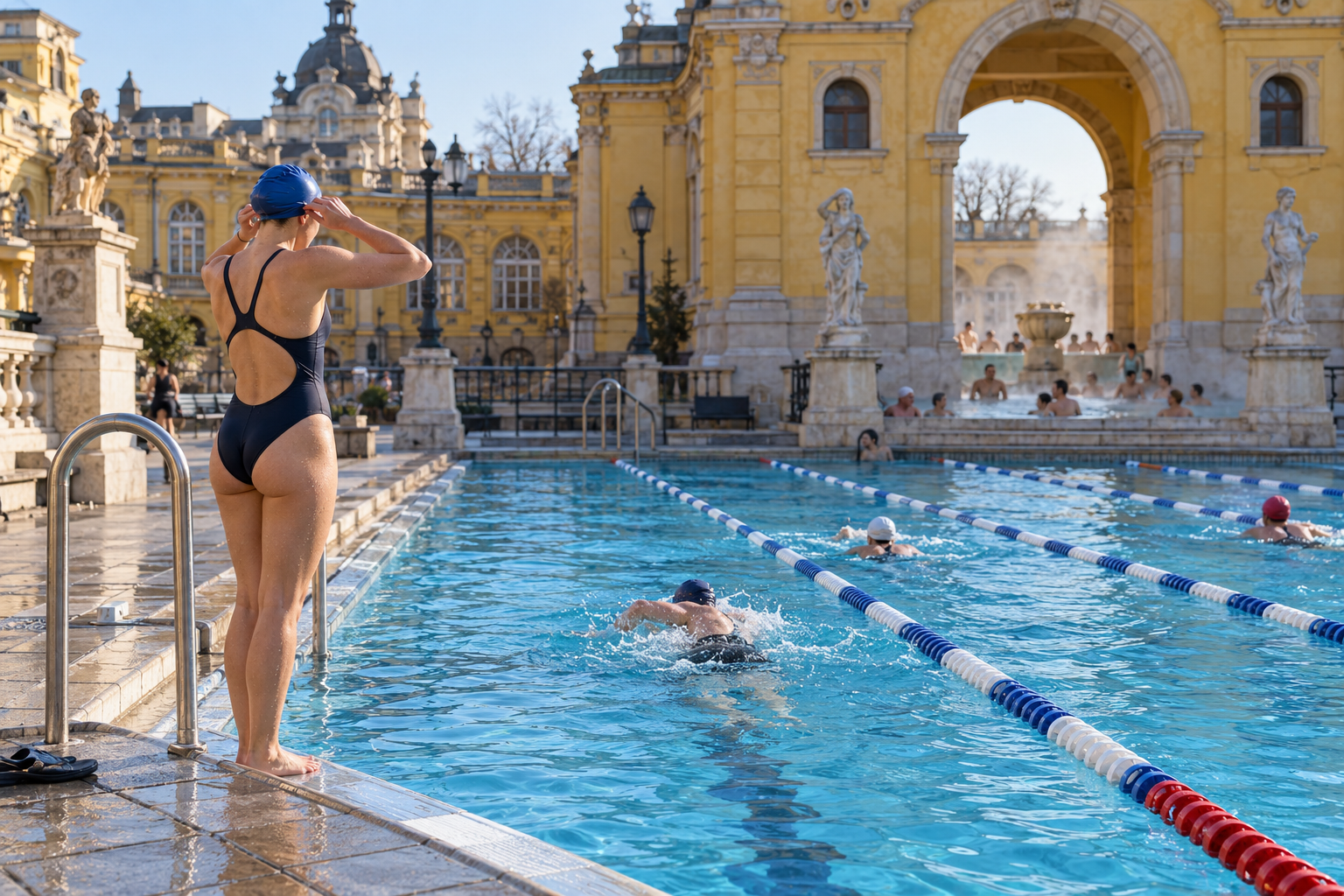
Here the Budapest baths surprise Americans in two opposite directions at once, and getting both right is essential. The first surprise is that, unlike the famously nude spa culture of neighboring Germany and Austria, the Budapest thermal baths are firmly swimsuit-required. In the mixed public pools, saunas, and steam rooms you must wear proper swimwear at all times, and nudity is simply not allowed in the public areas, so the American who has heard nervous rumors about naked European spas can relax; here, a normal swimsuit is not just acceptable but mandatory. Budapest is not Germany in this respect, and the mixed public baths are resolutely clothed, which for many nervous first-timers removes the single biggest worry they arrive with. There is a genuine catch, though, which is that the swimwear must be actual swim-grade material, and people have been asked to leave the pools at Szechenyi for wearing something like a cotton t-shirt in the water, so a real swimsuit it must be.
The second surprise runs the other way and catches almost everyone: the swim cap. In the thermal pools, the soaking pools, and the outdoor leisure pools, you do not need a cap and most people do not wear one. But in the dedicated lap pool, a swim cap is mandatory, and turning up to it without one will get you turned away.
This trips up visitors constantly, because they either assume they need a cap everywhere and buy one unnecessarily, or, more often, wander toward the lap pool for a swim without one and are stopped. The rule to remember is simple: swimsuit always, cap only if you intend to swim laps in the proper swimming pool. Keep those two straight, a real swimsuit on and a cap in your bag for the lap pool, and you will avoid the two most common wardrobe mistakes in the place. Everything else about what you wear is relaxed; it is only these two points, real swimwear and the lap-pool cap, that the baths are strict about.
Soak, Don’t Swim, and Move Between Temperatures
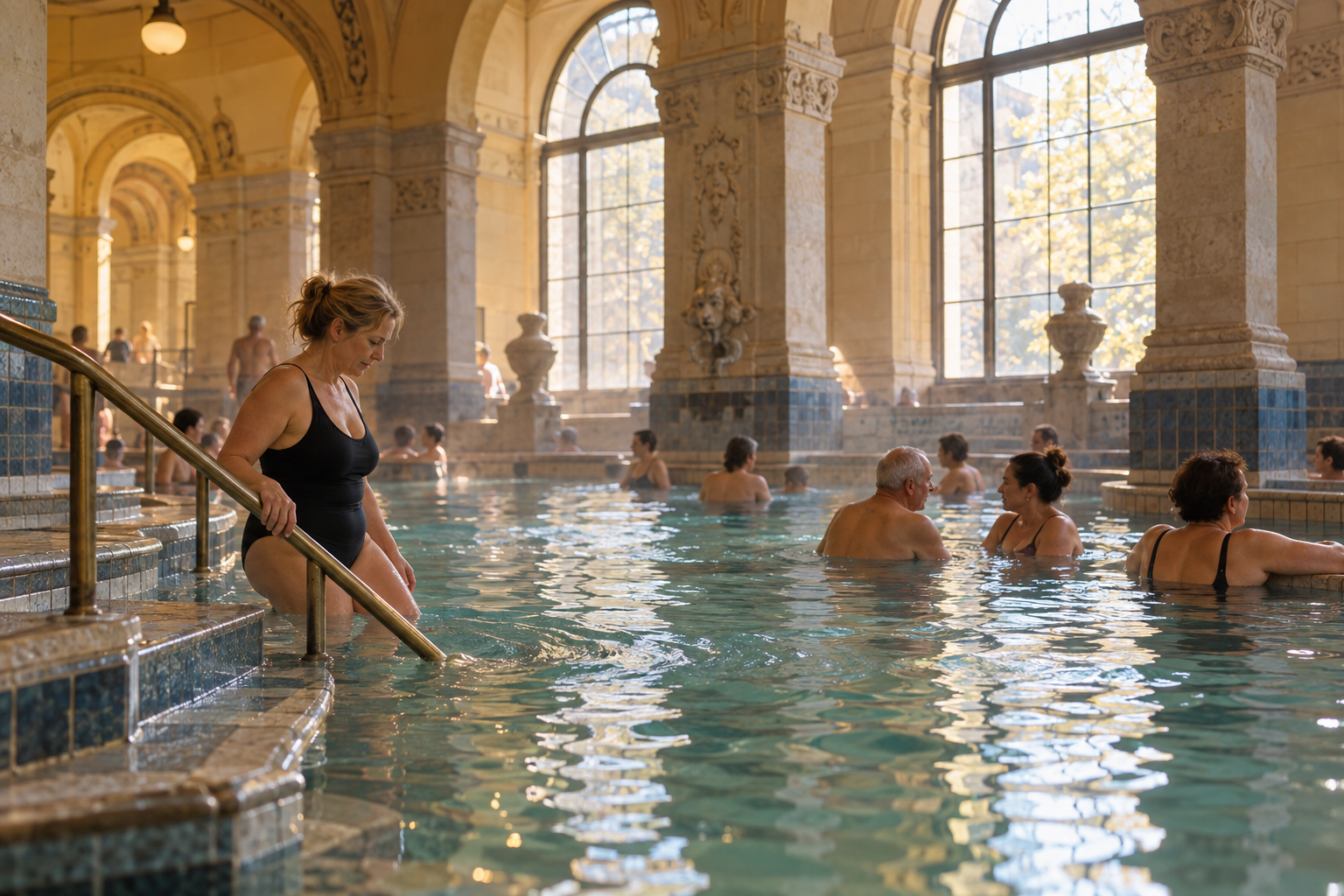
Once you are properly showered and dressed and in the water, there is an etiquette to the water itself that Americans often miss, because they treat the thermal pools like a swimming pool when they are nothing of the kind. The thermal pools are for soaking, quietly, not for swimming lengths, splashing, or horseplay, and the atmosphere in them is calm and restful, people sitting or standing in the warm water, talking softly or not at all. Diving in, swimming across, or making a racket marks you instantly as someone who does not understand what these pools are for, so the rule is to lower yourself in gently and soak, saving any actual swimming for the dedicated lap pool. The one exception to the calm is the outdoor whirlpool at Szechenyi, a fast circular current that spins bathers around and is the one spot where a bit of laughing and jostling is entirely in keeping.
There is also a rhythm to a proper bath visit that the regulars follow and newcomers benefit from copying, which is the movement between temperatures. The baths offer pools at a whole range of temperatures, from cold plunge pools up to very hot thermal ones, and the traditional way to use them is to alternate, soaking in a hot pool, then cooling off in a cold one, then resting, and repeating, a cycle thought to be good for the circulation and certainly good for the sense of well-being. The usual guidance is to spend only around fifteen or twenty minutes in the hottest pools at a stretch before cooling down, both for comfort and for safety, since sitting too long in very hot water is genuinely taxing on the body. Follow the local rhythm, hot then cold then rest, soak quietly rather than swim, and you move through the baths the way they are meant to be used, which is both more pleasant and less conspicuous than treating the whole place as one big swimming pool. Watch what the older regulars do and simply copy them; they have the whole choreography down, and it is the surest guide in the building.
The Ticket, the Cabin, and What to Bring
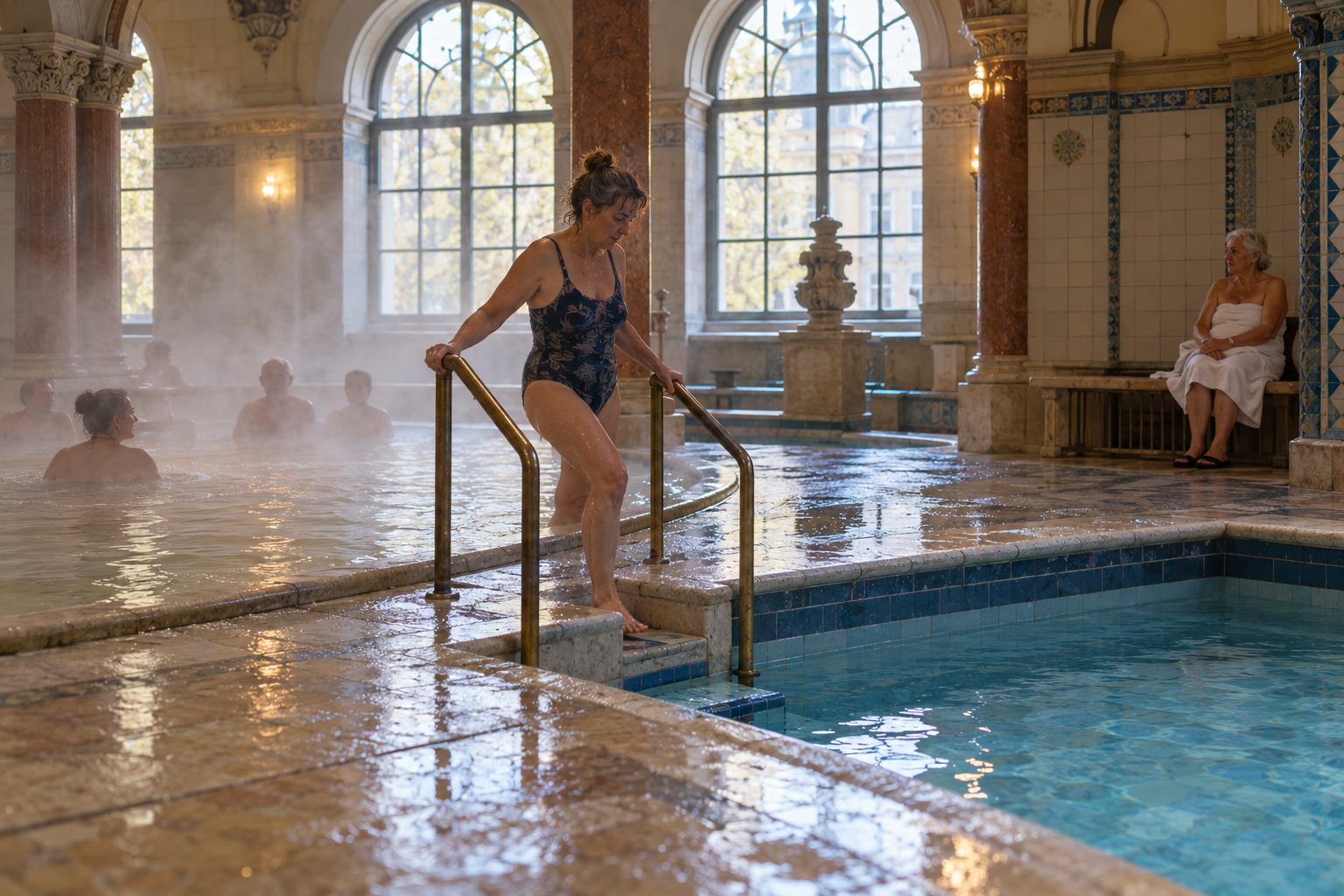
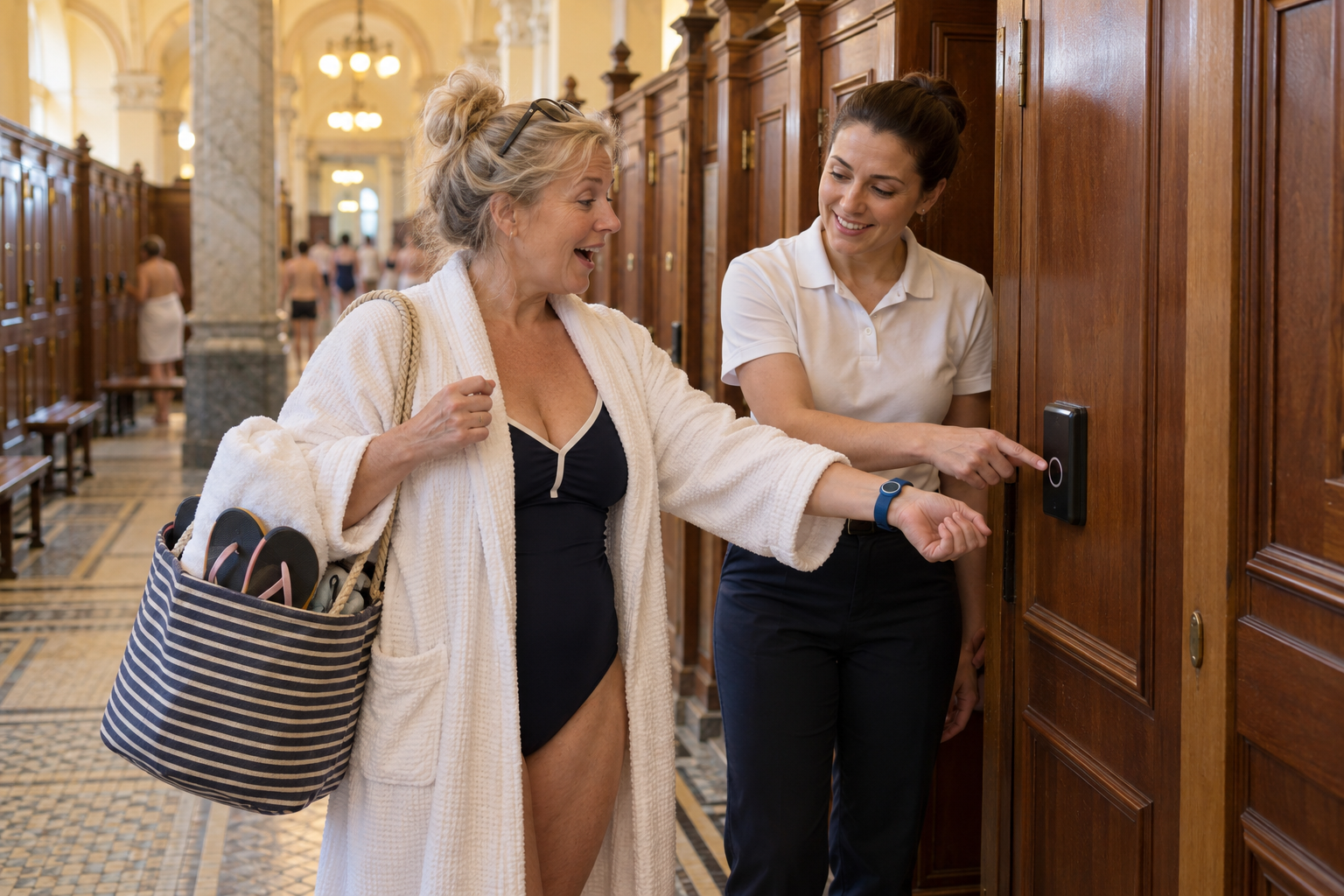
The last thing that trips up first-timers is the practical machinery of getting in and getting changed, which is more involved than a swimming pool back home and rarely explained. You buy a ticket, and there is usually a choice to make between a basic ticket with a locker, where you change in a communal area and store your things in a locker, and a slightly more expensive ticket with a private cabin, a small private booth to change in, which is worth the modest extra for the comfort and space, especially if you have luggage. Your locker or cabin is typically operated by an electronic wristband you wear in the water, which is the key to the whole system, so keep it on and keep track of it. The wristband finds and opens your assigned locker when you touch it to the panel, which is clever once you understand it and baffling for the first minute or two while you work out that there is no numbered key to carry.
Beyond the ticket, the golden rule is to bring your own kit, because while the baths do sell towels, swimwear, caps, and flip-flops on site, they are expensive and not always in stock, so you are far better off arriving prepared. Pack a large towel, your swimsuit, flip-flops for the wet floors, and a swim cap if you plan to use the lap pool, and you will avoid both the cost and the hassle. One final thing worth knowing is that Szechenyi transforms on certain weekend nights into a “sparty,” a spa party with music, lights, and drinks aimed squarely at young tourists, which is a genuinely fun night out but bears no resemblance to the calm, restorative daytime bathing that is the real local tradition, so choose your visit according to which experience you are after. The two could hardly be more different, and a visitor who wants the quiet, steaming, chess-and-newspaper morning should be careful not to book a ticket to the neon-lit party by mistake. Arrive showered, suited, capped if need be, with your own towel and a wristband on your wrist, soak quietly and move between the temperatures, and you will have cracked the unwritten code of the Budapest baths and earned those approving nods from the regulars. Do it once and it stops feeling like a test and starts feeling like a ritual you look forward to, which is exactly how the locals have felt about it for generations.

About the Author: Ruben, co-founder of Gamintraveler.com since 2014, is a seasoned traveler from Spain who has explored over 100 countries since 2009. Known for his extensive travel adventures across South America, Europe, the US, Australia, New Zealand, Asia, and Africa, Ruben combines his passion for adventurous yet sustainable living with his love for cycling, highlighted by his remarkable 5-month bicycle journey from Spain to Norway. He currently resides in Spain, where he continues sharing his travel experiences with his partner, Rachel, and their son, Han.