
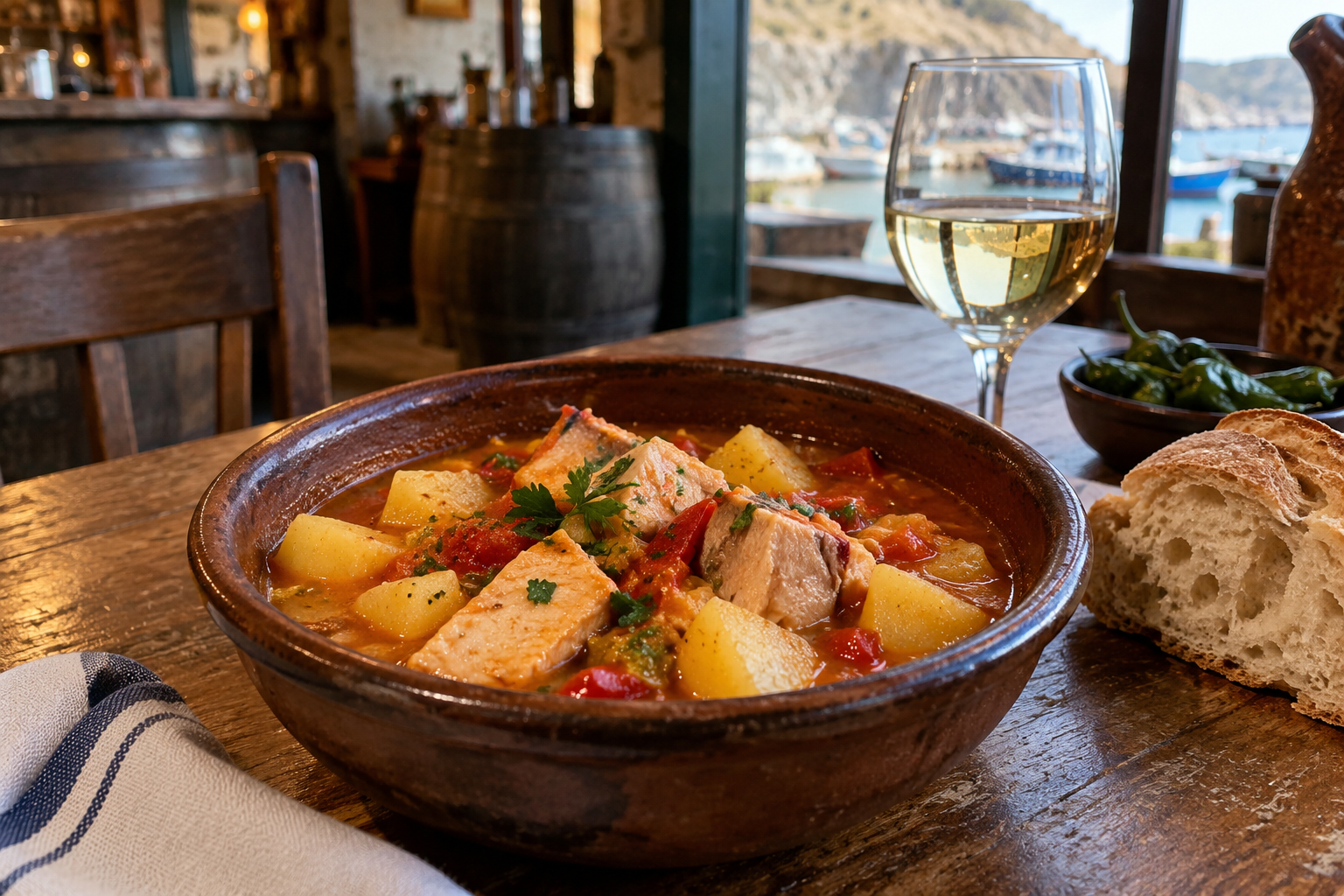
There is a Basque stew with one of the loveliest origin stories in Spanish cooking. Out on the fishing boats of the Bay of Biscay, the cook aboard would take the day’s catch, some potatoes, an onion, a few peppers, and turn them into a single hearty pot to feed the hungry crew, and they called it marmitako, which simply means from the pot, after the marmita, the big casserole they cooked it in. What began as humble sailors’ food has become one of the treasures of Basque cuisine, a rich, warming one-pot of tuna and potatoes that Basque families make when the bonito runs and the weather starts to turn. It is the definition of honest, seasonal cooking, and as the first cool days of autumn arrive it is exactly the sort of thing you want in a bowl. Few dishes carry their history so plainly in every spoonful, the sea, the boat, the pot, the hungry crew, all of it still there in a stew you can make in your own kitchen.
What follows is the fisherman’s story behind it, why September is its season, the two simple techniques that make it authentic, and how to cook it at home.
A Fisherman’s Invention
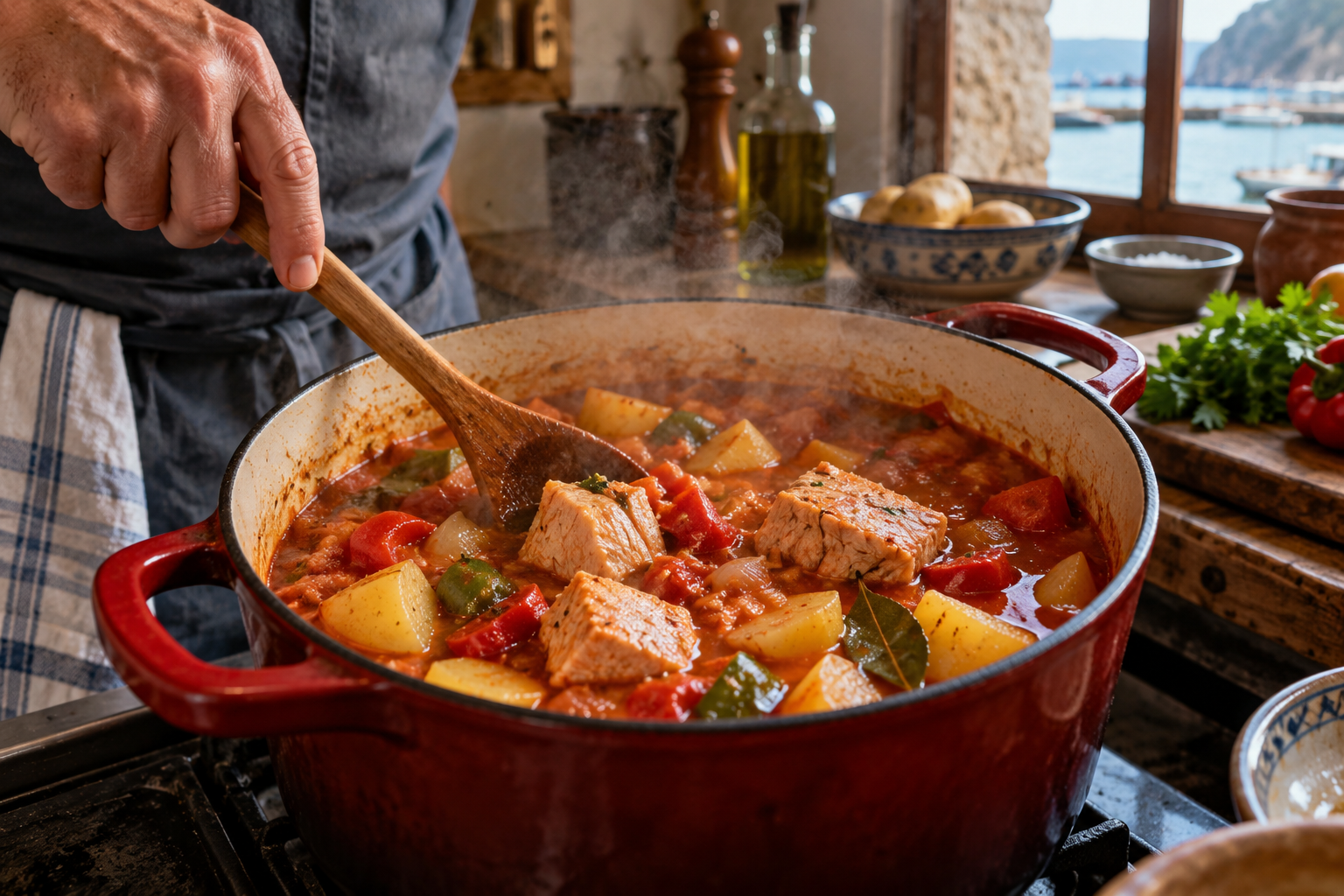
Marmitako is, at its heart, working food, invented not by chefs but by the fishermen of Spain’s northern coast to feed themselves at sea. On the boats, the appointed cook had to make a filling meal from whatever was on hand, chiefly the day’s own catch and a few sturdy vegetables that kept well aboard a boat, and the result was this rustic, satisfying stew, cooked in the one big pot every boat carried. The name itself, from the Basque word for that pot, tells you everything about its origins: it is the pot dish, the thing you make when you have one vessel, a fire, and hungry people to feed.
That humble beginning is the whole soul of the dish, and it is worth holding onto when you cook it, because marmitako was never meant to be fussy or refined. It is generous, forgiving, gloriously simple one-pot food, built on cheap potatoes and whatever fish was running, and its charm lies precisely in that unpretentious heartiness. There is a lovely irony that the fresh tuna which once made it a poor man’s meal now makes it something of a delicacy, but the spirit is unchanged, and a good marmitako still tastes like precisely what it is, the honest, warming food of people who worked hard on cold water. Cook it in that spirit, relaxed and generous, and you cannot go far wrong. This is not a dish that rewards anxiety or precision timing in the way a delicate sauce might; it rewards good ingredients and a bit of care at two key moments, and otherwise asks only that you let it be the hearty, homely thing it has always been.
Why September Is Its Season
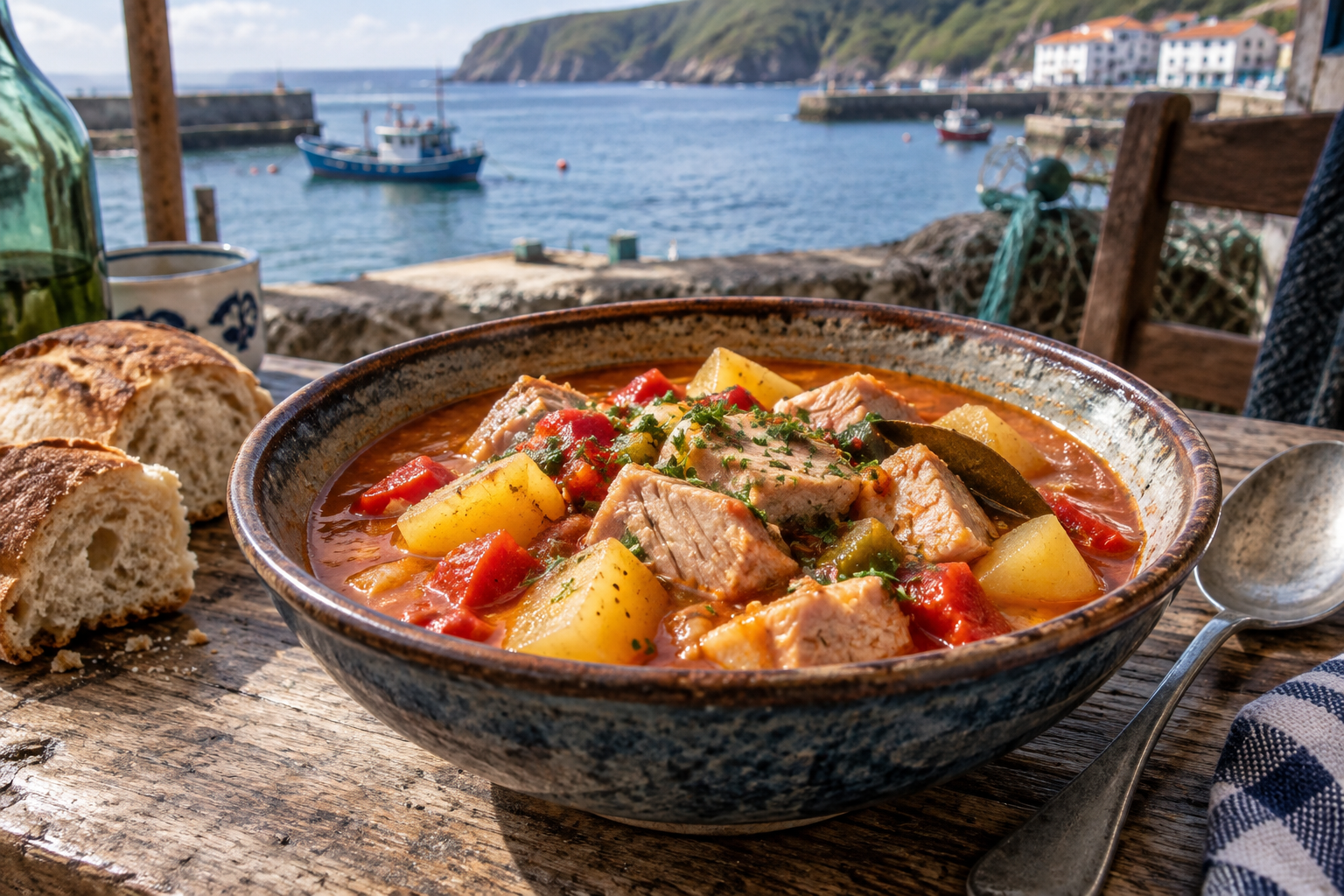
Marmitako is enjoyed year-round in the Basque Country, but it has a particular association with late summer and early autumn, and the reason is the fish. The traditional tuna for marmitako is the bonito del norte, the prized albacore of the Cantabrian Sea, and its season runs through the warmer months into the early autumn, which makes the turn of September, when the bonito is still running but the evenings are cooling, the perfect moment for it. The dish sits right at the seam between summer’s fresh fish and autumn’s craving for something warm.
That timing is part of what makes it such a satisfying dish to cook now, as the season changes. It is substantial and warming enough for the first genuinely cool nights, a proper hot bowl of stew, yet it is built on the tail end of the summer’s fish, so it carries a freshness that a heavier winter stew lacks. There is something deeply seasonal and right about a big pot of marmitako as the light shifts and the first real chill creeps in, the last of the summer’s good tuna meeting the first of the cozy autumn weather. For anyone who likes to cook with the seasons, it is one of the great early-autumn dishes, and September is precisely when to make it. Serve it as the evenings first start drawing in, with good bread to mop the bowl and a crisp glass of the Basque white wine Txakoli if you can find it, and you have a meal that tastes exactly of its moment in the year.
The Cracked Potato Trick
Here is the first of two small techniques that separate a real marmitako from an ordinary fish stew, and it concerns the potatoes. You do not cut them cleanly into neat cubes as you might for another dish. Instead you crack them, in the method the Spanish call cascado or chascado, by pushing your knife partway into the potato and then twisting to break off a chunk with a rough, torn edge rather than a clean cut. It looks crude, and that is the point.
The reason is clever and entirely practical. Those rough, broken edges release far more of the potato’s starch into the broth as it cooks than smooth-cut faces would, and that starch is what naturally thickens the stew, giving marmitako its characteristic body without any flour or thickener at all. The potatoes essentially thicken their own broth, doing the work that a spoonful of flour would do in a lesser stew but with far more flavor and none of the pastiness. Many cooks go a step further and mash a few of the cooked potato pieces against the side of the pot near the end, releasing still more starch to enrich the liquid. It is a wonderful bit of peasant ingenuity, using nothing but the way you break a potato to build a silky, hearty stew, and once you know it you will crack potatoes for every stew you make. It is the sort of trick that no one would ever guess from tasting the finished dish, yet it is doing quiet, essential work in every spoonful, which is exactly the kind of cleverness that folk cooking is full of.
Add the Tuna Last
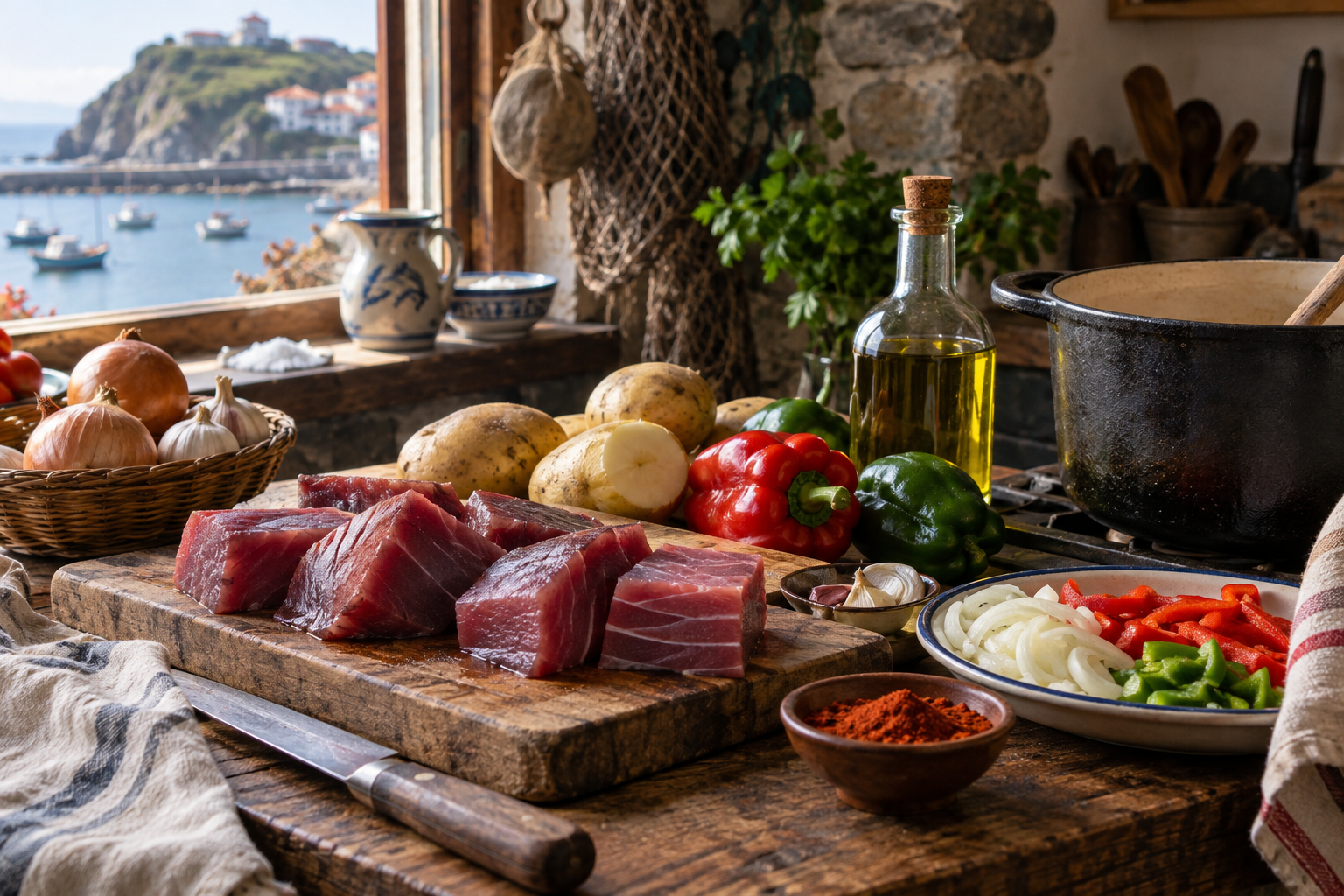
The second technique is even simpler and even more important, and getting it wrong is the single most common way to ruin an otherwise good marmitako: the tuna goes in at the very end, and barely cooks. Tuna is a lean, delicate fish that turns dry, grey, and tough the moment it is overcooked, so it must not be simmered along with the stew the way you might treat a tougher meat. Everything else, the sofrito, the potatoes, the broth, is cooked fully first, and only when the potatoes are tender and the stew is ready does the tuna go in.
Then it cooks for the briefest time. You add the cubes of fresh tuna to the finished, bubbling stew, let them cook for just two or three minutes, and then, crucially, you turn off the heat entirely, put the lid on, and let the pot rest for five minutes, allowing the residual warmth to finish the fish gently to a tender, juicy, barely-cooked perfection. Treated this way the tuna stays moist and melting, a world away from the dry, overdone fish of a careless version. The difference between the two is night and day, and it comes down entirely to those last few minutes and the willingness to stop cooking the fish while it still looks barely done. Remember that the stew is essentially finished before the tuna ever touches it, and that the fish only wants to be warmed through, and you will have marmitako as it is meant to be.
A Dish the Basques Take Seriously
It would be a mistake to think of marmitako as merely rustic leftovers, because the Basque Country is one of the great food cultures of the world, and it takes a dish like this seriously indeed. This is a region famous for its pintxos bars, its Michelin-starred restaurants, and its gastronomic societies, the txokos, private cooking clubs where members gather to cook and eat together, and within all of that marmitako holds an honored place as a beloved traditional dish rather than a mere throwaway.
There are even marmitako competitions, spirited cook-offs where cooks vie to make the finest version, which tells you how much pride is invested in getting this humble stew exactly right. That reverence is a useful thing to keep in mind, because it signals that the simplicity of marmitako is deceptive, and that the small details, the quality of the tuna, the cracked potatoes, the pepper paste, the crucial last-minute cooking, are what separate a merely decent pot from a genuinely great one. The Basques prize this dish not despite its humble origins but because of them, seeing in it exactly the honest, ingredient-driven cooking that defines their whole celebrated cuisine. Cook it with that same care and it repays you handsomely.
Making Marmitako
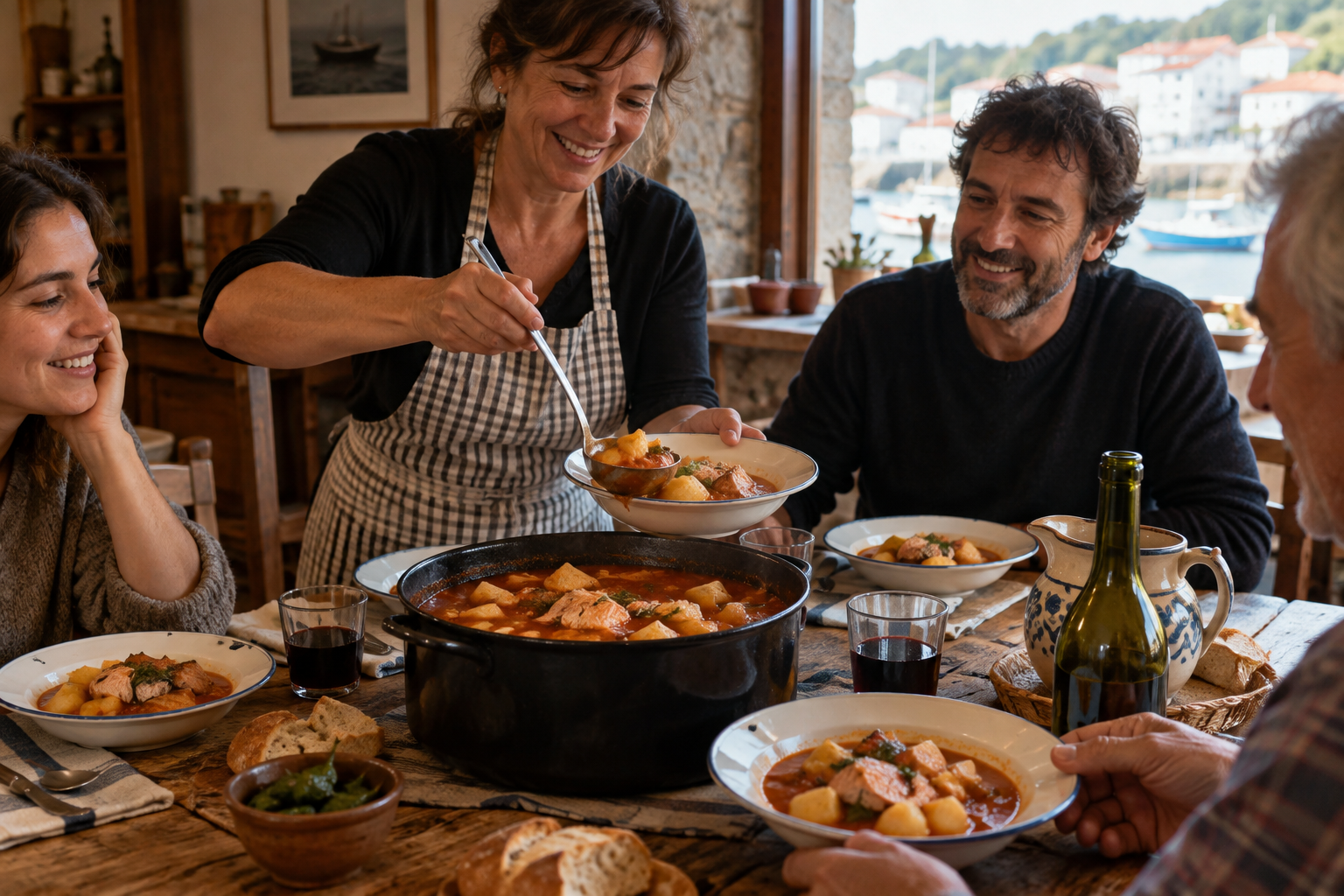
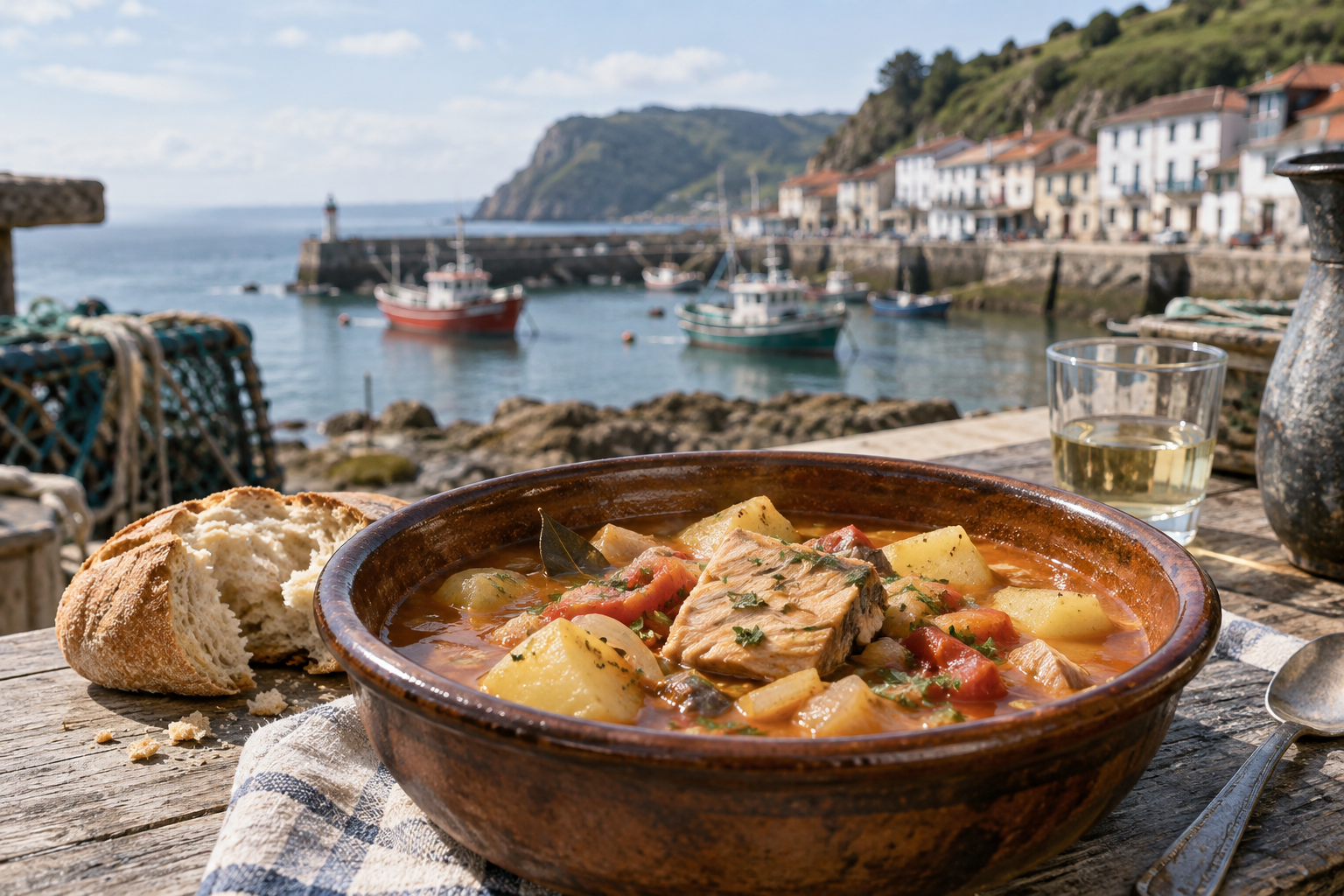
Here is a classic marmitako, in one pot, serving four. Use the freshest tuna you can, and do not overcook it.
Ingredients
- 4 tablespoons olive oil
- 1 large onion, finely chopped
- 1 green bell pepper, finely chopped
- 3 cloves garlic, minced
- 2 tablespoons choricero or nora pepper paste, or 1 tablespoon sweet paprika
- 2 ripe tomatoes, grated, or 1 cup crushed tomatoes
- A splash of dry white wine, optional
- 4 medium potatoes, peeled and cracked cascado style into chunks
- 4 cups (1 liter) fish stock, plus more as needed
- 600 g fresh tuna, cut into large 3 cm cubes
- Salt and black pepper, to taste
- Chopped fresh parsley, to serve
Instructions
- In a large, heavy pot, heat the olive oil over medium heat. Add the onion and green pepper and cook gently until soft, about 10 minutes.
- Stir in the garlic and cook for a minute, then add the choricero pepper paste or paprika and the grated tomato, and cook down for a few minutes into a rich sofrito. Add the white wine, if using, and let it bubble away for a minute.
- Add the cracked potatoes and stir to coat them in the sofrito. Pour in the fish stock, enough to just cover the potatoes, and season with salt and pepper.
- Bring to a gentle simmer and cook, uncovered, until the potatoes are tender, about 15 to 20 minutes. Add a little more stock if needed to keep them covered.
- Near the end, mash a few of the potato chunks against the side of the pot with a spoon to thicken the broth, and check the seasoning.
- Season the tuna cubes with salt, add them to the bubbling stew, and cook for just 2 to 3 minutes.
- Turn off the heat, cover the pot, and let it rest for 5 minutes so the tuna finishes gently. Serve in deep bowls, scattered with parsley, with crusty bread alongside.
And do treat the fish as flexible if you must, since a marmitako made with fresh hake, mackerel, or even salmon follows the exact same method and is delicious in its own right, though the classic bonito, cracked potatoes, and last-minute cooking are what make it truly Basque.

About the Author: Ruben, co-founder of Gamintraveler.com since 2014, is a seasoned traveler from Spain who has explored over 100 countries since 2009. Known for his extensive travel adventures across South America, Europe, the US, Australia, New Zealand, Asia, and Africa, Ruben combines his passion for adventurous yet sustainable living with his love for cycling, highlighted by his remarkable 5-month bicycle journey from Spain to Norway. He currently resides in Spain, where he continues sharing his travel experiences with his partner, Rachel, and their son, Han.