
Somewhere over the middle of the Atlantic, thirty thousand feet up and hours from the nearest land, a flight attendant reminds everyone to switch their phones to airplane mode, and hundreds of people dutifully tap the little airplane icon without the faintest idea what it actually does or why it matters way out here where there is obviously no signal anyway. It is one of the most pressed and least understood buttons in modern life, wrapped in half-remembered warnings about interfering with the plane and vague, inherited notions that phones and aircraft somehow do not mix. The truth is more interesting and a good deal more useful than the folklore, and once you understand what the button really does, you can use it far more cleverly, both in the air and on the ground. It is one of those small everyday mysteries that turns out to have a genuinely satisfying explanation hiding behind it. Most of us have pressed that button hundreds of times over the years without ever pausing to ask what it does, which is a shame, because the answer is both simpler and more useful than the vague dread the name inspires.
What follows is what airplane mode actually switches off, what keeps working despite it, the real reasons airlines require it, what it all means mid-ocean, the myths worth dropping, and how to turn it to your advantage.
What the Button Actually Does
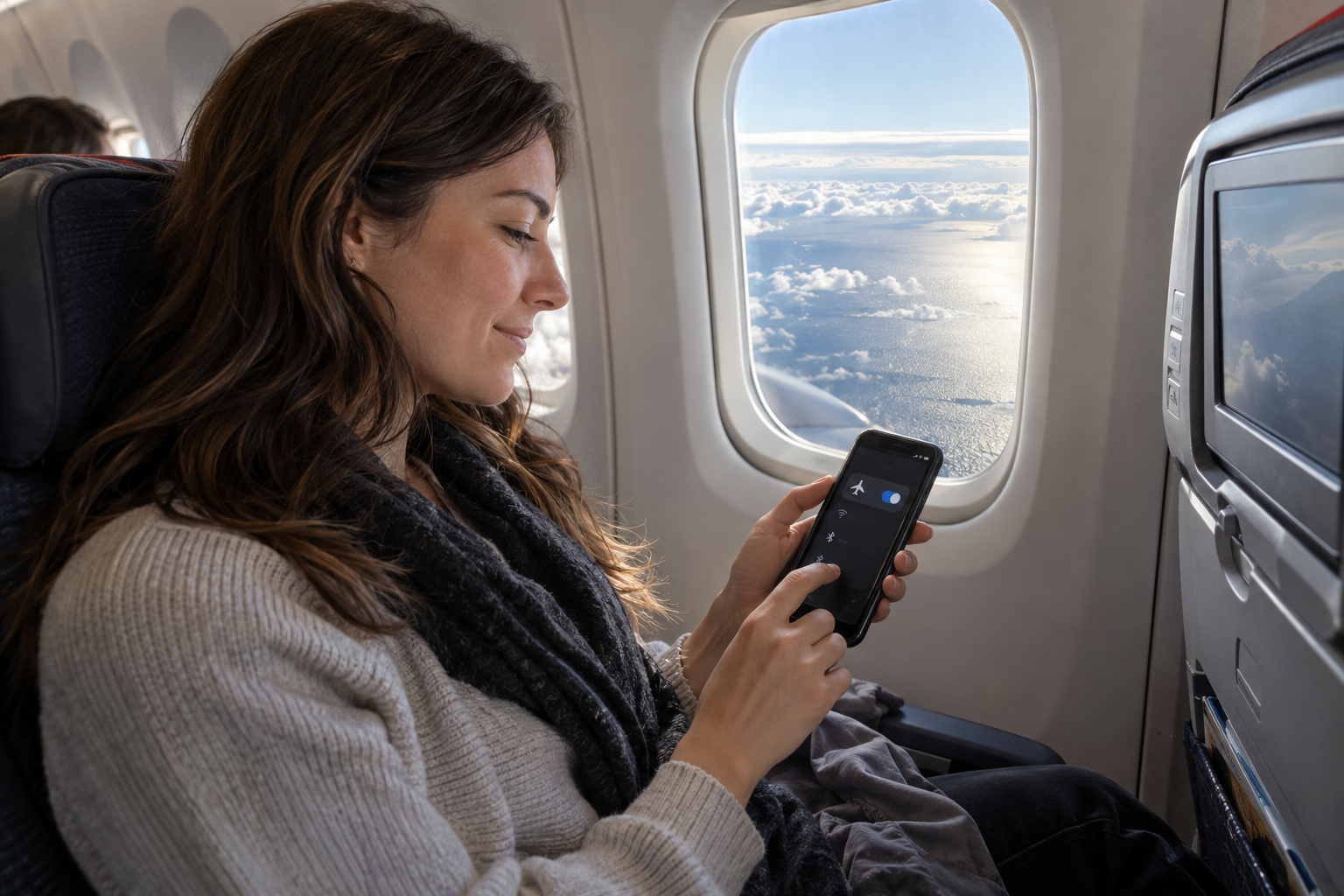
At its core, airplane mode does one simple thing: it silences your phone’s radio transmitters, the parts that send signals out into the world. The most important of these by far is the cellular radio, the one that connects you to mobile networks and towers, and airplane mode is in fact the only single setting that fully shuts that transmitter off. By default it also switches off Wi-Fi and Bluetooth, the phone’s other two wireless transmitters, so with one tap all three of your phone’s ways of broadcasting go quiet at once.
The key word there is transmitters, because airplane mode is fundamentally about stopping your phone from broadcasting, not about crippling the device. Your phone is constantly, invisibly chattering, reaching out to cell towers, scanning for Wi-Fi networks, pinging Bluetooth devices, and airplane mode simply tells it to stop talking and go silent.
All of that outward chatter happens whether you are using the phone or not, which is part of why a phone left in your pocket still slowly drains, and why silencing it has such an immediate effect on battery life. Everything that does not involve broadcasting a signal outward carries on completely unaffected, which is the crucial thing most people never realize, and it is why the button is far less drastic than its dramatic name suggests. The name conjures images of your phone shutting down or going dark, when really it just stops talking, the way you might mute yourself on a call while still hearing and seeing everything. It is a mute button for your phone’s radios, nothing more and nothing less. Think of it that way, as a mute rather than an off switch, and almost everything confusing about it suddenly makes sense.
What Still Works
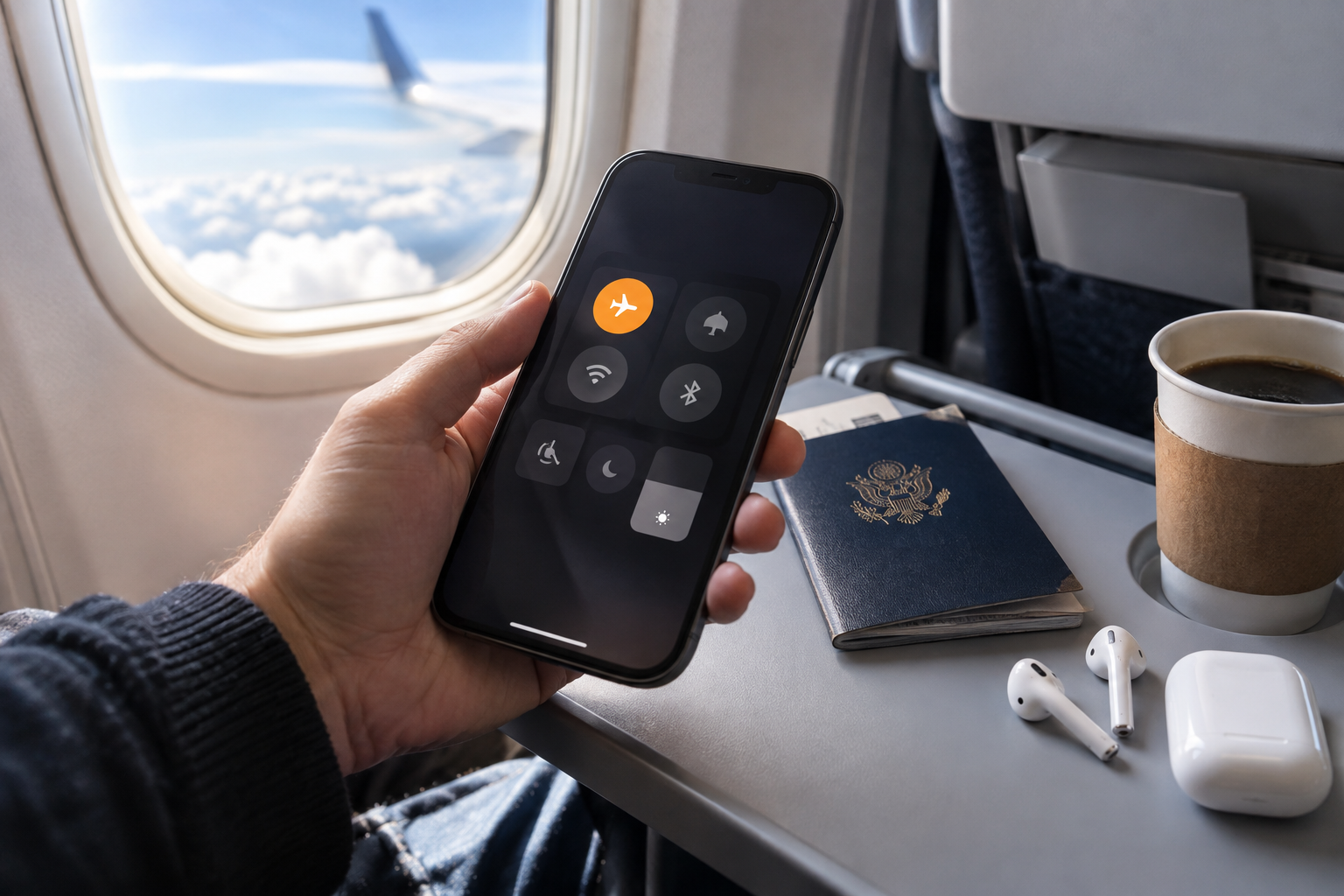
Because airplane mode only silences the transmitters, a surprising amount of your phone keeps working, starting with the one that genuinely surprises people: your GPS. Location tracking relies on your phone quietly receiving signals from satellites, and since receiving is not transmitting, GPS keeps working perfectly in airplane mode, which is why you can open a downloaded offline map mid-flight and watch the little blue dot inch its way across the Atlantic in real time. The one catch is that you need the map itself saved for offline use beforehand, since downloading a fresh map needs the internet, but the position tracking works regardless. The phone cannot use the internet to help pinpoint you, but the raw satellite fix still comes through, so you always know exactly where over the ocean you are. It is a genuinely lovely thing on a long flight, watching your own dot crawl across a map of the empty sea, and most people have no idea it is even possible with their phone in airplane mode.
The rest of the phone is equally alive. Your camera, your music, your downloaded films and books and podcasts, and any app that does not need the internet all function exactly as normal, since none of them depends on a broadcasting radio. This is worth internalizing before a long flight, because it means a phone loaded up in advance with downloaded entertainment, offline maps, and reading is a fully capable companion for a transatlantic crossing, airplane mode or not, wanting for nothing except a live connection you would rarely get out there anyway. And here is the genuinely useful part that many people miss: you can manually switch Wi-Fi and Bluetooth back on while leaving airplane mode active, which is precisely how you connect to in-flight Wi-Fi and how your wireless earbuds keep working. Many phones now even remember your choice, quietly keeping Wi-Fi and Bluetooth on the next time you enable airplane mode, so the whole thing happens almost invisibly for regular travelers. Airplane mode turns them off as a starting point, but it does not lock them off, so the moment the crew allows it, a couple of taps reconnects you to everything except the cellular network.
Why Airlines Actually Require It
Now for the question everyone half-wonders about: why does it matter, especially over an empty ocean? There are actually two reasons, and the famous one is the weaker of the two. The traditional rationale is interference, the worry that a phone’s radio emissions could disrupt the aircraft’s navigation and communication instruments, a concern dating from the era of bulky older phones and more sensitive avionics. The honest truth is that the evidence for modern phones actually endangering a plane is thin and much debated, and it is largely a precaution, but a precaution that regulators and airlines still firmly require, particularly during the critical moments of takeoff and landing. Aviation is a famously cautious world, and it tends to keep a rule in place as long as there is any conceivable risk at all, however small, which is exactly the spirit in which this one survives.
The second reason is less famous and, it turns out, more real: protecting the networks on the ground. A phone at cruising altitude, moving at hundreds of miles an hour, would be within range of a huge number of cell towers at once, connecting and reconnecting to tower after tower across a wide sweep of ground in a phenomenon sometimes called tower hopping, which can genuinely disrupt and congest the mobile networks below.
Multiply that by the hundreds of phones on a single aircraft, and a plane full of active handsets becomes a small flying disruption to the ground networks it passes over, which the airlines and carriers would much rather avoid.
So when the airline asks you to switch on airplane mode, you are, as much as anything, protecting the cellular system on the ground rather than the airplane you are sitting in. Between the precaution and the network protection, the rule is universal and enforced, which is why it is not optional. Whatever you make of the underlying physics, the regulations require it and the crew will insist on it, so the practical answer is simply to comply and understand that the reasons are more about caution and ground networks than about your particular flight falling out of the sky.
What It Means Over the Ocean
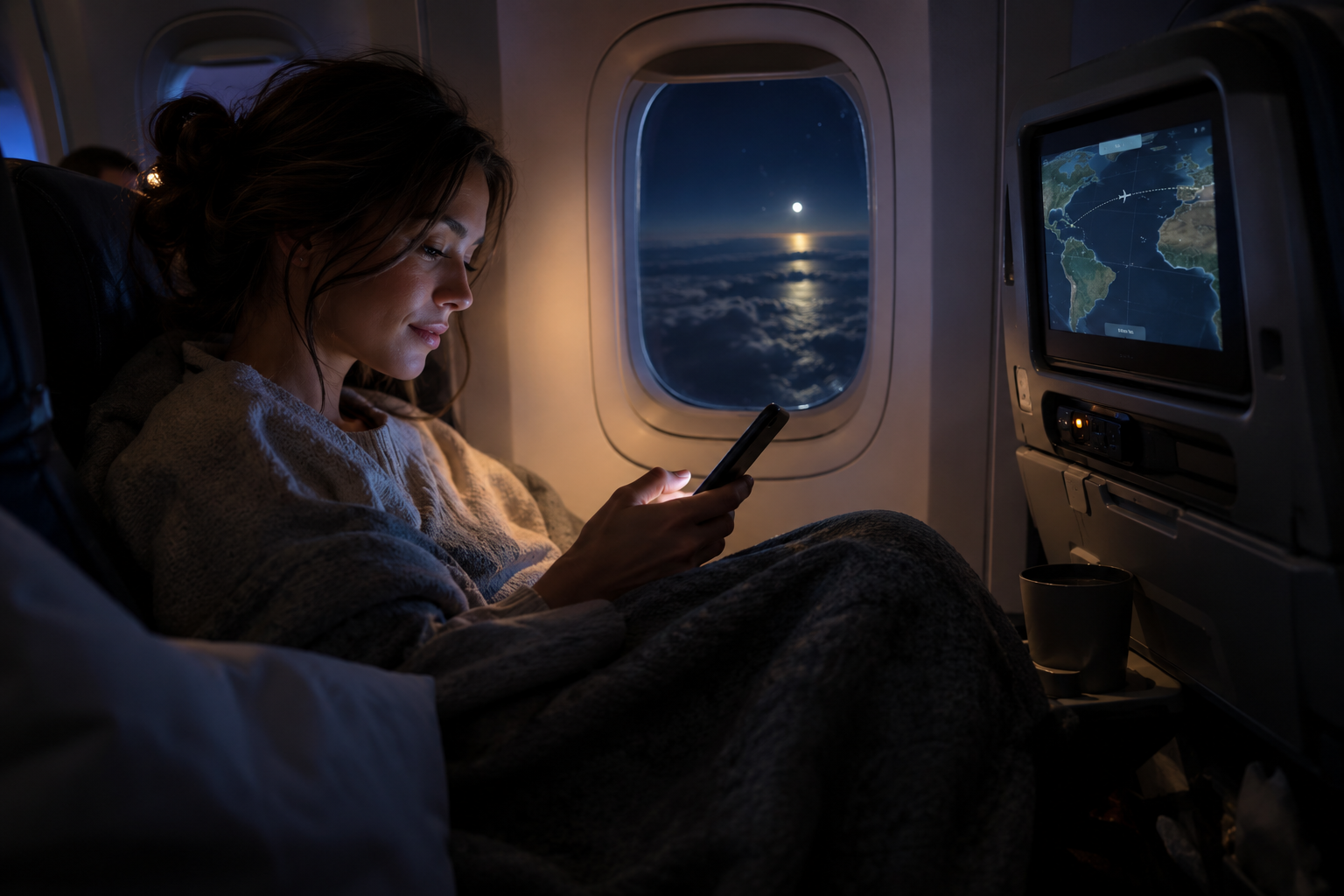
Out over the mid-Atlantic, the whole thing takes on a slightly comic logic, because the main practical reason to disable your cellular radio has already vanished. There are no cell towers in the middle of the ocean, so your phone’s cellular connection is completely useless out there regardless, with nothing to connect to for a thousand miles in any direction, and the tower-hopping concern that justifies the rule over land simply does not apply above open water. Whether your phone is in airplane mode or not, it will find no signal at all somewhere over the mid-Atlantic, which means that particular reason for the rule quietly lapses the moment you leave the coast behind. In a sense, airplane mode over the ocean is switching off something that could not work anyway, a rule enforced against a problem that has temporarily ceased to exist. There is a certain absurdity to the whole ritual out there, hundreds of people dutifully disabling a connection that vanished the moment the coastline dropped away behind them.
But the rule still holds throughout the flight, partly for consistency and the takeoff-and-landing precaution, and partly because leaving your cellular radio hunting fruitlessly for a signal it will never find just drains your battery for nothing. What can work over the ocean, on many modern long-haul aircraft, is satellite Wi-Fi, an internet connection beamed up to and down from satellites rather than ground towers, which is exactly why you can sometimes get online mid-Atlantic. It tends to be slower and pricier than the Wi-Fi you know on the ground, since every byte is making a round trip to space and back, but it is genuinely remarkable that it works at all from the middle of an ocean. To use it, you leave airplane mode on and simply switch Wi-Fi back on, connecting to the plane’s own network, a neat illustration of how airplane mode silences the useless cellular radio while letting the useful satellite link through. The whole arrangement is rather elegant once you see it: the one radio that would cause problems stays off, while the one that connects you harmlessly to a satellite is yours to switch on whenever the crew allows.
The Myths Worth Dropping
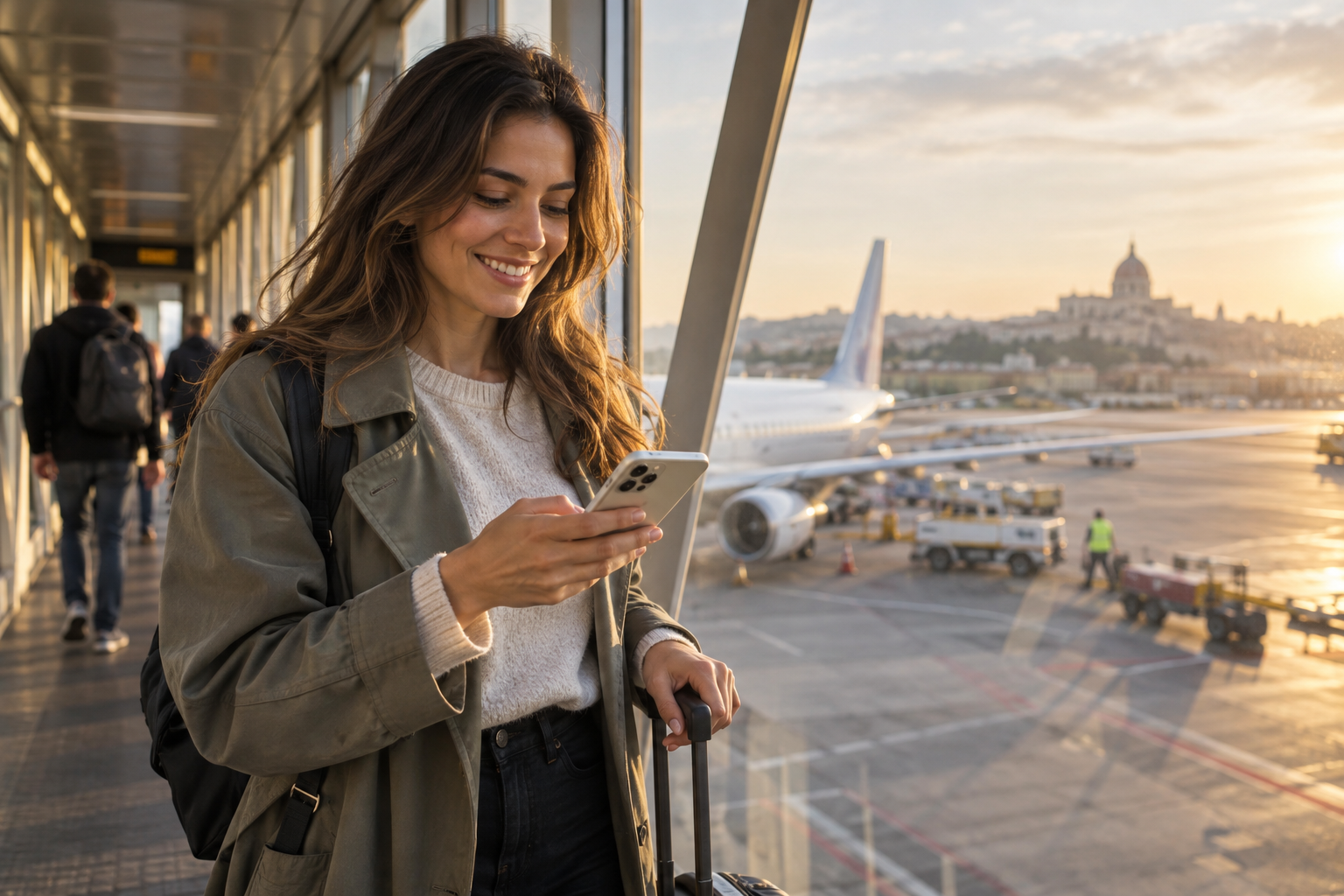
A few stubborn myths cling to airplane mode, and letting go of them makes flying simpler. The biggest is that it kills your GPS, which, as we have seen, is simply false, since GPS is receive-only and keeps working, so you can track your flight’s progress the whole way across. This one myth alone causes people to miss one of the small pleasures of long-haul flying, the live map on their own phone, simply because they assume the setting has switched it off. Another is that it locks you out of Wi-Fi and Bluetooth entirely for the flight, when in fact you can re-enable both by hand, which is the whole basis of in-flight Wi-Fi and wireless headphones. Anyone who has ever used wireless earbuds on a plane has already, perhaps without realizing it, disproved this myth, since those earbuds were running on Bluetooth the whole time with airplane mode switched on.
Then there are the more dramatic fears, none of them true. Airplane mode will not brick or damage your phone, which is designed for exactly this. Forgetting to switch it on will not send a plane plummeting from the sky, since a single phone left on is a minor issue rather than a catastrophe, though you should still follow the crew’s instructions and could face a fine or a scolding for stubbornly refusing. And it does not turn your phone into a useless brick, since everything offline keeps working. The reality is a mild, sensible tool, not the dangerous switch the mythology implies. Almost all the anxiety around it comes from the ominous name and the stern way it is announced, rather than from anything the setting actually does, which is quite mundane once you understand it.
Using It to Your Advantage
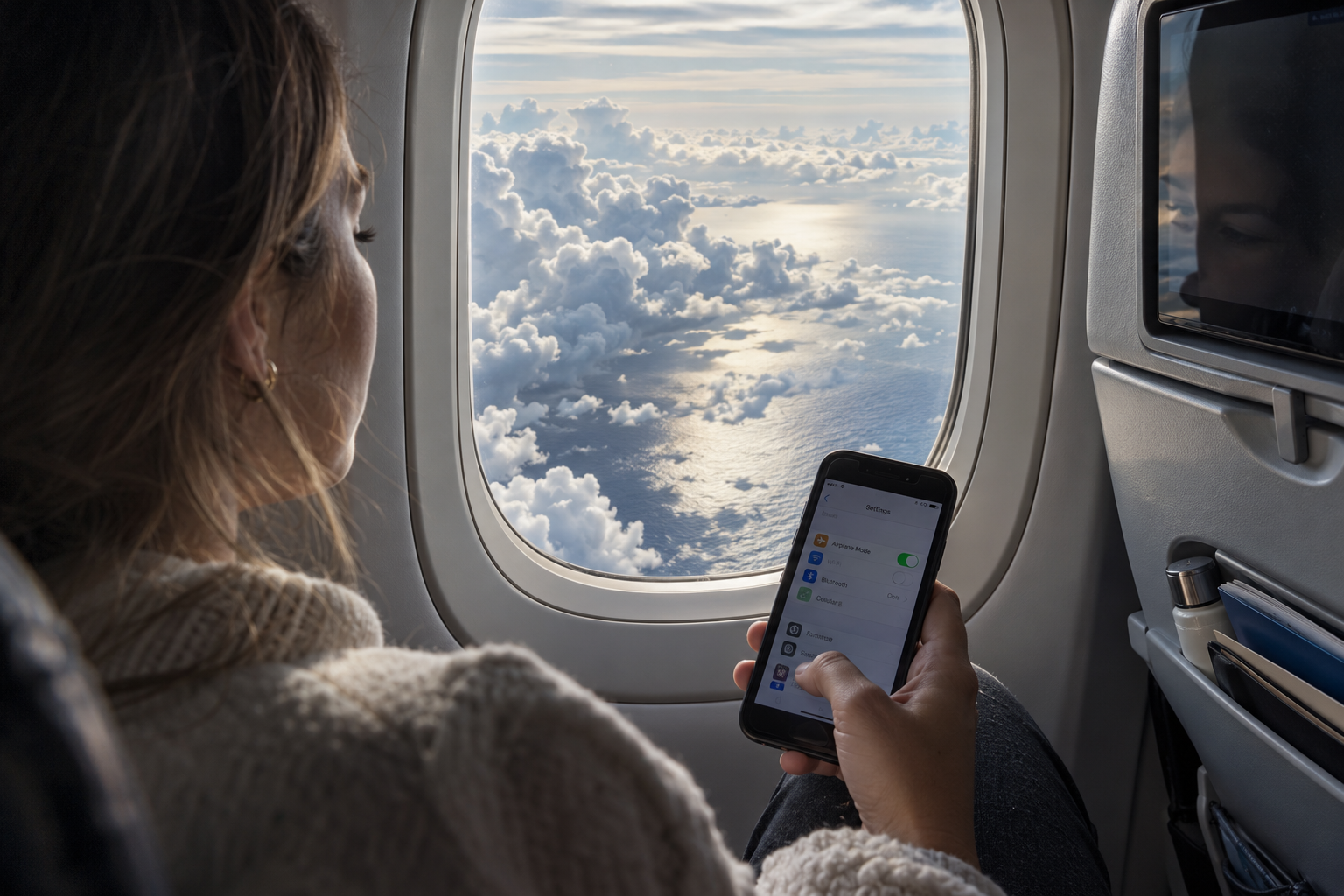
Once you understand the button, you can start using it deliberately rather than just obeying it, and the first great use is battery. Because airplane mode stops your phone from constantly searching for signals, towers, and networks, it dramatically cuts the background power drain, which is why flipping it on is the single best thing you can do to stretch a dying battery, on a plane or anywhere with weak signal where the phone would otherwise exhaust itself hunting. If you are ever down to your last few percent with no charger in sight, airplane mode will buy you far more standby time than any other single setting, and it works instantly. A phone in a low-signal area burns through its charge precisely because it is straining to connect, and airplane mode ends that straining instantly. It is one of the most counterintuitive facts about phones, that a weak signal drains the battery faster than a strong one, because the phone works ever harder to hold a connection it keeps losing, and airplane mode is the simplest cure.
Beyond the plane, it is a superb everyday tool. Switch it on in a dead zone to save power, use it as an instant do-not-disturb to get an uninterrupted hour of focus without powering the phone down, or enable it overnight to keep from being woken. Campers and hikers use it to nurse a phone’s battery through days away from an outlet, and anyone who wants a genuine break from the constant pull of notifications can find one in a single tap.
And on the plane itself, remember the simple sequence that unlocks the good stuff: turn airplane mode on as required, then, once the crew gives the word, switch Wi-Fi back on for the in-flight network and Bluetooth back on for your headphones, and open your offline map to watch yourself cross the ocean. That order matters, since enabling airplane mode first is what satisfies the rule, and re-enabling the two harmless radios afterward is what gives you a comfortable, connected flight within it. Understood properly, the button everyone presses without thinking becomes a genuinely useful little tool, and the next time you tap it somewhere over the Atlantic, you will know exactly what it is doing and why. That small piece of understanding turns a mysterious ritual into a deliberate choice, and it lets you get the most out of your phone across the ocean rather than simply switching it into a state you never really understood.

About the Author: Ruben, co-founder of Gamintraveler.com since 2014, is a seasoned traveler from Spain who has explored over 100 countries since 2009. Known for his extensive travel adventures across South America, Europe, the US, Australia, New Zealand, Asia, and Africa, Ruben combines his passion for adventurous yet sustainable living with his love for cycling, highlighted by his remarkable 5-month bicycle journey from Spain to Norway. He currently resides in Spain, where he continues sharing his travel experiences with his partner, Rachel, and their son, Han.