
Suggest to a typical American that they might rent, rather than own, a home in retirement, and you will usually get a horrified look, followed by the familiar catechism: renting is throwing money away, you have to build equity, you do not want to be paying a landlord at seventy. It is one of the most deeply held financial beliefs in American life, treated less as a calculation than as a moral law.
And yet across much of Europe, vast numbers of people rent their entire lives, retire as renters, and sleep perfectly well, in wealthy, stable countries where lifelong tenancy is normal and unremarkable. Their example, and the arithmetic behind it, exposes a piece of math that Americans are strangely unwilling to run, a calculation that sometimes, and for some people, favors the renter. This is not financial advice, and the right answer genuinely depends on your situation, but the question is worth taking seriously rather than dismissing on reflex. The American certainty that owning always wins is exactly the kind of unexamined belief that deserves a second look, if only because so much money rides on it.
What follows is how Europe actually lives, the math Americans refuse to run, the honest case for owning that the renters’ argument must answer, and where all of it leaves an individual retiree.
How Europe Actually Lives

The first thing to absorb is just how normal lifelong renting is in some of the richest, most stable countries on earth. Switzerland, one of the wealthiest nations in the world, has the highest share of renters in Europe, with well over half the population renting rather than owning, and Germany, Europe’s economic engine, is likewise a nation of renters, with more than half of households renting their homes. These are not countries of people who failed to buy, they are places where renting is a normal, respectable, permanent way to live, chosen freely and held for life. A Swiss professional on a comfortable salary may rent the same apartment for forty years and never once feel they have fallen short, because in their culture renting carries none of the stigma of failure that Americans attach to it.
Crucially, renting in these countries is secure in a way it often is not in America, because strong tenant protections mean a renter is not living under constant threat of eviction or of being priced out on a landlord’s whim, which removes much of the insecurity that makes Americans fear renting. A German or Swiss renter can settle into a home for decades with genuine stability, treating it as their own without the debt, the maintenance, or the frozen capital of ownership.
They hang pictures, raise children, and grow old in a place they do not own and never intend to, and the arrangement feels entirely secure because the law and the culture make it so. That combination, security without ownership, is precisely what Americans struggle to imagine, and it is the foundation on which the entire European comfort with lifelong renting rests. Once you see that renting can be stable, the case for owning loses its most emotional argument. Much of the American fear of renting is really a fear of insecurity, of the landlord who sells up or triples the rent, and in a system where that cannot easily happen, that fear simply falls away, leaving only the financial question, which is a very different and much more answerable thing.
The American Blind Spot

Before the math, it is worth asking why Americans in particular find this so hard to see, because the resistance is cultural rather than rational. Homeownership in America is not merely a financial choice but a cornerstone of national identity, bound up with the American Dream, with adulthood and success and putting down roots, so that to rent past a certain age can feel like a personal failure rather than a legitimate option. Generations have been raised on the twin slogans that renting is throwing money away and that a home is the best investment you can make, repeated so often they have hardened into unquestioned truth.
Neither slogan survives close inspection, but they do their work anyway, shaping the choice long before any numbers are run. A whole industry, from real-estate agents to mortgage lenders, has every incentive to keep those beliefs firmly in place, since a nation of committed buyers is the source of its livelihood, and the cultural message is reinforced at every turn. The result is that Americans approach the rent-or-buy question with their thumb heavily on the scale, treating owning as the obvious default and renting as the thing to explain away, which is precisely the mindset that makes the actual arithmetic so hard to see clearly. Europeans, lacking that particular conditioning, simply look at the numbers and their own preferences and decide, which is all anyone should really be doing.
The Math Americans Refuse to Run

Here is the calculation that the American catechism skips, and it is genuinely worth running. When a retiree owns a home outright, a large sum of money, often several hundred thousand dollars, is locked up inside those walls, frozen, illiquid, and earning nothing. The moment you sell that home, or choose to rent instead of buying one, that capital is freed, and freed capital can be invested. A sum of, say, $400,000, invested conservatively at a modest annual return, can generate somewhere in the region of twenty thousand dollars a year, which is money that can pay a great deal of rent while the underlying principal remains intact, and very possibly keeps growing. That is the crucial point the catechism misses: the money used to buy a house does not vanish when you rent instead, it goes to work, and a productive nest egg throwing off income is a very different thing from the same sum entombed in a property that pays you nothing until you sell it.
This is the heart of the renter’s case, and it upends the whole throwing-money-away framing. The homeowner who has poured their wealth into a paid-off house has not banished their housing cost, they have simply converted it into an invisible one, the opportunity cost of all that capital sitting inert instead of working for them. The renter, by contrast, keeps the capital productive and pays for housing out of the income it throws off, and if the investment earns more than the rent costs, the renter can come out ahead while never touching the principal at all. In a good year the portfolio may even grow faster than the rent rises, leaving the disciplined renter quietly wealthier at the end of a decade than the homeowner who felt so much more secure the whole time.
Add to that the costs of ownership that renters simply do not pay, the property taxes, the insurance, the endless maintenance, the transaction fees on buying and selling, and the math tilts further, because those are real, recurring, non-recoverable expenses that quietly drain a homeowner year after year. Run honestly, the sum is not the foregone conclusion Americans assume. Whether owning or renting wins depends entirely on the specific numbers, the price of the home, the cost of the rent, the return on the invested capital, and in plenty of real markets, especially where homes are expensive relative to rents, the renter who invests the difference comes out comfortably ahead.
Why the Renter’s Case Is So Strong in Retirement
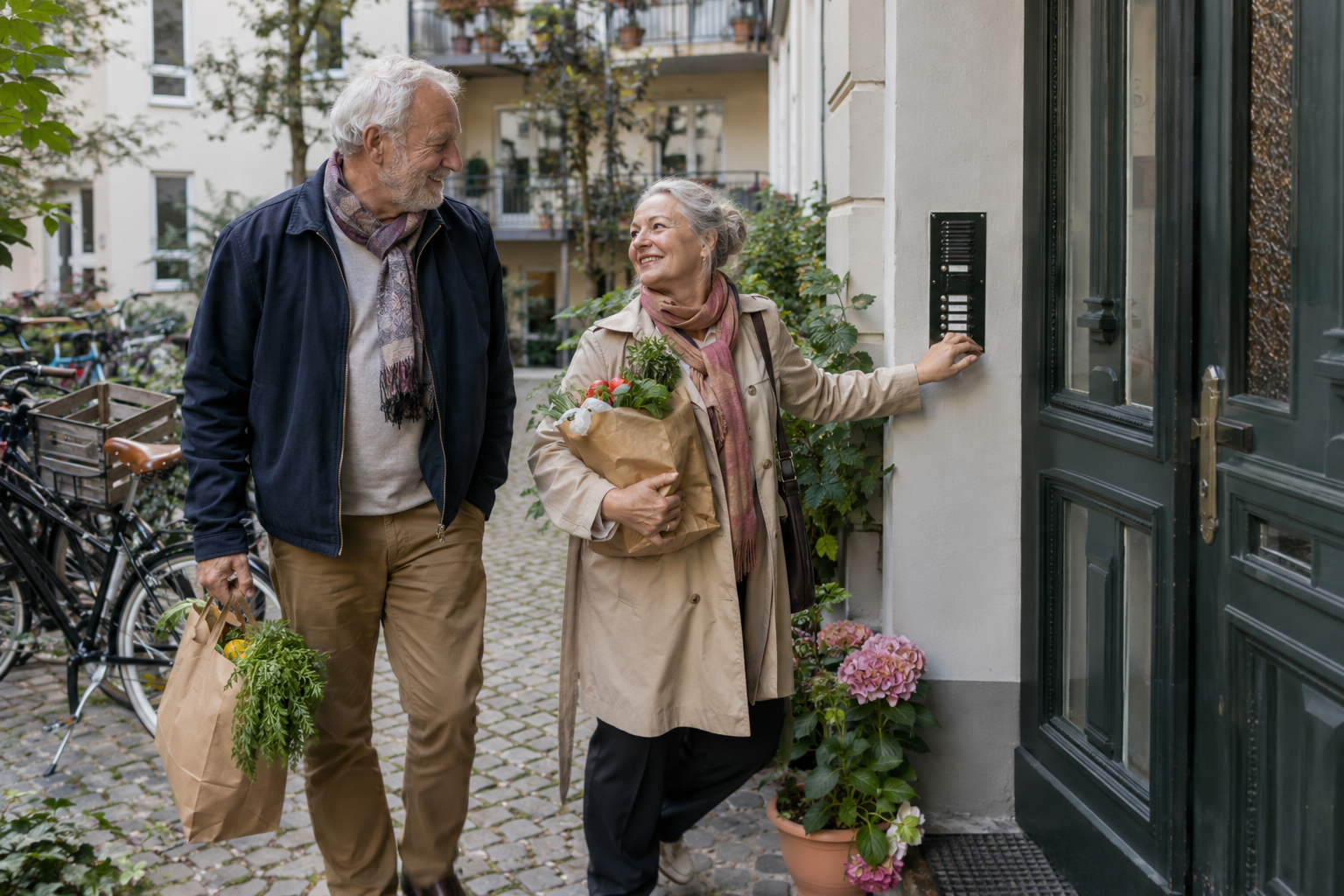
The argument grows stronger, not weaker, when you apply it specifically to retirement, which is exactly when Americans are most determined to own. A retiree is at the stage of life when liquidity, flexibility, and freedom from burdens matter most, and renting delivers all three where owning undercuts them. Freeing the capital tied up in a home turns a frozen asset into an income stream at precisely the moment a retiree needs income, rather than leaving a large fortune locked in a building they cannot easily spend.
Many an American retiree is, on paper, wealthy in home equity and yet short of actual spendable cash, house-rich and cash-poor, forced to consider reverse mortgages or downsizing simply to free money that a renter would have had liquid and working all along.
Flexibility matters more in later life too, not less. The needs of a sixty-five-year-old and an eighty-five-year-old can differ enormously, and a housing choice that suits one may badly fail the other, so the ability to change homes without the friction and expense of selling property is worth a great deal precisely at the stage when circumstances shift most. A renter can move easily, to be nearer family, to a place with better healthcare, to a smaller or more suitable home, or to a different climate, without the enormous cost and upheaval of selling a house, which is a genuine advantage as needs change with age. And the maintenance burden of a home, the roof, the boiler, the endless small repairs, falls on the landlord rather than on an aging owner who may have neither the energy nor the desire to manage it. For an older person, being free of all that, liquid, mobile, and unburdened, is not a lesser way to live but arguably a smarter one, which is exactly why a growing number of retirees in the English-speaking world are now choosing to rent by design rather than as a last resort. What was once seen as a sign of having failed to secure a home is increasingly recognized as a deliberate, sophisticated financial choice, one the Europeans have simply been making all along.
The Honest Case for Owning
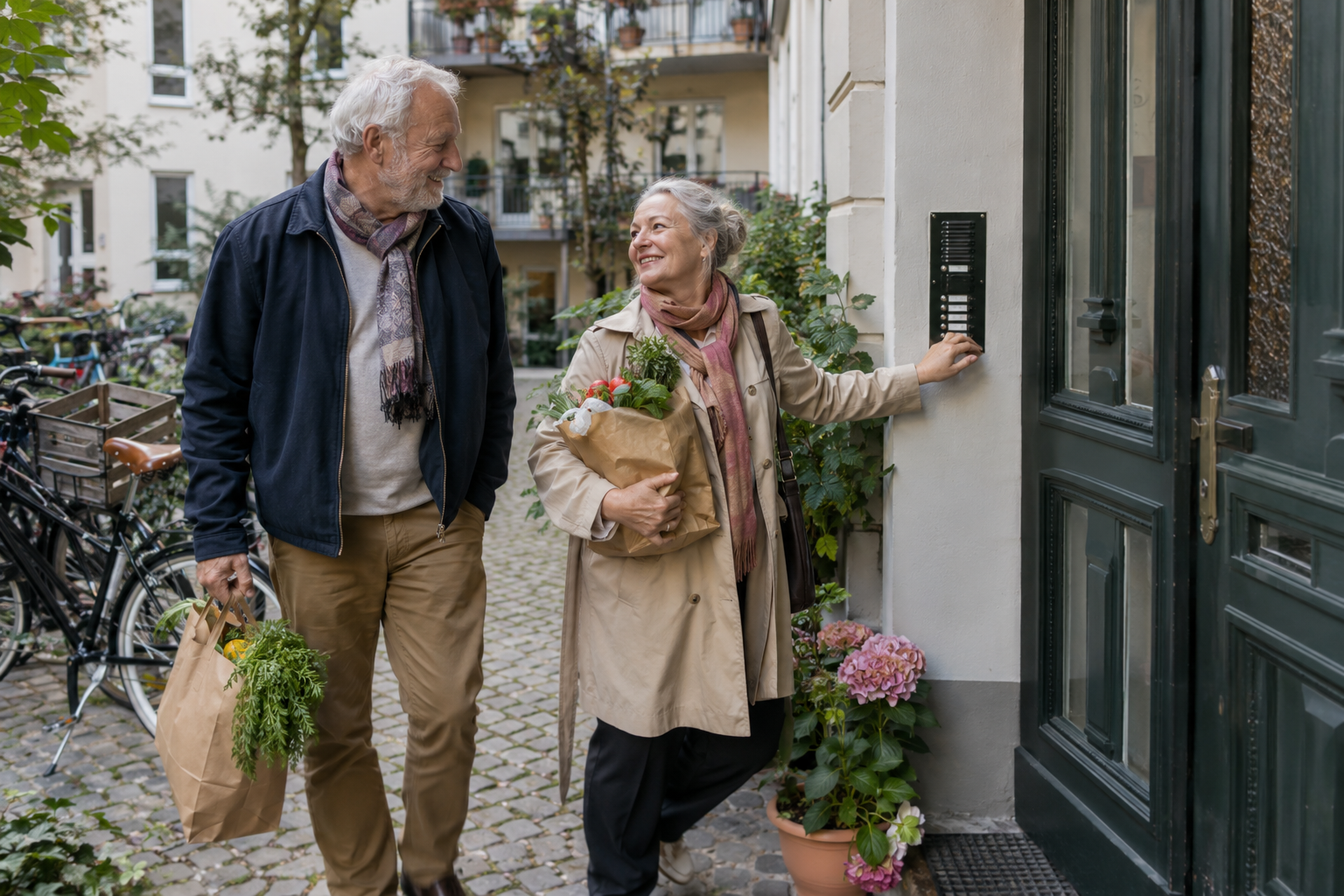
Now for the other side, because this is a real debate and the case for owning is genuinely strong, not a mere prejudice. The single most powerful argument for owning in retirement is protection against rising rents. A paid-off homeowner has locked in their housing cost forever, immune to the inflation that relentlessly pushes rents upward, while a renter faces the real and frightening prospect of their rent climbing year after year on a fixed retirement income, with no ceiling and no relief. Over a long retirement, that difference can be enormous, and it is the renter’s case’s greatest vulnerability. A person who retires at sixty-five may face twenty-five or thirty years of rising rents, and a housing cost that felt manageable at the start can balloon alarmingly by the end, whereas the owner of a paid-off home simply watches that whole risk pass them by.
There are other solid arguments too. Owning is a form of forced savings and leaves a valuable asset to pass on to heirs, which renting does not. It offers a security of tenure and a sense of permanence that even strong tenant protections cannot fully match, the deep comfort of knowing the home is unshakably yours.
For many people that emotional security is not a footnote but the whole point, worth accepting a worse financial deal for, and no spreadsheet can talk someone out of the peace of mind that comes from owning the roof over their head outright. And the renter’s entire financial case depends on a discipline many people lack, actually investing the freed capital wisely and leaving it alone, rather than spending it, since a retiree who frees $400,000 by renting and then gradually consumes it has thrown away the whole advantage and will end up worse off than the homeowner. The renter’s math works beautifully on paper, but only for someone with the discipline to make it real.
This is the honest weak point of the whole argument, since human beings are not spreadsheets, and a lump sum sitting in an investment account is far easier to dip into than equity locked in a house, so the very illiquidity that the renter’s case counts as a cost of owning is, for the undisciplined, quietly one of its virtues.
Where It Leaves You

So where does all of this leave an individual retiree staring at the choice? Not with a simple answer, but with a genuine one, which is more than the American reflex offers. The honest conclusion is that renting in retirement is a legitimate, often financially smart strategy that Americans dismiss far too quickly, out of cultural habit rather than arithmetic, and that the Europeans who do it are not settling for less but often quietly coming out ahead. The reflexive American horror at renting is a cultural inheritance, not a mathematical truth, and treating a genuine financial trade-off as a settled moral question is exactly how people talk themselves out of running the numbers at all. The throwing-money-away framing is simply too crude to be useful, since owning has its own large hidden costs and its own frozen capital, and running the actual numbers, rather than reciting the catechism, is the only responsible way to decide.
But it is equally honest to say that owning’s core advantage, immunity from rising rents, is real and powerful, especially over a long retirement, and that the renter’s case rests on investment discipline that not everyone has. The genuinely correct answer depends on your local rent-to-price ratio, your discipline as an investor, your appetite for flexibility versus security, and your feelings about leaving an inheritance, none of which a general article can settle for you. In a city where homes are cheap relative to rents, buying may clearly win; in one where they are wildly expensive, renting and investing may win by a mile; and your own temperament decides the rest, which is precisely why the honest answer is to run your own numbers rather than to inherit anyone else’s certainty.
What the European example proves is not that everyone should rent, but that lifelong and lifelong-into-retirement renting is a rational, comfortable, dignified choice that deserves to be weighed on its merits rather than ruled out on instinct. Run the math for your own situation honestly, and you may find, as millions of Europeans have, that there is more than one right way to house yourself in old age. This is general information rather than financial advice, and a choice this consequential is worth working through with a qualified financial professional who can model your own particular numbers.

About the Author: Ruben, co-founder of Gamintraveler.com since 2014, is a seasoned traveler from Spain who has explored over 100 countries since 2009. Known for his extensive travel adventures across South America, Europe, the US, Australia, New Zealand, Asia, and Africa, Ruben combines his passion for adventurous yet sustainable living with his love for cycling, highlighted by his remarkable 5-month bicycle journey from Spain to Norway. He currently resides in Spain, where he continues sharing his travel experiences with his partner, Rachel, and their son, Han.