
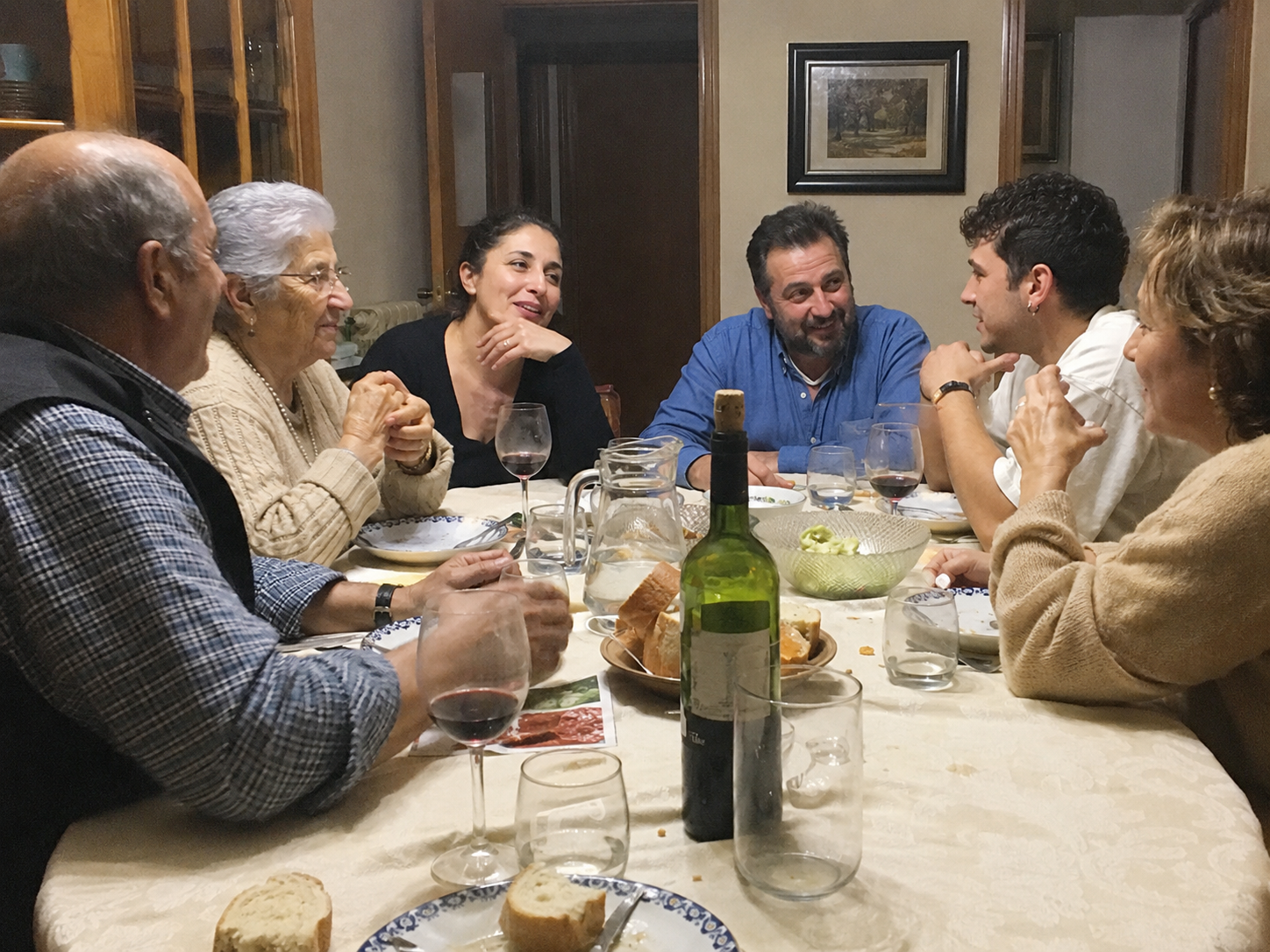
Every piece of American health advice I had ever absorbed said the same thing about eating dinner at nine at night: do not do it. Late eating, I had been told my whole life, makes you gain weight, wrecks your sleep, gives you indigestion, and slows your metabolism, and the sensible person finishes dinner by six or seven and certainly does not eat before bed. Then I moved to eating like the Spanish, who sit down to dinner at nine or ten as a matter of course and are among the healthiest, longest-lived people on earth, and I did it for thirty days to see which version of reality was true. The short answer is that almost none of the predicted doom arrived, and the longer answer, about why, is more interesting and more honest than a simple myth-busting victory lap.
What follows is what I was braced for, what actually happened, and what the research really says about eating late, which turns out to cut both ways. The honest version is more useful than either the panic or a smug takedown of it.
The Warnings I Was Braced For

The American case against late eating is stated so confidently and so often that it feels like settled fact. Eating late, the standard advice goes, means your body stores those calories as fat instead of burning them because your metabolism has slowed down for the night, so the same dinner eaten at nine does more damage than eaten at six. On top of that, you are warned that going to bed on a full stomach ruins your sleep and gives you heartburn, and that late-night eating is a fast track to weight gain and metabolic trouble. Whole diet programs are built around an early eating cutoff, and the phrase “nothing after eight” has the ring of a commandment repeated until no one thinks to question it.
It is advice repeated by magazines, trainers, and well-meaning relatives, and it has hardened into a kind of folk law. So when I decided to spend a month eating dinner at the Spanish hour, I genuinely expected to pay for it, to watch the scale climb, sleep badly, and feel heavy and sluggish. The whole experiment was set up as a test of predictions I had every reason to believe, which is what made the result so surprising. I fully expected to be writing a cautionary tale, and instead found myself writing something closer to a quiet correction.
What Actually Happened

The honest report of thirty days of nine o’clock dinners is that the disasters did not come. My weight did not climb, staying flat across the month within the ordinary small fluctuations, and my sleep, which I had braced to lose, was essentially unchanged, since I was not going to bed the instant I finished eating but living on a later schedule the way the Spanish do. The dreaded indigestion never really materialized either, beyond the ordinary result of the odd too-large meal, which would have happened at any hour.
If anything, the month felt pleasant rather than punishing. Eating dinner later meant a longer, more relaxed evening, a proper unhurried meal at the end of the day rather than a rushed early one, and the whole rhythm felt more civilized than I expected. The late dinner became something to look forward to rather than something to fear, which is not what the warnings had led me to imagine at all. Whatever the American warnings had promised, my actual experience was of a body that handled a nine o’clock dinner without complaint, which sent me to the research to understand why the confident predictions had missed so badly. I should be honest that a single person’s month is not evidence of anything on its own, and I could not separate the timing from everything else in my life, but the sheer absence of the promised disasters was striking enough to be worth understanding, and the research turned out to explain it neatly.
Why the Simple Version Is a Myth

The research on what drives weight is clear on the central point, and it is not the clock. The single biggest determinant of whether you gain weight is how many total calories you eat relative to what you burn, along with the overall quality of your diet, and controlled studies that hold calories equal find little to no difference in weight change between eating earlier and eating later. When the calories match, the hour on the clock largely does not decide your weight, which knocks the legs out from under the simplest version of the warning.
The idea that your metabolism shuts down at night and stores late calories as fat is, in that crude form, a myth. Your body does not stop burning energy because the sun went down, and a moderate dinner eaten at nine is not chemically transformed into fat by the hour it was eaten.
This is why the Spanish, and much of the Mediterranean, can eat late and remain healthy, because they are not violating some iron law of metabolism, they are simply eating on a different schedule, and the schedule alone is not what makes people gain weight. The real culprits behind late-eating weight gain, where it happens, are usually that late eaters eat more overall and eat worse, the mindless second dinner, the bag of chips in front of the television, not the mere timing. Studies that follow real people do sometimes find late eaters heavier, but when researchers dig in, the extra weight tracks with extra calories and poorer food choices rather than the hour itself, so the clock takes the blame for what the fridge actually did.
But Timing Is Not Nothing

Honesty requires the other half of the story, because the research does not hand the myth-busters a clean win either. There is a real and growing field, sometimes called chrononutrition, showing that meal timing does interact with the body’s circadian rhythm in ways that matter, and that eating very late can have modest metabolic effects even when calories are held equal. Some careful studies have found that identical meals eaten late produce higher post-meal blood sugar, slightly lower energy expenditure expenditure, and changes in fat metabolism compared to the same meals eaten earlier, and that people who eat most of their calories early tend to have somewhat better metabolic markers.
So the truthful position is not that timing is irrelevant but that it matters far less than the loud American advice implies, and in more specific ways. For most healthy people eating a sensible amount, moving dinner a few hours later is not going to cause the weight gain and ruin they fear. But timing is a real, if secondary, variable, and someone managing blood sugar or metabolic issues might reasonably pay more attention to it. The honest headline is that the clock is a minor character in the story of weight and health, not the villain it has been cast as, and that total calories, food quality, and how you eat late matter far more than the simple hour. It is the difference between a rule and a consideration, since a rule says never eat after a certain time or you will suffer, while a consideration says that all else being equal, earlier is marginally better for some people, which is true but a great deal less frightening and a great deal more accurate.
The Sleep Question, Honestly
Sleep deserves its own look, because it is the one warning that has a real kernel inside the exaggeration. It is genuinely true that lying down with a very full stomach can disrupt sleep and trigger reflux, since gravity is no longer helping keep stomach acid where it belongs, and a huge heavy meal eaten immediately before bed is a real recipe for a restless night. On that narrow point, the American advice is not wrong.
But the warning quietly assumes you eat and then immediately sleep, which is exactly what the Spanish do not do. Eating a moderate dinner at nine and going to bed at half past eleven or midnight leaves the food two or three hours to settle before you lie down, which is plenty, and it is why the Spanish late dinner does not wreck their sleep. The problem was never the hour on the clock but the gap between the last bite and the pillow, and once that gap is respected, a late dinner and good sleep coexist perfectly well. My own sleep through the month was the proof, unchanged and untroubled, because I never ate large and lay down fast.
What This Says About Health Advice
Stepping back, the most useful thing the month taught me was not about dinner at all but about how to hold confident health advice, because the late-eating rule is a perfect specimen of a certain kind of dietary dogma. It takes a small, real, conditional effect, that a huge meal right before bed is a bad idea, and inflates it into a sweeping, absolute law, that eating after some fixed hour is dangerous for everyone always. The real science underneath is quieter, more conditional, and more honest than the slogan.
This pattern repeats across a great deal of nutrition advice, where a nuanced finding gets flattened into a rule you can print on a magazine cover, and the rule then takes on a life of its own long after the science has moved on. The antidote is not cynicism but curiosity, asking what the actual research says rather than accepting the confident version, and being willing to test a scary rule against reality. A whole country eating happily and healthily at nine at night is a large piece of evidence, and it was sitting there in plain sight the whole time the advice insisted it could not be so. Whenever a health rule flatly contradicts the everyday reality of a large, healthy population, that contradiction is worth more attention than the rule, because the rule is the thing more likely to be wrong.
How the Spanish Actually Do It
The key to the whole paradox is that the Spanish do not eat late the way an American bingeing at midnight eats late, and the difference is everything. In Spain the big meal of the day is lunch, eaten in the early afternoon, so the nine o’clock dinner is often the lighter meal, not a heavy feast, which means the late meal is modest by design. Eating a light dinner late is a very different thing from eating a huge one late, and much of the American warning imagines the huge version.
Just as important, the Spanish do not eat at nine and collapse into bed at nine thirty. Their whole schedule is shifted later, so a nine o’clock dinner is followed by a couple of hours of evening life before a later bedtime, leaving the gap between eating and sleeping that actually protects digestion and sleep.
And the food itself is the Mediterranean pattern, vegetables, fish, legumes, olive oil, real cooking, rather than processed late-night snacking. So the Spanish late dinner works because it is light, early enough before a late bedtime, and made of good food, which is a completely different animal from the doom the American advice describes. They are not getting away with something risky, they have simply built the habit correctly. It is a useful reminder that a practice can look reckless from the outside and be perfectly sound once you understand its structure, and that judging the Spanish dinner by the American habit it superficially resembles gets the whole thing wrong. The hour is the same, but everything around it is different.
What Made It Work for Me
Once I understood the Spanish version, the lessons for doing it well were obvious, and they are the difference between a late dinner that harms you and one that does not. The first is to keep the late meal on the lighter side rather than making nine o’clock the moment for the biggest, heaviest plate of the day, which is easiest if lunch has done the heavy lifting. A light, good late dinner sits well and sleeps well in a way a giant one never will. The trick is really to shift the day’s weight forward, making lunch the substantial meal and letting dinner be the smaller bookend, which is the single biggest structural difference between the Spanish way and the American one and the thing that makes the late hour harmless.
The second is to leave a real gap before bed, not eating at nine and lying down at nine thirty, but giving yourself a couple of hours upright and awake for the meal to settle, which is simply how the Spanish live anyway. Do those two things, keep the food real rather than processed, and a nine o’clock dinner becomes not a health risk but a pleasant, civilized way to end the day. The thirty days taught me that the timing was never really the problem, and that the American advice had confused a specific bad habit, a huge processed meal eaten right before sleep, with the entire innocent category of eating dinner late. Strip away that one genuinely bad version, and what remains is one of the most civilized habits Europe has to offer, a proper, unhurried, later dinner that closes the day rather than rushing it, and that I was sorry to give up when the month was over.

About the Author: Ruben, co-founder of Gamintraveler.com since 2014, is a seasoned traveler from Spain who has explored over 100 countries since 2009. Known for his extensive travel adventures across South America, Europe, the US, Australia, New Zealand, Asia, and Africa, Ruben combines his passion for adventurous yet sustainable living with his love for cycling, highlighted by his remarkable 5-month bicycle journey from Spain to Norway. He currently resides in Spain, where he continues sharing his travel experiences with his partner, Rachel, and their son, Han.