

There is a small, almost embarrassingly simple idea that nutrition researchers keep returning to, testing it again and again because it keeps working, and it costs nothing and forbids nothing. The idea is this: eat your vegetables and your protein first, and save the bread, rice, potatoes, and pasta for last. Not less of them, not none of them, just later in the meal. I did it for a month, starting every lunch and dinner with the vegetables on my plate before touching the carbohydrates, and the interesting part is not what it did to me, which was modest, but how much real science sits behind such a humble trick. Researchers have been quietly confirming it for years. It is one of those rare bits of food advice that got more solid, not less, the more it was studied.
What follows is the trick stated plainly, what the studies actually found, why the order matters at all, and an honest account of who it helps and how much. The short version is that it is real, it is small, and it is one of the most sensible free habits you can pick up at the dinner table.
The Trick, Stated Simply
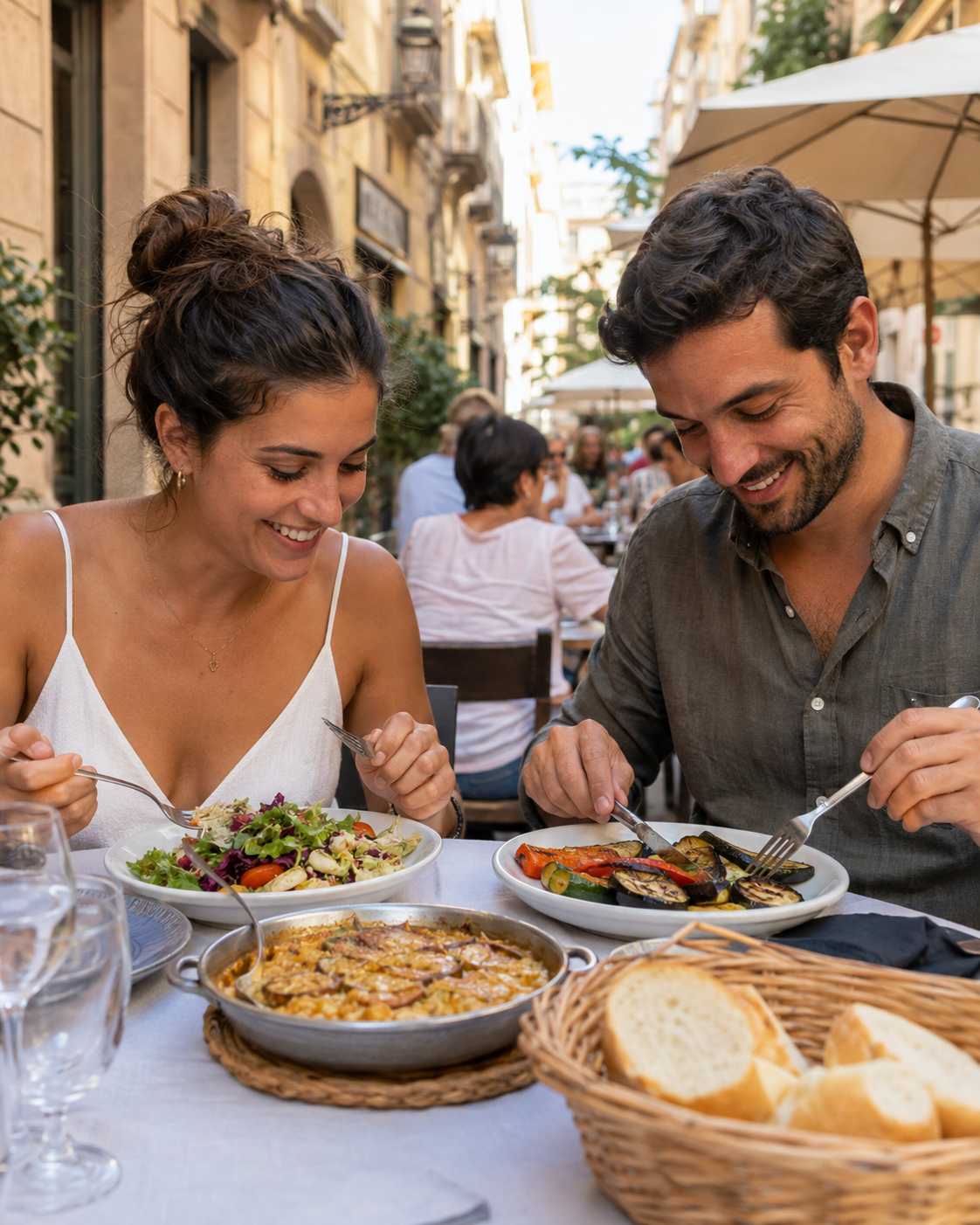
The whole thing fits in one sentence. When you sit down to a meal that includes carbohydrates, eat the vegetables and the protein first and the carbohydrates last, rather than everything mixed together or the bread first. The Spanish and Mediterranean habit of opening a meal with a vegetable first course does this almost by accident, and so does the old advice to eat your salad before your pasta, but the deliberate version is simply to put the starchy part of any meal at the end.
Nothing is removed and nothing is measured, which is what makes it so different from a diet. You eat the same meal, the same amount, the same foods you were going to eat anyway, and you only change the sequence in which they reach your fork. It is less a rule about what to eat than a small habit about the order of eating, and that is precisely why the researchers find it so appealing, because getting people to reorder a meal is far easier than getting them to give anything up.
What the Researchers Actually Found
The evidence here is genuinely interesting and more solid than most food-trick claims. In a much-cited study at Weill Cornell, researchers gave people with type 2 diabetes the identical meal on different days and only changed the order, and when the vegetables and protein came before the carbohydrates, post-meal glucose was markedly lower, by roughly 29 percent at thirty minutes, 37 percent at sixty, and 17 percent at two hours, with insulin lower too. Same food, same person, same amount, just a different sequence, and the blood sugar response changed substantially. That is the detail that makes the finding so striking, because it removes every other variable, since the meals were identical in every way except the order, so whatever changed had to come from the sequence alone.
It was not a one-off. The same team and others repeated the finding, and a later study in people with prediabetes found that putting the carbohydrates last cut the post-meal glucose spike by around 40 percent. A Japanese study using continuous glucose monitors found the same effect not only in people with diabetes but in people with normal blood sugar too, suggesting the trick is not only for the already-ill. Across these studies the picture is consistent, that the order in which you eat the parts of a meal has a real and measurable effect on how your body handles the sugar in it, which is a genuinely useful thing to know and rare in the noisy world of eating advice.
Why the Order Matters at All
The mechanism behind it is satisfying to understand, because it makes the whole thing feel less like a gimmick and more like plumbing. When you eat fiber from vegetables first, it forms a kind of mesh in the stomach and slows the rate at which everything, including the carbohydrates that follow, is digested and released into the bloodstream, so the sugar arrives as a gentle rise rather than a sharp spike. The protein and vegetables also seem to trigger the early release of gut hormones like GLP-1, which prime the body to handle the incoming glucose more smoothly.
There is also simple timing at work, since food eaten first slows the emptying of the stomach, so by the time the carbohydrates arrive they are metered out more slowly into the system rather than hitting all at once. None of this changes how many calories or carbohydrates you eat, it changes the speed at which they are absorbed, turning a fast spike into a slow curve. That is the entire trick, and it is why it works with the same meal in the same amount, because it is not about eating less but about smoothing the delivery of what you eat. The body, it turns out, cares not only about what arrives but about the order in which it does. It is a reminder that digestion is a process unfolding in time, not a single event, and that where a food sits in the sequence of a meal changes how the whole system responds to it.
How to Actually Do It
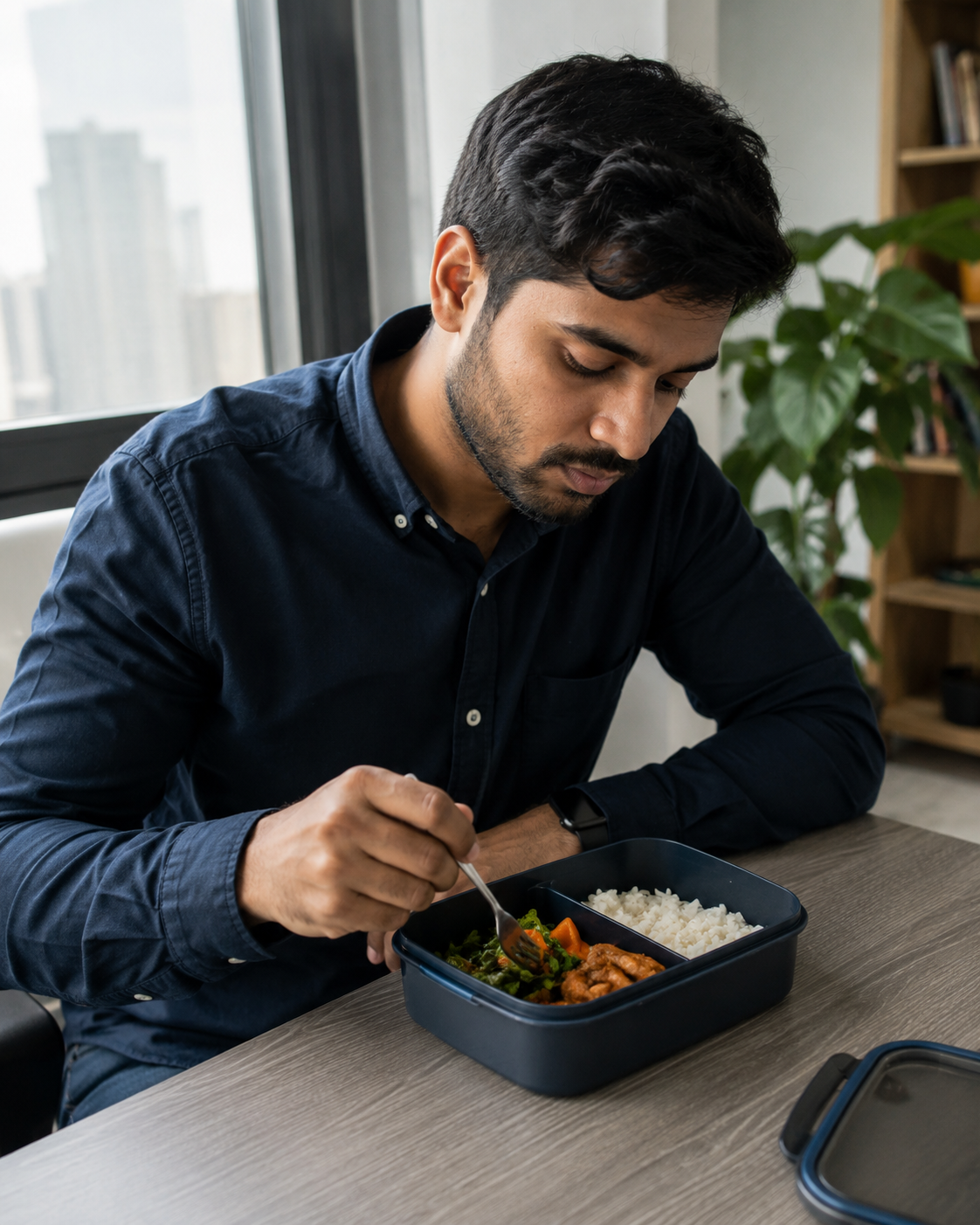
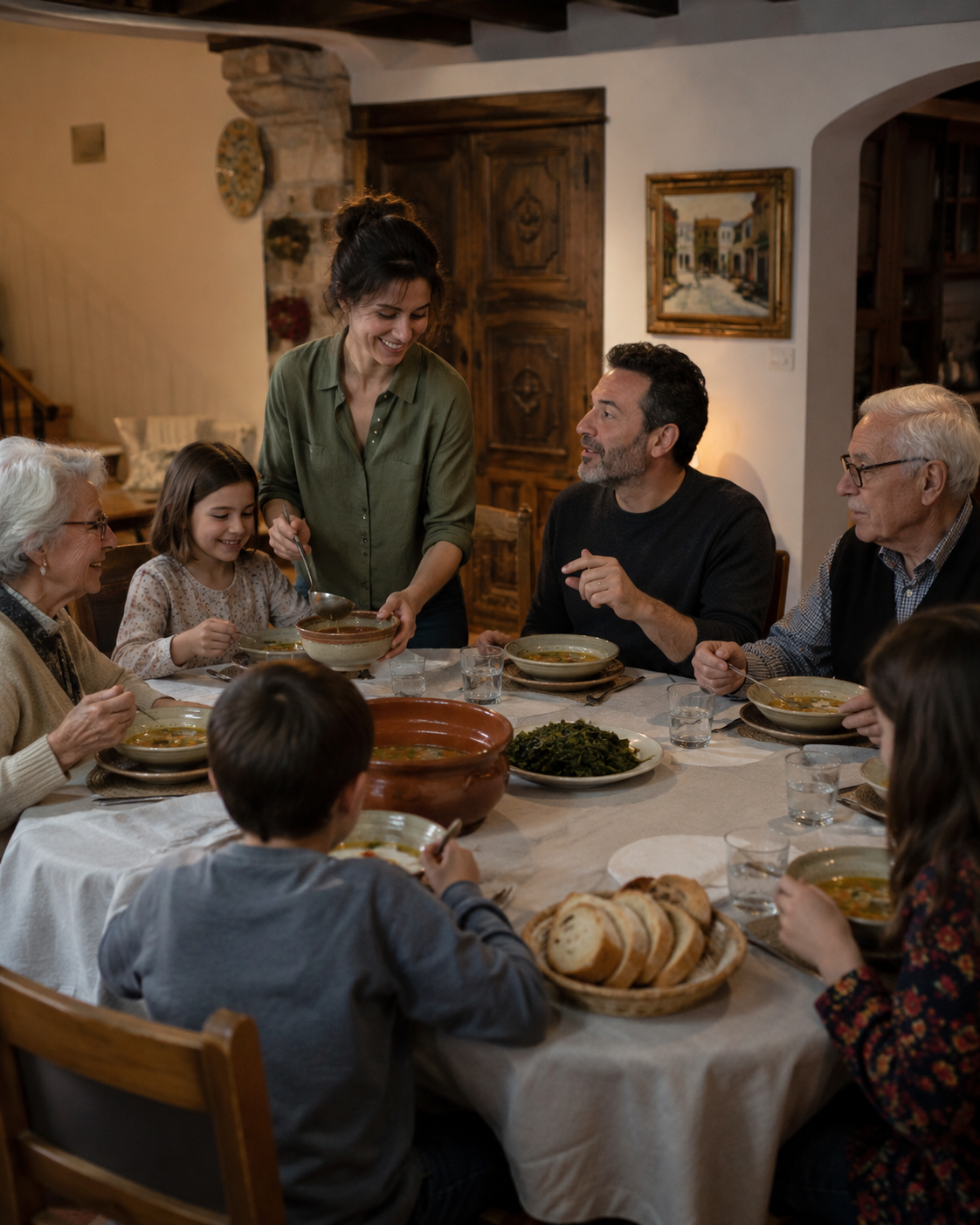
The practical version is refreshingly easy, and it slots into almost any way of eating without special effort. The simplest approach is to serve or eat the vegetables as a genuine first course, a salad, a plate of cooked greens, a bowl of vegetable soup, finishing it before the main starchy part of the meal even arrives, which is exactly the Mediterranean and Spanish habit of the vegetable primer plato. When everything is on one plate together, you just make a point of eating the vegetables and the protein down first and turning to the bread, rice, or pasta last.
It works with food from anywhere, since every cuisine has vegetables and a starch, so it is a salad before the pasta in Italy, the vegetables and fish before the rice in Japan, the greens before the bread anywhere at all. There is no need to be rigid about it, and a meal that is all one thing, a bowl of soup, a sandwich, needs no reordering at all. The habit only matters when a meal has a clear starchy component and clear vegetables and protein alongside it, and there the move is simply to front-load the vegetables and let the carbohydrates come at the end. Practiced a few times it stops being a conscious decision and becomes just how you eat, which is the point at which any food habit is actually worth having.
Why Researchers Keep Coming Back to It
There is a reason this particular idea has drawn study after study while flashier diet claims come and go, and it says something about what makes advice actually work. Most nutrition guidance fails not because it is wrong but because people cannot stick to it, since telling someone to eat less of a food they love, or to count and weigh and restrict, runs headlong into human nature and rarely lasts past a few weeks. Food order asks for none of that, which is exactly what excites the researchers, because here at last is a change people might actually keep.
One of the Weill Cornell scientists put the appeal in a memorable way, that instead of telling patients “don’t eat that,” a clinician could tell them “eat this before that,” and the difference between a prohibition and a reordering is the difference between a rule people abandon and one they can live with. That is why the studies keep coming, not because the effect is enormous but because the effect is real and the habit is genuinely sustainable, a rare and valuable combination. A modest benefit that people will actually adopt can, across a population and a lifetime, do more good than a dramatic one that nobody keeps up, and that is the quiet promise the researchers keep testing for.
Who It Helps Most, and Who Less
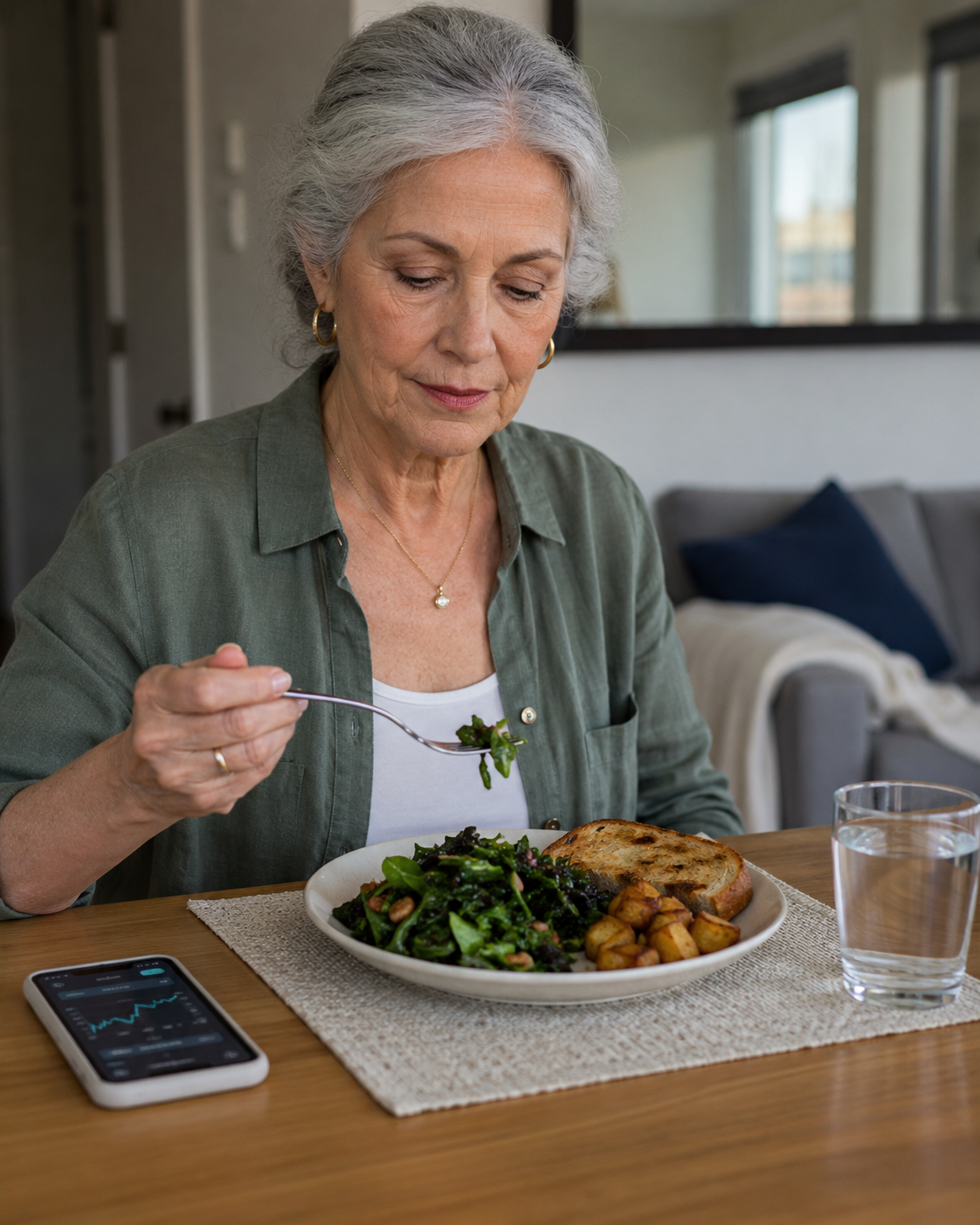
Here is where honesty has to temper the enthusiasm, because the trick is far more meaningful for some people than others. The strongest, clearest benefit is for people who already struggle to manage their blood sugar, those with type 2 diabetes or prediabetes, for whom blunting the post-meal glucose spike is a genuinely valuable, clinically relevant thing that can support the work their medication and diet are already doing. For these readers, food order is a real tool worth knowing. It will not replace anything their doctor has prescribed, but as a free habit that gently supports blood-sugar control at every meal, it belongs in the toolkit alongside the other things that help.
For a healthy person with normal blood sugar, the picture is gentler and less certain. A post-meal glucose rise is a completely normal thing that a healthy body handles perfectly well, and while the studies show the order still lowers the spike in such people, whether that translates into any long-term health benefit for someone who is already metabolically healthy is simply not established. The honest position is that this is a helpful, evidence-backed habit for anyone managing blood sugar and a harmless, possibly mildly beneficial one for everyone else, rather than a miracle that transforms a healthy person’s health. It costs nothing to do, so there is little reason not to, but it is not magic and should not be sold as such.
What the Month Actually Felt Like

The lived experience of thirty days of vegetables-first was quiet and rather pleasant, if undramatic. The most noticeable thing was not any measurement but a behavioral side effect, that starting each meal with the vegetables meant I actually ate them, all of them, instead of leaving them half-finished beside a plate of pasta I had filled up on first. Front-loading the vegetables turned out to be the most reliable way I have ever found to simply eat more vegetables, which is a genuine good regardless of any glucose curve. When the vegetables are the thing standing between you and the rest of the meal, you finish them, whereas when they sit as a neglected side next to something more tempting, they are the first thing left behind. The order quietly solved a problem that years of good intentions never had.
Beyond that, the honest report is subtle. Some days I felt a little steadier after lunch, without the heavy mid-afternoon slump that a big carbohydrate-first meal can bring, though I would not want to oversell a feeling that is easy to imagine into being. There was no dramatic transformation, no visible change, just a small, sustainable adjustment to the order of a meal that left me eating more vegetables and, on the science’s word, handling my meals a little more smoothly underneath. That modesty is the truth of it, and it is worth more than a breathless before-and-after that would not survive contact with reality.
It Is About Order, Not Restriction
This is the part worth underlining, because it is what sets the food-order habit apart from the anxious world of dieting. Nothing is forbidden here, nothing is counted, and nothing is made smaller, since you eat the whole meal, the bread and the pasta and the potatoes included, exactly as before. The only change is the sequence, which means there is no deprivation to white-knuckle through and no food cast as the enemy, and that makes it one of the gentlest eating habits a person can adopt.
That gentleness matters for more than comfort, because a habit that asks nothing to be given up is one a person can actually keep, and it carries none of the risk that restrictive eating can. If reordering a meal ever started to feel like a rule to obsess over or a way to police what you eat, that would be the moment to loosen it, since the entire appeal of this one is that it is relaxed, additive, and free of the anxiety that so much food advice carries. You are adding a good habit, eating your vegetables first, not subtracting anything at all.
Holding the Hype Loosely
It is worth saying plainly that this idea has been picked up and oversold, because a genuinely modest, useful finding has in some corners been inflated into a promise that avoiding glucose spikes is the secret to weight, energy, and long life for everyone. The research does not support that grand version. The spikes that are worth blunting matter most for people managing diabetes, and for a healthy person the normal rise and fall of blood sugar after a meal is not a problem to be feared or a villain to be defeated with elaborate hacks.
The sensible way to hold this is as a small, real, well-studied habit with a clear mechanism and a genuine benefit for the right people, not as a cure-all or a reason for anxiety about every meal. Eat your vegetables first because it is easy, because it is backed by real studies, and because it reliably gets more vegetables into you, and let the rest of the hype wash past. A true thing does not need to be exaggerated to be worth doing, and the quiet, honest version of this trick is plenty good on its own. It is a small, free, evidence-backed nudge in a healthy direction, and treated as exactly that, no more and no less, it earns its place in how you eat without ever needing to become a fixation.
Do hold the bigger claims loosely, and do talk to your own doctor if blood sugar is your concern, since the studies here are small and short-term, the clearest benefits show up in people managing diabetes or prediabetes rather than the already-healthy, and if you take any medication that affects your blood sugar, a change that lowers it is worth mentioning to the professional who manages your care.

About the Author: Ruben, co-founder of Gamintraveler.com since 2014, is a seasoned traveler from Spain who has explored over 100 countries since 2009. Known for his extensive travel adventures across South America, Europe, the US, Australia, New Zealand, Asia, and Africa, Ruben combines his passion for adventurous yet sustainable living with his love for cycling, highlighted by his remarkable 5-month bicycle journey from Spain to Norway. He currently resides in Spain, where he continues sharing his travel experiences with his partner, Rachel, and their son, Han.