

Put a platter of buttered corn on the cob on an American cookout table and it disappears in minutes, a beloved and unquestioned staple of summer. Put the same platter in front of a room of Europeans and you may get some polite confusion, a few raised eyebrows, and, from at least a couple of them, the quiet thought that you are serving them the food they give to their pigs. This is one of the great, funny, and genuinely real divides between American and European eating, a gap so wide that a vegetable Americans consider the essence of a summer gathering is one many Europeans consider fit mainly for livestock. And the strange part is that Europe grows an enormous amount of corn, just not for the reason you would think.
What follows is why the fields of Europe are full of corn that never reaches a human plate, where the animal-feed reputation comes from, and where in Europe you actually can find someone eating it off the cob. It is one of the most charming little differences between the two food worlds, and a genuinely useful one to know before you hand a cob to a visitor.
The Fields Are Full, the Plates Are Not

Drive through the French countryside, or parts of Italy, Spain, or Germany, and you will see fields of maize stretching to the horizon, so much of it that you might assume corn is as central to the European table as it is to the American one. It is not. The overwhelming majority of the corn grown in Europe is field corn, destined for animal feed, biofuel, and industrial uses, and only a tiny fraction is the tender sweet corn that a person actually eats. Europe, in other words, grows mountains of corn and eats almost none of it directly.
This is the paradox at the heart of the whole thing. The corn is everywhere in the landscape and almost nowhere on the plate, because in Europe it is understood primarily as a crop to fatten cattle and pigs rather than a food to feed people. An American looking at those fields sees the makings of a thousand cookouts, while a European looking at the same fields sees feed for the farm, and both are looking at the identical plant. The difference is entirely in what each culture has decided corn is for. And that decision, once made, becomes nearly invisible to the people living inside it, so an American genuinely cannot imagine why anyone would not eat such an obvious summer treat, while a European genuinely cannot imagine why anyone would eat what is so plainly a farm crop. Neither is wrong, they have simply inherited opposite assumptions so complete that each looks like plain common sense from the inside.
Corn Is What You Feed the Animals
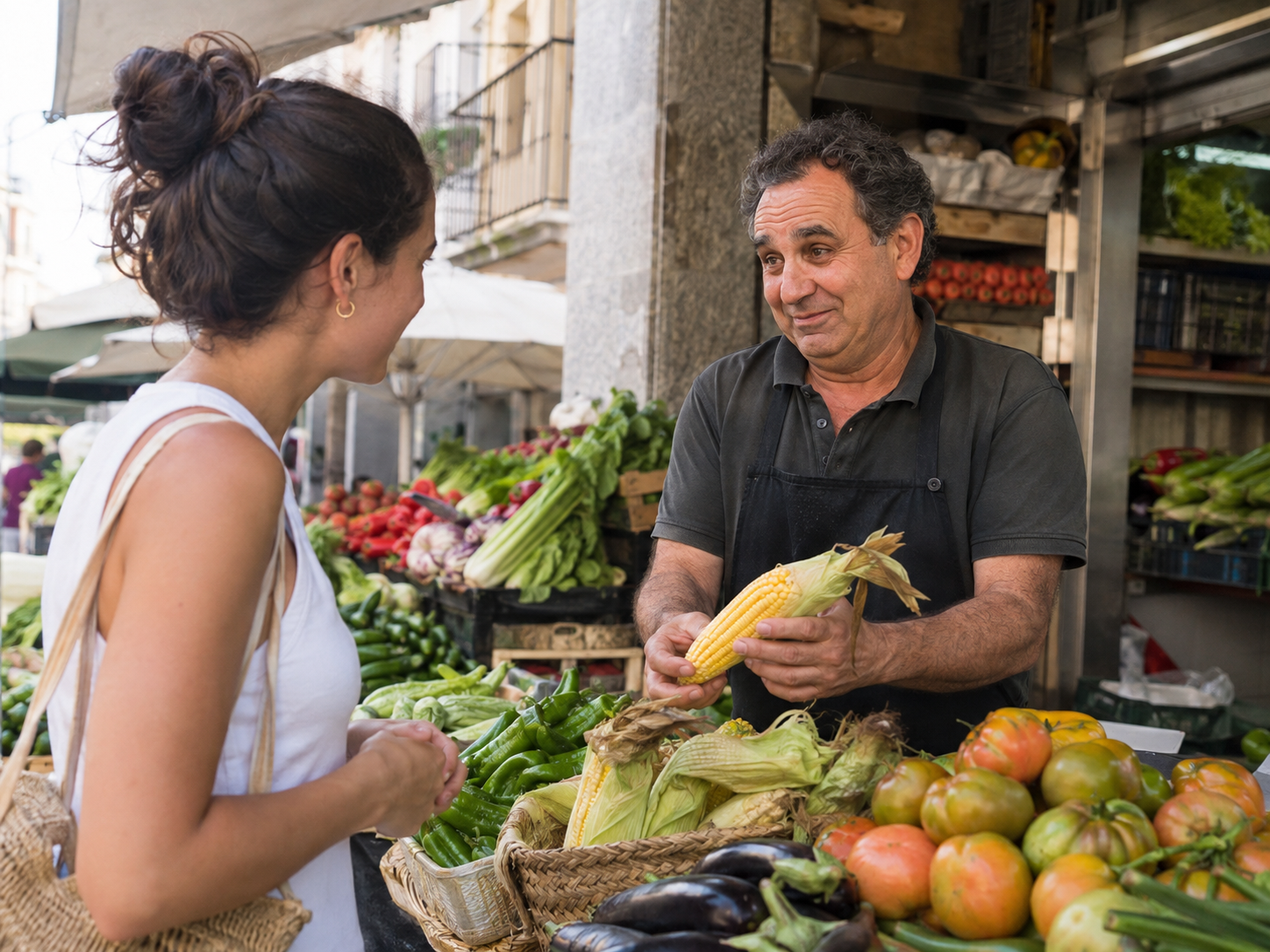
The animal-feed reputation is not a myth or a snobbish exaggeration, it is a genuine and deeply held cultural association across much of Europe. To a great many Europeans, corn is simply what you give to livestock, the stuff of troughs and silos, and the idea of putting it on a dinner plate for a person carries a faint whiff of the barnyard. In Italy, for instance, most of the corn grown goes to fatten the very pigs that become the country’s famous prosciutto, so an Italian may quite reasonably think of corn as an early stage of ham rather than a food in its own right.
This perception colors how corn on the cob is received when Americans serve it abroad, or to European visitors at home. It is not that anyone is being rude, it is that the dish genuinely reads to them the way a bowl of hay or a scoop of pig feed might read to an American, as food that belongs on the farm rather than the table. The reaction is less snobbery than sincere cultural puzzlement, the same look an American might give a European casually eating something the American had only ever seen used as bait or fertilizer. Each side is simply working from a different idea of what the plant is for. And because that idea was absorbed in childhood, long before anyone thought to question it, it feels not like an opinion but like an obvious fact about the world, which is exactly what makes these food divides so entertaining, that two reasonable people can look at the same ear of corn and one sees dinner while the other sees the contents of a feed sack.
A Wheat World Meets a New World Grain
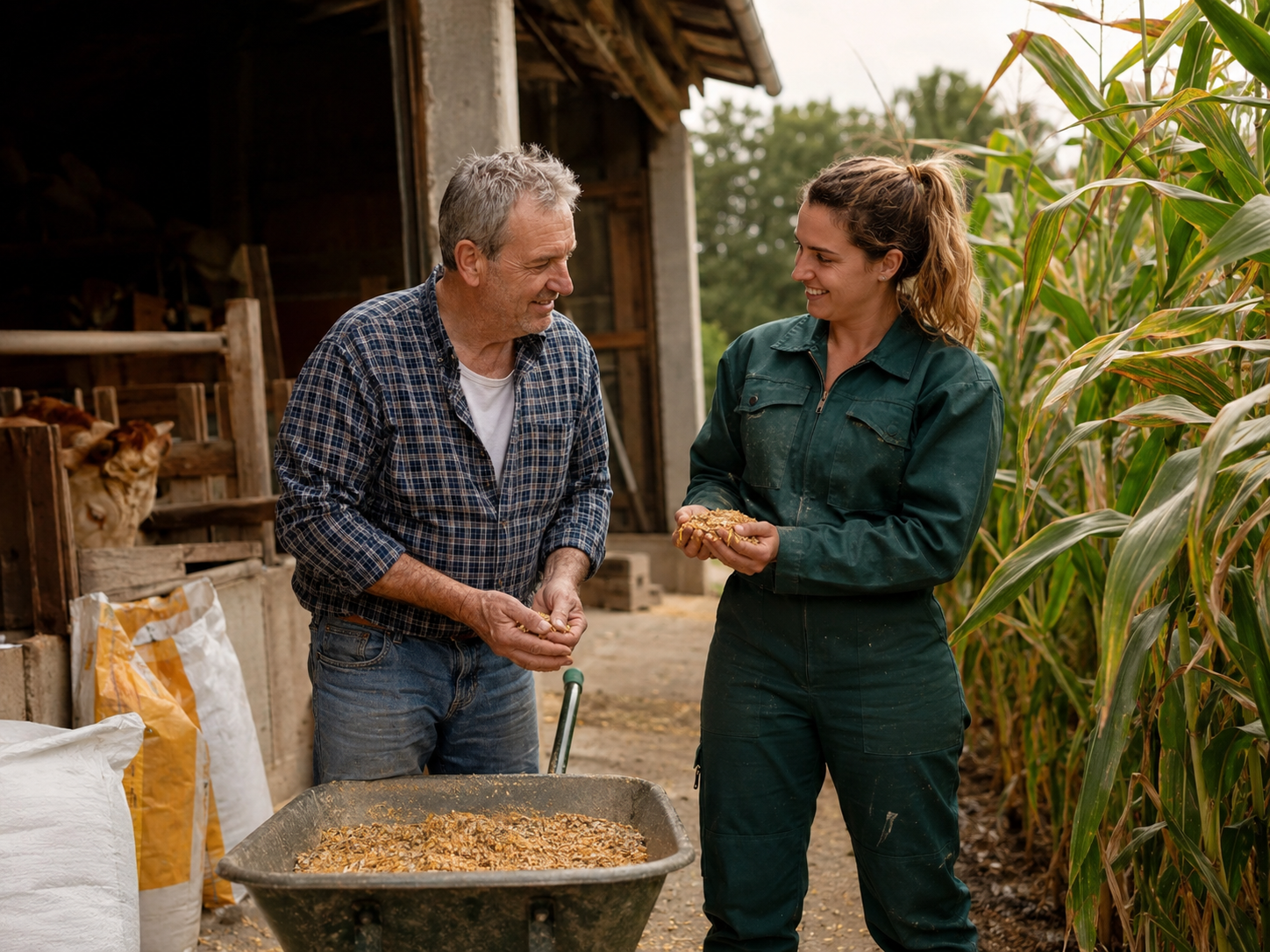
To understand the divide you have to go back to where corn came from, because it is not a European plant at all. Maize is native to the Americas, and it arrived in Europe only after Christopher Columbus carried it back across the Atlantic at the end of the fifteenth century, landing in a continent that already had its staple grain firmly established. Europe was, and to a large degree still is, a wheat culture, its bread and its identity built around wheat over thousands of years, and the newcomer grain simply did not have a place at that table.
So corn was adopted in Europe for the roles wheat did not fill. It became an ornamental curiosity, then a reliable animal feed, and in the poorer regions where wheat grew badly it became a cheap food of last resort, ground into cornmeal for polenta in northern Italy and similar dishes across the Balkans and Romania. That history left corn with a double reputation in Europe, as fodder on the one hand and as humble peasant food on the other, neither of which is the glamorous summer treat it became in America. The American love of corn on the cob grew from a completely different history, one in which corn was never the poor cousin of wheat but a founding crop of the country itself. That single difference in origin explains most of the divide, because a food’s reputation is set early and lingers for centuries, and corn entered the two continents wearing two entirely different costumes, the honored native staple in one and the strange foreign fodder in the other. Centuries later, the costumes have barely changed.
Sweet Corn Is the New Kid

Here is a detail that surprises people on both sides, which is that the specific corn Americans eat off the cob, tender and sugary sweet corn, is a relatively modern thing even in the United States, and a genuinely recent arrival in Europe. Sweet corn as a distinct eating variety spread through Europe only from around the 1970s, beginning in France, which means that for most of European history the option of a sweet, juicy cob was not even on the table, because that corn did not really exist there yet.
This late arrival is a big part of why corn on the cob never became a European tradition. By the time sweet corn showed up, European cuisines were long settled, their summer vegetables and their gathering foods already chosen, and a newcomer grain still shadowed by its animal-feed reputation was never going to leap onto the barbecue.
Where corn did find a foothold in modern Europe, it tended to be in its tinned form, scattered on salads, tucked into sandwiches and wraps, and, most controversially, sprinkled on pizza in places like Germany and the United Kingdom, a habit that horrifies Italians. The cob itself, boiled or grilled and slathered in butter, remained largely an American affair. It is a useful reminder that many food traditions we assume are ancient are in fact quite young, and that the absence of a dish from a cuisine often has less to do with taste than with timing, with what happened to be available and fashionable at the moment that cuisine set its habits. Sweet corn simply arrived in Europe too late to get a seat at the table.
Why Americans Love It So Much
To understand the divide fully, it helps to see the other side of it, because corn on the cob is not just a food in America but a piece of the national summer itself. It is bound up with childhood, with county fairs and backyard barbecues and Fourth of July and Labor Day, a sensory shorthand for warm evenings and family gatherings, so that biting into a buttery, salty cob is as much about memory and season as it is about taste. Few foods carry that much nostalgic weight, and none of it attached itself to corn in Europe.
The reason runs deep in American history, since corn was never a poor relation there but a founding crop, grown by Native Americans for millennia and adopted by the first colonists as the plant that kept them alive. Corn is woven into the American story in a way it never could be in a Europe that already had wheat, so where the European inherited corn as animal feed and famine food, the American inherited it as a symbol of the land itself. Two peoples received the same grain and wrote it into completely different stories, and the buttered cob on the summer table is the happy ending of the American version.
The Corn Nobody Sees
There is a final twist that flips the whole divide on its head, which is that Americans actually eat far more corn than Europeans do, they just cannot see it. While the corn on the cob is the visible, celebrated tip of it, the vast bulk of American corn is invisible, turned into the high-fructose corn syrup that sweetens the sodas, the feed that produces the beef and chicken, the starches and oils hidden in nearly every processed food on the shelf. The average American consumes an enormous amount of corn without ever seeing a kernel, because it has been dissolved into the entire food system.
So the real picture is almost the reverse of how it looks. Europeans grow corn openly in their fields and feed it to their animals, keeping it visible and honest and off their own plates, while Americans hide their corn inside everything they eat and then celebrate a single buttered cob as the one time they meet it face to face. Each culture, in its way, eats corn through its animals and its food supply, but only one of them also gnaws it straight off the stick at a summer party. The great corn divide, seen this way, is not really about how much corn each side eats but about which corn each side is willing to look in the eye.
Where Europe Does Eat It
The divide is real but it is not absolute, and it is softening, so it would be unfair to claim no European ever enjoys corn on the cob. The clearest exception is Greece, where grilled sweet corn is a genuinely beloved street food, sold by vendors who brush the cobs with olive oil and sprinkle them with sea salt, a preparation many Greeks would rank among their favorite summer snacks. There, at least, corn on the cob is not fed to animals but sold with pride on the street. It is a lovely exception, and a reminder that the divide is a general tendency rather than an iron law, since somewhere in Europe, on a warm evening, someone is happily eating exactly the food their neighbors a border away consider fit only for pigs.
Elsewhere the picture is slowly shifting too. Younger Europeans, more exposed to American food culture, are warmer to corn on the cob than their grandparents were, and you will now find it turning up at some barbecues, on some restaurant menus, and increasingly in supermarkets during the summer. Tinned sweet corn, meanwhile, is thoroughly established across the continent as a salad and sandwich ingredient, so it is not as though corn is unknown, only that the specific ritual of gnawing a buttered cob has never taken hold the way it has in America. The animal-feed reputation is fading, but slowly, and the old association still lingers in plenty of European minds.
Why It Matters at Your Cookout
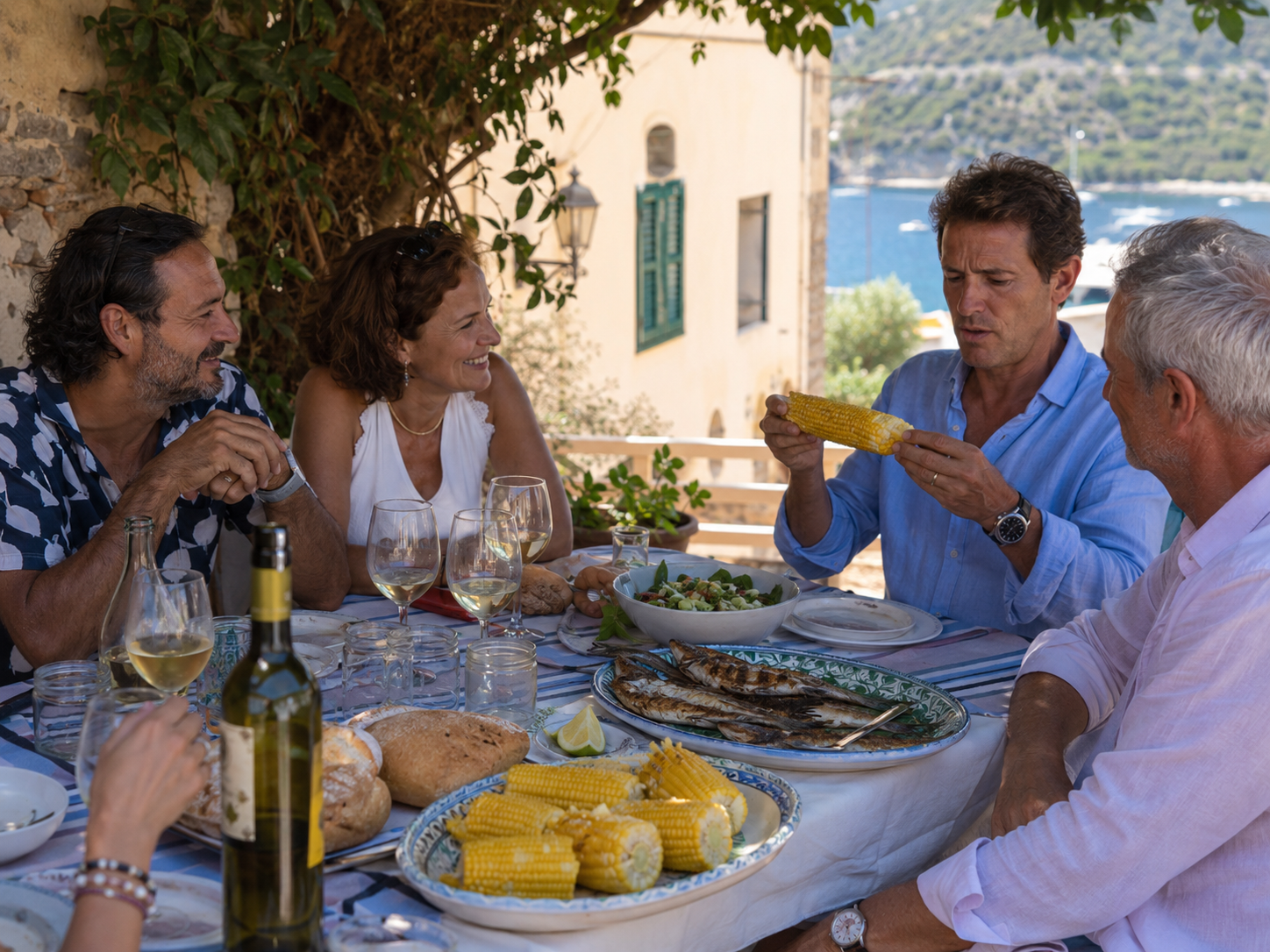
All of this is more than a fun piece of trivia if you happen to have European friends or family at your Labor Day cookout, because the corn on the cob may quietly become the most interesting thing on the table. To your American guests it is simply summer on a plate, but to a European it may be a small cultural adventure, a food they have only ever seen in a field or a can now handed to them buttered and salted and expected to be eaten by hand. That small collision of expectations is the whole charm of it. It is a wonderful conversation starter, and worth watching to see whether curiosity or old prejudice wins out. Half the fun is the little ceremony of it, the corn holders, the butter, the mess, the way it insists on being eaten with your hands, all of which can seem endearingly barbaric to someone raised to keep corn at arm’s length. You are not just serving a vegetable, you are offering a small, buttery cultural experience.
So put the corn out this weekend and enjoy the divide for what it is, one of those small, harmless, genuinely revealing differences between two food cultures that each think their own way is obviously the normal one. It is exactly the kind of thing that makes travel and mixed tables so much fun, the discovery that something you never once questioned looks strange from three thousand miles away. Explain to your European guests that this is not pig feed but the taste of an American summer, hand them a cob and some butter, and you may just make a convert. Or you may confirm their deepest suspicions, in which case there is always more for you, which is hardly the worst outcome a cookout ever produced. Either way, the corn will have earned its place at the table, if only as the most interesting thing on it.

About the Author: Ruben, co-founder of Gamintraveler.com since 2014, is a seasoned traveler from Spain who has explored over 100 countries since 2009. Known for his extensive travel adventures across South America, Europe, the US, Australia, New Zealand, Asia, and Africa, Ruben combines his passion for adventurous yet sustainable living with his love for cycling, highlighted by his remarkable 5-month bicycle journey from Spain to Norway. He currently resides in Spain, where he continues sharing his travel experiences with his partner, Rachel, and their son, Han.