
If you have European friends, you may have noticed something odd about the timing of the school year. While American children are only now trudging back to their classrooms around Labor Day, a great many European children have already been back for weeks, some since well into August. French kids returned in early September for the ritual known as la rentree, German and Scandinavian children in many regions went back in August, and British children were at their desks days before the American Labor Day weekend even arrived. It can seem, from the American side, as though Europe simply started sooner. The truth, as usual, is more interesting and more tangled than that, because there is no single European school calendar, no single American one either, and the real story is a patchwork of history, climate, and habit that almost nobody stops to explain.
What follows is why the school calendars differ so much, why the American summer is unusually long, and why there is no such thing as a universal back-to-school date. It is one of those everyday puzzles that turns out to have a surprisingly deep and interesting answer once you actually ask the question.
There Is No Single Calendar
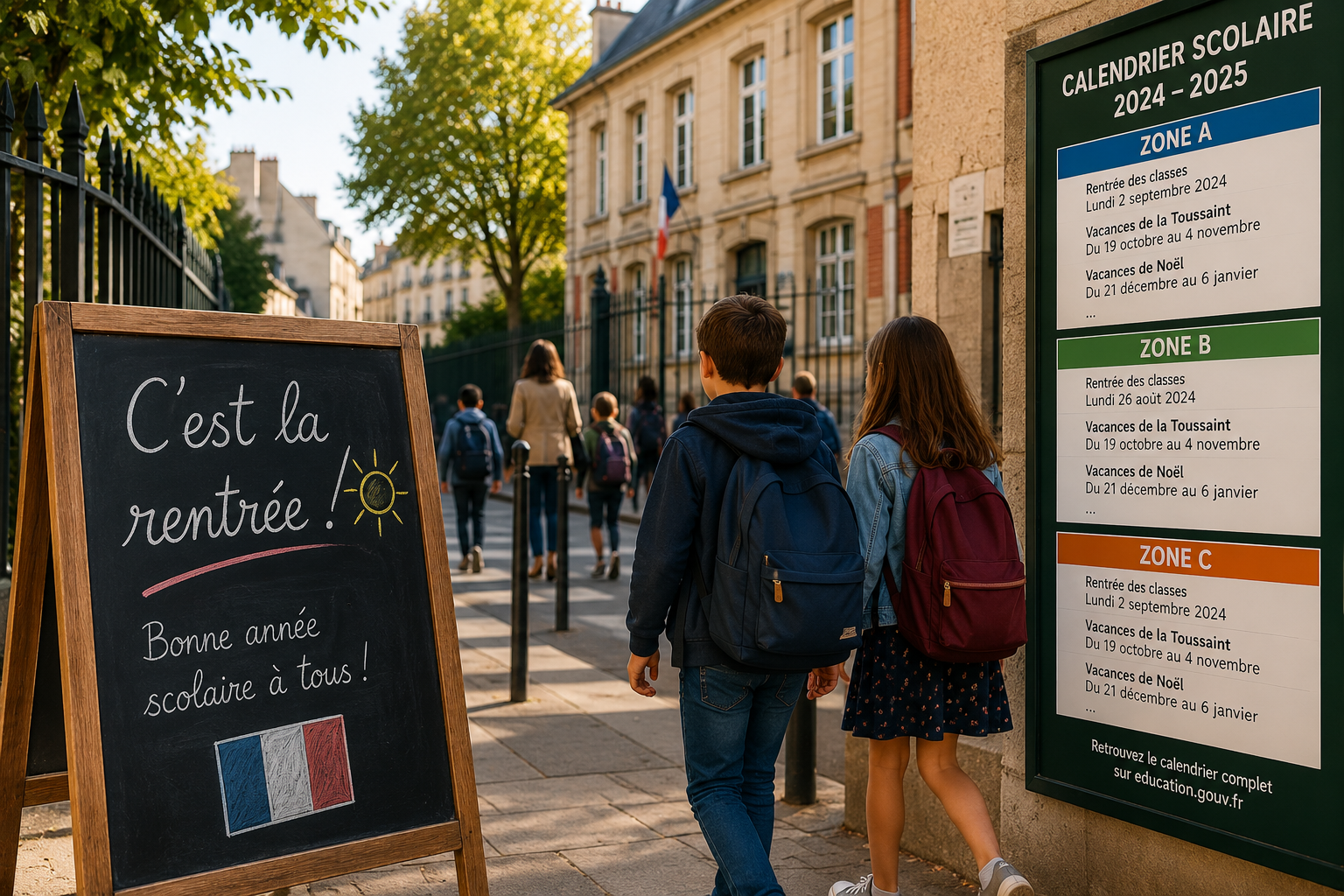
The first thing to understand is that the neat comparison of Europe versus America falls apart the moment you look closely, because Europe does not have one school calendar at all. Education is set nationally, and often regionally, by each country, so the start dates scatter across a remarkably wide range. In the north, Scandinavian countries like Sweden and Finland tend to start earliest, often in the middle of August, while Germany uses a deliberately staggered system in which each of its sixteen states picks its own dates, spreading the start of school across weeks specifically to keep the whole country from trying to travel at once.
Then the picture flips as you move south. France returns in early September, Britain likewise in the first days of September, but Italy, Spain, and Greece do not go back until the middle of September, weeks after the others. So while it is true that many European children were back before their American counterparts, plenty of others, especially in the sunny south, actually start later than American kids do. There is no European norm to compare against, only a continent full of different answers to the same question of when summer should end. This alone undoes most of the casual comparisons people make, since to say Europe starts school earlier or later than America is a bit like saying Europe eats dinner earlier or later, when a Spaniard and a Swede keep such different hours that the average means nothing. The continent is not one thing, and its school calendars are as varied as its dinner times.
The American Summer Is the Real Outlier

If any calendar in this story is genuinely unusual, it is the American one, and specifically the length of the American summer break. At roughly ten to eleven weeks, the United States has one of the longest school summer holidays of any developed country, considerably longer than the six-week breaks of Germany and Britain and comparable only to the long summers of southern Europe. The American summer is not just a break, it is an institution, a vast stretch of the year with its own culture of camps, road trips, and lazy months off.
This length is a big part of why the American back-to-school moment feels so distinct and so late. Because the summer is so long and, in the regions that start after Labor Day, ends so definitively at the start of September, the American return to school lands as a single, sharp, nationally felt event, marked by advertising, new clothes, and a collective sigh.
Much of Europe, with shorter summers and staggered or earlier starts, has no equivalent single moment, the return trickling in across August and September rather than crashing down all at once. The famous American back-to-school season is partly a product of that unusually long, unusually unified summer. It is worth noting how strange this looks from abroad, since to a German or a Briton used to a six-week summer, the American ten or eleven weeks seem almost impossibly long, an entire quarter of the year with the children home, which reshapes American family life, the economy of summer camps, and the whole cultural weight the season carries in a way that shorter European summers simply do not.
Where the Long Break Came From

The deeper question is why these calendars exist at all, and the answer on both continents runs back to the farm. The traditional school year, in both America and much of Europe, was shaped by the demands of agriculture, in an era when children were needed at home to help with the work of the fields, so the calendar was built around the rhythms of planting and harvest rather than around education. School paused when the farm needed hands and resumed when it did not, and the long summer break is in large part a fossil of that agricultural world.
That shared root is why schools on both sides of the Atlantic still tend to start in late summer or early autumn, after the busiest farming months had traditionally passed. But the story is often oversimplified, since the American summer was not simply about children picking crops, a common myth, but grew from a tangle of factors including urban heat, the difficulty of schooling in sweltering un-air-conditioned buildings, and the schedules of the wealthier families who set early educational fashions. The farm is part of the answer everywhere, but climate, class, and custom all pressed their thumbs on the calendar too, in different combinations in different places. It is a useful corrective to the tidy just-so story most people half-remember, in which children were simply released to bring in the harvest, since the real history is messier and more human than that, a compromise between what farms needed, what the weather allowed, what the well-off preferred, and what everyone had simply always done. Calendars, like most old institutions, are less designed than accumulated.
Why Climate Still Matters

Weather did not stop shaping the school year when tractors replaced farmhands, and it remains one of the clearest reasons the calendars differ, especially between northern and southern Europe. In the hot countries of the Mediterranean, where July and August can be genuinely punishing, the long summer break that keeps children out of stifling classrooms until the fierce heat has broken makes obvious sense, which is a large part of why Italy, Spain, and Greece hold onto their long summers and late-September starts. School simply waits for the weather to become bearable.
In the cooler north, the calculation is different, and there the priority is often to make the most of the short warm season rather than to escape a long hot one. Scandinavian and German schedules, with their earlier starts and their holiday time spread more evenly across the year, reflect a climate where summer is precious and brief and the rest of the year is long, so it makes sense to bank shorter breaks throughout rather than one enormous summer. The same instinct, to arrange school around the weather, produces opposite calendars in the hot south and the cool north, which is a neat illustration of how a single logic can lead to entirely different answers. It is a reminder that these calendars are not arbitrary or accidental but sensible local responses to real conditions, each one the product of a place asking, in effect, when is the worst time to try to keep children in a classroom here, and answering according to its own particular sky.
More Than Just the Summer

One reason the whole comparison confuses people is that they focus only on the summer break, when the summer is just one piece of a much larger puzzle. The total amount of holiday a child gets across the year is often surprisingly similar between countries, but how that time is distributed varies enormously, and that distribution matters far more to daily life than the summer start date alone. France, for instance, has a shorter summer than Italy but scatters generous holidays throughout the year, with regular breaks every several weeks, so a French family’s rhythm looks nothing like an Italian one despite similar total time off.
This is the detail the simple Europe-versus-America framing misses entirely. A country with a long summer and few other breaks, like the United States or Italy, gives families one enormous block to plan around and little else, while a country like Germany, with a short summer and frequent shorter holidays, spreads the childcare and the family time across the whole year. Neither is obviously better, but they produce completely different lives, and comparing only the September start date tells you almost nothing about which kind of year a child and their parents actually live. A parent in one system spends the year bracing for a single long summer of childcare, while a parent in the other navigates a steady drumbeat of shorter breaks, and each finds the other’s arrangement slightly baffling, which is exactly the kind of deep, invisible difference that shapes daily life far more than the headline dates ever suggest.
The German Traffic Solution
One detail deserves its own moment because it is such a wonderful piece of practical engineering, and that is the reason Germany staggers its school holidays. The country’s sixteen federal states do not break for summer at the same time but on a rotating schedule, so one state might start its holiday in late June while another does not begin until late July, and the reason is not educational at all. It is traffic. With over eighty million people, Germany learned that letting everyone break at once meant the entire nation trying to drive to the coast on the same weekend, jamming the Autobahn into a single vast parking lot.
By spreading the holidays across a wider window, and rotating which states go first each year so no region is always stuck with the least desirable dates, Germany smooths the flood of summer travelers into a manageable trickle. It is a small masterpiece of coordination, a school calendar shaped less by pedagogy than by the desire to keep the highways moving and the resorts from being overwhelmed in a single week. Few things capture the difference in national temperament quite so neatly as the fact that Germany organizes its children’s summers partly around traffic management, and does it so well that most Germans barely notice the machinery behind it.
What It Means If You Are Traveling
There is a practical reason for a traveler to care about all of this, beyond simple curiosity, because European school holidays shape the crowds and the prices at the places you might want to visit. When a country or a region is on its school break, its families travel, filling the beaches and the resorts and pushing up the cost of flights and hotels, so knowing roughly when the big countries break can help you either join the fun or, more usefully, avoid the crush. A destination in the thick of local school-holiday season will be busier and dearer than the same place a few weeks either side.
The staggering works in your favor here too. Because Germany, and to some extent the varied calendars across Europe, spread their holidays out, there is rarely a single week when all of Europe is on the move, which means a savvy traveler can often find a window when one country’s children are back in class and the crowds have eased. This is part of why the fall, once the long summer holidays have ended almost everywhere, becomes such a good time to travel, since the great engine of family travel that drives summer prices quiets down as the children return to their desks across the continent. The school calendar, in other words, is quietly one of the forces setting the price of your trip.
The Gap Nobody Explains

So the answer to why European kids started weeks ago and Americans just did is really that the premise is only half true, and the full truth is more revealing. Some European children did start earlier, in the north and in France, while others in the south started later, and the American return only feels like the definitive back-to-school moment because the American summer is unusually long and, in much of the country, ends in one clean stroke at Labor Day. There is no single gap between two systems, only a spectrum of choices shaped by old farms, hot summers, cold winters, and national habit.
That is the piece nobody tends to explain when the school-supply advertisements start, that the date children go back is not natural or obvious but a specific inheritance, different in every country and often in every region, and readable like tree rings for the history and climate that shaped it. It is one of those ordinary things that turns out to be quietly full of story once you ask why, a small window into how climate and farming and national character quietly shaped something as mundane as the day the kids go back. So the next time a European friend mentions their children have been in school for a month, you will know that they might be in Stuttgart, where that is true, or in Naples, where their kids are still on the beach, and that the timing tells you a whole quiet story about where they live. and that the American Labor Day return is not late at all, just the loud and unified end of the longest summer in the developed world. It is a small thing to know, but it turns a moment of grumbling nostalgia into a moment of quiet fascination, which is about the most a piece of trivia can hope to do, and reason enough to have asked the question in the first place.

About the Author: Ruben, co-founder of Gamintraveler.com since 2014, is a seasoned traveler from Spain who has explored over 100 countries since 2009. Known for his extensive travel adventures across South America, Europe, the US, Australia, New Zealand, Asia, and Africa, Ruben combines his passion for adventurous yet sustainable living with his love for cycling, highlighted by his remarkable 5-month bicycle journey from Spain to Norway. He currently resides in Spain, where he continues sharing his travel experiences with his partner, Rachel, and their son, Han.