
For a month I gave up the great American ritual of the weekly grocery haul, the overflowing cart, the trunk full of bags, the fridge packed to bursting on a Sunday, and I shopped the way much of Europe shops instead, a little most days, buying what I actually needed for the next meal or two. It felt inefficient at first, all those small trips, and it turned out to be the opposite, because at the end of the month the thing that had changed most was not my schedule but my bin, which was nearly empty of the wilted, forgotten, gone-off food that a big weekly shop quietly generates. The figures in this piece are a composite of that month rather than an exact receipt, but the direction is real, and the direction points at money most people throw away without ever noticing.
What follows is how daily shopping actually works, why it wastes so much less food, and where the roughly ninety-four euros a month I stopped wasting actually came from.
The Two Ways to Buy Food

The difference between the American and the European way of shopping is really a difference in philosophy. The American model is the big weekly, or even biweekly, stock-up, a single large trip to a supermarket where you buy in bulk to last the week, fill an enormous fridge and freezer, and aim never to run out of anything. It is built around convenience and the car, and it treats a full fridge as a sign of a household well run.
The European model, especially in cities and towns with markets and small shops, is the opposite, frequent small trips, often on foot, to buy fresh food for the next day or two. You go to the baker, the greengrocer, the butcher, or the market, you buy what you need for the meals just ahead, and you go again tomorrow. It is built around freshness and walkability rather than bulk and storage, and it treats food as something you buy close to when you eat it rather than something you stockpile. Neither is wrong, but only one of them quietly hemorrhages money into the trash, and it is not the one that looks efficient. The irony runs deep, because the American model was designed for efficiency, fewer trips, bulk prices, time saved, and yet it produces the more wasteful and often more expensive result once the thrown-away food is counted. Efficiency in trips turns out to be inefficiency in food, and the savings at the bulk shelf are quietly cancelled at the bin.
The Waste Nobody Counts

Here is the number that should stop everyone, because it is enormous and almost entirely invisible. The average American household throws away something on the order of $1,500 worth of food every year, roughly €1,400, and studies consistently find that households waste close to a third of the food they buy. That is not a rounding error or a moral failing, it is a structural feature of how the food is bought, and the big weekly shop is at the heart of it.
The mechanism is simple and familiar to anyone with a fridge. When you buy a week’s worth of fresh food at once, you are betting on what you will feel like eating for the next seven days, and you lose that bet constantly, so the bag of salad turns to slime, the herbs blacken, the bread goes stale, the vegetables at the back of the drawer are found weeks later, and the ambitious ingredients you bought for a meal you never cooked go straight in the bin.
You paid for all of it, and you ate perhaps two-thirds of it. The other third was a donation to your trash can, made every single week, and because it happens a little at a time it never registers as the large recurring expense it truly is. If your household threw away thirty dollars in cash every week you would be alarmed and would hunt down the leak immediately, but throw away thirty dollars in spoiled food and it feels like nothing, because the loss is disguised as ordinary kitchen life. That disguise is exactly why the waste persists, and why simply seeing it clearly is the first step to stopping it.
Why Daily Shopping Wastes So Little

Shopping daily attacks the waste problem at its root, because it removes the guesswork that creates it. When you buy only what you need for the next meal or two, you are no longer betting on a whole week of future appetites, you are buying for tonight and maybe tomorrow, decisions you can actually make accurately. The food you buy gets eaten because you bought it to be eaten now, not stored on the hope you would get to it, so almost nothing has the chance to wilt, expire, or be forgotten.
There is a freshness dividend on top of the waste saving. Food bought the day you eat it is at its best, the bread crusty, the vegetables crisp, the fish fresh, so daily shopping does not just waste less, it eats better, which is a large part of why European food can taste so good with such simple ingredients. And the smaller, more frequent trips make you a more deliberate shopper, since buying for a specific meal means buying with a plan, rather than the aspirational over-buying that a giant empty cart seems to invite. You come home with a bag, not a haul, and all of it becomes dinner. There is a quieter psychological shift too, because when the fridge is not already groaning with food, you notice and use what little is there, cooking the vegetables you bought because they are the only ones you have rather than reaching past them for something more exciting in the freezer. Scarcity, in this gentle and voluntary form, turns out to make you a better and more resourceful cook.
Where the €94 Came From

The savings in my month were not one dramatic thing but the sum of many small stopped leaks, which is exactly why they had been invisible before. The bagged salad and fresh herbs that used to rot, a few euros a week. The bread bought in optimistic quantity and thrown out stale, a couple more. The vegetables that softened in the drawer, the yogurts that expired, the meat frozen and forgotten, the ambitious ingredient bought for a recipe never made, each of them a small weekly loss that stopped almost entirely once I was buying day to day.
Add those stopped leaks across the month and they came to roughly €94, about $100, which had previously been leaving my household every month in the form of food I bought and never ate. That figure is a composite and yours would differ, but the shape of it is what matters, and the shape is that a large weekly shop bleeds a real, ongoing sum into the bin that daily shopping mostly stops. It is not a coupon or a deal or a sacrifice, it is simply the money you were already spending on food you were already throwing away, quietly returned to your pocket. Set beside the official figures, a household saving something in that range a month by wasting far less food is entirely plausible, since the studies say the average household wastes well over a thousand a year to begin with.
What You Give Up, Honestly
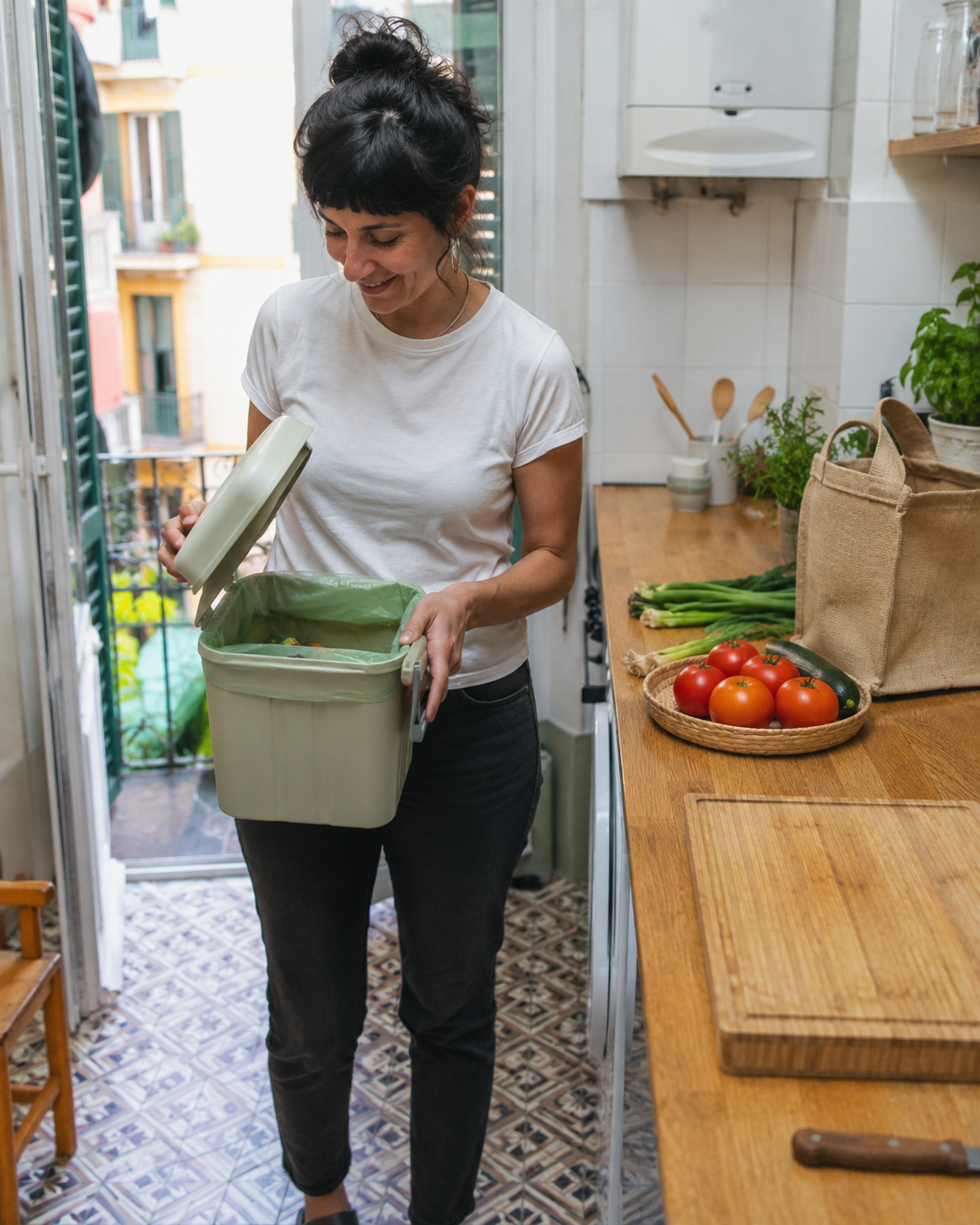
It would be dishonest to pretend daily shopping is pure gain, because it does ask something of you, and naming the cost makes the case more believable. The obvious price is time and effort, since a dozen small trips a week take more total minutes and more small decisions than one big one, and for a busy household that friction is real. There is also the loss of the deep pantry, the security of a house stocked to withstand a snowed-in week, which the frequent shopper trades away for freshness.
But the trade is smaller than it first appears, and often it runs the other way. The small trips are short, a few minutes to the corner rather than an hour navigating a vast supermarket and its checkout, and in a walkable place they fold into a walk you were half-taking anyway. The mental load drops too, because buying for tonight is a simpler decision than planning and predicting a whole week of meals in one anxious sweep of the aisles. And the pantry security is easily kept with a modest stock of staples and a sensible freezer, so you lose almost nothing real. Weighed honestly, the effort is modest and the reward, less waste, fresher food, and real money back, is large, which is why the habit sticks once people try it.
The Fridge Tells the Story
One of the most telling things about the whole experiment was what happened to the fridge, because the appliance itself turns out to encode the two philosophies. The enormous American refrigerator exists precisely to enable the weekly stock-up, a vast cold cave to store a week of food, and its very size invites you to fill it, which means it invites you to over-buy. Europeans famously get by with far smaller fridges, and that is not a hardship but a cause, because a small fridge cannot hold a week of food, so it gently enforces the frequent, fresh, buy-what-you-need rhythm.
The month taught me that the big fridge is not neutral. A large, always-full refrigerator is a machine for generating food waste, because things get lost in it, buried behind other things, pushed to the back and forgotten until they are furry, and the sheer capacity encourages exactly the bulk buying that produces the waste. Shopping daily, my fridge stayed mostly empty, holding little more than the next day’s food and a few staples, and an empty fridge is a fridge in which nothing rots forgotten. The lesson is not to buy a smaller fridge, though it would work, but to stop using the big one as a warehouse and start using it as a way station. Kept that way, half empty and holding only what is about to be cooked, even a large fridge stops being a place where food goes to be forgotten, and the waste it used to hide simply never accumulates.
Making It Work in a Car Country
The honest objection to all of this is that daily shopping is easy in a walkable European town with a greengrocer on the corner and much harder in an American suburb where the supermarket is a ten-minute drive away, and that is a fair point that deserves a real answer. You cannot pop out for tonight’s vegetables on foot if there is nothing within a mile, and nobody is going to drive to the store every single day, so the pure daily model does not transplant directly. But the principle behind it does, and it can be adapted.
The workable version in a car country is to shop more often and buy less each time, not necessarily daily but perhaps twice or three times a week rather than once, and to buy fresh, perishable things in the small quantities you will actually use before the next trip. You can also lean on the freezer deliberately rather than accidentally, buying fresh for the next few days and keeping a stocked freezer for the backstop, which captures much of the waste saving without the daily walk. The goal is not to worship frequency for its own sake but to buy closer to when you eat, in amounts you can realistically finish, and any move in that direction, even from weekly to twice-weekly, starts closing the leak. Even a small change in habit, a mid-week top-up trip for fresh things instead of one giant Sunday load, captures a surprising share of the benefit, because it is the gap between buying and eating, not the number of trips, that does the damage.
The Real Lesson Is Buying Less at Once

Strip away the romance of the European market and the practical core of what the month taught me is simple, that the problem was never how often I shopped but how much I bought at once relative to what I would actually eat. The big weekly shop fails because it forces you to predict a week of meals and moods, and you predict badly, so you over-buy and the surplus rots. Buying little and often works because it shortens the prediction to something you can actually get right, tonight’s dinner and maybe tomorrow’s, so almost everything you buy gets eaten.
That is a lesson anyone can use, in any country, with or without a market on the corner. Shop for meals you will actually cook in the next day or two, buy perishables in amounts you will finish, use the freezer on purpose, and watch what happens to your bin and then to your budget. The roughly ninety-four euros a month was never a saving in the ordinary sense, because I did not spend less on food I ate, I simply stopped buying food I threw away, which is the easiest money in any household to recover. It was sitting in the trash the whole time. That is the strange and cheerful truth at the center of this, that the easiest money to save in most households is not found by spending less or eating worse but simply by not buying food you were always going to throw away, and daily shopping is one of the most reliable ways to stop.
Do take the ninety-four euro figure as a sample snapshot of one month rather than a promise, since every household wastes a different amount and yours may be more or less, but the underlying fact is solid and well documented, that a large share of the food a typical household buys is thrown away, and that buying closer to when you eat is one of the simplest ways to stop paying for the privilege.

About the Author: Ruben, co-founder of Gamintraveler.com since 2014, is a seasoned traveler from Spain who has explored over 100 countries since 2009. Known for his extensive travel adventures across South America, Europe, the US, Australia, New Zealand, Asia, and Africa, Ruben combines his passion for adventurous yet sustainable living with his love for cycling, highlighted by his remarkable 5-month bicycle journey from Spain to Norway. He currently resides in Spain, where he continues sharing his travel experiences with his partner, Rachel, and their son, Han.