
Eleven thousand, four hundred. That was the number on the watch after an ordinary Tuesday in Getafe, a day with no exercise in it, no gym, no jog, nothing anyone would call a workout. I bought bread, took my kid partway to school, met a friend for coffee, went to the market, came home, went out again for something I forgot. A normal day of a normal life, and the watch logged over eleven thousand steps without me trying.
Out of curiosity I did the arithmetic on the same day somewhere else. Same errands, same coffee, same school run, same forgotten item, but transplanted into a typical suburb outside Columbus, Ohio, using the step counts researchers have actually measured in American life. The number came out around 5,200. One life, two places, and roughly 6,000 steps of difference that had nothing to do with willpower and everything to do with how the two places are built.
The Number I Actually Logged

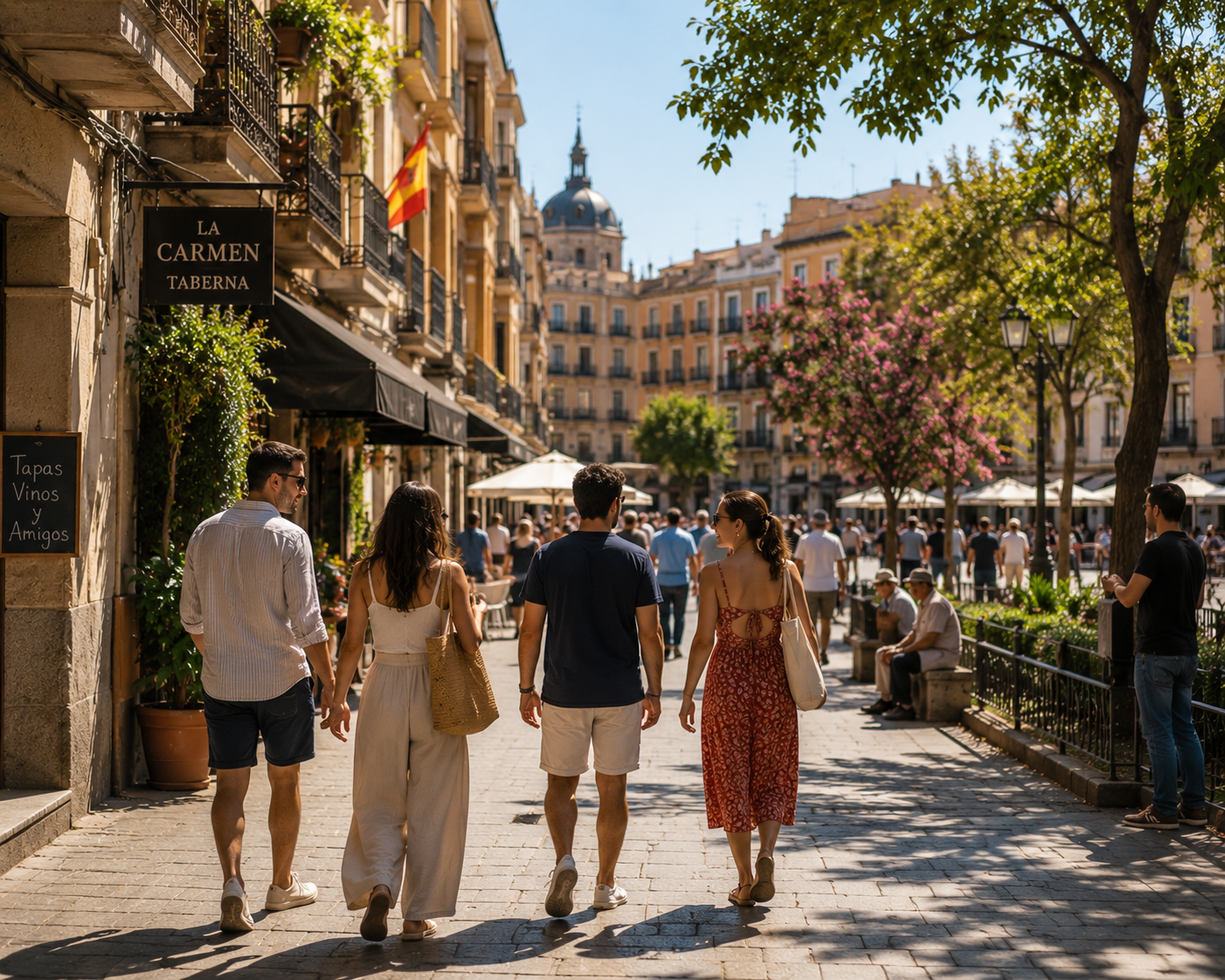
The Getafe Tuesday breaks down into small nothings that add up. The walk to the panadería and back is about 900 steps. The partial school run, to the corner where the older kids peel off, and home again, is another 1,600. Coffee with a friend meant walking to the plaza, standing at the bar, walking back, call it 1,400 more. The market run, with the good stall being three streets over, was 2,200 round trip carrying bags.
Then the afternoon: the pharmacy, the forgotten item from a shop near the Cercanías station, a loop through the park because it was there and the evening was soft. None of it was exercise. All of it was transport, the ordinary friction of getting through a day in a place where the things you need sit within a few hundred metres of your door and the natural way to reach them is on your feet. The watch was not measuring my discipline. It was measuring my street.
The Same Day, Dropped Into Ohio

Now run the identical to-do list through the composite Ohio suburb. This figure is a reconstruction, built from national step data rather than a second watch I strapped on in Columbus, but the mechanics are not guesswork, they are how that landscape works.
The bread is not three minutes away on foot, because there is no bakery on the residential street, so it is a drive to a supermarket, and the walk shrinks to the distance from a parking space to a door and back, maybe 200 steps. The school run is a drive, often a line of idling cars, because the school is too far and the roads have no sidewalk anyone would send a child down. Coffee is a drive-thru, where the steps are zero because you never leave the seat. The market is the same big supermarket, one more trip across the same parking lot. The park loop might survive if there is a park, but getting to it is, again, a drive. Add it up and the same busy, productive day yields a couple thousand steps, most of them earned crossing asphalt between a car and a cash register. The life was identical. The step count was cut by more than half, and the person living it did nothing wrong.
The cruelest part is that the Ohio day often feels busier. Driving four separate errands, fighting traffic, hunting for parking, buckling and unbuckling, all of it burns time and attention and leaves a person genuinely tired by evening, tired in a way that reads as effort. But almost none of that fatigue is movement. It is the low-grade stress of operating a vehicle through a landscape that requires one for everything, and it produces a body that is worn out and under-walked at the same time. The Getafe day, by contrast, feels lighter while delivering three times the steps, because walking a few hundred metres to a bakery is not something a body experiences as exertion. It is just going to get bread. The place that makes you drive tricks you into feeling active while keeping you still.
Where the Six Thousand Steps Went
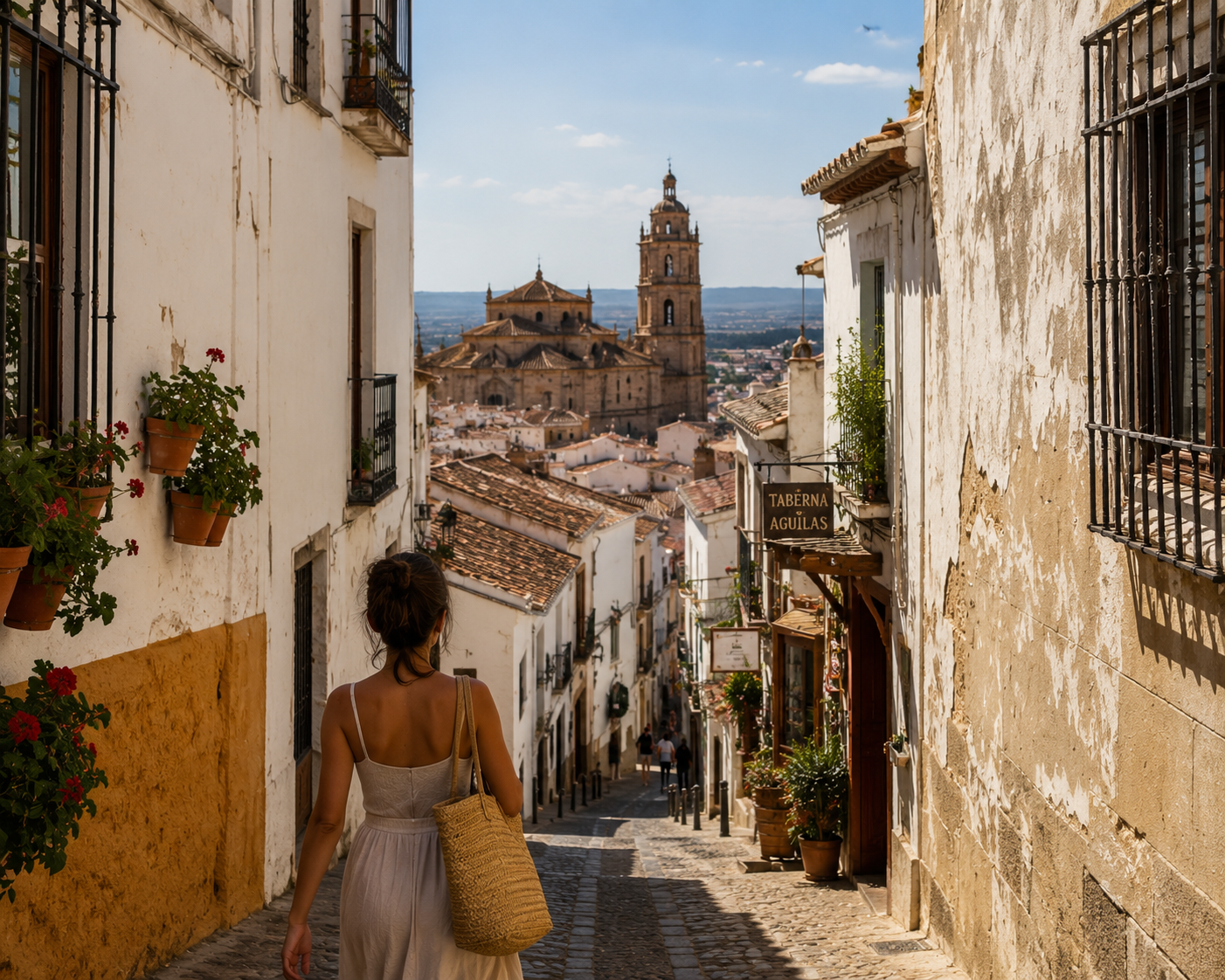
The missing steps did not vanish into laziness. They were designed out of the day by the shape of the place, one decision at a time. A neighbourhood with a bakery, a pharmacy, a school, and a bar inside a short walk turns every errand into a hundred or a thousand incidental steps. A neighbourhood built around the car puts a parking lot where the sidewalk would be and a six-lane road between you and anywhere worth going, so the same errands become trips you take sitting down.
This is the thing the fitness industry rarely says out loud, because there is no product in it. The single biggest driver of how much an ordinary person walks is not motivation or a step goal or a new pair of trainers. It is whether the place they live makes walking the path of least resistance or the path of most.
Consider the humble stroad, the wide fast road lined with shops that is too busy to walk along and too studded with driveways to walk across, the default form of the American commercial strip. It is engineered to move cars quickly, which makes it hostile to a person on foot, so even a shop that is technically four hundred metres away becomes a place you drive to because walking there means risking a road designed to discourage you. In Getafe, walking is simply easier than not walking, so it happens by default, thousands of times, invisibly. In the car suburb, walking is the harder choice at every turn, so it mostly does not happen, and no amount of willpower reliably beats a landscape that has quietly removed the reason to move.
The Kids Feel It First
The gap opens earliest in childhood, and it shapes a body before anyone has a chance to choose. In Getafe the older children walk to school in loose packs, cross the plaza, buy a snack, and come home on their own feet, and that daily walk is not counted as exercise by anyone, least of all them. It is simply how a child gets to school in a place built for it.
In the car suburb the same child is driven, buckled into a back seat for a ten-minute ride that used to be a twenty-minute walk, and the walk that would have happened by default for twelve years of childhood simply never occurs. The difference is not that Spanish parents care more about fitness. It is that one street can be crossed by an eight-year-old and the other cannot, because it was drawn for cars and has no sidewalk and no safe crossing, so the walk is not a choice a sensible parent would make. A childhood of incidental walking builds a body and a habit that carry into adulthood, and a childhood of being driven everywhere builds the opposite, and by the time either child is grown the pattern is set deep enough to feel like personality. For readers thinking about grandchildren, this is the quiet part of the built environment that outlasts everyone.
The Slow Cost of the Missing Steps
A single day’s gap of six thousand steps sounds like a curiosity until you let it run. Six thousand steps is roughly three miles, and three miles a day, or its absence, does not stay put. Across a week it is a marathon’s worth of walking that one life contains and the other does not. Across a year it is the difference between a body that moves as a matter of course and one that sits as a matter of course, and the body keeps the ledger.
The walking that a good street hands you for free is exactly the moderate daily movement that medicine spends fortunes trying to prescribe. It steadies blood sugar, it holds off weight gain, it keeps the heart and the legs and the balance in working order into old age. The person in the walkable place is quietly banking all of that without a plan, a gym membership, or a moment of willpower, while the person in the car suburb is told to find the discipline to replace, in scheduled exercise, the movement their environment removed. One of those is a great deal harder to sustain than the other, which is why the walkable place wins over a lifetime even though neither person is trying. Willpower is a battery that drains, and a plan to exercise runs on it, which is why gym memberships spike in January and lie unused by March. The walk to the bakery runs on nothing, because it is not a decision, it is just the way the bread gets home. Anything that depends on daily willpower loses eventually to anything that depends on none, and the walkable street is the version that depends on none. That is the deep reason the country rankings barely move over decades while individual diets and fitness fads come and go. The street is a more reliable coach than any human intention.
This Is How the Place Is Built, Not How Hard You Try
There is real research behind the hunch, and it is blunt. Back in the mid-2000s, a team led by David Bassett at the University of Tennessee put pedometers on adults across several countries and found Americans averaging about 5,117 steps a day, while the Swiss managed 9,650 and adults in Western Australia hit 9,695. Bassett did not blame American character. He pointed at the environment, saying plainly that the overall American landscape does not lend itself to an active lifestyle, and crediting the more active countries with better transit and the habit of doing errands on foot. He put the fix in the same terms, estimating that the average American would need to add thirty to forty minutes of walking a day just to close the gap with the rest of the world, an hour of scheduled effort to replace what a walkable street would have handed over for nothing.
That is the whole argument in one dataset. The Swiss are not more disciplined than Americans. They live in places where a normal day involves walking to the tram, walking from the tram, walking to the shop, and the walking is a byproduct of the errands rather than a task added on top. A later Stanford analysis of smartphone data reached the same conclusion from the other direction, tying a neighbourhood’s walkability directly to how many steps its residents log, with the most walkable places pulling people upward by the thousand.
What the Numbers Look Like Across Countries
Set the two extremes side by side and the pattern is hard to miss. Americans at roughly 5,000 steps. Japan, with its dense cities and train culture, around 7,168. Switzerland and Australia near 9,650 and 9,695. The countries at the top are not the ones with the most gyms or the loudest wellness culture. They are the ones where daily life is threaded through with transit and short walkable distances, so movement is baked into getting from morning to night.
A meta-analysis of walkable versus car-dependent neighbourhoods found people in the more walkable ones taking hundreds more steps a day on average, and that gap holds across very different countries and study designs. Multiply a few hundred daily steps across a year and it becomes a serious difference in physical activity, the kind that shows up in weight, in blood sugar, in the odds of the diseases that walking quietly holds at bay.
The obesity numbers from the original pedometer study make the stakes concrete. At the time Bassett measured, about 34% of American adults were obese, against roughly 16% in Australia, 8% in Switzerland, and 3% in Japan, the same running order as the step counts, only inverted. Nobody thinks step counts alone explain that whole spread, since diet and portion size and a dozen other things matter too. But the place that walks the least is also the place that weighs the most, and the two facts are not strangers. The person in the walkable place is not exercising more on purpose. They are just living somewhere that keeps asking them to move, and their body is collecting the interest.
Where This Does Not Hold
The honest version needs a few edges. The title is a bit of theatre, since I did not wear a watch in Ohio, and the American figure is a composite drawn from the research rather than a single measured day, so treat it as illustrative rather than a lab result. Plenty of Americans walk far more than the average, whether because they live in a genuinely walkable city like New York or Boston or because they build real exercise into their week and beat the environment by force of habit. And plenty of Spanish and European life is car-dependent too, in the sprawl around cities and in villages where the nearest anything is a drive. This was never a claim that one nationality is fitter than another. The built environment sets the default, and the default is doing most of the work while everyone argues about motivation. Give the disciplined American a walkable town and they will walk even more, and drop the walkable-town Spaniard into a cul-de-sac and their step count will collapse like anyone else’s, because the street was carrying them the whole time and neither of them noticed.
You Cannot Out-Discipline a Parking Lot
If you are choosing where to live, and especially if you are choosing where to grow old, this is worth more attention than the square footage. Ask whether you can reach a shop, a café, and a green space on foot from the front door. Ask whether the streets have sidewalks and whether anyone actually uses them. Ask whether daily life would put steps into your day without you scheduling them, because the version of you that has to drive to a gym to move is the version that will mostly not, and the version that walks to the market without thinking about it will still be walking to the market at eighty. There is a simple test on any house viewing: stand at the front door and see what you can reach in a ten-minute walk. If the answer is nothing, the address will cost you steps every day you live there, no matter how good your intentions are. Pick the street that makes the healthy thing the lazy thing, and let the place carry you.

About the Author: Ruben, co-founder of Gamintraveler.com since 2014, is a seasoned traveler from Spain who has explored over 100 countries since 2009. Known for his extensive travel adventures across South America, Europe, the US, Australia, New Zealand, Asia, and Africa, Ruben combines his passion for adventurous yet sustainable living with his love for cycling, highlighted by his remarkable 5-month bicycle journey from Spain to Norway. He currently resides in Spain, where he continues sharing his travel experiences with his partner, Rachel, and their son, Han.