

The portrait that follows is a composite, an illustrative blend drawn from the common experiences of many people rather than an account of any two specific real individuals. It is offered to explore a pattern that is quietly becoming more common, two adults who are not a couple choosing to build a shared retirement abroad together, and the particular financial arithmetic that such an arrangement involves. Picture, then, two sisters in their early sixties, both widowed or long single, who decide to spend their retirement not in separate small apartments in different American towns but together, in a sun-warmed flat in Spain. The idea delights them, but when they begin to look into the visas, they discover a curious thing. They had assumed, reasonably enough, that two people planning to live together under one roof would be treated much as any household is, and it comes as a surprise to learn that the system draws a sharp line between the household they intend to build and the kind it was designed to admit. That surprise is the beginning of an education in how residency rules quietly encode a particular idea of what a family is, and in how much room, or how little, they leave for the households that do not match it. The Spanish residency system, like most, is built around the assumption that people move in couples or families, and it does not quite know what to do with two sisters. the numbers reveal a math that married couples never have to think about, and understanding it is the key to whether their shared dream is possible. A brief note before continuing, this piece describes financial and visa matters in general terms and is not financial, immigration, or legal advice, the figures cited can change, and anyone considering such a move must verify the current rules and consult qualified professionals.
With that established, the story of these two sisters, though composite, illuminates something real and increasingly relevant, the way our residency and financial systems assume a couple at the center of every household, and what it takes for people who love each other in other ways to build a life together abroad. So here is the math the sisters must run, the lever that makes their plan work despite it, and the quiet richness of the life they are choosing. It is a story worth telling precisely because so many people now find themselves in a version of the sisters’ situation, single or widowed at retirement, financially comfortable but not wealthy, and drawn to the idea of sharing later life with someone dear rather than facing it alone. The arithmetic they must work through is unfamiliar, but the life on the far side of it is one an increasing number of people are quietly reaching for.
A Household the Visa System Did Not Imagine
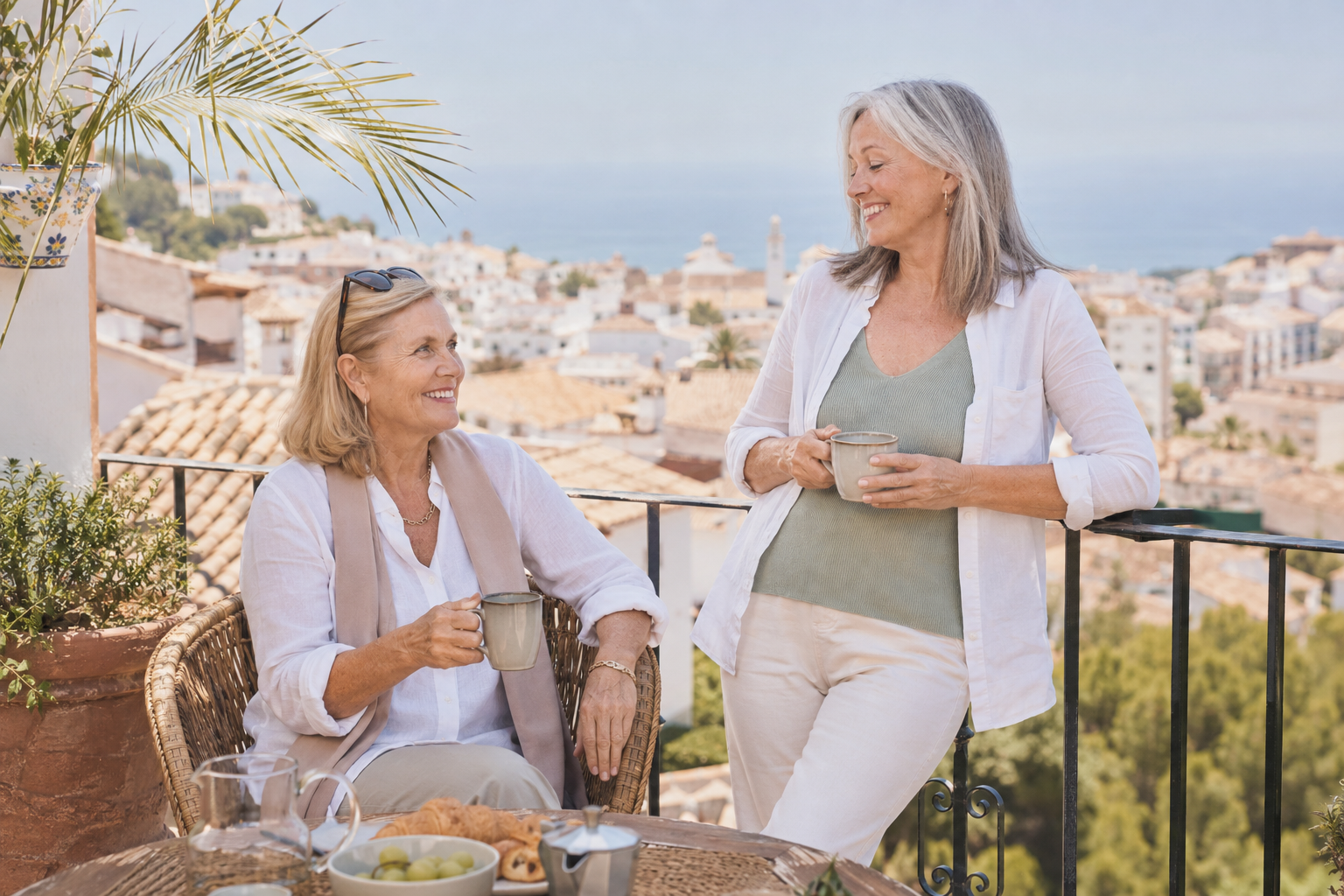
The sisters’ first discovery is that the entire framework of residency is designed around a shape of household that is not theirs. This is the root of everything that follows.
The system assumes a couple. Most residency systems, Spain’s included, are structured around a main applicant who then brings along a spouse, a partner, or dependent children, the whole apparatus is built on a family unit centered on a couple. two sisters, each an independent adult, do not fit neatly into this template, and the system has no obvious slot for the kind of household they intend to create.
Their bond is real but unrecognized. The sisters share a lifelong closeness, a plan to grow old together, and an intention to pool their lives completely, yet none of this counts in the way a marriage certificate would. their bond is a partnership in every practical sense, just not the kind the forms recognize, and that gap is where their particular challenge begins. They will pool their savings, share every household decision, care for one another through illness, and grow old side by side, which is precisely what a married couple does, yet the paperwork sees only two unrelated single women. The whole of their challenge, and much of what makes their story interesting, flows from this single mismatch between the life they are building and the categories the system offers.
The Math Couples Take for Granted
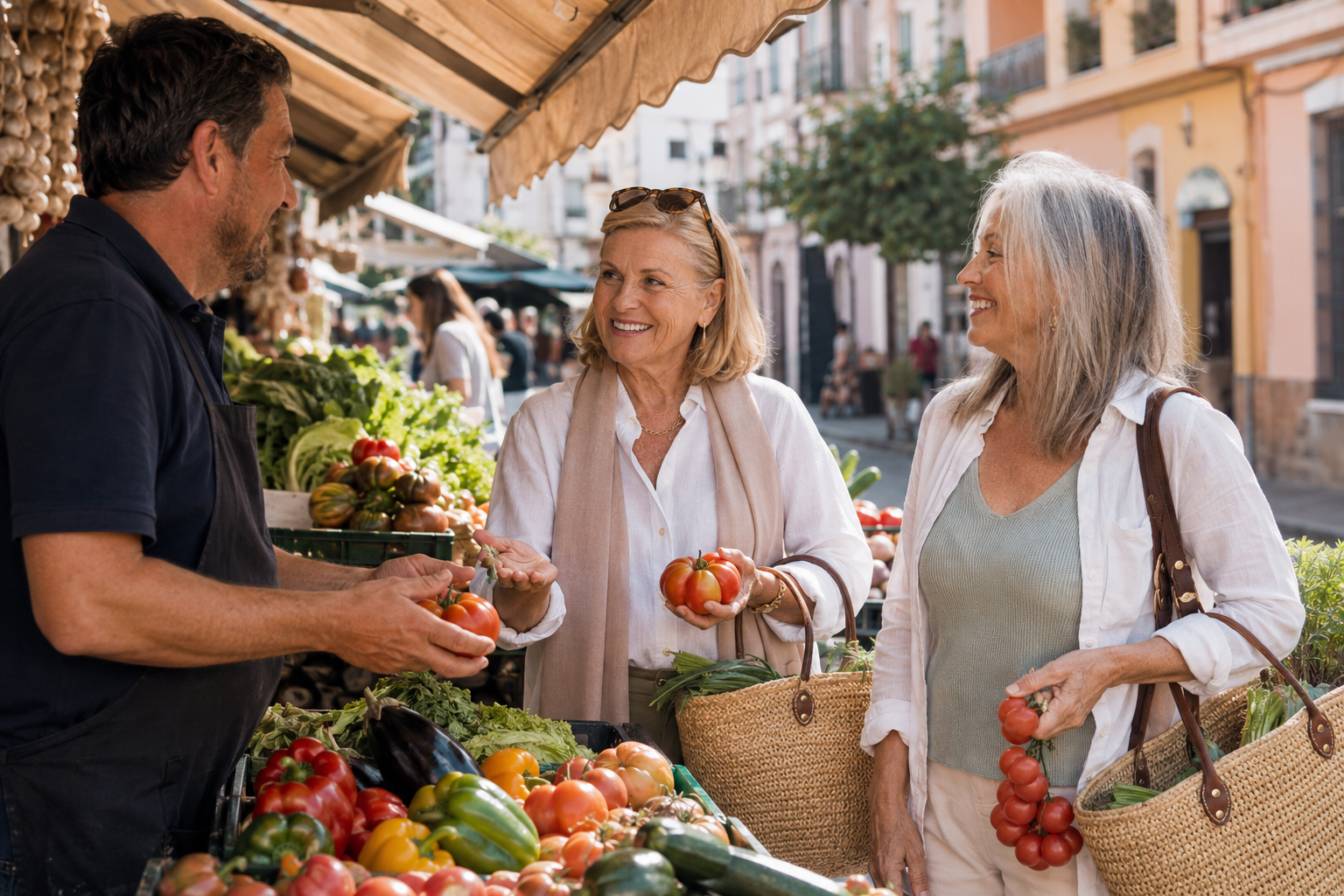
To see why the sisters face a harder path, it helps first to understand the comfortable math that an ordinary married couple enjoys. This is the baseline against which their situation must be measured.
One earner, one cheap dependent. Under Spain’s non-lucrative visa, the main applicant must show passive income of around four times the national income benchmark, about twenty-nine thousand euros a year, while a dependent spouse adds only around seven thousand more. a couple qualifies with one substantial income and one small top-up, near thirty-six thousand a year.
The couple’s structure is quietly efficient. This arrangement is generous to couples, because it lets one person’s income carry two people across the threshold, treating the second spouse as an inexpensive add-on, not a second full applicant. For a married couple, then, the bar for two is only modestly higher than for one, a structural kindness couples rarely notice. A husband and wife applying together simply see a slightly larger number than a single applicant would, and think little of it, unaware that the system is quietly doing them an enormous favor by treating one of them as a mere supplement to the other. It is only when a household falls outside that familiar couple-shaped mold that the true weight of the whole underlying assumption suddenly becomes visible. The sisters, running their numbers side by side with a married couple’s, see plainly what the couple never has to confront, that the residency system rewards one particular arrangement and quietly penalizes every other, however loving and stable it may be. Naming that asymmetry clearly is the first real step to working around it, which is exactly what the two sisters calmly and deliberately set out to do.
Why Two Sisters Cannot Split the Threshold

Here is the pivotal point, the reason the sisters’ math differs so sharply from a couple’s, and it comes down to who the system will accept as a dependent. The answer reshapes everything.
Siblings are not eligible dependents. The dependents a main applicant may bring under the non-lucrative visa are generally a spouse or partner, children, and in some cases dependent parents, but not siblings, so one sister cannot add the other the way a husband adds a wife. each sister is a separate independent adult who must qualify entirely on her own.
Two full thresholds, not one and a top-up. This means that rather than one primary income plus a small dependent supplement, the sisters must each independently show the full main-applicant income of around twenty-nine thousand euros a year, so between them they need close to fifty-eight thousand, far more than a couple’s thirty-six. This is the math couples never have to run, and the steepest hurdle the sisters face. Where a married couple presents one income and a small addition, the sisters must assemble two complete incomes, each strong enough to have carried a single applicant on its own. The requirement is not impossible, since many retirees on solid pensions can meet it, but it is markedly harder than the couple’s version, and it is the point at which some would-be sharers conclude, wrongly, that their plan cannot work at all. What those who give up too early miss is that clearing the threshold is only half the equation, and that the other half, the economics of actually living together, tilts strongly back in their favor. The steep entry requirement, in other words, is not the whole story, only its most discouraging opening chapter.
The Lever That Changes Everything
Just when the arithmetic looks discouraging, the sisters discover the powerful advantage hidden in their arrangement, the very thing that makes sharing a household so economical. This lever is what rescues their plan.
Two lives, one set of costs. Although each sister must qualify for her visa alone, once they are living together they share a single home, a single set of utility bills, one internet connection, often one car, and the daily costs of a shared kitchen, their actual cost of living per person falls dramatically. two people sharing a household live far more cheaply each than two keeping separate homes.
Pooling is the couple’s real secret. the deep economy of a shared household is exactly the advantage married couples enjoy daily, and it is fully available to the sisters too. So while the visa threshold treats them as two separate applicants, their lived economics are those of a partnership, the lever that makes the plan work. The very sharing that the visa refuses to recognize on paper becomes, in daily life, the engine of their comfort, halving the rent, the heating, the standing charges, and every other fixed cost of a home. In this sense the sisters simply claim, in how they live, the same economy of scale that the visa hands a married couple for free, and it more than compensates for the steeper threshold they had to clear to get there.
The Life the Money Buys
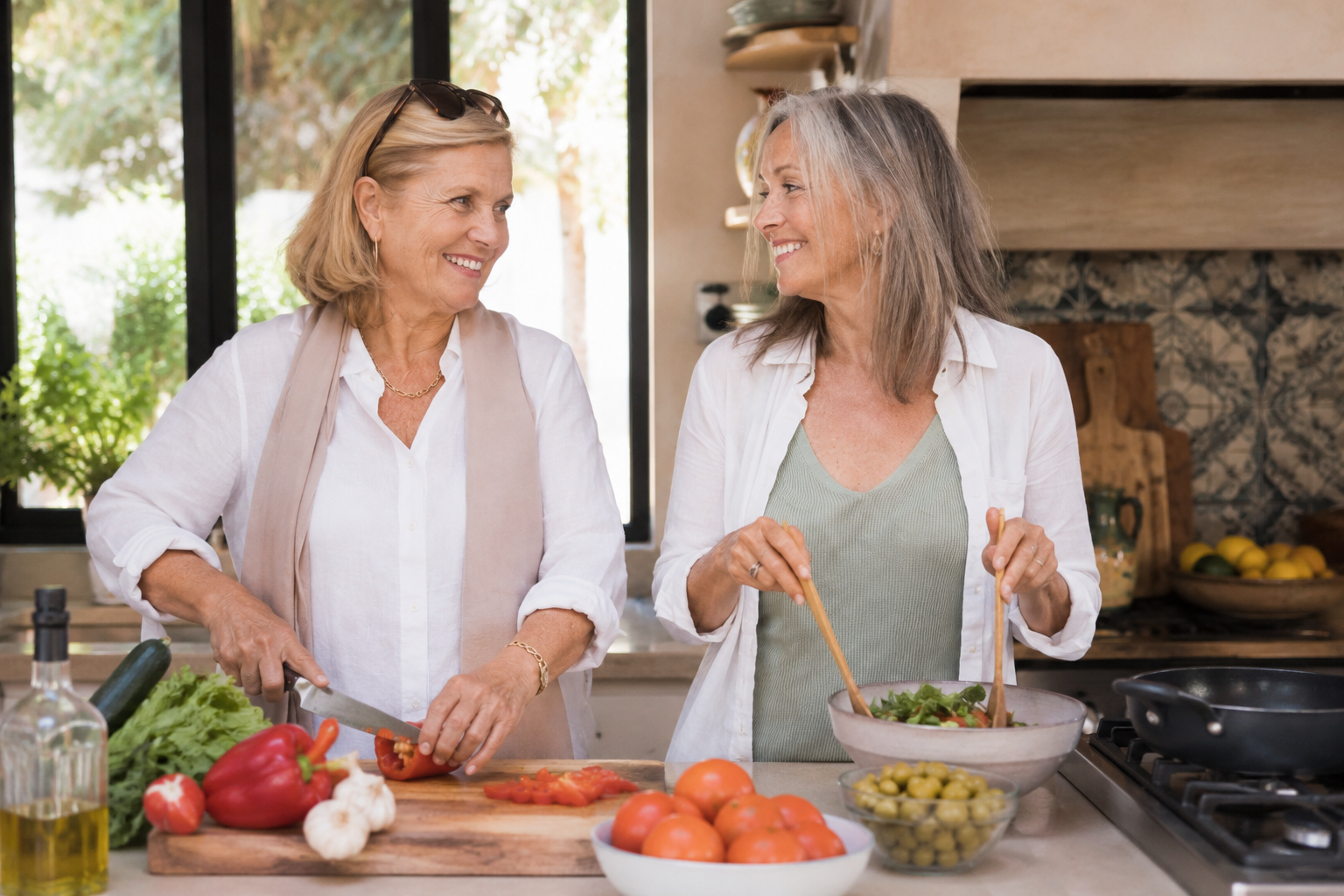
Once the sisters clear the visa hurdle, the shared-household economics reveal their true power, transforming incomes that would be tight alone into a genuinely comfortable life together. This is where the numbers turn from obstacle to gift.
Incomes that stretch twice as far. Each sister’s retirement income, which on its own might afford only a modest and somewhat lonely sort of existence in a small separate apartment, stretches remarkably further when the largest costs are shared down the middle. The flat is nicer, the meals are better, the small luxuries become possible, all because two people are carrying the fixed costs that one would otherwise bear alone.
A cushion against life’s shocks. Beyond the daily comfort, sharing a household gives each sister a financial and practical cushion, someone to share a sudden expense, to help in illness, to make later life more resilient. The shared home offers not just savings but real safety, a hedge against the particular vulnerabilities of growing older alone. A fall, a bout of flu, a night that turns frightening, all are less dangerous with another person in the house, and the deep peace of mind this daily companionship brings is worth every bit as much as the money it saves. For two people entering their later years, that daily presence of someone who will notice, and help, is a quiet insurance policy that no amount of solitary saving could buy.
Companionship Without a Couple
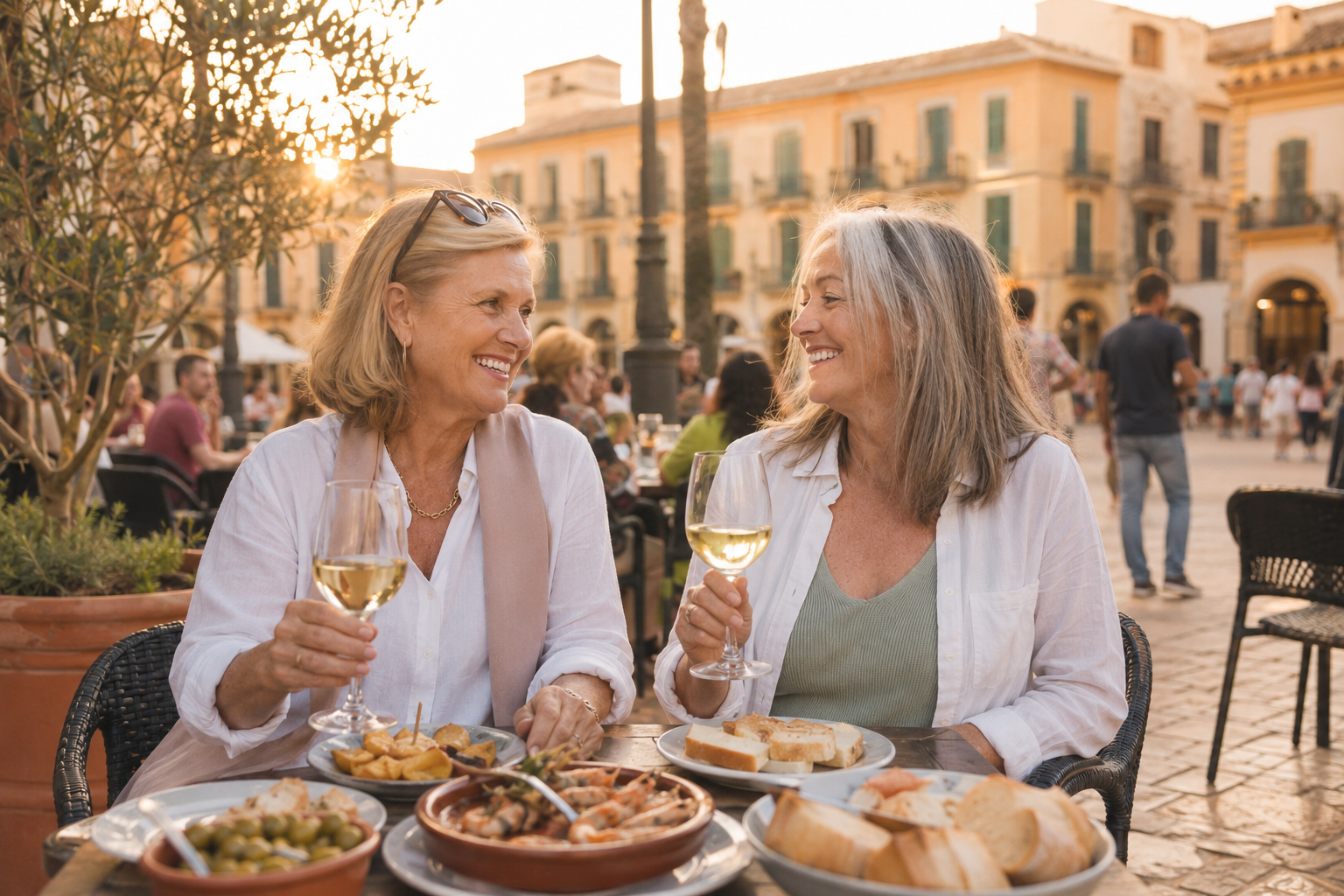
Beneath the arithmetic lies the real heart of the sisters’ choice, which has nothing to do with money and everything to do with belonging, with building a shared life beside someone they love. This is what the whole exercise is truly for.
A partnership of a different kind. What the sisters are creating is a genuine partnership, a shared daily life of companionship and mutual care that happens not to be romantic. that our systems recognize only the romantic couple says more about the systems than about a shared life, and the sisters’ bond is no less real for lacking a marriage certificate. History is full of households built on ties other than romance, siblings who kept a home together, lifelong friends who shared their years, companions of every kind, and there is nothing lesser or sadder about such a life. If anything, the deliberate choice to build a home with someone chosen for love of a different kind carries its own quiet dignity, and the sisters carry it lightly and wear it without a trace of apology.
Growing old in good company. The deepest gift of their arrangement is simply not being alone, someone across the breakfast table, a companion for the walk, a familiar presence in later life. This is the quiet richness the math ultimately serves, and it is a form of belonging that deserves to be seen and honored as fully as any other. The numbers and the visa forms are only the scaffolding around this simpler truth, that two people who love each other have decided to face the last chapter of their lives together rather than apart. Everything the harder arithmetic makes possible is ultimately in service of that one simple thing, and it is why the effort of running the more demanding math is so very plainly worth it to them both.
A Model More People Will Choose
Finally, the sisters’ composite story points to a pattern that is likely to grow, as more people recognize that a shared retirement need not wait for a spouse. Their once-unusual path may well in time become a truly well-worn and familiar one for many
An idea whose time is coming. As more single, widowed, or divorced people reach retirement, pooling resources with a sibling or close friend, rather than facing later life alone, will only grow. the sisters are early travelers of a road many others may follow, and this math may become ordinary. Demographic trends point the same way, with more people reaching retirement single than in past generations, and the old expectation that later life is spent within a marriage steadily loosening. Against that backdrop, two siblings or two old friends pooling their means to make a shared home abroad starts to look less like an oddity and more like a sensible answer to a common situation.
Worth running for anyone who dreams it. For anyone drawn to such an arrangement, the lesson of the sisters is that the harder visa arithmetic is real but far from insurmountable, and that the shared-household economics can make a rich life abroad genuinely achievable. As a final reminder, this portrait is a composite created for illustration and not a description of specific real people, and because visa rules and financial thresholds change and vary by situation, anyone considering such a move should verify all current requirements and seek qualified professional advice before acting.

About the Author: Ruben, co-founder of Gamintraveler.com since 2014, is a seasoned traveler from Spain who has explored over 100 countries since 2009. Known for his extensive travel adventures across South America, Europe, the US, Australia, New Zealand, Asia, and Africa, Ruben combines his passion for adventurous yet sustainable living with his love for cycling, highlighted by his remarkable 5-month bicycle journey from Spain to Norway. He currently resides in Spain, where he continues sharing his travel experiences with his partner, Rachel, and their son, Han.