
Before an American traveler in Europe has said more than a few words, the locals around them often already know exactly where they are from. It is not the passport that gives it away, nor even the accent, but a handful of small, lovable habits that mark a visitor from the United States as clearly as a flag. None of these habits are faults, and none of them are worth a moment of shame, because they simply reflect a warmer, more open, more comfortable way of moving through the world that is genuinely one of America’s most endearing qualities. Still, for the traveler who would like to blend in a little more, to be treated less like a tourist and more like a welcome guest, almost every one of these tells can be softened with a small, easy adjustment, and most of them can be decided upon before the plane even lands. So here, offered with real affection rather than any criticism, are nine habits that quietly announce an American abroad, and the simple ways to ease each one if you wish.
Think of this less as a list of mistakes and more as a gentle guide to turning the volume down on the tourist signals, so that the wonderful parts of an American traveler’s nature, the friendliness and the enthusiasm, come through without the noise. Every one of these is a matter of small awareness rather than real change, and none asks anyone to stop being themselves. Here is what the locals notice, and how to glide past it with grace.
Habit One: The Volume
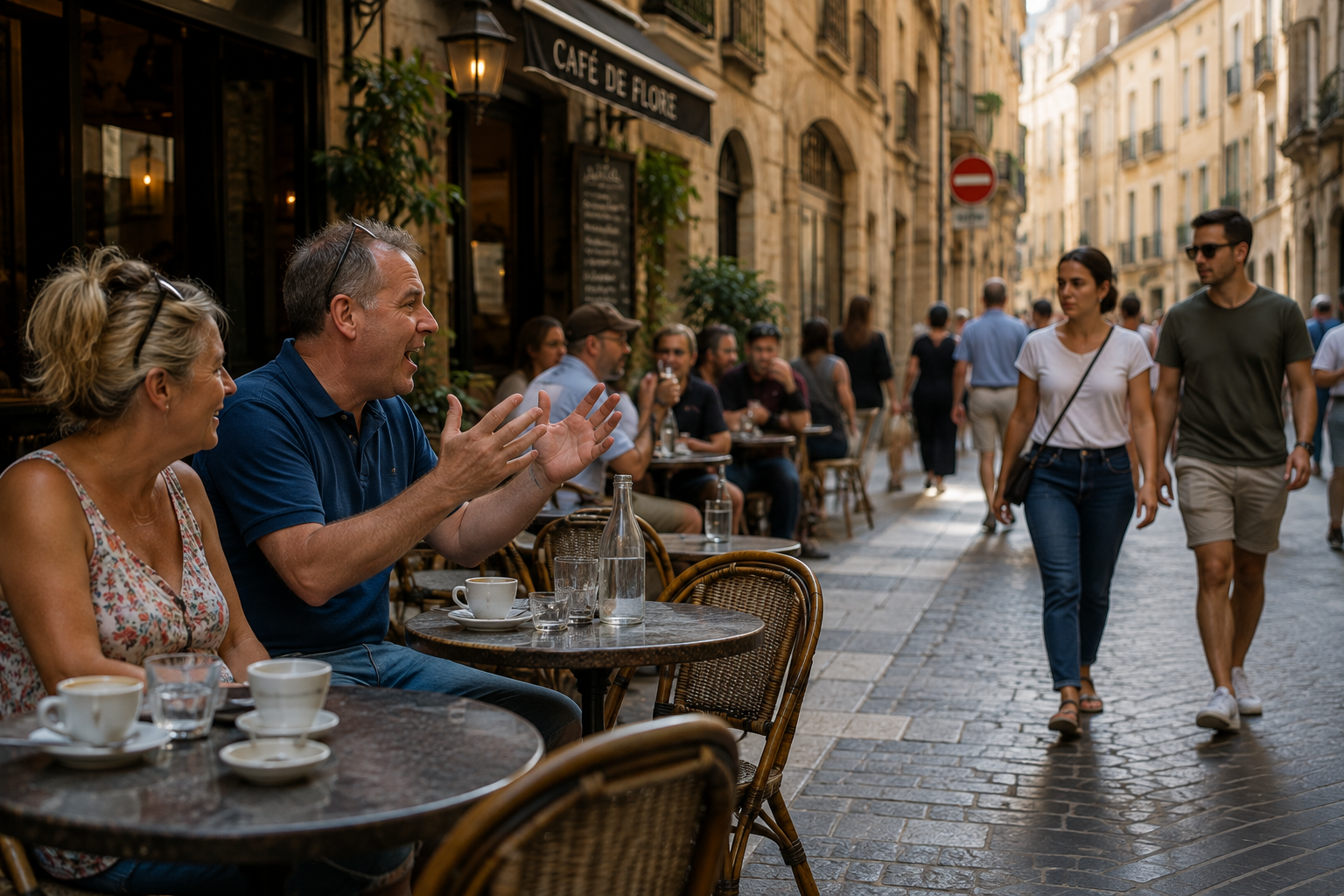
The first and most frequently mentioned tell is not seen but heard, because Americans are very often noticeably louder than the people around them. In many European settings, this stands out at once.
The room is quieter than at home. In much of Europe, indoor public spaces like cafés, trains and museums are kept noticeably quieter than their American equivalents, so a comfortable American volume can carry across an entire quiet carriage. This difference is one of the very first things locals notice, often before a visitor has said anything of substance at all.
The fix is simply to match the room. The easy adjustment asks only that you tune your volume to the level of the people around you, keeping all your natural warmth, dropping it a notch in quiet spaces. This small act of listening to the room is one of the quickest ways to feel less like an outsider and more like part of the scene. It is worth saying that the American openness behind the volume is a lovely thing, a sign of people at ease and enjoying themselves, and no one need feel embarrassed by it. The adjustment is not about self-consciousness but simply about courtesy to a quieter room, and it comes naturally within a day or two of paying attention.
Habit Two: The Athleisure and the Logos
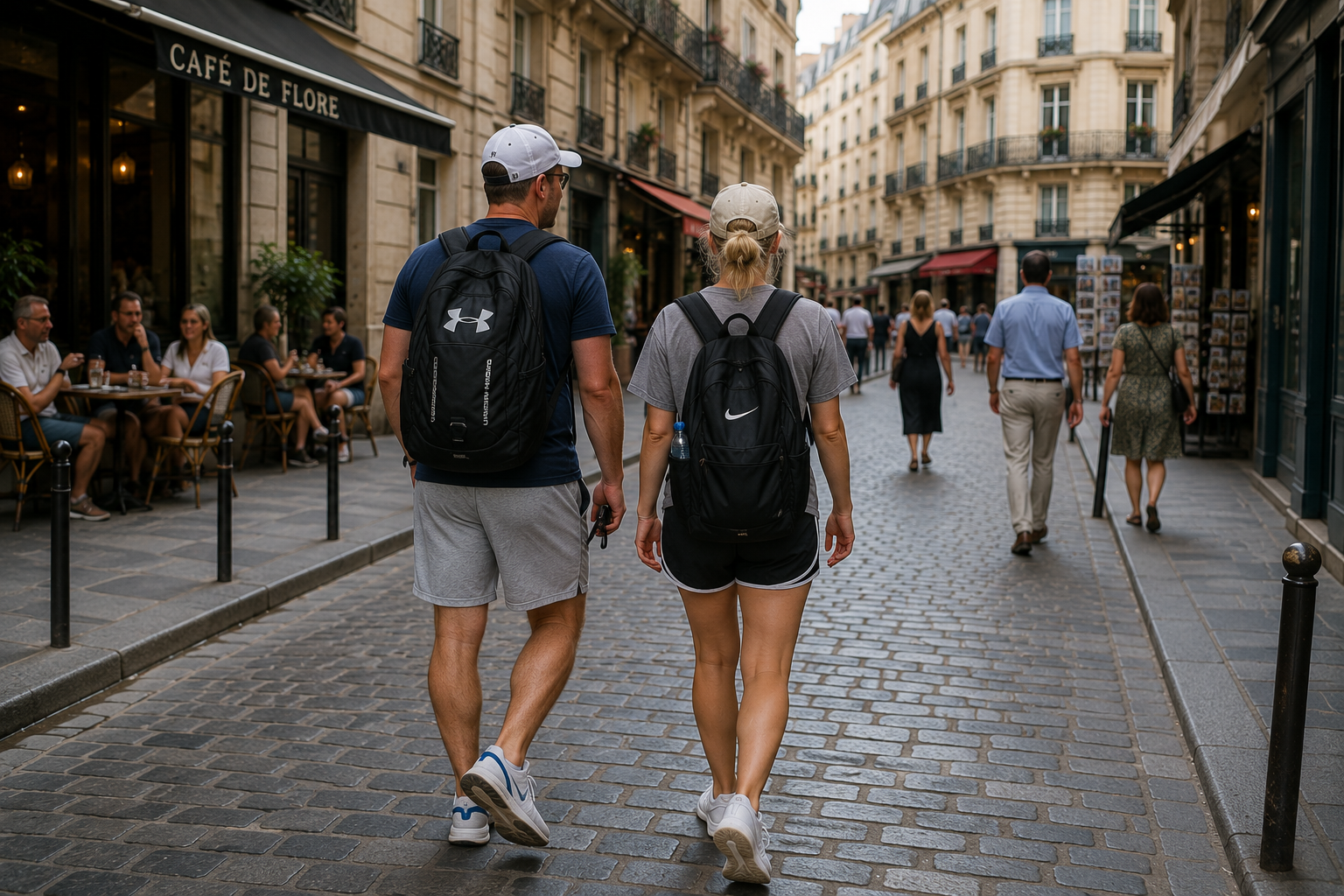
The second tell is visible from across a piazza, because American travelers tend to dress for comfort and practicality in places where locals dress with a little more intention. Clothing sends a signal before a word is spoken.
Comfort reads differently abroad. Americans often favor bright trainers, slogan shirts, team caps, and large backpacks, all perfectly sensible for a long day of walking, yet quite distinct from the more understated, put-together look common in many European cities. Even for a simple errand, locals in Paris or Milan dress with a quiet self-respect that makes gym wear stand out.
A small elevation goes a long way. The fix asks for no sacrifice of comfort, only a gentle lift, swap the slogan shirt for a plain one, the neon trainers for clean neutral sneakers. A scarf, a decent jacket, and jeans that fit will let a traveler move through a European city looking far more like a local and, often, be treated like one. Many visitors notice that the day they dress a little more sharply is the day waiters address them in the local language and shopkeepers warm to them, a small but real shift in how they are received. None of it requires expensive clothes or a whole new wardrobe, only a slightly more considered version of what you already own.
Habit Three: The Big Smile at Strangers
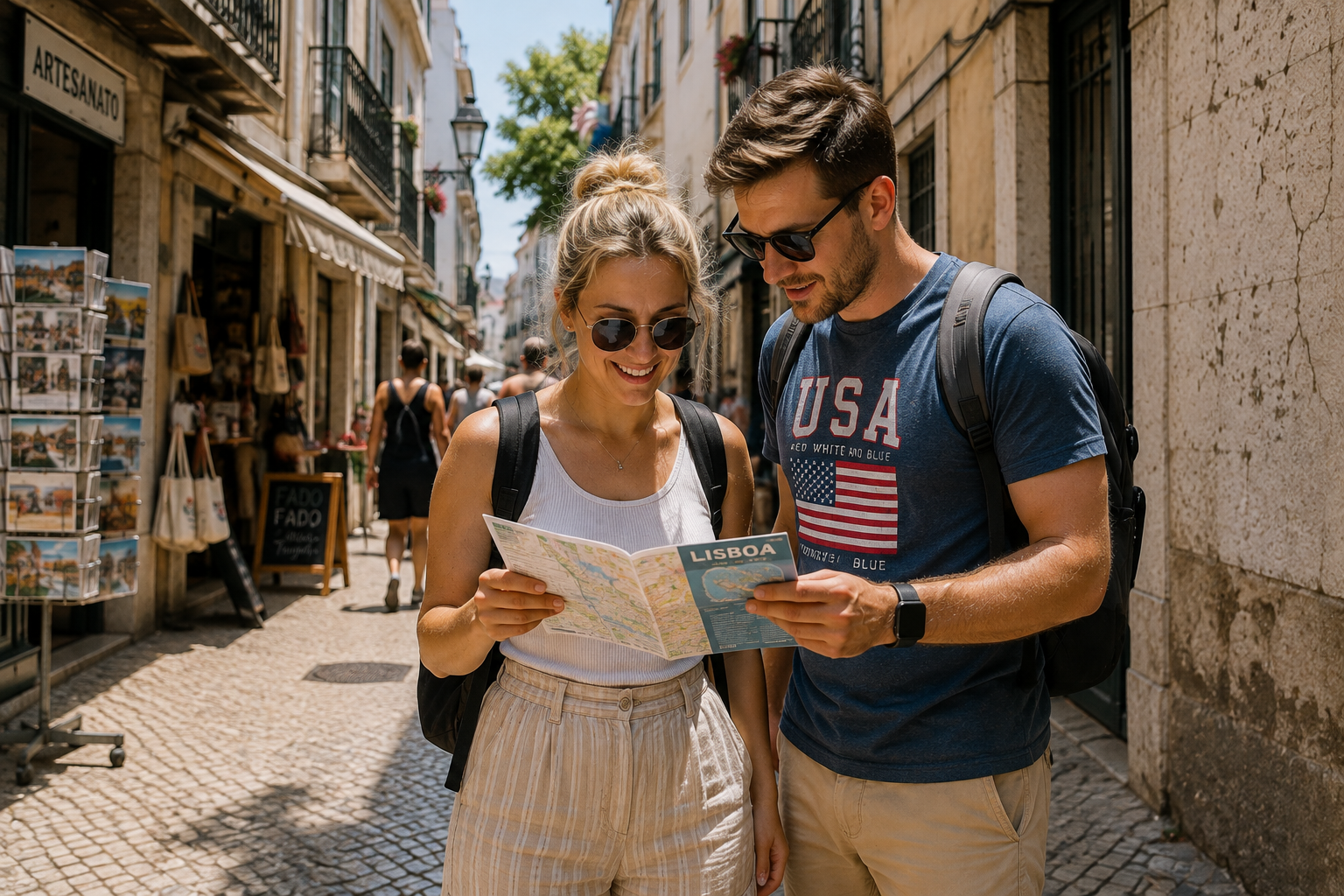
The third tell is one of the most charming of all, and it would be a shame to lose it entirely, because Americans smile warmly and openly at strangers in a way that is not universal. It can read as delightful or as puzzling, depending on where you are.
Open friendliness is distinctly American. The easy, unprompted smile at a passing stranger, the cheerful small talk with a shopkeeper, the grin while simply reading a menu, all reflect a genuinely warm culture, yet in some more reserved European settings the same smile can read as slightly unexpected. locals here keep their smiles genuine but subtle, offered to people they know.
Warmth can stay, just softened. The gentle adjustment asks only that you let the warmth settle a little, never that you become cold, offering a friendly nod rather than a beaming grin to strangers until the mood invites more. The friendliness is a gift, and it need not be hidden, only tuned to a slightly quieter key. In truth, many Europeans find the American warmth truly charming once they encounter it, and plenty of lasting friendships have begun with exactly the kind of easy openness that first marked a visitor as a foreigner. The point is never to suppress it, only to read the room, offering it where it is welcome and holding a little back where the setting is more formal.
Habit Four: The Ice and the Water
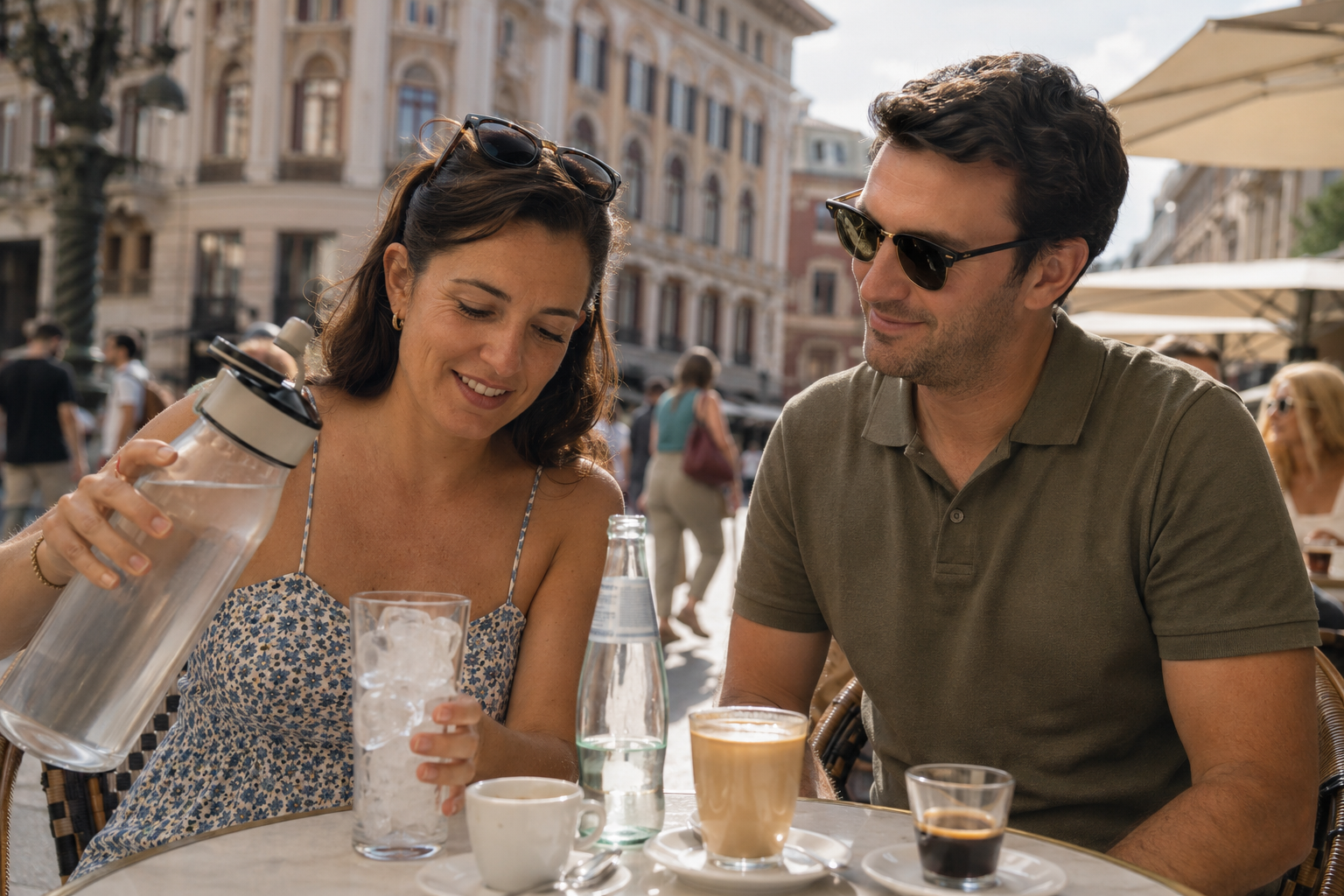
The fourth tell shows up at the very first café, because the American relationship with cold drinks and constant hydration is quite unlike the European one. It surfaces the moment a drink is ordered.
Ice and endless water are American habits. Americans want drinks packed with ice and large glasses of free tap water at every meal, along with a giant refillable bottle carried everywhere and sipped all day. In much of Europe, drinks come with little or no ice, and water is usually ordered and paid for by the bottle, and constant sipping from a huge bottle is simply not the custom.
Adjusting is easy and freeing. The fix is to expect and accept these differences rather than fight them, order water when you want it, drink it at room temperature, and let go of the need for ice in everything. Meeting the local custom here removes a very visible tell and spares a good deal of small friction at the table. There is even something pleasant to discover in the change, since a glass of wine or water at the temperature the locals prefer often suits the food far better than a glass full of ice ever could. Travel is partly about trying the local way of doing even the smallest things, and the way a country serves its drinks is as much a part of the experience as its food.
Habit Five: The Over-Tip
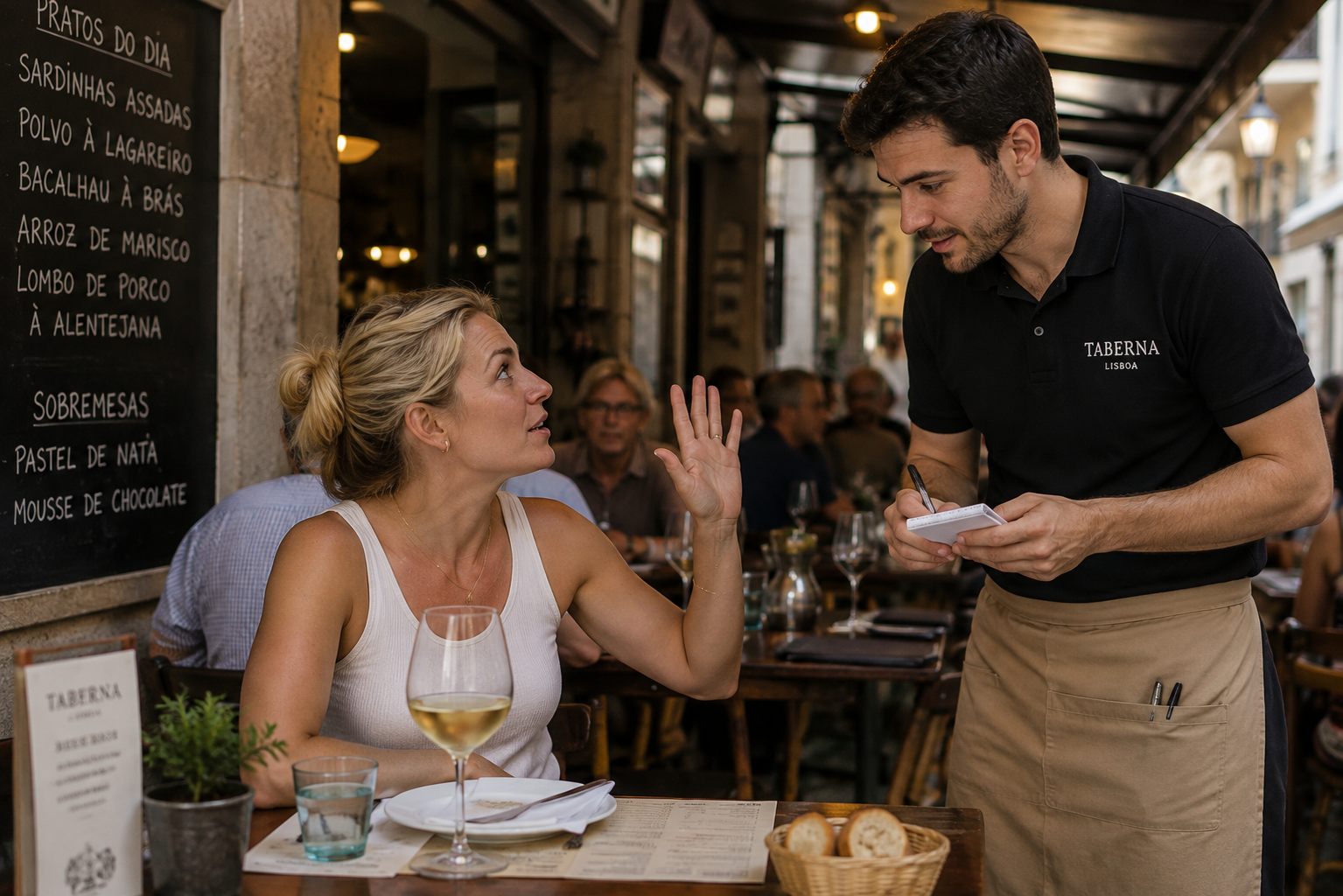
The fifth tell arrives with the bill, because American tipping habits are famously generous and quite different from the European norm. What feels polite at home can feel excessive abroad.
Generosity can overshoot. In the United States, tipping fifteen to twenty-five percent is standard, so Americans apply the same math in Europe, where service is frequently included in the bill and such large tips are simply not the custom. The habit is kind-hearted, but it marks a visitor instantly and can even cause a little awkwardness.
Learn the local rhythm. The simple fix is to check the tipping norm for each country, which in much of Europe means that rounding up the bill or leaving a small amount for good service is entirely sufficient. A little research before the trip turns a very common tell into a smooth, confident moment at the end of the meal.
Habit Six: The Early Dinner
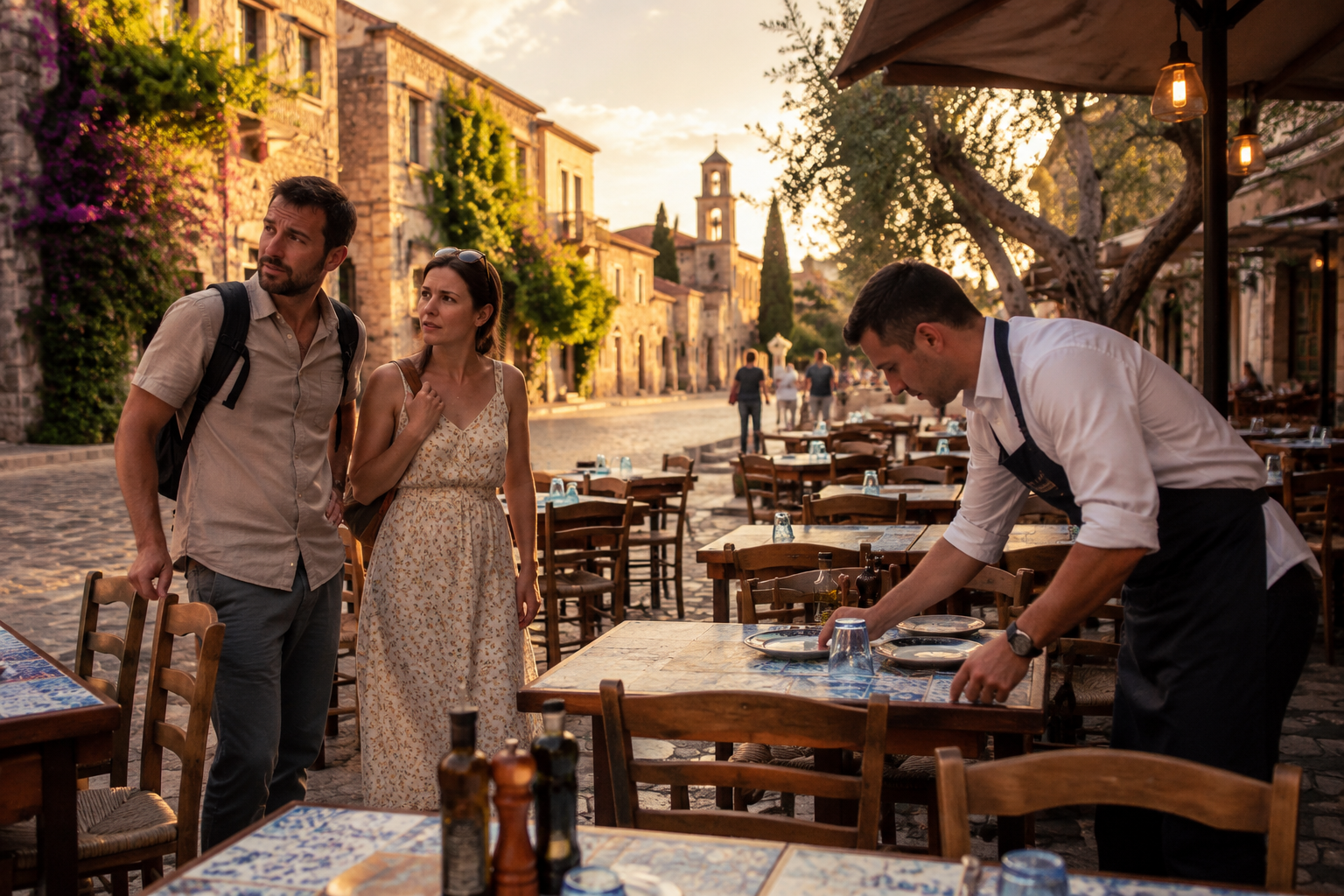
The sixth tell appears at the dinner table, or rather at the hour a traveler seeks it, because Americans tend to eat considerably earlier than much of Europe. Turning up at the wrong time is a quiet giveaway.
The clocks run differently. In many European countries, and especially in the south, dinner happens far later, sometimes not beginning until nine or ten in the evening, so a visitor seeking dinner at six may find the restaurants near empty or not yet open. Arriving hungry at an American hour is one of the surest signs of a newcomer.
Shift the schedule to match. The fix is simply to adopt the local rhythm, having a later lunch or a small snack to bridge the gap and settling in to dine when the locals do. Eating on the country’s schedule, rather than fighting it, not only helps a traveler blend in but often means better food and a livelier room. The kitchens are at their freshest and the atmosphere at its best when the locals themselves are dining, so shifting the clock a few hours is rewarded with the very best a place has to offer. Adjusting to the local hours also naturally resets the whole day, pushing back lunch and leaving lazy afternoons free, in a rhythm many travelers come to love.
Habit Seven: The Meal as a Pit Stop
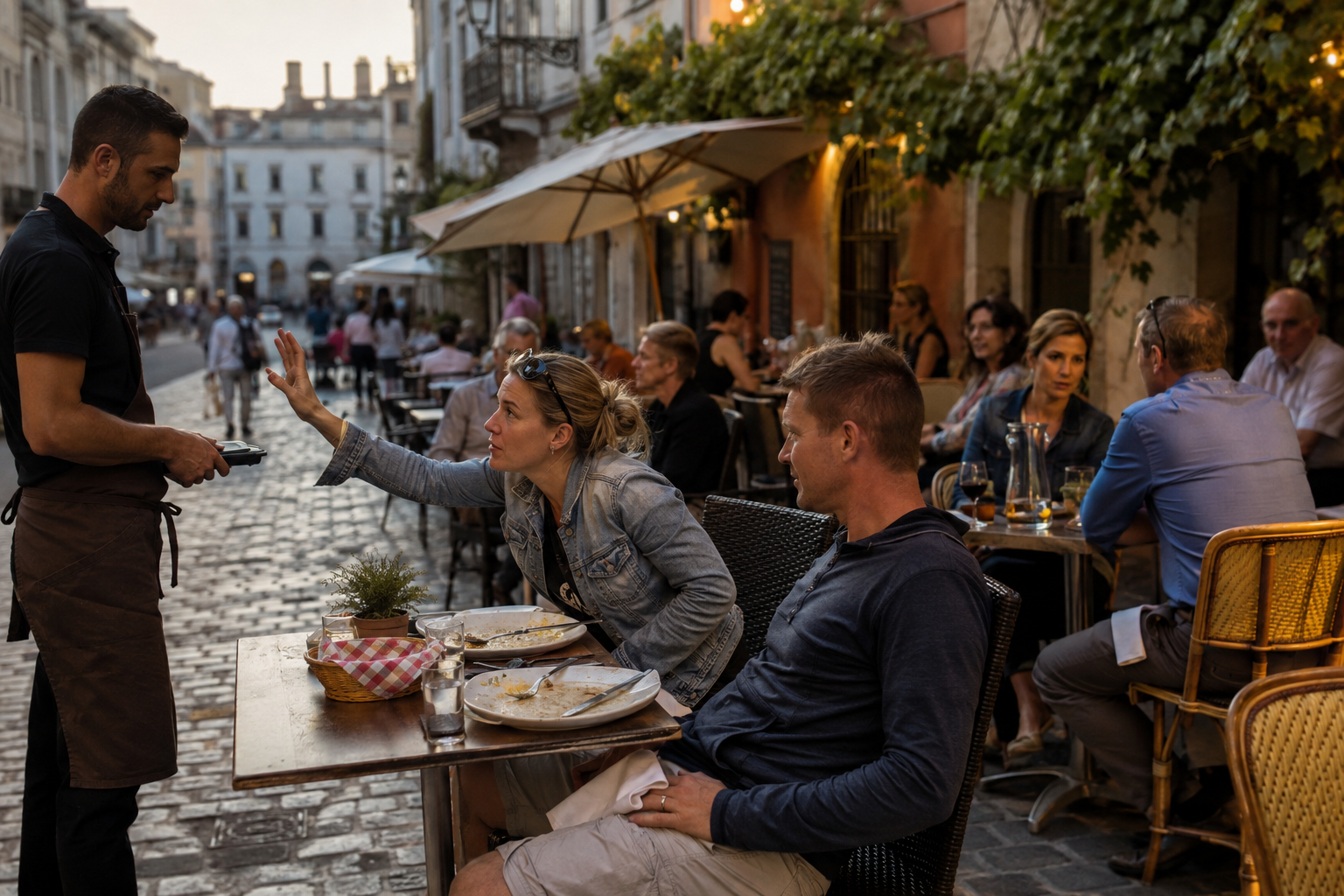
The seventh tell is about pace rather than time, because Americans often treat a meal as fuel to be dispatched efficiently, while much of Europe treats it as the event itself. The difference shows in how long you linger.
The meal is meant to be slow. In Europe, a meal is frequently a leisurely, unhurried affair, an occasion for conversation and people-watching that unfolds over a long, pleasant stretch, so the American habit of eating quickly and asking for the check right away can feel abrupt. The waiter who does not rush you is not being slow, but respecting the meal as something to be savored.
Let yourself linger. The lovely fix here costs nothing and gives much, simply slowing down, ordering another coffee, and letting the meal stretch out as the locals do rather than treating it as a task to complete. Learning to linger is one of the true pleasures of European travel, and it happens to erase one of the clearest tourist tells at the same time. Many visitors say that learning to sit over a long meal, with nowhere to rush off to, was the moment their trip truly began to feel like a holiday rather than a race. The pace is not laziness but a different set of priorities, one that places the pleasure of the table and the company above the ticking of the clock.
Habit Eight: The Camera Always Out
The eighth tell is one of the most visible, because American travelers, in their genuine delight at everything around them, often have a phone or camera constantly in hand. That enthusiasm is lovely, but it does stand out.
Everything gets photographed. Many American visitors, keen to capture every beautiful moment, keep a phone out for photos, directions and social media almost continuously, which marks them clearly against locals moving through the same streets without a second glance. The impulse comes from real wonder, which is a wonderful thing, but the constant camera is an unmistakable sign of a visitor.
Put it away, and be present. The gentle fix is to take the photos you truly want, then tuck the phone away and be in the place rather than viewing it through a screen. This not only softens the tell but, more importantly, lets a traveler experience the moment itself, which is surely the whole point of going.
Habit Nine: The Landmark Sprint

The ninth and final tell is one of pace across the whole day, because Americans, with limited vacation time and long lists of sights, often move through a city at a brisk, checklist-driven clip. The hurry itself gives them away.
Speed marks the visitor. Rushing from one landmark to the next, itinerary in hand, to see everything, sets a traveler noticeably apart from locals ambling unhurriedly through their own city. The instinct to make the most of a precious trip is entirely understandable, yet the resulting pace is one of the clearest signals of a tourist on a mission.
Do less, and feel more. The freeing fix is to slow down and do less, choose a few things to enjoy properly rather than many to rush through, and leaving real time to sit in a square and simply watch the city go by. Traveling at a gentler pace not only helps a visitor blend in but almost always makes for a richer, more memorable trip. The sights that are truly remembered years later are rarely the ones ticked hurriedly off a list, but the unplanned hour in a quiet square, the long lunch, the wander down a street with no name on the itinerary. Doing less, it turns out, is often the surest way to come home with more.
The Last Word on Blending In
Taken together, these nine habits share a single, reassuring truth, that none of them are flaws, but simply the marks of a warm, enthusiastic, and open culture meeting a slightly different set of local customs. Softening them is entirely optional, and a traveler who does none of it will still be welcomed warmly across Europe.
For those who do wish to blend in, the beauty of this list is that almost every adjustment is a matter of mindset rather than effort, a set of small intentions a traveler can simply decide upon before the plane touches down. Turn the volume down a notch, dress with a little more ease, slow the pace, and let the meals stretch out, and the wonderful parts of the American spirit will shine through all the brighter for it. The goal was never to stop being yourself, only to meet a new place halfway, and that small gesture of respect is exactly what turns a tourist into a traveler.

About the Author: Ruben, co-founder of Gamintraveler.com since 2014, is a seasoned traveler from Spain who has explored over 100 countries since 2009. Known for his extensive travel adventures across South America, Europe, the US, Australia, New Zealand, Asia, and Africa, Ruben combines his passion for adventurous yet sustainable living with his love for cycling, highlighted by his remarkable 5-month bicycle journey from Spain to Norway. He currently resides in Spain, where he continues sharing his travel experiences with his partner, Rachel, and their son, Han.