
Every family that books a flight in Europe runs into the same quiet piece of pressure. Somewhere in the booking process comes the offer to select seats for an extra fee, and beside it the unspoken threat that if you do not pay, you and your young children could be scattered across the aircraft. So parents pay up, often thirty, forty, or even fifty euros a seat, multiplied right across a whole family, purely to guarantee that a small and anxious child is not left sitting all alone many rows away from a parent. What most of these families do not know is that regulators across Europe have said for years that families should not have to pay for this, and that the European Union has now formally moved to make free family seating a legal right. The fee, in other words, is being charged for something that the authorities now increasingly regard as a basic family entitlement rather than an optional paid extra. Before going further, an important note, air passenger rules are changing significantly in 2026 and the timing of the new protections matters a great deal, so this is a general overview rather than a guarantee, and any family should confirm the current rules and their own airline’s policy before booking.
With that said, understanding this issue can save a family a real amount of money on every single trip, and can also spare them a good deal of the very anxiety that the airlines quietly rely on to sell the fee. The situation is shifting quickly in travelers’ favor, and even under today’s rules there are simple ways to sit together without paying. So here is what the regulators actually say, what is changing, and how a family can keep its members together without handing over money it does not need to spend. It is one of those areas where a little knowledge translates directly into savings on every trip a family takes, year after year. The airlines are counting on parents not knowing their options and paying out of worry, and the simple act of understanding the landscape flips that dynamic entirely in the family’s favor. What follows is not a set of loopholes but simply an accurate picture of a system in the middle of changing, and of the rights families already hold within it. Armed with that picture, a parent can approach the booking page calmly, knowing which levers to pull and which pressures to ignore.
The Fee Families Pay Without Question
The starting point is the fee itself, which has become such a routine part of booking a flight that most families pay it almost reflexively. It is worth seeing clearly for what it is.
The charge is widespread and real. A large majority of European carriers still charge a seat-selection fee, often up to fifty euros per seat, and for a family of four choosing seats both ways, the total climbs quickly into serious money. This is one of the most reliable of all the extra fees that budget travel has normalized. It sits alongside charges for cabin bags, for printed boarding passes, and for a dozen other things that were once simply included in the price of a ticket. Of all of them, though, the seat fee is perhaps the one families feel least able to refuse, precisely because it seems to hold the wellbeing of a young child hostage. That emotional weight is exactly what makes it so profitable, and so worth understanding. No parent wants to gamble with a small child’s comfort or safety on a long flight, and airlines know that most will pay almost any reasonable sum rather than take the chance. Seeing the fee clearly as a lever pulled on that instinct, rather than a genuine reflection of scarce seating, is the first step to refusing to be moved by it.
Fear is what sells it. The reason families pay so readily is the implied threat behind the fee, the worry that without paying, a small child could be seated alone many rows from a parent. Airlines understand this anxiety perfectly, and the fee converts a parent’s reasonable fear into a reliable stream of extra revenue.
What the Regulators Actually Say
Against this practice stands a growing chorus of official disapproval, because aviation regulators in several countries have made clear that families should not be split up in the first place. The guidance has been pointing one way for years.
Reasonable efforts were always expected. Even before any binding law, guidance across Europe held that airlines should seat young children beside an accompanying adult, and lawmakers had raised concerns that some carriers deliberately scatter family bookings to force fees. The practice, in other words, was already seen as a problem long before it was formally outlawed. For years the gap between what the guidance recommended and what the airlines in practice did was left to the goodwill of individual carriers, which is to say it was often ignored where there was money to be made. That gap between recommendation and enforcement is exactly what the new binding rules are designed to close, replacing a polite suggestion with a firm obligation that carries real consequences.
Other regulators agree. This is not only a European view, since the UK aviation authority recommends young children be seated close to an accompanying adult, and regulators elsewhere have proposed or urged similar protections. Across much of the world, the official position has converged on the same simple idea, that separating small children from their parents to sell a seat fee is not acceptable. Regulators have increasingly recognized that this is not merely an inconvenience but a genuine safety and welfare concern, since a frightened child seated far from any parent is a problem for the whole cabin, not just the family. That framing, treating togetherness as a matter of child welfare rather than customer preference, is precisely what has pushed the issue from soft guidance toward hard law.
The New EU Law That Changes Everything
The most significant development is a major reform of European air passenger rights that turns this guidance into a firm legal obligation. Its arrival marks a real shift in the balance of power.
Free family seating becomes a right. Under the reform approved by European lawmakers, airlines must seat a person accompanying a child under fourteen in an adjacent seat at no charge, with the same free adjacent-seating right extended to pregnant travelers and to passengers with disabilities or reduced mobility. This converts family seating from a paid service into a protected entitlement.
The timing is crucial to understand. Crucially, this new rule is not yet in force, because after formal publication it takes effect only after a set period, followed by a further preparation period of around a year for airlines and booking systems to adapt. the guarantee is coming rather than already operating, so families flying now still face the old landscape. This distinction is easy to miss amid the celebratory headlines, and a parent who reads that free family seating is now the law could be forgiven for assuming it applies to their flight this summer. It does not, at least not yet, and confusing the announcement of a right with its actual arrival is a costly mistake. The sensible course is to treat the new protection as a welcome development on the horizon while continuing to use the practical tactics that work under the rules in force today.
The Ryanair Turnaround
The pressure on this practice is not only coming from lawmakers but from competition regulators too, and one high-profile case shows the direction of travel clearly. A major budget airline has already blinked.
A regulator forced a change. A UK competition authority opened an investigation into one carrier’s mandatory family-seating fee, which had required a parent traveling with young children to pay in order to sit together, the airline moved to change its approach. This was a direct result of regulatory pressure rather than a voluntary act of generosity.
The fee became optional. Under the revised approach, the airline said it would assign families seats together at check-in for free, usually toward the rear, while still offering paid seat selection for those who want a specific choice. This is exactly the direction the whole industry is being pushed, toward free togetherness as standard and paid selection as an option, not a threat. One carrier’s climbdown under regulatory pressure sends a clear signal to the rest, since no airline wants to be the outlier still charging families to sit together once the practice has become publicly indefensible. The combination of competition regulators acting now and the new law arriving soon means the old model of profiting from separated families is quietly running out of road.
Book It Right, and It Is Often Free Anyway
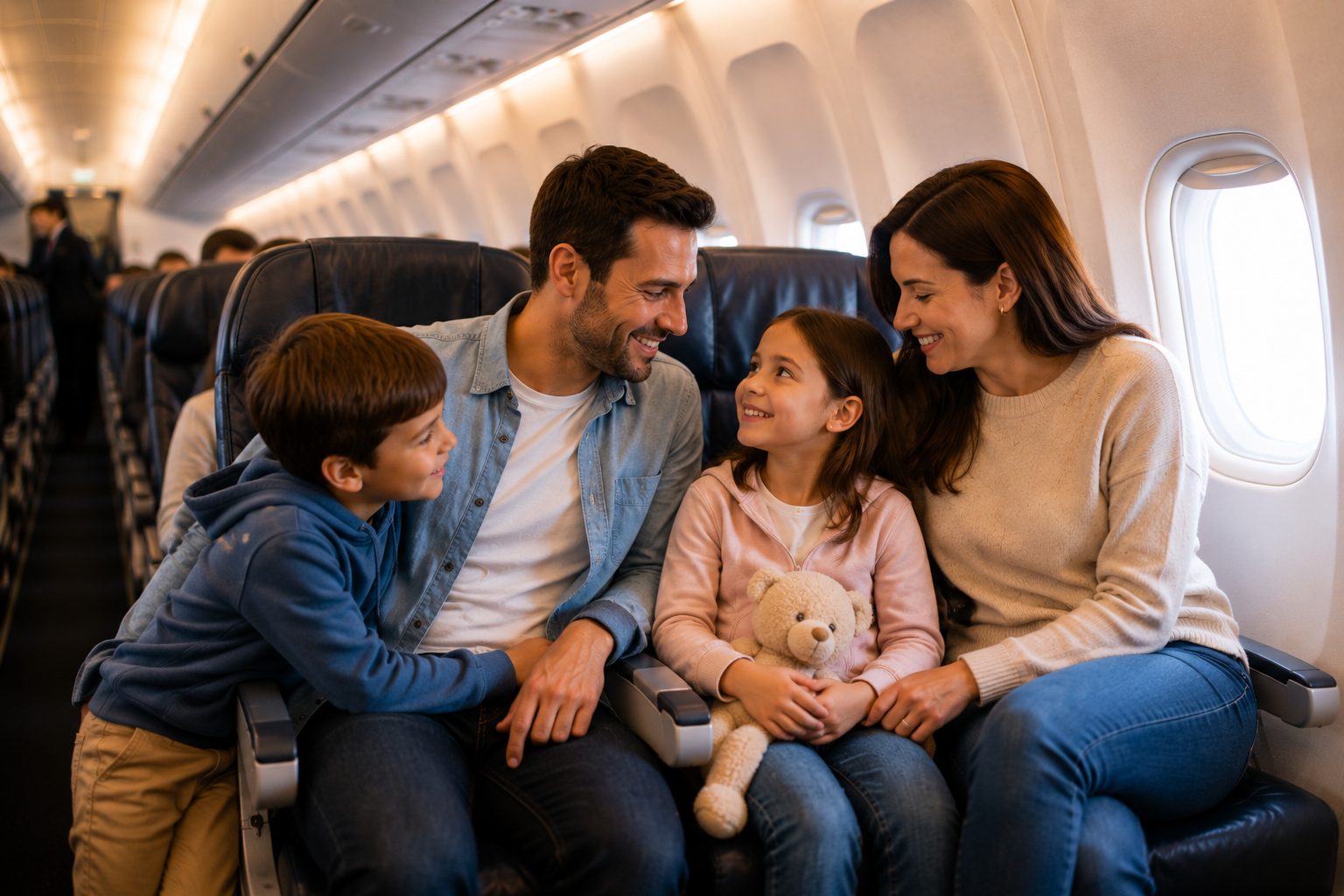
While the binding law is still on its way, families are far from powerless under today’s rules, because how a flight is booked has a large effect on whether seats end up together. A few simple habits stack the odds in a family’s favor.
Book together, and book early. Placing the whole family on a single reservation, and booking as far ahead as possible, gives an airline’s system the best chance of automatically seating everyone together, since more of the plane is still open. Fragmented bookings and last-minute purchases are exactly what lead to scattered seats, so avoiding both removes much of the risk. When families book on separate references, perhaps because one parent booked first and another was added later, the system has no way of knowing they belong together and treats them as unrelated strangers. Keeping everyone under a single reference from the outset, and buying early while the cabin is mostly empty, is the closest thing there is to a guarantee of adjacent seats without paying a cent.
Check in the moment it opens. Many airlines seat families together at check-in, so check in the moment the window opens, often twenty-four hours before departure, can secure adjacent seats without any fee. This small piece of timing discipline frequently solves the whole problem at no cost. Airlines hold back a certain number of seats and release or reshuffle them as departure approaches, and the family that is ready the instant online check-in opens often finds it can slot everyone together from whatever is available. Setting a reminder for the exact moment check-in opens is a tiny effort that regularly saves a family the entire fee, turning a stressful uncertainty into a solved problem the day before the flight.
Ask, Do Not Simply Pay
Perhaps the most useful thing a family can know is that the fee is often avoidable simply by asking, because many airlines will quietly seat young children with a parent even when they have no formal obligation to do so. The default of paying is rarely the only option.
Airlines will usually help if asked. Even without a binding rule, most carriers will seat a young child beside an adult when a parent asks directly, at check-in, or at the gate, rather than leaving a small child genuinely alone. A polite, direct request is often all it takes, and it costs nothing to make. Frontline staff generally have no wish to seat a young child alone and will usually find a way to keep a family together if simply asked with a little courtesy. It helps to ask early rather than at the last moment, to be pleasant rather than demanding, and to mention clearly that a young child is involved, since that is the detail that unlocks the most goodwill. Many parents who assumed they had no choice but to pay discover, on asking, that the airline was perfectly willing to help all along.
Treat the fee as a last resort. The sensible approach is to exhaust the free routes first, book together, check in early, and ask the airline, paying only if none of that works and the peace of mind is truly worth it to you. Paying should be a considered last choice, not the automatic first move the booking page nudges you toward. The entire design of the booking flow is built to make paying feel like the only responsible option, presenting the fee at the emotional moment when a parent is picturing their child alone in a distant row. Recognizing that design for what it is, a sales tactic rather than a genuine necessity, is what allows a family to pause, work through the free options first, and pay only if they truly choose to.
What to Do If You Are Split and Charged
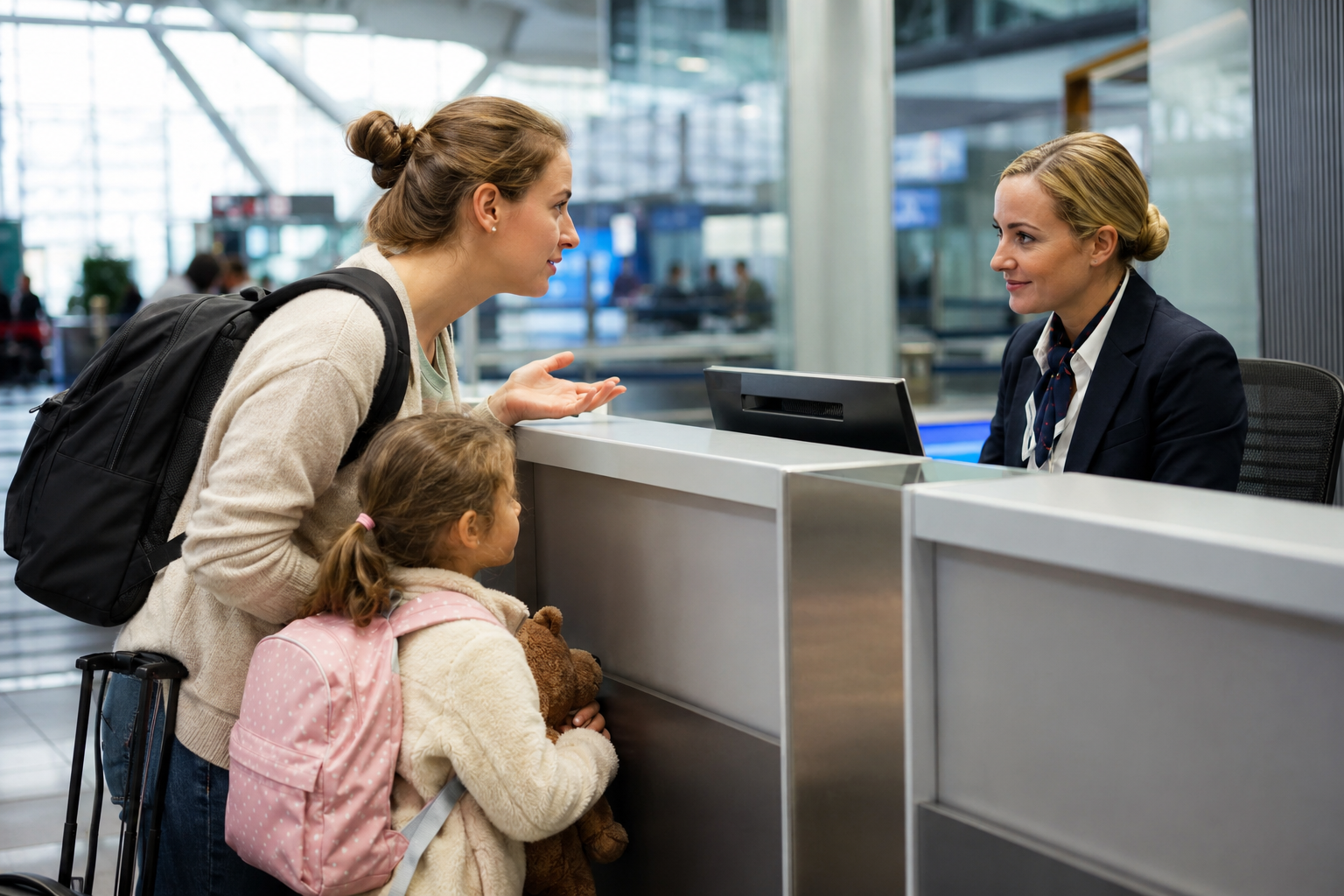
Finally, families should know their options for the cases where an airline does separate them or push the fee hard, because a record of what happened can matter. Documentation is a quiet form of power.
Keep a record. If an airline separates a family from a young child and charges to fix it, document the booking, the seat assignment, and any correspondence to support a complaint to the airline or the relevant authority. As protections tighten, such records become increasingly useful. A clear timeline showing that a family booked together, was separated by the airline anyway, and was then charged to fix it is precisely the kind of evidence a regulator or an ombudsman takes seriously. Even where no immediate refund follows, complaints of this kind feed the very pressure that has driven the recent reforms, so a family that documents and reports a bad experience is quietly helping to fix the problem for everyone.
Know the direction of travel. The clear trend across Europe is toward free family seating as a right, not a privilege, so a family that understands this can push back rather than accept the fee as inevitable. As a final reminder, because these rules are actively changing through 2026 and the exact protections depend on timing and on the airline, every family should confirm the current position and their carrier’s specific policy before booking rather than relying on any single figure or promise here.

About the Author: Ruben, co-founder of Gamintraveler.com since 2014, is a seasoned traveler from Spain who has explored over 100 countries since 2009. Known for his extensive travel adventures across South America, Europe, the US, Australia, New Zealand, Asia, and Africa, Ruben combines his passion for adventurous yet sustainable living with his love for cycling, highlighted by his remarkable 5-month bicycle journey from Spain to Norway. He currently resides in Spain, where he continues sharing his travel experiences with his partner, Rachel, and their son, Han.