
There is a moment in every foreigner’s first Greek taverna meal when they get it wrong, and it usually happens the second they open the menu and start choosing a dish for themselves. In Greece, that instinct, so natural everywhere else, is precisely the mistake, because a taverna is not a place where each person orders their own plate. the whole table eats together, from shared dishes that arrive in their own sweet time, over an evening that no one is ever in a hurry to end. The Greeks have a word for the spirit of it, parea, a gathering of friends sharing food, wine, and conversation as one, and the entire way of ordering flows from that idea. Understanding this transforms a meal from a series of small confusions into one of the great pleasures of Mediterranean travel. So before the next menu lands in your hands, here are the rules of ordering at a Greek taverna, where everything comes for the table or not at all, and where the meal is really just the excuse for the evening.
None of these rules are difficult, but almost all of them run against the grain of how dining works in much of the world, which is exactly why visitors stumble. The plates are shared, the food is uncoordinated, the bread appears uninvited, and the bill will never come until you ask for it. Learn the logic behind each of these and you will not only avoid every rookie error but eat the way Greeks have eaten happily for generations. Here is how it works, rule by rule.
Rule One: Order for the Table, Never for Yourself
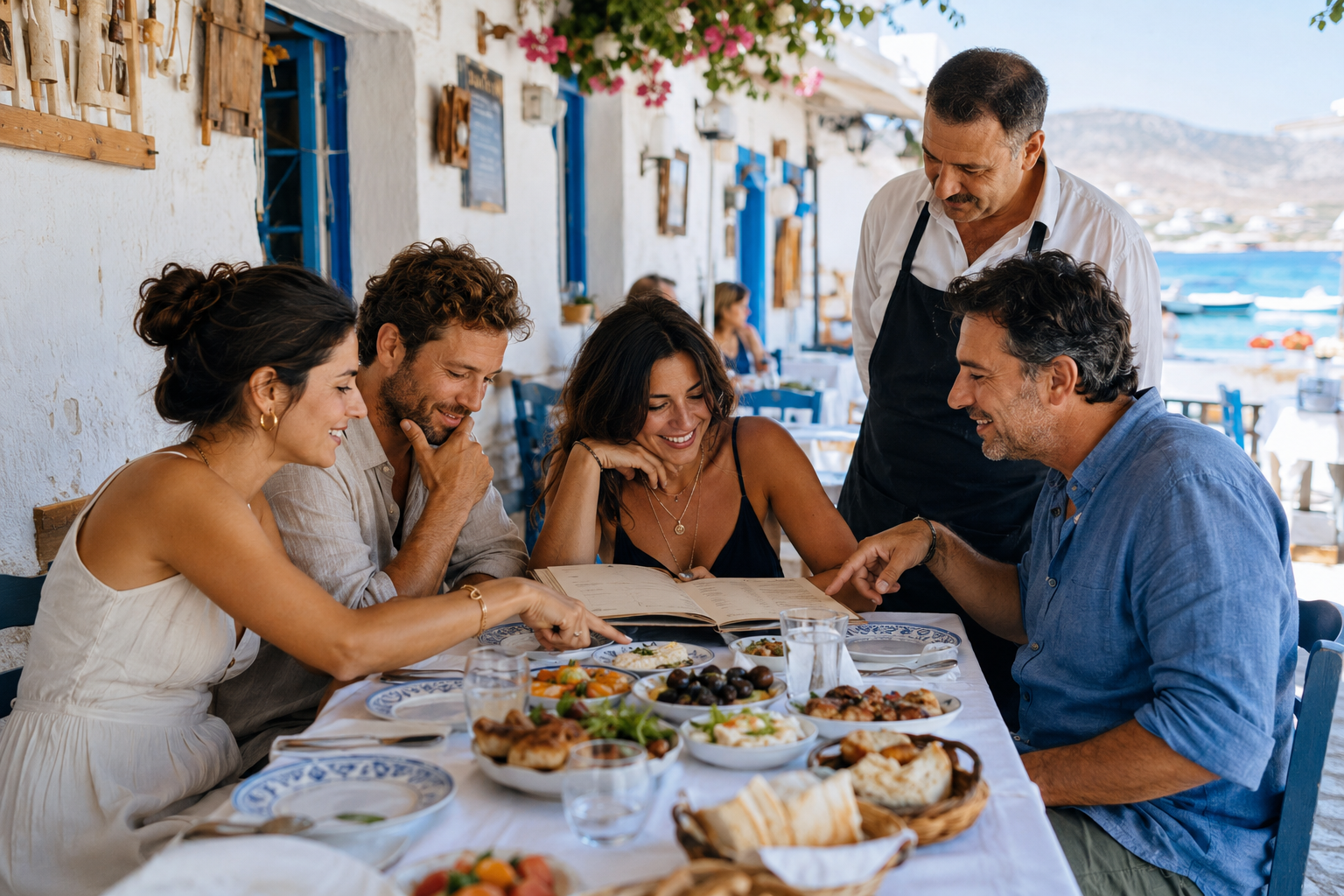
The foundational rule, the one that everything else rests upon, is that a Greek taverna meal is a shared, communal affair and not a collection of individual orders. Grasping this changes everything.
Nobody orders their own main. In a traditional taverna, the table chooses a spread of dishes for everyone to share, not one plate per person, all placed in the middle and eaten by all, so ordering a single plate just for yourself misses the entire point. The Greeks call the whole convivial idea parea, and the food is arranged to serve the group rather than the individual.
Sharing is the whole spirit. Because everything is communal, a diner reaches into the shared dishes, samples a little of everything, and feasts collectively rather than a private one. This generous, family-style sharing is the beating heart of Greek dining, and embracing it wholeheartedly is the surest way to enjoy a taverna as the locals do. It takes some visitors a meal or two to unlearn the habit of guarding their own plate, but once the shift happens it is a revelation. Suddenly you are tasting eight dishes instead of one, passing plates back and forth, and eating the way a Greek family has eaten for centuries, and the whole table feels less like a transaction and more like a party.
Rule Two: Build the Meal in Layers
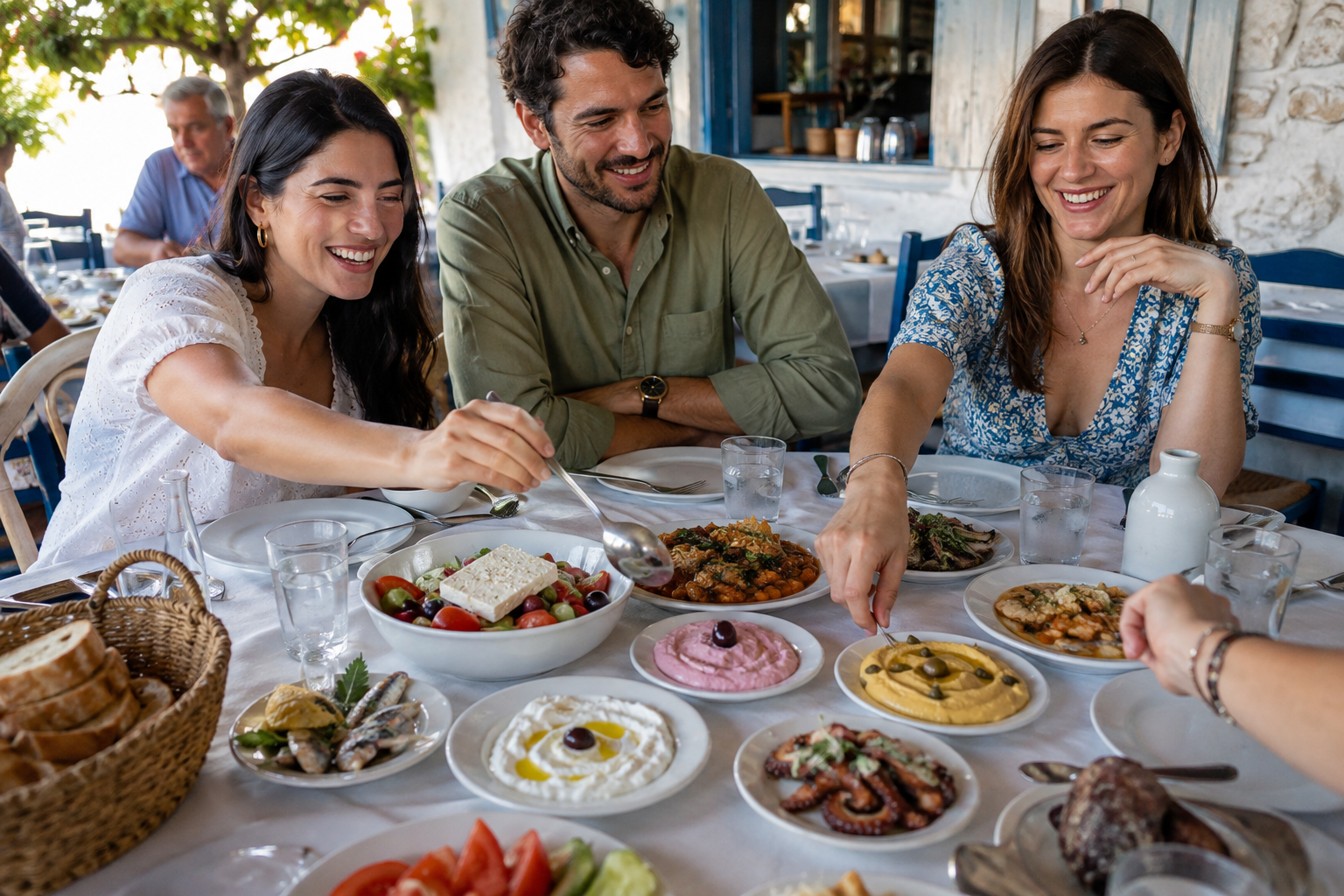
Once you accept that you are ordering for the table, the next question is what to order, and here the Greeks follow a loose but reliable sequence of layers. A little structure helps.
Start with dips and a salad. The classic way to begin is with a few dips such as tzatziki, taramosalata and fava, plus the horiatiki that is always shared, so the table fills first with these bright opening plates. From this foundation, the rest of the meal builds naturally outward.
Add mezedes, then perhaps a main. After the dips and salad come the mezedes, the small shareable plates that are the soul of the meal, from octopus to fried cheese to vine leaves, and only then, if the table still wants more, a main dish or two to share as well. A wise rule of thumb is to order a dish or two more than you think you need, since plates are grazed, not finished. Greeks would rather see a table generously covered, with a little of everything left over, than a mean spread cleared to the last crumb. Abundance is part of the hospitality, and no one frets about ordering too much. If you are unsure what to choose, you can always ask for a poikilia, a variety platter, and let the kitchen assemble a selection for you.
Rule Three: Let the Food Arrive in Waves
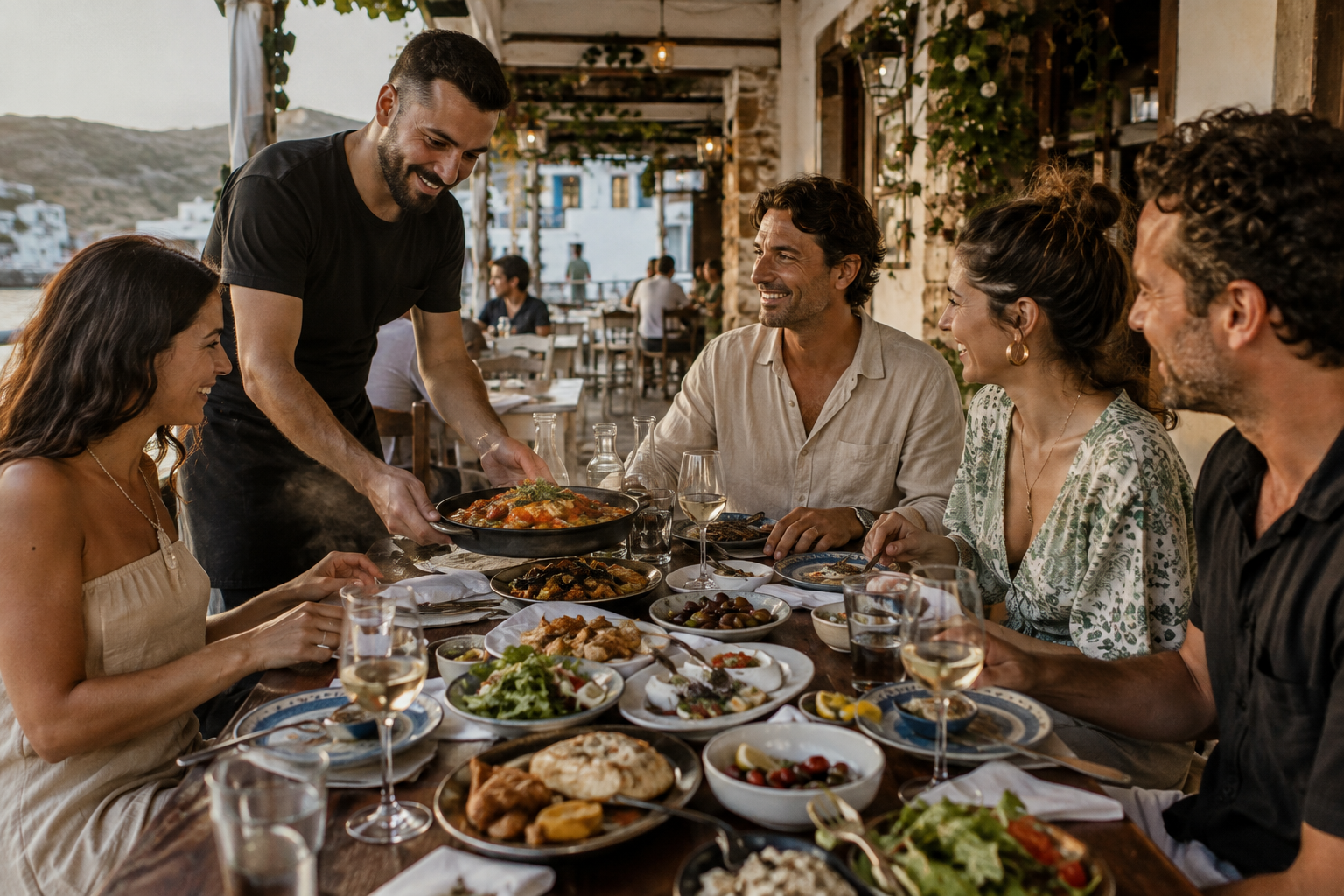
A common source of confusion for visitors is the timing of the food, which does not follow the neat, coordinated courses of a formal restaurant. Understanding the rhythm prevents frustration.
The plates come when they are ready. In a taverna, dishes are brought out as the kitchen finishes them, not all together in tidy courses, so the table fills up gradually and unpredictably over the meal. This is not disorganization but the natural, unhurried way of things, and a diner should simply enjoy each plate as it lands rather than waiting for everything to arrive at once.
The table fills as you go. Because the food trickles out in waves, the shared table becomes a slowly growing landscape of plates. Relaxing into this gradual, rolling abundance, rather than expecting a synchronized meal, is a key part of settling into the taverna rhythm. There is a real charm to it once you stop resisting. A cold dip might arrive while the grilled fish is still cooking, and by the time the fish lands you have already been happily eating for twenty minutes. Nothing waits on ceremony, and the meal unfolds as a series of small arrivals rather than a single staged event, which suits the slow, sociable pace perfectly.
Rule Four: Accept the Bread and the Cover Charge
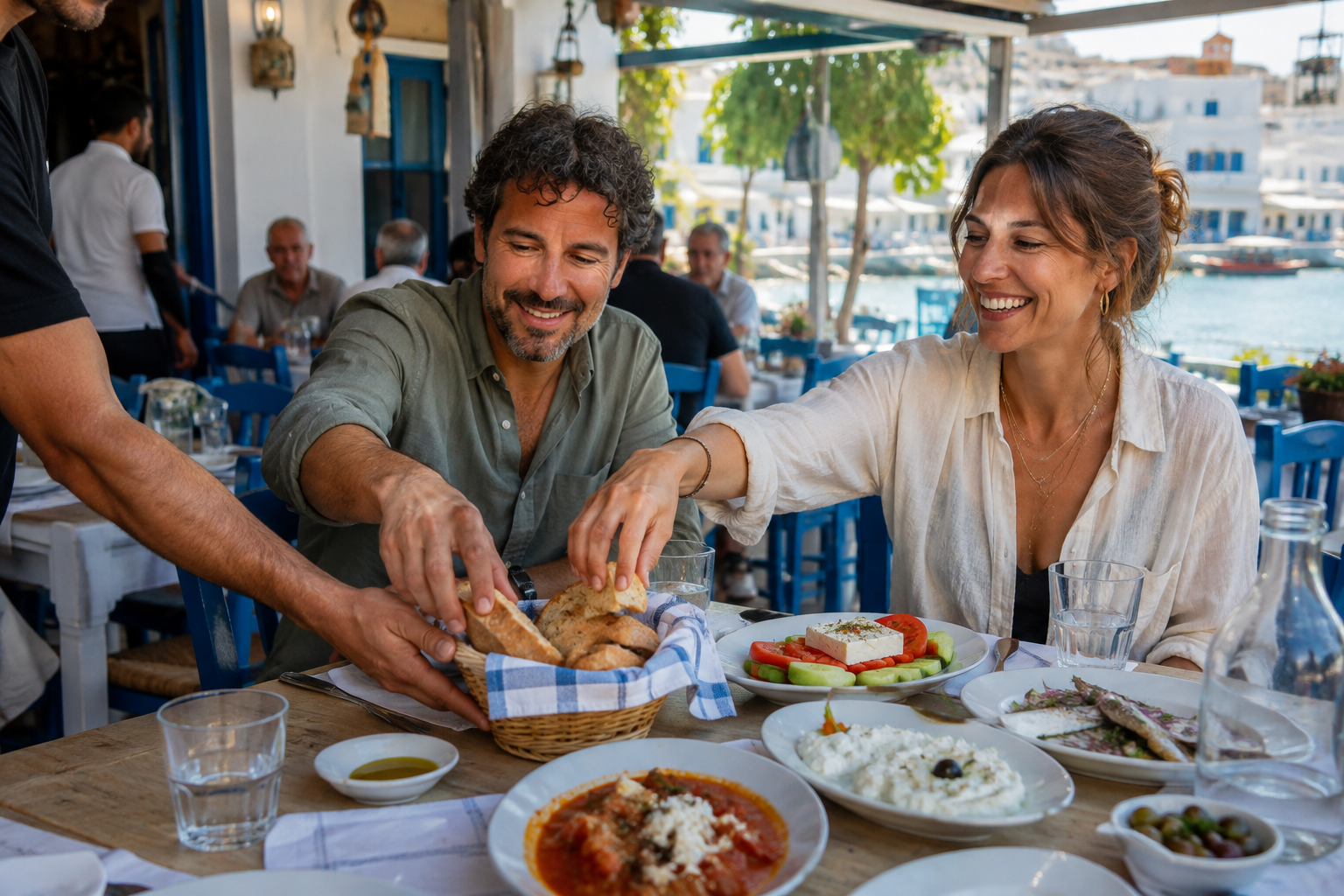
Almost every taverna will bring bread to the table whether you asked for it or not, and it comes with a small charge that surprises the unprepared. Knowing about it in advance removes the sting.
The bread is part of the welcome. Shortly after you sit, a basket of bread appears, often with olive oil, brought without being ordered as a standard part of the taverna experience. This is not an error but a small ritual of hospitality, and using the bread to mop up the sauces on the shared plates is entirely welcome.
There is usually a cover charge. Most tavernas add a small per-person cover charge, a couvert, for bread and table settings, typically only a few euros a head and entirely normal rather than any kind of scam. If you genuinely do not want the bread or the bottled water they may also bring, say so politely right when you sit down, before it appears on the bill. That said, most visitors quickly learn to simply accept it, since the bread is usually good, the charge is small, and the little basket is genuinely meant as a gesture of welcome rather than a way to pad the bill. The best tavernas take real pride in what they set down unbidden, and refusing it can feel like turning away the first offer of hospitality.
Rule Five: Order the House Wine by the Carafe
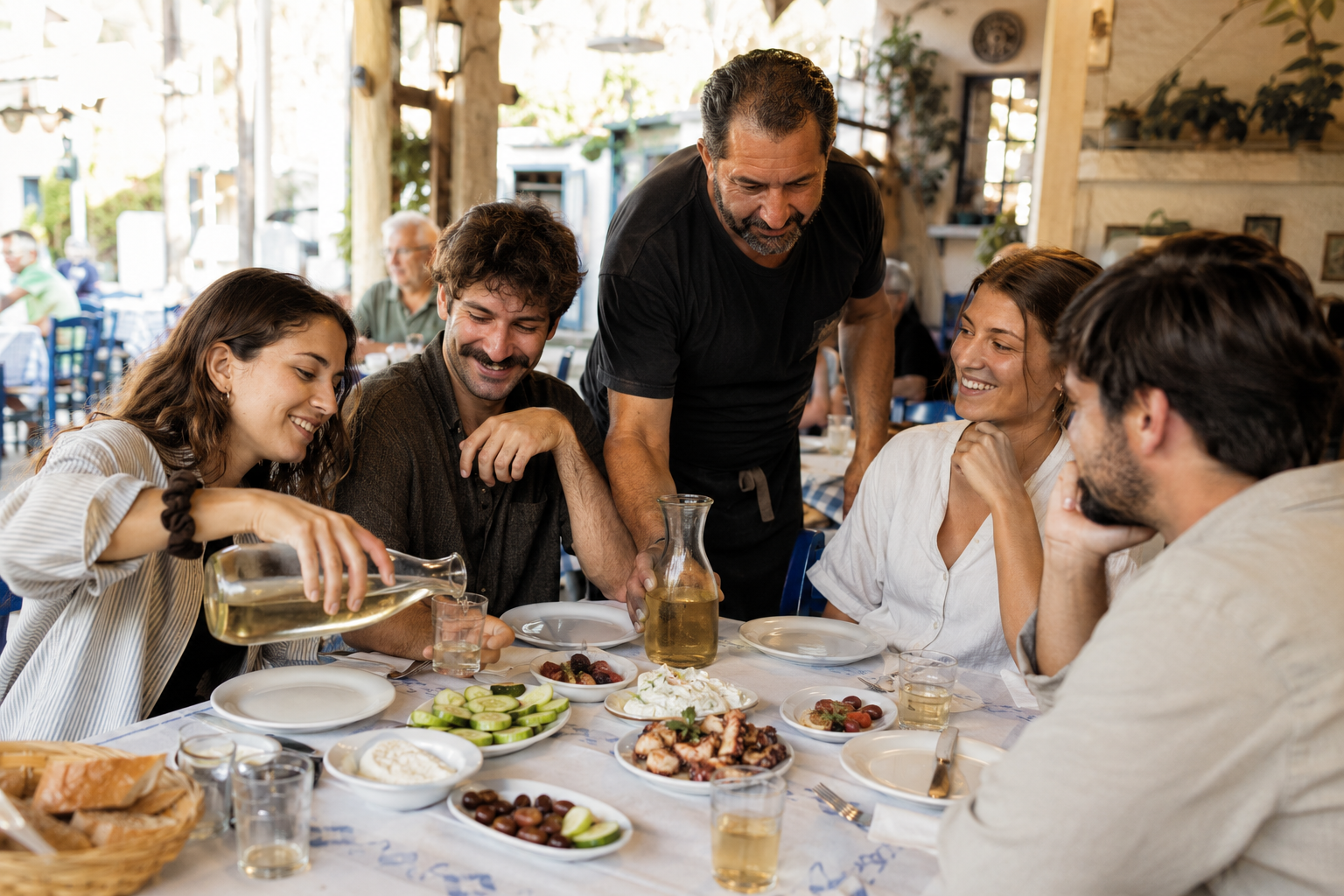
The drink that belongs with a taverna meal is not a bottle chosen from a list but the house wine, ordered in a way that puzzles first-timers. Doing it the local way is half the pleasure.
Ask for the house wine loose. In a traditional taverna, the house wine, chyma, is ordered by the half or full carafe, never the bottle, and it will be a local or regional wine, often the owner’s own, poured simply and cheaply. This unpretentious loose wine is the authentic companion to a taverna meal, and asking for it marks a diner as someone who knows the ropes.
Consider the spirits too. Alongside the wine, a taverna meal pairs beautifully with a glass of ouzo or tsipouro with their mezedes, so a diner might well add one to the table. These local drinks are part of the whole convivial ritual, sipped slowly across the long hours of the meal. Ouzo and tsipouro in particular are meant to be nursed alongside food, never knocked back, and a small carafe of either can anchor an entire evening of mezedes. A glass of retsina, the resinated wine that divides opinion so sharply, is another authentic taverna choice worth trying at least once, ideally with something salty and fried.
Rule Six: Visit the Kitchen if You Are Invited
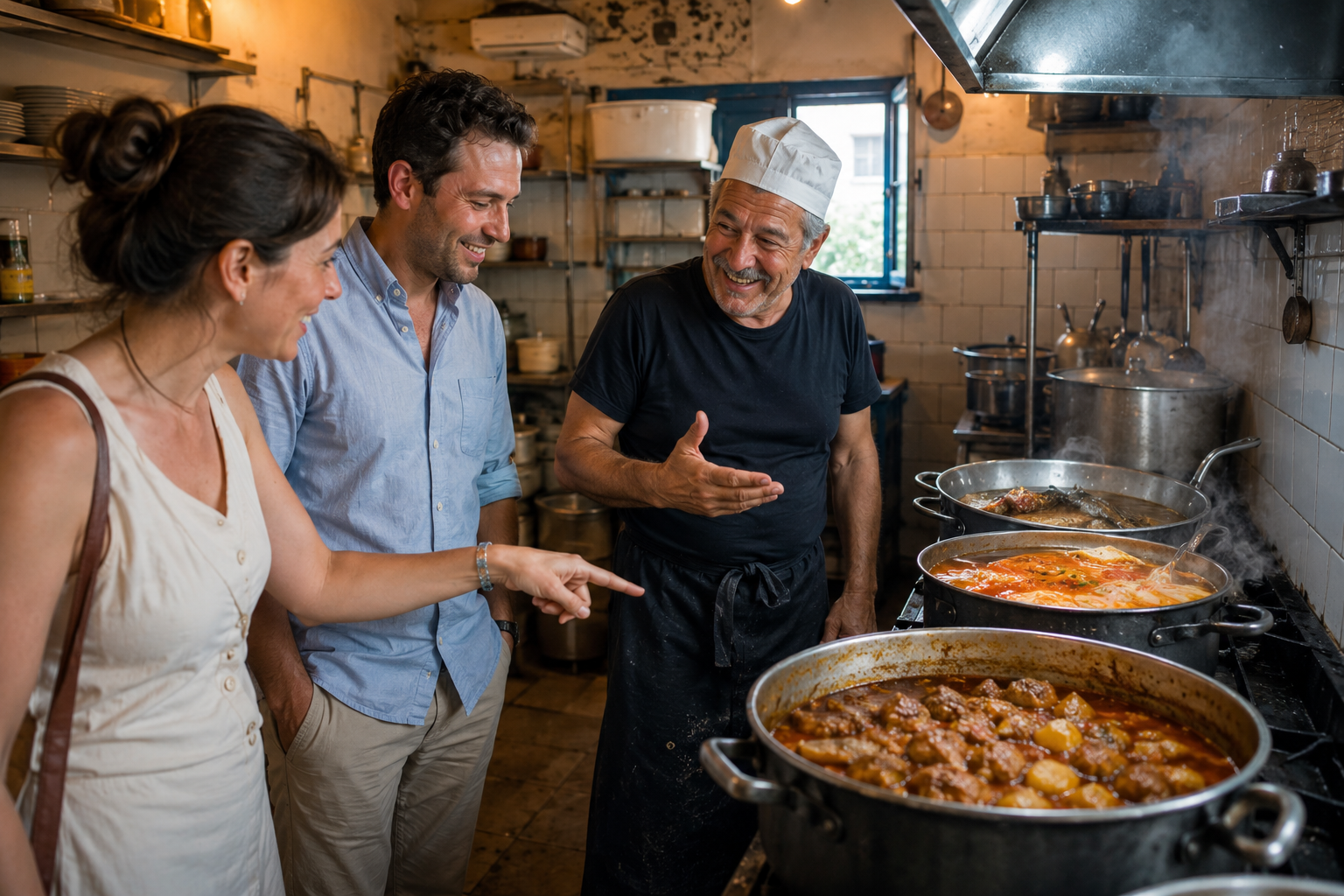
One of the loveliest and most surprising customs of the old-fashioned taverna is that the menu is sometimes not on paper at all, but in the pots on the stove. A visitor should embrace it.
The pots tell the day’s story. In many traditional tavernas, especially the older and more rural ones, a diner may be welcomed into the kitchen to peer into the pots and choose by pointing, then to choose by pointing. This is a charming and authentic way to order, letting the day’s cooking rather than a laminated menu guide the meal.
Point at what tempts you. When offered this chance, the right response is to accept warmly, wander in, and point at whatever looks and smells best, trusting the kitchen and the season. Ordering this way, straight from the pots, is one of the most genuine experiences a Greek taverna can offer, and it delights the cooks as much as the diner. It is worth accepting any such invitation eagerly, because it is a mark of a proper, unhurried, family-run place and a window into the day’s real cooking. The dishes stewing slowly on the stove, the magirefta as Greeks call them, are often the finest thing a taverna makes, and seeing them in the pot is the surest way to order well.
Rule Seven: Never Be Rushed, and Never Rush
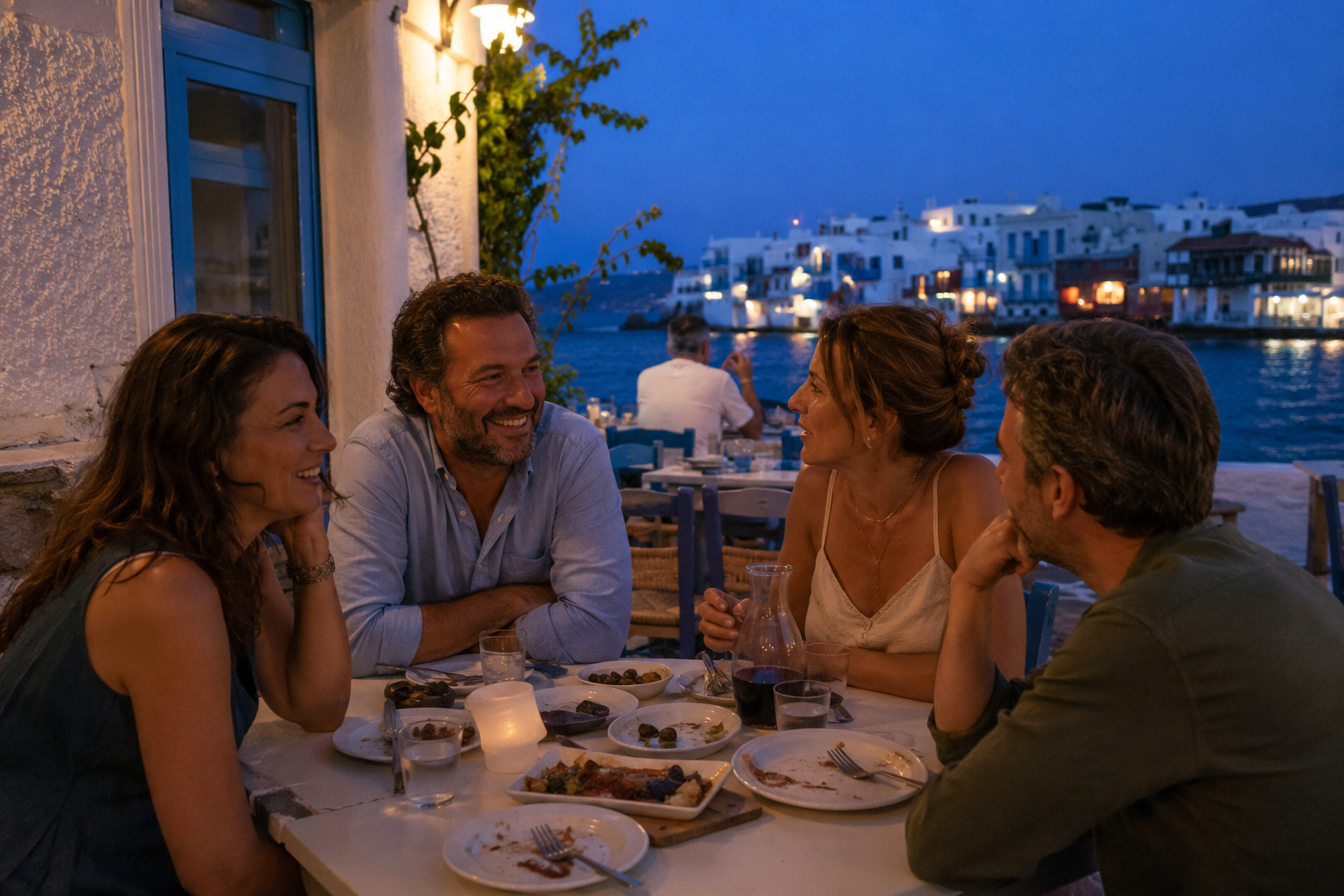
Perhaps the single most important thing for a visitor to understand is that a taverna table is yours for the entire evening, and the pace is meant to be gloriously slow. Time is simply not a factor here.
The table is yours all night. In a Greek taverna, no one will hurry you, clear your plates early, or hint that others are waiting, because the table belongs to you for as long as you wish to sit at it, even long after the food is gone. Lingering over the last of the wine and the conversation is not rude but exactly the intended way of things.
The meal is really the gathering. The deeper truth behind the slow pace is that in Greece the food is almost secondary to the occasion of sitting together, so the meal is really a frame for the company, the talk, and the passing of the hours. A diner who settles in for a long, unhurried evening has understood the taverna far better than one who eats quickly and leaves. This is perhaps the hardest rule for a busy visitor to absorb, and the most rewarding once they do. A taverna meal is not an item to be efficiently completed but an evening to be spent, and the hours slip by in a way that leaves you feeling you have not merely eaten but truly lived a little. Rushing it is not just poor form, it is a waste of the very thing the taverna exists to give.
Rule Eight: Ask for the Bill, Because It Will Not Come

Following naturally from the unhurried pace is a rule that catches out many visitors at the very end of the meal, the fact that the bill will never simply appear. You must summon it.
Bringing it unasked would be rude. In Greek dining culture, presenting the bill unasked is considered impolite, a sign the diner is being rushed out, so the check simply will not arrive on its own. A visitor who sits waiting for it to appear, as it would elsewhere, may wait a very long time indeed.
Make the writing motion. When you are finally ready to leave, ask for the bill by catching the waiter’s eye and making a small writing gesture in the air, or simply to ask for the logariasmo, the Greek word for the bill. This little signal is understood everywhere, and giving it is the diner’s job, not the waiter’s.
Rule Nine: Pay as One, and Tip Lightly
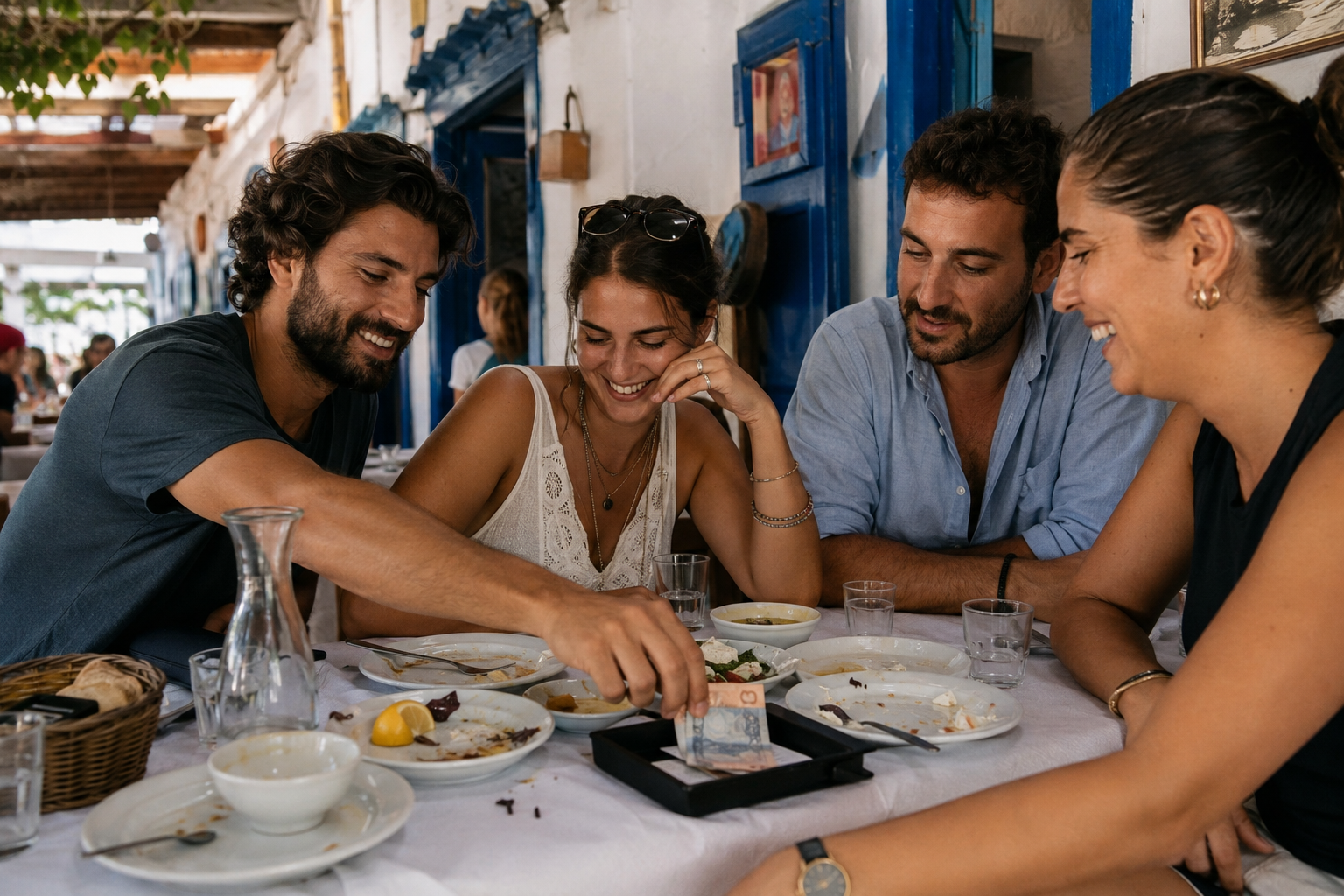
The communal spirit that shapes the whole meal extends right through to how the bill is settled, in a way that can differ from what visitors expect. A light touch is the rule.
The bill is shared, not split by item. In keeping with the spirit of parea, a Greek table settles the bill as a whole, not by fussily dividing it dish by dish, with the group covering it together or one person happily treating the rest. Trying to split the check into precise individual shares runs against the generous, collective feeling of the meal.
Tipping is modest. Greek tipping is far lighter than the American kind, rounding up or leaving around five to ten percent is a kind and sufficient gesture rather than an obligation. A diner who leaves a little extra for good service is appreciated, but no one expects the large percentages customary in some other countries.
The Last Word on the Taverna
Beneath all these rules lies one simple, joyful idea, that a Greek taverna is not really about the food at all, but about the shared pleasure of the table. Everything, from the communal ordering to the endless evening, is designed to serve that single purpose.
So when you next find yourself in a taverna, resist the urge to order your own neat plate and instead surrender to the Greek way entirely. Order for the table, let the dishes arrive as they please, accept the bread, pour the house wine, and settle in for a long, slow evening that no one will ever ask you to end. Do that, and you will discover that in a Greek taverna the meal is only the beginning, and the real feast is the company, the conversation, and the unhurried joy of a shared table. It is a lesson worth carrying home, this idea that a meal can be a whole evening’s pleasure rather than a task to be dispatched, and that the finest thing on any table is the people gathered around it.

About the Author: Ruben, co-founder of Gamintraveler.com since 2014, is a seasoned traveler from Spain who has explored over 100 countries since 2009. Known for his extensive travel adventures across South America, Europe, the US, Australia, New Zealand, Asia, and Africa, Ruben combines his passion for adventurous yet sustainable living with his love for cycling, highlighted by his remarkable 5-month bicycle journey from Spain to Norway. He currently resides in Spain, where he continues sharing his travel experiences with his partner, Rachel, and their son, Han.