
Every so often a headline goes around the internet promising that a beautiful Swiss village will pay you tens of thousands of dollars simply to move there, and for once the headline is basically true. The village is Albinen, a tiny, sun-drenched settlement high in the canton of Valais, and it truly does offer newcomers a substantial cash incentive, enough to reach around sixty thousand dollars or more for a family. But the story that spreads online almost always leaves out the part that matters most, which is that the rules attached to this money are strict, serious and very real, and that the biggest hurdles of all fall hardest on foreigners hoping to move from abroad. This article lays out what Albinen really offers, what conditions come with it, and why, for most Americans dreaming of an Alpine new start, the grant is far harder to claim than the viral version suggests. Before going further, a clear and important note, this is a factual overview and not financial, tax, or immigration advice, and I am not a financial advisor, tax professional, or immigration lawyer. Program terms change, so anyone seriously interested must verify the current rules with official sources before making any decision.
With that firmly established, the Albinen scheme is a fascinating example of a broader trend, remote European communities using cash to fight depopulation. It is worth understanding properly, both for what it offers and for the sober realities it involves, because the gap between the dream and the fine print is exactly where most hopeful movers come unstuck. So let us look carefully at the money, the many conditions, and the one requirement that quietly rules out most foreign applicants. Only by holding all three together can a reader judge fairly whether the famous Albinen offer is a real opportunity for them or a beautiful dream that belongs to someone else. The village is genuine, the money is genuine, and so, unfortunately for many, are the barriers.
What Albinen Is Actually Offering

At the heart of the story is a real and quite generous cash incentive, structured to reward families in particular. The headline numbers are genuine, even if the path to them is not simple.
The money is paid per person. Albinen offers eligible newcomers a grant of twenty-five thousand Swiss francs per adult and ten thousand per child, so a couple can reach fifty thousand francs and a family of four up to seventy thousand, sums worth roughly sixty to eighty thousand US dollars depending on family size and exchange rates. This per-person structure is deliberately designed to attract families with children, the exact kind of residents a shrinking mountain village most badly needs.
It is aimed at reversing decline. Like many small Alpine communities, Albinen has watched its young people drift away to the cities for years, and the grant is a direct attempt to reverse that slow emptying by drawing in new families. The village is betting hard money that a few committed households can help secure its future as a living community rather than a postcard. Interest in the offer has been enormous, with the village reportedly fielding around a hundred enquiries a day, the great majority from people who do not meet the conditions. That flood of hopeful attention is itself a sign of how powerfully the dream travels, and of how few who chase it have looked closely at what it truly requires. It is a story playing out across rural Europe, where dozens of shrinking towns and villages have turned to cash grants, cheap houses, and tax breaks to lure new blood. Albinen is simply one of the most famous and most generous of these efforts, which is why its name keeps circling the internet. But fame and generosity are not the same as accessibility, and that is where the trouble starts for most who read the headlines.
The Village Itself
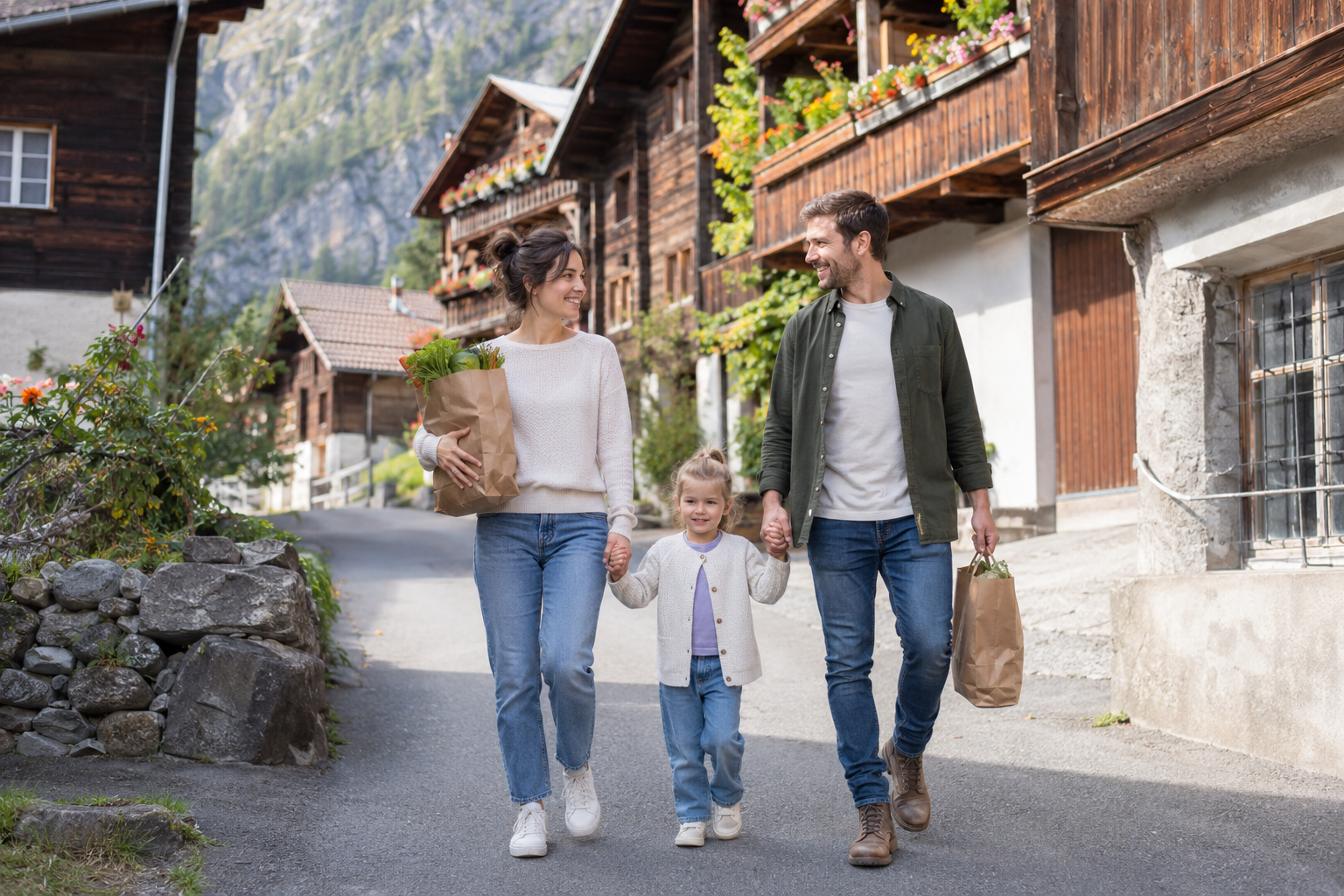
Before weighing the rules, it helps to picture the place the money is meant to fill, because Albinen is no ordinary target for relocation. It is a genuine Alpine gem, which is part of why the offer draws such attention.
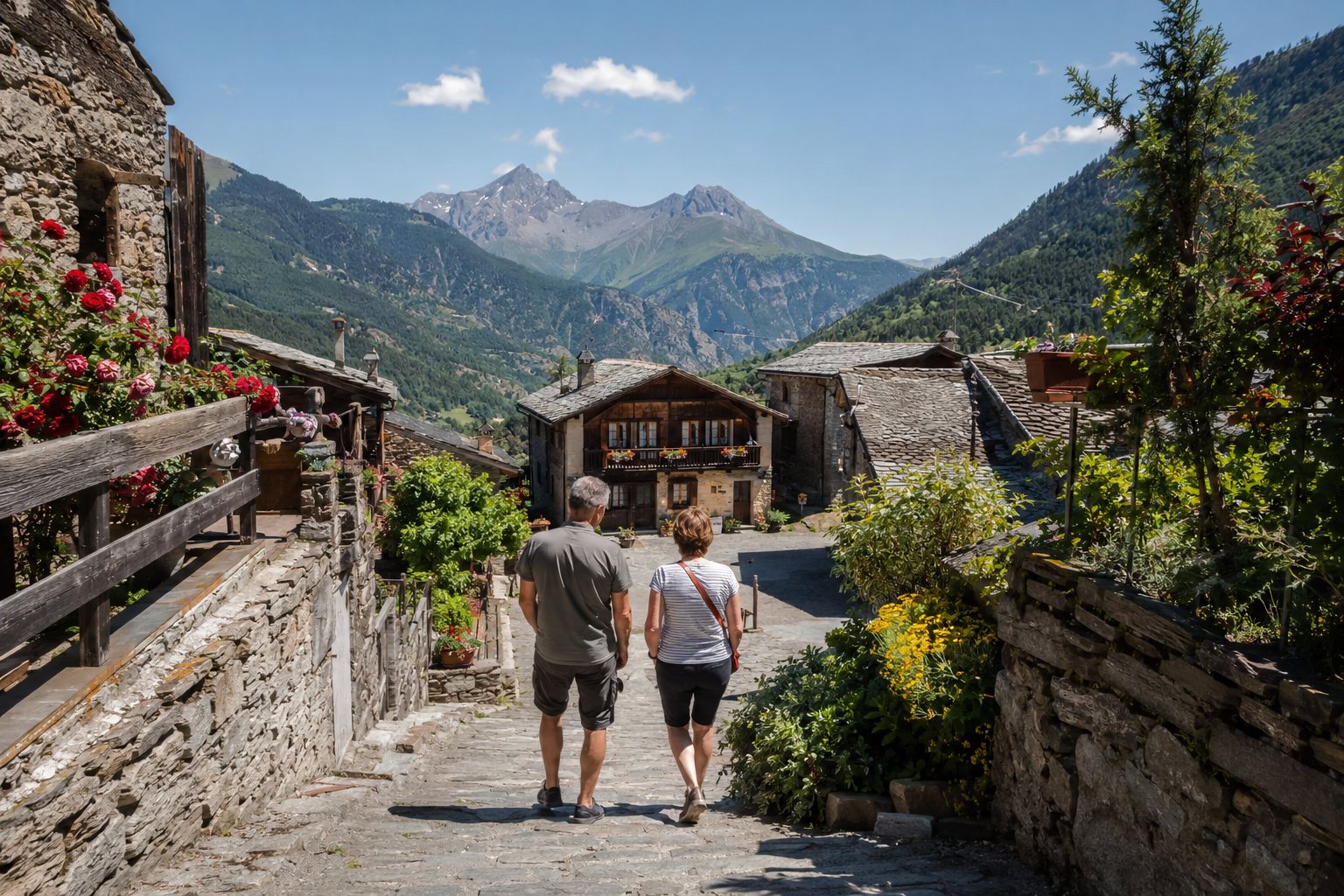
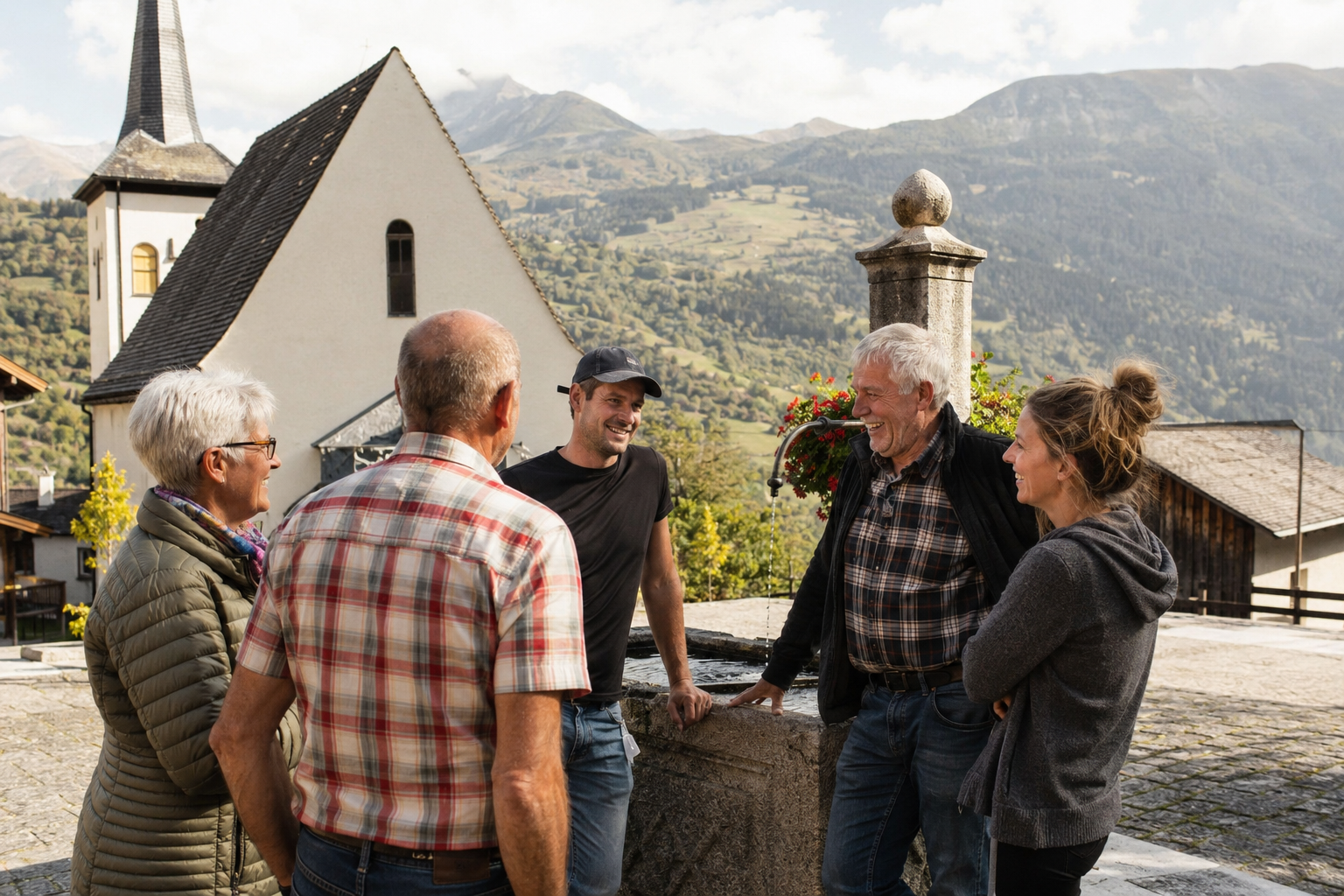
It is small and strikingly beautiful. Albinen sits at around thirteen hundred meters on a sunny, south-facing Valais slope, a cluster of sun-faded wooden houses so well preserved the village enjoys protected status. With a resident population of only a couple of hundred people or so, it offers exactly the kind of quiet, scenic, storybook Alpine life that a great many people dream of, a short way above the famous thermal spa resort of Leukerbad itself.
The setting is the real draw. For those who truly want mountain living, the true appeal of Albinen is less the cash than the place itself, the clean air, the peaks, the deep quiet, and a strong sense of close community. The money is really only a nudge toward a mountain life that some people would happily choose anyway, rather than a payment to endure somewhere unpleasant.
The Rules Are Genuinely Strict
Here is where the viral version tends to go quiet, because the conditions attached to Albinen’s money are demanding and clearly designed to filter out the casual and the speculative. These are not gentle suggestions but firm requirements.
The core conditions are serious. To qualify, applicants must generally be under the age of forty-five, must live in Albinen as their permanent primary residence for at least ten years, and must invest in local property, so the grant is aimed squarely at younger people ready to put down deep roots. Anyone hoping for a casual or temporary Alpine escape is ruled out from the start. Each of these conditions exists for a clear reason. The age limit favors people who will contribute to the village for decades, the residency rule keeps the money from flowing to speculators, and the property requirement ties newcomers concretely to the place. Taken together they paint a portrait of the resident Albinen actually wants, a young family ready to build a permanent life, not a bargain-hunter passing through. Nothing about the scheme is accidental or loosely enforced, and that is the point most casual readers miss entirely.
You must buy into the village. A central requirement is that recipients buy, build, or renovate a home worth at least two hundred thousand Swiss francs, and a large share of any building work must go to firms from the Valais region. This ties the newcomer firmly and financially to the village and channels real money into the local economy, but it also means a serious property commitment sits at the heart of the deal.
The Money Now Comes Later
One of the most important recent changes to the scheme is easy to miss and significantly affects the appeal, a shift in when the money finally arrives. The village has tightened the terms to weed out short-term takers.
The payout is delayed. Where the cash was once associated with the moment of moving, the grant is now paid only after newcomers have put down roots for a number of years, so the money rewards those who truly stay rather than those who merely arrive. This delay is designed precisely to filter out anyone treating the scheme as a quick windfall. For a hopeful mover from abroad, this single change to the timing alters the whole calculation entirely. The grant can no longer be counted on to help fund the move itself, since it arrives only after the family has already committed years and a great deal of their own money to the village. It becomes a reward for staying rather than an incentive to arrive, which is a very different and far more demanding proposition than the headlines imply.
It rewards real commitment. The effect of the delay, combined with the ten-year residency rule and the requirement to repay if you leave early, means Albinen is paying for lasting settlement and nothing less. A family must truly build a life in the village to see the full benefit, which is exactly what the village intends.
It Is Not Free Money
Perhaps the most common misunderstanding about Albinen is the idea that the grant is simply cash in hand, when in truth it offsets only part of a much larger required investment. Seeing the full financial picture is essential to judging the offer honestly.
The grant sits against a bigger spend. Because recipients must invest at least two hundred thousand francs in a property to qualify, the grant is really a partial subsidy of a substantial purchase, not free money to spend as one likes. A family is committing to a major property investment in a high-cost country, with the grant softening but nowhere near covering it. Put plainly, no one is going to get rich here. Even in the best case, the grant returns a fraction of what a family must spend to qualify, and it does so only after years of living in the village. The honest way to see it is as a helpful discount on a life you already want to live in Albinen, not as a payment that makes the move cheap, let alone profitable.
Switzerland is expensive. Beyond the property itself, Switzerland has one of the highest costs of living in the world, so newcomers need the means to sustain a life there well beyond the grant. Anyone weighing the offer has to look well past the headline figure to the full cost of buying into and then living in a Swiss mountain village, which is considerable indeed.
The Real Catch for Americans
For hopeful movers from the United States, there is one requirement that quietly undoes the dream for most, and it has nothing to do with age or property. It is the question of whether you are even allowed to live in Switzerland at all.
The grant does not grant residency. Crucially, the Albinen money is not a visa and grants no right to live in Switzerland, so a foreigner must first independently qualify to reside in the country, which for non-Europeans is difficult and typically requires employment, deep financial self-sufficiency, or other narrow routes. The grant assumes you already have, or can secure, the legal right to settle, which is the hard part. Switzerland is not part of the European Union and guards its residency tightly, so for an American there is no simple path to living there long term. Work permits are limited and hard to obtain, and other routes demand substantial wealth or specific circumstances. None of this is unique to Albinen, but the village’s grant does nothing to help with it, which is precisely why so many hopeful readers hit a wall the moment they look past the headline.
A settlement permit is often required to be paid. Reporting on the scheme indicates that foreign applicants generally need a Swiss C settlement permit at the time the grant is paid, and that permit itself usually requires years of prior legal residence in Switzerland. In practice, this means the grant realistically suits people already settled in Switzerland, not those hoping to move over and collect, a distinction the viral headlines almost never make clear. It is worth sitting with that point, because it is the crux of the whole matter. The dream sold online is of a village that will pay a foreigner to move in, when the reality is a village that will help an already-resident family put down permanent roots. Those are not the same offer, and confusing them is the source of most of the disappointment the scheme generates.
Who the Scheme Actually Suits
Putting the pieces together, it becomes clear who Albinen’s offer is really designed for, and it is a narrower group than the internet suggests. Understanding this saves a great deal of disappointment.
It fits the already-settled. The scheme clearly rewards a young family already living legally in Switzerland, or with a clear path to doing so, and that wants to commit to a decade of Alpine village life. For such a household, the grant is a real and valuable help toward buying a home and building a future in a beautiful place. If you are already living and working in Switzerland, or married to a Swiss citizen, or otherwise on a solid legal footing there, then Albinen’s offer is well worth a serious look. For that narrow group, the strict conditions are simply the price of a genuine gift, and the mountain village at the end of it is a lovely place to claim it.
It disappoints the casual dreamer. For the far larger group of people abroad who imagine simply moving to Albinen and pocketing the cash, the residency rules, the property investment, the ten-year commitment, and the delayed payout will almost always prove prohibitive. Understanding that clearly, before falling for the headline, is the single most useful thing a hopeful mover can do. Better to know the truth early and either pursue the real path to Swiss residency with open eyes, or set the dream aside, than to spend months chasing a grant that was never within reach. Clarity, in this case, is a kindness, even when it disappoints, and there is no shortage of other and more accessible European villages courting newcomers for those whose hearts are set on a fresh start abroad.
So Albinen’s offer is entirely real, and for the right family already able to live in Switzerland it is a rare and generous opportunity worth taking seriously. But it is emphatically not the easy Alpine giveaway of the viral posts, and the rules that surround it are strict for a reason. As a final and important reminder, this article is a general overview and not financial, tax, or immigration advice, and I am not a financial advisor or immigration lawyer. Anyone genuinely considering this must confirm the current terms and their own eligibility with official Albinen and Swiss sources, and consult qualified professionals, before taking a single step.

About the Author: Ruben, co-founder of Gamintraveler.com since 2014, is a seasoned traveler from Spain who has explored over 100 countries since 2009. Known for his extensive travel adventures across South America, Europe, the US, Australia, New Zealand, Asia, and Africa, Ruben combines his passion for adventurous yet sustainable living with his love for cycling, highlighted by his remarkable 5-month bicycle journey from Spain to Norway. He currently resides in Spain, where he continues sharing his travel experiences with his partner, Rachel, and their son, Han.