
There is a quiet fear that shadows the idea of growing old alone, the fear of isolation, of days without a friendly face, of a life shrinking to four walls. It is a perfectly real concern, and one worth taking seriously. But it is also one that the physical and social fabric of much of Europe answers in a way that surprises people who move there from more spread-out, car-dependent places. In a European town or city neighborhood, a person aging alone is rarely as alone as they would be in a suburb of driveways and parking lots. The very design of daily life, the dense walkable streets, the shops you visit on foot, the doorkeeper who knows everyone, the café on the corner, the bench in the square, quietly weaves solitary people into a web of small daily contacts. This is the story of that built-in village, and why it makes aging alone in Europe feel so different.
What makes this worth understanding is that connection, for an older person living alone, is not only about deep friendships and family, important as those are, but also about the steady stream of small, casual human contacts that fill an ordinary day. A nod from a familiar shopkeeper, a few words with a neighbor on the stairs, a wave from the man at the bar, these tiny interactions add up to a powerful sense of belonging and being seen. European urban life is unusually rich in exactly these low-key contacts, and for a solo ager they can make the difference between a life that feels connected and one that feels empty, often without any special effort at all.
Here is how the ordinary architecture of European daily life provides this built-in village, from the doorkeeper to the corner bar to the public bench, and why it matters so much for anyone growing older on their own. This is a reflection on a way of life rather than a set of instructions, and every place and person is different, but understanding this quiet feature of European living may reassure anyone who worries about aging alone.
The Village Hidden in the City
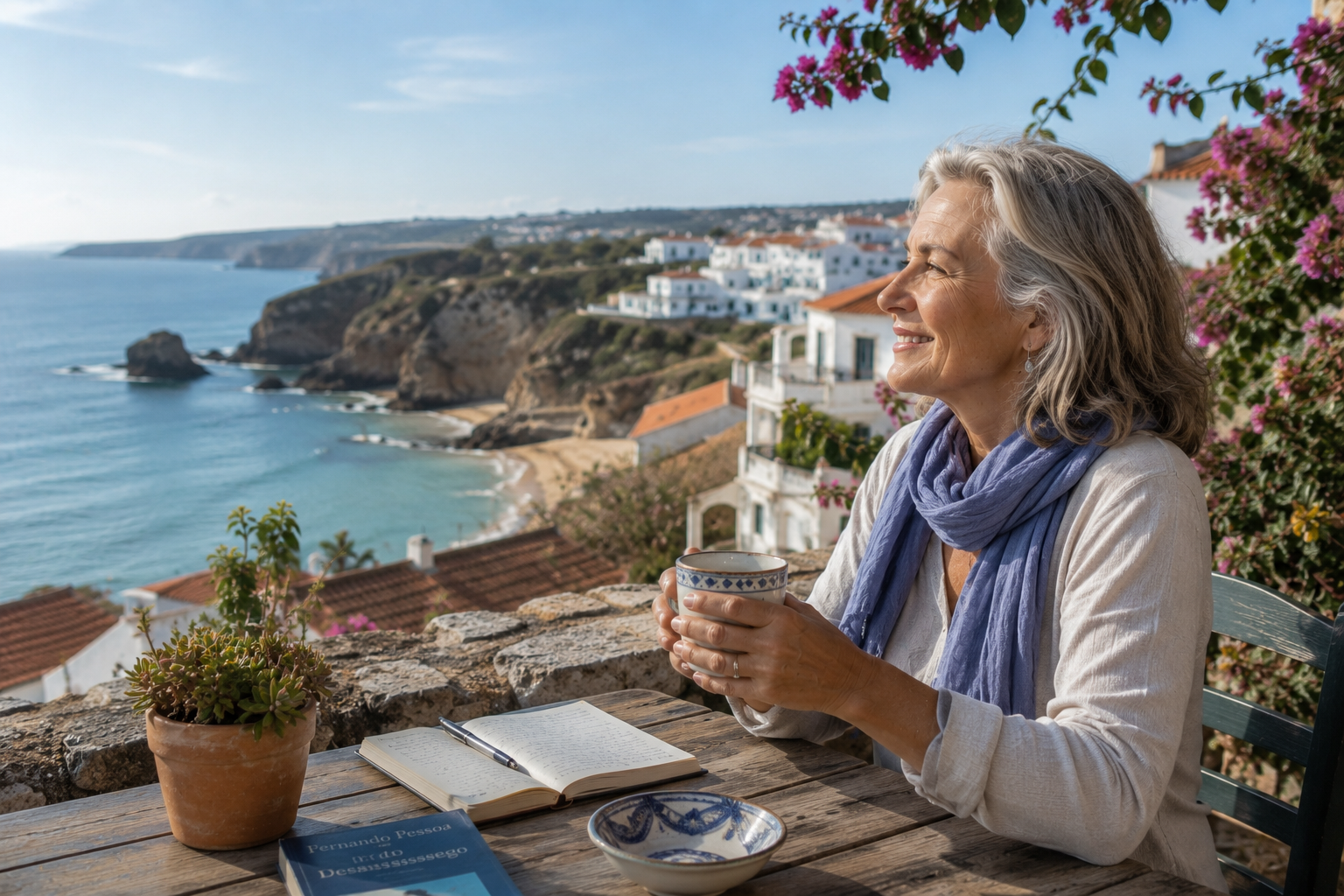
The first thing to grasp is that European towns and cities are often structured in a way that naturally generates human contact, quite unlike the car-dependent sprawl many people are used to. The design itself does much of the work.
Daily life happens on foot. In a typical European neighborhood, the essentials of life, the bakery, the pharmacy, the market, the café, sit within a short walk, so an older person naturally moves through their neighborhood on foot each day, encountering the same faces and exchanging the same greetings. This simple fact, that you walk to what you need rather than driving to a distant store, means daily life is full of small encounters a car-based existence eliminates. In a place built around the car, a person can go days without speaking to a soul outside their home, sealed in a vehicle between one indoor destination and the next. In a walkable neighborhood the opposite is true, and the same short walk to buy bread that a younger person barely notices becomes, for an older person living alone, a small daily dose of the human contact that keeps loneliness at bay.
Density brings people together. Because people live close to one another in apartments and along busy streets rather than isolated on separate plots, there is constant incidental contact, on the stairs, at the shops, in the square, so no one is truly cut off. The very closeness some imagine as a lack of privacy is, for a solo ager, a source of connection, ensuring that other people are always near and life is always happening around you. There is a warmth to living amid the sounds and movements of other lives, the neighbor’s radio, the children in the courtyard, the footsteps on the stairs, that a person in an isolated house never experiences. For someone who lives alone, this ambient presence of others, felt through the walls and across the street, is a quiet antidote to the silence that can settle over a solitary home, a reminder that one is part of something larger even in one’s own company.
The Portera at the Door
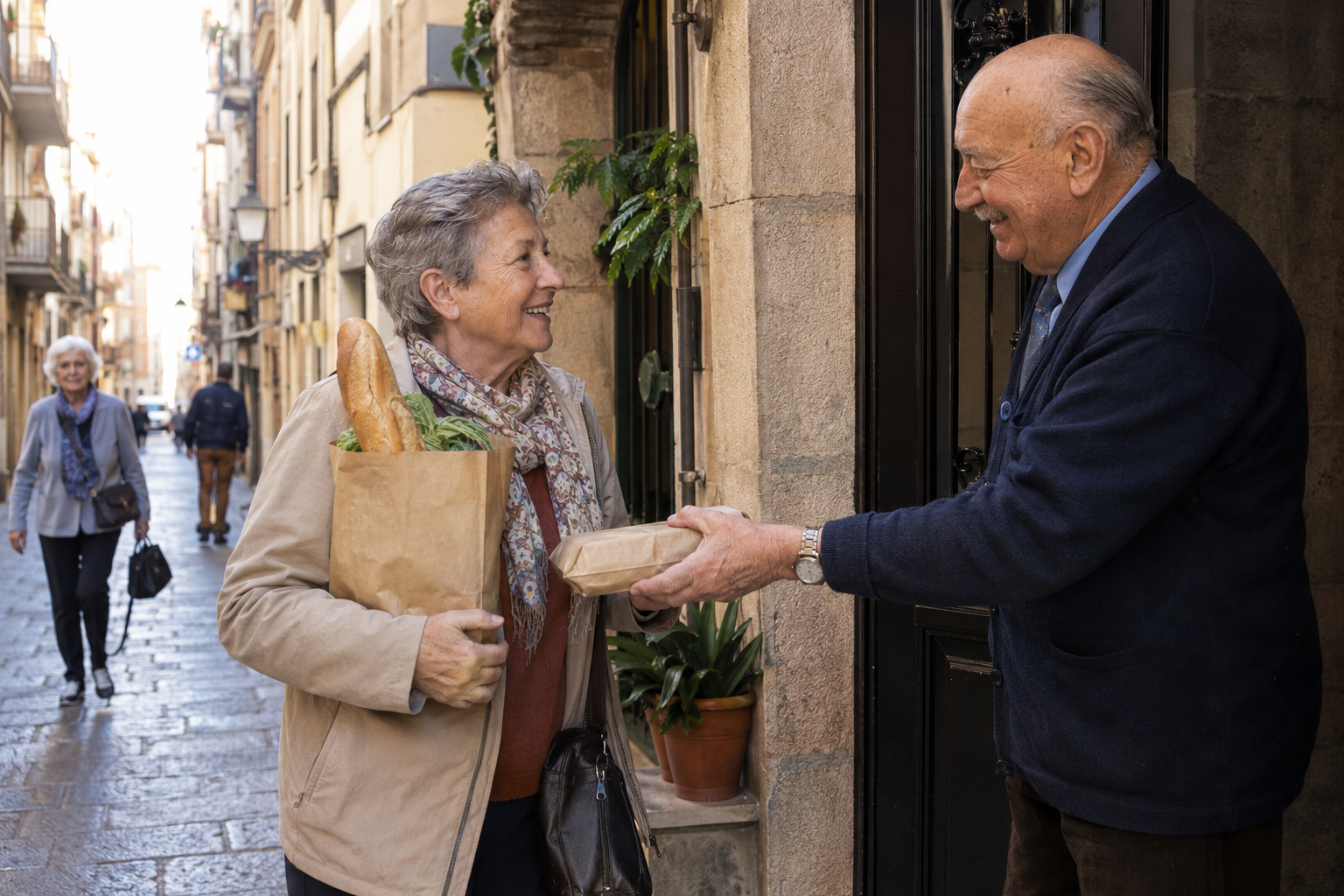
One of the most charming and practical features of this world, especially in Spain and other southern European countries, is the figure of the building doorkeeper, traditionally known in Spanish as the portera or portero. This person can be a solo ager’s quiet guardian.
They know everyone and everything. The doorkeeper who watches over an apartment building comes to know all the residents, notices comings and goings, takes in parcels, and keeps a friendly eye on the life of the building, so for an older person living alone there is someone who would notice if something seemed amiss. This gentle, informal watchfulness provides a layer of security and human contact that no amount of technology can replace. A camera or an alarm can register that something has happened, but it cannot greet you by name, ask after your health, or notice with a human eye that you have not been seen since yesterday. The doorkeeper offers exactly this irreplaceably human form of attention, and while the tradition has faded in some places, where it survives it remains one of the quiet glories of southern European apartment life, and a real comfort to anyone living on their own.
They are a daily human anchor. Beyond their practical usefulness, the doorkeeper often becomes a genuine daily presence in a resident’s life, a person to greet, to chat with, to exchange small news with on the way in and out, so the very act of leaving and entering home carries a moment of connection. For someone who lives alone, this reliable little exchange, repeated each day, can be a small but meaningful thread of companionship woven into ordinary life.
The Bar as a Living Room
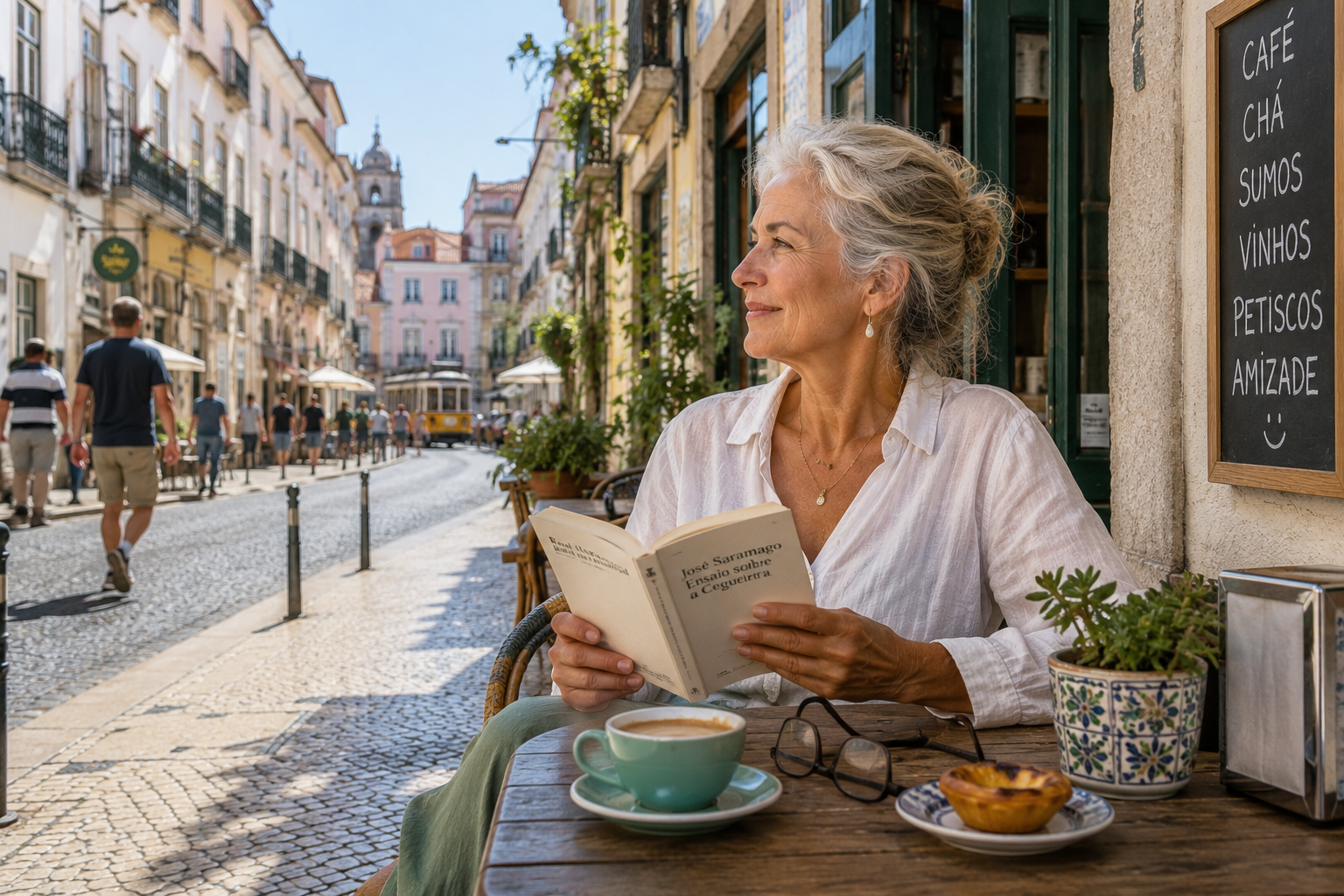
Perhaps nothing embodies the built-in village more than the neighborhood bar or café, which in much of Europe functions less as a place to drink than as an extension of the community’s living room. For a solo ager, it can be a second home.
It is a place to belong, not just to consume. The local bar in a European neighborhood is a social institution where people of all ages gather through the day, where staff know the regulars by name and order, and a person can sit with a coffee among others without any need for a prior arrangement, so it offers company on demand. This is utterly different from a place you visit occasionally, being instead a daily anchor where an older person is known, welcomed and folded into the ongoing life of the place.
The regulars become a kind of family. Over time, the other regulars at a neighborhood bar form a loose community of their own, a familiar cast of faces who notice each other, share news, and provide a sense of belonging, so a solo ager gains a whole circle of low-pressure companionship. There is no obligation and no formality, only the easy comfort of being a known face among other known faces, which for someone living alone is a quietly powerful thing. This is the particular genius of the neighborhood bar as a social institution, that it asks nothing of you but your presence. You need not make plans, extend invitations, or sustain a conversation, only turn up, and company is simply there. For an older person who may find the effort of arranging a social life tiring, this on-demand, no-strings companionship is perhaps the most accessible form of connection there is.
The Bench in the Square
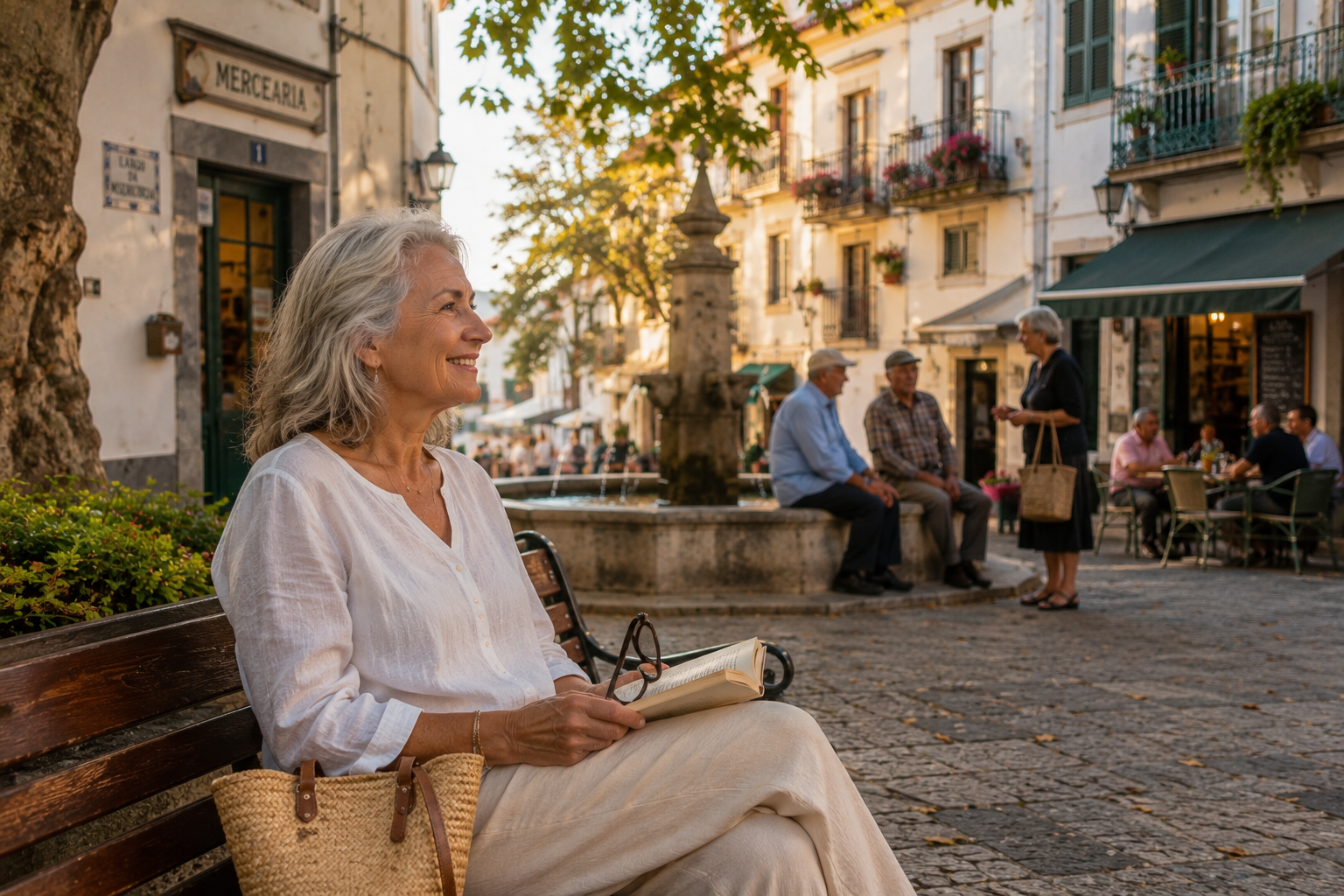
Every European town has its squares and its benches, and these humble public spaces play a surprisingly important role in the social life of older people, offering a stage for connection that costs nothing. The bench is, in effect, the village’s open-air meeting place.
Public space invites people to linger. The plaza, the park, the tree-lined promenade, all furnished with benches and designed for people to sit and pass the time, invite older residents out of their homes and into company, so an afternoon on a bench becomes a social occasion. Unlike private, indoor-focused cultures, this generous public life gives everyone, regardless of means, a place to simply be among people.
The bench is where the neighborhood gathers. On these benches, neighbors meet, conversations begin, and the daily drama of the community unfolds, so a solo ager can step out of an empty apartment into a scene full of life whenever they wish, needing only to sit down. This ready access to the flow of community life, freely available to anyone who walks out their door, is one of the great gifts of the European public realm to those who might otherwise be alone. It costs nothing, requires no membership, and excludes no one, which makes it a great equalizer among older people of every circumstance. Whether wealthy or of modest means, partnered or solo, anyone can claim a place on a public bench and become part of the passing life of the square, and that democratic openness is precisely what makes the public realm such a reliable refuge from isolation.
The Rhythm That Pulls People Out
Beyond the physical spaces, European daily life follows rhythms that repeatedly draw people out of their homes and into contact with others, structuring the day around shared moments. These rhythms are a hidden engine of connection.
The daily errands set a sociable pace. The habit of shopping little and often, buying fresh bread each day rather than stocking up weekly gives an older person a reason to go out daily, so the very rhythm of provisioning becomes a source of routine and contact. Each small errand is an occasion to move through the neighborhood, greet familiar faces, and remain woven into daily life. What looks from the outside like mere inefficiency, shopping every day instead of once a week, turns out to be one of the quiet secrets of a connected old age. The daily trip to the bakery or the market is not a chore to be minimized but a thread of routine and contact, and cultures that have kept this habit have, almost by accident, preserved a powerful defense against the isolation of their older residents.
Shared hours bring everyone outdoors. Customs like the evening stroll, when whole neighborhoods come out to walk, talk and see one another in the cooler hours, create regular moments when the streets fill with people, so a solo ager is swept along in a communal rhythm. These shared daily rituals ensure that being out among others is not something one has to arrange but simply what everyone does, at the same time, together. The evening stroll in particular has an almost magical quality for a person living alone, since it means that at a certain hour the whole neighborhood is out on the street, and to join it one need only step outside. There is no need to be invited or to belong to any group, only to walk along with everyone else, part of a moving, chatting, unhurried crowd, and in that simple participation a solo person is folded effortlessly into the life of the place.
Why This Matters for Aging Alone
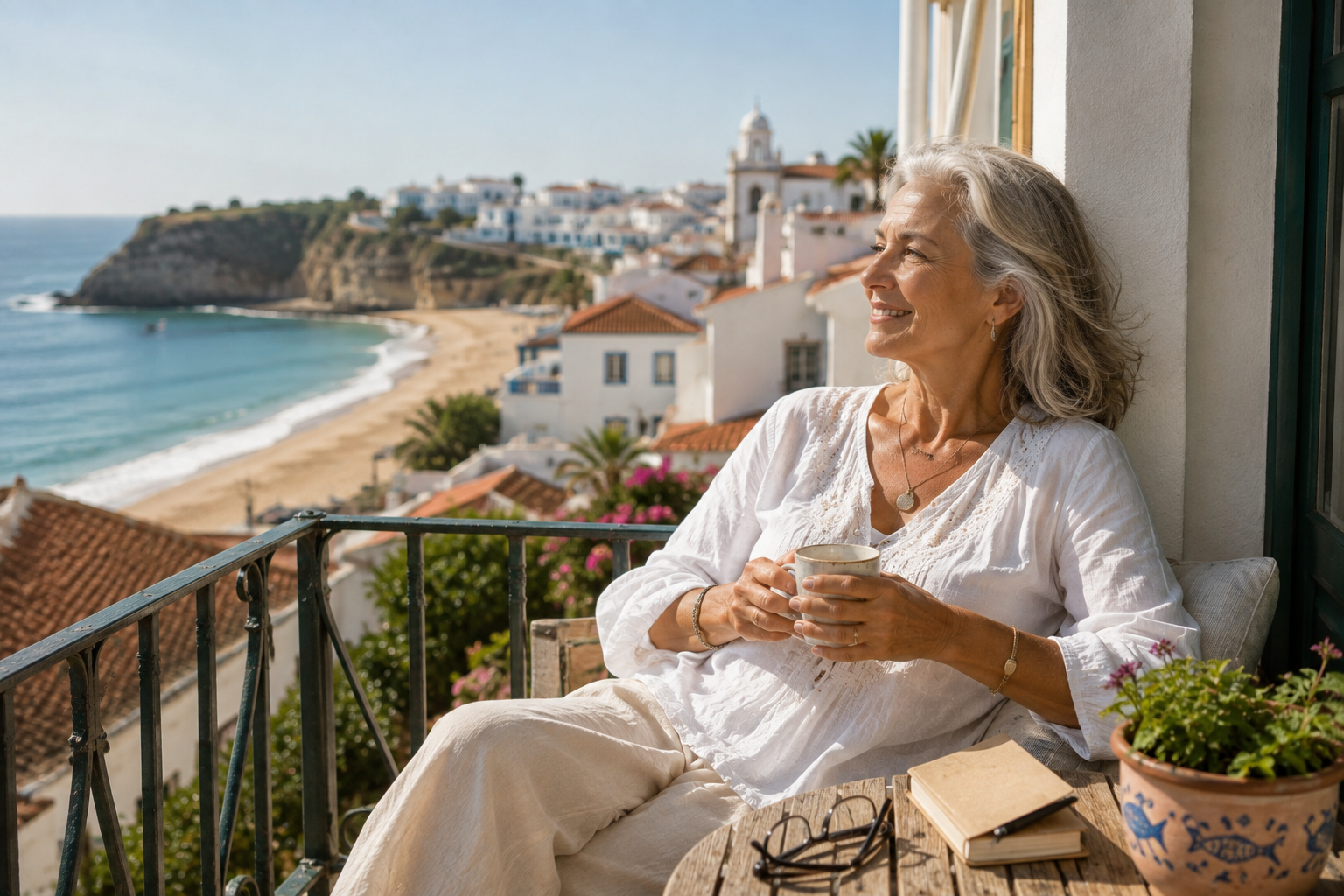
Pulling these threads together reveals why aging alone in a European setting can feel so different from doing so in a more isolating environment, because the built-in village supplies, effortlessly, much of the connection a solo person would otherwise have to work hard to create. The environment does the heavy lifting, quietly and continuously, on the solo ager’s behalf.
Connection comes without striving. In this kind of setting, a solo ager does not have to organize an active social calendar merely to avoid isolation, because simply living an ordinary life fills the day with human contact, so belonging is built into the routine. This ambient sociability is a profound advantage for anyone who lives alone, providing the fabric of connection almost automatically.
It is a safety net as well as a comfort. Beyond the pleasure of company, this dense web of daily contacts means an older person living alone is surrounded by people who would notice their absence or distress, so the built-in village offers a measure of security alongside its warmth. To be embedded in a community that sees you is to be both less lonely and less vulnerable, which is exactly what a person aging alone most needs.
The Comfort of the Built-In Village
The lasting reassurance of all this is that growing old alone need not mean growing old in isolation, because in much of Europe the very shape of daily life gathers solitary people into a warm, low-effort community, from the doorkeeper to the barman to the neighbors on the bench. The village is not something a solo ager must build from nothing, but something the environment largely provides.
What makes this so valuable is that it asks so little of the person to receive it, since the connection flows from simply participating in ordinary local life rather than from any special effort or arrangement, which is precisely what makes it such a gift to those living alone. A person need only step out their door and move through their day to find themselves surrounded, seen and quietly accompanied.
So if the prospect of aging alone gives you pause, take real comfort in this feature of European life, which turns the ordinary act of living in a walkable, sociable place into a source of daily connection and quiet security. Choose a neighborhood with a real street life, a doorkeeper if you can, a good local bar, a square with benches, and let the built-in village do its gentle work. Grow old there, and you may find that living alone and being alone turn out to be two very different things, and that the second need never follow from the first.

About the Author: Ruben, co-founder of Gamintraveler.com since 2014, is a seasoned traveler from Spain who has explored over 100 countries since 2009. Known for his extensive travel adventures across South America, Europe, the US, Australia, New Zealand, Asia, and Africa, Ruben combines his passion for adventurous yet sustainable living with his love for cycling, highlighted by his remarkable 5-month bicycle journey from Spain to Norway. He currently resides in Spain, where he continues sharing his travel experiences with his partner, Rachel, and their son, Han.