
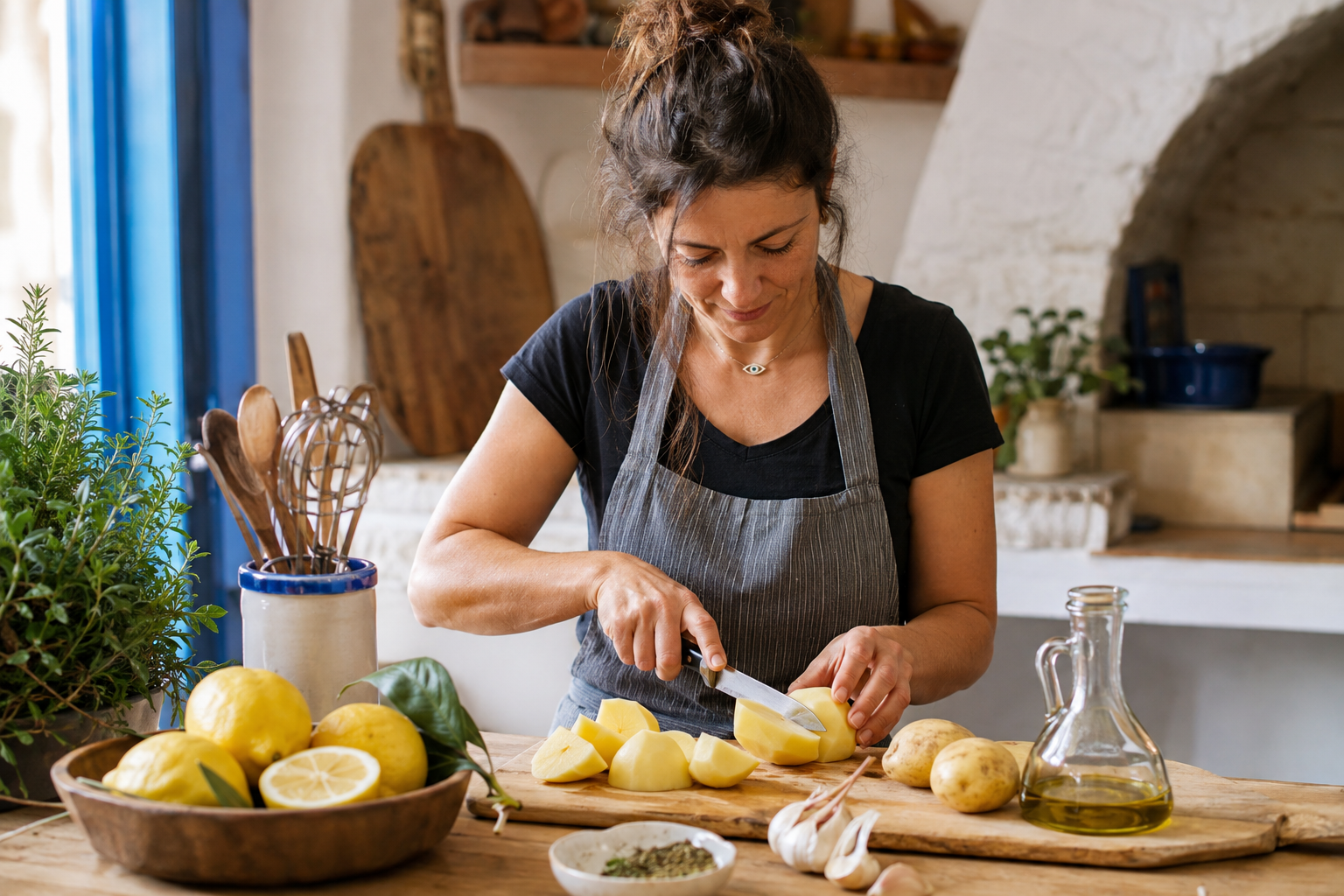
The first time I served Greek lemon potatoes at our table in Madrid, something slightly embarrassing happened. I had spent the afternoon on a roast chicken, fussing over the skin and the resting and the pan juices, and I had thrown the potatoes together almost as an afterthought, the way you do with a side dish. And then everyone ignored the chicken. They went back for the potatoes twice, scraping the pan clean, arguing gently over who got the last of the crispiest wedges, while the beautiful bird I had so carefully labored over sat there politely half-eaten. That is the strange magic of these potatoes, called patates lemonates in Greek. They are made from almost nothing, four humble ingredients and one clever trick, and yet they routinely upstage whatever expensive, complicated thing you place beside them. This is the story of how they work, why they are so good, and exactly how to make them yourself, so that you too can watch a plate of potatoes quietly humiliate your main course.
What makes them worth understanding, beyond the pleasure of eating them, is that they are a perfect little lesson in the Greek genius for turning simple things into something wonderful. There is no cream, no cheese, no long list of ingredients, no fancy technique that requires special equipment. There is only the humble potato, transformed by lemon, olive oil and broth into something greater than the sum of its parts, all through a single method that anyone can master on the first try. Once you understand the trick, you will never think of roast potatoes the same way again.
Here is what these potatoes actually are, the four ingredients that carry the whole dish, the one trick that makes them extraordinary rather than ordinary, and the full recipe so you can make them tonight. This is a simple, joyful recipe rather than anything complicated, and the beauty of it is that its simplicity is the entire point, so let me walk you through why a handful of ingredients and one good idea can outshine an entire roast.
What These Potatoes Actually Are
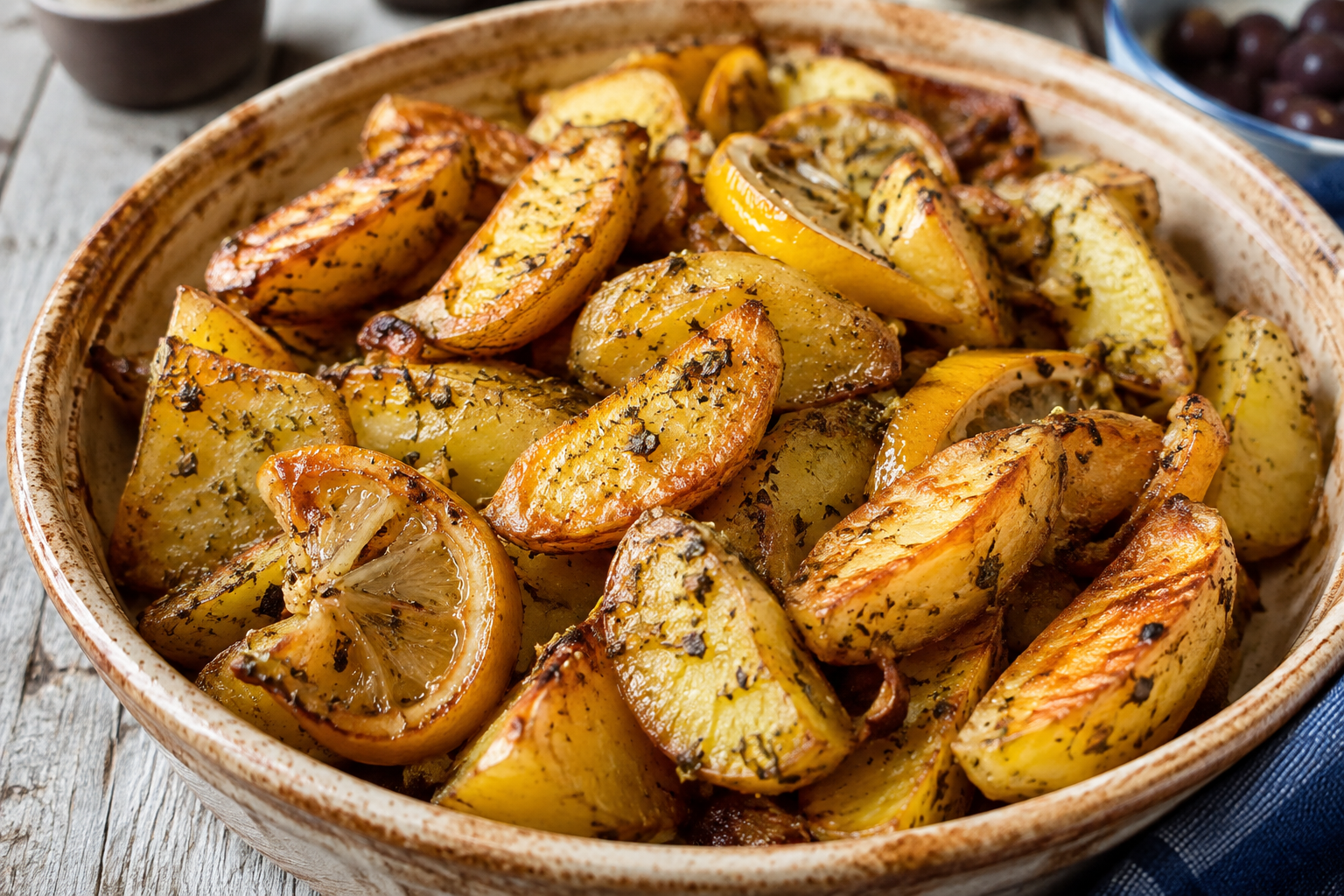
Before the recipe, it helps to know what you are making, because Greek lemon potatoes are their own distinct thing, quite different from any roast potato you may have met before. They occupy a delicious little category all of their own.
They are the great Greek Sunday side. Across Greece, these lemony, garlicky, oregano-scented potatoes are the classic accompaniment to the big roast, served alongside lamb, chicken, pork, or a whole grilled fish, so they are woven into the fabric of the Greek family table. They are comfort food and celebration food at once, the thing that makes a Sunday lunch feel complete. In Greek homes they are not a fussy dish reserved for special occasions but an everyday miracle, the kind of thing a grandmother throws together without measuring anything, because she has made them a thousand times and her hands simply know. There is a warmth to a dish like that, one that carries a whole culture’s approach to food inside it, the idea that the best cooking is not about showing off but about feeding the people you love something true and delicious.
Their texture is the whole point. What sets them apart is a combination you rarely get in a single potato, a soft, creamy, deeply flavored interior paired with golden, properly crisp edges, so each wedge gives you two pleasures at once. They are not merely roasted but transformed, tender through and crackling at the corners, and that contrast is what makes people reach for them again and again. Most roast potatoes give you one thing well, either a crisp shell or a fluffy middle, but rarely both in perfect balance. These give you the full range in every single wedge, the shattering edge and the soft, lemon-soaked heart, and once you have eaten a potato that manages both at once, an ordinary roast potato starts to feel like a missed opportunity. That is the standard these set, and it is a high one.
The Four Ingredients
The heart of this dish is its beautiful economy, because the flavor that seems so complex comes from just four central ingredients, each doing essential work. There is nowhere for a bad ingredient to hide, which is why quality matters here.
The four pillars are potatoes, lemon, olive oil and broth. The potatoes themselves provide the substance, good fresh lemon juice provides the bright, sharp soul of the dish, a generous amount of good olive oil provides richness and the medium for crisping, and broth provides the savory depth and the liquid that cooks the potatoes through, so between them these four carry the entire flavor. A few basics round them out, garlic and oregano and salt and pepper, the everyday seasonings any kitchen already has, but the character comes from that central quartet.
Each one matters, so choose them well. Because there are so few ingredients, the quality of each shows clearly in the result, which means fresh lemons not bottled, a good fruity olive oil, and a flavorful broth all make a real difference. This is a dish where you cannot hide behind a long list of seasonings, so treating those four simple things with respect is what separates a good pan of potatoes from a great one. I learned this the slightly hard way, making them once with a tired old bottle of lemon juice from the back of the fridge and a supermarket oil I did not much care about, and wondering why they tasted flat and a little sour rather than bright and rounded. Made again with two real lemons, squeezed by hand, and a green, peppery olive oil, they were a completely different dish. The ingredients are so few that each one is doing a fifth of the work, and there is simply nowhere for a weak one to hide.
The One Trick That Changes Everything
Now we come to the secret, the single technique that transforms these from ordinary roast potatoes into something special, and it is so simple that you will wonder why all potatoes are not made this way. This one idea is the whole game.
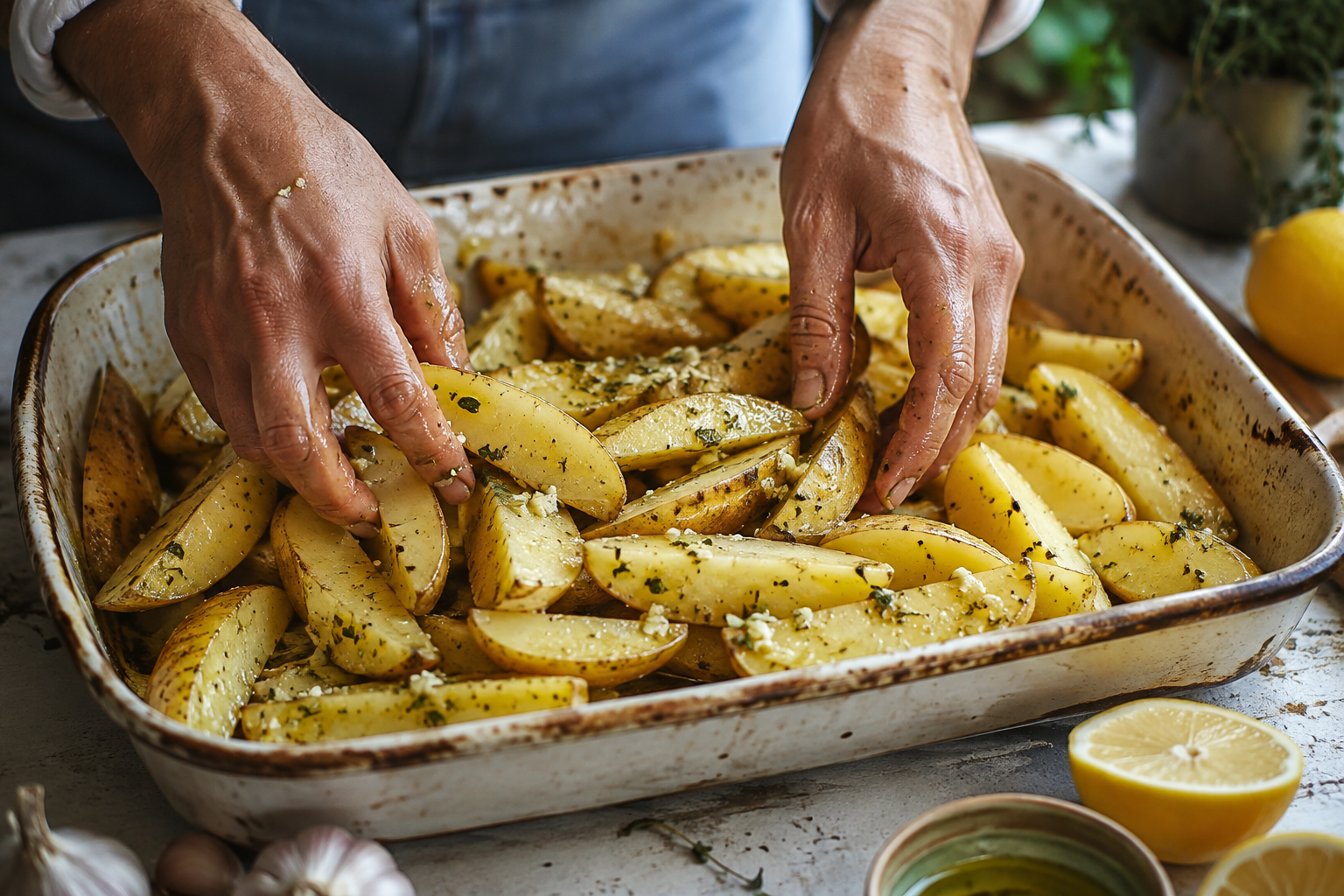
You roast them in liquid, then let the liquid cook away. Rather than simply tossing potatoes in oil and roasting them dry, you roast these in a flavorful bath of lemon, oil and broth, which the potatoes drink in as they soften, and then, as the cooking continues, that liquid gradually cooks away, leaving behind a concentrated, lemony oil that fries the potato edges crisp in the final stretch. The potatoes are essentially braised and then fried in the same pan, in the same flavored liquid, without you ever having to do a thing except wait.
This is why they are so good. That two-stage process is the genius of the dish, because it flavors the potatoes from the inside out, then crisps them beautifully once the liquid is gone, giving you that magical tender-inside, crunchy-outside result, so a single method delivers both flavor and texture at once. No parboiling in a separate pot, no complicated steps, just the patience to let the liquid do its two-part work. I think this is why the dish feels almost like a magic trick the first time you make it. You put a pan of pale potatoes swimming in watery liquid into the oven, and it looks unpromising, nothing like a crisp roast potato. Then you open the door later to find the liquid has vanished, the potatoes have drunk it all in, and what is left is glistening golden wedges in a slick of lemony oil. Nothing you did made that happen except trusting the process, which is exactly what makes it so satisfying to pull off.
Choosing and Cutting the Potatoes
A little care at the start pays off enormously, so it is worth knowing which potatoes to reach for and how to cut them, because these small choices shape the final result. Get this one part right and the rest of the dish is truly easy.
Reach for a good roasting potato. A yellow, waxy-to-medium potato such as Yukon Gold works beautifully here, holding its shape while still turning creamy inside, so you get wedges that stay intact rather than falling apart, while still going soft and fluffy within. Floury potatoes can work but tend to break down more, so a firmer yellow potato is the safest and most traditional choice. If you are shopping and unsure, look for the potatoes labelled good for roasting or all-purpose, with a yellow-gold flesh rather than the very starchy white kind used for fluffy mash. In Spain I reach for the ones sold simply as patatas para asar, and in a British or American shop a Yukon Gold or a similar yellow variety does the job perfectly. The point is a potato that will soak up the lemony liquid and go tender without dissolving into mush by the time the edges crisp.
Cut them into generous wedges. The classic shape is a thick wedge, not a small cube, because larger pieces give you that lovely contrast of a substantial soft interior against crisp edges, so resist the urge to cut them too small. Aim for wedges roughly the size that lets each one have a proper fluffy middle and a couple of good crisping surfaces, and try to keep them fairly even so they cook at the same rate. Wildly different sizes are the one thing that can trip up an otherwise foolproof dish, because the small pieces will crisp and threaten to burn while the big ones are still soft in the middle. A little attention with the knife at the start saves you from fishing out the done ones later, so it is worth the extra minute to cut them with some care. Beyond that, there is genuinely nothing to fear here, which is part of why this is such a wonderful dish for a nervous or a busy cook.
Putting It All Together
With the ingredients understood and the trick in hand, the actual assembly could not be simpler, which is the joy of this dish, everything happens in one pan with almost no active work. Here is the whole thing, start to finish.
Greek Lemon Potatoes (Patates Lemonates)
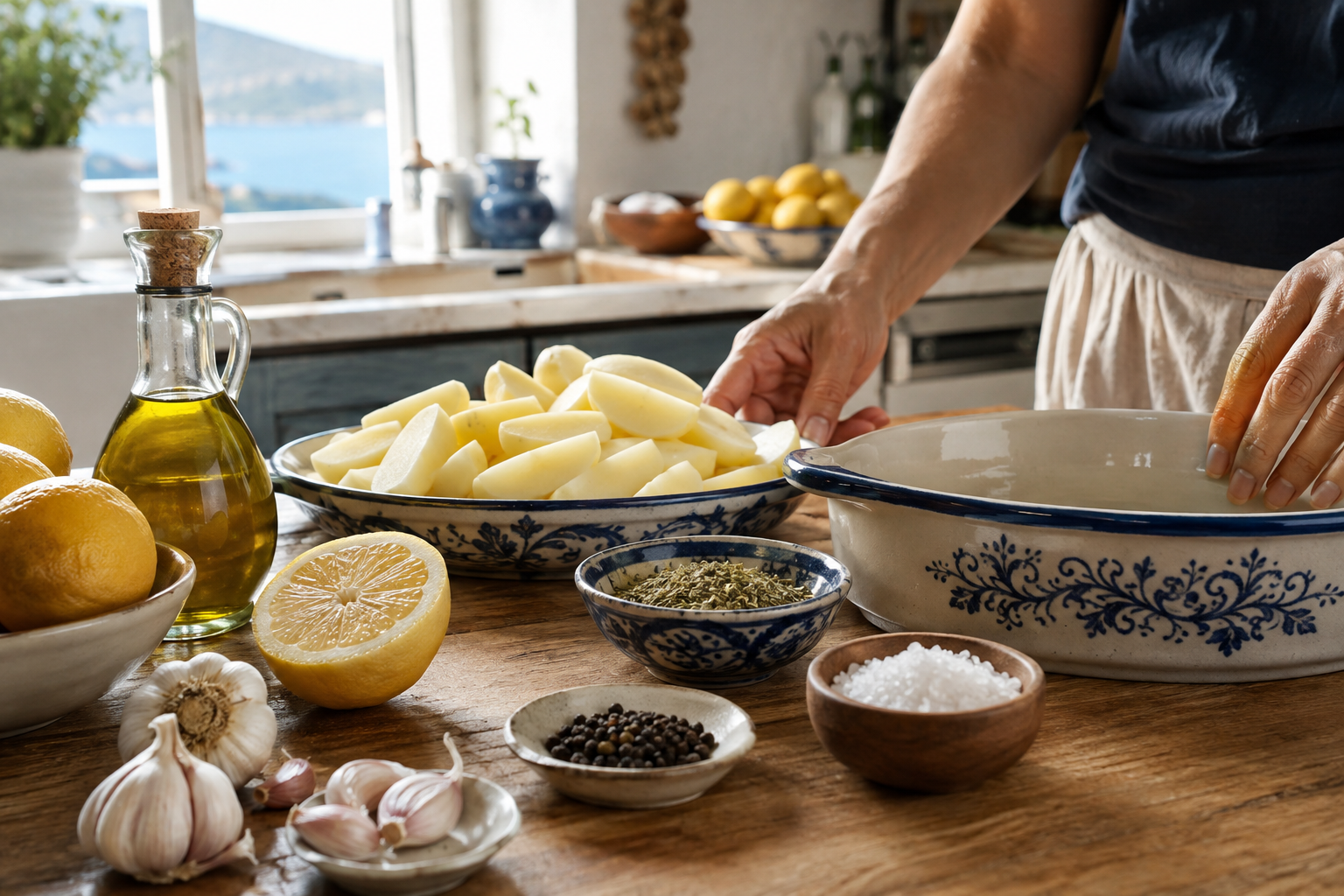
Serves 4 to 6 as a side / about 1 hour 15 minutes
Ingredients:
- About 1 kilogram (2 pounds) of yellow potatoes such as Yukon Gold, peeled if you like and cut into thick wedges
- 120 millilitres (about half a cup) of good olive oil
- Juice of 2 large lemons (roughly 80 millilitres or a third of a cup)
- 240 millilitres (about 1 cup) of chicken or vegetable broth
- 3 or 4 cloves of garlic, finely chopped or crushed
- 2 teaspoons of dried oregano
- Salt and freshly ground black pepper to taste
Method:
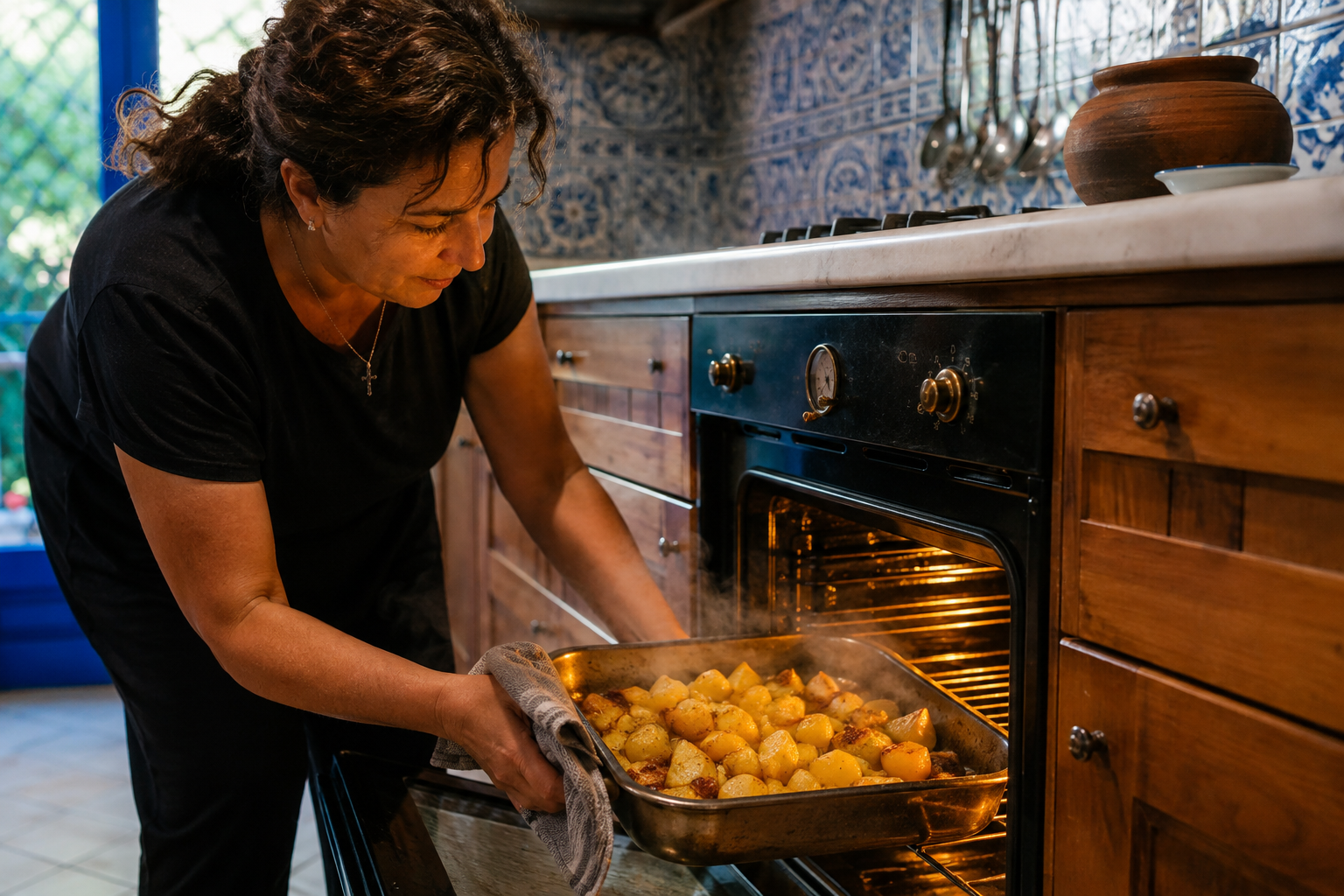
- Heat your oven to 200 degrees Celsius (400 degrees Fahrenheit). Put the potato wedges into a large roasting pan, ideally in a single layer with a little room around them.
- Add the olive oil, lemon juice, broth, garlic, oregano, a generous amount of salt, and plenty of pepper. Toss everything together so the potatoes are well coated, then spread them out flat in one layer.
- Roast for about 40 minutes. During this time the potatoes will soften and drink in most of the flavorful liquid.
- Take the pan out, turn the wedges over with a spatula, and return them to the oven.
- Roast for another 20 to 30 minutes, until the liquid has cooked away to just a little golden oil in the bottom of the pan and the potatoes are tender inside with crisp, golden edges. If they need more color, give them a few extra minutes. Ovens vary more than we like to admit, so treat the times as a guide rather than a rule, and trust your eyes and nose over the clock. You are looking for a pan with almost no loose liquid left, just a shimmer of golden oil, and wedges that have taken on real color at their edges. If there is still a puddle of watery broth sloshing about, they simply need longer, and if the tops are pale, a few minutes more will fix it. This is a dish that rewards a cook who looks rather than one who merely times.
- Taste, add a little more salt or a squeeze of fresh lemon if you like, and serve hot.
Serving Them at Your Table

Once you have made them, the question becomes what to do with them, and the happy answer is almost anything, because these potatoes are among the most versatile sides in the world. They belong happily beside nearly every roast you could ever imagine.
They love a roast, but they do not need one. Traditionally these accompany roast lamb or chicken, and they are magnificent that way, soaking up the juices and cutting the richness with their brightness, so they are the natural partner to any Sunday roast. Yet they are so satisfying that I am just as happy eating a plate of them on their own, perhaps with just a simple green salad and some crusty bread to mop the pan. That last part is not a throwaway suggestion, because the little pool of lemony, garlicky oil left in the bottom of the pan is arguably the best thing in the whole dish, and letting it go to waste would be a small tragedy. A torn piece of good bread dragged through it, catching the browned bits and the last of the lemon, is the cook’s quiet reward, the bite you take standing at the counter before the plate ever reaches the table.
They also shine at a gathering. Because they hold their heat well and taste wonderful even slightly cooled, they are perfect for a table full of people and dishes, a Mediterranean spread, a holiday meal, a long lazy lunch, so they suit company as well as a quiet weeknight. Wherever you serve them, be prepared for them to disappear faster than whatever you thought was the star of the meal.
Why the Potatoes Win
The lasting charm of Greek lemon potatoes is that they prove something I love about the best home cooking, that simplicity and cleverness together can beat expense and complication every time, turning four ordinary ingredients into a dish that outshines the elaborate main it was meant to support. There is a real lesson in that, one that goes beyond potatoes, about how the humblest things, treated with a little knowledge and care, can become the most memorable.
What makes them so reliably the star is exactly the combination we have walked through, the honest quality of a few good ingredients and the quiet brilliance of the one trick that lets them flavor and crisp themselves in a single pan. You do not need skill or special equipment or a long shopping list, only the understanding that roasting them in liquid and letting it cook away is what makes all the difference, and the patience to let the oven do the work.
So the next time you are planning a roast and worrying over the centerpiece, save a little of that energy for these potatoes instead, and watch what happens at the table. It is a strangely freeing thing to realize that the humblest item on the menu might be the one everyone remembers, because it takes the pressure off the rest and lets you enjoy the cooking. You can relax about the roast, knowing that even if it is merely good, the potatoes will carry the meal. Cut your wedges, toss them in lemon and oil and broth, trust the trick, and let them roast into something golden and irresistible. I promise you the same thing that happened at my table in Madrid will happen at yours, that a humble pan of potatoes will quietly steal the show from whatever you slaved over, and that no one, least of all you, will mind one bit. It is, after all, the most delicious kind of defeat a cook can suffer.

About the Author: Ruben, co-founder of Gamintraveler.com since 2014, is a seasoned traveler from Spain who has explored over 100 countries since 2009. Known for his extensive travel adventures across South America, Europe, the US, Australia, New Zealand, Asia, and Africa, Ruben combines his passion for adventurous yet sustainable living with his love for cycling, highlighted by his remarkable 5-month bicycle journey from Spain to Norway. He currently resides in Spain, where he continues sharing his travel experiences with his partner, Rachel, and their son, Han.