
Stand in front of the ham section of any decent Spanish shop and you are looking at one of the widest price ranges in the whole food world. Two legs of cured ham can sit side by side, looking almost identical to an untrained eye, and one might cost eight euros a kilo while the other costs eighty or more. To the newcomer this whole spread seems baffling at first, even a little suspicious, as if the higher price were pure snobbery or marketing. It is not. The difference between a cheap ham and a spectacular one is real, precise and printed right there on the label for anyone who knows how to read it. Spain regulates all of this by law, and once you learn to decode just a handful of words and a colored tag, the entire mysterious world of jamón opens up, and you can buy with confidence at any price. This is how to read a jamón label, and the few key words that separate the everyday from the extraordinary.
What makes this worth learning is that jamón is not one product but a whole spectrum of them, and the label is a reliable, legally controlled guide to exactly where on that spectrum any given leg sits. Unlike so much food marketing, which is designed to confuse and seduce, the Spanish system for labeling ham is designed to inform, telling you precisely what breed of pig you are buying, what it ate, and how it lived. Learn the code, and you will never again overpay for a mediocre ham or, worse, miss out on a magnificent one hiding in plain sight.
Here is what actually determines the price and quality of a jamón, the crucial first distinction that most foreigners get wrong, the color-coded system that ranks the best hams, and the few words to look for so you always know what you are buying. This is a practical guide for the curious shopper rather than anything complicated, and while prices vary by shop and region, the code itself is fixed by law, so let me walk you through how to read any leg of Spanish ham like a local.
The First Word That Matters, Serrano or Ibérico
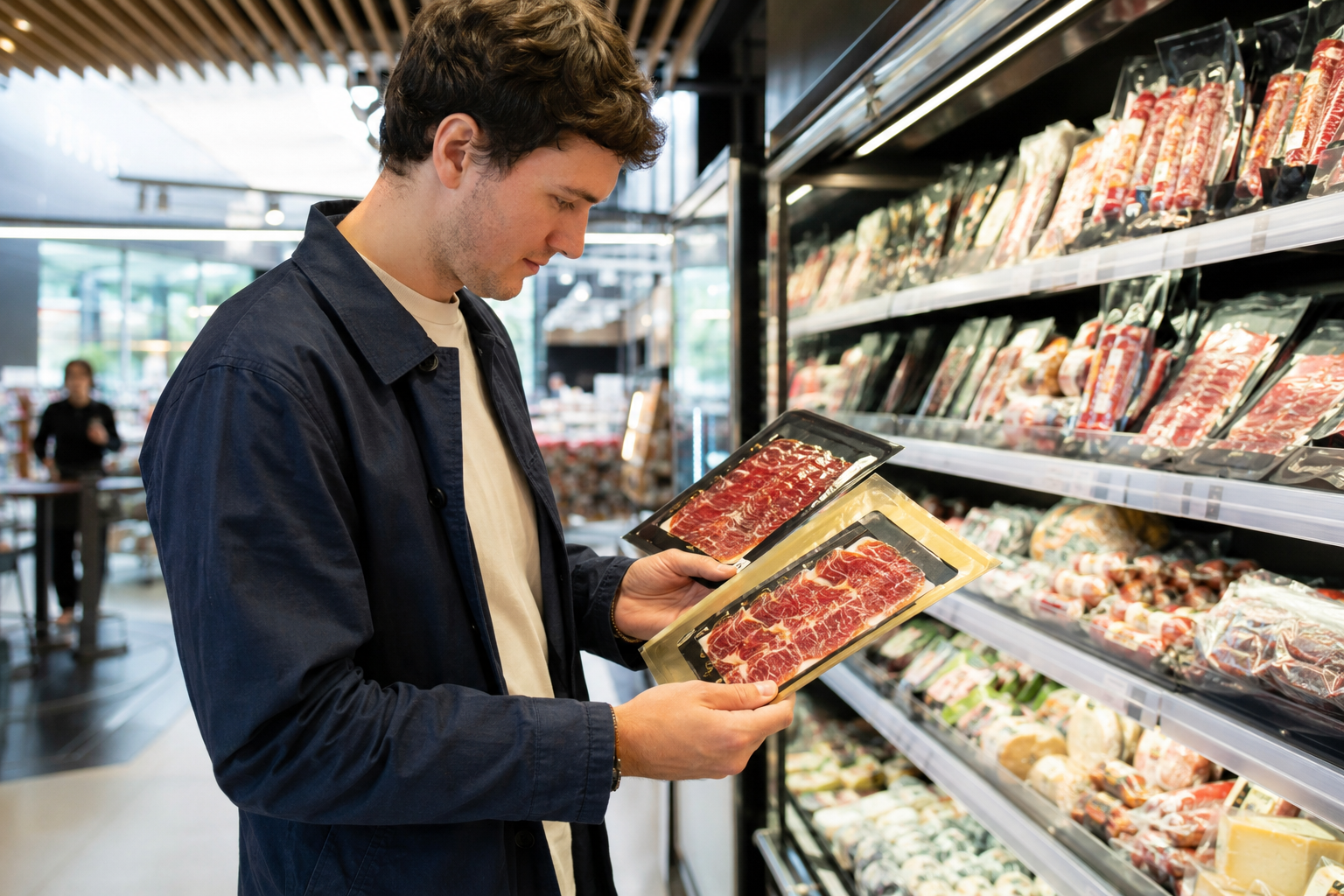
Before anything else, there is one fundamental distinction that determines which universe of ham you are even in, and getting this right is the single most important step. It comes down to the breed of the pig.
Serrano and ibérico are different animals. The word serrano refers to ham from ordinary white pigs, the everyday cured ham, good and useful and inexpensive, while the word ibérico refers to the native Iberian pig, a distinct dark breed prized for something far richer and more complex, so the two words mark completely different categories of product. This is not a difference of quality within one type but a difference of type altogether. It is a bit like the difference between two entirely different animals rather than two grades of the same one. A fine serrano can be a lovely thing, perfect for an everyday sandwich or a quick tapa, and there is no shame at all in buying it, but it is simply not trying to be the same product as a great ibérico. Confusing the two, or expecting one to taste like the other, is the most common mistake newcomers make, and clearing it up first saves a great deal of disappointment and wasted money.
This one word explains much of the price gap. Because ibérico ham comes from a special breed raised in a particular way, it commands dramatically higher prices than serrano, so simply knowing whether a label says serrano or ibérico tells you which price world you are in. The cheap end of the ham spectrum is largely serrano, while the expensive, celebrated hams are almost all ibérico, which makes this the first word to find on any label. A useful mental shortcut is that serrano is the ham of the everyday, the reliable slices in a bocadillo or on a lunchtime plate, while ibérico is the ham of the occasion, the one served on its own so that nothing distracts from it. Neither is better in an absolute sense, since they do different jobs, but they sit in different price worlds, and knowing which you are looking at is the foundation of every other judgment you will make.
The Second Word, Bellota
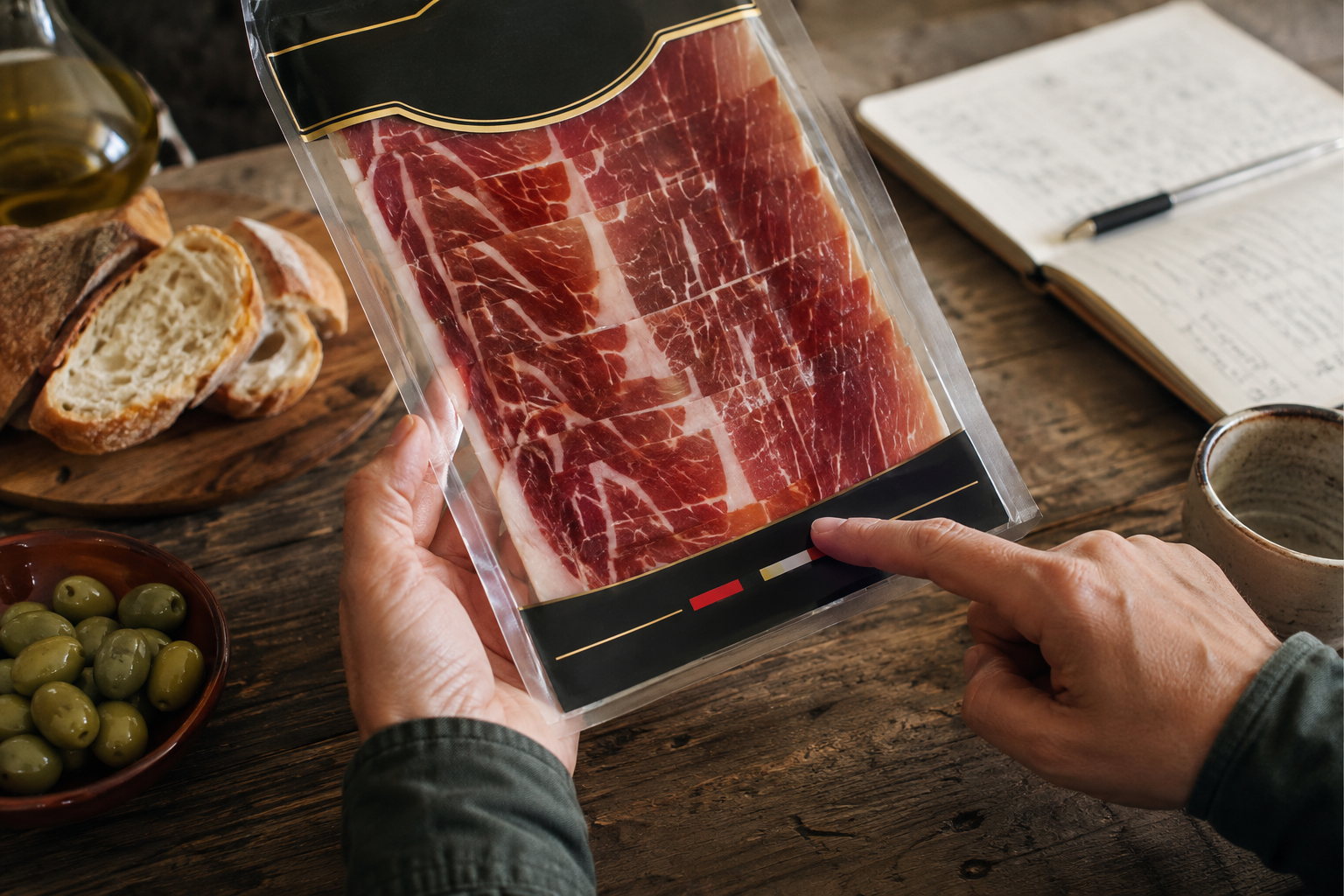
Once you are in the world of ibérico ham, the single most important word to look for is one that signals what the pig ate, because diet is one of the greatest determinants of quality. That word is bellota.
Bellota means the pig ate acorns. The word bellota means acorn, telling you the pig spent its final months roaming the oak woodlands feasting on acorns, which gives the fat and flesh an extraordinary flavor and texture, so bellota is the mark of the finest feeding regime. This acorn diet, plus the exercise of a free-roaming life, produces the melting, nutty, complex ham that jamón lovers prize above all.
Its absence matters too. When a label does not say bellota but instead says cebo, it means the pig was fed on grain and fodder rather than acorns, a good but less remarkable ham, so the presence or absence of that single word signals a real difference in quality and cost. Learning to spot bellota is one of the quickest ways to identify a superior ham at a glance. It is worth knowing, too, that Spanish law protects this word and its companions carefully, so that terms evoking the acorn and the open oak pasture cannot legally be used on hams that were not truly produced that way. That means when you see bellota, or words and images suggesting the wild acorn-fed life, you can trust that the ham truly earned them, rather than wondering whether a marketing team simply liked the sound of it. The word is a promise the producer is legally bound to keep.
The Third Word, the Breed Percentage
The next crucial piece of information concerns just how much of the special Iberian breed is in the pig, because not all ibérico ham comes from a fully purebred animal, and the label must tell you. This is where percentages come in.
The label states how Iberian the pig is. Ibérico pigs can be fully purebred or crossed with another breed, and the law requires the label to state the percentage, so you see one hundred, seventy-five, or fifty percent Iberian, which tells you the genetic purity of the animal. A fully purebred pig is the most prized and expensive, while crossbred versions are excellent but a step below.
This percentage shapes both quality and price. Because a fully purebred Iberian pig produces the most sought-after ham, the words one hundred percent ibérico signal the top of the range, while lower percentages indicate a fine but slightly less exclusive product, so this figure is a key part of judging what you are paying for. Combined with the feeding word, the breed percentage lets you place any ibérico ham quite precisely on the quality ladder. The two pieces of information work together: a ham can be acorn-fed but crossbred, or purebred but grain-fed, and each combination sits at a different point on the scale of price and prestige. The very finest hams are the ones where both boxes are ticked, purebred and acorn-fed, while the more affordable ibérico hams tend to compromise on one or the other. Reading the two together, rather than fixating on a single word, is what lets you judge a ham accurately.
The Fourth Word, Pata Negra, and Who May Use It
There is one more term that carries enormous weight, so much so that Spanish law tightly restricts who may use it, which makes it a truly reliable signal rather than empty marketing. That term is pata negra.
Pata negra is legally reserved for the very best. The phrase pata negra, meaning black hoof, may by law be used only for the top category, the purebred acorn-fed ibérico, so unlike loose marketing language it is a protected term you can truly trust. When you see pata negra used correctly, it points to the pinnacle of the entire jamón world, the purebred pig fattened on acorns in the wild.
This legal protection is your friend. Because the term cannot legally be slapped on lesser hams, its presence, when genuine, is a meaningful guarantee rather than a hollow boast, so a shopper who understands this can use the phrase as a real marker of the highest quality. It is one of the clearest examples of how the Spanish system turns label words into trustworthy information. In a food world full of vague and slippery claims, where words like natural and artisan can mean almost anything, it is truly refreshing to find a category where the key terms are pinned down by law and mean exactly what they promise. That reliability is a quiet gift to the shopper, and it is worth appreciating every time you use it.
The Color Code That Ties It All Together
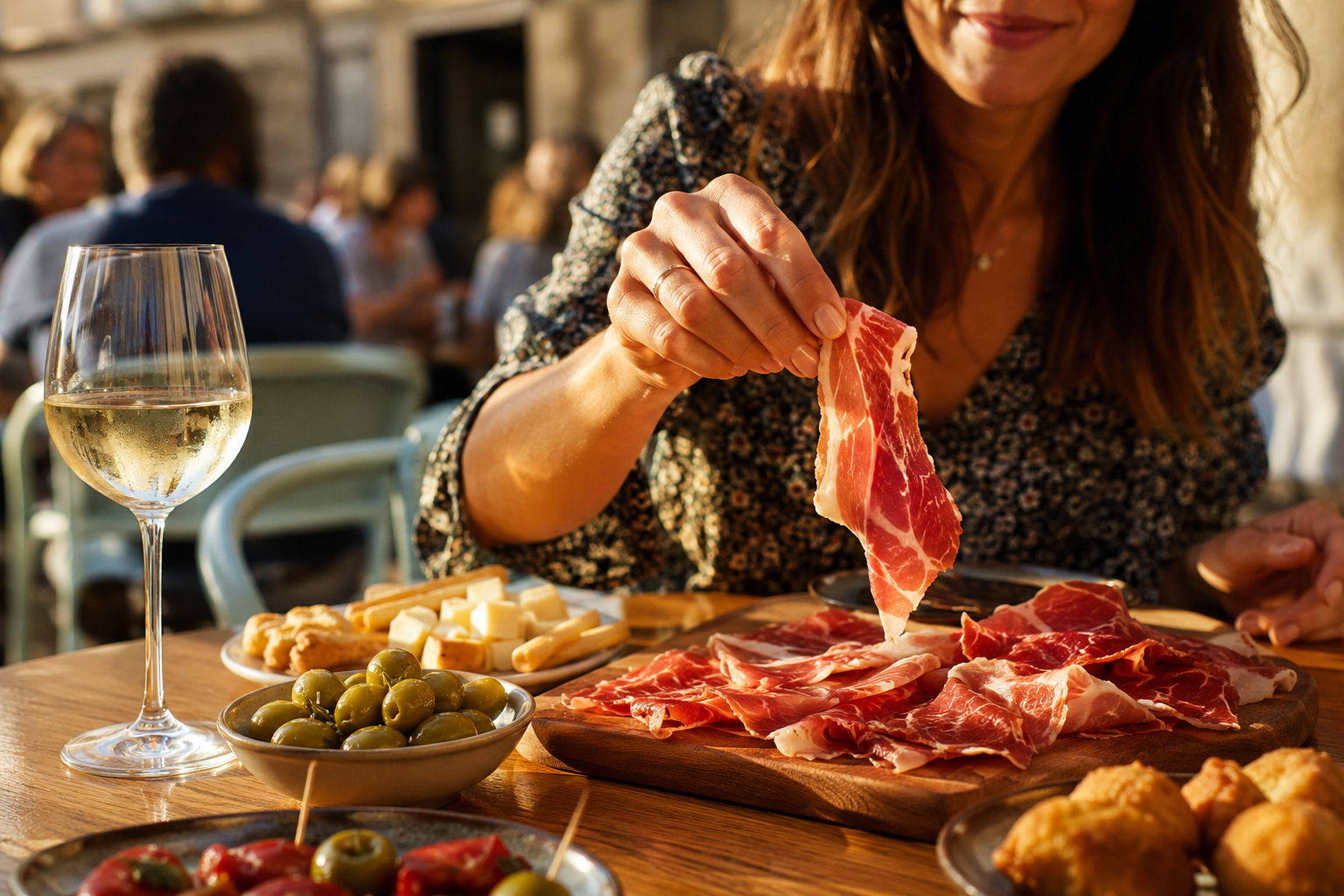
To make all of this even easier, Spain has introduced a color-coded seal system for ibérico ham, a colored tag on the leg that instantly signals its category, so you can judge quality at a glance without even reading the words. Each color corresponds to a specific combination of breed and diet.
The colors rank the hams clearly. In the ibérico system, a black seal marks the very top, the purebred acorn-fed ham that alone may be called pata negra, a red seal marks acorn-fed crossbred pigs, green marks free-range pigs on pasture and grain, and white marks pigs raised on grain in pens, so the four colors form a clear hierarchy from most to least prized. Learning this sequence of colors is like a cheat sheet to the entire range.
The seal is regulated, not decorative. Crucially, these colored seals are controlled by law, not chosen by the producer for marketing, so the color on the leg is a reliable, official statement of what the ham actually is, which makes it one of the most trustworthy signals in the whole shop. A quick glance at the seal tells an informed shopper almost everything they need to know before they have read a single word.
Putting the Whole Label Together
With all four words and the color system understood, reading any jamón label becomes a simple, quick process that lets you know exactly what you are buying and whether the price is fair. It is a matter of checking a few things in order.
Read it in a logical sequence. First establish whether it is serrano or ibérico, then, if it is ibérico, look for bellota to judge the diet, check the breed percentage to judge purity, note whether pata negra applies, and glance at the color of the seal to confirm the overall tier, so in a few seconds you can place any leg precisely. This simple routine transforms the bewildering ham counter into an open book. What once looked like a wall of near-identical legs at wildly different prices resolves into a clear, logical ladder, with every rung explained by the words and the color on the tag. After a few visits it becomes second nature, and you find yourself reading the labels almost without thinking, the way a Spaniard does, sizing up a leg in a glance and knowing at once whether it is the right ham for what you have in mind and whether the price is fair.
The result is confidence at any budget. Armed with this knowledge, you can shop deliberately, choosing an inexpensive serrano for sandwiches, a mid-range ibérico for a weekend, or a splendid pata negra for a special occasion, all with full understanding of what you are paying for, so the label serves you rather than mystifies you. Reading the label well means never overpaying and never missing out. It also changes how you enjoy the ham itself, because understanding what went into a great leg, the pure breed, the acorns, the years of open-air life, deepens the pleasure of eating it. A slice of fine pata negra tastes even better when you know the story the label told, and an everyday serrano is more satisfying when you chose it deliberately for its job rather than settling for it in confusion. Knowledge, here as so often with food, is a real part of the pleasure.
Reading Ham Like a Local
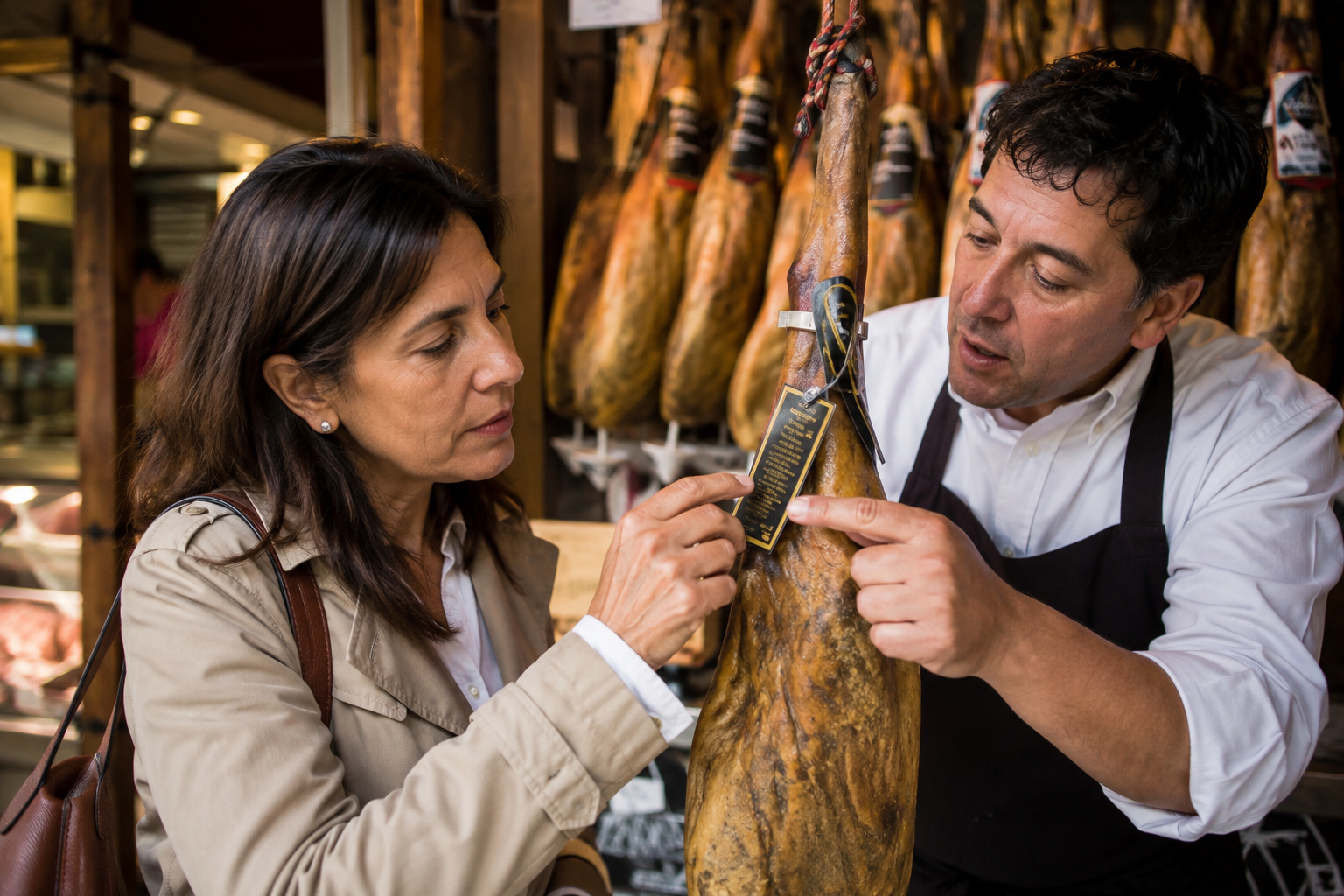
The lasting value of learning to read a jamón label is that it replaces confusion and guesswork with genuine understanding, turning what looks like an intimidating luxury into something you can navigate as confidently as a Spaniard, choosing exactly the right ham for the occasion and the budget. The enormous price range that once seemed mysterious becomes perfectly logical, each level explained by breed, diet and the life the pig led.
What makes this knowledge so satisfying is that it is grounded in an honest, legally enforced system rather than in marketing spin, which means the words on the label genuinely mean what they say. Unlike so many products where you cannot trust the packaging, a jamón label, once you can read it, is a reliable guide to quality and value, and the few key words and colors are all you need to unlock it.
So the next time you find yourself before a Spanish ham counter, faced with rows of legs ranging from the very humble to the truly extravagant, remember that the price difference is not a trick but a story told plainly on the label. Look for serrano or ibérico, hunt for the word bellota, check the breed percentage, respect the protected phrase pata negra, and glance at the color of the seal, and you will know precisely what you are looking at. Do that, and whether you spend eight euros or eighty, you will buy exactly the ham you meant to, and enjoy it all the more for understanding it.

About the Author: Ruben, co-founder of Gamintraveler.com since 2014, is a seasoned traveler from Spain who has explored over 100 countries since 2009. Known for his extensive travel adventures across South America, Europe, the US, Australia, New Zealand, Asia, and Africa, Ruben combines his passion for adventurous yet sustainable living with his love for cycling, highlighted by his remarkable 5-month bicycle journey from Spain to Norway. He currently resides in Spain, where he continues sharing his travel experiences with his partner, Rachel, and their son, Han.