
There is a test so simple it seems almost too crude to matter, and yet it has become one of the most talked-about measures in the science of aging. You grip a device as hard as you can, it registers the force in your hand, and that single number turns out to be remarkably informative about your overall health and how well you are likely to age. This is grip strength, measured with a hand dynamometer, and a large and growing body of research has found it to be one of the most reliable simple predictors of healthy aging and longevity medicine has. It sounds almost implausible that squeezing a small gadget could reveal so very much, but the studies are large, consistent and striking, which is exactly why doctors and researchers have come to treat this humble hand test with real seriousness. Here is what the research actually shows, and, just as importantly, what it does not.
Before going further, one crucial point has to be made clearly, because it is the key to understanding everything that follows. The research on grip strength is about association, not proof of cause. Grip strength is powerfully linked to health and longevity, but that does not mean that gripping harder is not what makes people healthier, and keeping that distinction in mind is essential to interpreting the findings correctly rather than being misled by them. What grip strength appears to be is a window, a simple readout of something much larger going on in the body.
Here is what grip strength actually measures, what the major studies have found about its links to aging and mortality, why a hand squeeze can reveal so much, and the important limits of what the number can tell you. This is a factual overview of the research rather than medical advice, and I am not a doctor, so nothing here should be taken as a diagnosis or a prescription, but the science of this simple test is truly fascinating and worth understanding accurately.
What Grip Strength Actually Measures
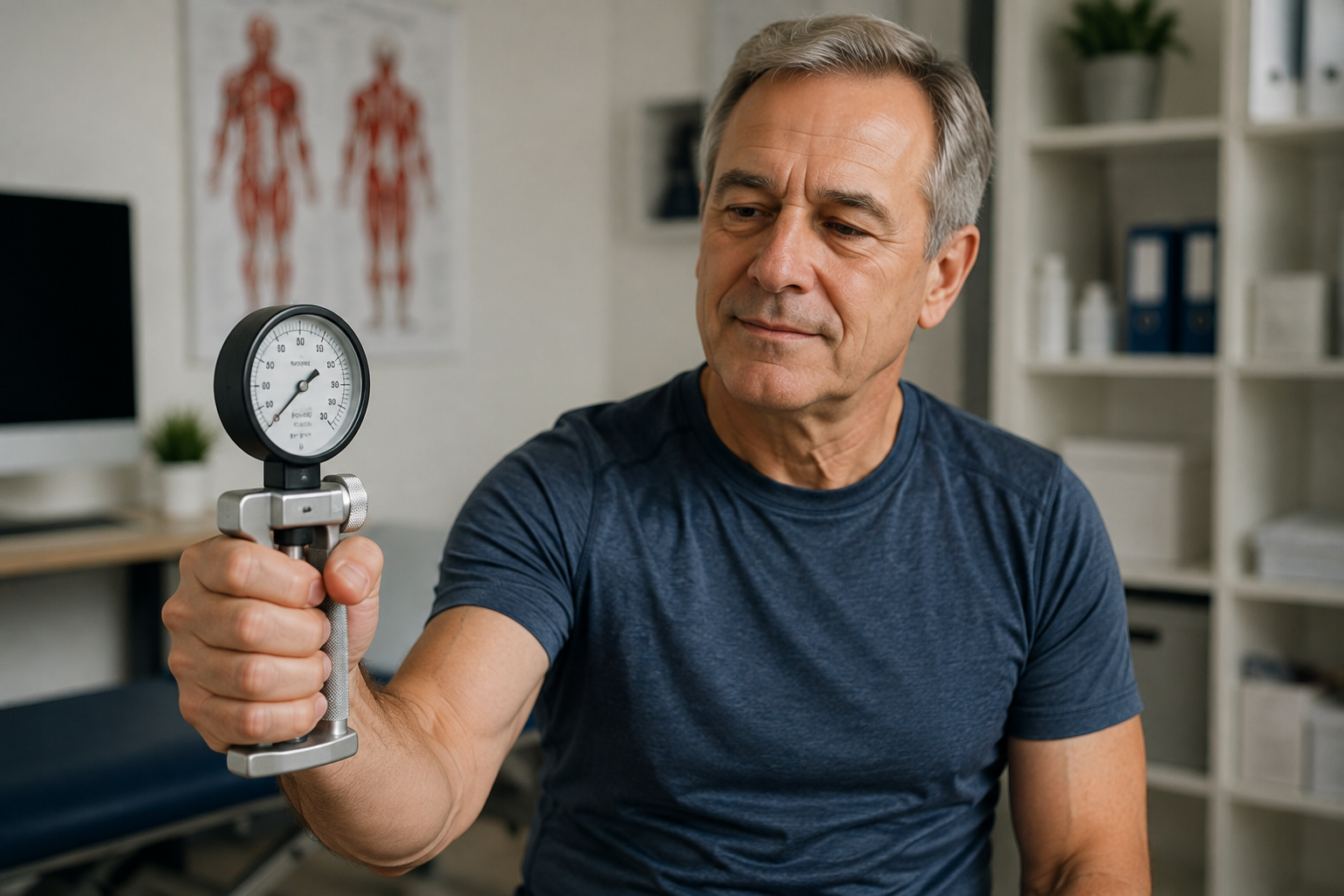
To understand why grip strength matters, you first need to know what it is and how it is measured, because the test is disarmingly simple and its power comes precisely from that simplicity. It is one of the easiest meaningful measurements in all of medicine.
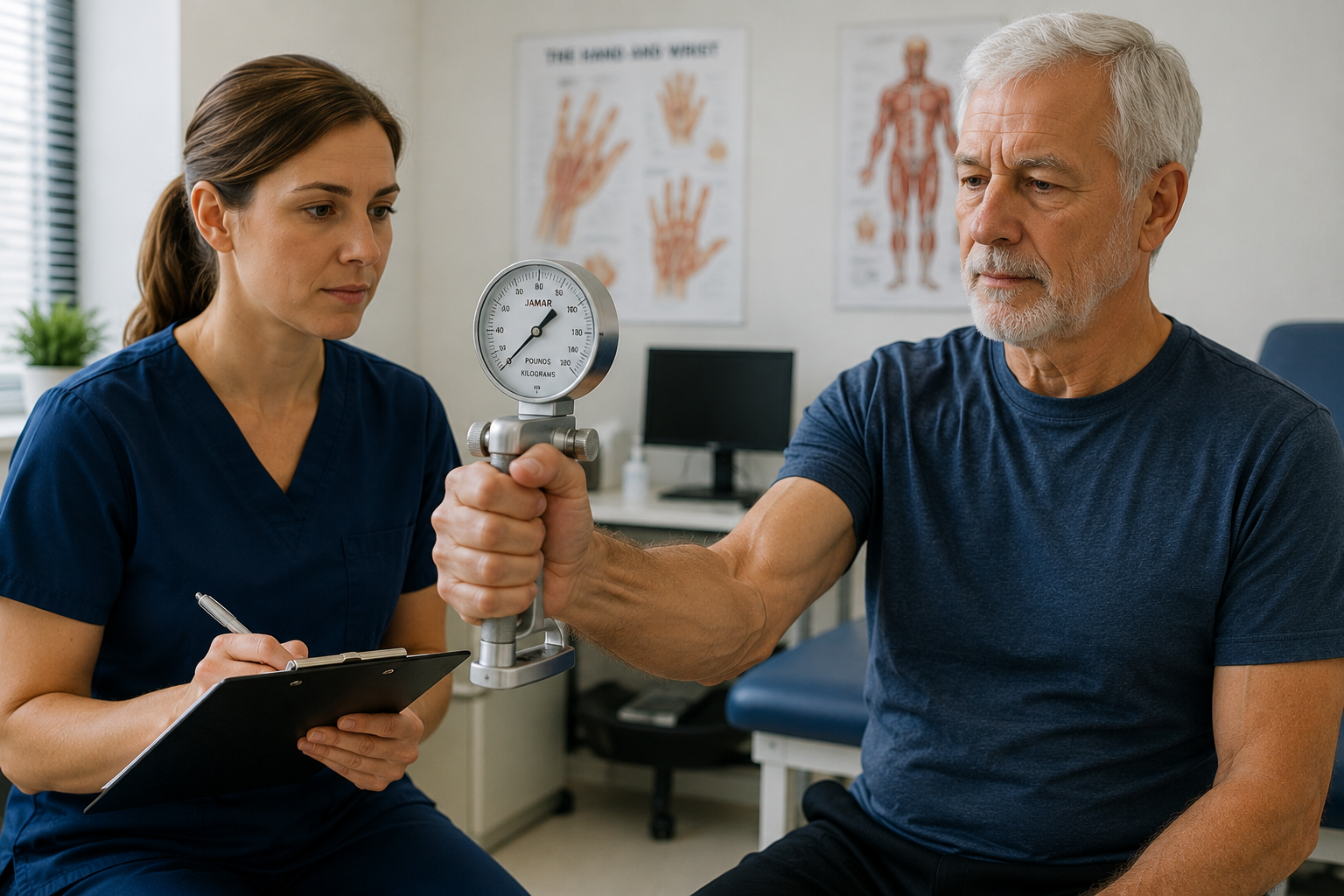
The test is a single hard squeeze. Grip strength is assessed with a hand dynamometer, most often a hydraulic model, which the person squeezes as hard as they can while it records the maximum force in kilograms, so the whole test takes seconds and requires nothing more than a firm grip. The most widely used device in the research is a particular hydraulic dynamometer that has become something of a standard, allowing results to be compared across studies worldwide. This standardization is quietly important, because it means the enormous body of grip-strength research is largely measuring the same thing in the same way, which makes the findings far easier to compare and combine than they would be if every study used a different method.
What it captures is broader than the hand. Although the test measures the hand, the strength it records reflects far more than the fingers and forearm, serving as a convenient proxy for overall muscular strength and general physical condition, so the hand becomes a window onto the whole body. A firm grip is not really about the hand, but about the health it happens to reveal.
The Landmark Findings
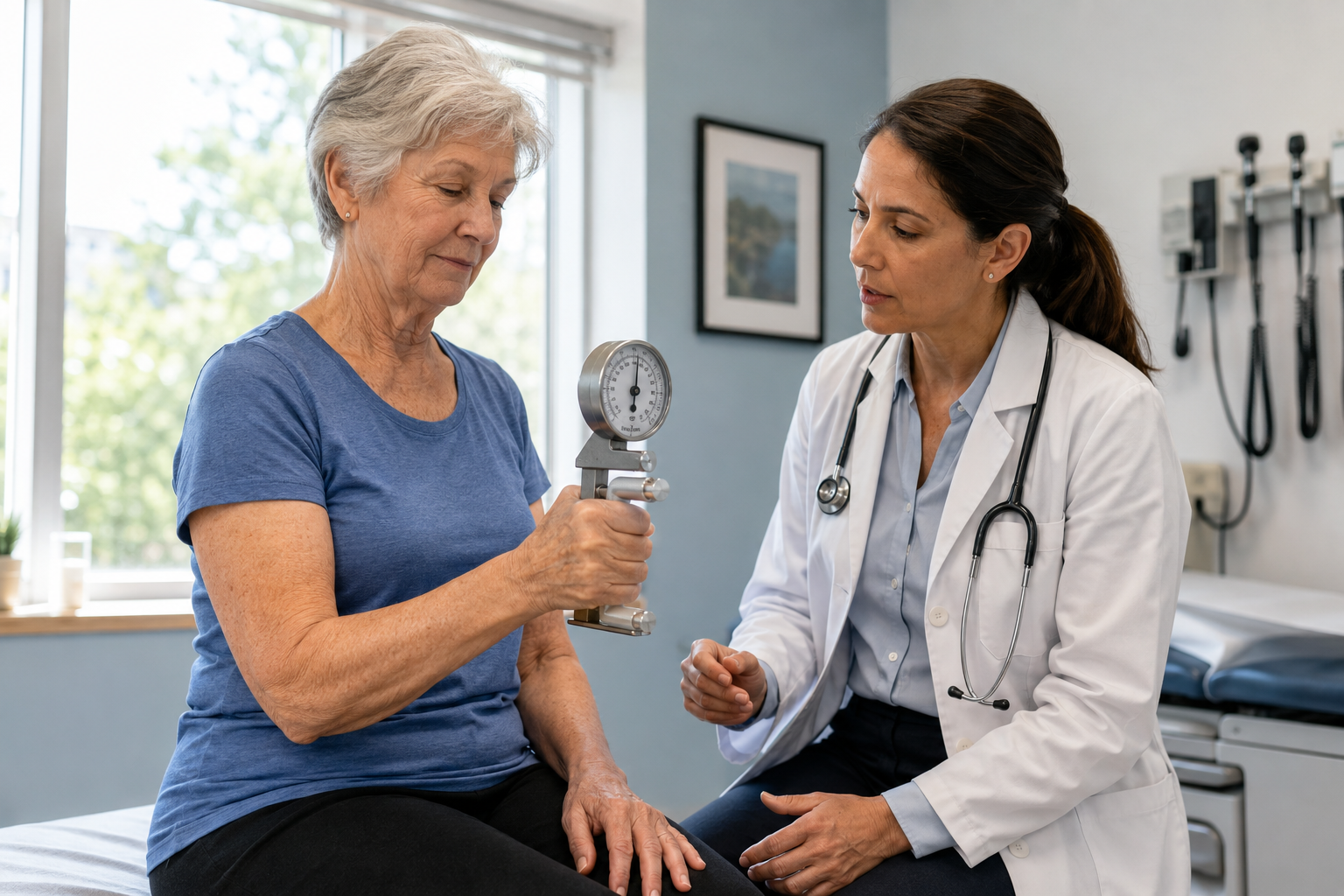
The reason grip strength commands such attention is a series of large, rigorous studies that have found it to be a startlingly strong predictor of health outcomes, sometimes outperforming measures far more elaborate. The scale of this research is what makes it compelling.
One landmark finding compared it to blood pressure. In a major international study known by its acronym PURE, which followed large populations across many countries, researchers found grip strength associated with mortality and cardiovascular events more strongly than systolic blood pressure, a striking result given how central blood pressure is to medicine, so a simple hand squeeze proved to be a better statistical predictor than a cornerstone clinical measure. Weaker grip was linked to a higher risk of early death across every income level.
The evidence base is enormous. Beyond that study, grip strength has been examined in a vast prospective study of around half a million participants in the United Kingdom, which linked it to cardiovascular, respiratory and cancer outcomes as well as overall mortality, and in a meta-analysis pooling data on roughly two million people, so the associations rest on some of the largest datasets in health research. This is not a single surprising study but a deep and consistent body of evidence built on millions of people. That consistency matters enormously in health research, where isolated findings often fail to replicate and single studies can mislead. When the same association appears again and again, across different countries, populations, age groups and decades, and holds up under careful statistical scrutiny, it becomes far harder to dismiss as a fluke or an artifact. The strength of the grip-strength evidence lies precisely in how many times, and in how many different settings, the same pattern has emerged.
The Link to Dementia and Disease
Beyond overall mortality, the research has connected grip strength to specific conditions of aging, extending the reach of what this simple measure appears to reflect. The associations run wide as well as deep.
Grip strength has been linked to dementia. In a large study drawing on hundreds of thousands of participants, lower grip strength was associated with higher incidence of, and mortality from, dementia, a link that persisted even after careful analysis, so the hand test connects not only to how long people live but to the health of the aging brain. As with all these findings, this is an association, but it is a notable one drawn from a very large sample.
It also tracks with a range of other conditions. Research has associated weaker grip with frailty, the muscle-loss condition sarcopenia, with cardiovascular and metabolic disease, and with a higher risk of falls and multiple simultaneous illnesses, so low grip strength keeps turning up alongside many of the major challenges of aging. The consistency with which it appears across so many different conditions is part of what makes researchers regard it as such a useful general indicator. A measure that were only linked to one disease might simply reflect that one disease, but grip strength shows up alongside a remarkably broad range of them, which suggests it is capturing something more fundamental than any single condition. That breadth is a clue to its meaning: it appears to track not a particular illness but the general robustness of the body, the overall reserve that protects against many threats at once.
Why a Hand Squeeze Reveals So Much
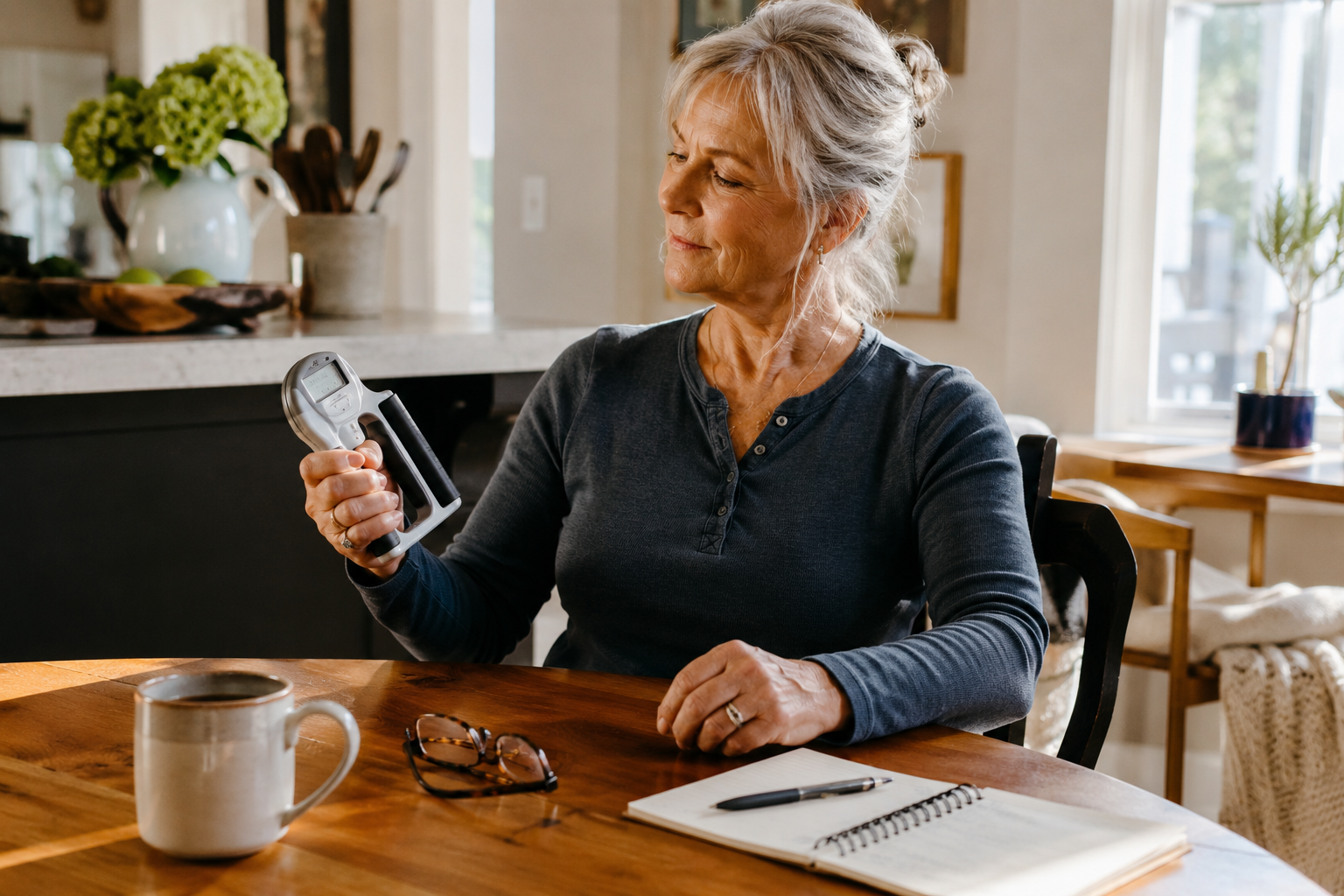
The natural question is why on earth a single measure of hand strength should carry so much information about a person’s whole future health, and the answer lies in what grip strength is quietly summarizing. It is a remarkably efficient summary of overall vitality.
Grip reflects the health of many systems at once. A firm grip depends not only on muscle but on the nervous system, nutrition and activity, and on the absence of the chronic diseases that sap strength, so the single number rolls up the condition of many bodily systems into one quick reading. When you squeeze a dynamometer, you are in effect testing muscle, nerves and overall physiological reserve all at once. Muscle mass and quality decline with age and disease, the nervous system’s ability to recruit muscle fibers reflects neurological health, and the energy and nutrition available to power a strong contraction depend on the body’s broader metabolic state. A single maximal squeeze draws on all of these simultaneously, which is why it manages to compress so much information into one number, and why that number tracks so closely with the slow, whole-body process of aging.
This is what makes it such an efficient marker. Because so many aspects of health feed into it, grip strength serves as a cheap, fast, non-invasive shorthand for overall vitality that would otherwise take many separate tests to assess, which is precisely why clinicians and researchers value it so highly. A measure that captures so much in a single squeeze is a rare and useful thing, and its simplicity is a feature, not a limitation.
What the Number Cannot Tell You
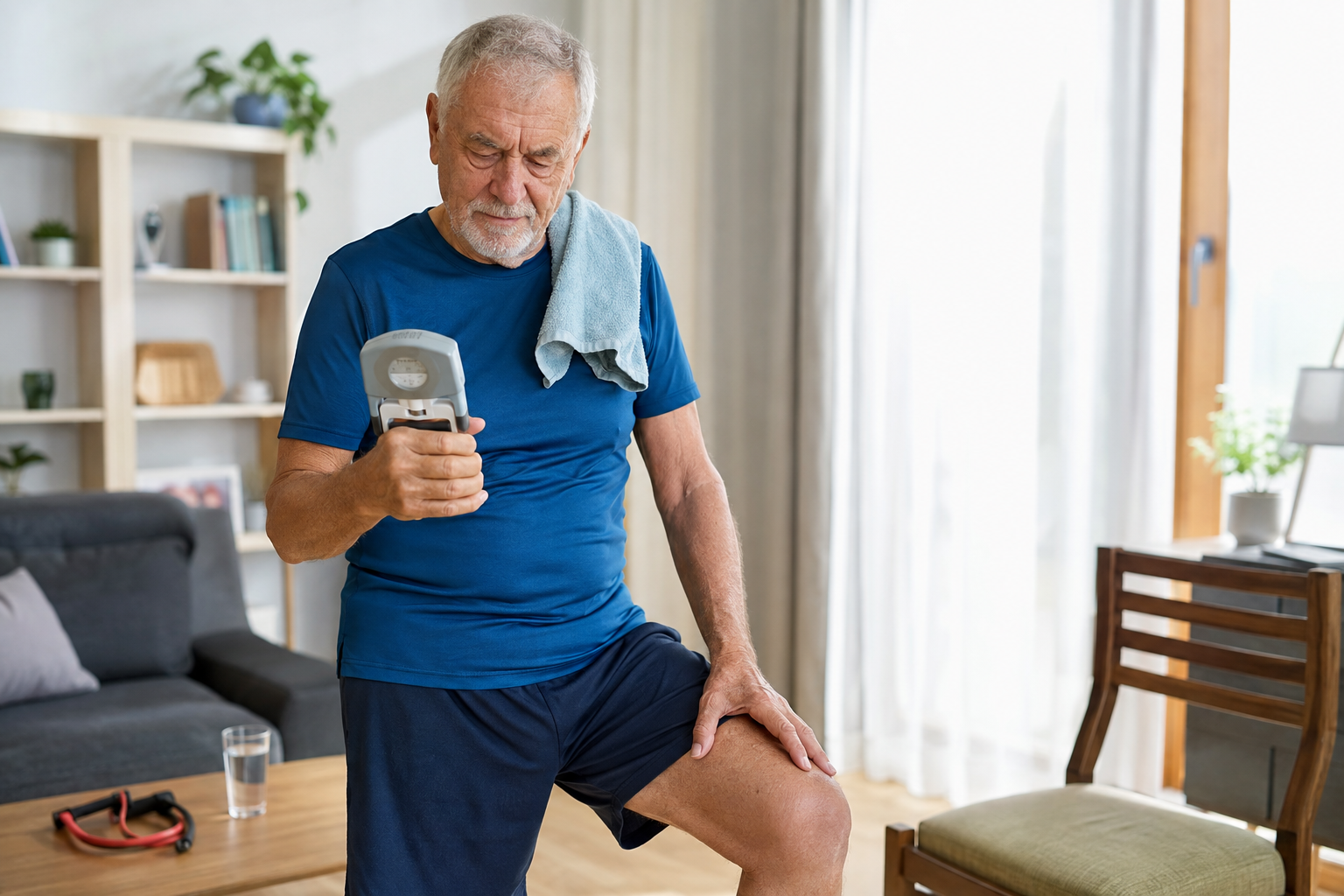
Now comes the most important part, the careful account of the limits of grip strength, because misunderstanding what the number means is easy and potentially misleading. The test is powerful, but it is not magic, and it is not a lever.
It is a marker, not necessarily a cause. The central caution is that grip strength predicts outcomes because it reflects underlying health, not because grip itself keeps people alive, so it is a signal of vitality rather than a proven cause of it, and squeezing a dynamometer harder in isolation is not shown to extend anyone’s life. The grip reveals the state of the body, but it is the state of the body, not the grip, that ultimately matters. This is the single most common way the research gets distorted in popular retellings, which sometimes imply that building hand strength is a shortcut to a longer life. The studies do not show that. They show that people who are strong tend to be healthier and to live longer, and that grip is a convenient way to detect that underlying strength and health, which is a very different and far more careful claim than the headline version suggests.
And it is a population pattern, not an individual verdict. These findings describe statistical associations across large groups, which means a given person’s grip is not a personal prophecy, and many with weaker grips live long, healthy lives, so no one should read their own hand test as a fixed forecast of their future. The number is a useful clue in the aggregate, not a sentence handed down to any individual, and treating it otherwise misunderstands what the research really says. This distinction between population patterns and individual fates runs through all of epidemiology, and it is worth holding onto whenever any single measurement is described as predicting health. A statistic that is powerfully true across a million people can still be a poor guide to what will happen to any one of them, because individual lives are shaped by countless factors no single number can capture. The grip test describes tendencies across groups, not destinies for persons.
How Doctors Actually Use It
Given all this, it is worth understanding the practical role grip strength plays in real medicine, because clinicians use it as a truly helpful tool while respecting its limits. It has earned a real place in clinical practice.
It functions as a screening signal. In practice, clinicians use grip strength as a quick, inexpensive way to flag potential frailty or declining health, particularly in older adults, prompting closer attention or further assessment when the number is low, so it works as an early warning indicator rather than a diagnosis in itself. A low reading is a reason to look more closely, not a conclusion on its own.
It fits into a larger picture. Grip strength is most useful not in isolation but as one piece of a broader assessment of a person’s health, considered alongside their history, their other measurements, and their overall condition, so responsible clinicians treat it as one informative input among many. Its value comes from being combined with everything else a good assessment includes, not from standing alone as a single verdict. Used this way, as a fast and inexpensive prompt to pay closer attention, it can help catch declining health earlier than it might otherwise be noticed, which is a genuine benefit in the care of older adults. The point is never to reduce a person to a grip reading, but to use that reading as one more early signal that something may deserve a closer look, in service of keeping people healthier for longer.
Understanding the Hand Test Honestly
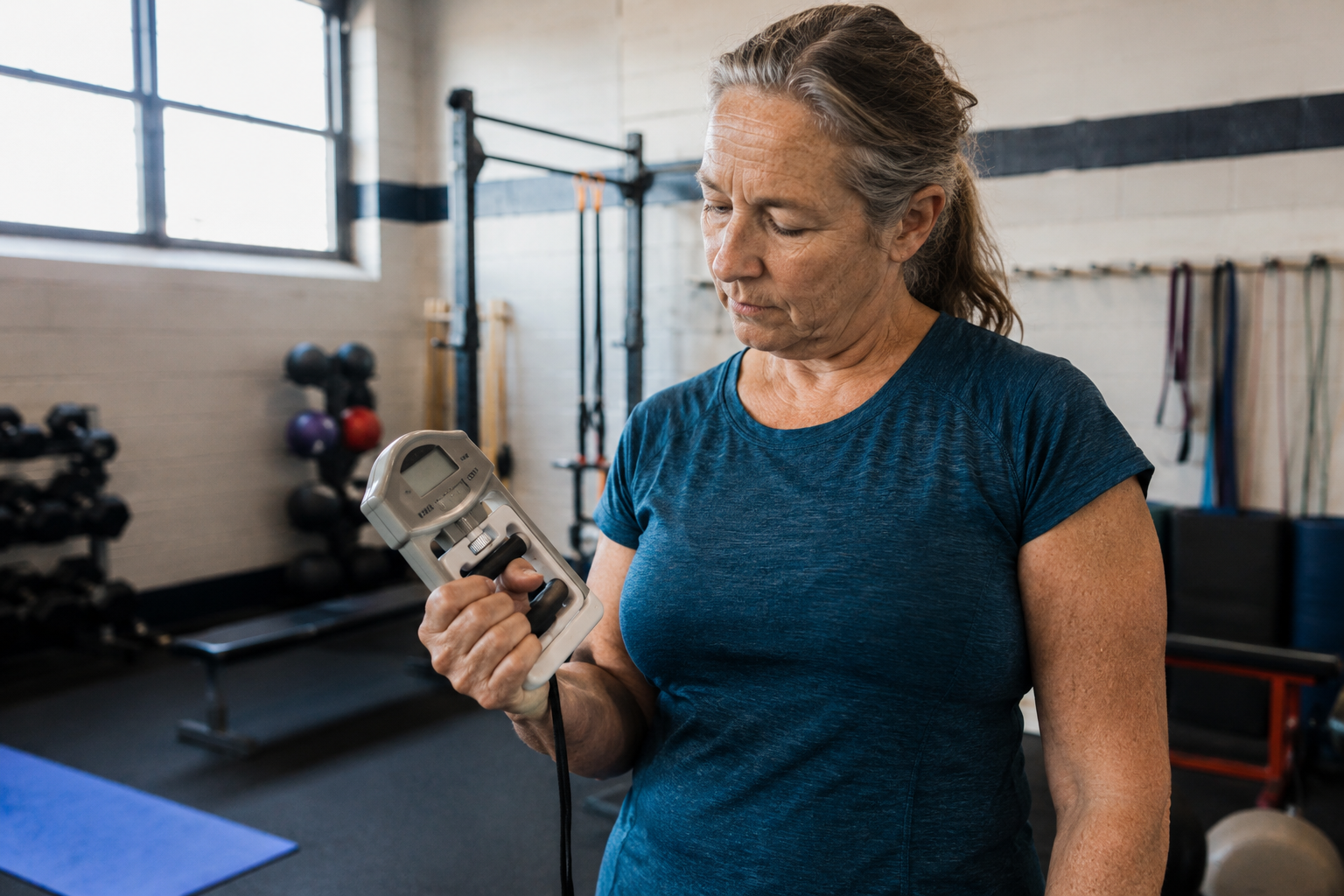
The lasting significance of grip strength is that it offers a rare thing in medicine, a measure at once extraordinarily simple and remarkably informative, capturing in a single squeeze a great deal about a person’s overall health and how they are likely to age. The research behind it is large, consistent and deeply impressive, which is why this humble hand test has earned the serious attention of doctors and scientists alike.
What makes understanding it properly so important is the distinction that runs through all of it, between a powerful predictor and a proven cause. Grip strength is a superb window onto health, a signal worth taking seriously, but it is a reflection of vitality rather than its source, and reading it correctly means appreciating both its real power and its genuine limits. Understood that way, it is neither a gimmick nor a magic number, but a fascinating example of how a simple measurement can quietly summarize the health of the whole.
So the next time you hear that a hand squeeze can predict how well you will age, you will know both why that claim is grounded in serious science and why it must be understood with care. Grip strength genuinely is one of the most reliable simple predictors of healthy aging that research has found, a real and useful window onto the body’s condition, and also a marker rather than a lever, a clue rather than a prophecy. That combination of real significance and honest limits is exactly what makes it worth understanding accurately.

About the Author: Ruben, co-founder of Gamintraveler.com since 2014, is a seasoned traveler from Spain who has explored over 100 countries since 2009. Known for his extensive travel adventures across South America, Europe, the US, Australia, New Zealand, Asia, and Africa, Ruben combines his passion for adventurous yet sustainable living with his love for cycling, highlighted by his remarkable 5-month bicycle journey from Spain to Norway. He currently resides in Spain, where he continues sharing his travel experiences with his partner, Rachel, and their son, Han.