
In Finland, the sauna is a fixture of ordinary life, something many people do several times a week from childhood onward. So when Finnish researchers set out to follow thousands of middle-aged men for two decades, they were able to ask a question few other countries could: does the frequency of sauna bathing have any relationship to the risk of developing dementia later in life? The answer they found was striking enough to draw attention around the world. The men who used the sauna most often had dramatically lower rates of dementia and Alzheimer’s disease than those who used it least. It is the kind of finding that sounds almost too good to be true, and understanding it properly, both what it shows and what it cannot, is the key to taking it seriously without overstating it. Here is what that landmark study actually found, and how to read it with care.
Before anything else, the single most important point must be stated plainly, because everything else depends on it. This was an observational study, which means it found an association between sauna use and lower dementia risk, not proof that sauna use causes it. That distinction is not a technicality but the very heart of interpreting the research responsibly, and keeping it in view is what separates an accurate understanding from a misleading one. The study opened a fascinating door, but it did not, and could not, settle what lies behind it.
Here is what the Finnish study actually examined, what it found about sauna frequency and dementia, why researchers think there might be a connection, and the crucial limits that keep the finding a promising lead rather than a proven cure. This is a factual overview of a piece of research rather than medical advice, and I am not a doctor, so nothing here is a recommendation or a treatment plan, but the science is truly intriguing and worth understanding with care.
The Study Behind the Headlines
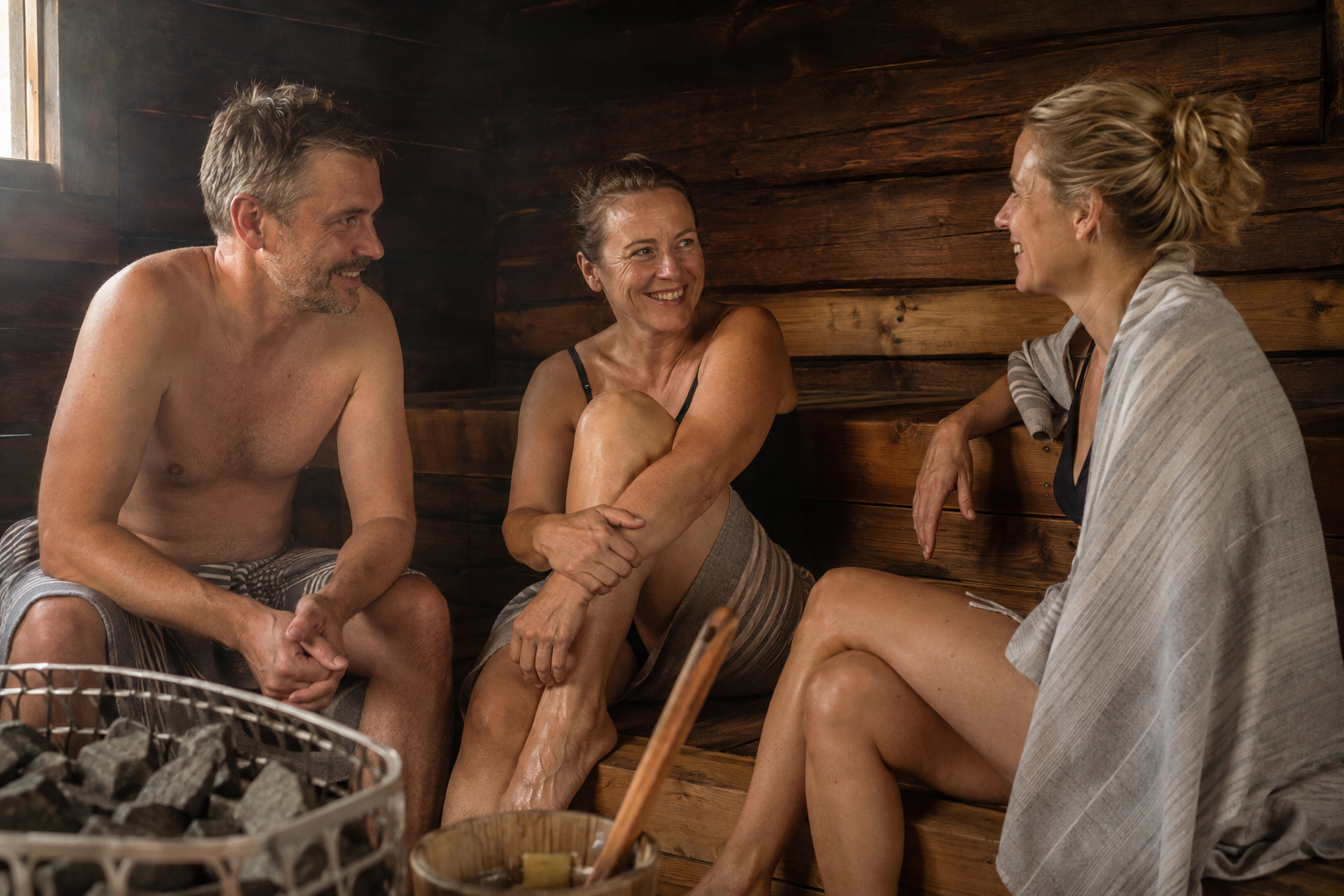
To make sense of the finding, you need to know what kind of study produced it, because its design is both its strength and the source of its limits. This was a serious, long-term piece of research, not a casual survey.
It followed thousands of men for two decades. The research tracked more than two thousand middle-aged men, all healthy at the outset, for a median of around twenty years, recording who developed dementia over that time, so the study had the scale and duration needed to detect meaningful patterns. Following people for twenty years is what gives a study like this its weight, allowing conditions that take decades to emerge to be captured.
Its Finnish setting was essential. The study could only be done somewhere sauna bathing is deeply woven into daily life, and Finland, where traditional saunas are a near-universal habit practiced multiple times a week, was the ideal place to examine the question, so the cultural context was not incidental but fundamental to the research. Nowhere with a casual or occasional sauna culture could have produced a study of this kind, which is part of why the finding is both remarkable and specific to its setting. In a country where only a small minority used saunas, and rarely, there would be too little variation in the habit to detect any relationship with something as complex as dementia. Finland’s saturation in sauna culture is what created a natural experiment of sorts, with enough frequent users and enough infrequent ones, all followed for long enough, to make the comparison meaningful. That same cultural saturation, however, is also what makes the results hard to generalize elsewhere.
What the Study Found

The central finding is what captured the world’s attention, and it was notable both for its size and for the clear pattern it followed. The numbers were large enough to be hard to ignore.
More frequent sauna use tracked with far less dementia. Comparing men by how often they used the sauna, the researchers found that those who bathed most frequently, four to seven times a week, had a dramatically lower risk of dementia and with Alzheimer’s disease over the follow-up period than those who used it just once a week, a difference on the order of two-thirds, so the gap between frequent and infrequent users was large. A reduction of that magnitude in a common, feared condition is why the study made headlines.
And the pattern was graded. Rather than an all-or-nothing effect, the study suggested a dose-response relationship, with the moderate group falling between the highest and lowest, so the more often the men used the sauna, the lower their associated risk appeared to be. A graded pattern, where more of something tracks with steadily less risk, makes researchers take an association more seriously, though it still does not prove cause. The reasoning is that a random or spurious link would not be expected to line up so neatly with the amount of exposure, whereas a real effect often does show exactly this kind of dose-dependence. It is one of several classic considerations scientists weigh when judging whether an observed association might reflect something genuine. Still, dose-response is suggestive, not conclusive, and plenty of graded associations have later turned out to be explained by other factors.
Why the Associations Held Up

Part of what made the finding compelling was that it did not simply vanish once the researchers accounted for other explanations, which is a meaningful test of an association’s robustness. The pattern survived careful scrutiny.
The researchers adjusted for many other factors. When the analysis took into account a wide range of other influences on health, including age, alcohol, body weight, blood pressure, smoking, diabetes, heart history and cholesterol, the association remained, so sauna frequency stood out as an independent predictor, not a mere reflection of those other factors. That the link persisted after such adjustment is one of the study’s genuine strengths. Many apparent health associations shrink or disappear once obvious confounders are accounted for, because they were really being driven by, say, the fact that healthier or wealthier people happened to do the thing in question. Here, the fact that frequent sauna users still showed markedly lower dementia risk after controlling for smoking, weight, blood pressure, and the rest makes it harder to dismiss the pattern as simply a stand-in for general good health. That resilience is a genuine point in the finding’s favor, even if it cannot settle the matter.
But adjustment can never be complete. Even the most careful statistical adjustment can only account for the factors the researchers measured and thought to include, leaving open the possibility that some unmeasured difference between users explains part of the pattern, so the surviving association strengthens the case without closing it. This is a limit of all observational research, and a careful reading holds it firmly in mind.
Why There Might Be a Real Connection
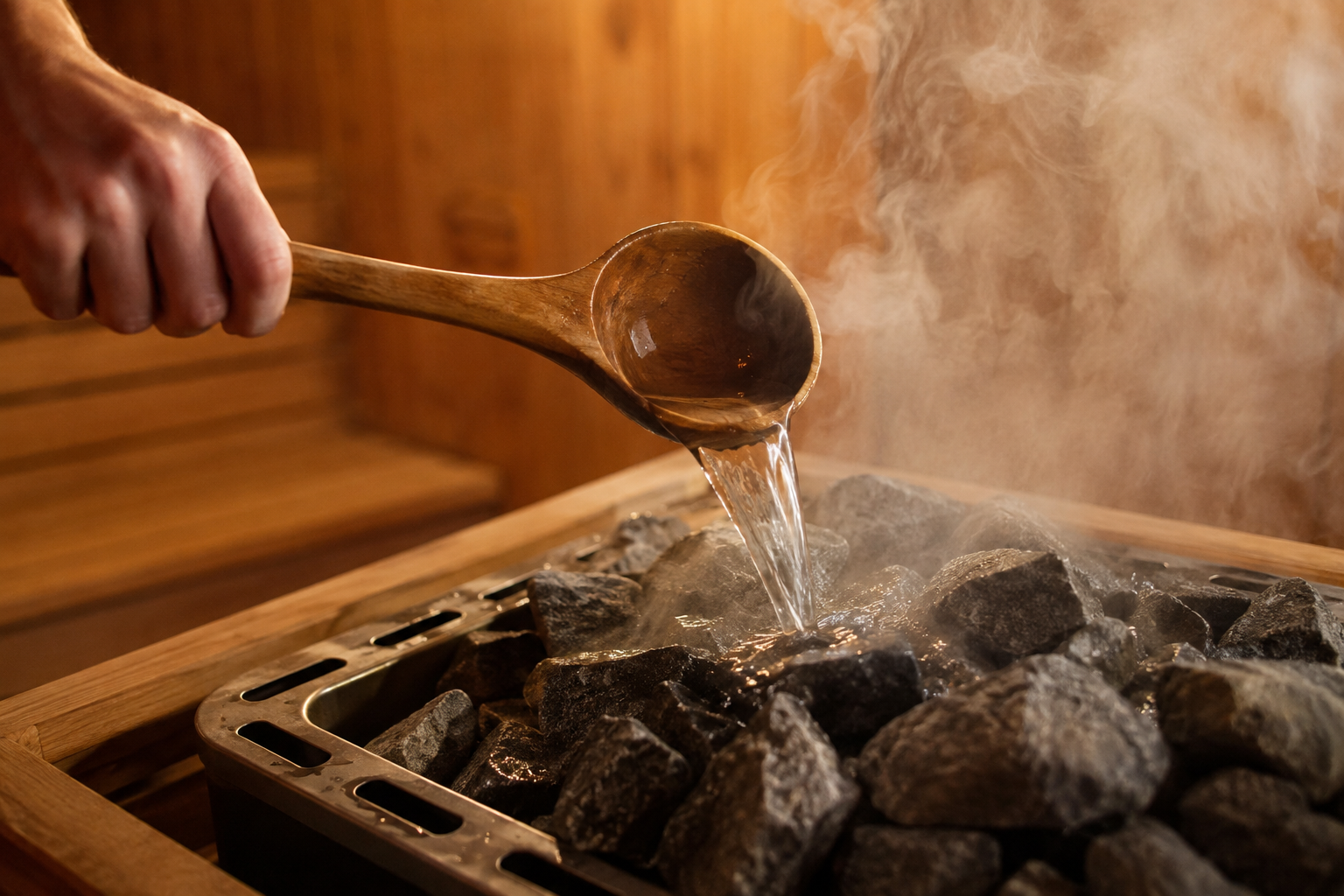
Given the finding, researchers have proposed several plausible reasons why regular sauna use might really influence brain health, though it is important to stress that these are hypotheses, not established mechanisms. The proposed pathways are reasonable but unproven.
Heart health is a leading candidate. The same Finnish research has linked frequent sauna use to better cardiovascular outcomes, and because heart health and brain health are closely intertwined, sharing many risk factors, one leading idea is that sauna bathing may protect the brain partly by protecting the heart and blood vessels, so the dementia link may run through the cardiovascular system. This is a coherent and much-discussed possibility, but it remains a proposed explanation rather than a demonstrated one.
Other mechanisms have been suggested too. Researchers have pointed to heat-stress responses, possible effects on inflammation, and the relaxation and stress reduction that regular sauna use can bring, all as potential contributors to a brain-health benefit, so several biological pathways are plausible candidates. Which, if any, of these truly accounts for the association is precisely what further research would need to establish, and none should be treated as settled.
The Limits That Matter Most
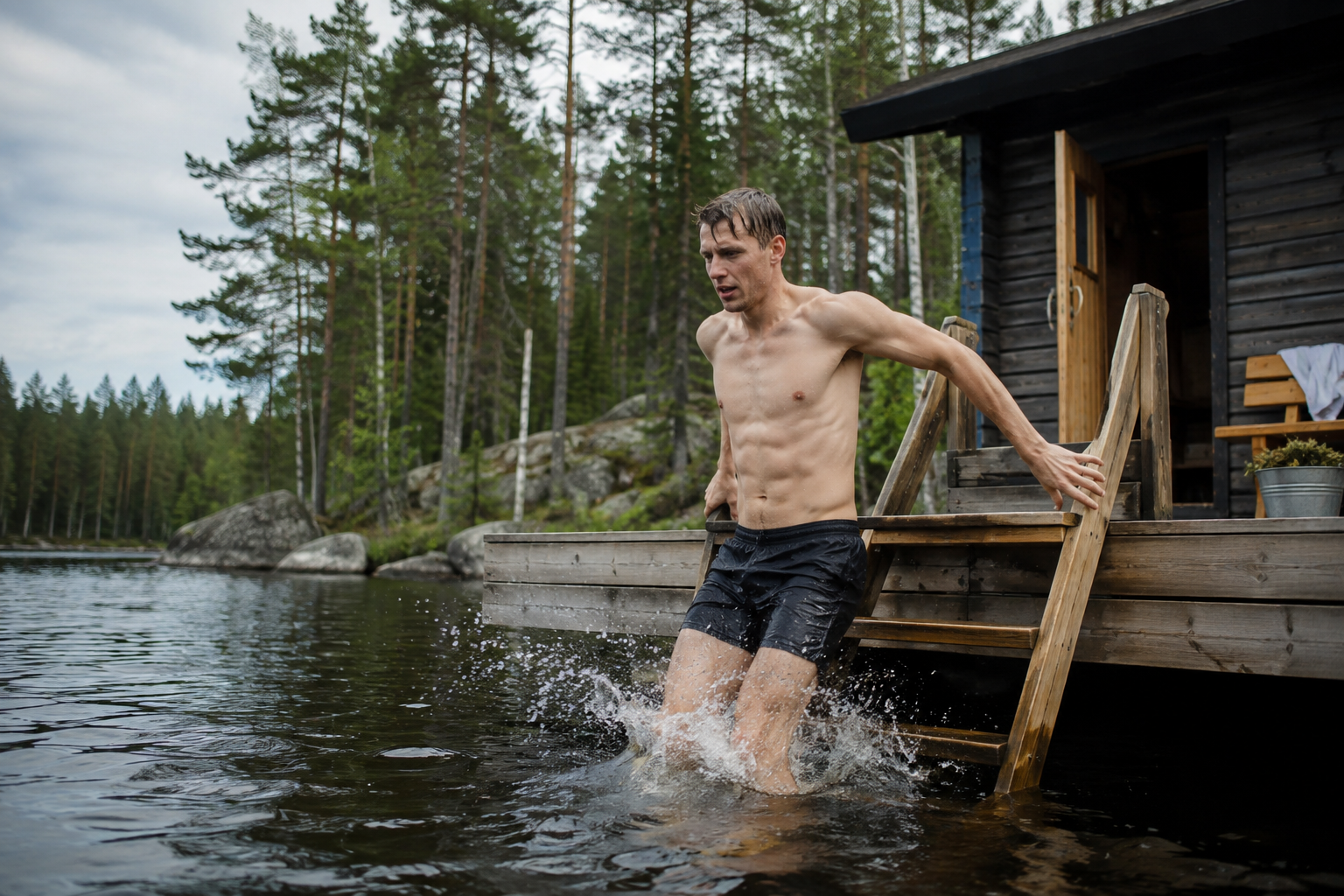
Now comes the essential counterweight, the set of limitations that keep this finding a promising lead rather than a proven prescription, because overlooking them would badly distort what the study means. These caveats are not fine print but central to a fair reading.
The population was narrow. The study looked only at middle-aged Finnish men, so its findings cannot simply be assumed to apply to women, other ages, or other countries and cultures, and the researchers themselves called for further study in broader populations, so the result is a specific finding in a specific group rather than a universal law. What holds for Finnish men may or may not hold for anyone else, and that uncertainty is real. Women’s brains and bodies differ in ways that can matter for dementia risk, other populations have different baseline health and different confounding habits, and cultures without a sauna tradition would involve people adopting the practice in very different ways. That does not make the finding wrong for other groups, only that it has not been shown to hold for them, and treating a result from one narrow population as if it were universal is one of the most common ways good research gets misused.
And lifelong Finnish habits complicate it. Because Finns typically use saunas from very early childhood, the benefit may reflect a lifetime of heat exposure rather than something a person could replicate by taking up sauna bathing later in life, so the finding may not translate into a simple intervention for adults elsewhere. Whether starting a sauna habit in midlife confers any similar benefit is simply not established. It is entirely possible that the relevant protection, if it exists at all, builds up over decades of regular heat exposure beginning in youth, in which case an adult taking up saunas later might see little of the same effect. It is equally possible that later-life sauna use helps too. The point is simply that this particular study cannot tell us, because everyone in it had been using saunas since childhood, and reading a lifelong-habit finding as a prescription for a new midlife routine goes well beyond what the evidence supports.
How to Hold the Finding Sensibly
Given both the striking result and its real limits, the sensible way to regard this study is as an intriguing and hopeful piece of evidence rather than a definitive answer or a call to action. Balance is everything here.
It is promising, not proven. The fair summary is that the study found a strong and interesting association, adjusted carefully and following a graded pattern, which makes it a genuinely worthwhile lead, while remaining an observational finding in a narrow population that cannot establish cause, so it deserves interest without overstatement. Treating it as a hopeful clue rather than a proven remedy is exactly the right posture. Overstating it risks sending people chasing a single practice as though it were a guaranteed shield against one of the most feared conditions of old age, which the evidence does not support. Dismissing it entirely, on the other hand, would ignore a large, careful, long-term study that found a real and graded association worth investigating further. The measured middle ground, curious but not credulous, is where a careful reader should sit.
And it fits a broader, gentler truth. Whatever the specific mechanism, the study is consistent with a larger and well-supported picture in which habits good for the heart and overall wellbeing tend to be good for the aging brain too, so its deeper lesson points toward the general value of a healthy, active, relaxed life rather than toward any single magic practice. That broader message is on far firmer ground than any claim about saunas alone. Decades of research converge on the idea that the heart and brain age together, and that the ordinary pillars of good health, staying active, managing blood pressure, not smoking, keeping stress in check, and maintaining social and mental engagement, are associated with better outcomes for both. A regular sauna habit, in a culture built around it, may well be one expression of that broader pattern rather than a stand-alone cure, and it is that larger, steadier body of evidence that deserves the most weight.
Reading the Sauna Study Honestly
The lasting value of this Finnish research is that it offers a fascinating, carefully conducted glimpse of a possible link between a simple lifelong habit and the health of the aging brain, striking enough to take seriously and rigorous enough to respect, while honest enough in its own limitations to warn against overreach. It is a genuine contribution to understanding, not a miracle and not a mirage.
What makes reading it correctly so important is the gap between what a headline can imply and what a study can really show. This research does not prove sauna use prevents dementia, and it cannot tell any individual the habit will protect them, but it does add a real and intriguing thread to the growing understanding of how lifestyle and brain health may be connected. Held that way, as a promising lead within a larger picture, it is exactly as valuable as it should be, and no more.
So the next time you see the claim that Finnish saunas are linked to lower dementia risk, you will know that it rests on a real and impressive study, and also that the link is an association drawn from a specific population, not a proven, universal cure. The finding is a genuine and hopeful one, worth knowing and worth watching as science digs deeper, and best understood as part of the broader and steadier truth that what is good for the body tends, over a lifetime, to be good for the mind as well.

About the Author: Ruben, co-founder of Gamintraveler.com since 2014, is a seasoned traveler from Spain who has explored over 100 countries since 2009. Known for his extensive travel adventures across South America, Europe, the US, Australia, New Zealand, Asia, and Africa, Ruben combines his passion for adventurous yet sustainable living with his love for cycling, highlighted by his remarkable 5-month bicycle journey from Spain to Norway. He currently resides in Spain, where he continues sharing his travel experiences with his partner, Rachel, and their son, Han.