
An American moves to Europe, loads the European washing machine for the very first time, presses start, and watches in growing alarm as the display announces that the wash will take two hours and forty minutes. Back home in the States, a full load of laundry was reliably done in thirty or forty minutes. Something, surely, must be wrong. The machine is broken, or set incorrectly, or stuck. And so begins one of the most common and most thoroughly misguided panics of the whole expat experience, because the long cycle is not a malfunction at all, and never was. That European washing machine is behaving exactly as it was designed to, running a cycle that takes hours entirely on purpose, for reasons that are not a flaw but the whole point. What looks like a broken machine is in fact a triumph of a different set of priorities. The panic is so universal among newcomers that it has become a small rite of passage, the moment an American first confronts a European appliance and discovers that the assumptions they brought with them do not apply. It is a tiny collision of two philosophies, playing out in a laundry room, and it repeats itself in kitchen after kitchen across the continent as new arrivals meet their first three-hour wash.
The confusion is completely understandable, because the difference in cycle times between American and European machines is enormous, and nothing in a typical American’s experience prepares them for a wash that runs longer than a feature-length movie, and then some. But once you understand why European machines take so long, the marathon cycle stops looking like a defect and starts looking instead like clever, deliberate engineering aimed at goals an American machine largely ignores. The length is the feature, not the fault, and understanding that changes how you see the humble washing machine entirely.
Here is why European washing machines run such long cycles, the engineering logic behind each of the reasons, why that logic produces better efficiency rather than worse cleaning, and the honest trade-offs involved. This is a look at the technology and the thinking behind it rather than a verdict on which approach is better, and both systems have their merits, but understanding the deliberate logic of the long European cycle is the surest cure for the newcomer’s mistaken conviction that something has gone wrong.
The Panic That Greets Every Newcomer
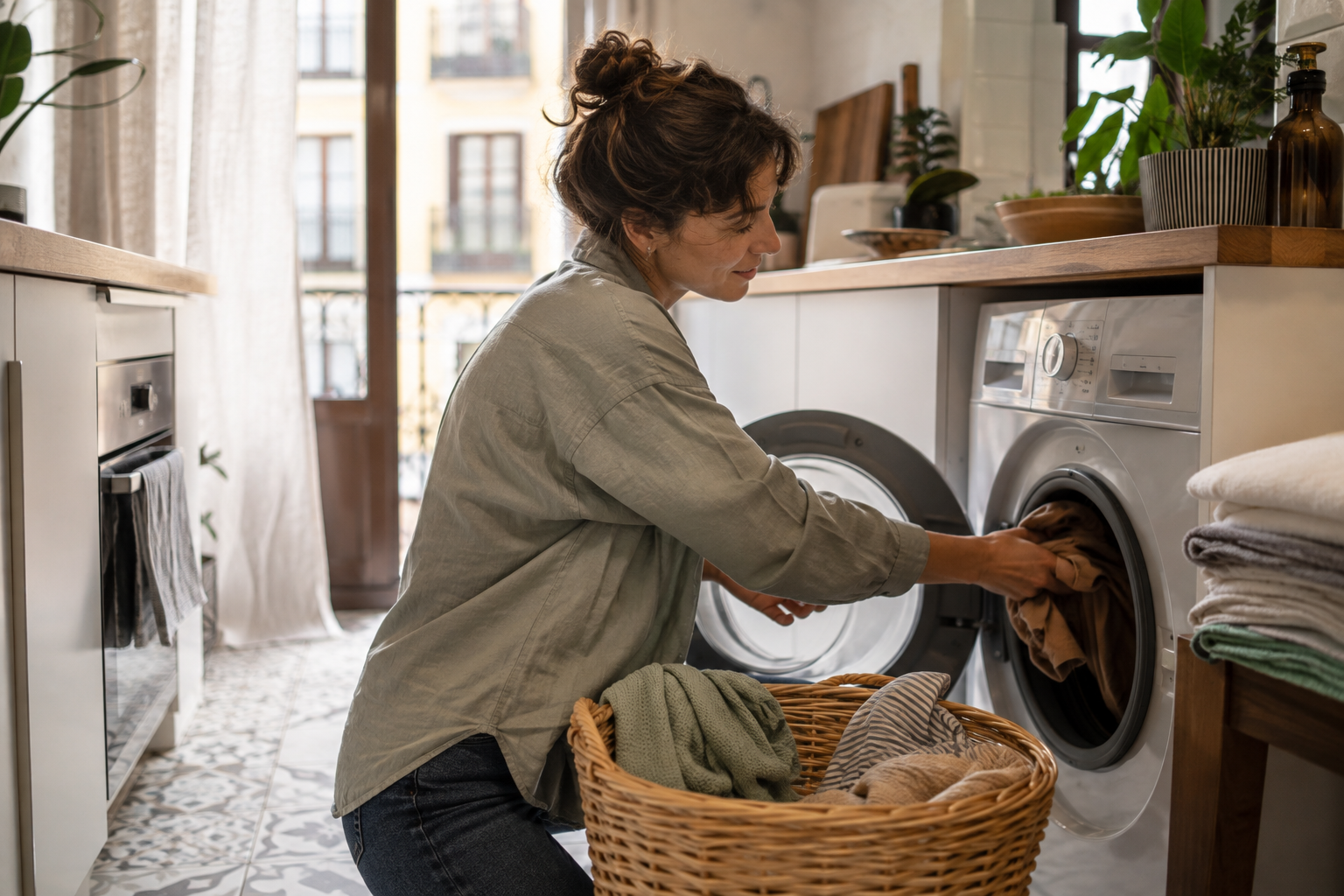
To appreciate the explanation, it helps to start with just how jarring the difference is, because the gap in cycle times between the two continents is so large that disbelief is the natural first reaction. This is not a matter of a few extra minutes.
The contrast is stark. Where a typical American washing machine might finish a load in around half an hour to forty-five minutes, a typical European machine routinely takes two to three hours for a comparable wash, so the European cycle can run four or five times longer than what an American is used to. To someone raised on quick American washes, a three-hour laundry cycle for a single ordinary load sounds not just slow but faintly impossible, the sort of number that has to be a mistake.
This is why the malfunction assumption is so common. Faced with a machine that seems to run endlessly, a newcomer’s natural conclusion is that it must be broken, jammed, or set to some strange program by mistake, so they check the settings, restart the cycle, or call for help, none of which is necessary. The machine is working perfectly. It is simply doing something quite different from what its American cousin does, and doing it on purpose.
Reason One, the Machine Heats Its Own Water
The single biggest reason for the long cycle lies in a fundamental difference in how the two machines get their hot water, and it is the key that unlocks the whole mystery. European machines make their own heat, and making heat takes time.
The plumbing tells the story. Most American washing machines connect to both a hot and a cold water supply, drawing pre-heated hot water straight from the home’s water heater, whereas the typical European machine connects only to a cold water line and heats the water itself, using a built-in electric heating element inside the machine, so a European wash must pause to warm its own water from cold. That heating process, bringing a drum full of cold water up to temperature internally, simply takes time that an American machine, fed ready-made hot water, never needs to spend.
This one difference accounts for much of the gap. Because the European machine has to generate its own heat rather than importing it, a significant chunk of the long cycle is spent simply warming the water to the temperature the wash requires, so what an American machine skips entirely becomes a built-in stage of every European wash. It is not wasted time but working time, the machine doing a job the American version quietly outsources to the water heater down the hall. This also explains a related surprise many newcomers meet, which is that European machines often have no hot water connection to attach at all, only a single cold inlet. Plumbers and expats alike sometimes puzzle over the missing hot tap, until they realize the machine was never meant to receive hot water in the first place. Everything about the design assumes the machine will make its own heat from cold.
Reason Two, Less Heat for Longer Saves Energy
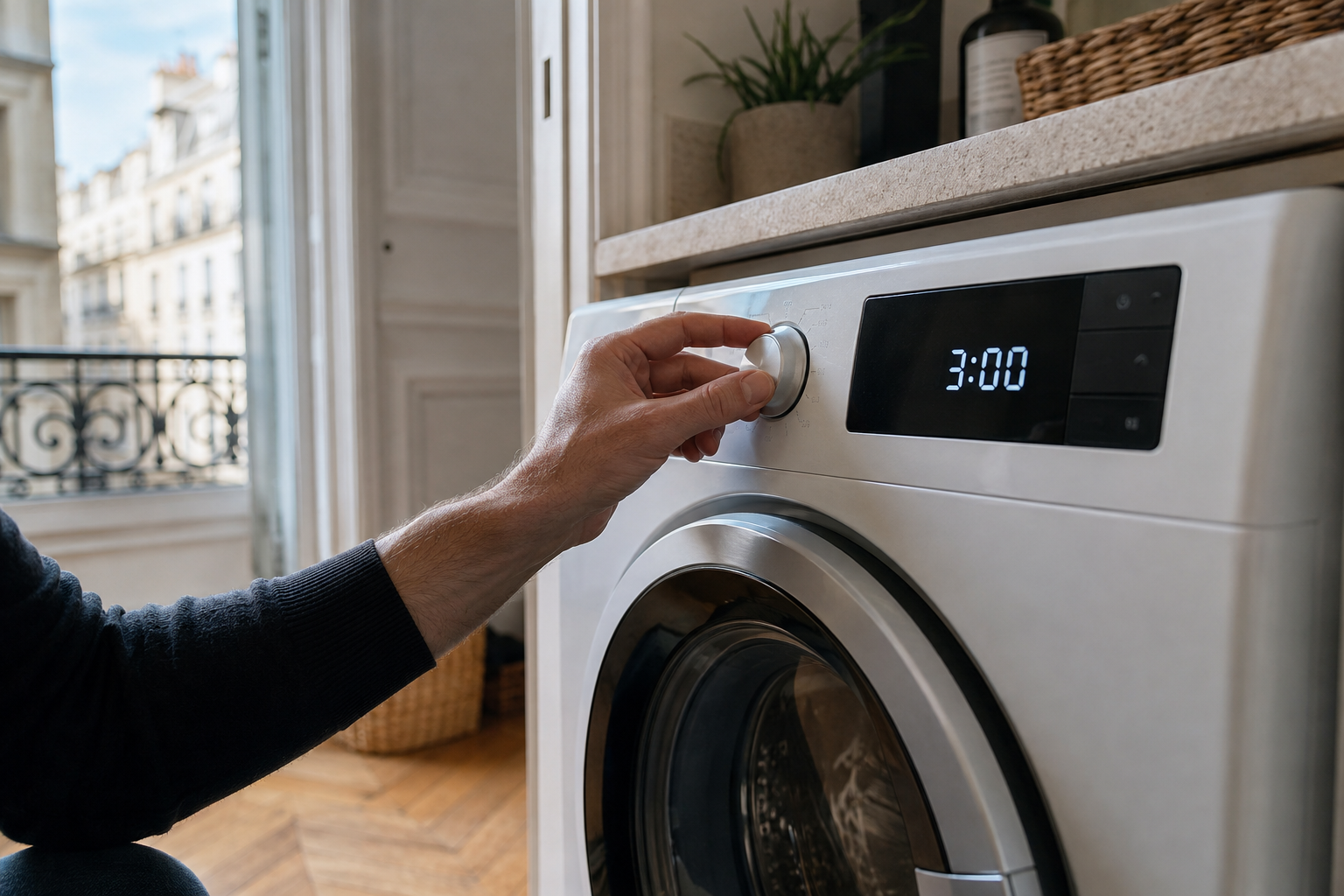
Here is the piece of logic that most surprises people, and that flips the whole intuition about long cycles on its head, because it turns out the long cycle is not the energy-hungry option but the energy-saving one. This is the counterintuitive heart of the matter.
The physics is illuminating. In a washing machine, the overwhelming majority of the energy, around ninety percent, goes to heating the water, not spinning the drum, so the way to save energy is above all to use less heat, and the clever trick is to wash at a lower temperature for a longer time, achieving the same cleaning with cooler water by simply giving it longer to work. Less heat but more time gets the clothes just as clean while using markedly less electricity.
This is why the long eco cycle beats the quick one on energy. Counterintuitively, the lengthy eco program uses less electricity than a short, hot, quick wash, because the money and energy are in the heating, not the running time, so the three-hour eco cycle that looks so wasteful is actually the frugal choice. The secret of efficiency is not in the clock but in the thermometer, and the long cycle is long precisely so that it can be cool, and cool precisely so that it can be efficient. Once this clicks, the whole thing stops feeling like a paradox. The instinct that a longer-running appliance must burn more power is perfectly reasonable for most machines, but a washing machine is unusual in that its main energy cost is heat rather than motion. Extend the running time, drop the temperature, and you trade a little patience for a real reduction in the energy used, which is exactly the bargain the European machine is built to strike.
Reason Three, European Rules Reward the Long Cycle

Behind the engineering sits a whole regulatory framework that actively pushes manufacturers toward these long, efficient cycles, which explains why the design is so universal across European machines. The rules make efficiency the goal, and efficiency makes the cycle long.
The energy label drives everything. European washing machines carry a prominent energy efficiency label, and the ratings are measured using the machine’s most efficient program, which is precisely the long eco cycle, so manufacturers optimize that headline cycle for maximum efficiency in order to earn the best possible rating. The cycle that scores well on the label is the long one, and the label matters enormously to buyers, so the long cycle becomes the machine’s showcase program.
This reflects a deliberate European priority. The whole framework of European appliance regulation is built around minimizing energy and water use, reflecting the region’s high energy costs and strong environmental commitments, so the long cycle is not an accident of design but the intended result of rules that treat efficiency as paramount. What an American might see as a strange quirk is in fact the direct expression of a society that decided saving energy was worth waiting a few hours for. The label itself has become a remarkably powerful force in the European market, prominently displayed on every machine and closely read by buyers, so a manufacturer that cannot show a strong rating is at a real disadvantage. That competitive pressure pushes the whole industry in the same direction, toward ever longer and cooler eco cycles that score well on the test, which is why the phenomenon is so consistent across brands and countries rather than the choice of any single maker.
Reason Four, Small Drums and Little Water

Two further design features reinforce the long cycle and reveal how differently European machines approach the basic task of washing, both of them again rooted in efficiency. These machines are built to sip resources, not gulp them.
Water use is the first. European front-loaders use far less water than American top-loaders many newcomers grew up with, tumbling clothes through a little water repeatedly rather than filling a large tub, so they clean using a fraction of the water but need more time to do it thoroughly. Getting clothes clean in very little water is a slower process than sloshing them around in a full tub, and the extra time is the price of the water savings.
Size is the second. European machines typically have smaller drums than their American counterparts, reflecting smaller homes and a different sense of scale, and combined with gentler tumbling action this means a wash is thorough and easy on clothes but unhurried. The smaller, gentler European machine treats laundry as something to be done carefully and economically rather than quickly and in bulk, which is entirely in keeping with the rest of its philosophy. There is a knock-on benefit worth noting, which is that the gentler tumbling and lower temperatures are also kinder to clothes, causing less shrinkage, fading and wear over time. So the same design choices that save energy and water tend to make garments last longer too, a quiet third dividend on top of the two the machine was primarily built to deliver.
The Honest Trade-Offs
It is worth acknowledging that the long cycle is not purely virtuous, and that there are real debates and downsides to the European approach, so it is not simply a case of enlightened Europe versus wasteful America. Both systems involve genuine trade-offs.
The time cost is real. However efficient the long cycle is, it does mean laundry takes far longer, which can be a real inconvenience for a busy household with a lot of washing to get through, so the energy savings come at a real cost in time and convenience that not everyone welcomes. There is even evidence that many Europeans faced with three-hour eco cycles simply avoid them for quicker programs, which quietly undercuts the whole efficiency goal. Researchers and regulators have noticed this gap between the efficient programs machines offer and the faster ones people really choose, and it has become a real headache for energy policy, since a machine is only as efficient as the cycle its owner is willing to run. The long eco cycle may be the frugal choice on paper, but a cycle nobody uses saves nothing at all.
There are technical debates, too. Some argue that heating water externally, especially with solar, could be more efficient than making the machine heat it from cold, and quicker cycles do exist for lighter loads, while the gap between American and European machines is slowly narrowing as high-efficiency designs spread, so the picture is not static or one-sided. The long cycle is a sensible answer to European priorities, but it is an answer with costs, and reasonable people weigh those costs differently.
Not Broken, Just Different
The lasting lesson of the European washing machine is that what looks like a malfunction to an outsider is very often a deliberate design serving priorities that outsider simply does not share, and that the three-hour cycle is a perfect small example, engineered on purpose to save energy and water rather than time. The machine is not failing to be fast. It is succeeding at being efficient, which is a different goal entirely.
What makes this worth understanding, beyond calming the panicked newcomer, is how neatly it captures a genuine difference in values between two ways of doing things. The American machine optimizes for speed, the European one for energy and water efficiency, and each is a rational response to its own priorities and constraints, so neither is broken and neither is simply better. The long cycle is what efficiency looks like when a society decides to prioritize it, patiently, a few hours at a time. There is something almost characterful in that patience, a willingness to wait built right into an everyday machine, and it tells you as much about the place as any grand policy does. The washing machine, of all things, turns out to be a small window onto a whole way of weighing convenience against consequence.
So the next time you stand before a European washing machine watching it count down from three hours and feel the old suspicion that something must be wrong, relax and let it run. Nothing is broken. The machine is patiently heating its own water, washing cool to save energy, sipping rather than gulping its water, and earning its efficiency rating exactly as designed, all of it on purpose and all of it working perfectly. Understand the logic, and the long cycle transforms from a maddening malfunction into a quietly impressive piece of engineering, doing precisely what it was built to do.

About the Author: Ruben, co-founder of Gamintraveler.com since 2014, is a seasoned traveler from Spain who has explored over 100 countries since 2009. Known for his extensive travel adventures across South America, Europe, the US, Australia, New Zealand, Asia, and Africa, Ruben combines his passion for adventurous yet sustainable living with his love for cycling, highlighted by his remarkable 5-month bicycle journey from Spain to Norway. He currently resides in Spain, where he continues sharing his travel experiences with his partner, Rachel, and their son, Han.