
Every morning in hotels across Europe, a quiet ritual unfolds that looks, to the untrained eye, like a simple free-for-all. There is a long table laden with food, plates stacked at one end, and guests helping themselves. But beneath that apparent simplicity runs a set of unspoken rules, a whole etiquette of the breakfast buffet that European travelers absorb without ever being taught and that visitors from elsewhere sometimes trample without realizing it. The European hotel breakfast is not a buffet in the American sense of unlimited abundance to be conquered, but something closer to a shared table with a social contract attached, and understanding that contract is the difference between fitting in gracefully and marking yourself, morning after morning, as someone who does not know the rules.
The heart of the matter is a different philosophy of what the buffet is for. Where one tradition treats a spread of food as a challenge to extract maximum value from, the European sensibility treats it as a communal resource to be shared considerately, taken in reasonable amounts, and enjoyed at a civilized pace, so that the same physical buffet carries an entirely different set of expectations depending on where you are. The rules are rarely posted and never announced, which is exactly why breaking them is so easy and so quietly noticeable.
Here are the unspoken rules of the European hotel breakfast, the etiquette of the buffet as a social contract, from how much to take to how to treat the shared space to the small courtesies that mark you as a considerate guest. This is a look at dining custom and gentle guidance rather than rigid law, and hotels and countries vary, but understanding the spirit behind these conventions turns a potential source of awkwardness into an easy, pleasant part of the traveling day.
The Buffet Is Not a Challenge

The first and most important rule is a matter of mindset: the European breakfast buffet is not an all-you-can-eat contest to be won, but a shared meal to be taken from reasonably. The abundance on the table is not an invitation to load your plate as high as possible, but simply a range of options from which to choose a normal breakfast, and treating it otherwise misreads the whole situation.
This is where the cultural gap opens most widely. Visitors accustomed to the American idea of the buffet, where piling a plate impressively high is almost the point and getting your money’s worth means eating as much as you can, can find themselves badly out of step at a European breakfast, where a mountainous plate reads not as savvy but as greedy. The same behavior that seems shrewd in one setting looks graceless in the other. None of this is about eating less for its own sake, and no one is watching your appetite. A guest who is truly hungry is entirely welcome to eat a large and satisfying breakfast, returning to the table as many times as they please. The distinction is between eating well, which is encouraged, and stockpiling on the plate, which is not, and the line between them is really about waste and appearance rather than quantity consumed. You may eat as much as you like, provided you eat what you take.
The underlying principle is moderation and consideration. A European breakfast plate tends to be a reasonable, normal-sized breakfast, taken with the awareness that the food is shared and that one can always go back for more, so restraint is not deprivation but simply good manners. The buffet rewards the guest who takes what they will eat, not the one who treats the table as a personal stockpile.
Take Only What You Will Eat
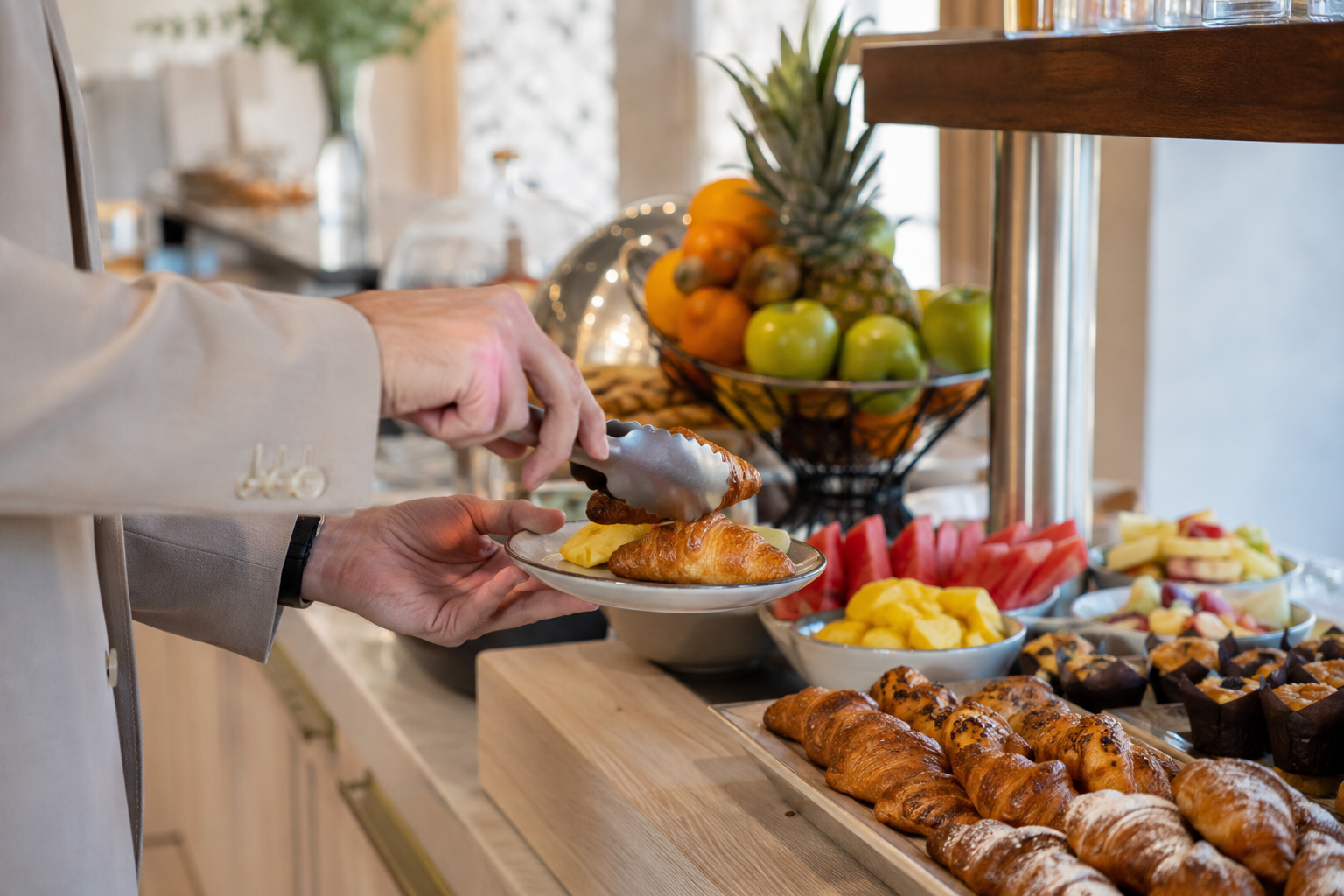
Flowing directly from that mindset is the cardinal practical rule of the buffet, which is to take only what you will really eat, going back for more as needed rather than overloading your plate at once. This single habit sits at the center of buffet etiquette everywhere, and it is taken seriously in Europe.
The reasons are both practical and moral. Overloading a plate and leaving food uneaten is seen as wasteful and inconsiderate, since the food left on your plate is food taken from the shared supply and thrown away, so a plate returned with piles of untouched food is a small breach of the contract. Waste, in a culture that often prizes not wasting food, carries a real if unspoken disapproval.
The elegant solution is the return trip. Rather than trying to carry an entire breakfast in one towering load, the considerate guest takes a modest plate, eats it, and goes back for whatever else they want, which keeps portions sensible and waste minimal while costing nothing but a few steps. There is no prize for assembling everything in a single journey, and every reason to make two or three relaxed trips instead.
Never Pack Food for Later
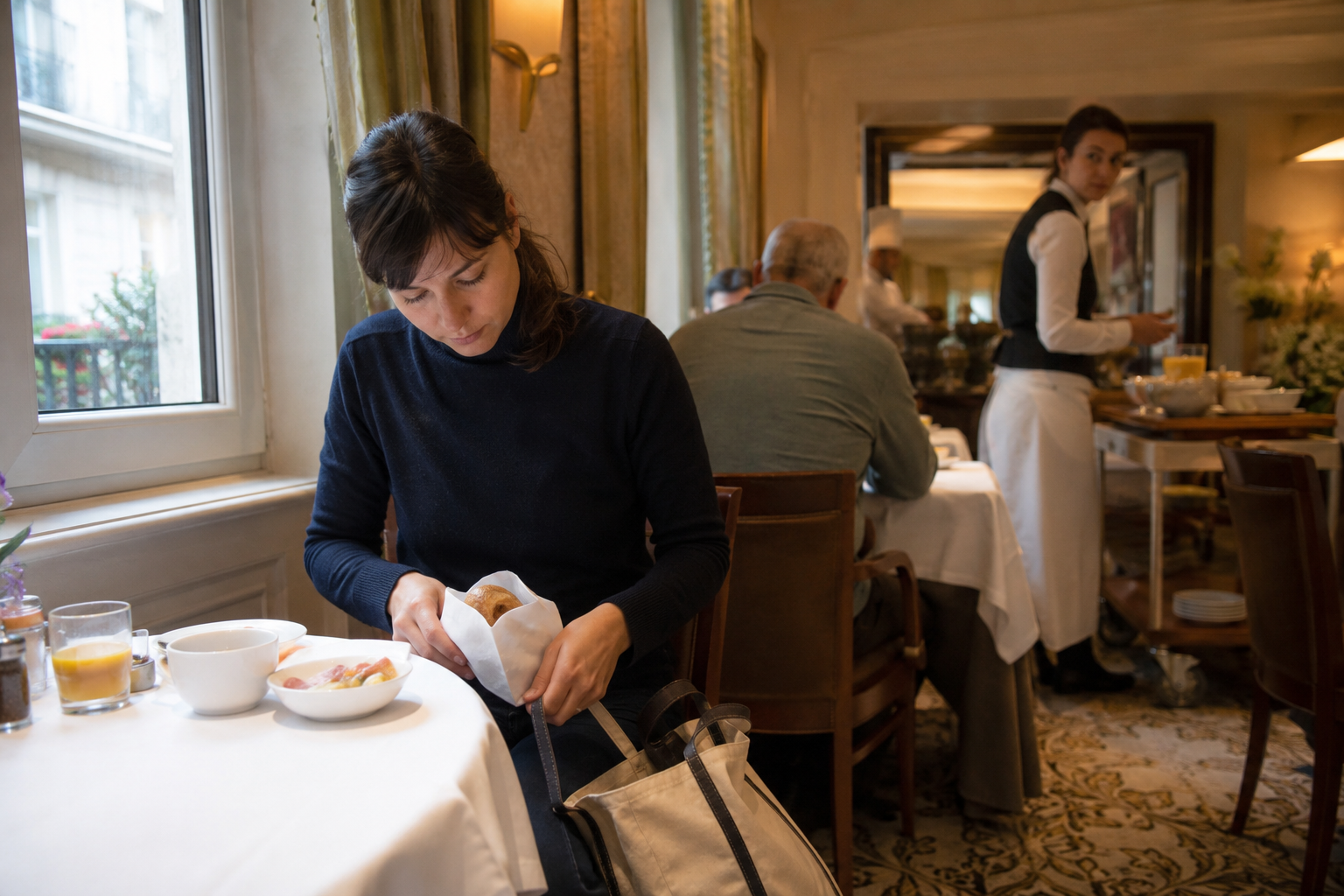
Here is one of the rules most frequently and most visibly broken by unaware guests, and one of the clearest lines in the whole social contract: the breakfast buffet is for eating there, not a supply depot for food to take away. Wrapping up rolls, fruit, or cold cuts to slip into a bag for lunch is a genuine breach of etiquette, and a conspicuous one.
The distinction matters enormously. Eating a full and satisfying breakfast at the buffet is entirely the point and completely encouraged, but discreetly assembling a packed lunch to carry out of the room crosses a clear line, because the food is provided for breakfast consumed on the premises, not as free provisions for the day. Staff notice, other guests notice, and it reads unmistakably as taking advantage.
There is a small, sometimes tolerated exception worth knowing. Some hotels do not mind a guest taking a single piece of fruit for the road, and a few even offer a way to make a packed breakfast if you must leave early, but the safe assumption is that filling a bag with food is not acceptable unless the hotel has explicitly said so, and when in doubt, the food stays in the dining room. Asking first, on the rare occasion it matters, is always better than quietly loading a napkin. It is worth understanding why this particular rule provokes such strong feeling, because it can seem harmless to the person doing it. Taking food away converts a shared morning meal into free groceries, shifting a cost onto the hotel that the arrangement was never meant to cover, and it is precisely the visibility of the act, the bag being filled in full view of other paying guests, that makes it feel like a breach rather than a kindness to oneself. The breakfast is generous on the understanding that it is eaten there.
Mind the Shared Space
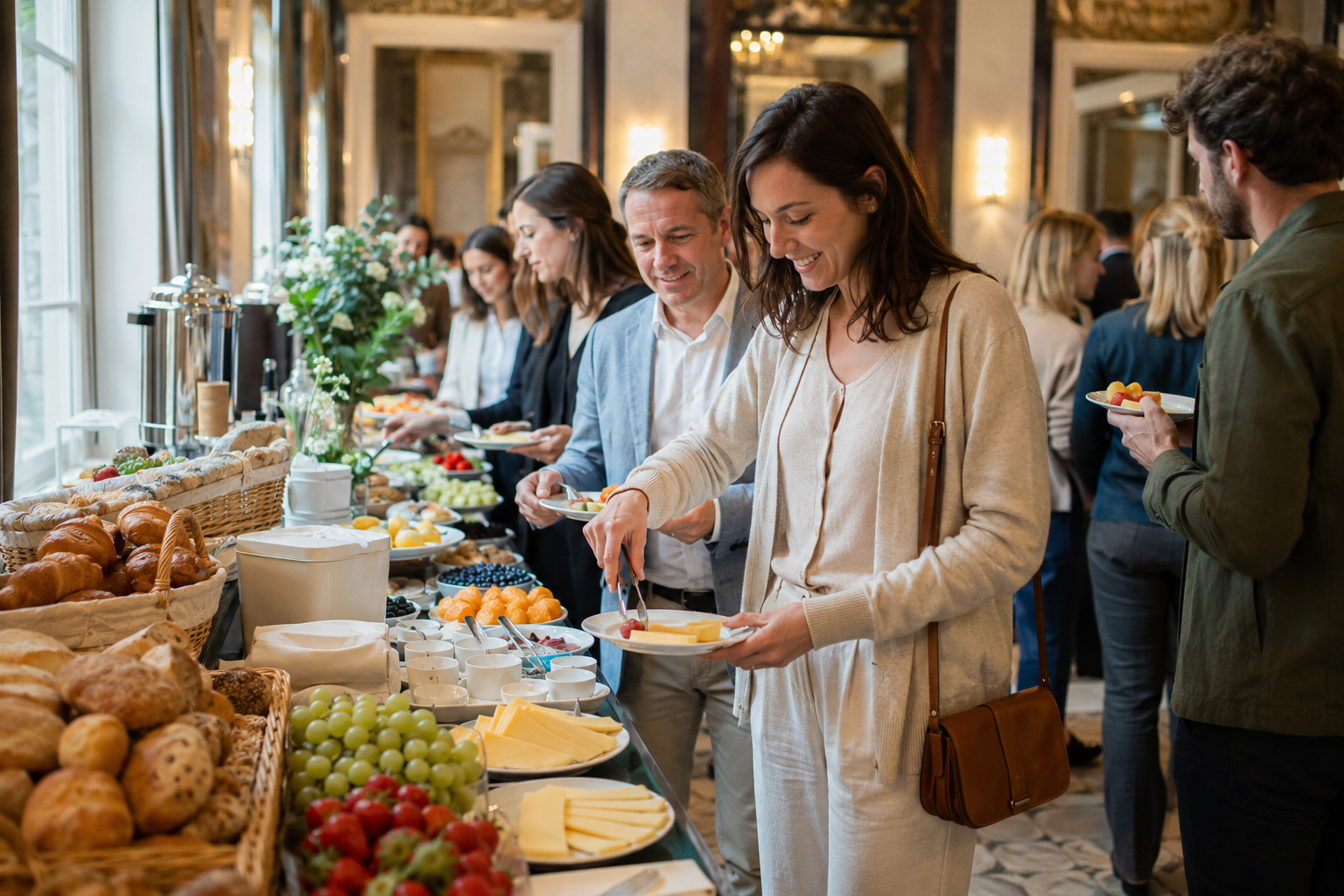
Beyond how much you take and where it goes, the buffet carries an etiquette of the shared space itself, a set of small courtesies around moving through it that keep the whole thing running smoothly for everyone. The core idea is simple awareness that many people are using the same table and the same serving implements, and behaving accordingly.
Several specific habits follow. Using the serving utensils provided, not your own fork or fingers, not touching food you do not intend to take, keeping the queue moving rather than lingering and blocking the table while you deliberate, and serving yourself cleanly without making a mess are all part of respecting the communal nature of the buffet, and all are noticed when neglected. These are the hygiene and flow courtesies that a shared table quietly demands.
The spirit behind them is consideration for the next person. Every choice at the buffet is made in the presence of others waiting to use the same space, so keeping your handling clean, your pace reasonable, and your presence at the table brief is a way of respecting everyone else’s turn, which is the essence of the whole social contract. The buffet works only if everyone treats it as shared, and falls apart the moment someone treats it as theirs alone.
The Table Is Yours, and the Pace Is Slow

The European breakfast also has its rhythms at the table, distinct from the grab-and-go speed common elsewhere, and understanding them helps you settle in properly. Breakfast in much of Europe is meant to be a relatively unhurried, seated affair, enjoyed at the table rather than rushed, so there is no need to eat as though you are in a race.
This unhurried pace shapes the whole experience. Guests are expected to sit at a table and eat there in a civilized manner, returning to the buffet as needed, rather than treating breakfast as a hurried refueling, so lingering a little over coffee and conversation is entirely normal and welcome. The morning meal is part of the pleasure of the day, not merely a task to complete before it begins. For travelers used to grabbing a coffee and a pastry on the move, this can take a small adjustment, but it is a pleasant one to make. Sitting down properly to breakfast, even for twenty unhurried minutes, sets a gentler tone for the day and is part of what makes a European morning feel different. The buffet is not a pit stop but a small daily ceremony, and leaning into that rhythm rather than resisting it is one of the quiet pleasures of traveling there.
There is also a gentle etiquette around the table itself. Once you have chosen a table it is generally understood to be yours for the duration, so you can leave your things and return to the buffet without losing your seat, but you should not commandeer a large table for one when the room is busy or leave belongings to hold tables you are not using, which are small inconsiderations in a shared room. Claiming a reasonable spot and using it graciously is all the situation asks.
Read the Room and the Hotel
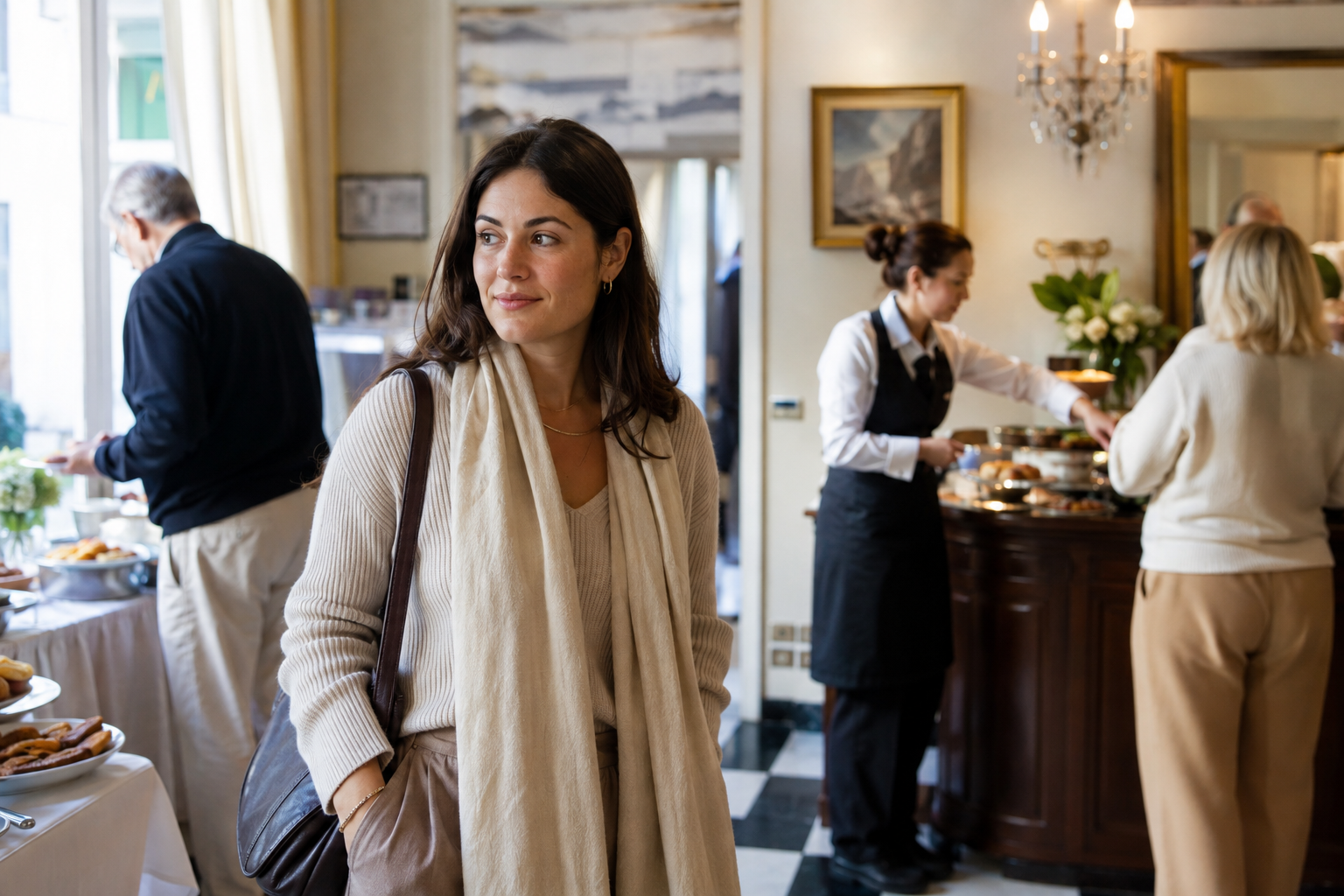
Because customs vary, part of the unspoken etiquette is simply paying attention to the particular place you are in, since the specifics shift from country to country and hotel to hotel. What is normal at a modest guesthouse differs from a grand hotel, and habits differ across European countries, so the considerate guest watches and adapts rather than assuming one rule fits all.
Observation is the traveler’s best tool here. Glancing at how the locals and regular guests handle the buffet, noticing whether staff serve certain items or guests help themselves, and following the evident norms of the place will keep you on the right side of etiquette far better than any rigid checklist, so a little attentiveness goes a long way. The rules are written in the behavior of the room, for anyone willing to read them.
This adaptability is itself part of the contract. The willingness to observe and match the customs of the place you are in, rather than importing your own habits wholesale, is the mark of a considerate traveler in any setting, and the breakfast buffet is simply a daily, concentrated example of that larger courtesy. Fitting in is less about memorizing rules than about paying respectful attention.
Why the Rules Exist
It helps, finally, to understand that these unspoken rules are not arbitrary fussiness but expressions of a coherent underlying value, which is the treatment of shared resources with consideration for others. Every one of the buffet’s conventions, from taking modest portions to not packing food away to keeping the space clean, flows from the single idea that the buffet is a commons to be shared fairly rather than exploited individually.
Seen this way, the etiquette makes complete sense. The rules exist because a buffet only works well when everyone exercises a little restraint and consideration, taking their fair share, minimizing waste, and respecting the next person, so the conventions are simply what makes a communal resource function gracefully. They are less about propriety for its own sake than about the practical and moral logic of sharing.
This is why breaking the rules grates even when no one says anything. Behavior that treats the shared buffet as a personal opportunity, hoarding, wasting, or packing food away, violates the implicit agreement that makes the whole arrangement pleasant, which is why it draws quiet disapproval even in the absence of any posted rule or spoken rebuke. The social contract is real precisely because everyone else is keeping it.
Keeping the Contract
The lasting insight of the European breakfast buffet is that it is a small, daily lesson in the etiquette of shared things, a low-stakes arena in which the difference between the considerate and the oblivious guest is written plainly for anyone to read. The rules are never posted because they do not need to be, resting instead on a shared understanding that the abundance on the table is a common resource to be enjoyed thoughtfully rather than conquered.
What makes learning this etiquette worthwhile is how easily it turns a potential source of daily awkwardness into a pleasant, unremarkable part of travel. Take a sensible plate, eat it at your table, go back for more if you like, leave the food you will not eat and the food you cannot carry, keep the shared space clean, and settle into the unhurried pace, and you will move through every European breakfast room as someone who plainly belongs there. The contract, once understood, is effortless to keep.
So the next time you come down to a European hotel breakfast and find that long, laden table waiting, resist the instinct to treat it as a conquest and step into the quiet social contract instead. Take what you will eat, enjoy it unhurried at your table, leave the buffet as considerate for the next guest as you found it, and carry nothing away but a good breakfast well enjoyed. Do that, and you will have understood something that no sign will ever tell you, that the buffet was never really about the food, but about how a room full of strangers agrees to share.

About the Author: Ruben, co-founder of Gamintraveler.com since 2014, is a seasoned traveler from Spain who has explored over 100 countries since 2009. Known for his extensive travel adventures across South America, Europe, the US, Australia, New Zealand, Asia, and Africa, Ruben combines his passion for adventurous yet sustainable living with his love for cycling, highlighted by his remarkable 5-month bicycle journey from Spain to Norway. He currently resides in Spain, where he continues sharing his travel experiences with his partner, Rachel, and their son, Han.