
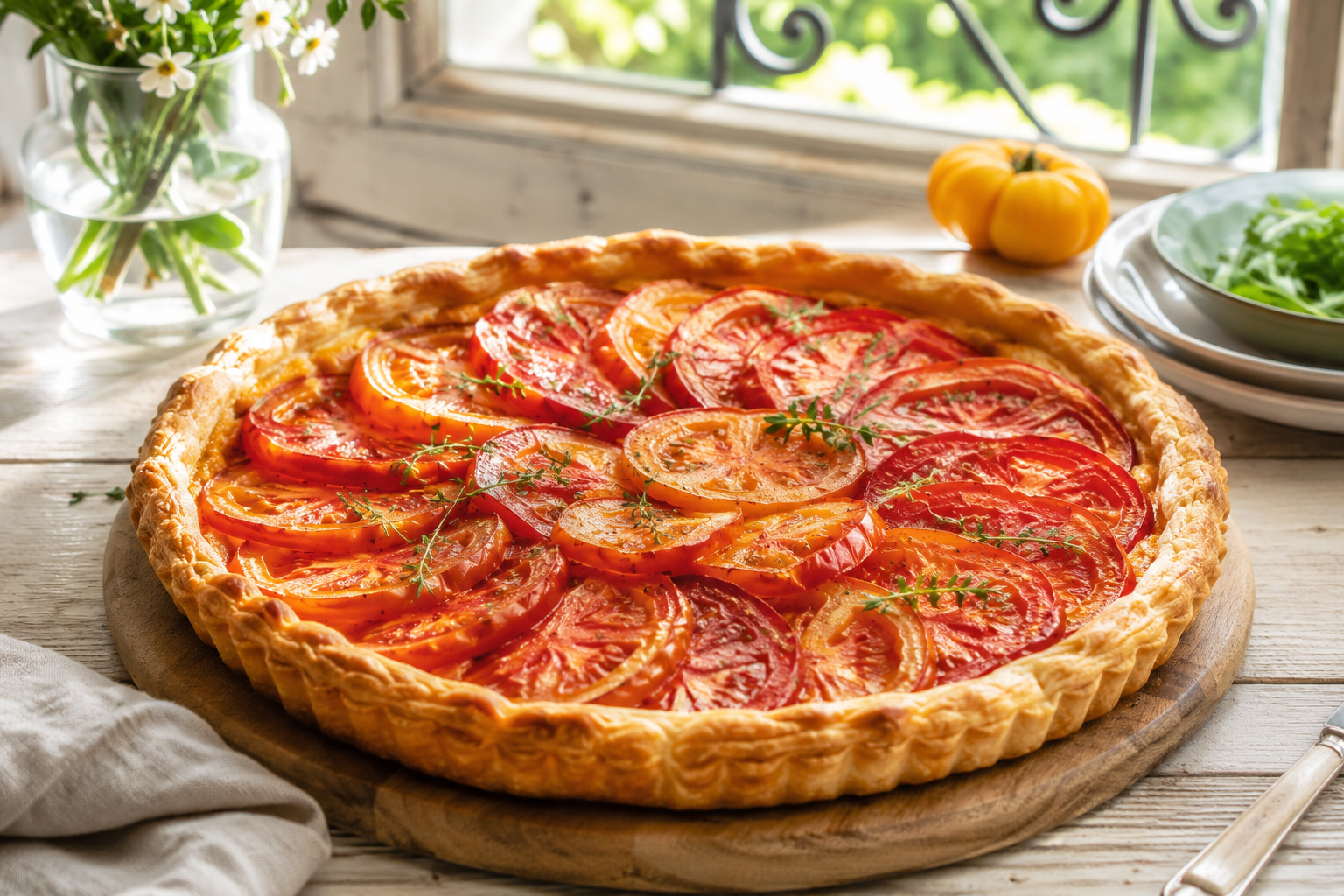
There is a certain kind of dish that makes you look like a far better cook than you are, and the French tomato tart is the finest example I know. Set it on the table, golden and glistening, with its concentric rings of ripe tomatoes on a puff of flaky pastry, and everyone assumes you spent the afternoon on it. In truth, you spent about fifteen minutes of real work, and the oven did the rest. This is the tarte à la tomate, a beloved summer staple of the French home kitchen, and it is one of those rare recipes that delivers a truly impressive result for almost no effort, provided you know its one simple secret and one small trick.
The beauty of this tart is that it is built almost entirely from shortcuts that happen to be authentic. The French themselves reach for store-bought puff pastry, the tomatoes need no cooking before they go on, and the whole thing comes together with a few pantry staples and a handful of ripe tomatoes, so there is nothing here to intimidate even a nervous cook. What transforms these humble parts into something special is a single, slightly unexpected ingredient hidden beneath the tomatoes, and a small preparatory step that separates a soggy disappointment from a crisp, golden triumph.
Here is what makes the French tomato tart so special, the secret ingredient that defines it, the one trick that guarantees success, and exactly how to make it in fifteen minutes of hands-on work. There is a real recipe below, the classic French method, so you can make it the next time good tomatoes are in season. This is the ultimate showpiece for a summer table, a dish that tastes like the south of France and looks like a labor of love, while asking almost nothing of you in return.
The Secret Beneath the Tomatoes
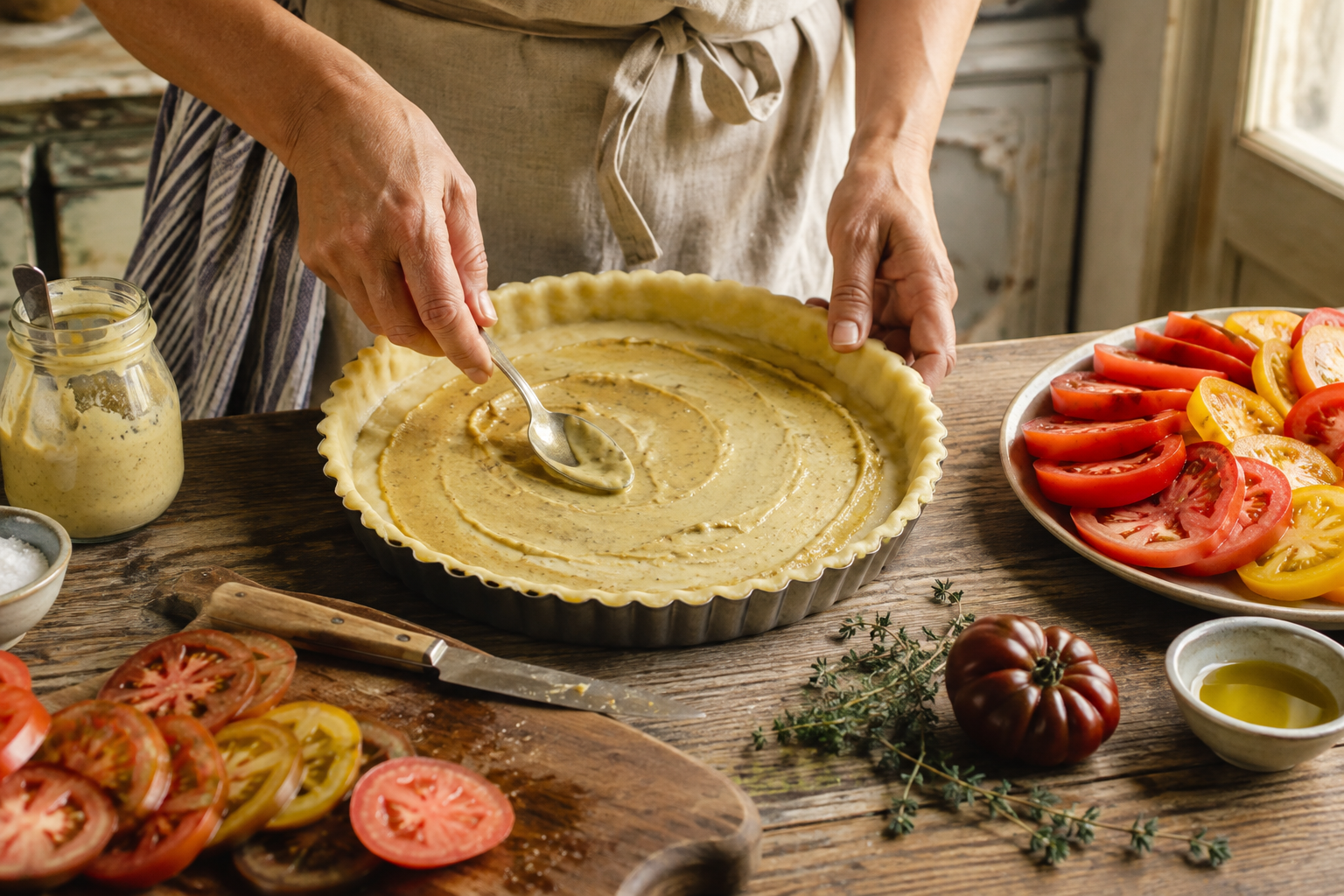
The single thing that makes a French tomato tart distinctly French, and distinctly delicious, is a layer most people would never guess is there, spread invisibly beneath the tomatoes. That secret is Dijon mustard, smeared over the pastry base before anything else goes on, and it is the ingredient that elevates the whole tart from a simple tomato pastry into something with real depth and character.
The reason it works so well is a matter of balance. Ripe summer tomatoes are sweet, juicy and mild, and the sharp, tangy bite of Dijon mustard is the perfect foil for them, cutting their sweetness and adding a savory, piquant complexity that plain tomatoes on pastry would entirely lack, so the mustard and tomato together are a real match made in heaven. It is the kind of pairing that seems surprising until you taste it, at which point it seems obvious. This is the signature move of a great deal of French cooking, the well-chosen sharp note that keeps a rich or sweet dish from becoming cloying. A squeeze of lemon on butter, a cornichon beside a pâté, a smear of mustard under tomatoes, each does the same quiet job of lifting and brightening. Once you notice the pattern, you start to see why so much French food tastes balanced rather than heavy, and the tomato tart is a small, delicious lesson in that principle.
This mustard layer is not optional or incidental but the defining feature of the classic French version. While the mustard bakes into the tart it mellows considerably, losing its raw pungency and leaving behind a deep, savory tang that suffuses the whole dish, which is why French home cooks consider it essential and why a tomato tart without it tastes like something is missing. Spread it on with a generous hand, because it is the soul of the recipe. A word on which mustard to use, since it matters more than you might expect. Smooth Dijon is the classic choice, sharp and clean, and it spreads into an even layer that bakes down beautifully. A grainy whole-seed mustard works too and gives a more rustic, textured result with little bursts of flavor, so the choice is really one of preference. What you want to avoid is the bright yellow ballpark sort, which is too mild and vinegary to bring the depth the tart depends on.
The One Trick That Matters
If the mustard is the secret ingredient, there is also one crucial technique that separates a great tart from a soggy failure, and it concerns the tomatoes themselves. Tomatoes are full of water, and if you simply pile fresh slices onto pastry and bake them, all that released juice soaks into the crust and leaves it wet and limp rather than crisp and golden.
The solution is beautifully simple, which is to draw the excess water out of the tomatoes before they ever touch the pastry. You slice the tomatoes, sprinkle them with salt, and let them sit for a while on a rack or paper towels so the salt draws out their moisture, then blot them dry before laying them on the tart, and this single step is the difference between a crisp tart and a soggy one. It takes only a few minutes of hands-on effort and a little waiting, and it is not a step to skip.
Some cooks add a second line of defense as well. A light sprinkle of breadcrumbs or cheese over the mustard can absorb any remaining juice and add flavor, forming a small barrier that helps keep the pastry crisp, so between salting the tomatoes and adding an absorbent layer, sogginess is easily avoided. Master this one concern and the tart is essentially foolproof. It is worth dwelling on why the crisp crust matters so much, because it is easy to think of it as a minor detail. The whole pleasure of the tart lies in the contrast between the shattering, buttery pastry and the soft, jammy tomatoes on top, and a soggy base collapses that contrast into a single wet texture that disappoints no matter how good the flavors are. Protecting the crust is not fussiness but the very thing that keeps the tart a tart rather than a slumped, damp pizza.
Why It Looks Like So Much More

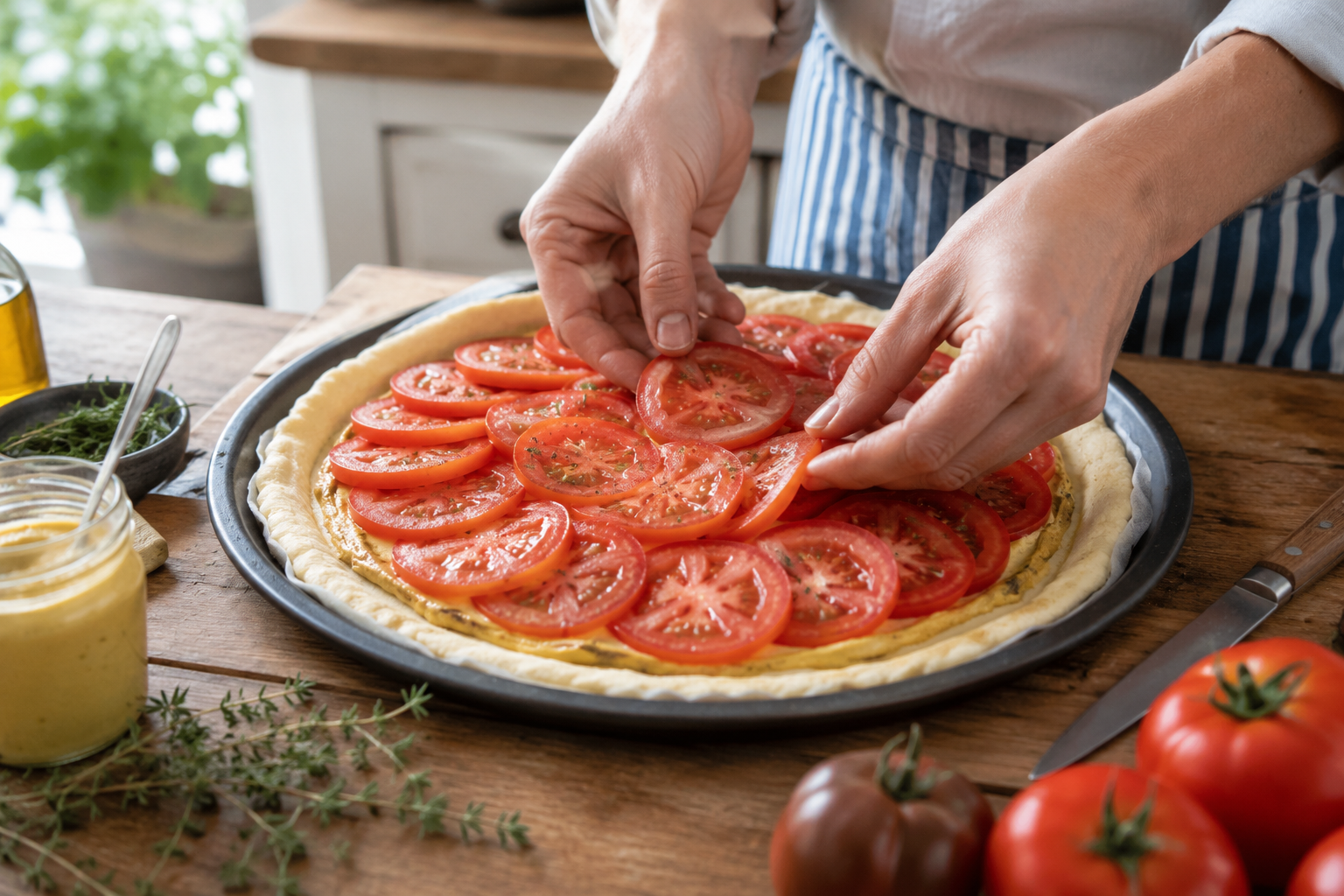
Part of the magic of the French tomato tart is the gap between how impressive it looks and how little work it takes, and that gap is worth understanding, because it is largely a matter of presentation rather than difficulty. The tart’s beauty comes almost entirely from the simple act of arranging the tomato slices in a pretty pattern, usually overlapping circles that spiral toward the center.
That arrangement does a lot of visual work for very little effort. Laying the slices in neat concentric rings takes only a couple of minutes but produces a strikingly elegant, almost professional-looking result, the kind of thing that makes people assume real skill and time went into it, when in fact you simply placed slices in a circle. The eye reads the pattern as care, and care as effort, though the effort was minimal. This is a truly useful thing to understand about cooking for others, well beyond this one recipe. A great deal of what reads as culinary skill is really just presentation, the willingness to take an extra minute to arrange something thoughtfully rather than pile it on a plate. The tomato tart simply makes the principle unusually obvious, rewarding thirty seconds of neat arranging with a result that looks like it belongs in a patisserie window.
The golden puff pastry completes the illusion. As it bakes, store-bought puff pastry rises into buttery, flaky, golden layers that look bakery-made, so the finished tart has the burnished, professional appearance of something far more laborious, all from a sheet of pastry you unrolled from a package. Between the pretty tomatoes and the golden crust, the tart presents itself as a triumph of effort, which is exactly the happy deception at its heart.
The Fifteen-Minute Recipe
Here is the classic French tomato tart, requiring about fifteen minutes of actual hands-on work, plus some draining and baking time during which you are free to do other things. Make it when tomatoes are at their summer best, because the quality of the tomatoes matters more than anything.
French Tomato Tart (Tarte à la Tomate) serves four to six, about fifteen minutes of work plus baking
Ingredients:
- Puff pastry, one sheet, store-bought and thawed
- Ripe tomatoes, about one and a half pounds, the best you can find
- Dijon mustard, two to three tablespoons
- Grated cheese, about one cup, Gruyère or Comté
- Olive oil, for drizzling
- Fresh thyme or Herbes de Provence, a teaspoon or so
- Salt and black pepper, to taste
- Optional: two tablespoons breadcrumbs, a clove of garlic
Method:
- Slice the tomatoes, lay them on a rack or paper towels, sprinkle both sides with salt, and let them drain for at least fifteen to thirty minutes, then blot them dry.
- Preheat the oven to around 400 to 425 degrees Fahrenheit, and line a baking sheet or tart pan with parchment.
- Lay out the puff pastry, prick it all over with a fork, and if you like, fold up the edges slightly to form a rim.
- Spread the Dijon mustard evenly over the pastry, leaving a small border, then sprinkle the grated cheese over the mustard, and the breadcrumbs if using.
- Arrange the drained tomato slices over the cheese in overlapping concentric circles, then drizzle with olive oil and scatter over the thyme, pepper, and a little more salt.
- Bake for about thirty-five to forty minutes, until the pastry is puffed and golden and the tomatoes are beginning to brown at the edges.
- Let it cool for a few minutes, then serve warm or at room temperature.
That is the whole thing, elegant and golden and far easier than it looks, ready to impress anyone at the table.
Choosing and Handling the Tomatoes
Because the tomatoes are the star, a few words about them will improve your tart considerably. The single most important factor is ripe, flavorful, in-season tomatoes, since the tart is essentially a showcase for them, so this is a summer dish to make when tomatoes are at their peak rather than a recipe for the pale, mealy tomatoes of winter.
Bigger, meatier tomatoes tend to work best. Large tomatoes such as beefsteak or heirloom give you nice broad slices that arrange beautifully and hold together well, and their meatier flesh means somewhat less water to contend with, though any ripe, tasty tomato will do, and halved cherry tomatoes make a charming rustic version. The key is flavor and ripeness rather than any particular variety.
Do not forget that the salting step matters most with the juiciest tomatoes. The juicier your tomatoes, the more important it is to salt and drain them thoroughly, because the wetter the tomato, the greater the risk to your crust, so give especially juicy specimens a little extra draining time. A few minutes of attention here pays off in a crisp, well-baked tart rather than a wet one.
Serving It the French Way

The French tomato tart is as versatile as it is beautiful, at home in several roles on the table. Most classically it is served as a starter or a light main course, cut into slices or squares and accompanied by nothing more than a simple green salad with vinaigrette, which is all the elegant tart needs alongside it.
Its temperature flexibility is part of its charm. The tart is delicious hot, warm, or at room temperature, which makes it ideal for entertaining, since you can make it ahead and serve it whenever you are ready, and it travels well to a picnic or a potluck. This forgiving quality is part of why it is such a beloved summer dish in France, where it turns up at lunches and gatherings all season long.
To serve it truly in the spirit of its origins, keep the accompaniments simple and Provençal. A chilled glass of rosé, a green salad, perhaps some olives and good bread, and you have a meal that tastes of the south of France in high summer, the tart at its center looking for all the world like the product of a long afternoon’s work. That contrast between ease and elegance is the whole joy of the dish. It is the sort of dish that quietly rewards you twice, once in the eating and once in the making, because there is real pleasure in producing something so handsome with so little strain. You get to enjoy the admiration of your guests without the exhaustion that usually earns it, which feels a little like getting away with something. The French, who have always understood that good food need not mean hard labor, built exactly this kind of generous ease into their everyday cooking.
The Effortless Showpiece
The lasting appeal of the French tomato tart is that it hands you a truly impressive dish in exchange for almost no work, which is the best bargain in cooking. With store-bought pastry, a smear of mustard, a handful of ripe tomatoes arranged with a moment’s care, and a hot oven, you produce something that looks and tastes like real accomplishment, and only you need to know how little it demanded of you.
What makes it worth adding to your repertoire is that it solves a common problem, the wish to serve something beautiful and delicious to guests without spending hours in the kitchen. This tart is precisely that solution, a reliable showpiece that comes together in minutes yet always draws admiration, so it earns a permanent place in the summer rotation of anyone who cooks for others.
So the next time good tomatoes are piled high at the market and you want to make something that looks like you tried much harder than you did, buy a sheet of puff pastry and a jar of Dijon and make this tart. Salt your tomatoes, spread your mustard, arrange your circles, and let the oven work its magic, then set the golden result on the table and accept the compliments graciously. The tarte à la tomate has been making French home cooks look brilliant for generations, and it will happily do the same for you. No one need ever know it was the easiest thing you made all week.

About the Author: Ruben, co-founder of Gamintraveler.com since 2014, is a seasoned traveler from Spain who has explored over 100 countries since 2009. Known for his extensive travel adventures across South America, Europe, the US, Australia, New Zealand, Asia, and Africa, Ruben combines his passion for adventurous yet sustainable living with his love for cycling, highlighted by his remarkable 5-month bicycle journey from Spain to Norway. He currently resides in Spain, where he continues sharing his travel experiences with his partner, Rachel, and their son, Han.