
An American woman gets married and, more often than not, faces a decision that comes loaded with tradition, paperwork and quiet social pressure, whether to take her husband’s last name. A Spanish woman getting married faces no such decision, because the question simply does not exist. She keeps her name, as she always would, as her mother did and her grandmother did before her, because in Spain a woman does not take her husband’s surname and never has. There is no maiden name to give up, no new name to adopt, no forms to file. Her name is hers for life, marriage or no marriage.
To an American this can sound almost radical, a woman keeping her own name as a matter of course, but in Spain it is not a feminist statement or a modern choice at all. It is simply how names work, an ancient system in which everyone carries two surnames for life and no one changes them at marriage, so deeply established that the very concept of taking a spouse’s name is foreign. What looks from America like a progressive act is, in Spain, just the unremarkable way things have always been done. The distinction matters more than it first appears. In America, a woman keeping her name is a decision she makes, sometimes defends, and occasionally has to justify to family or officialdom, whereas in Spain it is simply what happens, requiring no decision and inviting no comment. The same outcome, a woman with her own name, arrives by an entirely different route, and the Spanish route is the one that asks nothing of her at all.
Here is how the Spanish surname system really works, why women keep their names, where the tradition comes from, and what it reveals about identity and marriage that the American system obscures. This is a cultural and factual explainer rather than any kind of advice, naming laws and customs vary and evolve, but the Spanish system is a fascinating and coherent alternative to the Anglo-American habit, and understanding it casts the familiar in a new light.
Everyone Has Two Surnames
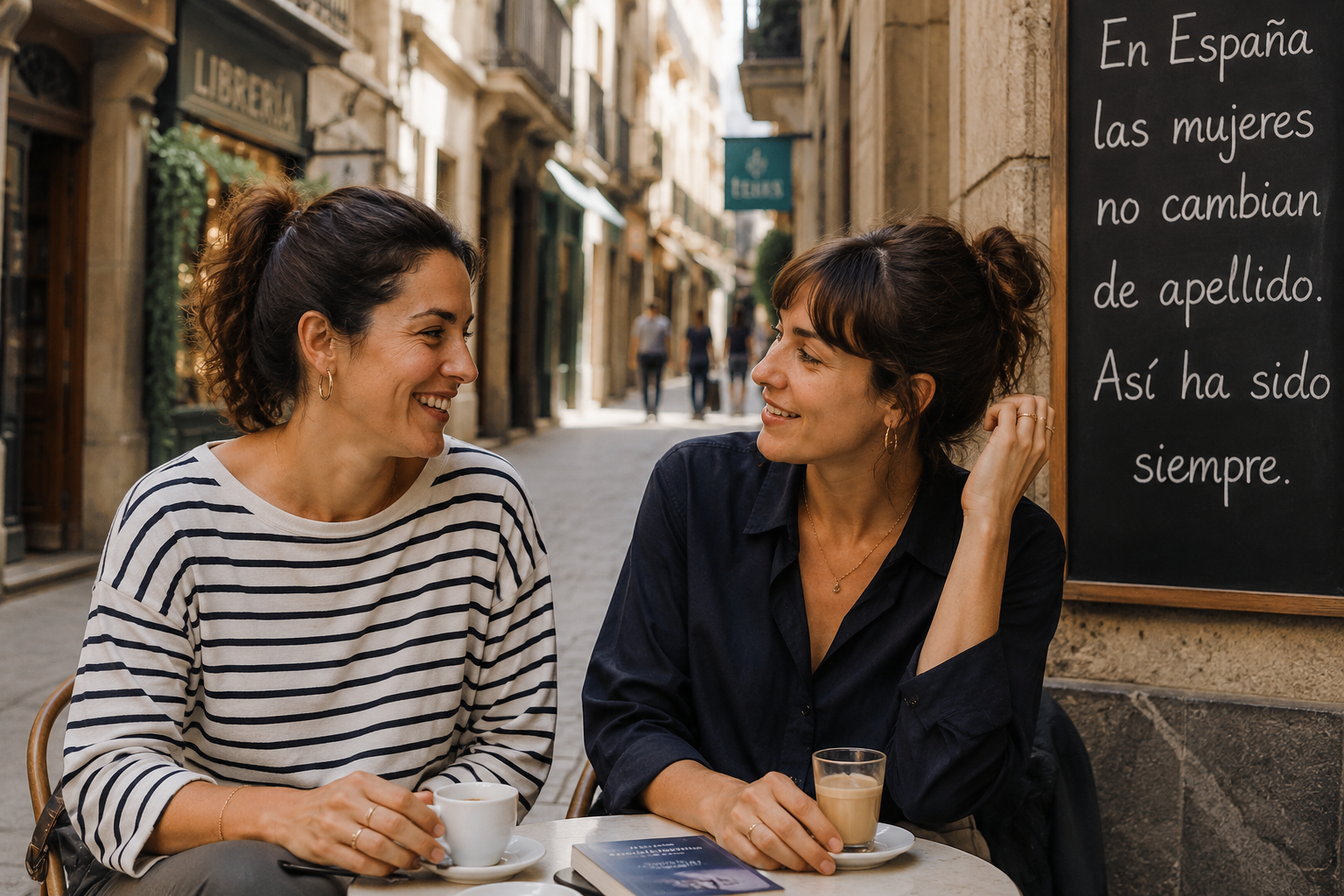
To understand why Spanish women keep their names, you first have to understand that every Spanish person carries two surnames, not one. A Spaniard’s full name consists of a given name followed by two family names, traditionally the first surname from the father and the second from the mother, so that each person’s name carries both parental lineages at once.
This is the foundation of the whole system. Where an English speaker has a single surname, typically the father’s, a Spaniard has two, one from each parent, which means a person’s name is a small family tree in itself, recording both the paternal and the maternal line. The child of a García and a Martínez might be, for example, named with García and Martínez both, one from each side, and would carry that pairing for life. Neither surname is more real or more permanent than the other.
The two surnames are not hyphenated or merged but kept distinct, each a full surname in its own right. In everyday life a person is often known by just the first of the two, but both appear on official documents, in legal contexts and in formal use, together forming the complete legal name that a Spaniard carries from birth. This dual-surname structure is the key that makes the rest of the system work, and it is worlds away from the single inherited surname of the Anglophone tradition. A small practical benefit falls out of the double surname that Anglophones rarely enjoy, which is that full names are far less likely to collide, since two people sharing a given name and both surnames is rare, so the Spanish system quietly distinguishes individuals through the ordinary structure of the name itself.
The Name Is Fixed for Life
The crucial fact, the one that answers the whole question, is that in Spain these two surnames are fixed for life and do not change, ever, regardless of marriage. Spanish law establishes that a person’s birth surnames remain their legal name throughout their life, unaffected by marital status, so that marriage simply has no effect on either spouse’s name.
This is why the question of taking a husband’s name never arises. Because names are permanent under the law, a Spanish woman keeps her two surnames when she marries exactly as she had them before, and her husband keeps his, so both spouses carry their birth names into and through the marriage unchanged. Neither one adopts the other’s name, because the legal system does not contemplate such a change in the first place.
The consequence is that the very idea of a maiden name does not exist in Spain. Since a woman’s name never changes at marriage, there is no former name to distinguish from a married name, no maiden name and married name as separate things, only the one name a woman carries her whole life. An American concept as basic as the maiden name is, in the Spanish system, simply meaningless, because nobody’s surname was ever going to change. The word itself has no clean Spanish translation for this reason. Terms exist to describe a birth name, but the freighted English notion of a maiden name, a former name set aside upon marriage, points at a thing that does not occur in Spanish life, so there is no everyday word for it because there is no everyday experience of it. Language, as so often, simply mirrors the custom underneath.
Where the Tradition Comes From
This is not a recent reform but an ancient and deeply rooted custom, which is what makes the American framing of it as progressive so misleading. The two-surname system dates back centuries in Spain, to the medieval era, when the practice of carrying both parents’ surnames took hold as a way of identifying people more precisely and honoring both family lines.
The system served real purposes that entrenched it. Carrying two surnames allowed for better identification of individuals in a world of common names, and it let noble and influential families keep both their paternal and maternal lineages visible in their names, preserving the prestige of both lines, so the practice became firmly established in Spanish society and law. What began as a matter of identification and family pride became simply the way names worked.
This deep history is why keeping one’s name is nothing remarkable in Spain. The system has functioned this way for so many generations that no one experiences a woman keeping her name as a choice or a statement, because there was never an alternative custom of name-changing to depart from. The tradition is not that Spanish women have won the right to keep their names, but that the question of surrendering them never arose, which is a profoundly different thing.
What Happens to the Children
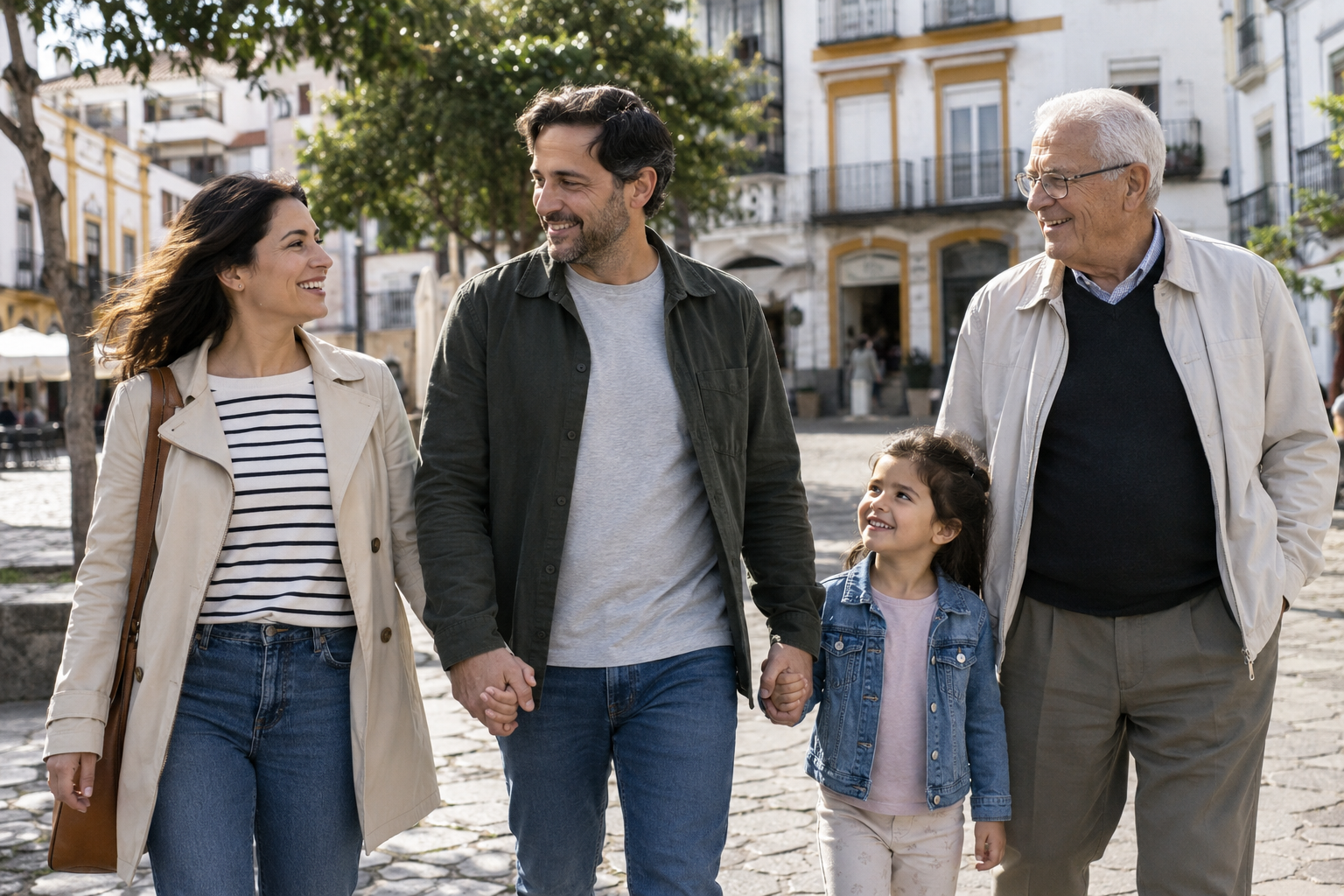
A natural question is how children are named in a system where parents keep separate surnames, and the answer is elegant. A child takes one surname from each parent, traditionally the father’s first surname and the mother’s first surname, so the child too ends up with two surnames, one from each side, carrying both lineages forward into the next generation.
The mechanism passes both families down through the generations. Because each child inherits one surname from each parent, the paternal and maternal lines are both preserved in the child’s name, and the pattern repeats down the generations, each person carrying a piece of both their father’s and their mother’s family names. The system is self-perpetuating, weaving both lineages into every new name down the years.
There is a quiet practical advantage in this that the single-surname system lacks. Because a Spanish mother shares a surname with her children just as the father does, the legal and visible bond between mother and child is never obscured by a difference of name, and a divorced mother is never left bearing an ex-husband’s surname merely to match her children. The Spanish child’s name links it clearly to both parents at once, which is one of the system’s understated strengths.
The Order, and How It Has Changed
The one part of the system that has truly evolved is the order of the two surnames, and this change is worth understanding because it reflects a real modernization. Traditionally the father’s surname came first and the mother’s second, a default that gave the paternal name the more prominent position and passed it down more reliably through the generations.
That default has been reformed in the name of equality. A law that came into force in 2018 eliminated the automatic rule that the father’s surname must come first, giving parents the freedom to decide the order of their child’s two surnames, with the same order then applying to all their children, and leaving the registry to decide only if the parents cannot agree. The paternal-first rule is no longer the law, only one option among two.
This reform modernized the system without disturbing its core. The essential features, two surnames for life, no name change at marriage, both lineages preserved, all remain exactly as they were, while the single element of gender imbalance, the automatic priority of the father’s name, has been removed. The change shows a system capable of reform at the edges while keeping its fundamental logic intact, and it leaves the tradition of women keeping their names entirely untouched.
The de García Footnote
There is one historical wrinkle worth addressing, because Americans sometimes encounter it and misunderstand it, which is the old custom by which a woman could append her husband’s name with the word de. In this traditional practice, a married woman might add her husband’s paternal surname to her own, preceded by de, meaning of, so that María Rodríguez might style herself María Rodríguez de García.
This custom is the closest Spain ever came to a married name, and it is important to see what it was and was not. Even at its height it was an optional social addition rather than a legal change of name, a courtesy style layered on top of a woman’s unchanged legal name rather than a replacement of it, so even the woman who used it kept her own surnames underneath. Her legal identity never changed for a moment.
And crucially, this custom is now largely archaic and fading. The de García style is increasingly seen as old-fashioned and is far less used than it once was, a relic of a more patriarchal era that modern Spanish women mostly do not adopt, so even the one historical gesture toward a married name is disappearing. The system’s default, a woman’s own name kept entirely and unchanged, is more firmly the norm now than ever.
What the System Reveals
Step back from the mechanics and the Spanish system reveals something quietly profound about names and identity that the American system obscures. In Spain a name is treated as a permanent marker of who you are and where you come from, fixed at birth and carried unchanged for life, an identity that marriage does not alter because marriage does not change who your parents were or which lineages you descend from.
This stands in sharp contrast to the Anglo-American tradition. In the American system a woman’s surname has historically been treated as contingent on her marital status, changing as she moves from her father’s name to her husband’s, which subtly frames her identity as defined by her relationship to a man, first her father and then her spouse. The Spanish woman’s name, fixed and her own, carries no such implication, standing instead as a permanent statement of her own lineage and identity.
There is a dignity in the Spanish approach that becomes visible only by comparison. The Spanish woman never faces the paperwork, the lost professional continuity, the divorced-and-still-bearing-his-name awkwardness, or the quiet pressure that surrounds the American name-change question, because her name was never in play to begin with. Her identity on paper is stable across her whole life, through marriage and divorce and everything else, which is a kind of quiet freedom the name-changing tradition does not offer.
The Name That Stays Her Own
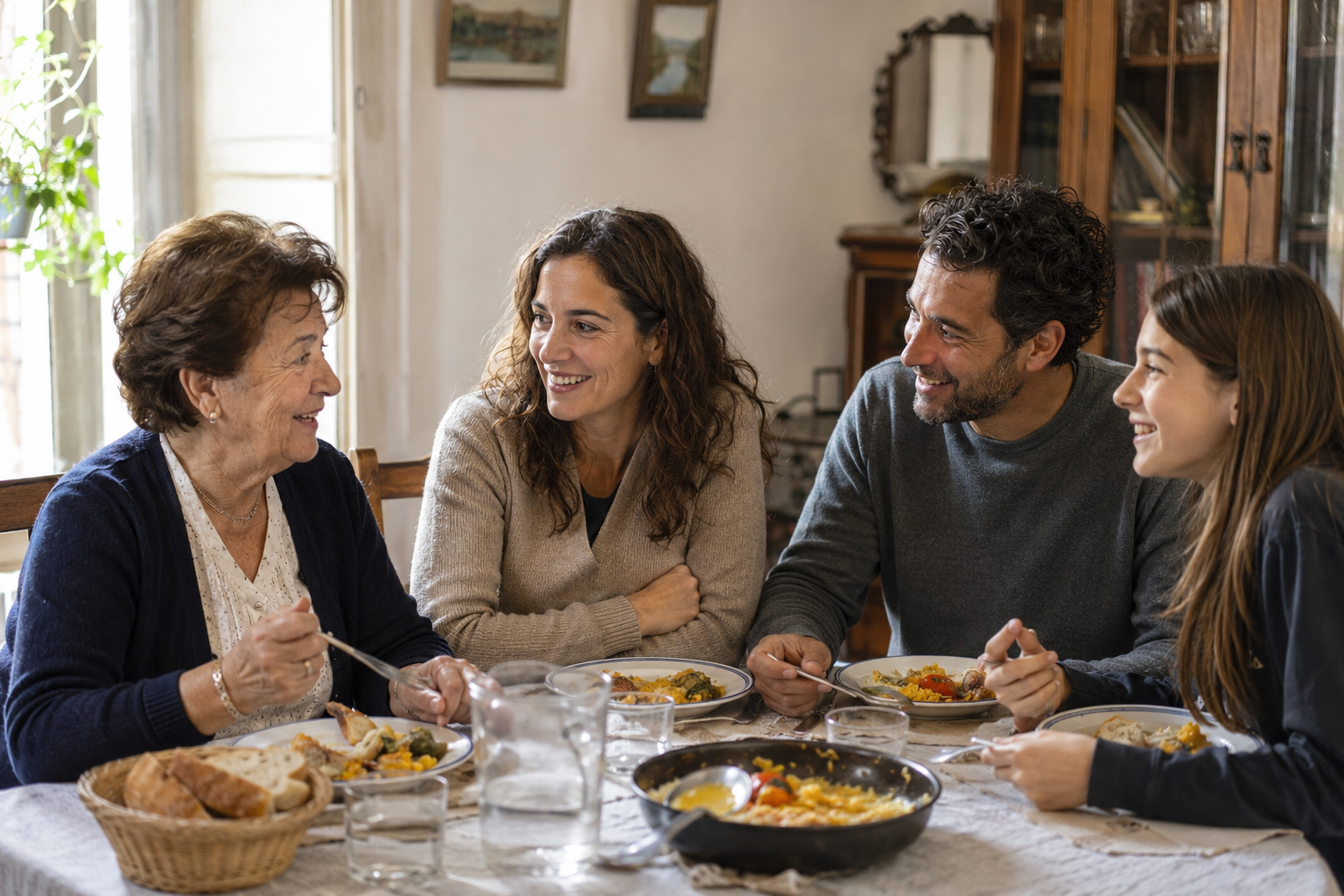
The headline fact, that Spanish women never take a husband’s last name, turns out to open onto a whole coherent system with its own long history and its own quiet wisdom. It is not that Spanish women resist name-changing but that the concept never existed for them to resist, because a system of two permanent surnames, one from each parent, simply leaves no room for a name to change at marriage. The absence of the custom is the whole point.
What makes the Spanish system worth understanding is how neatly it sidesteps problems the American system creates. By fixing names at birth and preserving both lineages, it keeps every woman’s identity her own for life, links children clearly to both parents, and spares everyone the freighted decision and the paperwork that surround the American name change, all through a structure that has quietly worked for centuries. It is a reminder that the way one’s own culture does things is rarely the only way, or even the simplest.
In the end the Spanish woman keeping her name is not making a statement at all, which is exactly what makes it so striking to an American eye. She is simply carrying the name she was born with, as everyone in Spain does, through a marriage that changes her life in many ways but not this one. Her name was hers before she married, it is hers during her marriage, and it will be hers after, unchanged and unquestioned, as it has been for Spanish women for centuries. Nobody has taken a husband’s name, and nobody was ever expected to, and in that quiet permanence there is a kind of dignity the name-changing world might envy. Her name is simply a fact about her, as fixed as her date of birth, and no wedding was ever going to touch it.

About the Author: Ruben, co-founder of Gamintraveler.com since 2014, is a seasoned traveler from Spain who has explored over 100 countries since 2009. Known for his extensive travel adventures across South America, Europe, the US, Australia, New Zealand, Asia, and Africa, Ruben combines his passion for adventurous yet sustainable living with his love for cycling, highlighted by his remarkable 5-month bicycle journey from Spain to Norway. He currently resides in Spain, where he continues sharing his travel experiences with his partner, Rachel, and their son, Han.