
For a whole generation of American drinkers, the word Lambrusco conjures a specific memory, a sweet, cheap, fizzy red wine that flooded the United States in the 1970s and 1980s, the stuff of screw-top bottles and undemanding parties. It was, for a time, the best-selling imported wine in America, and it left behind an impression that has stuck for decades, that Lambrusco is sugary, simple and not to be taken seriously. That impression is a shame, because it is based on one narrow, sweetened export version of a wine that, in its Italian home, is something else entirely.
The real Lambrusco, the wine as it is drunk in the Italian region that has made it for centuries, is not sweet at all but dry, a bright, lightly sparkling red that is one of the great food wines of Italy and the beloved house wine of Emilia-Romagna. The sweet fizz that America remembers was a version tailored for export tastes, a commercial success that unfortunately buried the reputation of the real thing, and rediscovering the dry original is one of the happiest surprises available to anyone willing to give the wine a second chance.
Here is what Lambrusco actually is, where the sweet-versus-dry confusion came from, the styles and grapes worth knowing, and how to serve and pair the real dry wine so you can taste why Italians love it. This is a guide to understanding and enjoying a much-misunderstood wine rather than anything technical, and once you know what to look for, you will find that Lambrusco is not a guilty pleasure from the past but a seriously delicious and useful wine for the table.
The Sweet Fizz America Remembers
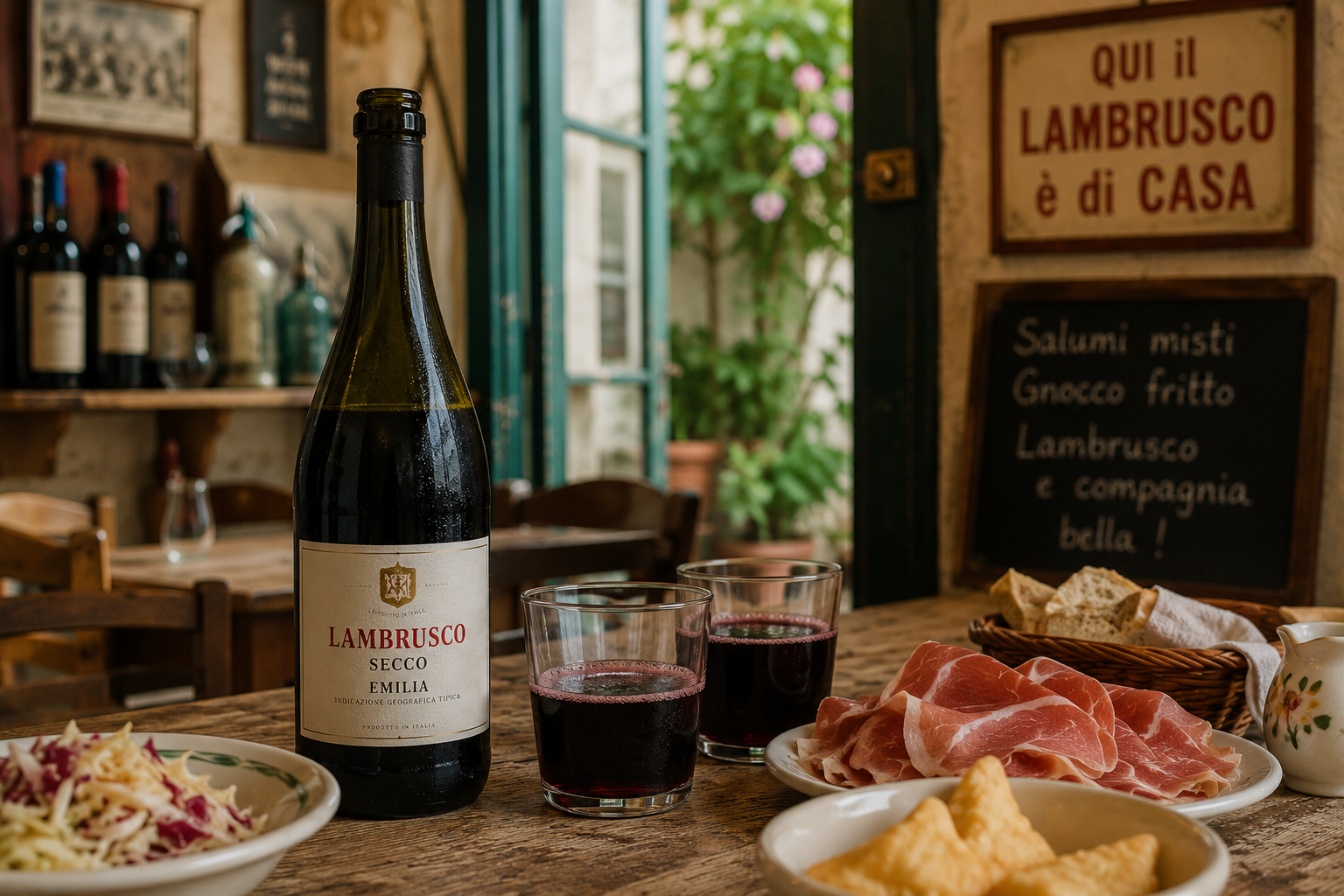
To understand Lambrusco’s reputation problem, you have to go back to its American heyday, when a very particular version of it conquered the United States. Throughout the 1970s and 1980s, sweet Lambrusco was the biggest-selling imported wine in America, an inexpensive, sweet, fizzy red that sold in enormous quantities and became, for millions of drinkers, the definition of what Lambrusco was.
That version was made to a specific commercial formula. The Lambrusco that swept America was deliberately sweetened and made simple and approachable, aimed at a mass market with a taste for easy, sugary wine, and it succeeded brilliantly at that goal, becoming a household name, but at a cost to the wine’s reputation. It taught a generation that Lambrusco meant sweet, cheap and unserious.
The trouble is that this export version was never the whole story, or even the real one. The sweet fizzy Lambrusco that Americans remember was a commercial style crafted for export, quite different from the traditional dry wine drunk in its Italian homeland, so the impression it left, that all Lambrusco is sweet plonk, was a misunderstanding from the start. America met one narrow version of the wine and mistook it for the whole. There is even a small irony buried in the story, which is that the sweet export boom, for all the damage it did to the wine’s image, at least made the name famous. Millions of people who had never heard of Emilia-Romagna knew the word Lambrusco, so the raw material for a rediscovery was always there, needing only for drinkers to learn that the bottle they half-remembered was a commercial creation rather than the real regional wine it was named after.
What Lambrusco Really Is
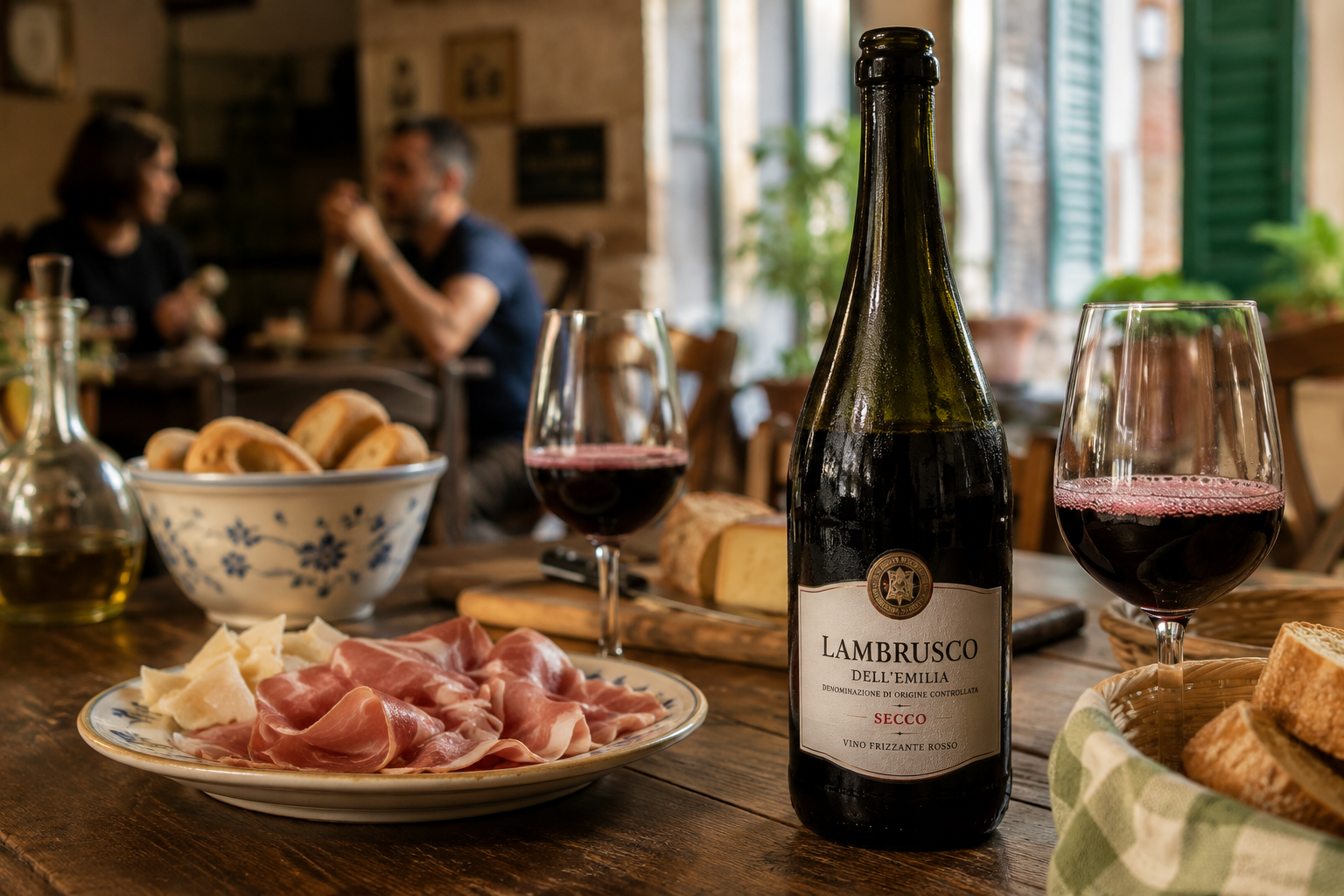
The real Lambrusco is a lightly sparkling red wine from northern Italy, and getting a clear picture of it dispels the old sweet-wine myth immediately. Lambrusco is a frizzante, or semi-sparkling, red wine, typically light to medium-bodied, fruity, with soft tannins and a bright, refreshing acidity, made to be enjoyed young and served chilled, which already makes it a very different creature from the sticky sweet version of memory.
Its sparkle is gentle and distinctive. Lambrusco is usually frizzante, meaning lightly fizzy rather than fully sparkling like Champagne, so when you pour a glass it foams up softly, a little like pouring a beer, before settling into a lively, gently bubbling red, which is part of its charm and its refreshing quality. That soft effervescence, combined with the chill and the bright acidity, makes it wonderfully thirst-quenching. This gentle fizz is worth dwelling on, because it is central to the wine’s character and quite different from what most people expect of a red. A still red wine is a contemplative thing, often served warm and sipped slowly, whereas Lambrusco is lively, cool and refreshing, closer in spirit to a good beer or a crisp white in how it hits the palate, even as it delivers the fruit and gentle tannin of a red. It occupies a delightful category almost of its own.
Above all, the traditional and best Lambrusco is dry. While Lambrusco can be made in a range of sweetness levels, the classic and most respected style is dry, called secco, a crisp, fresh, dry red with lively fruit and a clean finish, utterly unlike the sweet export version, and it is this dry style that represents the real wine and that serious drinkers seek out. The dry Lambrusco is the wine Emilia-Romagna has always loved. It helps to think of the dry style not as a modern reinvention but as the original that the sweet version departed from. Long before the export boom, the people of the region were drinking their local red dry, fizzy and cold with their meals, so the secco Lambrusco winning renewed attention today is really a return to the wine’s roots rather than a novelty. The sweet version was the detour, and the dry wine is the home the wine has come back to.
Emilia’s House Wine
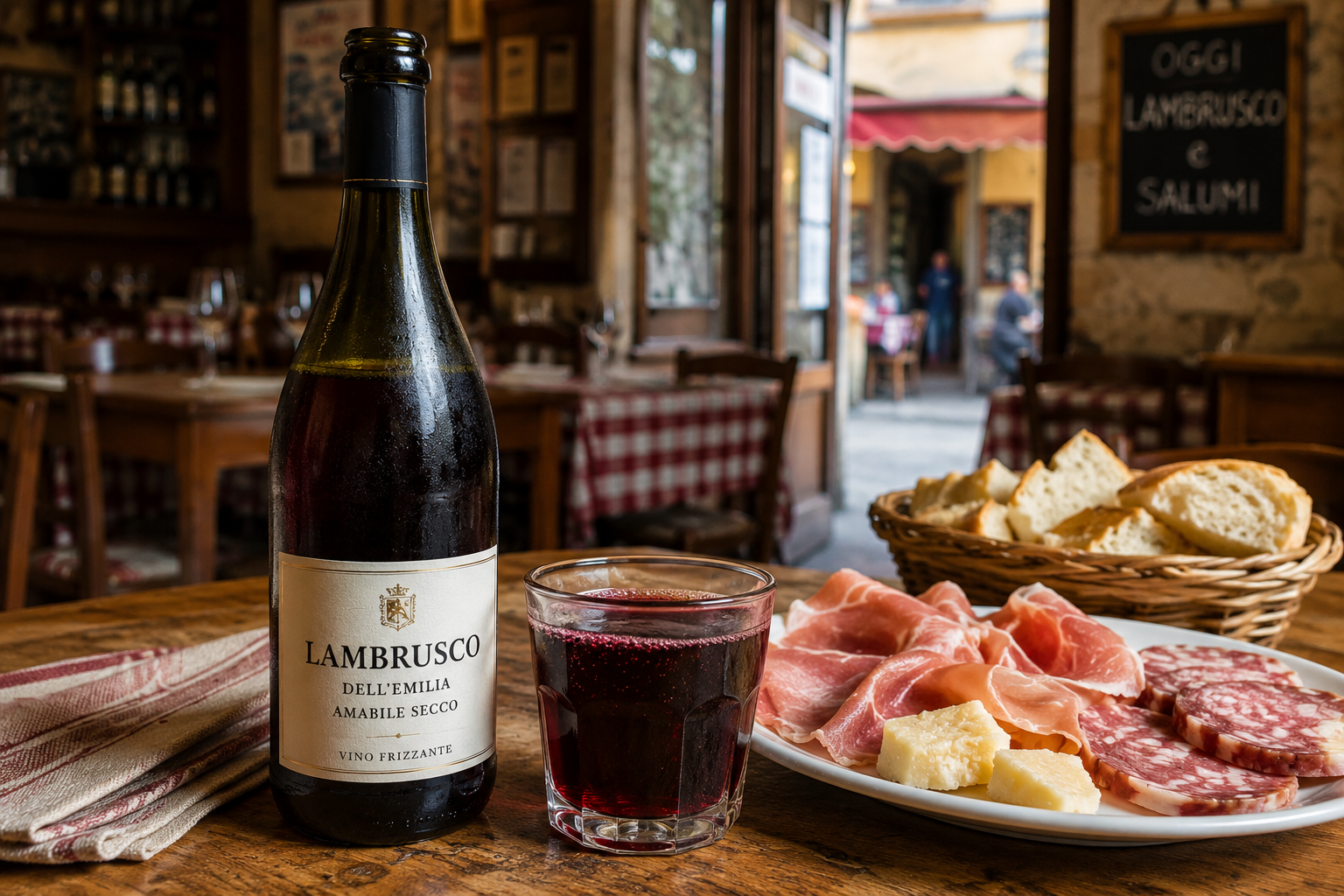
Lambrusco belongs to one particular corner of Italy, and understanding that place is key to understanding the wine, because Lambrusco is the house wine of Emilia-Romagna, one of Italy’s greatest food regions. The wine has been made in this north-central Italian region for a very long time, and it is woven into the local food culture as the everyday wine of the region’s tables.
The connection to the region’s food is no accident. Emilia-Romagna is the home of some of Italy’s most famous and richest foods, including Parmigiano-Reggiano cheese, prosciutto and other cured pork, and the balsamic vinegar of Modena, and Lambrusco evolved right alongside these rich, fatty, savory specialties as the wine made to accompany them. It is a wine shaped by its local cuisine, built to sit at the same table. This partnership of wine and food runs so deep that it is hard to fully appreciate one without the other. The famously rich foods of the region, the fatty cured pork, the salty aged cheese, the hearty meat sauces, can overwhelm a delicate wine or clash with a heavy one, but they meet their perfect foil in a cold, dry, fizzy Lambrusco, whose every quality seems designed to answer them. The wine and the cuisine grew up together, and they still belong together.
This is why the dry, fizzy, acidic style makes so much sense in its home. The bright acidity and gentle bubbles of a dry Lambrusco cut through the richness of the region’s fatty cured meats and aged cheeses, refreshing the palate between bites, so the wine and the food are perfectly matched partners, each making the other better. Lambrusco is not an accident of history but the deliberate, ideal companion to one of the world’s great regional cuisines.
The Grapes and Styles Worth Knowing
Lambrusco is not a single wine but a family, made from several related grape varieties, and knowing a few of the main ones helps you navigate the category. The name Lambrusco refers both to the wine and to a group of native grapes of Emilia-Romagna, of which a handful of varieties account for most of the good wine, each giving a slightly different character.
Three varieties are especially worth knowing. Lambrusco di Sorbara is the lightest and most delicate, pale in color and floral, prized for its elegance and bright acidity, while Lambrusco Grasparossa, often labeled Grasparossa di Castelvetro, is the deepest and boldest, with the most color, body and tannin, and Lambrusco Salamino sits between them, fruity and balanced. Together they offer a range from light and floral to dark and structured.
Reading the label lets you choose your style. The key word for the dry style is secco, meaning dry, while semisecco or amabile indicates off-dry, and dolce means sweet, so a drinker seeking the real dry Lambrusco should look for secco on the label and choose among the grape varieties according to whether they want something light and floral or dark and bold. A dry Sorbara and a dry Grasparossa are two quite different and equally rewarding wines. This variety within the category is a pleasure to explore rather than a complication to fear. Trying a light, floral Sorbara one evening and a dark, structured Grasparossa the next reveals just how much range the humble Lambrusco name contains, and it means there is a Lambrusco to suit almost any dish or mood. Far from being one monolithic sweet wine, it is a small world of related reds waiting to be discovered.
How to Serve It
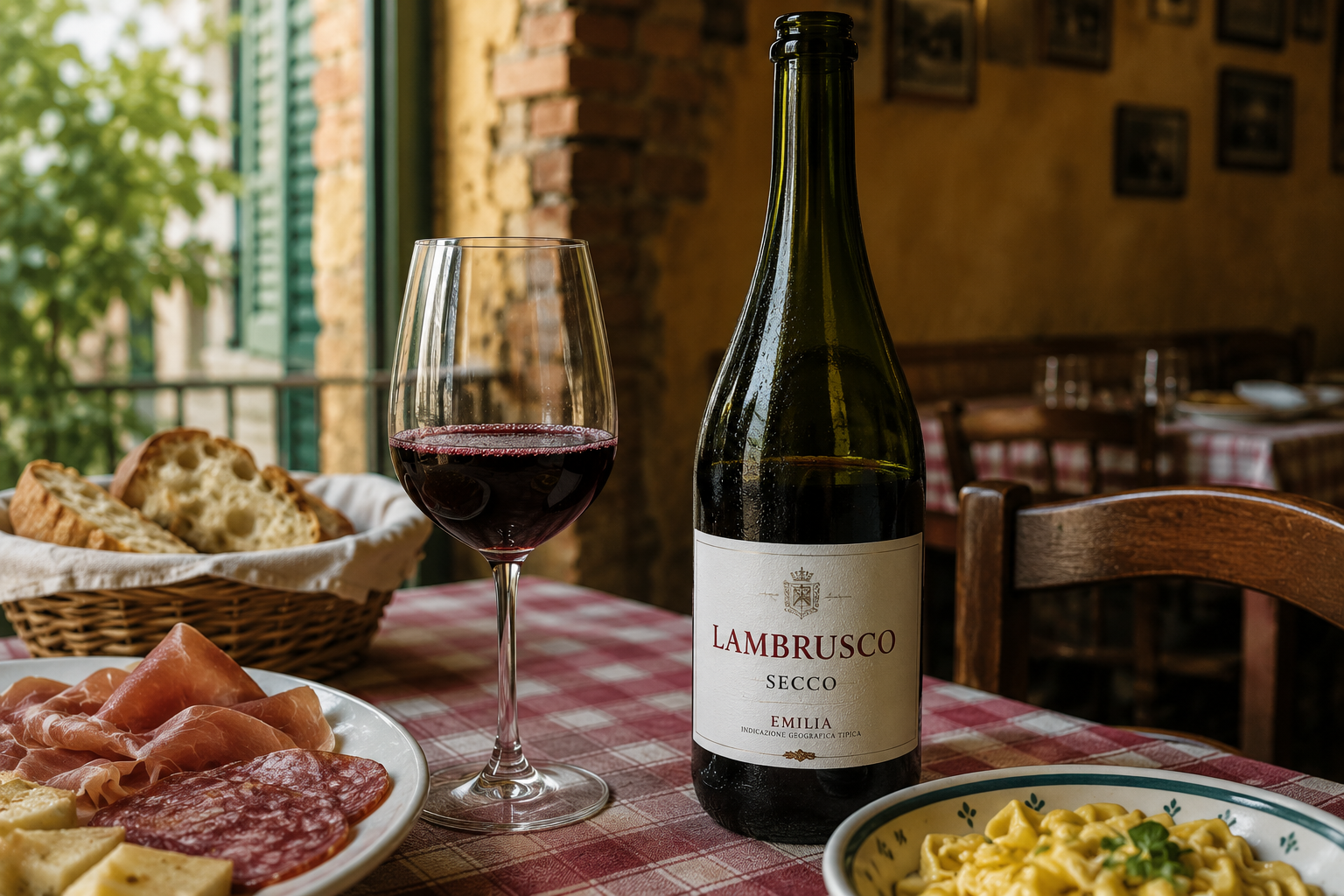
Serving Lambrusco correctly is simple but makes a real difference, and the most important point is that it should be served chilled. Unlike most red wines, Lambrusco is meant to be drunk cool, at around the temperature of a lightly chilled wine rather than room temperature, because the chill enhances its refreshing quality and suits its fizzy, fruity character. A cool serving temperature is essential to enjoying it as intended.
This is one of the pleasures of the wine, that it is a red you can chill and drink like a refreshing summer drink. Pull the bottle from the fridge so it is nicely cool but not ice-cold, pour it into ordinary wine glasses and watch it foam and settle, and drink it while it is fresh and lively, since Lambrusco is made to be enjoyed young rather than aged. There is no ceremony required, only a good chill and a willingness to enjoy.
The wine’s easy, unfussy nature is part of its appeal. Lambrusco is an unpretentious, affordable, everyday wine rather than a solemn one, meant to be opened and enjoyed without fuss, poured generously and drunk with food and company, which is exactly how the people of Emilia-Romagna have always treated it. Chill it, pour it, and enjoy it, and you are drinking Lambrusco the way it is meant to be drunk. This lack of pretension is not a lack of quality but a different kind of virtue. A wine that demands no decanting, no special glassware and no long cellaring, that costs little and pleases immediately, is a wine that earns a permanent place in the everyday rotation, ready for a weeknight dinner or a spontaneous gathering. Its greatness lies precisely in its easy, generous drinkability.
What to Drink It With
Lambrusco is one of the great food wines, and its versatility at the table is perhaps its greatest virtue, all thanks to that combination of bright acidity, gentle fizz and light body. These qualities make dry Lambrusco a superb partner for rich, fatty, savory foods, because the acidity and bubbles cut through richness and cleanse the palate, which is exactly what a plate of cured meats or a wedge of aged cheese calls for.
The classic pairings come straight from its home region. Dry Lambrusco is magnificent with the foods of Emilia-Romagna, with prosciutto and salami and other cured pork, with Parmigiano-Reggiano and other rich cheeses, and with the hearty meat dishes and rich pastas of the region, whose fattiness the wine cuts beautifully. This is the pairing the wine was born for, and it is hard to improve upon.
Its usefulness reaches well beyond Italian food, though. Because it cuts richness so well and refreshes the palate, dry Lambrusco pairs wonderfully with all sorts of rich or fatty dishes from around the world, from barbecue and burgers to pizza to fried foods, making it a truly versatile and food-friendly wine for almost any casual meal. Few wines are so happy alongside so much everyday food, which is a large part of what makes it so useful to have on hand. Keeping a bottle chilled in the fridge is one of the small, smart pleasures of a well-run kitchen. When friends arrive unannounced or a rich dinner needs a partner, a cold bottle of dry Lambrusco is ready to foam into glasses and suit almost anything on the table, at a price that never makes you hesitate to open it. It is the kind of wine that quietly improves ordinary evenings.
Giving the Real Wine a Chance
The lasting lesson of Lambrusco is that a wine’s reputation and its reality can drift far apart, and that the sweet fizz America remembers was never the real thing. The genuine Lambrusco, the dry, bright, lightly sparkling red of Emilia-Romagna, is a world away from the sugary export version, and rediscovering it means setting aside an old impression and tasting the wine as Italians truly drink it, which is a deeply rewarding thing to do.
What makes the rediscovery so worthwhile is how much the real wine offers. A good dry Lambrusco is refreshing, food-friendly, affordable and endlessly drinkable, a wine that pairs with a huge range of food and brings a note of easy pleasure to any table, everything the sweet export version was not, so the drinker who gives it a fresh chance gains a truly useful and delicious new wine. The reward is entirely out of proportion to the effort.
So the next time you see Lambrusco on a shelf or a wine list, look past the memory of the sweet fizz and reach for a bottle marked secco. Chill it well, pour it foaming into a glass, and drink it alongside some cured meat and cheese or whatever rich, savory food you love, and you will taste why the people of Emilia-Romagna have cherished this bright, dry, sparkling red for generations. The Lambrusco America remembers was a passing commercial fashion. The real Lambrusco is a timeless regional treasure, and it has been there all along, waiting to be discovered by anyone willing to look past its reputation.

About the Author: Ruben, co-founder of Gamintraveler.com since 2014, is a seasoned traveler from Spain who has explored over 100 countries since 2009. Known for his extensive travel adventures across South America, Europe, the US, Australia, New Zealand, Asia, and Africa, Ruben combines his passion for adventurous yet sustainable living with his love for cycling, highlighted by his remarkable 5-month bicycle journey from Spain to Norway. He currently resides in Spain, where he continues sharing his travel experiences with his partner, Rachel, and their son, Han.