
There is a test for whether a food is really food, and it does not involve reading a label or counting additives. It involves imagining a Spanish grandmother, an abuela of the old kind, the sort who cooked every day of her life from what the market and the garden gave her, and asking one simple question of whatever is in your hand. Would she recognize it? Not the brand, not the packaging, but the thing itself. Would she see food she knows, or frown at something she could not name? For thirty days, I ate only what would pass that test, only what an abuela would recognize, and it turned out to be a far better guide than any ingredient list.
The idea came from a frustration with the usual way we talk about ultra-processed food, which quickly turns into a numbing recitation of chemical names most of us cannot pronounce or picture. That approach is accurate but bloodless, and it makes healthy eating feel like a chemistry exam. The abuela test does something different and, I think, wiser. It gives the whole question a face, a human standard rooted in generations of real cooking, and it turns an abstract nutritional problem into a warm and intuitive one. If she would know it as food, eat it. If she would not, leave it. That was the whole rule, and it fit on a single line.
Here is what the abuela test is, why it works so well as a filter, what changed when I ate by it for a month, and how anyone can use it without turning meals into a science project. This is a personal account rather than medical or nutritional advice, and everyone’s needs are different, but the abuela test turned out to be the simplest and most humane way I have found to eat well, and the month I spent following it left a mark that has lasted.
The Test Itself
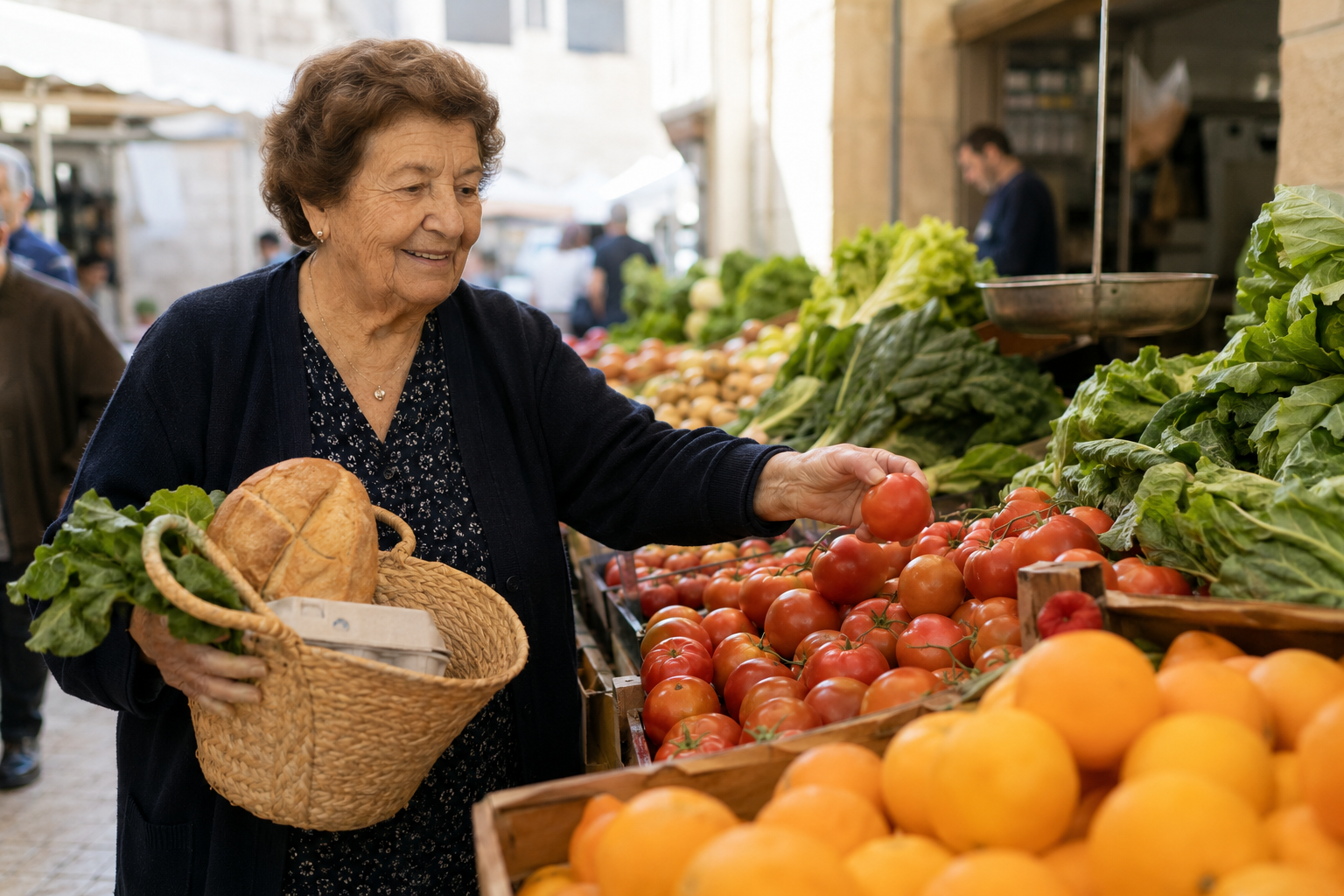
The abuela test is disarmingly simple, which is most of its power. You look at a food and ask whether a grandmother from an earlier, less industrial time, someone who cooked from scratch with real ingredients her whole life, would recognize it as food made from things she could name and picture growing or being raised.
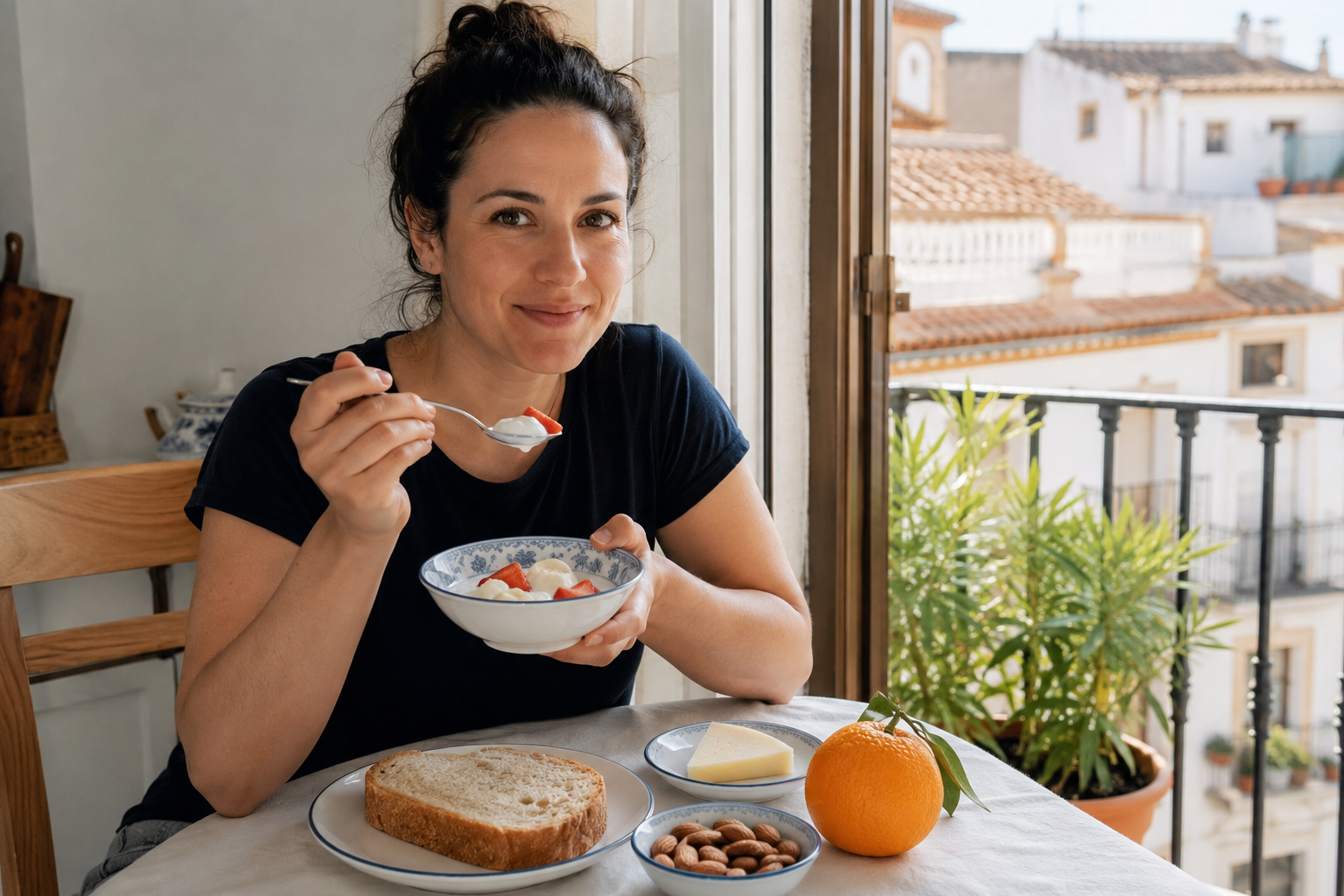
The beauty of the test is that it needs no expertise. A real tomato, a piece of fish, an egg, a wedge of cheese, a loaf of honest bread, a bowl of lentils, a handful of almonds, an orange, a pour of olive oil, all of these pass instantly, because any abuela on earth would know them at a glance. They are food in the plain, obvious, ancestral sense, the raw materials of meals as they have been made for centuries, requiring no explanation and no chemistry.
What fails the test is just as clear. A bright, shelf-stable snack cake with a two-year expiry, a neon drink, a nugget of reconstituted something in a crumb coating, a spread that lists twenty ingredients you cannot picture, a breakfast cereal shaped into bright cartoon forms and dyed colors no plant ever made, all of these would leave an abuela baffled, because they are not really assembled from foods she knows but engineered from substances she never cooked with. The test sorts the two worlds almost effortlessly, and once you start applying it, the line becomes surprisingly bright. There is a whole middle ground the test handles gracefully too. Some foods are lightly processed in ways an abuela would fully understand, cheese, cured ham, tinned fish, olives, bread, yogurt, because these are old preservation crafts, not modern industrial invention, and she made or bought them herself. The test is not a war on all processing, only on the kind that turns food into something unrecognizable. That distinction, between the ancient craft of preserving food and the modern engineering of it, is one the abuela draws instinctively.
Why It Works Better Than a Label
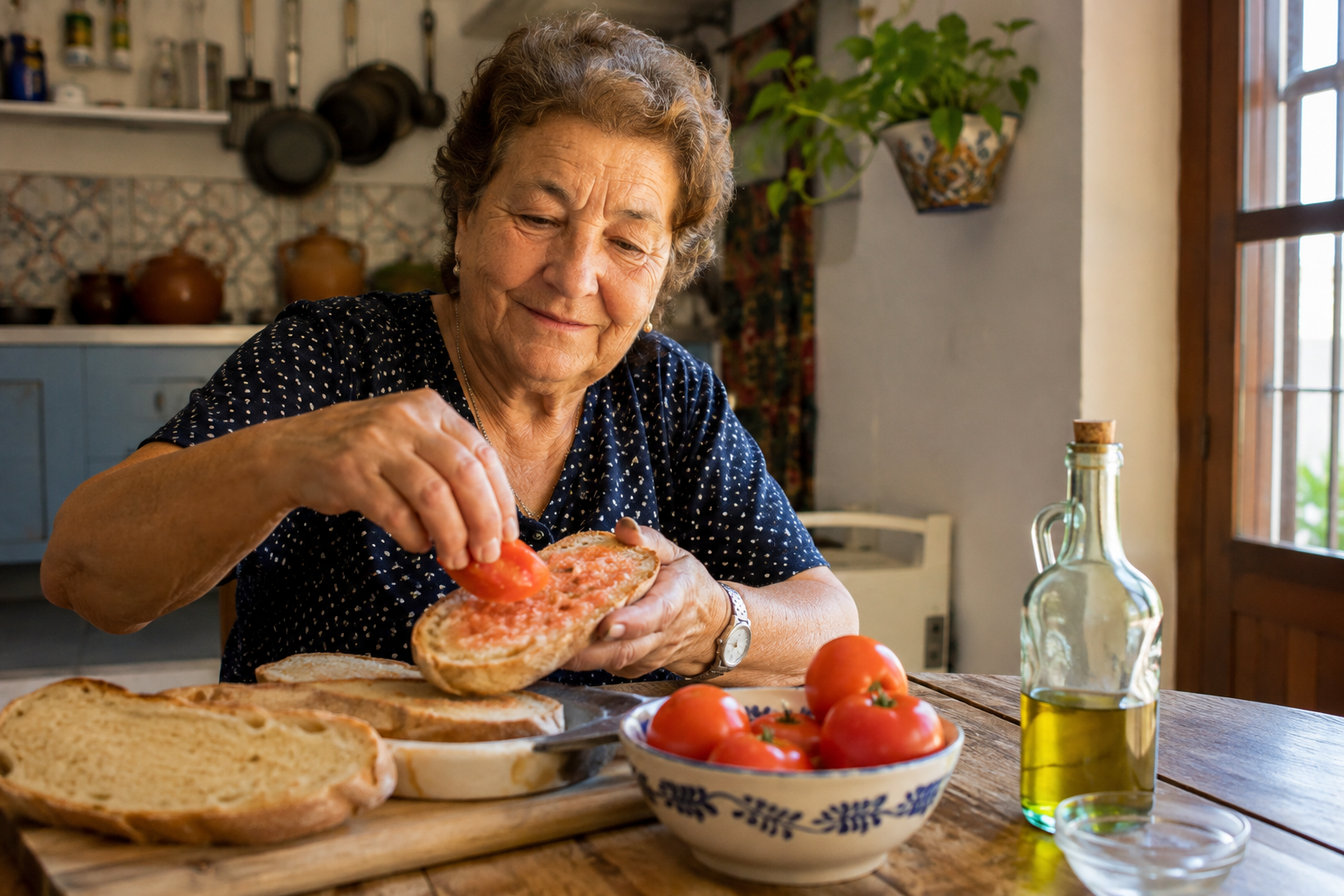
I had spent years trying to eat well by reading labels, scanning ingredient lists for the additives I had been taught to avoid, and it had always felt like a losing battle against a language designed to defeat me. The abuela test cut through all of that, and understanding why reveals something real about how ultra-processed food works and how to escape it.
The problem with the label approach is that it fights on the manufacturer’s turf. Ingredient lists are technical, ever-changing, and often reworded to look friendlier, so keeping up with which additives are concerning and spotting them among the euphemisms is exhausting and easy to get wrong. The abuela test sidesteps the entire game by asking a question the packaging cannot spin, because no clever wording can make an engineered snack into food a grandmother would recognize.
This is why the test is so robust. It does not require you to know the science of any particular additive, or to keep a list of banned substances in your head, but relies instead on a simple, durable, common-sense standard that industrial food cannot easily fake, which is whether something is a recognizable food or a manufactured product dressed as one. It replaces expertise with intuition, and in doing so it makes eating well accessible to anyone, no chemistry required. This accessibility is not a small thing. A great deal of nutrition advice is effectively gatekept behind jargon, leaving ordinary people feeling that eating well is a specialist skill they lack, when in fact their own grandmothers managed it without a single nutrition label. The abuela test hands that competence back, reminding you that the knowledge of what real food is was never lost, only buried under a century of marketing. You already know more than the packaging wants you to think you do.
What a Month Looked Like
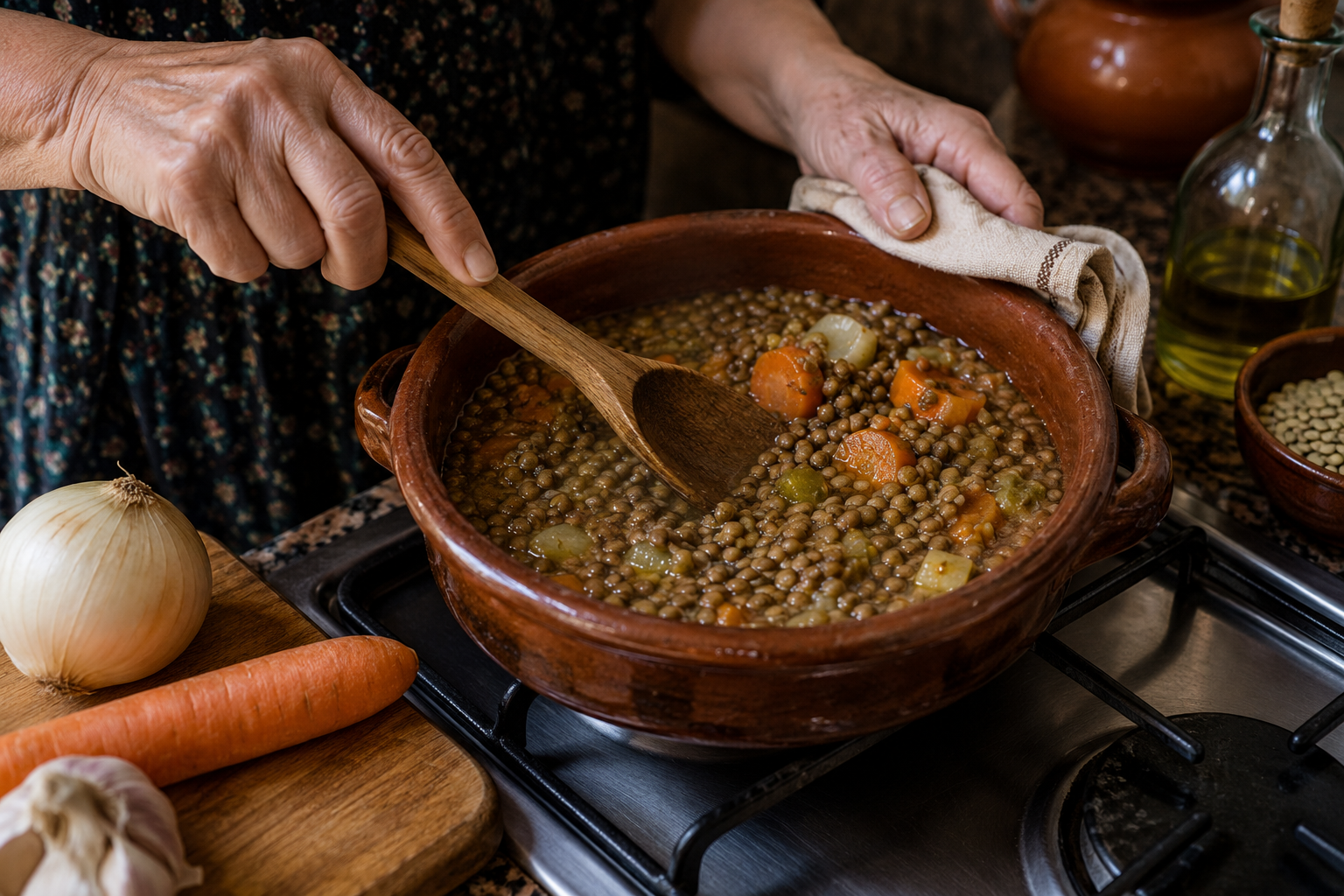
Eating this way for thirty days was, above all, a return to cooking, because the abuela test quietly forces you into the kitchen. When the only things that pass are recognizable foods, you find yourself buying ingredients rather than products and turning them into meals yourself, which is exactly what an abuela did every single day, and what the modern food system has spent decades persuading us we are too busy to do.
My days filled with simple, old-fashioned meals. Breakfast became eggs, or bread with tomato and olive oil, or fruit and yogurt, the plain foods of a Spanish morning. Lunches and dinners were the honest dishes of home cooking, a lentil stew, grilled fish with vegetables, a tortilla, a plate of beans, a salad dressed with oil and vinegar, the kind of food that fills a table in a village house. None of it was fancy, and all of it would have been instantly familiar to a grandmother anywhere around the Mediterranean.
What struck me was how unrestrictive it felt. I had braced for a month of deprivation, but eating only recognizable food did not feel like a diet of denial, because real food, cooked simply, is deeply satisfying, and the meals were generous, flavorful and pleasurable rather than meager. This was not about eating less or counting anything, but about eating real things, and the abundance of good, simple food was one of the happiest surprises of the whole month. I think this is because deprivation is a feature of diets built around subtraction, around what you cannot have, whereas the abuela test is built around a positive vision of what real food is. You are not staring at a list of forbidden things and feeling their pull, you are cooking and eating generously from an enormous world of genuine food. The framing changes everything, turning what could have been a month of saying no into a month of saying yes to the right things.
What Changed, and What Didn’t
I want to be careful and clear about the effects, because this is where these accounts often exaggerate. I did not undergo a miraculous transformation, and I am not going to claim that thirty days of recognizable food cured anything or remade my body, because that would not be true and you should distrust anyone who says it.
What I noticed was quieter and real. Cooking and eating this way, I felt generally steadier through the day, less pulled by the restless cravings that packaged foods had always provoked in me, and more satisfied after meals, the ordinary and believable benefits of eating whole foods cooked at home rather than grazing on engineered ones. These are not dramatic claims, and I offer them as one person’s experience rather than a promised result, but the difference in how settled I felt was noticeable enough to keep me going.
Just as important was what did not happen. I did not spend the month hungry, or bored, or feeling punished, and I did not find it especially hard once I had shopped and cooked a few times, which quietly dismantled the assumption that eating this way must be a grim exercise in willpower. The truth is that it was mostly a pleasure, and the biggest cost was simply time in the kitchen, which is a real cost but a very different one from suffering.
The Catch Worth Naming
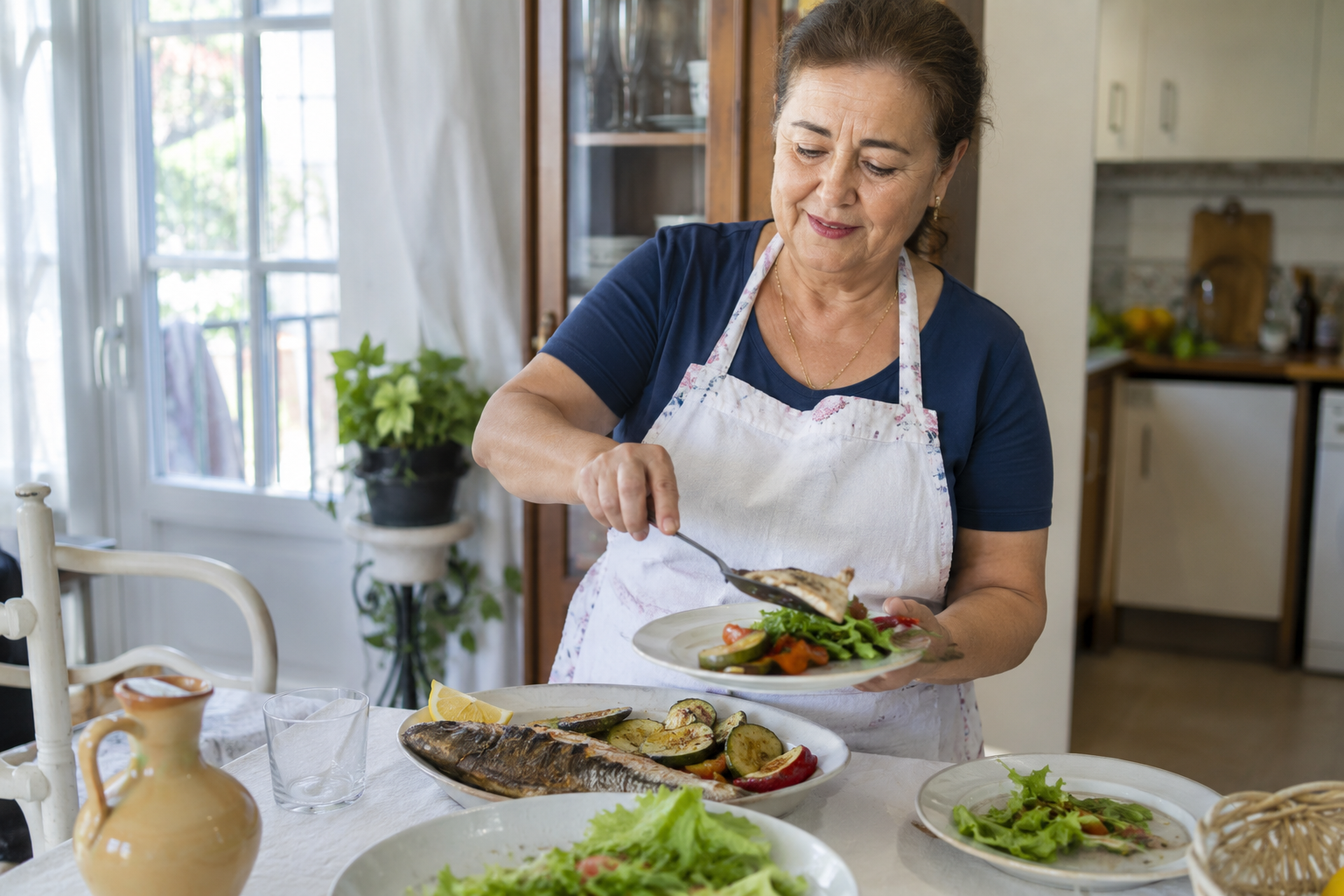
The real difficulty deserves naming, and it is not willpower or taste but time and, to some degree, money and access. Cooking from recognizable ingredients takes more time than opening a package, and that time is not equally available to everyone, so I want to be clear that the abuela test, for all its simplicity, asks something real of a busy life.
This is the real limit of the whole idea. The abuela who cooked from scratch every day often did so because that was her work, in a world structured very differently from ours, and asking a person with a job and a commute and children to cook that way is asking for time that modern life does not readily give, which is a genuine obstacle rather than an excuse. Pretending the test is effortless for everyone would be false, because it is not.
There are ways to soften the difficulty, and they matter. Cooking simple recognizable food does not have to mean elaborate meals, since much of what passes the test is quick, a piece of fish, some vegetables, eggs, beans from a jar, fruit and cheese, and batch cooking and a few easy staples go a long way, so the test is more achievable than it first appears even for busy people. The point is not culinary perfection but a general direction, and even a partial move toward recognizable food is worth something.
Making It a Habit
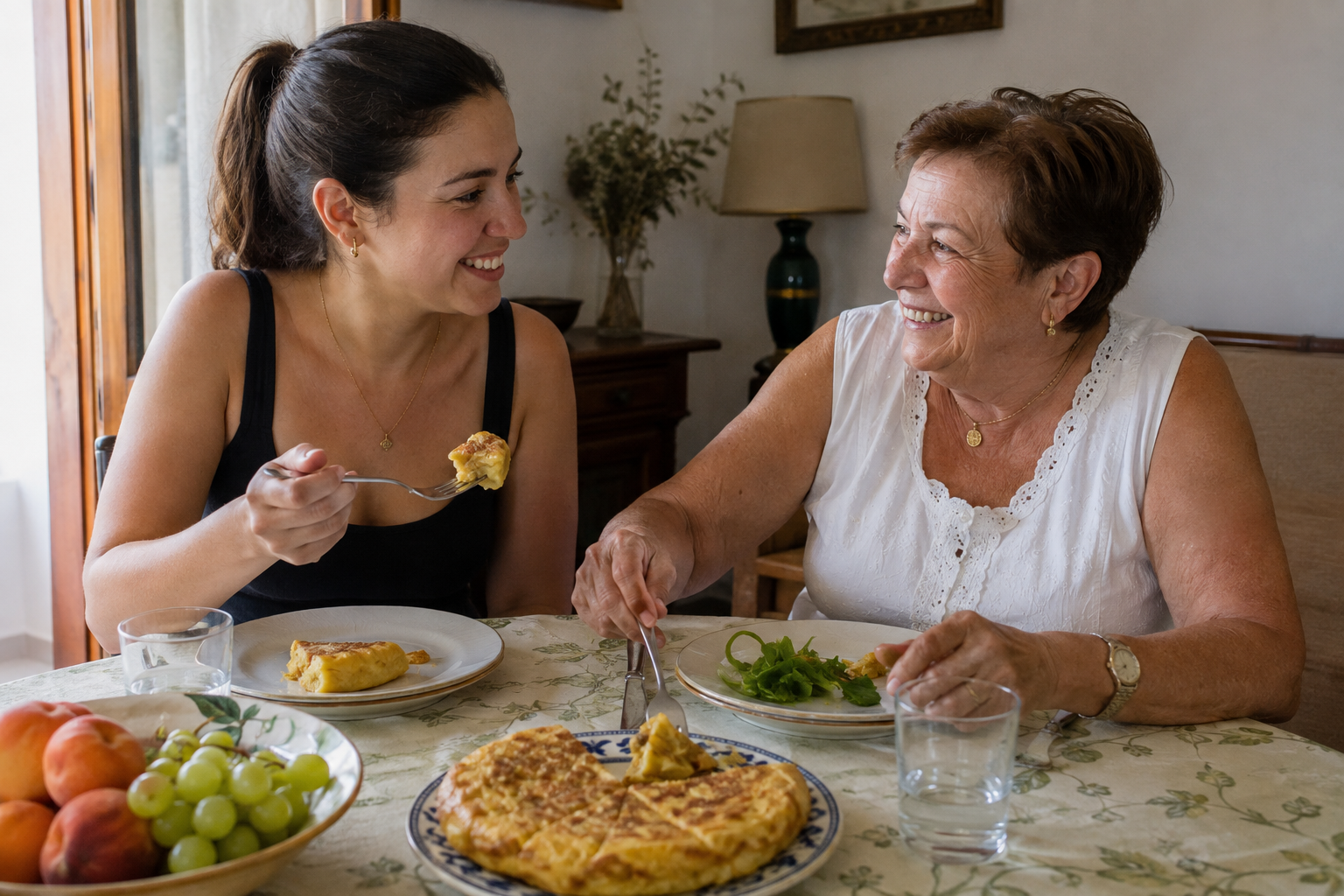
Coming out of the thirty days, the question was whether any of it would stick, and the answer has been that the abuela test survived as a simple mental habit long after the strict month ended. I do not follow it rigidly now, but it runs quietly in the background whenever I shop or eat, a fast, intuitive filter that shapes my choices without demanding constant effort.
Its durability is the whole point. Because the test is so simple and requires no lists or apps or expertise, it is easy to keep using indefinitely, unlike the elaborate rules that make people give up, and it bends gracefully to real life, allowing the occasional food that fails without collapsing into all-or-nothing failure. A habit you can keep imperfectly for years beats a strict rule you abandon in a week, and the abuela test is very much the former.
The way I hold it now is as a gentle default rather than a law. Most of the time I reach for what an abuela would recognize, because I have learned that I feel better and eat better when I do, and some of the time I do not, and that is fine, because the goal was never purity but a durable lean toward real food. That balance, recognizable food most of the time and no guilt about the rest, is what has made the habit last.
The Face That Makes It Stick
The lasting lesson of my thirty days is that the best guide to eating well may not be a nutritional label or a list of banned additives but a human face, the imagined abuela whose lifetime of real cooking is a better standard than any panel of ingredients. Giving the ultra-processed question a face turned an abstract, joyless problem into a warm and intuitive one, and that shift is what made the change feel not like a diet but like coming home to how people have always eaten.
What makes the test worth adopting is precisely that it asks for judgment rather than expertise, and offers a direction rather than a rigid rule. You do not need to understand food chemistry to know what a grandmother would recognize, and you do not need to be perfect to benefit from leaning that way, which makes this one of the rare approaches to eating well that is both truly effective and truly sustainable for an ordinary life. It meets you where you are and asks only that you move, gently, toward real food.
So the next time you are unsure whether something is worth eating, skip the label and picture the abuela. Show her what is in your hand and watch her face. If she would smile and call it food, enjoy it without a second thought, and if she would frown at something she cannot name, take that seriously. It is a simpler, kinder and more human test than any I have found, and after thirty days of living by it, I have never really stopped. The abuela, it turns out, was right about food all along, and she never needed to read a single label to know it.
This is a personal account rather than medical or nutritional advice, and anyone with specific dietary needs or health concerns should speak with a doctor or a registered dietitian.

About the Author: Ruben, co-founder of Gamintraveler.com since 2014, is a seasoned traveler from Spain who has explored over 100 countries since 2009. Known for his extensive travel adventures across South America, Europe, the US, Australia, New Zealand, Asia, and Africa, Ruben combines his passion for adventurous yet sustainable living with his love for cycling, highlighted by his remarkable 5-month bicycle journey from Spain to Norway. He currently resides in Spain, where he continues sharing his travel experiences with his partner, Rachel, and their son, Han.