
An American attending their first wedding in Europe often spends the whole event quietly recalibrating. Where is the bridal party? Why did no one register for gifts? Why is dinner starting at ten at night, and why does everyone seem prepared to dance until sunrise? The familiar American wedding script, with its matching bridesmaids, its gift registry, its reception that winds down by eleven, turns out to be just that, an American script, and European weddings follow entirely different ones. For the American guest, the differences range from charming to bewildering, and they add up to a truly eye-opening experience.
None of this is to say European weddings are better or worse than American ones, only that they are strikingly different, shaped by different traditions and different ideas about what a wedding is for. But those differences catch American guests off guard again and again, from the absence of features Americans consider essential to the presence of customs Americans have never encountered, all the way to a stamina at the party that puts the American reception to shame. Knowing them in advance turns confusion into delight.
Here is what tends to shock American guests at European weddings, from the missing bridal party and registry to the marathon celebrations that run until dawn, offered as a cultural comparison rather than a judgment of either tradition. This is a general and affectionate look at broad patterns rather than a rule about every wedding, since customs vary enormously across Europe and from family to family. But the contrasts are real and recurring, and they make the European wedding a fascinating thing to witness.
No Bridal Party
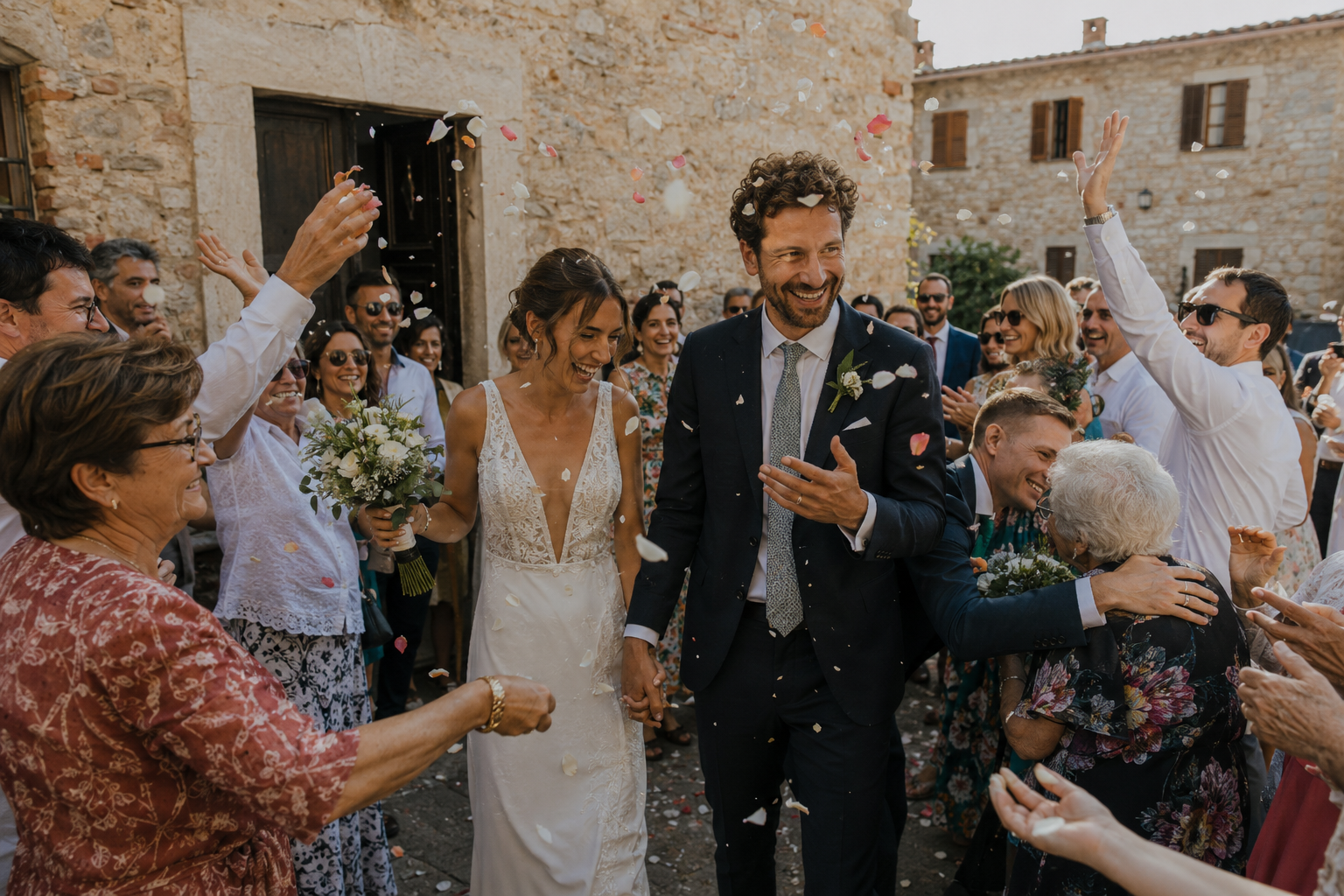
The first thing an American guest notices is an absence, the near-total lack of the bridal party that is central to the American wedding. There are usually no matching bridesmaids in coordinated dresses, no groomsmen in identical suits, no elaborate wedding party standing up front, none of the choreographed entourage that an American wedding is built around.
To an American this can be quite disorienting. The bridesmaids and groomsmen are so fundamental to the American conception of a wedding, with their fittings and their duties and their processional, that their simple absence leaves the American guest wondering whether something has been forgotten, when in fact the European wedding was simply never structured around a bridal party in the first place. The couple stands on their own.
Where Americans build a small court around the couple, many European weddings keep the focus on the couple alone, perhaps with just a witness or two for the legal formalities rather than a full retinue in matching outfits. It is a leaner, less choreographed affair at the front, and once the American adjusts, many find there is something appealingly simple about a wedding that centers the couple rather than an entourage. The missing bridal party is the first sign that the whole script is different. It also quietly changes the social dynamic of the day. Without a wedding party, there is no separate tier of specially costumed friends set apart from the other guests, so everyone attends on roughly equal footing, and the expensive, sometimes fraught business of being asked to be a bridesmaid, buying the dress and hosting the showers, simply does not arise. The American who has funded a friend’s wedding party will find the European approach refreshingly free of that particular obligation.
No Gift Registry
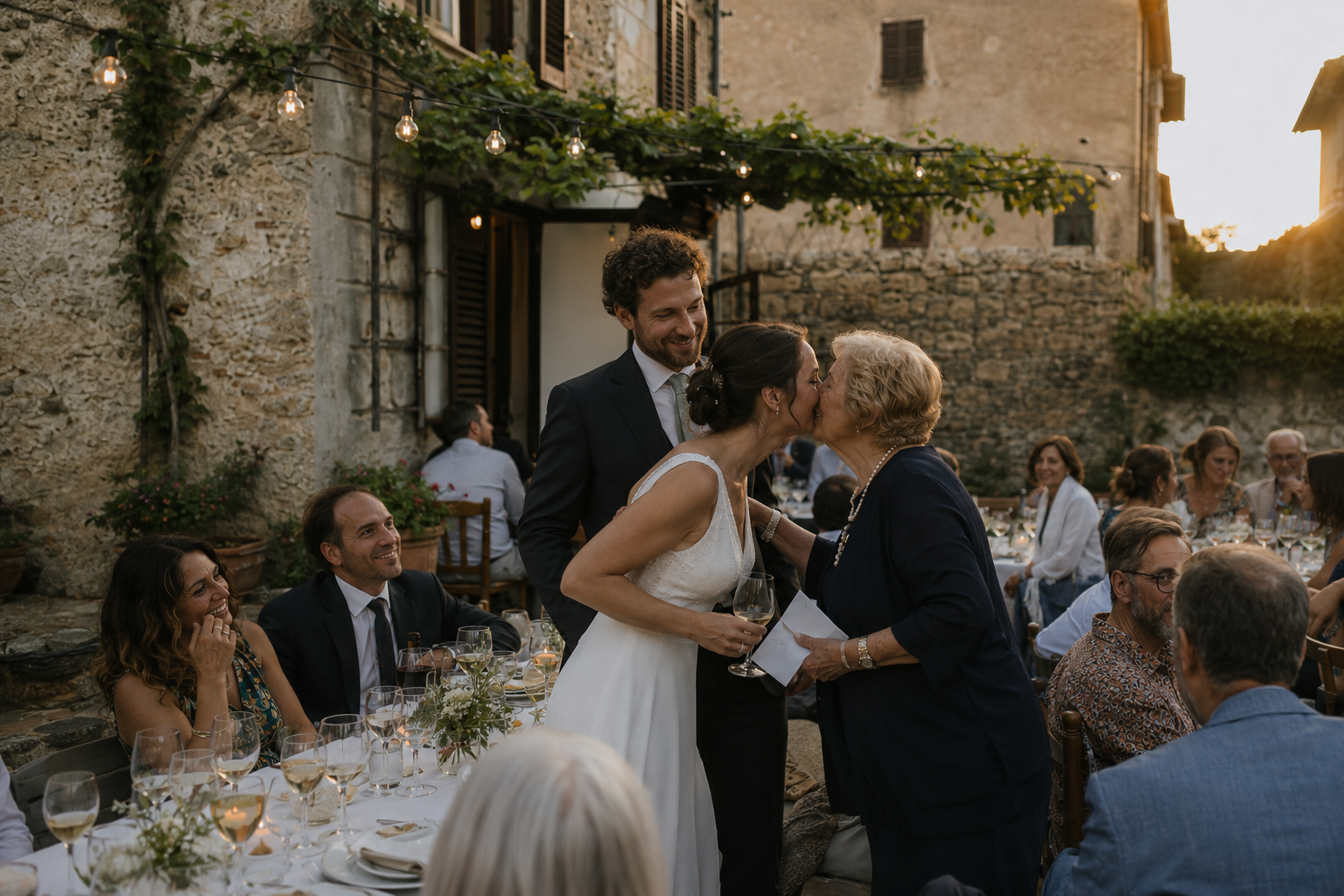
The second shock is the absence of the gift registry, that fixture of American weddings where the couple selects the exact housewares they want and guests buy from the list. In much of Europe this simply is not done, and an American guest looking for the registry to know what to buy will find that there is none, which can be quietly stressful for someone raised on the registry system.
What replaces it is often refreshingly direct. In many European countries the customary gift is simply money, cash given to the couple to help them start their life together or fund their honeymoon, rather than a specific object chosen from a list, so the guest is spared the registry hunt and the couple receives something more useful. The practicality of it strikes many Americans, once they get over the initial surprise, as rather sensible.
The etiquette around the cash gift is its own small education. Rather than agonizing over which blender to buy, the European guest gives an appropriate sum of money, often calibrated loosely to the cost of the celebration or the closeness of the relationship, in a card or envelope presented to the couple. To an American accustomed to the registry, handing over cash can feel startlingly blunt at first, but it is entirely normal and expected in much of Europe, and it removes a whole layer of American wedding anxiety. There is a logic to the cash custom that goes beyond convenience. A wedding is expensive, a couple starting out often needs money more than a fourth set of towels, and the guests, rather than guessing at what the couple lacks, simply contribute to the life the couple is building, which many find both more sincere and more generous than the registry. What can look crass to an American eye is, on reflection, a rather warm and practical way of helping a couple begin.
The Civil and the Celebration Are Separate
A structural difference that confuses many American guests is the way the legal marriage and the celebration are often separated in Europe. In many European countries the official, legally binding marriage happens as a civil ceremony at a town hall or registry office, sometimes on a different day, while the big celebration that guests attend is a separate event, which can puzzle Americans used to a single ceremony that is both legal and celebratory at once.
This separation reflects a different relationship between the state and the wedding. In much of Europe only the civil ceremony carries legal force, so a couple marrying in a church or elsewhere must also complete the civil formalities, and the result is that the wedding an American guest attends may be purely a celebration, the legal deed already done or done separately. The party is the party, and the paperwork is the paperwork.
For the American guest this can produce moments of confusion about what exactly they are witnessing. The grand celebration may not be the legal wedding at all, which happened quietly at a registry office, so the emotional and social heart of the event and its legal core have been pulled apart in a way the American single-ceremony model never does. Once understood, it makes sense, but it catches many American guests by surprise. It can also mean the couple has technically been married for days or even weeks before the celebration the guests attend, which reframes the whole event. The party is a joyful public affirmation rather than the legal moment itself, so nothing hinges on it legally, and this can lend the celebration a relaxed quality, freed from the solemn weight of being the instant the marriage becomes real. The serious business was handled quietly elsewhere.
Dinner Starts Late, and So Does Everything
The timing of a European wedding is one of its greatest shocks to the American guest, because everything happens far later than an American would expect. Where an American wedding might have guests seated for dinner in the early evening and the whole affair wrapped up by eleven, a European celebration, especially in the south, can see dinner beginning at nine or ten at night and the festivities only truly getting going as the American would expect them to be ending.
This late schedule reflects a broader European rhythm, particularly in Mediterranean countries. Late dining is simply the norm in places like Spain and Italy, so a wedding dinner at ten at night is unremarkable to the locals even as it astonishes the American, and the whole event is calibrated to a later clock that the American body is not prepared for. The guest who ate a big lunch expecting an early dinner is in for a long wait.
The consequence is that the American guest must recalibrate their entire sense of a wedding day’s shape. What feels to an American like the middle of the night is, at a European wedding, merely the point at which the real celebration begins, so the guest who paces themselves for an American timeline will flag badly, while the one who understands the late rhythm can settle in for the long, joyous haul ahead.
Dancing Until Dawn
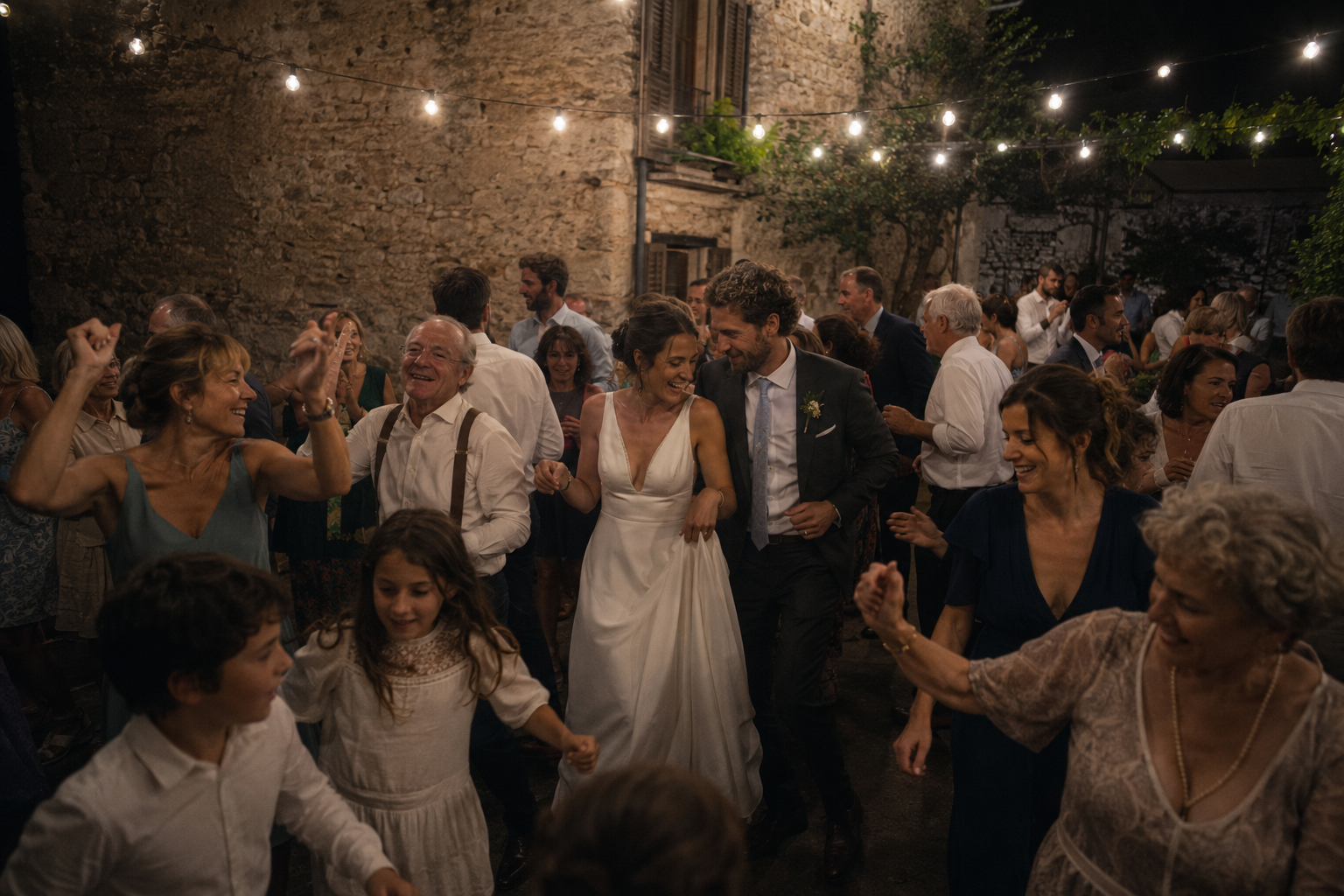
Which leads to perhaps the most famous shock of all, the sheer duration of the European wedding celebration, which can truly run until sunrise. Where the American reception is a bounded event with a clear end, the European celebration, once it gets going, can continue for many hours into the night, with dancing and eating and drinking carrying on until the small hours and beyond, sometimes literally until dawn.
The stamina involved astonishes American guests. A European wedding is not a few hours of dinner and dancing but an epic, a marathon celebration that demands real endurance, with the party going strong at three or four in the morning long after an American reception would have sent everyone home, and guests of all ages staying for the duration. This is a feat of festivity the American wedding rarely attempts.
There are often second acts that compound the marathon. Late-night food may appear to refuel the dancers in the small hours, the celebration may spill into an after-party, and in some traditions the festivities continue the very next day with another gathering, so what an American thinks of as a single evening’s event becomes an extended, multi-stage celebration. The American guest who witnesses, and survives, a wedding that dances until dawn comes away with a new understanding of what a party can be.
More Relaxed and Less Scripted
Beyond the specific differences, American guests often notice a different overall feeling, a wedding that is less rigidly scripted than the American version. Where American weddings often run to a tight and elaborate program, the first dance, the cake cutting, the bouquet toss, all in careful sequence, many European weddings feel looser, more spontaneous, and more focused on simply eating, drinking and celebrating together.
This relaxed quality can be a revelation to the American. Freed from the packed itinerary of set-piece moments that structure an American reception, the European celebration can breathe, letting people linger over the long meal, drift into dancing when the spirit moves, and enjoy the company without being marched through a program, which many American guests find liberating once they stop waiting for the next scheduled event. The wedding unfolds rather than executes.
The absence of certain American rituals contributes to the ease. Many of the choreographed traditions an American expects, the formal bouquet toss, the garter ritual, the elaborately staged sequence of events, are simply not universal in Europe, so the celebration is less a performance to be gotten through and more a party to be enjoyed. For the American guest, this looser spirit is often one of the most pleasant surprises of the whole experience.
The Long Meal at the Heart of It
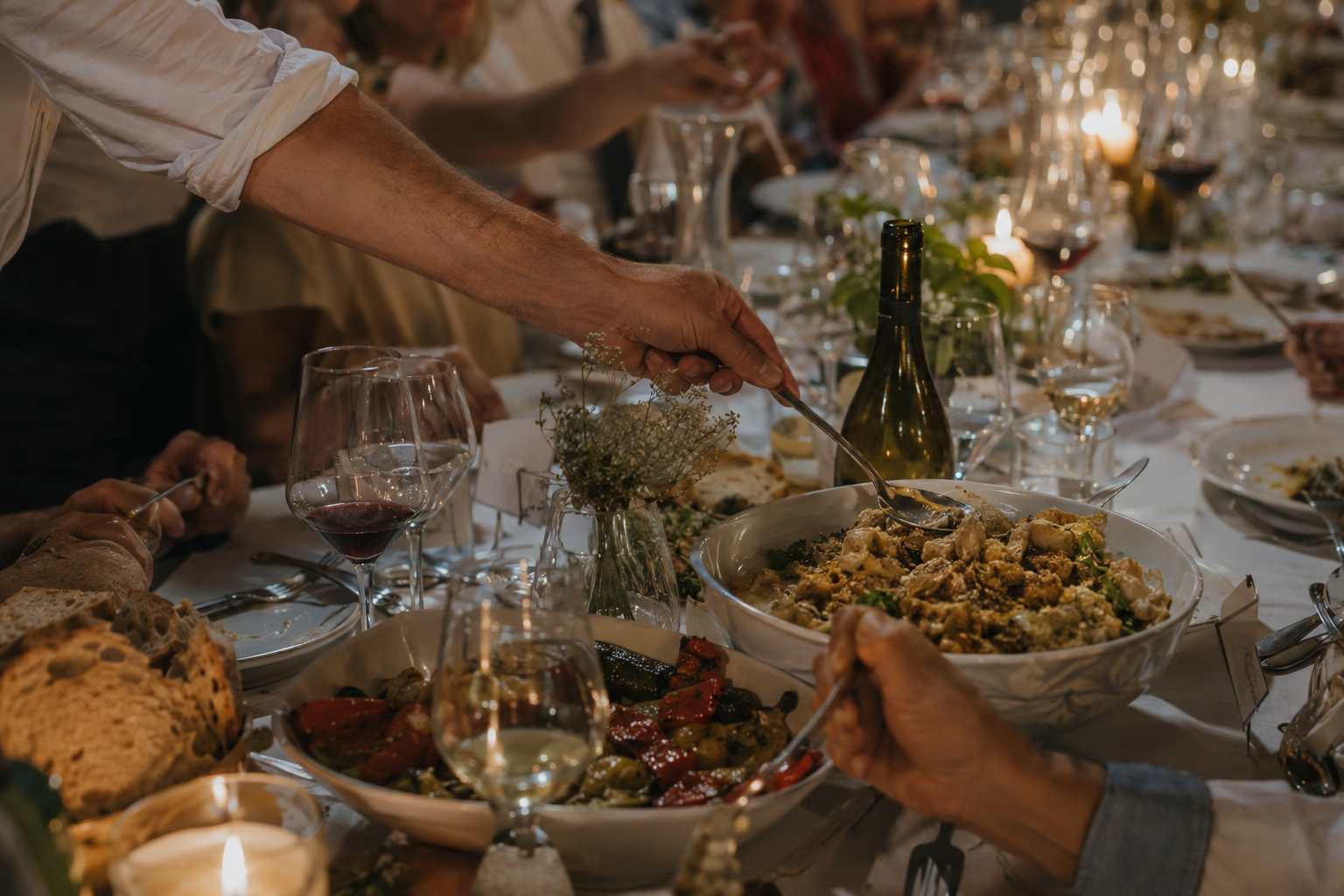
Underpinning much of the European wedding is the centrality of the meal, which is often a long, elaborate, multi-course affair that anchors the whole celebration in a way American guests do not expect. Where the American wedding tends to treat dinner as one segment of the evening to be served and cleared so the dancing can start, the European wedding often builds the entire celebration around an extended feast.
This meal can go on for hours, and that is the point. Course after course arrives across a long and leisurely dinner, with wine and conversation and toasts unfolding between them, so the meal is not a preliminary to the celebration but a central part of it, a shared feast that can occupy much of the evening before the dancing even begins. The food and the time spent over it are treated as essential rather than incidental.
For the American guest, adjusting to the long meal is part of adjusting to the whole European rhythm. The dinner that seems to go on and on is not a delay before the real event but the heart of it, an expression of the European conviction that gathering around a long table to eat and drink together is what a celebration fundamentally is. Once the American stops waiting for the meal to end, they can appreciate it as the warm, unhurried centerpiece it is meant to be.
Learning to Love the Difference
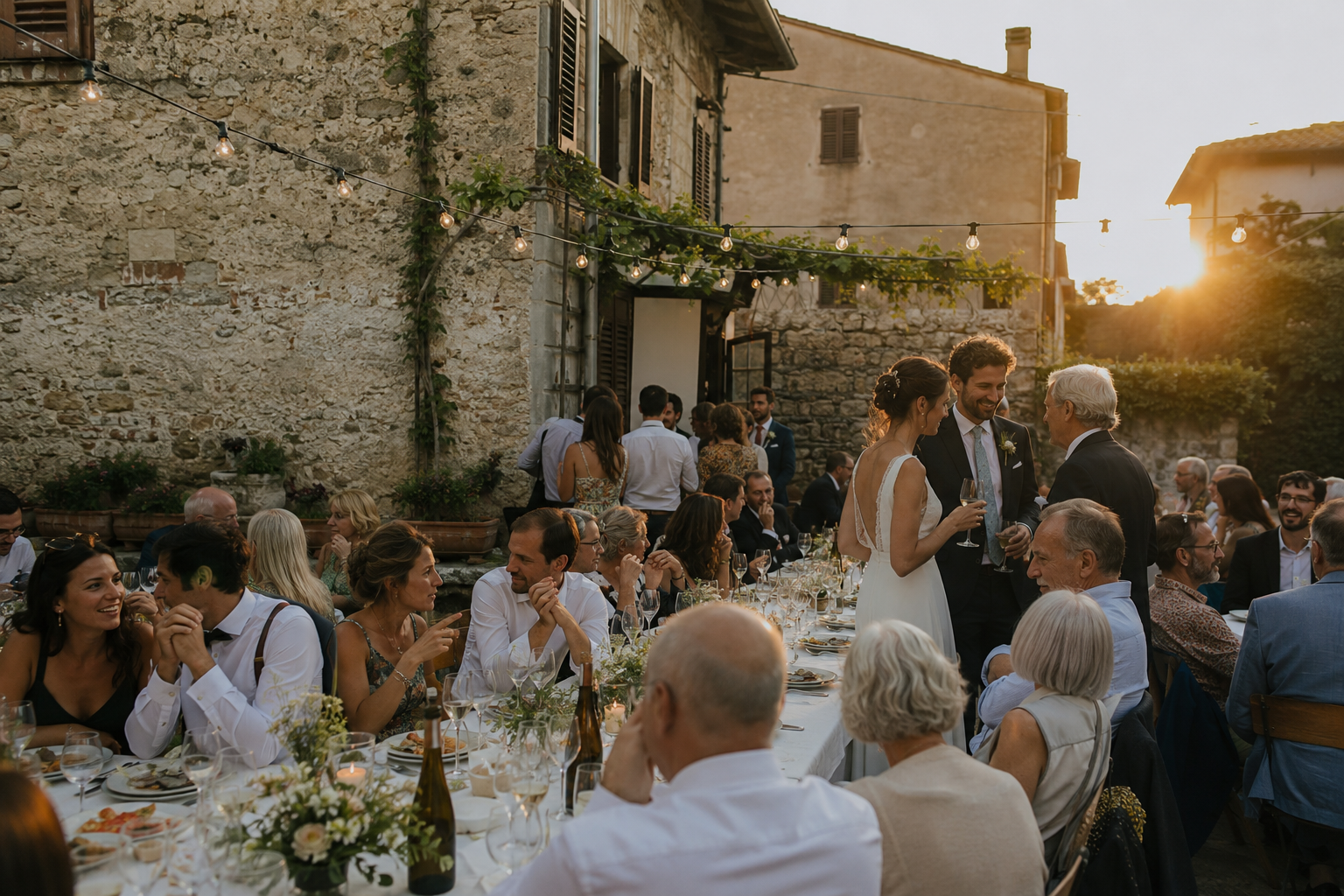
Taken together, the shocks that await the American guest at a European wedding, the missing bridal party, the absent registry, the separated ceremony, the late start, the dawn finish, the looser structure, the long meal, add up to a wedding built on wholly different assumptions about what the occasion is for. The American script and the European script diverge at nearly every point, and encountering the European one for the first time is a small lesson in how much of what we consider universal is really just local.
What makes the experience so rewarding is that the differences, once understood, are mostly delightful. The cash gift is practical, the couple-focused ceremony is elegant, the long meal is warm, and the marathon celebration is joyous in a way the bounded American reception rarely achieves, so the American guest who arrives prepared to adjust rather than to judge tends to come away charmed. The shocks turn into pleasures once the script is understood.
In the end the European wedding invites the American guest to let go of their assumptions and step into a different way of celebrating, one that centers the couple, the meal and the sheer joy of an all-night party over the choreographed program of the American model. The guest who embraces it, who paces themselves for the late start, gives cash without embarrassment, and settles in to dance until dawn, discovers a wedding that is less a production and more a celebration, and often finds themselves wishing their own traditions had a little more of the same. The differences that shock at first are, in the end, the whole point, and the American who learns to love them takes home more than a good night. They take home a new idea of what a wedding can be, and often a slightly sore pair of feet to prove it.

About the Author: Ruben, co-founder of Gamintraveler.com since 2014, is a seasoned traveler from Spain who has explored over 100 countries since 2009. Known for his extensive travel adventures across South America, Europe, the US, Australia, New Zealand, Asia, and Africa, Ruben combines his passion for adventurous yet sustainable living with his love for cycling, highlighted by his remarkable 5-month bicycle journey from Spain to Norway. He currently resides in Spain, where he continues sharing his travel experiences with his partner, Rachel, and their son, Han.