
In America, an unmarried couple who live together are, in the eyes of the law, mostly just two people who happen to share an address. There is no official category for them, no registration that recognizes their partnership, no in-between status between total legal invisibility and full marriage. In Spain there is exactly such a category, called the pareja de hecho, a registered domestic partnership that grants a cohabiting couple real legal recognition and a bundle of rights without marrying them. It is a middle path that America simply does not have, and does not even have a clean word for.
The pareja de hecho, which translates roughly and inadequately as domestic partnership or civil union, occupies a space that barely exists in American law, formally recognizing a stable unmarried couple and granting them a range of legal benefits while stopping short of marriage. For the many Americans now living in Spain, and for anyone curious about how another country structures relationships, it is a truly useful thing to understand, both for the practical rights it confers and for the different philosophy of partnership it reveals.
Here is what the pareja de hecho really is, what rights it grants and withholds, how it differs from marriage, and why America has no real equivalent. This is general information rather than legal advice, the rules vary significantly by region and change over time, and anyone considering one needs proper local legal guidance, but understanding the shape of this institution is illuminating in itself, especially for the American accustomed to a world with only two options.
An In-Between Status America Lacks
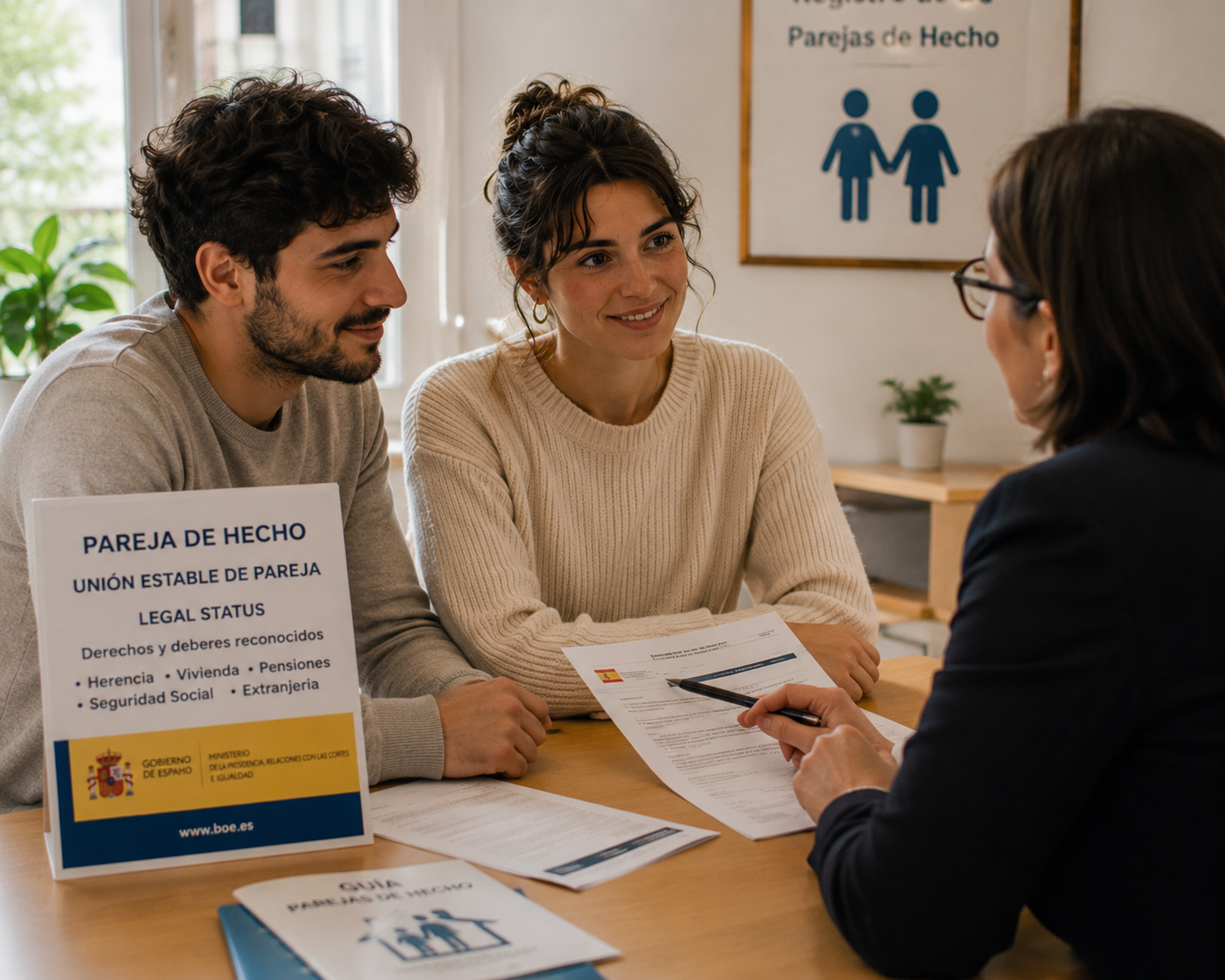
The first thing to grasp is that the pareja de hecho fills a gap that American law largely leaves empty. In the United States, a couple is essentially either married or unmarried and legally unrecognized as a couple, with little in between beyond a patchwork of limited and fading arrangements. Spain offers a genuine third option.
The pareja de hecho is that third option made official. It is a formally registered status for a couple who live together without being married, a legal acknowledgment that they are a committed partnership, which opens the door to real rights and recognition that an unregistered cohabiting couple does not have. The couple registers with the authorities and, in doing so, moves from legal invisibility to legal recognition without ever getting married.
This is precisely the status America lacks a clean word for. English reaches for domestic partnership or civil union, but neither quite captures the Spanish institution, and the American legal landscape offers no widespread, standardized equivalent, which is why the pareja de hecho can be so puzzling to Americans encountering it. It is a recognized, registered, rights-bearing middle ground between cohabitation and marriage, and it is simply not part of the American map of relationships. The closest thing many Americans know is the vague and legally shaky notion of common-law marriage, but that is a different animal entirely, an informal status recognized in only a handful of states and often misunderstood even there. The pareja de hecho is nothing so hazy, being a deliberate, formal, actively registered status a couple chooses and records, which is exactly what gives it teeth that the American folk category lacks.
What It Actually Grants
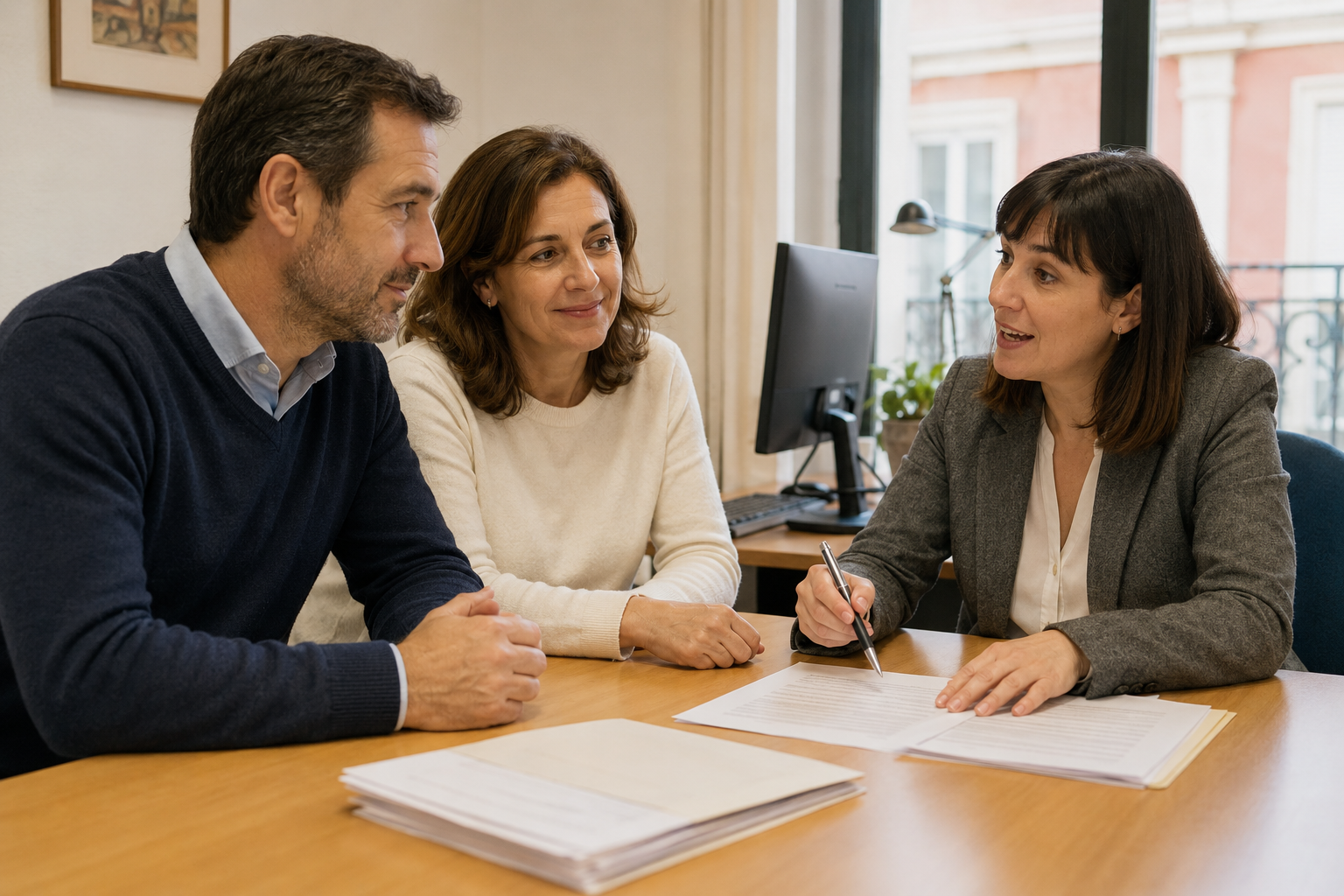
The reason the pareja de hecho matters is the concrete benefits it provides, which are real and substantial even if they fall short of marriage. Registering as a pareja de hecho grants a couple a range of legal rights and protections, spanning social security, employment, health matters and taxation, giving the partnership legal weight it would not otherwise have.
Several of these benefits touch daily life directly. Registered partners generally gain rights around social security survivor benefits, access to employment-related leave such as bereavement and parental leave comparable to married couples, recognition as next of kin in health and medical contexts, and certain tax treatments, all of which give the relationship practical legal standing. These are not trivial protections but meaningful rights that structure a couple’s security and daily dealings, the sort of things that only become visible when a partner is hospitalized, a job grants leave, or a benefit is claimed.
For many couples, especially international ones, the immigration dimension is the most valuable of all. A registered pareja de hecho can serve as the basis for a foreign partner to obtain Spanish residency, or for family reunification, particularly where one partner is an EU citizen, which makes it a powerful tool for binational couples who want to live together in Spain without marrying. For such couples this immigration pathway is frequently the whole point of registering. It is worth dwelling on how significant this is for binational couples, because it can be life-shaping. Where an American partnered with a Spaniard or another EU citizen might otherwise face the full apparatus of a residency visa, the pareja de hecho can open a far more accessible route to living and working legally in Spain, sometimes without the income thresholds that other visas demand. For couples who do not want to marry but do want to build a life together in Spain, this alone can justify the whole exercise.
What It Deliberately Withholds

Just as important as what the pareja de hecho grants is what it does not, because it is emphatically not a marriage by another name. The status stops well short of marriage in several significant respects, and treating the two as equivalent is a common and costly mistake, so understanding the gaps matters as much as understanding the benefits.
The most important gap concerns inheritance. Unlike a spouse, a registered partner does not automatically inherit from their partner under Spain’s general rules, having no equivalent of the reserved share that a husband or wife is guaranteed, which means that without a will, a surviving partner can be left with nothing. This is why a will is not just advisable but essential for registered partners, far more so than for married couples, since the will is what protects the surviving partner where the law does not.
Other gaps matter too. A pareja de hecho does not change your legal marital status, which remains single, it does not create the shared financial regime that marriage does, leaving the partners’ finances separate by default, and it does not grant the joint income-tax filing available to married couples, so a partnership can miss tax advantages a marriage would capture. The pareja de hecho is a distinct and lesser status by design, offering much but deliberately not everything. The word lesser is not a criticism here but a description, since the gaps are features rather than flaws. The institution was built precisely to offer recognition without the full entanglement of marriage, so its lighter obligations and thinner protections are the price and the point of its greater flexibility. A couple who wants everything marriage provides should simply marry, and a couple who wants recognition without all of that has, in the pareja de hecho, a tool shaped exactly for them.
The Regional Patchwork
One feature that badly complicates the pareja de hecho, and distinguishes it sharply from marriage, is that it is not a single national institution but a regional patchwork. Where marriage in Spain is governed by uniform national law that works identically from Barcelona to Seville, the pareja de hecho is regulated separately by each of Spain’s autonomous communities, so its rules, requirements and rights vary from region to region.
This regional variation shapes everything about the status. The requirements to register differ by community, with some regions demanding a minimum period of prior cohabitation, Madrid for instance requiring a year, and others requiring the partnership be formalized through a particular process, while the exact rights conferred also vary depending on where a couple registers. There is no single Spanish pareja de hecho but seventeen regional versions, each with its own rules.
This creates real practical complications, especially the problem of moving. Because each region runs its own registry and sets its own rights, a pareja de hecho registered in one autonomous community does not reliably transfer if the couple moves to another, and a couple cannot simply carry their registration across regional lines the way a marriage carries nationwide. For a mobile couple, this regional fragmentation is a genuine consideration, and one with no parallel in the uniform national institution of marriage.
How It Differs From Marriage

Setting the pareja de hecho beside marriage brings the whole picture into focus, because the two are quite different institutions rather than variations on one theme. Marriage is a uniform, national, comprehensive legal status with the full set of rights, from automatic inheritance to shared finances to joint taxation, applied identically across the entire country. The pareja de hecho is a regional, partial, more flexible status offering many rights but not all.
The philosophical difference is as real as the legal one. Marriage binds a couple comprehensively and permanently in the eyes of the law, with a formal process required to enter and to dissolve, while the pareja de hecho recognizes a partnership more lightly, granting substantial rights while preserving a greater degree of independence and flexibility, and it can be dissolved far more easily than a marriage. It is a lighter commitment with lighter consequences.
This flexibility is precisely its appeal for many couples. Some couples choose the pareja de hecho over marriage exactly because it offers real legal recognition and important rights without the full weight, permanence and financial merging of marriage, suiting those who want their partnership acknowledged and protected but not fully married. The choice between the two is a genuine one, a decision about how much legal binding a couple wants, which is a choice American couples rarely get to make in such structured terms.
Why America Has No Word for It
The absence of an American equivalent is itself revealing, and worth dwelling on. The United States, for the most part, structures adult partnership as a binary, married or not, with marriage as the single comprehensive status and little formal recognition for committed couples who have not married, so the standardized, rights-bearing middle category that the pareja de hecho represents simply never became a fixture of American law.
The history explains part of it. Some American jurisdictions did develop domestic partnerships and civil unions, particularly as way stations toward marriage equality, but many of these have faded or been folded into marriage since same-sex marriage became legal nationwide, leaving the American landscape with even less of a middle option than it once had. The category exists in scattered and shrinking forms rather than as a coherent national institution.
The result is a genuine conceptual gap. The American accustomed to thinking of relationships as married or unmarried encounters in the pareja de hecho a whole recognized status they have no ready framework for, a couple who are neither married nor legally invisible but something definite in between. The missing word reflects a missing institution, and the Spanish system, by contrast, treats the space between cohabitation and marriage as a real place worth naming and regulating.
Whether It Is Right for a Couple
For couples seriously weighing the pareja de hecho, particularly the many international couples in Spain, the decision comes down to matching the status to their needs, and it requires clear eyes about both its powers and its limits. For a binational couple needing a residency pathway, or a couple wanting recognition and rights without marrying, it can be a fine fit, delivering exactly the legal standing they need with less commitment than marriage.
But the limits must be respected, and this is where good advice becomes essential. Because the pareja de hecho withholds automatic inheritance, varies by region, and lacks some of marriage’s tax and financial advantages, a couple relying on it should understand precisely what it does and does not do for them, above all making a will to protect each other, since the law will not do it automatically. The couple who treats it as a full marriage substitute without checking the details can be badly caught out.
This is emphatically an area for proper legal guidance rather than assumption. Because the rules vary so much by region and the stakes, from inheritance to residency, are so high, anyone considering a pareja de hecho should consult a lawyer familiar with their specific autonomous community, who can explain exactly what registering will and will not achieve for them. The institution is truly useful, but only to those who understand its particular shape, which is why expert local advice is indispensable.
A Third Option Worth Understanding
The pareja de hecho turns out to be a small revelation for the American observer, evidence that the binary of married or unmarried is not the only way a society can structure committed partnership. Spain offers a real, recognized, rights-bearing middle ground, a way for a couple to be legally acknowledged and substantially protected without marrying, and the fact that America has no clean word for it reflects how completely the American system has committed to the binary instead.
What makes the institution worth understanding is both its practical value and what it reveals. For the many couples it suits, especially international ones navigating residency, it delivers real and important rights through a flexible, lighter-weight status, while for everyone else it stands as an illuminating example of a different way to think about partnership, one that recognizes the space between single and married as a legitimate place to be. It is quietly useful and thought-provoking at once.
In the end the pareja de hecho is a reminder that the legal categories we treat as natural and inevitable are really just choices a society has made, and that other societies have made different ones. The Spanish couple registered as a pareja de hecho, recognized and protected but not married, occupies a status the American couple cannot quite occupy, because America never built it. Understanding it is worth the effort, both for the couples who might use it and for the light it casts on the assumptions we never think to question, and it is a good example of how looking closely at another country’s law can reveal the shape of our own. The word America lacks turns out to point at an option America lacks too.

About the Author: Ruben, co-founder of Gamintraveler.com since 2014, is a seasoned traveler from Spain who has explored over 100 countries since 2009. Known for his extensive travel adventures across South America, Europe, the US, Australia, New Zealand, Asia, and Africa, Ruben combines his passion for adventurous yet sustainable living with his love for cycling, highlighted by his remarkable 5-month bicycle journey from Spain to Norway. He currently resides in Spain, where he continues sharing his travel experiences with his partner, Rachel, and their son, Han.