
There is a particular kind of magic to falling asleep in one place and waking up in another, and the Mediterranean has quietly perfected it. While most travelers fly to the Spanish islands, squeezing through airports and paying for a hotel the moment they land, a smarter and older way of arriving runs through the night across the dark water. You board a ferry in the evening, take a cabin, sleep as the ship crosses, and step off in the morning already there, rested and unhurried, having turned the journey itself into the first night of the trip.
The night ferries of the Mediterranean are one of travel’s underrated pleasures, and the arithmetic behind them is better than it looks. A cabin on an overnight crossing to Mallorca or one of its neighbors does the work of both a flight and a hotel night at once, moving you across the sea while you sleep and depositing you at your destination in the morning, which turns what would have been dead travel time into a rather romantic night’s rest afloat. Booked well, the cabin does not add a night to the trip. It saves one.
Here is how the Mediterranean night ferries work, why a cabin crossing can beat both the flight and the hotel, what the experience is really like, and how to do it well. This is a genuine and often overlooked way to travel the Spanish islands and the wider sea, part transport and part small adventure, and once you have done it the airport route starts to feel like a waste of a good night. There is a reason this way of traveling has survived the age of cheap flights rather than being killed by it. A plane is faster on paper, but it eats a day at both ends in transfers and waiting and delivers you frazzled, while the night boat gives the hours back by folding them into sleep. For anyone who values arriving well over arriving quickly, the maths and the mood both point to the sea.
The Overnight Crossing Explained
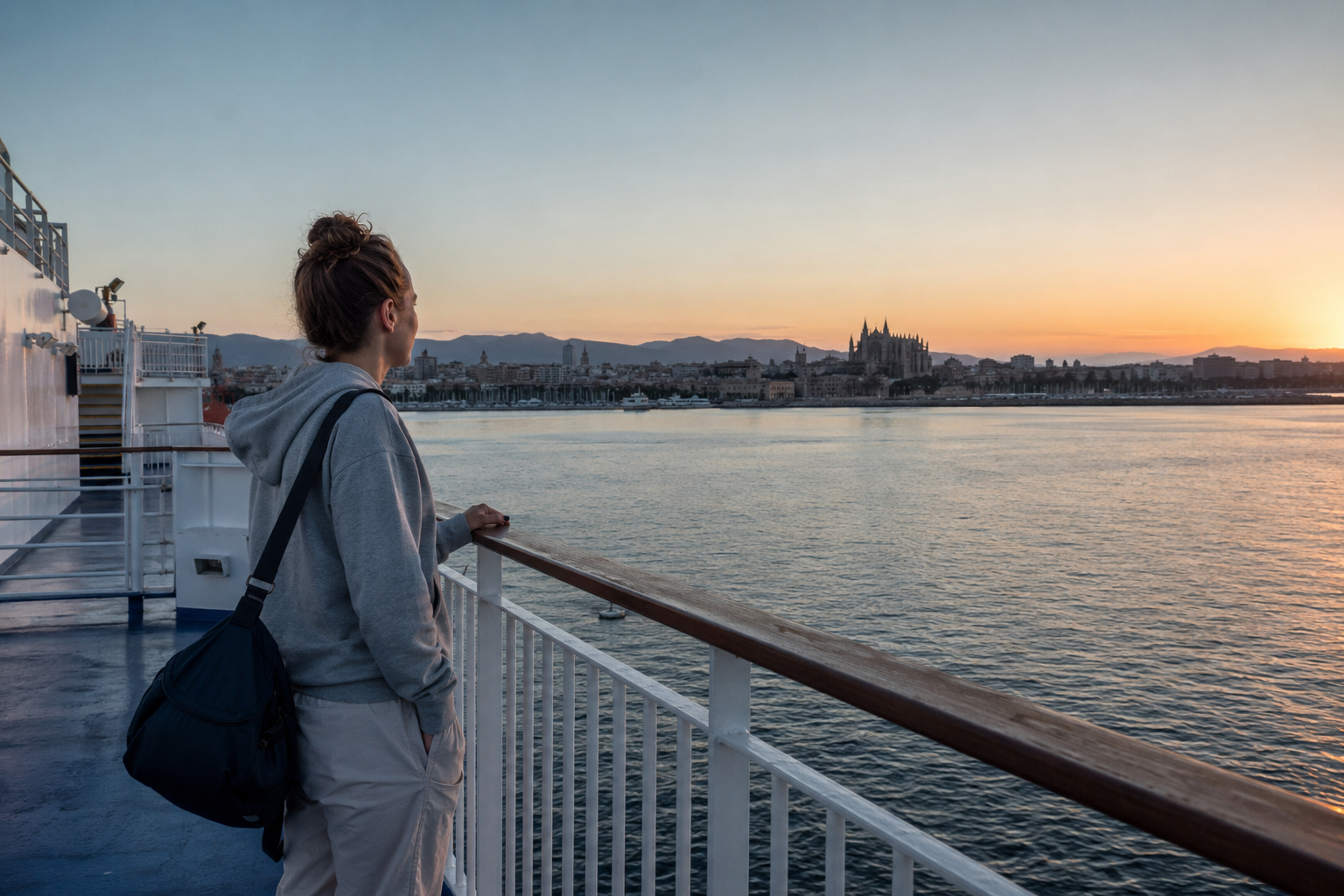
The concept is simple and old, the overnight ferry, a large ship that sails through the night on a long crossing so that passengers can sleep aboard and arrive in the morning. Across the Mediterranean these routes knit together the mainland and the islands, and the Spanish network is especially rich, with overnight sailings running from the mainland ports out to the Balearic Islands of Mallorca, Menorca and Ibiza.
The mainland departure points are the great Mediterranean ports. Ferries to the Balearics leave from Barcelona and Valencia most prominently, along with Dénia further south, each offering crossings to the islands, some by day and the best of them by night. An evening departure from Barcelona or Valencia sails through the dark and arrives at a Balearic port the next morning, covering the distance while the passengers rest. The timings are the whole trick, and they are worth checking carefully when you book. Some crossings run in daylight and are simply transport, while the valuable ones leave in the evening and dock after breakfast, which is the pattern that turns the fare into a bed for the night. The same route can offer both, so the traveler who wants the hotel-saving version needs to pick the sailing that actually crosses in the dark.
These are not small boats but proper ships, floating hotels really, carrying cars and cargo alongside foot passengers and offering a range of ways to make the crossing. You can travel in a simple reclining seat if you are counting every euro, but the whole point of the night ferry, and the source of its real value, is the cabin, a private room with a bed where you can close a door, lie down, and truly sleep across the sea rather than dozing upright in a lounge.
Why the Cabin Changes Everything
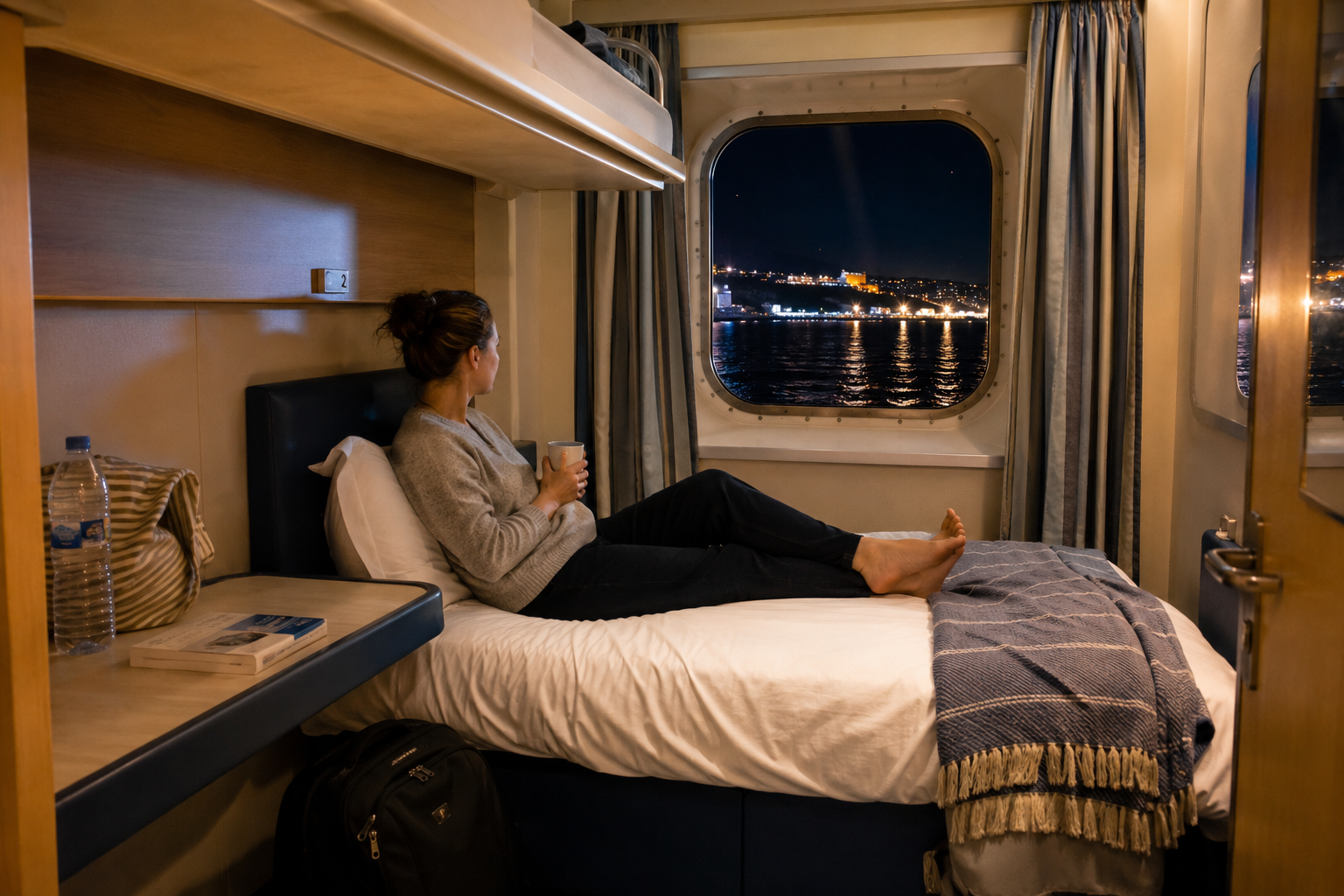
The cabin is what transforms the night ferry from mere transport into something worthwhile, and understanding why is the heart of the matter. A reclining seat gets you across, but you arrive stiff and tired, having spent the night in a chair among strangers. A cabin gives you a real bed behind a locked door, a private space to sleep properly, and you step off the ship in the morning rested rather than wrecked.
This is the difference between enduring the crossing and enjoying it. In a cabin the overnight ferry becomes a night’s accommodation that happens to be moving, with a bed to sleep in, usually a small private bathroom, and the gentle motion of the ship to rock you to sleep, so that the hours you spend traveling are the same hours you would have spent sleeping anyway. The journey stops costing you a day and starts costing you nothing but the fare.
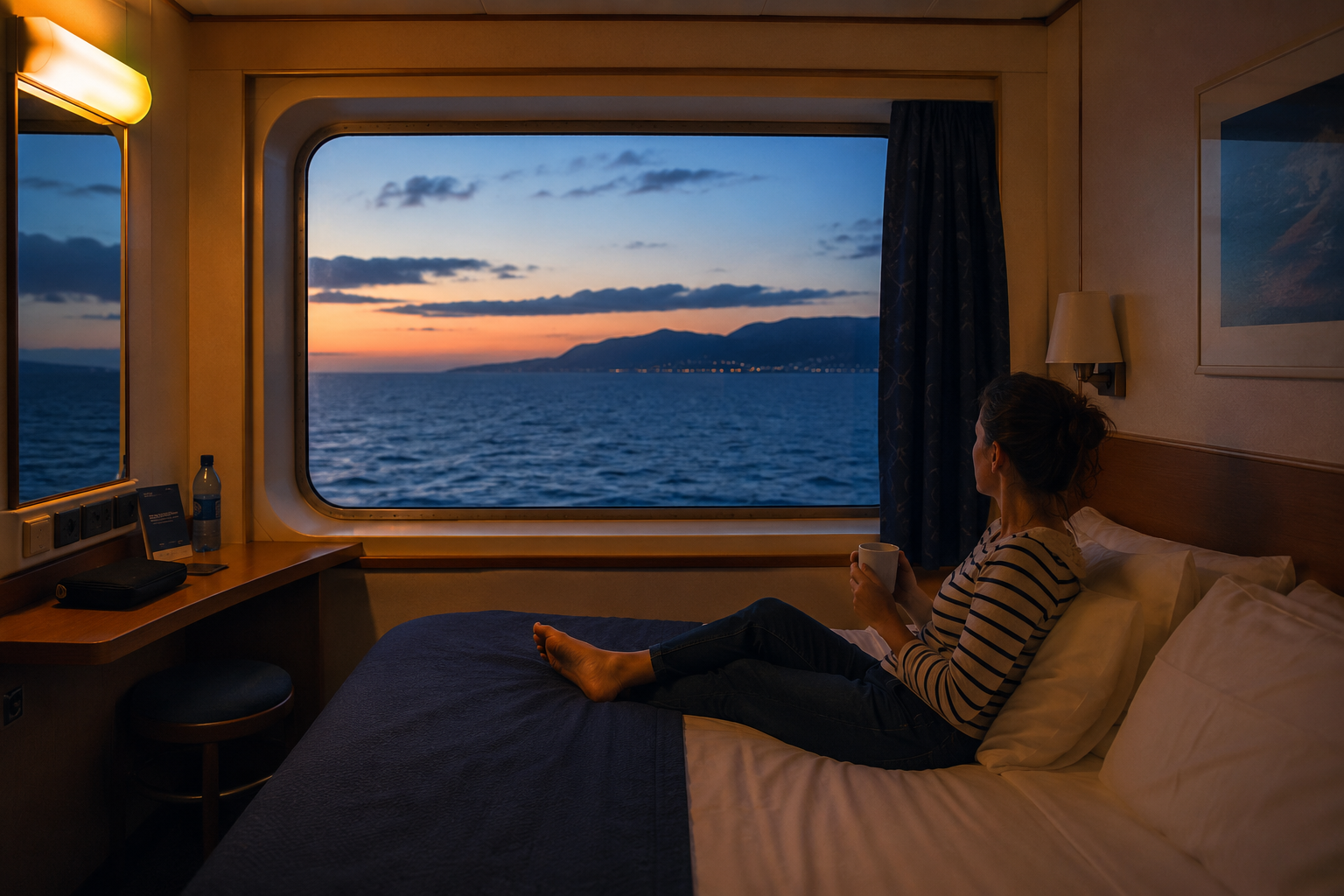
Cabins come in a range from basic inside rooms with no window to more comfortable outside ones with a porthole or sea view, and even the simplest is a vast improvement on a seat. For a couple or a family the economics grow better still, since a single cabin sleeps several people for one price, and the cost per head of a private room to sleep in while crossing the sea can be very reasonable indeed. The cabin is the upgrade that makes the whole idea work. It is worth resisting the temptation to save the small sum by taking a seat, because that false economy undoes the entire benefit. The seat gets you there but robs you of the sleep, so you arrive tired and still face the day, whereas the modest extra for a cabin buys the one thing that makes the crossing worthwhile. Spend on the bed. It is the point of the exercise.
The Arithmetic That Beats the Hotel
Now the calculation that gives this piece its title, because it is quietly persuasive once you lay it out. Consider the conventional way to reach an island, which is to fly. You pay for the flight, you lose a chunk of the day to airports and transfers, and when you land you check into a hotel and pay for a night’s accommodation. The flight and the first hotel night are two separate costs stacked on top of each other.
The night ferry collapses those two costs into one. The cabin crossing carries you to the island and provides your bed for the night in a single fare, so instead of paying for a flight and then a hotel, you pay once for a berth that does both jobs. You board in the evening after a full day, sleep across the water, and arrive in the morning ready to begin, having spent the night traveling productively rather than paying a hotel to sleep on dry land.
The saving is real and the logic is clean. A cabin fare that replaces a hotel night means the crossing largely pays for a good part of itself, and for a family sharing one cabin the value multiplies. Add the money not spent on airport transfers and checked bags, and the ferry can come out ahead on pure cost, before you even count the pleasure of the thing. A cabin to Mallorca does not just rival the fly-and-hotel approach. On the right night it quietly beats it. The comparison tilts further once you count the intangibles that never make the spreadsheet. There is no baggage limit worth worrying about on a ship, no liquids rule, no cramped seat, no scramble through a terminal, and the option to bring the car removes the whole question of transport at the other end. Even where the raw fares are close, the ferry throws in a great deal that the flight charges extra for or cannot offer at all.
What the Night Crossing Is Like
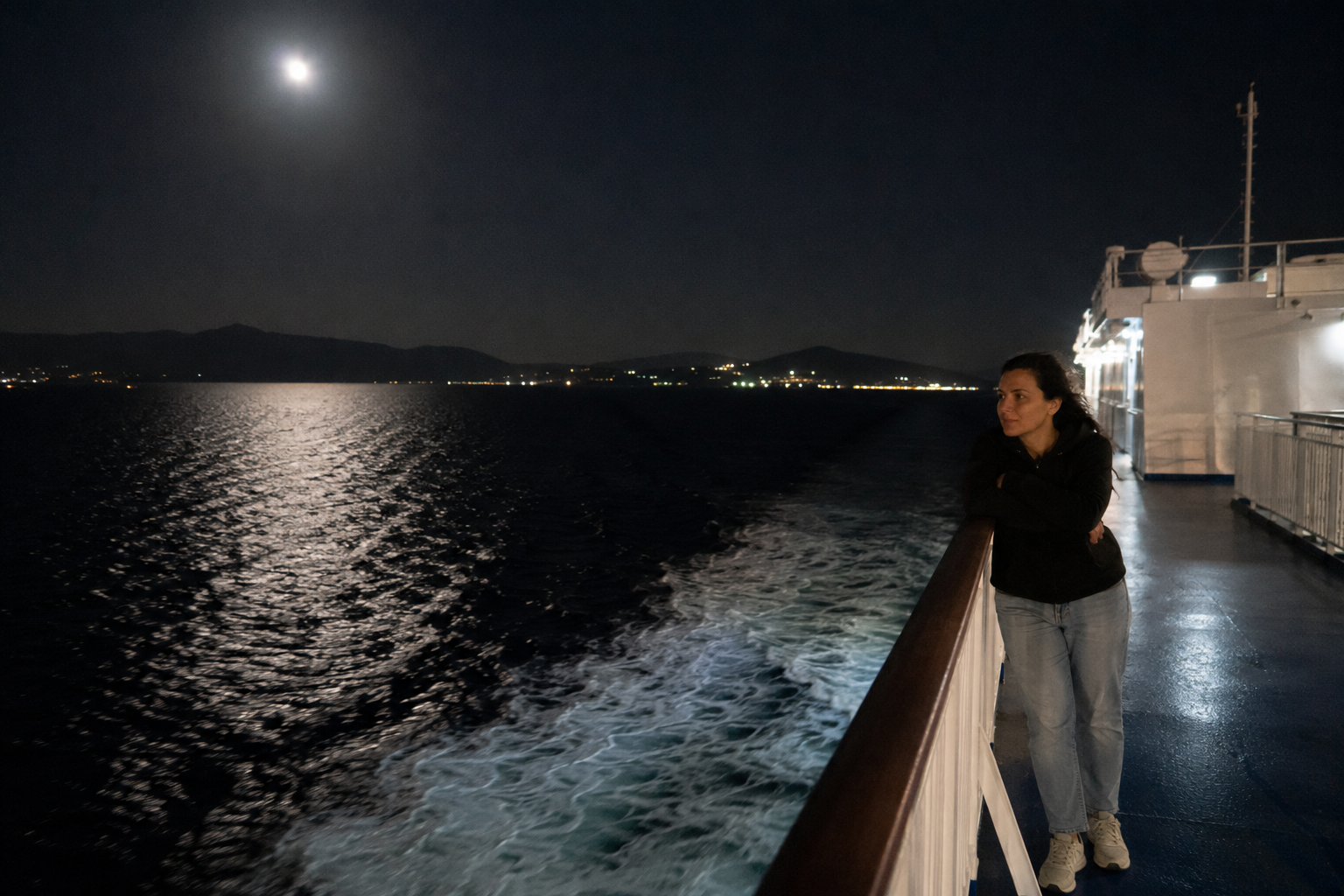
Beyond the arithmetic, the experience itself is a pleasure that the airport route cannot touch. You arrive at the port in the evening, board a great lit-up ship, and settle in as it pulls away from the mainland with the city lights receding behind you. There is time for dinner aboard, a drink on deck as the coast slips away, and the particular calm of watching the harbor lights shrink into the dark before you turn in.
Then there is the night itself. Falling asleep to the low hum of the engines and the gentle roll of the ship is a specific and lovely sensation, the sea rocking you off while the vessel does the traveling, and there is something deeply restful about surrendering the miles to the night. You wake as the light comes up, step out on deck with a coffee, and there ahead is the island rising out of the morning sea, growing closer as you approach the port. It is a beautiful way to arrive.
The ships themselves make it easy. A modern Mediterranean ferry carries restaurants and bars and lounges and open decks, so the evening aboard can be as social or as quiet as you like, dinner and a drink and the stars, or an early night behind your cabin door. And unlike a flight, there is no cramped misery to endure, only space to move around, sea air to breathe, and the slow civilized pace of travel by water. The crossing is not the price of the trip. It is part of the trip. Children in particular tend to love it in a way they never love a flight. A ship is a place to explore rather than a seat to be strapped into, with decks to roam and the sea all around and a cabin that feels like an adventure, so the crossing that a parent dreads on a plane becomes, on a ferry, one of the parts of the holiday the kids remember most fondly.
Booking It Well
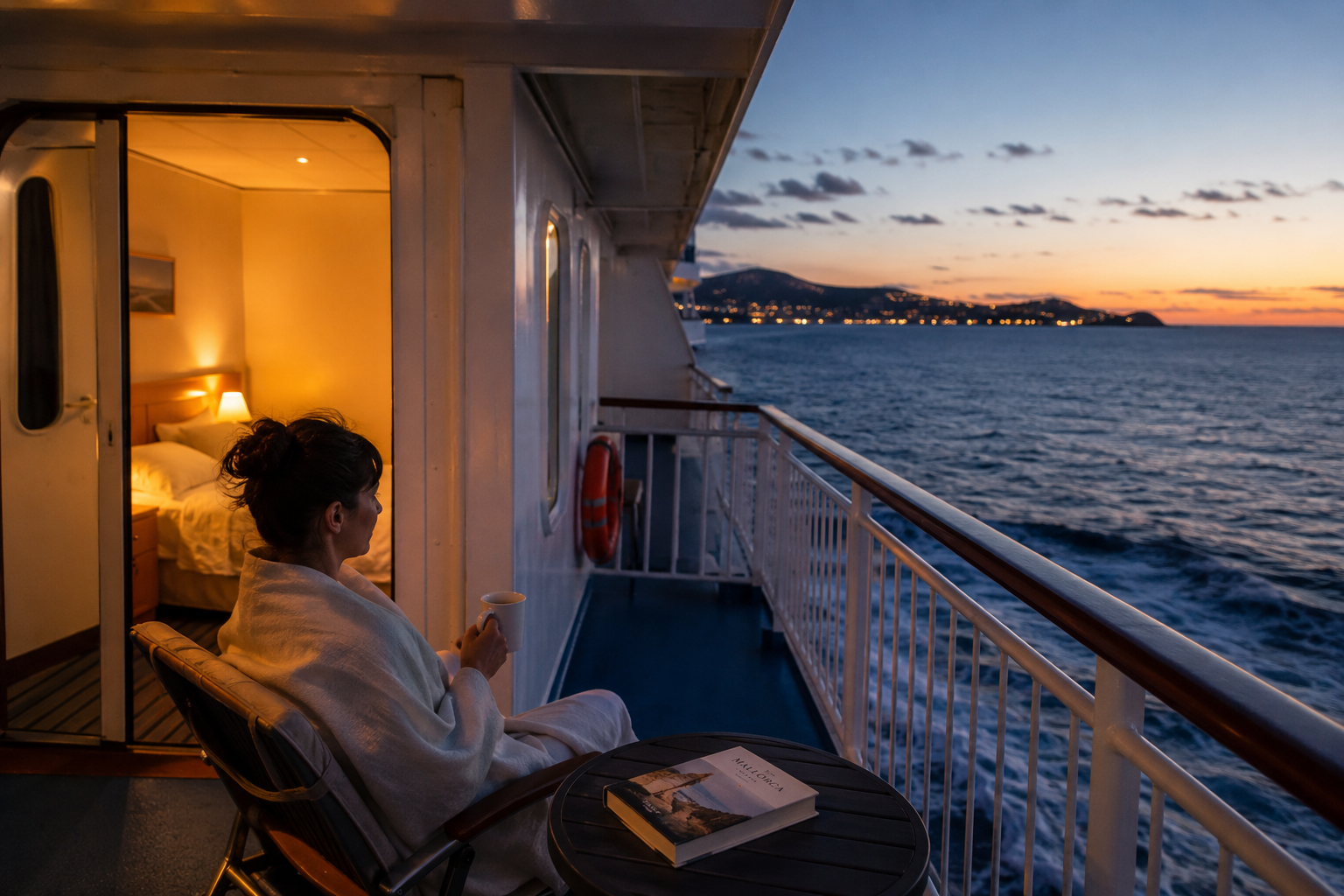
Doing this right takes a little knowledge, and the first rule is to book the cabin ahead, especially in summer. The overnight sailings to the popular islands fill up in the high season, and the cabins go first because everyone who understands the trick wants one, so the traveler who books early secures a berth at a good price while the latecomer is left with a reclining seat or a sold-out ship. Plan ahead and the cabin is affordable. Leave it late and it may be gone.
It pays to think about which crossing and which cabin suit you. An overnight sailing is the one that saves the hotel night, so it is worth choosing an evening departure that arrives in the morning rather than a daytime crossing, and worth weighing the cabin grades, since an outside cabin with a window costs a little more but adds a great deal to the pleasure of waking at sea. For a family or a group, booking a single shared cabin keeps the per-person cost low.
A few practical things smooth the trip. Bringing your car aboard is possible and often worthwhile if you want a vehicle on the island, which is another advantage over flying, and it is wise to bring a few essentials for the night in a small bag rather than digging through luggage. Arrive at the port in good time, since boarding a ship is a more relaxed but earlier process than a flight, and then simply settle in and let the sea do the rest.
The Wider World of Mediterranean Night Ferries
While Mallorca and its Balearic neighbors are the classic Spanish example, the night ferry is a way of travel that opens up the whole Mediterranean once you acquire the taste. The same overnight logic connects countless ports across the sea, and a traveler who has discovered the pleasure of the cabin crossing to the Spanish islands soon starts eyeing the map for other routes to sleep across.
The possibilities are wide. Overnight ferries thread the Mediterranean between the mainland and the islands and across whole stretches of sea, linking Spain, Italy, France, Greece and North Africa in a network of night crossings that predates the budget airlines and offers a slower, richer way to move between them. The islands of Italy, the Greek isles, the crossings to Sardinia and Corsica and beyond all reward the same approach, a cabin, a night, and a morning arrival.
This is travel of an older and more romantic kind, the kind that treats getting there as part of the pleasure rather than an obstacle to it. In an age of stripped-down flights and airport misery, the Mediterranean night ferry is a quiet act of resistance, a way to cross the sea that gives you a bed, a deck, a dinner and a sunrise instead of a boarding gate and a baggage carousel. Once you have slept your way to an island and woken to find it waiting in the morning light, the whole idea of flying there starts to feel like missing the best part.
Sailing Into the Morning
The night ferry rewards a certain kind of traveler, the one who would rather arrive rested than fast, who sees a sea crossing as an experience rather than a delay, and who appreciates the neatness of a single fare doing the work of two. It is not always the quickest way to reach an island, and for a short hop a flight may still make sense, but for the overnight routes to Mallorca and its neighbors the cabin crossing offers something a plane never can, which is a genuinely good night folded into the journey.
The heart of it is that simple, satisfying arithmetic. A cabin on the overnight boat carries you across the water and gives you your bed for the night in one stroke, saving the hotel and turning the miles into sleep, so you wake refreshed at your destination having lost no time at all. For couples and families especially, sharing a cabin across the sea can be both the cheaper and the lovelier way to arrive, and the money saved on a hotel night is money kept for the holiday itself.
So next time the islands call, look past the airport. Book an evening ferry and a cabin, have dinner on deck as the mainland fades, sleep to the roll of the sea, and step off in the morning already there, unhurried and rested and a hotel night ahead. The Mediterranean has been carrying travelers across its waters by night for a very long time, and it still knows something the airlines forgot, which is that the best journeys are the ones you sleep straight through and wake at the other end of, with the island rising gold out of the morning sea.

About the Author: Ruben, co-founder of Gamintraveler.com since 2014, is a seasoned traveler from Spain who has explored over 100 countries since 2009. Known for his extensive travel adventures across South America, Europe, the US, Australia, New Zealand, Asia, and Africa, Ruben combines his passion for adventurous yet sustainable living with his love for cycling, highlighted by his remarkable 5-month bicycle journey from Spain to Norway. He currently resides in Spain, where he continues sharing his travel experiences with his partner, Rachel, and their son, Han.