
The headline wrote itself, and it traveled the world. An American woman bought an abandoned house in a Sicilian hill town for the price of a coffee, restored it, and now spends part of every year living the dream in the country her family left generations ago. It is a lovely story and every word of it is true, which is exactly why the number underneath it deserves more attention than it usually gets.
Meredith Tabbone, a financial adviser from Chicago, bought into Sambuca di Sicilia’s famous €1 auction in 2019. By the time the work was finished in late 2023 she had spent, by her own account to CNBC, roughly €425,000, or about $446,000, on the renovation. The house cost less than a sandwich. The project cost most of the price of a Chicago condo, and she says it was worth every cent.
Here is what she really bought, what she spent and why, and what her numbers tell anyone else eyeing a €1 listing. These are her reported figures as given to CNBC and other outlets rather than a typical case or a projection, and nothing here is financial advice, but her arithmetic is the most useful thing in the entire €1 house genre.
The Coincidence That Started It
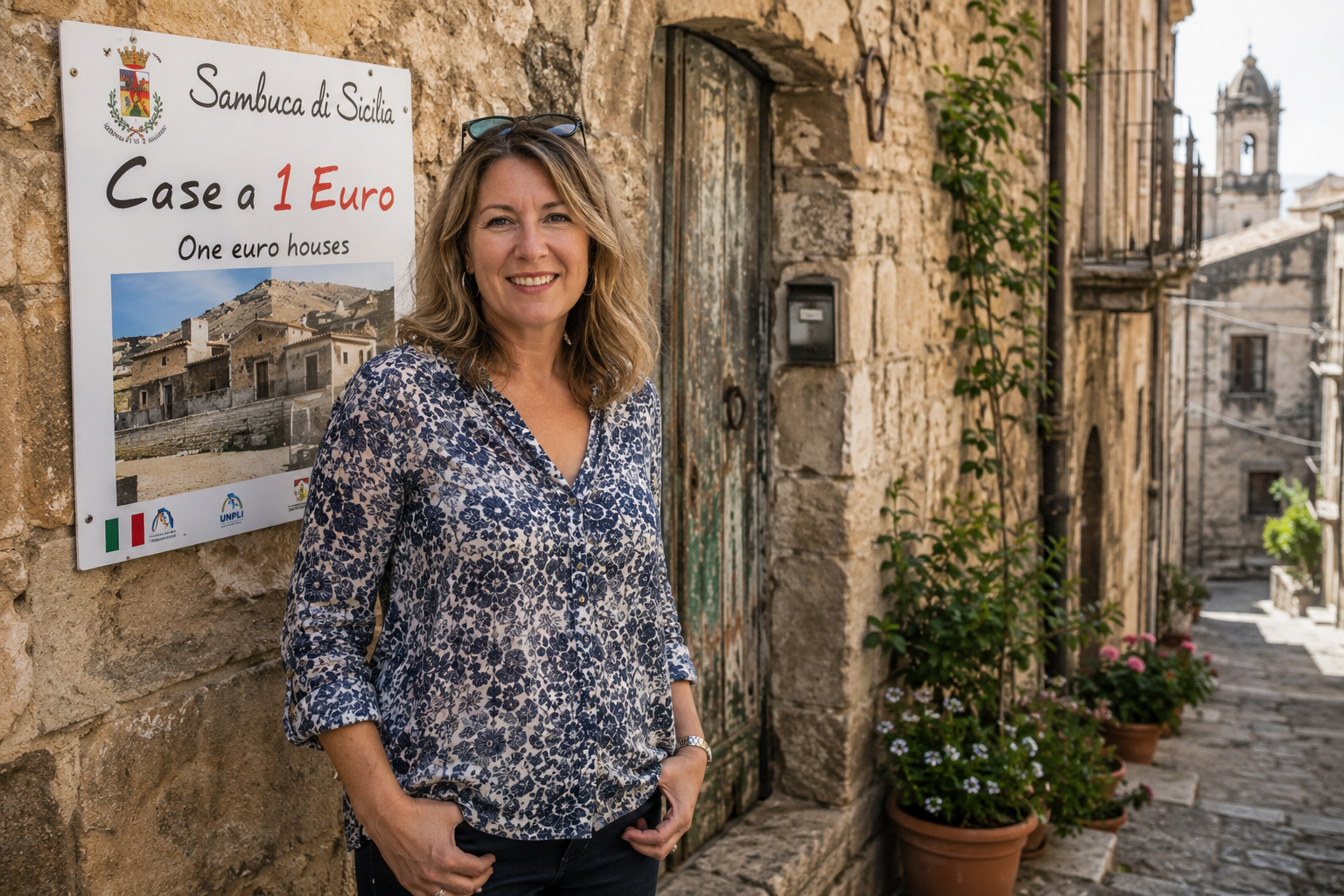
The story begins with genealogy rather than real estate. In early 2019, Tabbone was researching her family history and had traced her great-grandfather back to a specific Sicilian town, when a friend forwarded her a CNN article about that same town auctioning off abandoned houses starting at one euro. The town was Sambuca di Sicilia, in the province of Agrigento, a place she had never visited and had known about, until that week, only as a line in a family record.
She has described the coincidence as too good to be true and took it as a sign. What followed was not a leisurely property search but a silent auction conducted from four thousand miles away, in which she submitted a deposit to the listed bank and sent in a one-page form by courier carrying her name, her bid and the address of a building she had never laid eyes on.
The bidding is the first thing the headline flattens. Sambuca’s houses started at €1, but they were auctioned, so the price was whatever the highest bidder offered, and Tabbone’s winning bid was €5,555. With taxes and fees the total to take ownership came to €5,900, roughly $6,200. Before she had seen the property, the euro was already gone as a number and had become what it always was, a starting gun rather than a price. This is worth dwelling on because it is universal to the famous Sicilian schemes. Sambuca has run its auctions repeatedly, starting at one euro and then at two and later at three, and popular properties routinely close well above the symbolic opening, sometimes at five or twenty thousand. The €1 in the headline is a floor at an auction, and the market decides the rest.
What the Euro Bought
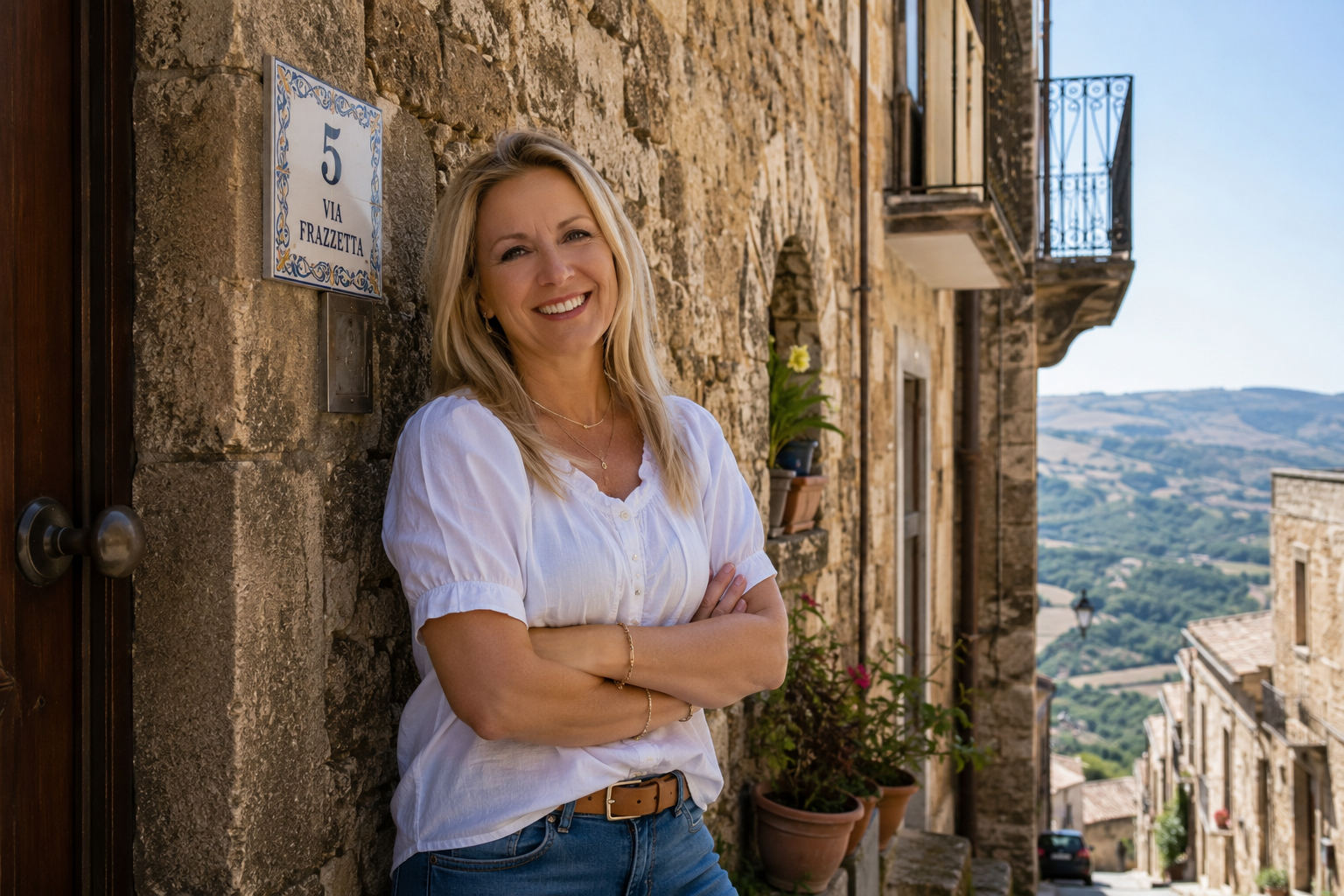
She flew out to see her house for the first time in June 2019, and her description of what she found has become one of the more useful passages in the whole €1 canon. The condition, she told CNBC, was dire at best. There was no electricity and no running water. There was asbestos in the roof. There was, by her account, something like two feet of pigeon droppings on the floor.
This is the reality behind the romantic photographs of stone alleys and wooden shutters. A €1 house is not a quaint fixer-upper with good bones and dated wallpaper but a building that has been abandoned long enough that the town wants rid of it, which in practice means structural work, hazardous material, no services and decades of decay. The euro is not a discount on a house. It is the price of taking on a ruin. The town, for its part, has never hidden this. The whole premise of a €1 scheme is that these buildings have negative value to their owners, costing money to secure and offering nothing in return, which is why they can be released for a symbolic sum. What the buyer receives is the right to spend a great deal of money on a problem, in a beautiful place, under a deadline.
Then she did something that doubled the project. Standing in the property, she decided to buy the vacant house next door as well, through a private sale with its owner, for €22,000, a little over $23,000. That purchase alone cost nearly four times her auction bid, and it changed the scale of everything that followed, which is the moment her budget began its long departure from the plan. It is a very human decision and probably the right one. Two small adjoining ruins make a single proper house, the neighboring building would never be cheaper than at that moment, and combining them turned a cramped project into a real home. But it is also the exact point where a €1 story stops being about €1, and no headline has ever had room for it.
The Budget That Grew
Her original plan was modest and entirely reasonable. Tabbone initially intended to spend about €40,000 renovating roughly 620 square feet. That is a sane number, close to what plenty of €1 buyers imagine, and had she stopped there this would be a very different article.
Combining the two properties changed the arithmetic completely. The renovation budget grew to around €140,000 to cover about 2,700 square feet, a project four times the original footprint at three and a half times the original cost. And even that was not the end of it, because the scope kept expanding as the vision sharpened and she chose to make essentially every element of the home custom.
The final figure was €425,000, roughly $446,000, on the renovation, with reporting putting her all-in spend on the dream home at around $475,000. What matters is her own explanation of how it happened, which is disarmingly free of drama. She has said she faced no unforeseen costs and nothing went wrong outside her control. The overrun was not a disaster. The project simply kept growing because she kept choosing to grow it.
The Distinction That Matters
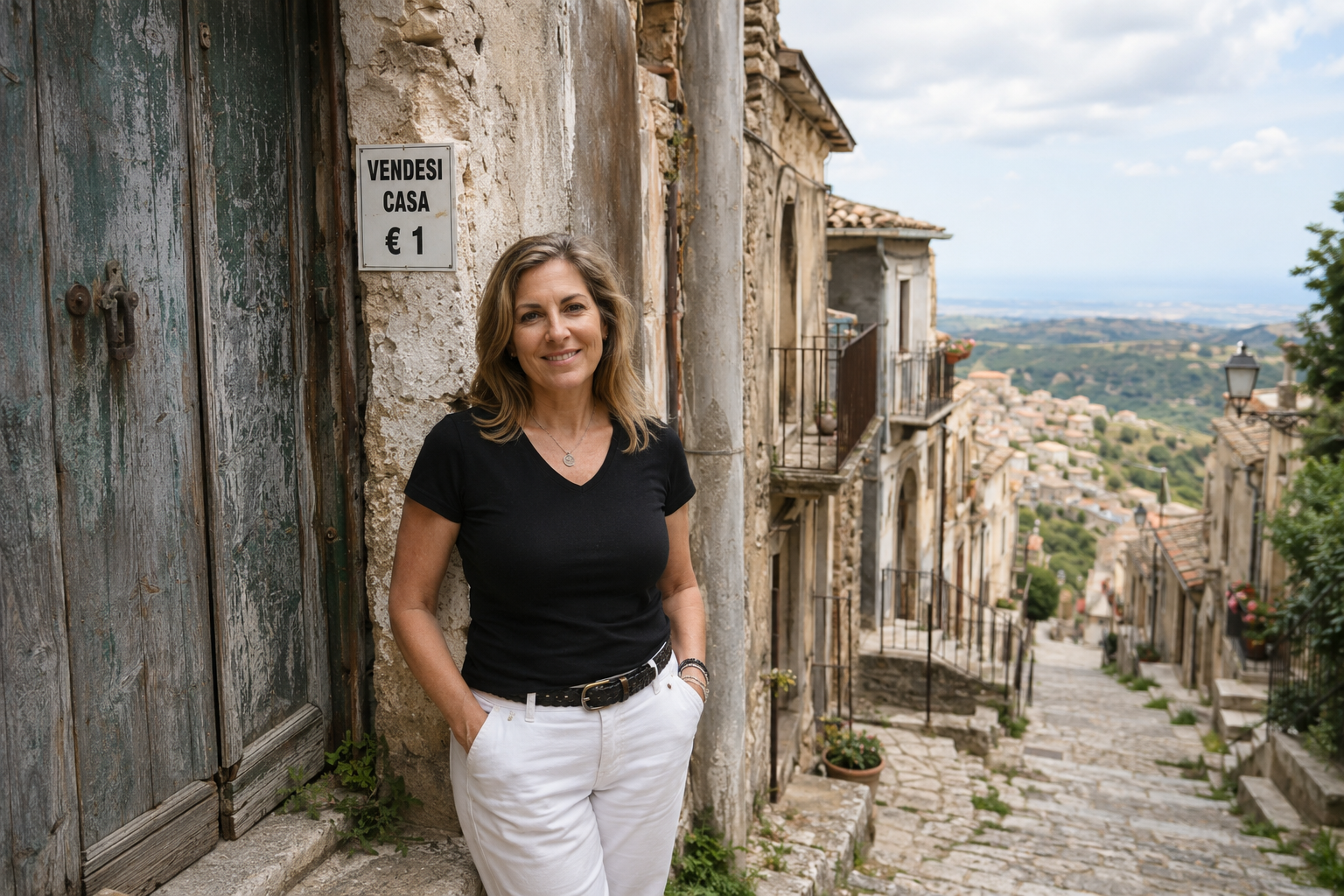
That explanation is the single most valuable thing in her story, and it is the part that gets lost. There are two entirely different ways a €1 renovation reaches half a million dollars, and they lead to opposite conclusions. One is that the building ambushes you, the roof fails, the walls need underpinning, the costs spiral beyond your control and you are trapped. The other is that you decide, repeatedly and deliberately, to build something better.
Tabbone’s was the second kind. She bought a second building because she wanted more space, she expanded the scope because she wanted the result, and she spent on custom work because she wanted every element to be hers. Those are the decisions of someone building a dream home, and they would have cost roughly the same in any country, on any starting price, from a €1 ruin or a €300,000 townhouse. That is the test worth applying to any €1 horror story you read. Ask whether the money went on the building’s problems or the buyer’s preferences, because the two are constantly conflated in the coverage. A collapsed roof is the scheme’s risk. A custom kitchen and a sauna are the owner’s choice, and they belong in a different column entirely.
Which means her number is not a warning about €1 houses so much as a measurement of ambition. A different buyer with the same ruin and a strict brief, restoring 620 square feet to a simple, sound, comfortable standard, would have landed far closer to the original €40,000 than to €425,000. The house did not decide her budget. She did, and that is a distinction anyone reading her headline should hold onto.
The Five Years Nobody Mentions
The other number the headline skips is time. The project took about five years from the winning bid to completion in late 2023, stretched by the scale of the work and by the pandemic that arrived in the middle of it, and she has described somewhere in the region of four million moments of frustration along the way. Her phrase for it is better than any warning a guide could write. The frustration was not a sign that the project was failing but simply the texture of doing something this large across an ocean, in a second language, through a bureaucracy built for locals. Anyone imagining a serene restoration montage should sit with that number for a moment.
The logistics were their own project. She managed a local crew from Chicago, running the build through Zoom meetings and WhatsApp messages across a language barrier, and spent parts of each year on site with her architect and the local artisans. Warnings came early and often, and she recalls plenty of people telling her it could be a scam and that she stood to lose a lot of money.
She also got something unexpected out of the pandemic delays. With travel restricted and sightseeing off the table, she found herself spending her Sicilian time with the locals who were renovating her house and with their friends, rather than with other expats. The forced slowness built her a community, and she has said her only real regret about the whole project is not embracing slower living sooner. It is a striking thing for the delays to have produced the best part of the outcome. Had everything run smoothly and quickly, she would have flown in, supervised, sightseen and flown out, and the community that now defines her time there might never have formed. The pandemic that wrecked her schedule is arguably what made the house a home.
What She Got for the Money
The finished result is a home of roughly 2,700 square feet across two combined buildings, custom throughout, with a dry-heat sauna in one of the guest bedrooms, walls knocked through to open the living space, and a terrace. She now spends about four months a year there and describes it as feeling like a primary residence rather than a vacation property.
The intangibles are the part she emphasizes. She pursued and established Italian dual citizenship along the way, reconnected with her father’s lineage in the town her great-grandfather left, and built a social life among locals and fellow foreigners that she says is easier to make than one in the United States, because being out among people every day is simply part of the culture there. She has described the house as a bridge between her past and her future.
She has also been explicit that it changed how she thinks about work. Running her own advisory business, she found that time in a slower culture shifted her focus away from building the business as the center of her life and toward personal fulfillment more broadly. For a financial adviser to conclude that a half-million-dollar project was worth it for reasons that never appear on a balance sheet is, in its way, the most interesting line in her whole story.
What Sambuca Got Out of It
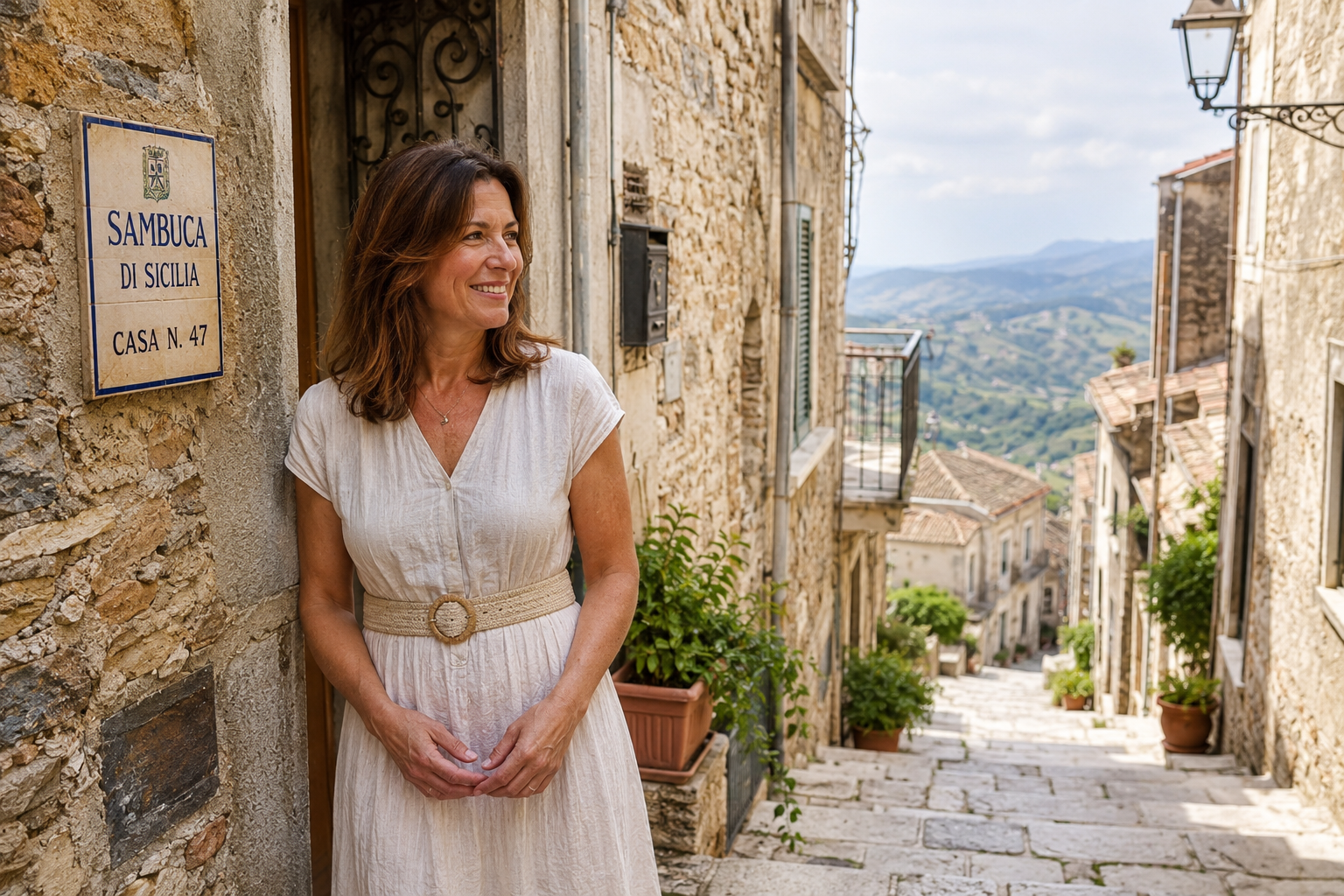
The town’s side of the ledger is worth a moment, because Tabbone’s spending is not only a personal story. Sambuca di Sicilia first went viral in 2019 with its €1 auction and has repeated the exercise since, and the mayor has said the first sale brought an influx of around €20 million into the local economy, with some 250 further homes sold outside the original auctions.
That is the mechanism working exactly as designed. A buyer like Tabbone does not simply acquire a ruin, she hires local architects, builders, carpenters and suppliers for years, and nearly half a million dollars of Chicago money ends up circulating through tradespeople in a small Sicilian town. Multiply that across dozens of buyers and a symbolic sale becomes a genuine economic event.
The town also got what it could not buy directly, which is attention. Sambuca’s mayor has said the town is now definitely on the map, and the €1 auctions turned an obscure hill town in Agrigento province into a name recognized on the other side of the world, with the property market and the visitors that follow such recognition.
There is a lesson in this for anyone reading the €1 coverage cynically. The schemes are frequently described as too good to be true, as though the towns must be hiding something, when the truth is simpler and stated openly. The town wants your renovation budget spent locally and your presence in its streets, and it is willing to hand over a derelict building to get both. Everybody in that trade knows exactly what they are getting.
What Her Numbers Teach Everyone Else
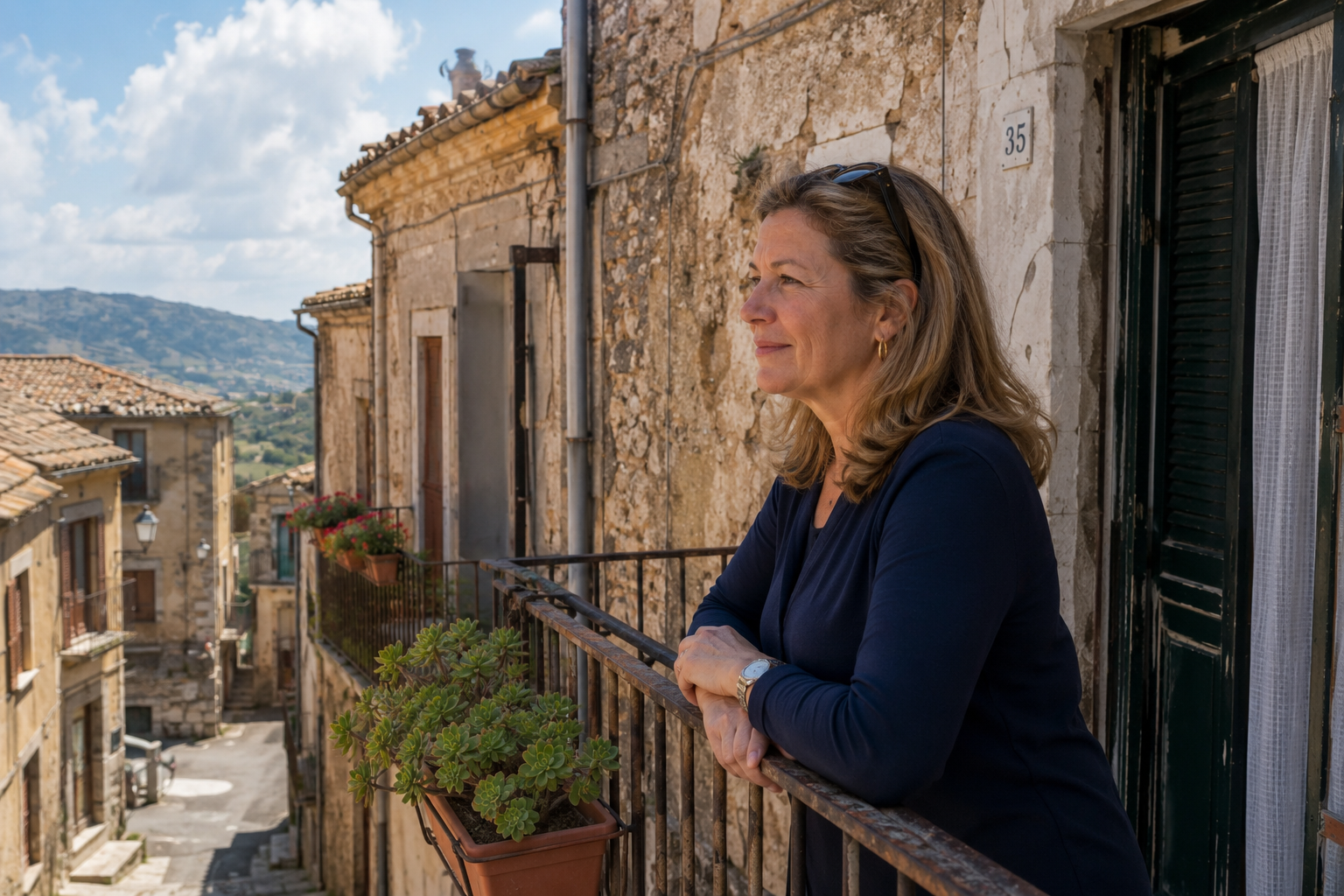
Strip her story down and it offers a clearer guide to €1 houses than most guides manage. The euro is a headline, not a price. Her real entry cost was €5,900 at auction plus €22,000 for a second building, and even the modest version of her plan started at €40,000 of work. Anyone budgeting from the number in the headline is not budgeting at all.
The second lesson is that the scope is the spend. Her costs quadrupled and then multiplied again not because Sicily is expensive or the system failed, but because she kept choosing more, and a buyer who wants a restored, sound, simple house in a beautiful town can hold a very different line. The €1 scheme is a way to acquire a ruin cheaply. What happens next is a normal renovation, governed by normal decisions.
The third is that the time is real and the frustration is guaranteed. Five years, a foreign bureaucracy, a language barrier, a distant crew and a pandemic are what the finished photographs are standing on. Tabbone would do it again, and says so plainly, but she would do it with more patience from the start. The number that made her story famous was $446,000. The number that truly explains it is five years, and the choice, made over and over, to build the thing she wanted rather than the thing that was cheap. Her house cost a euro. Everything after that was a decision, and the decisions are the story.

About the Author: Ruben, co-founder of Gamintraveler.com since 2014, is a seasoned traveler from Spain who has explored over 100 countries since 2009. Known for his extensive travel adventures across South America, Europe, the US, Australia, New Zealand, Asia, and Africa, Ruben combines his passion for adventurous yet sustainable living with his love for cycling, highlighted by his remarkable 5-month bicycle journey from Spain to Norway. He currently resides in Spain, where he continues sharing his travel experiences with his partner, Rachel, and their son, Han.
mj
Tuesday 21st of July 2026
I also read another article that says 80% of single women (barring she's single) move back from Europe within a year of moving there. At the end of the day, I would argue that this is probably the type of project that less than 1% of people should take on. There are far nicer areas in the US where $+400k will get you a lot.