
Sit down to dinner with Spaniards and you will notice, after a while, a set of questions that never come. The conversation will be loud, warm, and endless, ranging over food and family and football and politics and the state of the world, and yet certain things an American would ask within the first ten minutes simply never get asked. The gaps are not accidental but map the quiet boundaries of what Spanish culture considers private, and they say a great deal about what the two societies value.
The most famous of these silences is around money, and it is real, but salary is only the first of them. There is a whole cluster of questions, mostly about money and work and status, that Americans ask reflexively as a way of placing a new person, and that Spaniards find intrusive, irrelevant, or simply strange. Learning which questions go unasked is one of the fastest ways to understand how differently Spain and America size up a human being.
Here are seven questions Spaniards never ask at dinner, and what each silence reveals. These are broad cultural patterns rather than ironclad rules, and Spain is a large and varied country, but the shape of them holds remarkably well.
How Much Do You Earn?
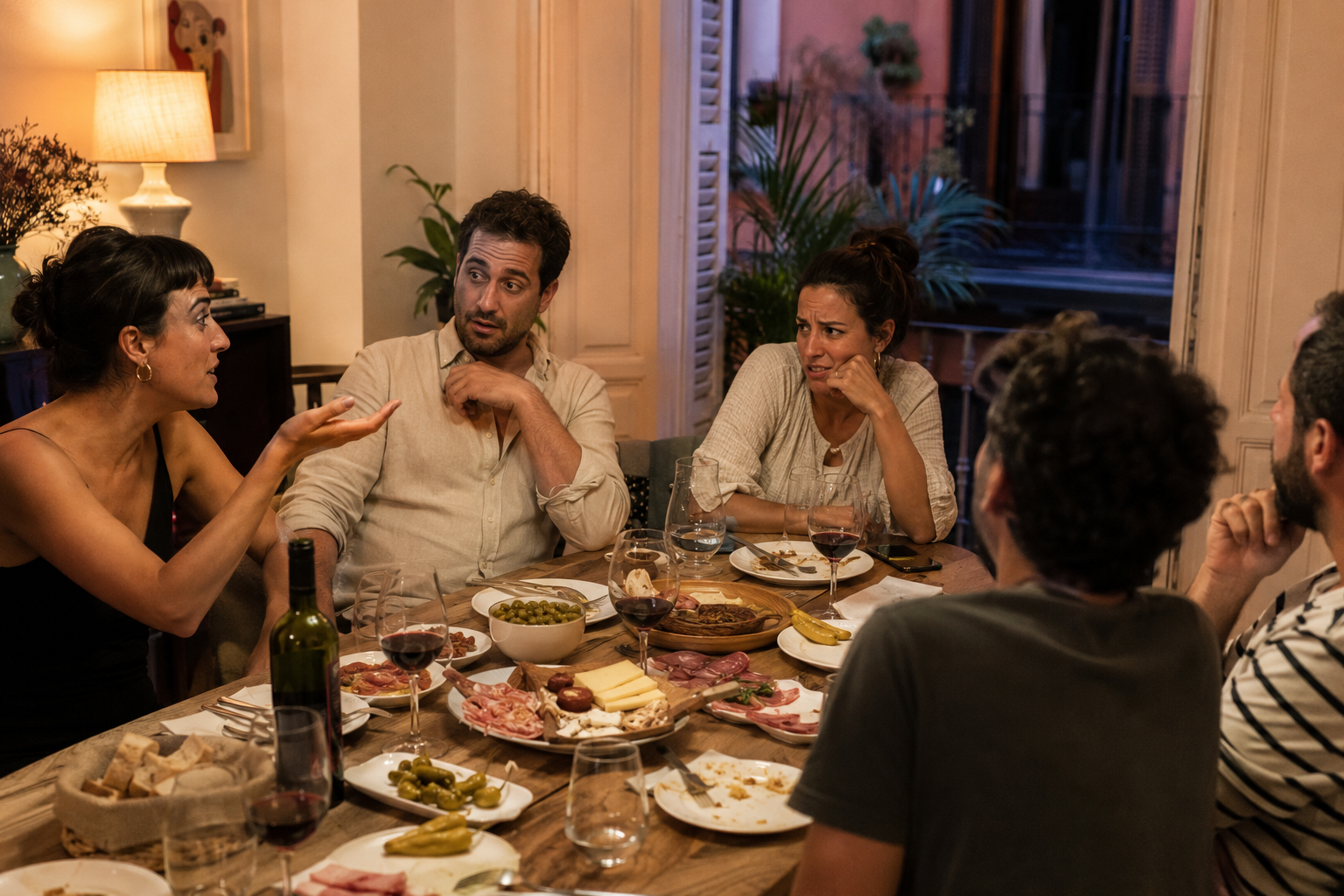
The deepest taboo is the one about salary. In Spain, asking someone what they earn is a serious breach, the kind of question that lands with a thud and marks the asker as boorish, and it is almost never posed directly among people who are not very close. Money is treated as genuinely private, a matter between a person and their own household, not material for dinner conversation.
To an American this can feel oddly buttoned-up, since salary talk in the United States is common enough to fuel entire websites and workplace movements. But in Spain the instinct runs the other way, holding that what you earn is nobody else’s business and reveals nothing worth knowing about you as a person. Pushing on it does not read as friendly curiosity but as a kind of appraisal, and appraisal is exactly what the Spanish table is not for.
What sits underneath the silence is a refusal to rank people by income. When no one asks what you earn, no one is quietly sorting the table by salary, and the conversation stays free to be about things that truly bind people together. The unasked question protects the meal from becoming a comparison, which is precisely why it goes unasked. It is worth adding that this is changing at the edges, especially among younger Spaniards and in the world of work, where pay transparency has crept in as it has elsewhere. But at a social dinner among adults, the old rule still holds firmly, and an American who leads with a salary question will feel the temperature of the table drop in a way that needs no translation.
What Do You Do for a Living?
Americans famously open with it. Meet someone new and the second or third question is almost always what they do, because in American culture your job is your identity, the single fact that supposedly explains you. In Spain, leading with work strikes people as a strange place to start, and the question, when it comes at all, tends to arrive much later and matter much less.
This is not because Spaniards have no jobs or take no pride in them. It is because they do not treat work as the core of who a person is, and would rather know other things first, where you are from, who your people are, what you love, how you spend your time. A Spaniard is a son of a particular town, a fan of a particular team, a person with a family and a history, long before they are an accountant or an engineer.
The result is that you can spend a whole warm evening with Spaniards and leave without knowing what half of them do for work, and without it having mattered in the slightest. You will know their region, their family, their opinions and their sense of humor instead, which is a richer portrait than a job title, and a reminder that a person is a great deal more than their occupation. There is a freeing quality to this that visitors often notice with relief. Away from a culture that introduces everyone by their job and quietly ranks them by it, you get to be a whole person at a Spanish table, defined by your stories and your character rather than your business card. For anyone tired of being reduced to what they do for a living, it is a distinctly pleasant change.
How Much Did That Cost?
Ask a Spaniard how much they paid for their apartment, their car, or their watch, and you will get a cool, evasive answer and a mental note that you are not to be trusted. Price questions belong to the same forbidden territory as salary, and prying into what someone paid for their possessions is read as crude, a way of pricing a person through their things.
The American habit of comparing costs, of asking what the house went for or what the trip set someone back, comes from a culture more comfortable with money as open conversation. Spain does not share that comfort, and treats the price of your belongings as your own affair, not a leaderboard to be published at dinner. The value of a thing to a Spaniard is what it means and how it is used, not the number on its receipt. This extends to a general distaste for showing off, since flaunting what things cost is as frowned upon as asking. Conspicuous displays of wealth tend to invite quiet disapproval rather than admiration in much of Spain, and the person who volunteers the price of their new car is committing nearly the same small sin as the person who asks. Money, in both directions, is kept off the table.
Behind this lies the same instinct that guards the salary question, a resistance to turning people and their possessions into a ranking. When no one is asking what anything cost, no one is keeping score, and the objects around the table go back to being ordinary parts of life rather than markers of status. The unasked price question keeps the meal about the company rather than the balance sheet.
Do You Own or Rent?
Closely related, and just as unasked, is the question of housing status. In much of the United States, whether you own or rent is a common and revealing question, a quick proxy for financial standing and life stage. In Spain, it is another of the money-adjacent questions that simply does not come up over dinner, since it too edges into the private matter of a person’s finances.
Home ownership works differently in Spain in any case, with high rates of ownership across all sorts of people, so the question carries less of the status charge it can hold elsewhere. But even beyond that, prying into where and how someone lives, and what it costs them, falls on the wrong side of the line. It is filed with salary and prices as information a person may share if they choose, but that no one has any business requesting.
The pattern by now is clear. Around the whole subject of personal money, earnings and prices and property and wealth, Spain draws a firm and quiet boundary, and the dinner table stays on the polite side of it. What a person has and what they paid for it is treated as theirs alone, and the conversation is left free for warmer things. None of this means Spaniards are secretive or cold, which is the usual American misreading of the rule. They are among the warmest and most open people you will meet, quick to share opinions, feelings and family news that many Americans would keep guarded. The privacy is specific and narrow, drawn tightly around money alone, while almost everything else is offered freely and loudly.
Are You Religious?
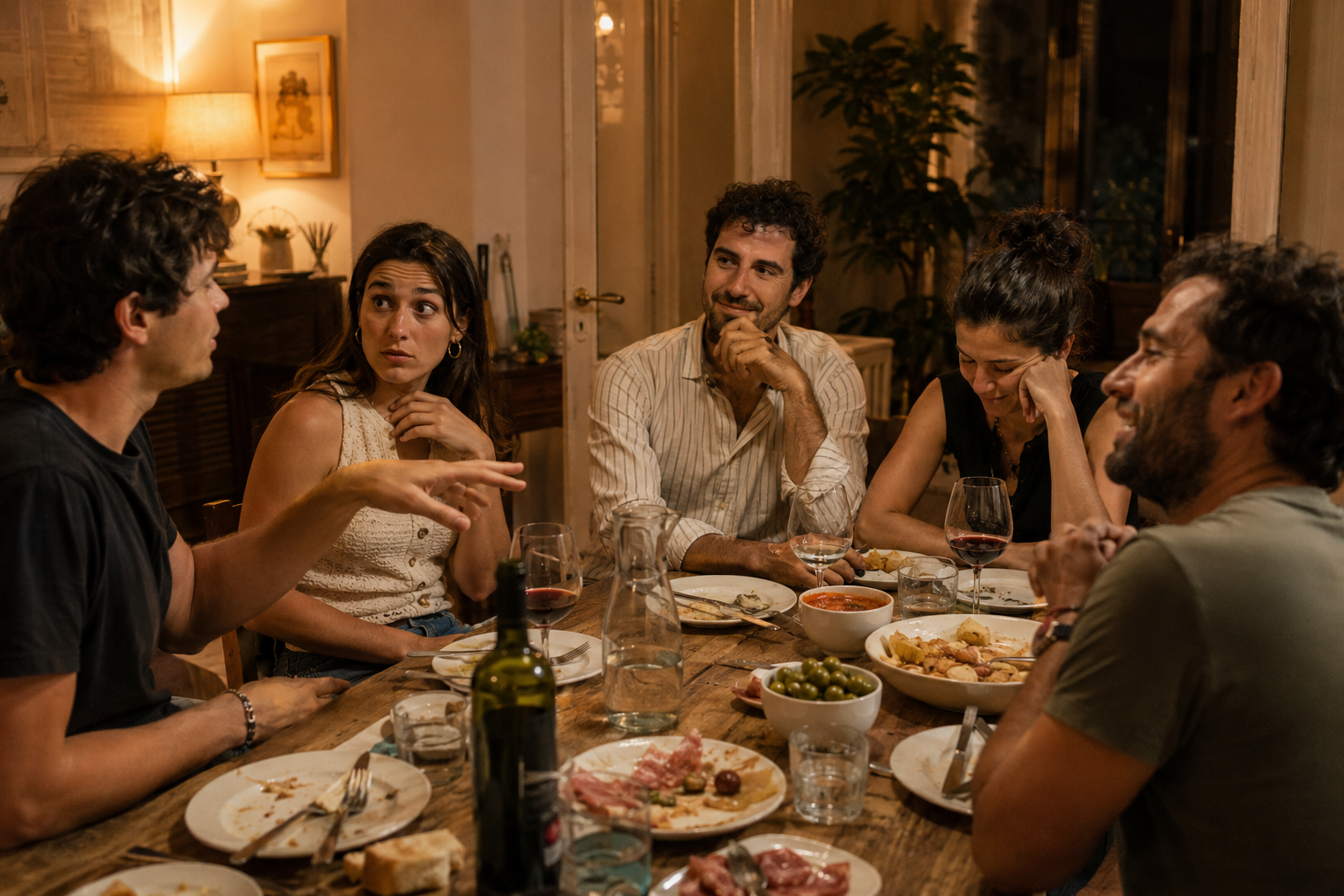
Away from money, another American opener that falls flat in Spain concerns faith. Asking someone about their religion, their beliefs, or their churchgoing is treated as a private probe into territory that is nobody’s business, and it rarely surfaces at a social dinner. Belief, like income, is filed firmly under personal.
Spain’s history has a lot to do with this. After decades in which the Church was bound up tightly with the state, modern Spain has become largely secular and distinctly private about faith, and many people treat their relationship with religion, whatever it is, as a quiet personal matter rather than a social identity to be declared. Asking about it directly presumes an intimacy that most social settings do not have.
The silence here protects something important, which is the freedom to hold or not hold a faith without being sorted by it. When no one is asking about belief, believers and non-believers share the same table without the question ever dividing them, and the evening belongs to everything they have in common rather than the one thing that might set them apart. It is another boundary drawn in the service of an easy, undivided meal. This does not mean religion never comes up, since Spain argues about the Church and its history as passionately as it argues about anything. But that is debate about religion as a public force, a very different thing from asking a fellow guest to declare their personal beliefs, which remains firmly off limits. The distinction between the public subject and the private question runs through a great deal of Spanish conversation.
What Are Your Five-Year Plans?
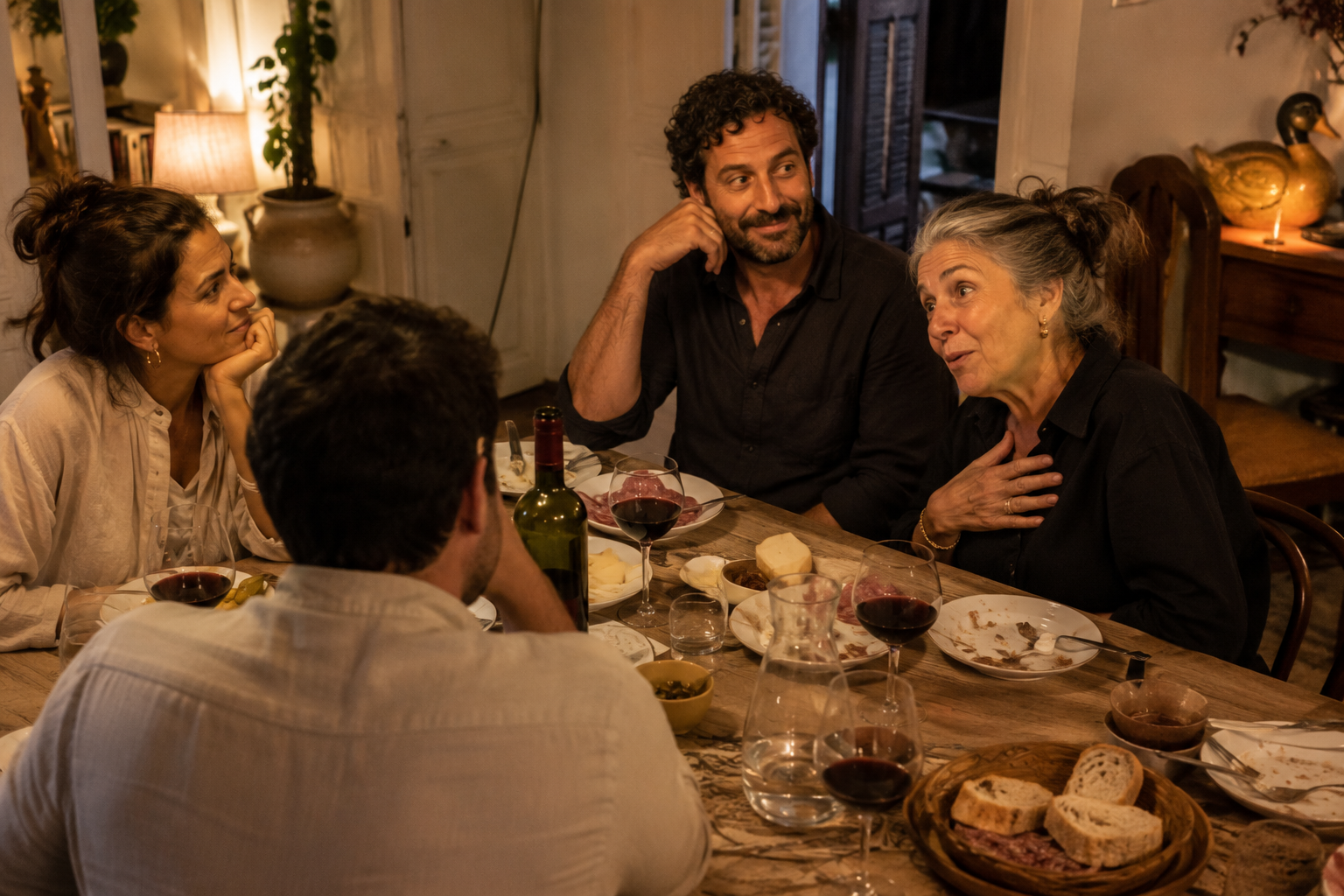
The American love of the ambition question, the where-do-you-see-yourself and the what-are-your-goals, tends to puzzle Spaniards, for whom the relentless auditing of a person’s future feels both intrusive and slightly joyless. At a dinner meant for pleasure and company, an interrogation about someone’s plans and trajectory strikes the wrong note entirely.
This reflects a real difference in how the two cultures hold time. American conversation often treats the present as a staging ground for the future, a place to assess progress and plot the next move, while Spanish culture is far more at home in the present itself, in the enjoyment of the meal and the evening and the company at hand. Quizzing someone about their five-year plan over dinner drags the future onto a table set firmly for the now.
There is a gentle wisdom in leaving the question aside. A dinner is not a performance review, and a person is not a project to be assessed for progress, and by not asking where everyone is headed, Spaniards keep the evening about where everyone actually is, which is together and enjoying themselves. The unasked question is a small refusal to turn leisure into another kind of work. It fits a broader pattern in which Spaniards treat the future with a certain relaxed fatalism, an acceptance that much of it lies beyond our control and not worth fretting over at dinner. The famous shrug and the phrase that translates roughly as who knows are close to a national attitude, and they leave the anxious planning that fills American conversation gently to one side.
So, Are You Keeping Busy?
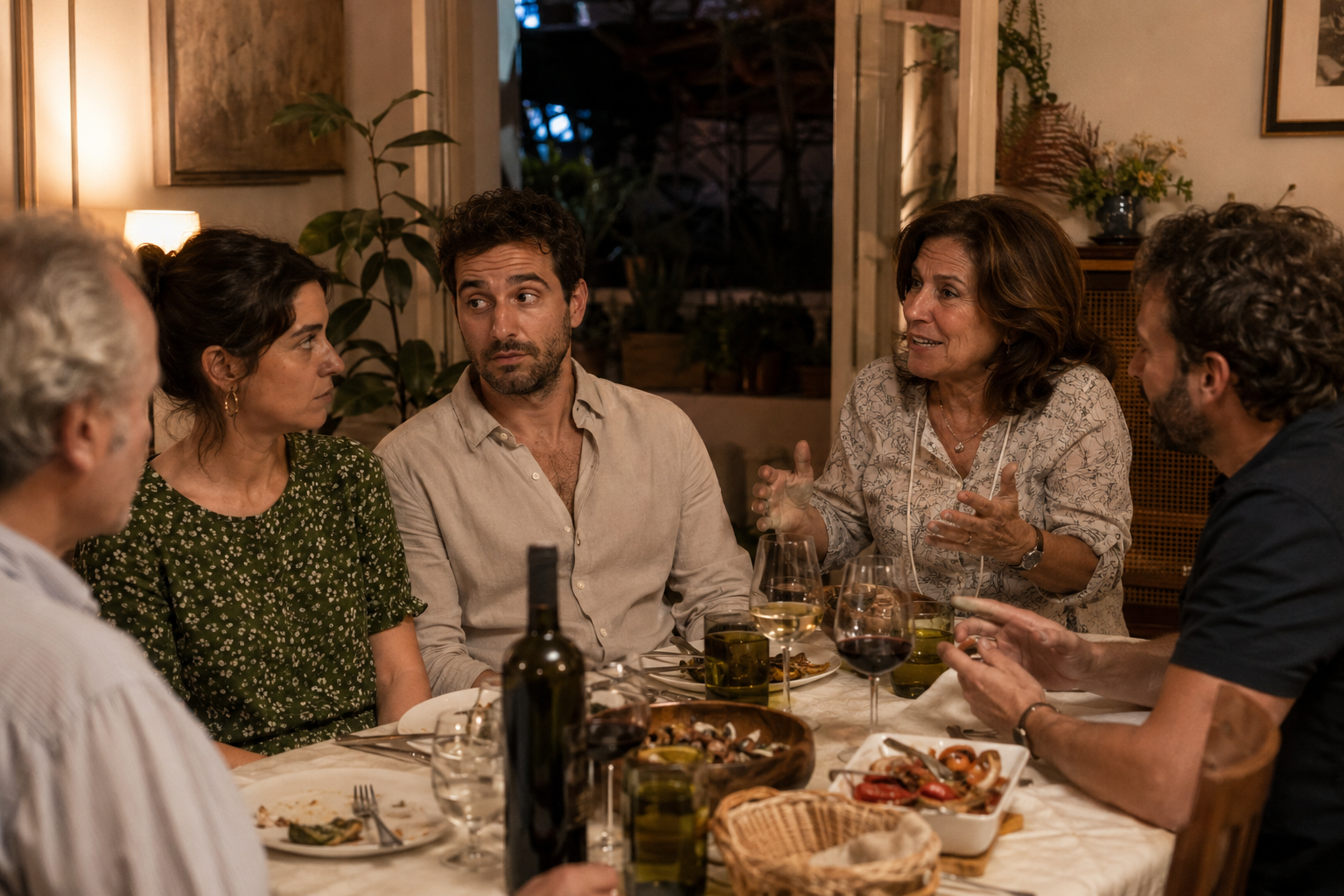
Finally, the American instinct to equate busyness with worth, expressed in the endless asking after how busy and productive a person is, does not translate. In American culture being busy is a badge of importance, and the question after someone’s busyness is almost a compliment. In Spain, being run off your feet is not admired but slightly pitied, and boasting of it would puzzle the table.
Spanish culture does not treat constant productivity as the measure of a life, and it protects leisure, rest and unhurried time as things of real value rather than guilty indulgences. To be able to sit for hours over a long lunch, unbothered and unhurried, is closer to the Spanish ideal than to be too busy to stop, so the question that assumes busyness is good simply misreads the room.
This last silence may reveal the most of all. In not asking whether you are keeping busy, Spaniards quietly reject the whole idea that a person must be productive to be worthy, and make space instead for the long, slow, purposeless pleasure of a shared meal. The evening is not time taken from more important work. The evening is the important thing. This is perhaps the hardest of the seven for a hard-charging American to absorb, and also the most valuable. The idea that a long meal with people you love is not a break from real life but a central part of it, not something to be earned by productivity but a good in its own right, sits at the very heart of how Spain lives. The unasked busyness question is really a whole philosophy in miniature.
Put these seven silences together and a portrait emerges of what the Spanish table is and is not for. It is not a place to appraise people by their money, their work, their status or their plans, and the questions that would do that appraising simply go unasked. What is left, once all that is set aside, is the good stuff, the food and the family and the football and the arguments and the laughter, the things that really connect people. The unasked questions are not a coldness but a kindness, a way of keeping the table free for everything that matters more, and learning which questions to leave unspoken is one of the surest signs that you have begun to understand how Spain gathers around a meal. For the visitor, the practical advice writes itself. Leave the money and the work and the plans and the productivity at the door, come instead with your stories and your opinions and your appetite, and ask about the food on the table, the town someone comes from, or the match at the weekend. Do that, and you will not merely avoid giving offense. You will be handed the keys to one of the warmest and most generous social worlds there is, where you are welcome exactly as you are and no one will ever ask what you earn.

About the Author: Ruben, co-founder of Gamintraveler.com since 2014, is a seasoned traveler from Spain who has explored over 100 countries since 2009. Known for his extensive travel adventures across South America, Europe, the US, Australia, New Zealand, Asia, and Africa, Ruben combines his passion for adventurous yet sustainable living with his love for cycling, highlighted by his remarkable 5-month bicycle journey from Spain to Norway. He currently resides in Spain, where he continues sharing his travel experiences with his partner, Rachel, and their son, Han.