
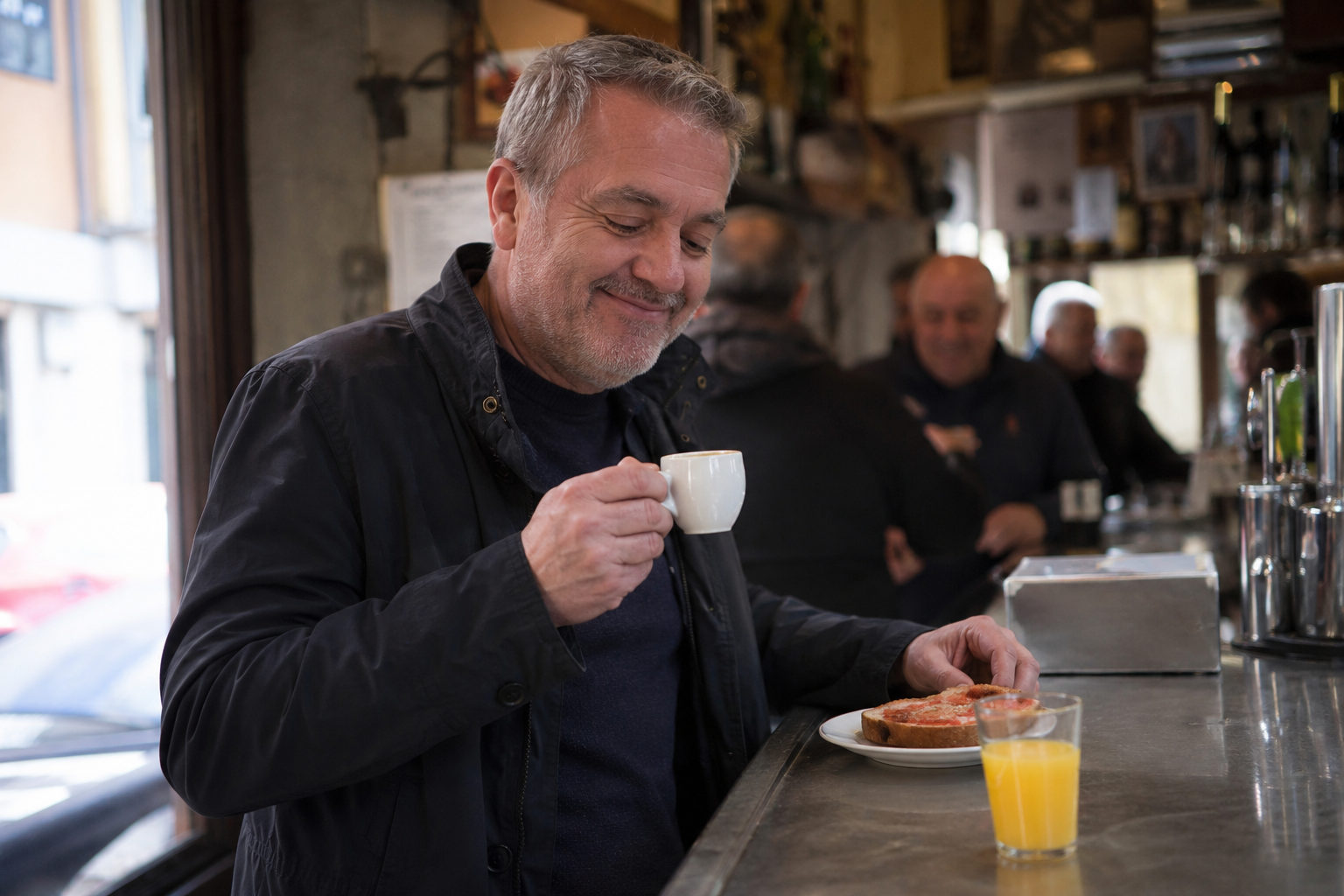
For years my mornings were a small daily emergency. Coffee gulped standing up, something eaten over the sink or in the car, a scramble of screens and hurry before the day had properly begun, all of it fast and functional and joyless. Then, for one month, I did what half of Spain does every single day. I walked down to the bar on my corner and ordered the €3.50 breakfast, and I sat down to eat it, and my mornings were never quite the same again.
The Spanish bar breakfast is one of the great small pleasures of life here, and it is almost aggressively simple. A slice of toasted bread, a small fresh orange juice, and a coffee, taken sitting at a bar or a little table while the day gets going around you. I had walked past mine a thousand times without joining it. For thirty days I finally did, and the food, it turned out, was the least of what I got.
Here is what a month of the €3.50 Spanish breakfast actually did to my mornings, my wallet, and my head. The price will vary from town to town and is creeping up like everything else, but the ritual behind it is priceless, and it changed how I start the day.
What €3.50 Buys
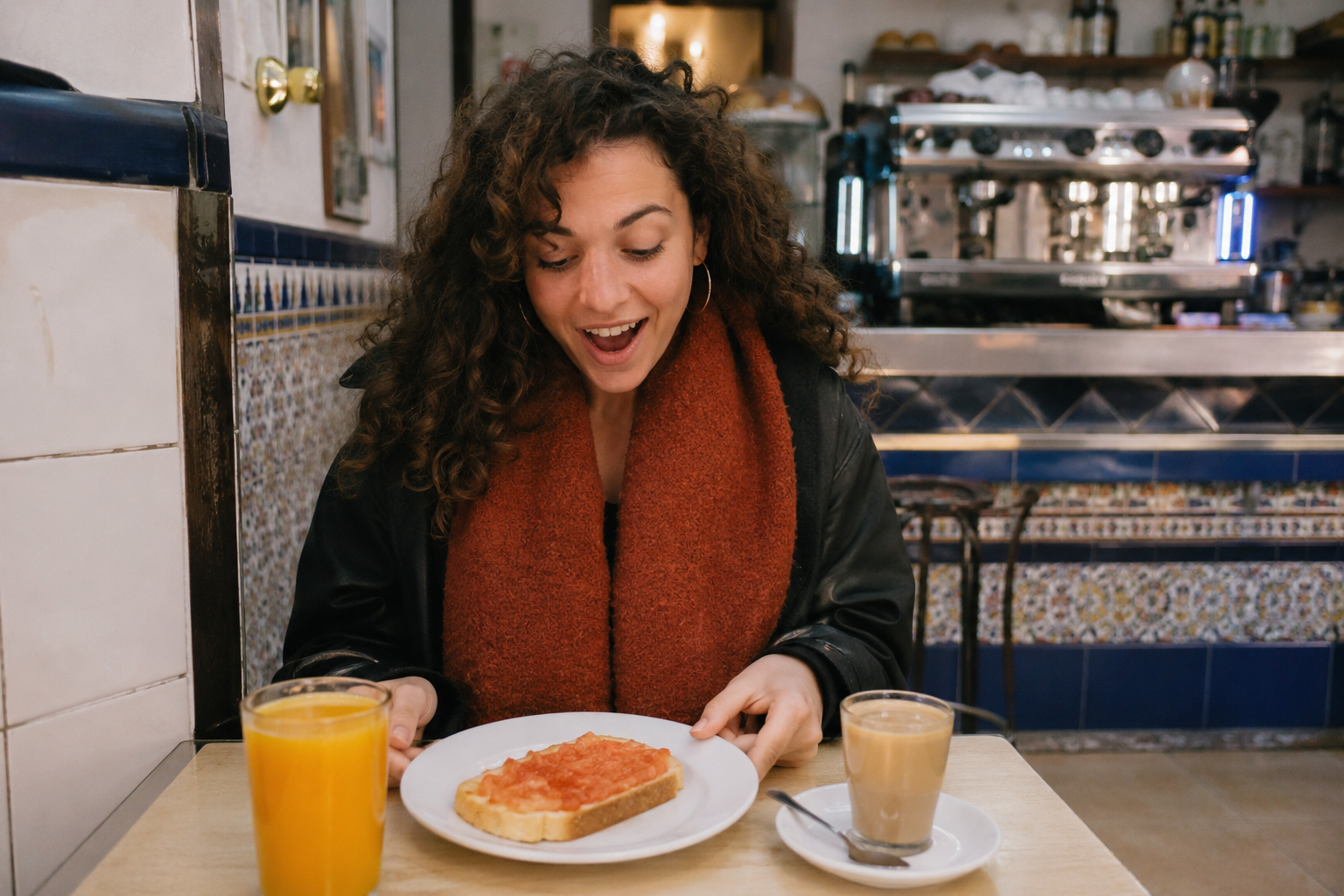
The classic neighborhood desayuno is a set little trio, and at my local bar it came to about €3.50 all in. There is the tostada, a piece of good toasted bread, most often rubbed with tomato and drizzled with olive oil in the Spanish way, though butter and jam are common too. There is the zumo, a small glass of orange juice, and in the better places it is squeezed fresh from real oranges while you wait. And there is the café, usually a café con leche, strong and milky and hot.
That is the whole thing, and its cheapness still astonishes me. In much of the United States, a coffee alone from a chain can cost more than this entire sit-down breakfast, before you have added anything to eat, and the idea of a fresh juice, real toast, and a proper coffee for the price of a fancy latte would seem impossible. Here it is simply the going rate, the ordinary price of an ordinary morning.
Prices do vary, and I should be honest about that, since a tourist street in central Madrid or Barcelona will charge more, and everything has crept up with inflation. But in an ordinary neighborhood bar, away from the sights, the modest desayuno for a few euros remains one of the best deals in Europe, and paying it every morning for a month still cost me less than my old coffee habit alone once had. Part of why it stays so cheap is that the bar breakfast is not a treat here but an institution, something a huge share of the country does on the way to work, so it is priced for everyday people rather than for tourists. It is one of those rare things that is both genuinely good and reliably affordable, and the two are not in tension. In Spain a modest pleasure is allowed to stay modestly priced.
The Morning Slowed Down
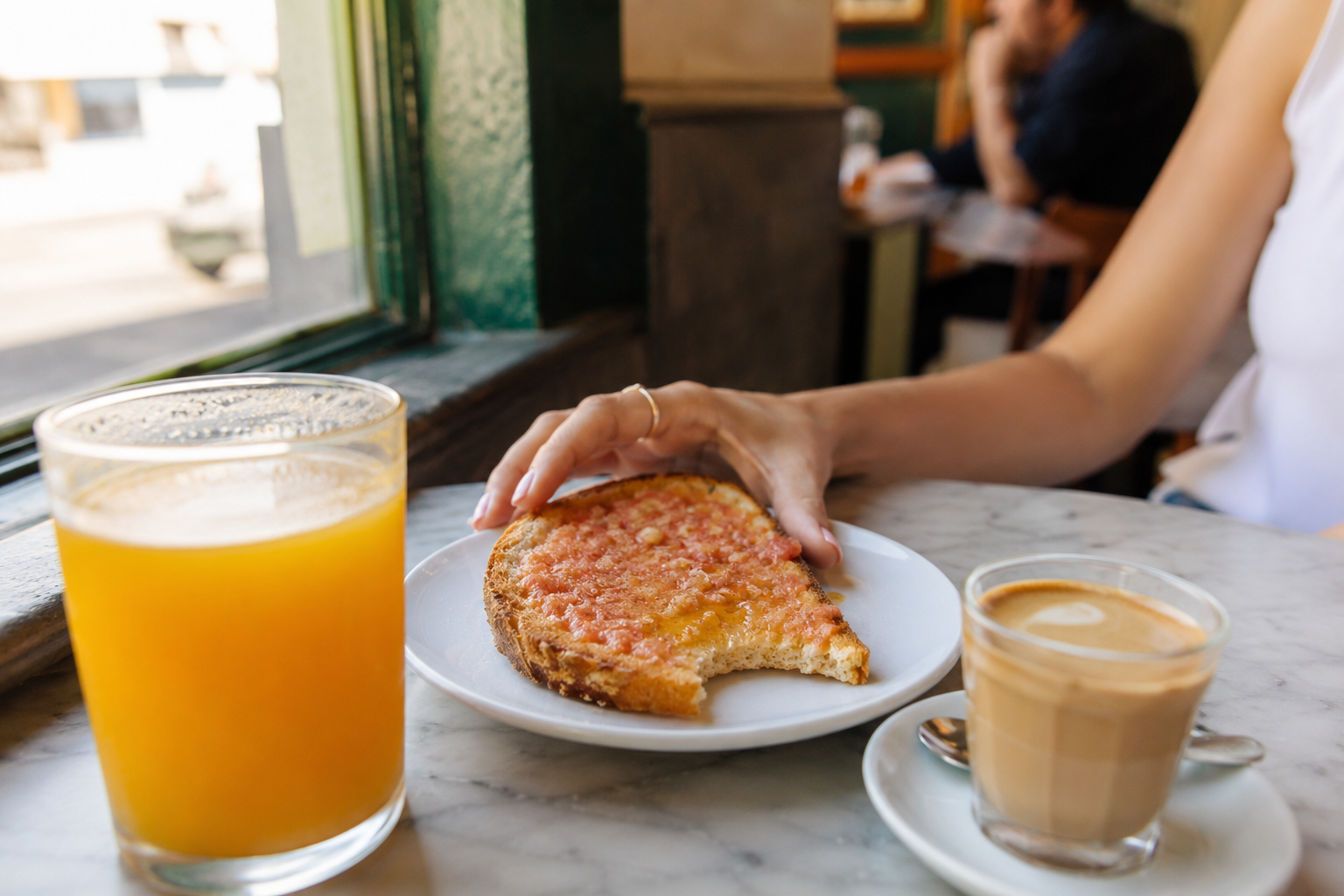
The first thing I noticed had nothing to do with the food. It was that I was sitting down. For the first time in years, my breakfast was not something I did while doing three other things, but a thing in itself, eaten at a table or a counter with nothing required of me but to eat it and watch the morning happen. The simple act of sitting changed everything.
The Spanish bar breakfast is unhurried by design. Nobody rushes you, nobody expects the table back, and the whole culture of it assumes you will take a little time over your coffee before the day claims you. After years of eating on my feet and on the move, being handed permission to sit still for fifteen quiet minutes at the start of the day felt almost radical, and it reset the tone of everything that followed.
That quieter opening rippled through the rest of the morning. Starting the day seated and calm, rather than frantic and scattered, left me steadier and less rushed for hours afterward, as though the pace of those first fifteen minutes set the pace of the whole morning. I had been beginning every day in a small panic and calling it normal, and the bar breakfast quietly showed me another way. It is a strange thing to have to relearn how to sit and eat, but that is more or less what happened. The habit of doing everything at once, of never letting a single moment be only itself, had crept so far into my mornings that stillness felt unfamiliar at first. Within a week it felt essential, and I began to guard those fifteen minutes as the calmest and most deliberate part of my whole day.
The Same Faces Every Day
By the second week, something else had crept in, which was that I had become a regular. Going to the same bar at roughly the same time every morning, I began to see the same people, the staff behind the counter, the other regulars in their usual spots, the rhythm of a small place that knows its customers. Before long they knew me too, and the morning came with a nod and a greeting.
This turned the breakfast into a social event so gentle I barely noticed it happening. There was the camarero who started preparing my order the moment I walked in, the old man who always had the paper at the end of the bar, the brief exchanges about the weather and the football, none of it deep and all of it warming. I had stumbled into a tiny daily community simply by showing up in the same place at the same time.
I had not expected to care about this, and it turned out to matter more than almost anything else. There is something quietly sustaining about being known at the place where you start your day, about the small daily contact with familiar faces, and researchers keep pointing to exactly this kind of casual connection as one of the underrated supports of a good life, a small daily connection. My breakfast had come with a side of belonging. These were not friendships in any deep sense, and I did not know these people’s lives or troubles. But the light, regular, low-stakes contact of a shared morning place turns out to be its own kind of nourishment, the sort a person living behind a car windshield and a front door rarely gets. I had been starved of it without knowing, and the bar quietly fed me.
The Food Was Better Than It Sounds
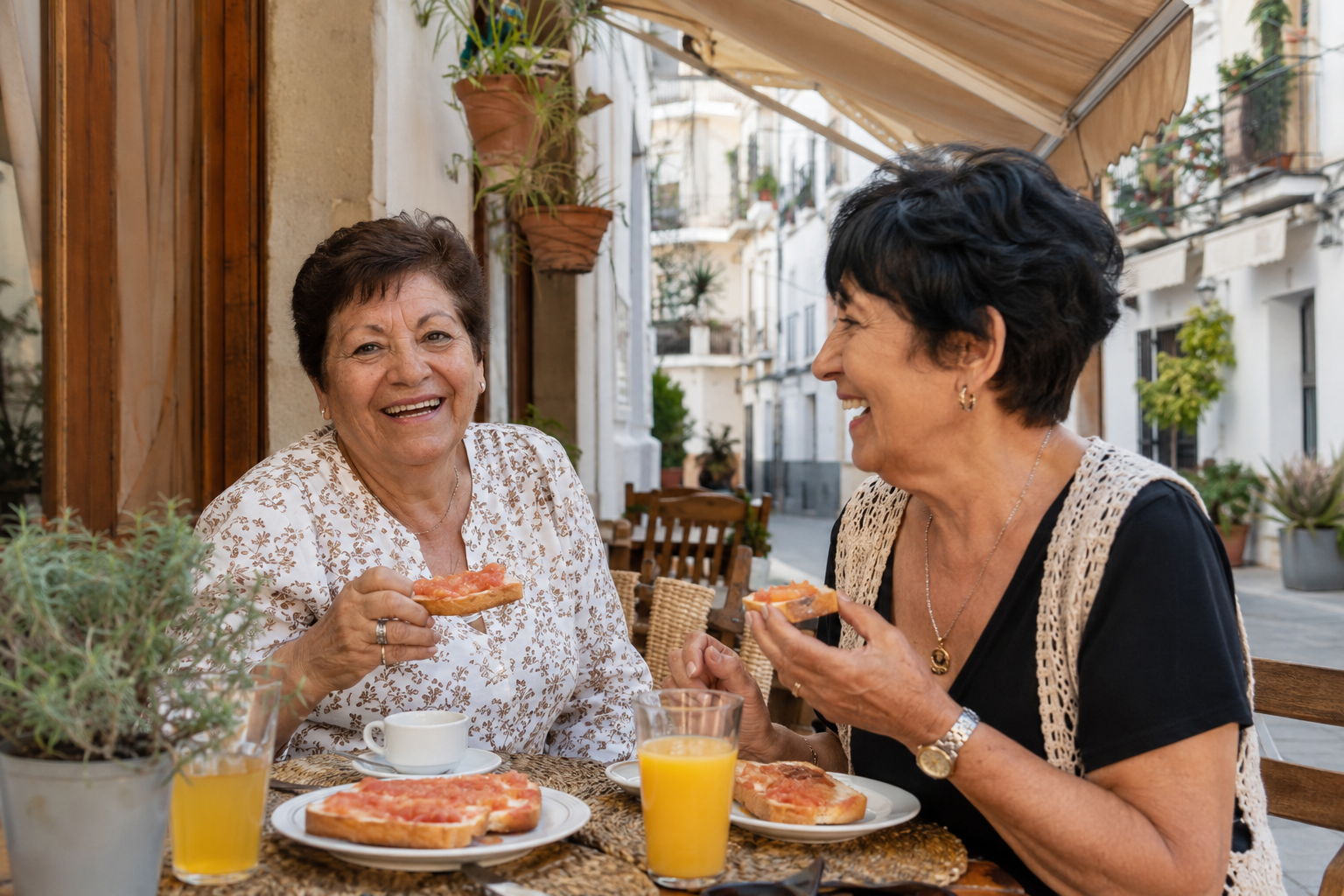
It would be easy to assume that such a cheap and simple breakfast is nothing special, but done well it is a small marvel. The tostada con tomate, when the bread is properly toasted and the tomato is ripe and the olive oil is good, is one of those humble dishes that is far greater than the sum of its parts, savory and fresh and deeply satisfying in a way a pastry never is.
The freshly squeezed juice was a revelation after years of the bottled kind, bright and tart and alive, and the coffee was strong and good in the unfussy way Spanish coffee tends to be. None of it was fancy, and that was the point, since this is not a special-occasion breakfast but an everyday one, built from a few good simple ingredients treated with a little care. Simplicity done well beats elaboration done carelessly every time.
There was a lightness to it too that served me well through the morning. This was not the heavy, sugary, over-large breakfast I had often defaulted to, but a modest and balanced start that left me satisfied rather than sluggish. I felt better through the late morning on the bar breakfast than I had on the bigger, richer breakfasts I used to grab, and it cost a fraction as much. There is a quiet wisdom in the traditional Spanish breakfast being light. The big meal of the day here comes at lunch, so the morning is meant only to get you started, not to weigh you down, and the small tostada and coffee do exactly that. After a lifetime of being told breakfast should be large and important, I found the modest version left me clearer and steadier all morning.
It Got Me Out of the House
An unexpected benefit was that the breakfast required a walk. My bar was a few minutes away on foot, which meant that every morning began with a short stroll down and back, a little movement and fresh air and daylight folded into the start of the day before I had even properly woken up. It was the gentlest possible exercise, and it did me good.
That small daily walk turned out to be a fine way to begin. The morning air, the few minutes of movement, the daylight that helps set the body’s clock, all of it arrived as a free bonus attached to going out for breakfast rather than eating at home. I had thought I was going out for the coffee and the toast, and I was also, without planning it, going out for the walk and the light.
Getting out of the house mattered in a subtler way too. Leaving my own four walls and stepping into the life of the street, however briefly, pulled me out of my own head and into the world at the very start of the day, which is a better place to begin than alone at a kitchen counter. The bar breakfast was a small daily act of joining the world, and the world is a cheerful place to join first thing in the morning. I had not realized how isolating my old mornings were until I replaced them. Eating alone at a counter, eyes on a screen, is a solitary way to begin, and stepping out into a busy bar full of ordinary human life was the opposite of it. The change from private hurry to shared calm did something for my mood that no amount of optimizing my breakfast at home ever had.
What It Cost, and What It Saved
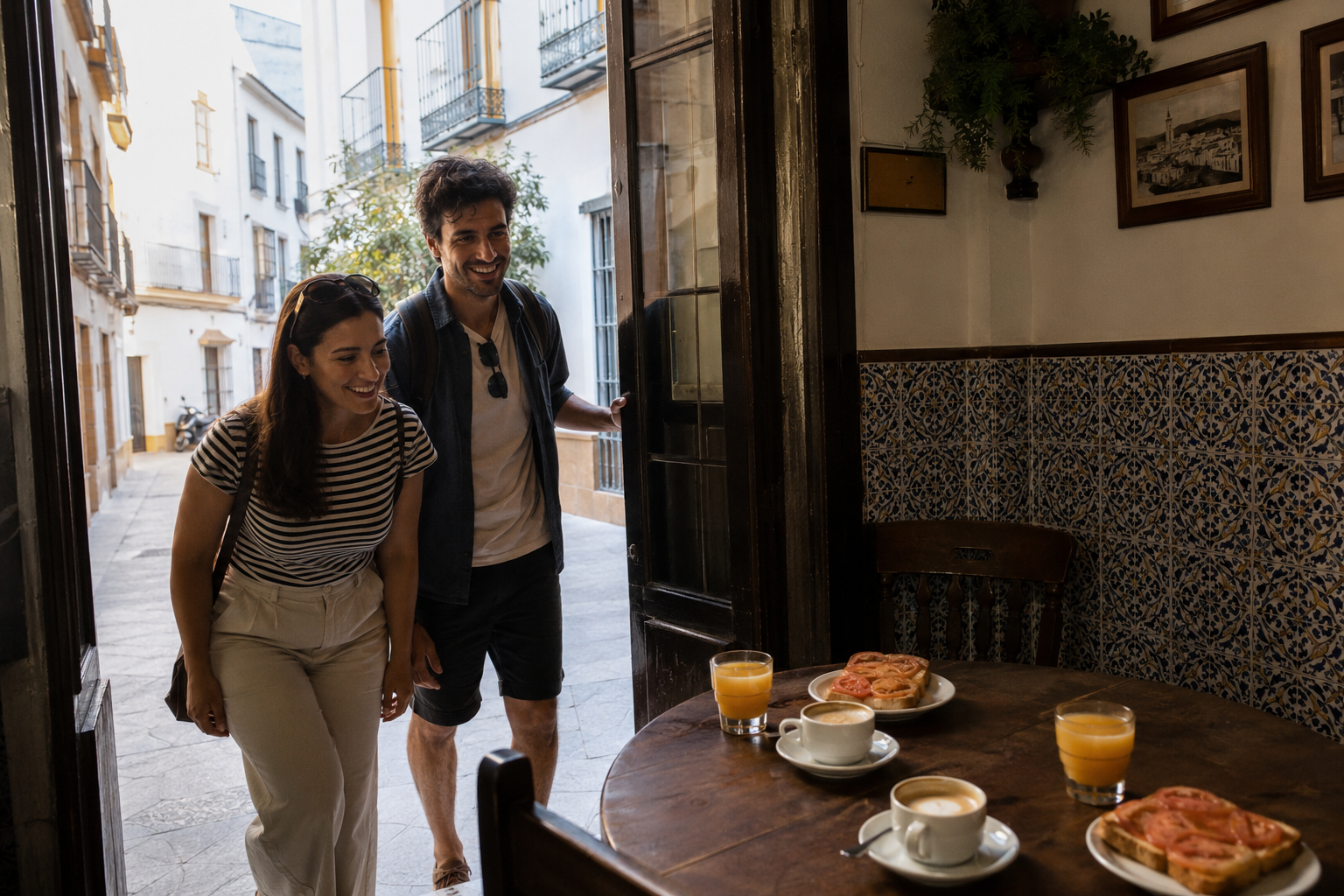
On pure economics, the experiment surprised me. I had assumed that eating out every morning must be an indulgence, and instead the modest bar breakfast cost me little more, and sometimes less, than my old habit of expensive takeaway coffees and grabbed pastries. A few euros a day for a proper sit-down breakfast turned out to be one of the better values in my whole budget.
Even taken at full price across a month, the total was modest, the kind of small daily spend that feels almost trivial and yet buys a great deal of pleasure. Set against a single dinner out, a month of these breakfasts looks like nothing at all, and set against what many people spend on coffee alone, it can even come out ahead. This is not a luxury dressed up as a bargain but a genuine one. That reframing mattered to me more than the exact figures. I had spent years treating eating out as a splurge to be rationed and felt vaguely guilty about the coffees I bought, when the truth was that a simple daily breakfast at a neighborhood bar was one of the most sensible small purchases I could make. Some of the best things about life in Spain are also among the cheapest, and this is near the top of the list.
The deeper value, though, was never really about the money. What I was buying for my few euros was not just food but a ritual, a slowing of the morning, a daily dose of connection, a walk, and a calmer start to the day, all bundled together at a price that made the whole thing feel like a gift. Measured by what it gave me, the €3.50 breakfast was the best money I spent all month.
What I Kept After the Month
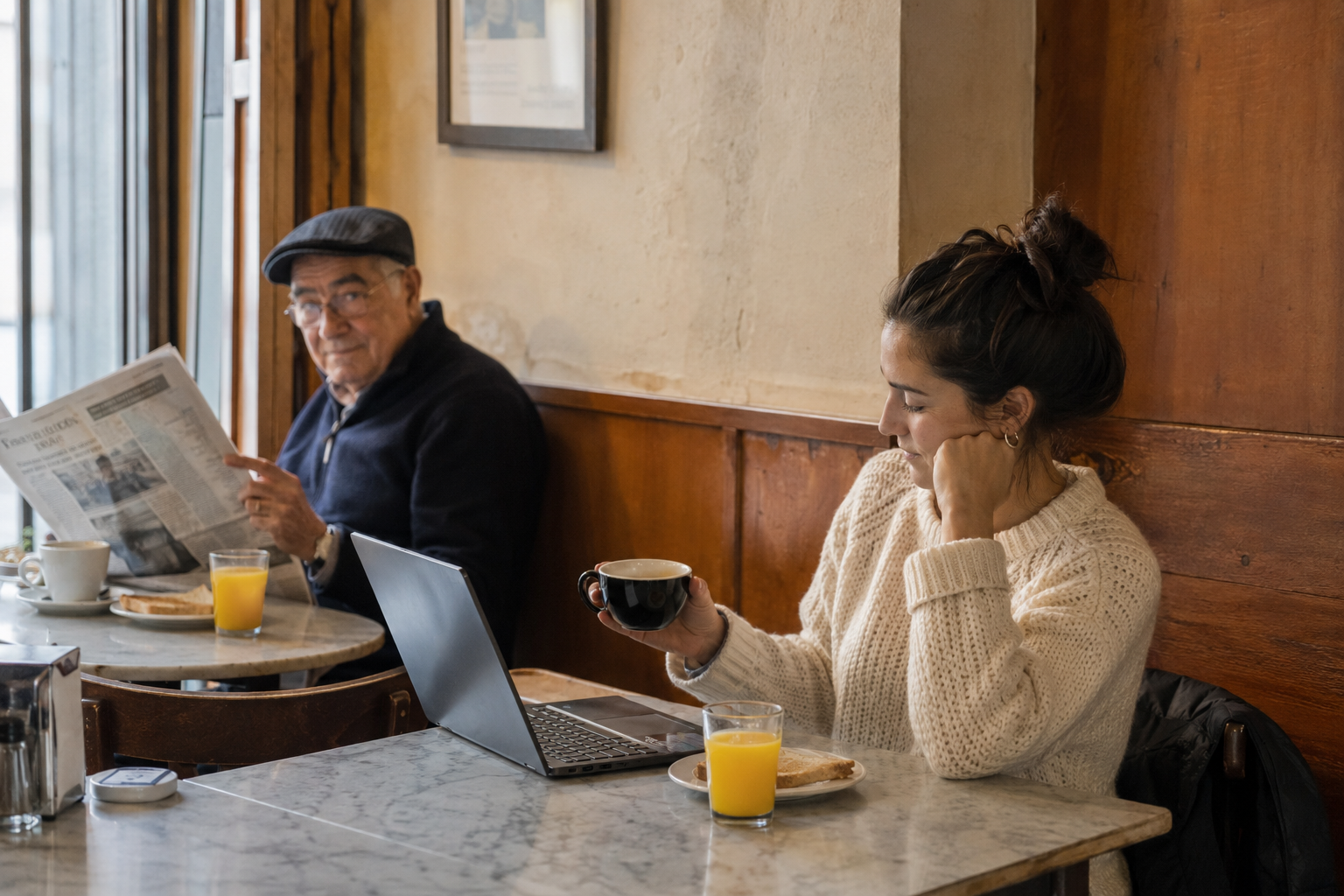
When the thirty days ended, I did not go back to the sink and the car and the gulped coffee. The experiment had quietly become a habit, because the version of my morning with the bar breakfast in it was so plainly better than the version without that returning to the old way made no sense. Some experiments you are glad to finish. This one I simply kept.
I do not go every single day now, since life does not always allow it, but the bar breakfast has become the anchor of my good mornings rather than a rare treat. On the days I make time for it, the whole day tends to go better, steadier and calmer and more connected, and I have come to guard those fifteen unhurried minutes as some of the most valuable of the week. The cheapest part of my day turned out to be one of the most important. What strikes me now is how little it took. I did not overhaul my life or adopt some demanding new regime. I simply walked to a bar and sat down to a three-euro breakfast, and that tiny change rippled outward into calmer mornings, small daily connection, a bit of movement, and a better mood, all for the price of the coffee I used to gulp on the run. The smallest ritual carried the largest return.
If there is a lesson in it beyond my own mornings, it is how much a small, cheap, daily ritual can quietly do. The Spanish figured out long ago that breakfast is not only fuel but a way to begin the day gently, in company, without hurry, and they built a whole affordable culture around it. For the price of a fancy coffee, I bought my way into that culture for a month, and I have not wanted to leave it since. Sometimes the best thing you can change is not something big and dramatic but the first fifteen minutes of the day, and in Spain those minutes happen to cost about three and a half euros.

About the Author: Ruben, co-founder of Gamintraveler.com since 2014, is a seasoned traveler from Spain who has explored over 100 countries since 2009. Known for his extensive travel adventures across South America, Europe, the US, Australia, New Zealand, Asia, and Africa, Ruben combines his passion for adventurous yet sustainable living with his love for cycling, highlighted by his remarkable 5-month bicycle journey from Spain to Norway. He currently resides in Spain, where he continues sharing his travel experiences with his partner, Rachel, and their son, Han.