
Americans are, by almost any measure, a friendly people. They smile easily, thank generously, chat with strangers, and radiate a warmth that visitors from more reserved places often find genuinely lovely. Yet that same warmth, carried unchanged across the Atlantic, can land in Europe as something puzzling, excessive, or even faintly insincere, not because Europeans are colder but because they draw the lines of politeness in very different places.
The gap is not about one side being nice and the other being rude. It is about two different theories of what politeness is for. American politeness tends to be warm, expressive and offered freely to everyone, while much of European politeness, especially in the north and center of the continent, is more reserved, saving open warmth for real relationships and treating public interactions with a cooler courtesy. Neither is wrong, but they read each other strangely.
Here are nine ways American politeness comes across as odd in Europe, starting with the one every American abroad eventually hears about. A quick caveat first, since Europe is not one place, and the warm, loud south of Spain and Italy sits much closer to the American style than the reserved north does. But across a great deal of the continent, these patterns hold.
Over-Thanking Is Real

The thanking is the first thing Europeans notice, and it is not a myth. Americans thank constantly, thanking the waiter each time a plate moves, thanking the cashier several times in a single transaction, thanking a friend three times for the same small favor, until the word loses all weight through sheer repetition. To many Europeans it sounds less like gratitude than a nervous verbal tic.
In much of Europe, thanks are given more sparingly and therefore mean more when they come. A single, sincere thank you for something that truly warranted it carries real weight, while the American habit of thanking for every tiny thing can read as either anxious or oddly formal, as though every human interaction were a small transaction requiring receipt. The warmth behind it is real, but it gets lost in the volume.
The underlying difference is about how much verbal smoothing an interaction is felt to need. American culture cushions nearly everything in gratitude and please and sorry, while many European cultures leave more of that unsaid, trusting the basic goodwill of the exchange without narrating it. An American dialing the thanks down by half in Europe will sound not ruder but simply more native. It helps to remember that the reserved European is not withholding warmth by thanking less, only spending the word where it counts. Once you stop hearing the sparse European thanks as coldness, you begin to notice how much more each one means, which is rather the whole point.
Smiling at Strangers

The American smile is famous, offered freely to shop assistants, passersby and total strangers on the street, and in much of Europe it quietly baffles people. A smile aimed at someone you do not know can read, in more reserved countries, as odd, suspicious, or even slightly unhinged, since a smile there is something exchanged between people who have a reason to share one, not sprayed across a room.
This is especially true in the north and east of the continent, where the unprompted smile is often met with a wary blankness that Americans find chilly. It is not coldness so much as a different grammar of the face, one in which a smile is a genuine signal reserved for genuine warmth, rather than a default social lubricant applied to everyone. The permanent friendly smile can even arouse mild distrust, as though the smiler wants something.
Europeans smile plenty, of course, warmly and often, among friends and once a real connection exists. The difference is that the smile is earned rather than given by default, so the American habit of beaming at strangers marks you instantly as foreign. Save the big smile for the people you are truly glad to see, and the reserved European face makes more sense.
Asking How Someone Is Without Wanting to Know
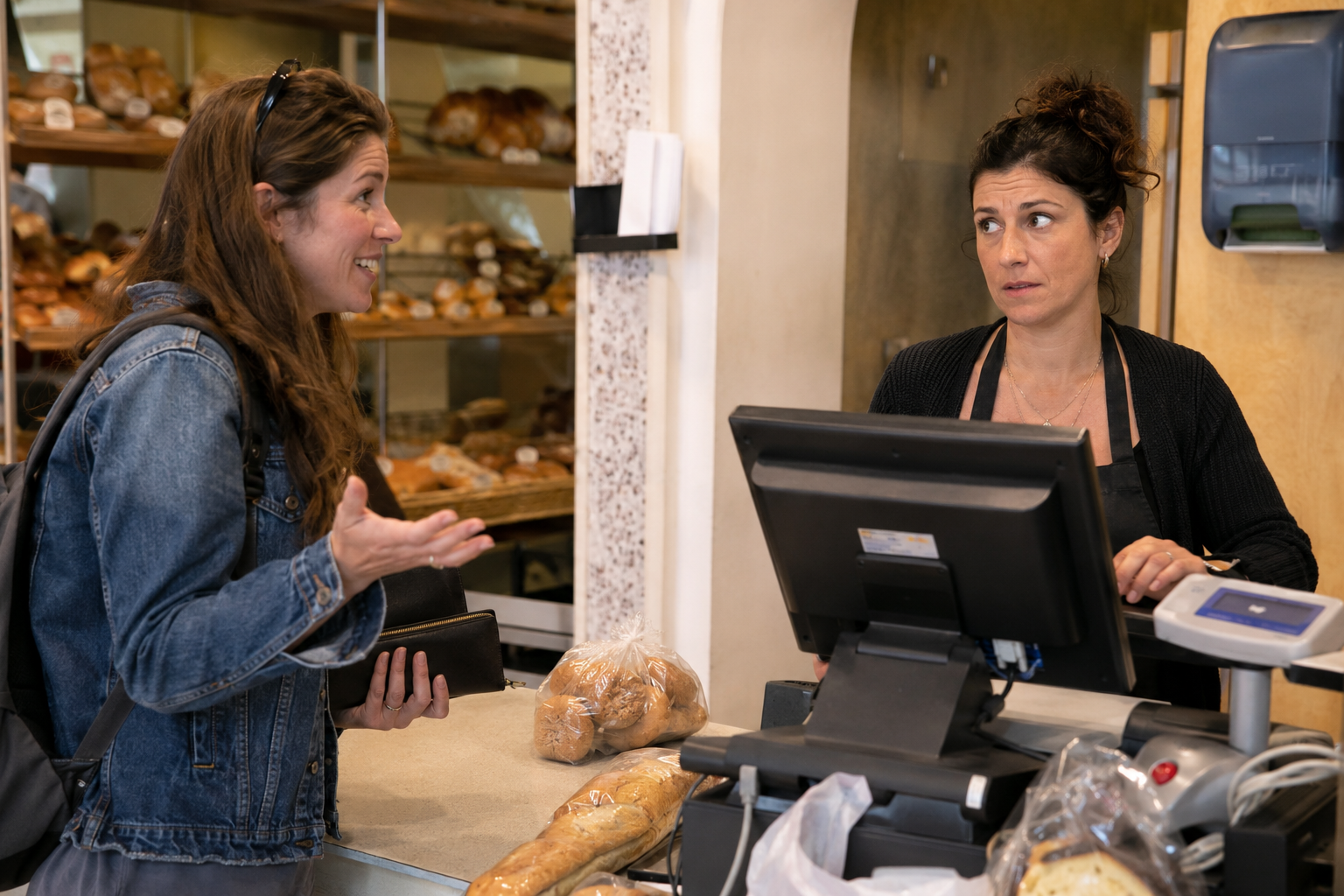
Perhaps the most confusing American habit is the greeting that is not a question. An American cashier or acquaintance will ask how you are as a simple hello, with no expectation of a real answer, and the whole exchange is a ritual rather than an inquiry. To many Europeans, asking a question you do not want answered is quite strange, a small piece of theater with no content.
In cultures where how are you is a real question, this creates honest confusion. A German or a Dutch person, asked how they are by a stranger, may really begin to tell you, having taken the question at face value, and the American who did not want to know is left stranded by their own greeting. The words mean what they say, so asking them idly reads as odd rather than friendly.
The American version treats the phrase as pure social music, a warm noise that means roughly hello and expects only the same noise back. That is not dishonest, exactly, but it puzzles people who reserve questions for things they truly want to know. In much of Europe, if you do not want the answer, it is better not to ask, and a simple hello does the job without the confusion. The workaround for Americans is small and painless. Keep the greeting and drop the question, and a warm hello or good morning carries all the friendliness with none of the puzzle. You lose nothing that mattered and spare your European acquaintance the odd moment of being asked something you did not want them to answer.
Making Small Talk With Strangers

Americans chat, comfortably and often, with cashiers, seatmates, people in queues, and strangers in elevators, treating the passing moment as a chance for a little human connection. In much of Europe this easy small talk with strangers reads as intrusive or bewildering, a breach of the quiet neutrality that public space is supposed to have. The elevator is for silence, not conversation.
The reserve here is not unfriendliness but a different sense of the boundary around a stranger. Many Europeans grant one another a kind of privacy in public, a right to be left alone in the shared space of a train carriage or a shop queue, and an unsolicited conversation can feel like a small invasion of it. The American reaching out warmly is, without meaning to, stepping over a line the European is trying to hold.
This trips up Americans who read the resulting silence as coldness, when it is really a form of respect. The person who does not chat with you on the train is not rejecting you but honoring an unspoken agreement to let each other be. Once you stop expecting small talk from strangers, the European quiet stops feeling hostile and starts feeling, in its own way, considerate.
Complimenting People You Don’t Know
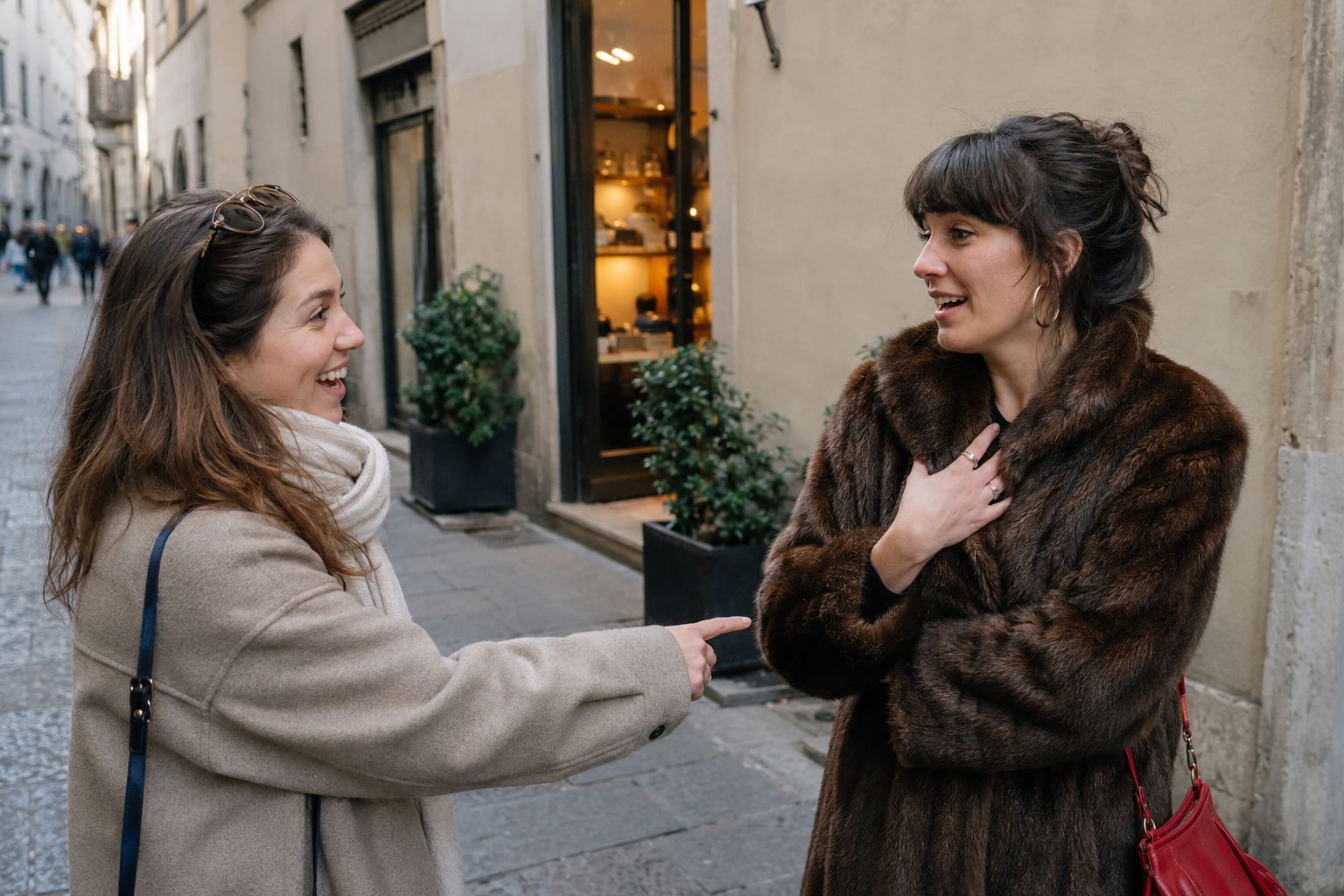
The warm American compliment to a stranger, the cheerful I love your coat tossed to a passerby, is meant kindly and often lands awkwardly in Europe. Complimenting someone you do not know can feel forward or false to a European, an intimacy that has not been earned, and rather than delighting the recipient it may leave them faintly suspicious of the motive behind it.
Compliments, like smiles and thanks, tend to be more measured in much of Europe, offered when they are truly meant and to people with whom there is some relationship. The free-flowing American praise, generous as it is, can read as a kind of social currency spent too freely to carry real value. If everything is wonderful and everyone is amazing, the words stop meaning much, and a more reserved culture hears the inflation.
The kind impulse behind the compliment is real, and Europeans who understand the American style come to find it endearing. But absent that understanding, the stranger praising your shoes registers as slightly off, and the safer path abroad is to save your compliments for people you know and moments that warrant them. Given sincerely and sparingly, a compliment in Europe means a great deal more.
Treating Service Workers Like Instant Friends

Americans often bring a warm, first-name, how-is-your-day familiarity to their dealings with waiters, clerks and other service workers, chatting easily and treating the interaction as a brief friendship. In much of Europe the relationship between customer and server is more formal and more bounded, a professional exchange conducted with mutual courtesy rather than manufactured chumminess, and the American warmth can feel out of place.
This is not because Europeans look down on service workers, but because the roles are kept clearer. A European waiter is a professional doing a job well, addressed politely and left to do it, rather than a temporary buddy to be drawn into conversation, and both sides often prefer that clarity. The performance of friendship can even feel slightly false to someone who would rather simply be treated with straightforward respect.
There is also the matter of the false intimacy of first names and instant closeness, which many European cultures approach more slowly. Where American friendliness leaps straight to warmth, much of Europe moves through a more formal stage first, and the leap can feel presumptuous. Meeting the courtesy where it is, professional and polite rather than instantly personal, reads as more respectful, not less.
Issuing Invitations You Don’t Mean
The cheerful American we should get together sometime, or we should grab a coffee, is one of the great sources of transatlantic confusion, because in Europe an invitation is usually meant literally. When an American offers one of these warm, vague gestures with no intention of following through, a European may take it at face value, wait for the plan to materialize, and feel quietly let down when it never does.
To the American, the phrase is a friendly expression of goodwill, a way of saying it was nice to see you rather than a firm commitment to a calendar. To many Europeans, if you say you will get together, you are proposing to really do it, and the vague American version can read as either flaky or oddly insincere once the promised coffee never appears. The warmth was real, but the words implied more than was meant.
The lesson for Americans abroad is to mean your invitations or not to make them, since a European is likely to hold you to your word. Say it was lovely to see you, which is true and complete, rather than proposing a plan you will not keep, and you avoid a small breach of trust. Save the invitation for the times you truly intend to follow through, and it will be received exactly as warmly as it was meant.
Apologizing for Everything
Americans, like the British, apologize reflexively, saying sorry for bumping a chair, for asking a question, for existing slightly too near someone, until the word becomes a kind of nervous punctuation. In much of continental Europe this steady stream of apology reads as strange and a little weak, an odd habit of asking forgiveness for things that need none. The constant sorry drains the word of the meaning it should carry.
In many European cultures, an apology is reserved for an actual wrong, something that truly caused harm or offense, and offering one for every trivial thing dilutes it and can even seem to invite being walked over. The American reflex, born of a wish to smooth every interaction and never impose, reads very differently in a culture that expects apology only when it is warranted. Saying sorry too easily can make you seem strangely anxious.
The fix abroad is to reserve the apology for when you have actually done something, and to let the small frictions of ordinary life pass without ceremony. A brushed shoulder or a small request needs no sorry in most of Europe, and withholding it does not make you rude but simply calibrated to the local sense of when contrition is owed. Spend the word carefully, and it keeps its worth.
Wishing Strangers a Nice Day
Finally, the warm American send-off, the have a nice day delivered to every stranger by every clerk and passerby, can ring hollow to European ears. Coming from someone who does not know you and will never see you again, the cheerful benediction can feel scripted and empty, a piece of corporate warmth rather than a real wish, and in more reserved cultures it registers as faintly odd.
The habit grows partly out of American service culture, where relentless friendliness is expected and rewarded, and partly out of a genuine national warmth that likes to send people off kindly. But transplanted to a place where such phrases are not the norm, it can sound like a slogan, a mandated cheerfulness with no person really behind it. The very automatic quality that makes it easy at home is what makes it ring false abroad.
The impulse itself is a kind one, since wishing a stranger well is a lovely thing at heart. It is simply that in much of Europe the sentiment is expressed less, and so expressing it constantly marks you as foreign and can seem to mean less rather than more. A simple goodbye, or the local equivalent, carries the warmth without the scriptedness, and fits the quieter key in which European courtesy tends to be played.
Taken together, these nine habits paint a picture not of Americans being fake or Europeans being cold, but of two cultures that locate warmth and sincerity in different places. American politeness spreads its warmth wide and thin, offering a little to everyone, while much of European politeness keeps its warmth deeper and narrower, reserved for the people and moments that have earned it. Each can misread the other, the American seeming insincere and the European seeming aloof, when both are simply being polite by their own rules. Understanding the difference is what lets an American abroad keep all their genuine warmth while learning when to hold a little of it back, and a traveler who grasps it will find that the reserved European, once truly befriended, is as warm as anyone on earth. The task, then, is not to abandon American warmth, which is a real gift, but to read the room and adjust its volume. Keep the kindness, ease off the performance of it, and let the real feeling show through in quieter ways, and Europeans will warm to you all the same, only more slowly and, in the end, more deeply.

About the Author: Ruben, co-founder of Gamintraveler.com since 2014, is a seasoned traveler from Spain who has explored over 100 countries since 2009. Known for his extensive travel adventures across South America, Europe, the US, Australia, New Zealand, Asia, and Africa, Ruben combines his passion for adventurous yet sustainable living with his love for cycling, highlighted by his remarkable 5-month bicycle journey from Spain to Norway. He currently resides in Spain, where he continues sharing his travel experiences with his partner, Rachel, and their son, Han.