
There is a small Greek island in the Aegean where men routinely live into their nineties and beyond, where heart disease and dementia are strikingly rare, and where a surprising number of people simply seem to forget to die. The island is Ikaria, and it is one of the world’s handful of Blue Zones, the places researchers have identified where people reach very old age in unusual numbers and unusually good health.
What makes Ikaria so interesting to scientists, and to cardiologists in particular, is that its old men are not doing anything exotic. They take no special supplements and follow no program. They simply live, day after day, in a way their island has shaped over centuries, and that ordinary daily life turns out to contain a remarkable set of habits that researchers keep returning to study. That, more than anything, is what draws the scientists in. A place where long life comes not from medicine or wealth but from the texture of ordinary daily living is a place with lessons for everyone, and Ikaria has been studied so closely precisely because its secrets look like habits rather than accidents.
Here are eight things the old men of Ikaria do every day, the small routines that longevity and heart researchers keep examining for clues. None of this is medical advice, and Ikaria’s longevity springs from many tangled factors including its genes and its isolation, but the pattern is real and quietly instructive.
They Take an Afternoon Nap
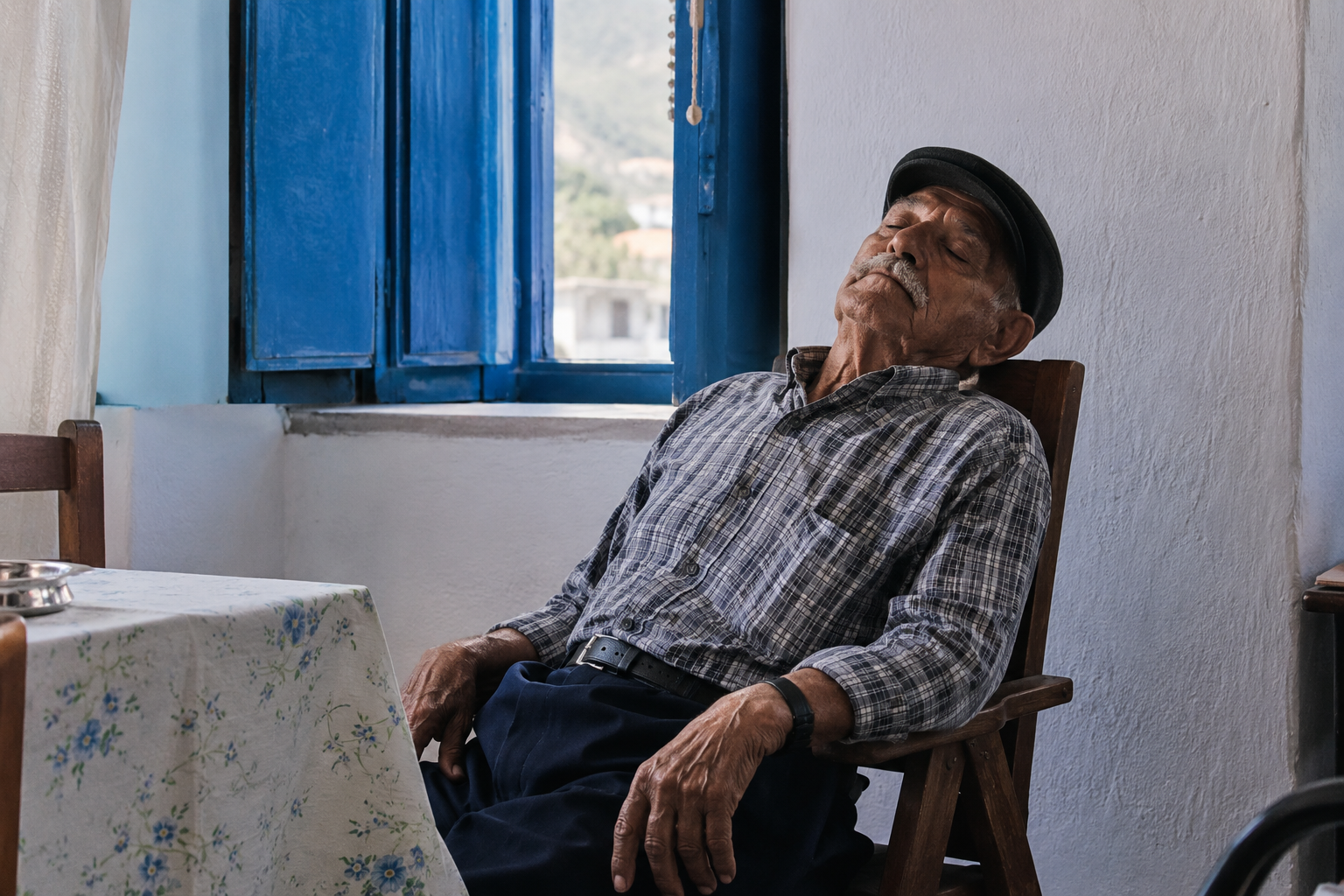
The Ikarian day is built around a proper afternoon nap, taken in the heat of the day when work pauses and the island goes quiet. This is not an occasional indulgence but a fixed daily habit, as much a part of the schedule as any meal, and it is one of the things cardiologists have studied most closely.
The interest is not sentimental. A large Greek study found that regular midday napping was associated with a meaningfully lower risk of dying from heart disease, and the finding helped put the humble siesta on the cardiology map. Whether the benefit comes from lowered stress, reduced blood pressure, or simple rest, the daily nap appears to be doing real cardiovascular work.
For the old men of Ikaria, the nap is simply how the day has always been shaped, a pause built into the rhythm of a hot climate. That it may also be protecting their hearts is a happy accident of a lifestyle designed around comfort and the sun rather than around productivity, and it is one of the clearest lessons the island offers. The practical lesson is gentle and easy to borrow. A short afternoon rest of twenty or thirty minutes is within almost anyone’s reach, and the science suggests it may be one of the simplest things a tired heart can be given. The Ikarians never invented it as a health measure, yet the rest of us can adopt it as one.
They Drink Wild Mountain Teas
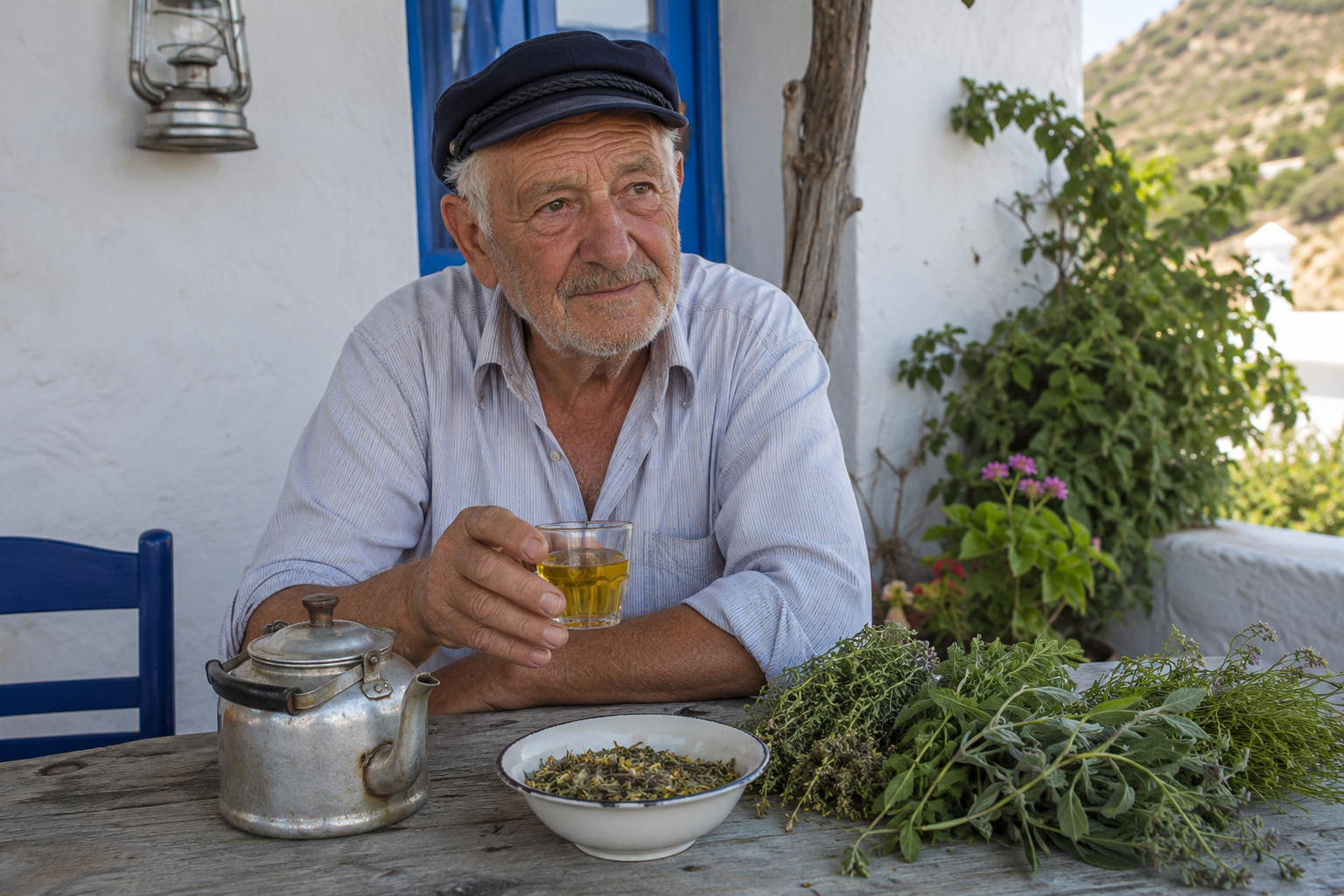
Every day, the old Ikarians brew and drink teas made from the wild herbs that grow across their mountainous island, rosemary and sage and oregano and dandelion and many more, gathered from the hillsides and steeped into a daily infusion. It is the island’s everyday drink, taken in the evening and throughout the day, and it is another habit that has caught the eye of researchers.
Many of these mountain herbs have mild diuretic properties, which can gently lower blood pressure over time, and they are rich in antioxidant compounds besides. A lifetime of drinking these infusions, rather than sugary drinks, may be quietly helping to keep blood pressure and inflammation in check, which matters enormously for the heart.
The herbs also tie the men to their land and their seasons, since knowing which plant grows where and when is part of the island’s inherited knowledge. The daily tea is at once a mild medicine, a ritual, and a link to the mountainside, and it is a good example of how Ikarian habits tend to serve several purposes at once. For an outsider, the habit is easy to imitate in spirit if not in exact herbs. Swapping sugary drinks for simple herbal teas, and drinking more of them across the day, borrows the essence of the Ikarian infusion, and even without a wild mountainside the shift away from sugar is worth making on its own.
They Walk the Hills All Day
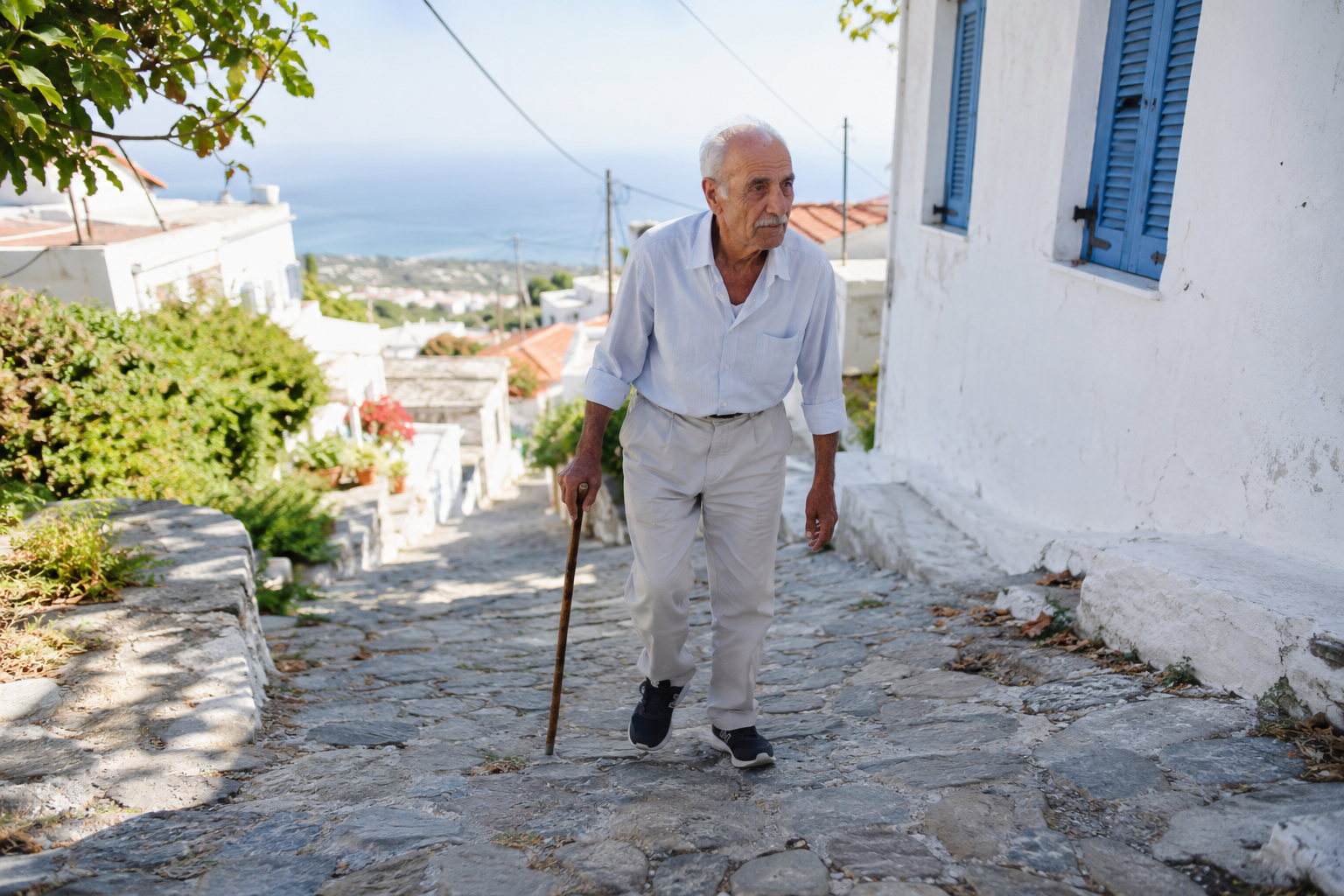
Ikaria is steep, rugged and mountainous, and simply living there means walking up and down its slopes constantly, which the old men have done every day of their lives. There are no flat, easy strolls here. Getting to a neighbor, a garden, or the village means climbing, and that built-in effort keeps legs strong and hearts working well into extreme old age.
This is natural movement of exactly the kind longevity researchers prize, physical activity that is woven into daily life rather than performed as exercise. The old Ikarian does not go to a gym or follow a program. He simply moves across a demanding landscape all day, every day, and that constant gentle exertion does the work that formal fitness routines try and often fail to sustain.
The terrain, in other words, is part of the medicine. An island that forces its people to walk its hills has built exercise into the very geography of daily life, and the strong, mobile old men who result are one of the clearest signs of how powerful that constant low-level movement can be. The takeaway is not to move to a mountain but to build real walking back into daily life, on hills and stairs wherever possible, so the body keeps working across the whole day. The everyday climbing, not the occasional hard workout, is what seems to keep the Ikarian heart so strong so late into life.
They Eat Straight From the Garden
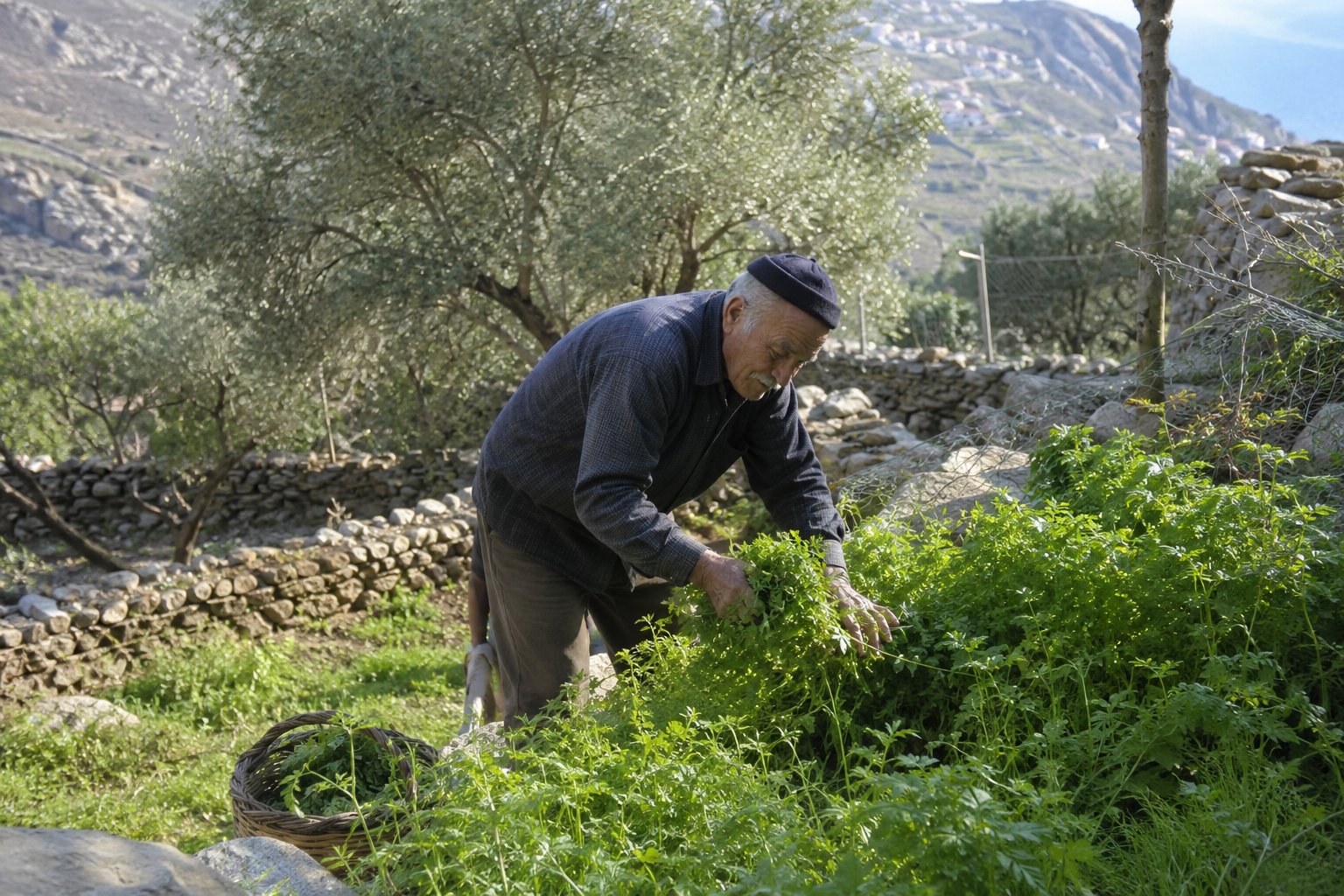
The Ikarian diet is a plant-heavy version of the Mediterranean diet, built on vegetables and wild greens and beans and olive oil, with fish and a little meat rather than a lot, and most of it grown or gathered locally. What lands on the plate came, very often, from the garden or the hillside that morning, about as fresh and unprocessed as food can be.
Those wild greens, gathered from the mountainsides, are extraordinarily rich in the antioxidants and nutrients that protect the heart and body, far more so than cultivated supermarket produce. Combined with the beans, the good olive oil, and the near-total absence of processed and sugary food, this way of eating is close to the ideal heart-protective diet that cardiologists spend their careers recommending.
The old men eat this way not by choice of diet but by habit and availability, because it is what the island grows and what their mothers cooked. A lifetime of it, rather than a lifetime of industrial food, is one of the pillars on which their long, healthy lives are built, and it is the single habit researchers point to most often. The heart of the lesson is the plate itself. A diet leaning hard on vegetables and wild greens and beans and olive oil, with meat as a small accent rather than the center, is close to what every cardiologist recommends, and the Ikarians arrive at it through tradition rather than prescription. Growing even a little of your own food nudges you a step closer to that plate.
They Work the Land Into Old Age
The old men of Ikaria keep gardens, tend olive trees, and work their land well into their eighties and nineties, long past any age at which most people would call themselves retired. This daily work in the soil is at once exercise, a source of fresh food, and a reason to get up in the morning, and it never really stops.
There is deep value in that continued purpose. Staying useful and engaged, with real work to do and a genuine role to play, protects against the physical and mental decline that so often follows the abrupt stop of retirement. The Ikarian man never fully retires, and so he never loses the daily structure and meaning that work provides.
The gardening also keeps him bending, lifting, walking and moving in the open air and the sun, which is gentle physical activity of the most sustainable sort. Purpose and movement and fresh food all arrive in the single daily act of working the land, which is why researchers see the refusal to retire as one of the island’s quiet strengths. There is a warning hidden in this for the modern world, where retirement often means a sudden and total stop. The Ikarian pattern suggests that keeping some real work, some daily purpose and some reason to move matters enormously, and that the goal in later life may be to wind down slowly rather than to halt everything at once.
They Keep a Rich Social Life
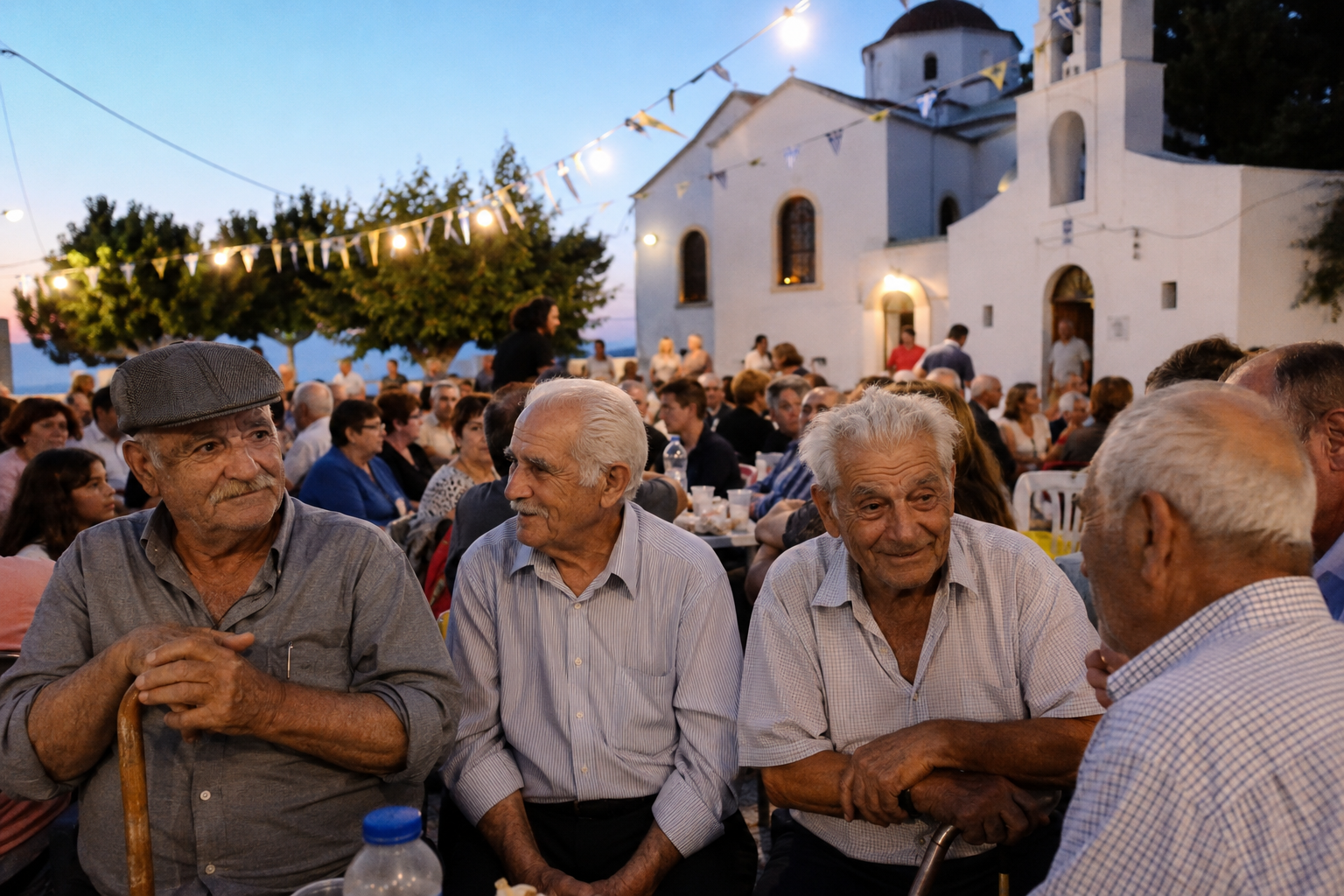
On Ikaria, no one grows old alone. The old men are surrounded by family, neighbors and lifelong friends, folded into a tight community where visiting is constant and celebrations run late into the night, and that deep social connection is one of the most powerful protectors of health that exists.
The island is famous for its all-night festivals and its refusal to hurry a social occasion, and the old take full part. There is always a gathering to join, a neighbor to sit with, a long conversation to be had, and this constant contact keeps the loneliness that damages health in more isolated societies from ever taking hold.
Longevity researchers rank strong social ties alongside diet and exercise as a driver of long life, and Ikaria delivers those ties as a matter of course. The old man is never shut away or set aside but remains a full member of a warm and connected community, and that belonging may be doing as much for his heart as anything on his plate. The lesson here is the one that runs through every Blue Zone, and it is the most important of all. Protecting and deepening social ties in old age, staying woven into a community rather than drifting into isolation, may be the single most powerful thing a person can do for a long life, and it is available anywhere, not only on a Greek island.
They Ignore the Clock
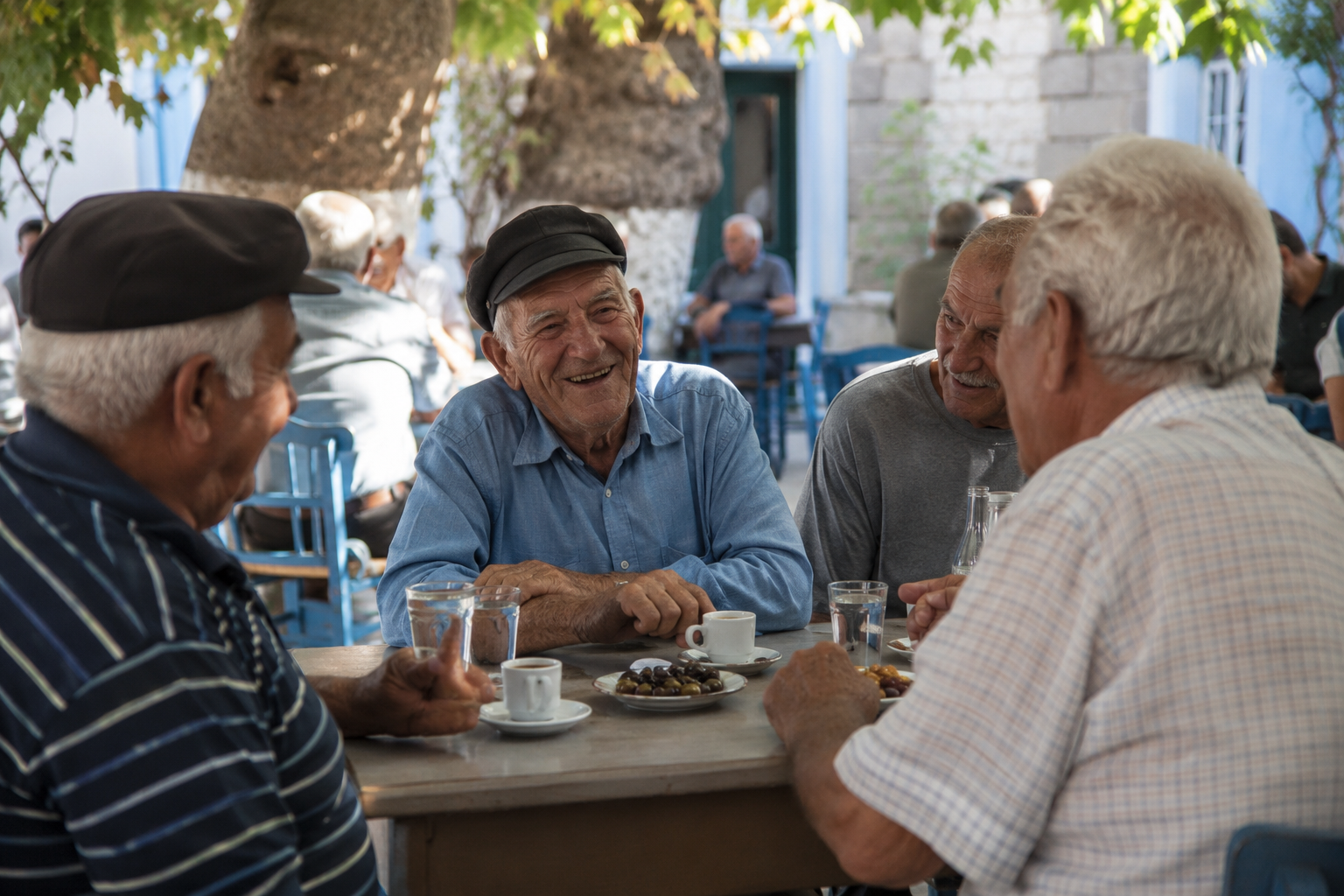
Ikarians are famous for a relaxed, almost defiant relationship with time, and the old men embody it. Appointments are loose, the day drifts, no one rushes, and there is a genuine cultural resistance to the tyranny of the clock that visitors find both baffling and, eventually, contagious. Life moves at the pace of the island, not the watch.
That unhurried quality is not laziness but a shield against chronic stress, which is one of the great hidden drivers of heart disease and aging. A life lived without constant deadlines, traffic and time pressure spares the body the steady drip of stress hormones that wears down the modern heart, and the calm you see in these old men is the accumulated result of decades lived that way.
The islanders themselves half-joke that they simply forget to die, and there is something to it. A life without hurry, without the grinding low-level stress that fills the modern day, gives the body a gentleness that seems to translate directly into extra years, and it may be one of the harder habits for an outsider to copy. Still, the principle can be borrowed even in a hurried world. Building genuine unhurried time into the day, protecting rest, and refusing to let every moment be ruled by the clock all lower the chronic stress that quietly ages the heart. A little of the Ikarian calm goes a surprisingly long way.
They Live by Faith and Fasting
Finally, the rhythms of Greek Orthodox faith shape the Ikarian year, and the old men follow them, which brings both a spiritual structure and a surprising dietary side effect. The many fasting periods of the Orthodox calendar mean regular stretches, adding up to much of the year, when meat, dairy and rich foods are set aside in favor of simple plant food.
This traditional fasting has drawn real scientific interest, since these regular periods of eating simply and lightly may bring some of the metabolic benefits that researchers now associate with lighter eating and periodic restraint. The old Ikarian, following his faith, has practiced a gentle form of it his whole life without ever calling it a diet.
Beyond the food, the faith brings community, ritual, meaning and a sense of belonging to something larger, all of which support the calm, connected, purposeful life that seems to sit at the heart of Ikarian longevity. It is a fitting final habit, because like all the others it works on the body and the spirit at once. Whatever one’s own beliefs, the underlying pattern is worth noting. Regular stretches of simpler, lighter eating, a strong sense of meaning, and belonging to something larger than oneself show up again and again in the world’s longest-lived places, and the Ikarian year, shaped by faith, happens to deliver all three at once.
Taken together, these eight habits are not a program or a plan, and that is exactly why cardiologists find Ikaria so compelling. The old men of the island are not trying to live long. They nap, walk the hills, drink their mountain teas, eat from their gardens, work the land, stay close to their neighbors, ignore the clock, and follow their faith, and long, healthy life falls out of that ordinary daily existence as a kind of side effect. None of it is guaranteed, and the island’s genes and isolation matter too, but the pattern is clear, and much of it is quietly available to anyone willing to live a little more like an old man of Ikaria. There is no single magic bullet on the island, which is exactly the point. It is the combination, the way eight ordinary habits reinforce one another across a whole life, that seems to matter, and no one of them alone would do the job. The island’s gift is not a secret ingredient but a whole way of living, which is both the good news and the challenge, since it cannot be bought in a bottle but can, piece by piece, be built into a life.

About the Author: Ruben, co-founder of Gamintraveler.com since 2014, is a seasoned traveler from Spain who has explored over 100 countries since 2009. Known for his extensive travel adventures across South America, Europe, the US, Australia, New Zealand, Asia, and Africa, Ruben combines his passion for adventurous yet sustainable living with his love for cycling, highlighted by his remarkable 5-month bicycle journey from Spain to Norway. He currently resides in Spain, where he continues sharing his travel experiences with his partner, Rachel, and their son, Han.