
Every year a steady stream of American couples does the same quiet arithmetic. They look at two Social Security checks, look at what those checks buy in the United States, look at what they might buy on a warm stretch of the Spanish coast, and decide to find out. The Costa Blanca, the long ribbon of coastline around Alicante, has become one of the places they land, and the question that follows them across the Atlantic is always the same. Does it really work?
The honest answer is a ledger, not a slogan. Two Social Security checks are a modest income by American standards, not a fortune, and whether they stretch into a comfortable Spanish retirement depends entirely on the real monthly numbers rather than the brochure. The figures below are representative rather than any one couple’s exact accounts, drawn from typical benefit amounts and typical Costa Blanca costs, but they show the shape of the thing clearly enough.
Here is what two Social Security checks really cover on the Costa Blanca, where the money goes further than it would at home, and the constraints that the sunny version of the story tends to leave out.
The Income Side
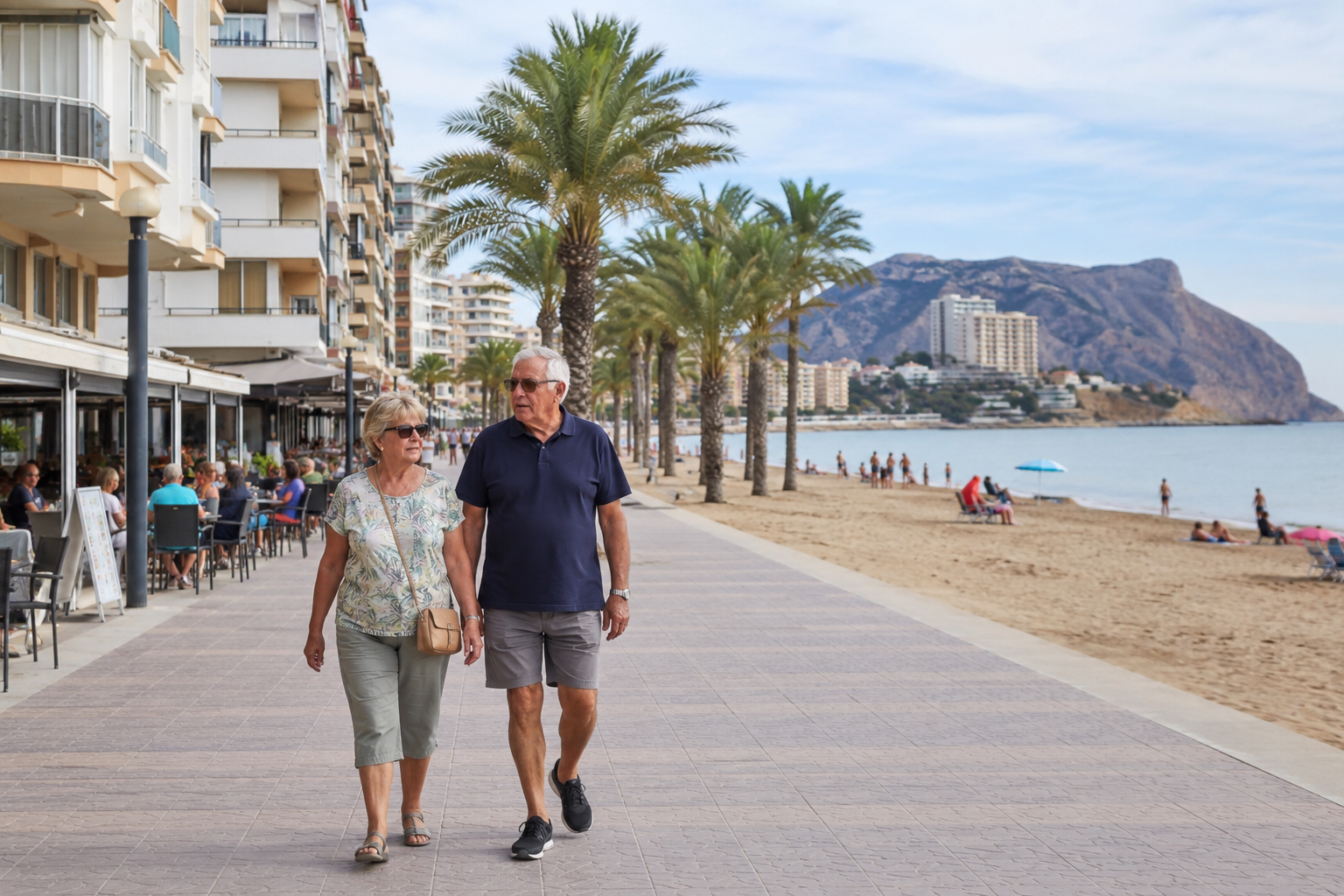
Start with what comes in. The average Social Security retirement benefit in 2026 sits at roughly $2,071 a month for a single retired worker, after the year’s cost-of-living adjustment. A couple drawing two checks is therefore working with something in the range of $3,000 to $3,600 a month combined, depending on their earnings histories, since one spouse often draws a smaller benefit or a spousal amount rather than a second full check.
That dollar income has to become euros to be spent in Spain, and the exchange rate matters more than new arrivals expect. At a rate of around one dollar to eighty-five euro cents, a combined $3,200 a month lands as roughly €2,700, give or take. When the dollar is strong the couple feels richer, and when it weakens, the same checks buy fewer euros, and the grocery budget quietly tightens without anyone changing their habits.
This is the first thing that separates a retirement funded in dollars from one funded in euros. The income is not fixed in the currency it is spent in, so it breathes with the exchange rate, and a couple living close to the line feels every swing. Most learn within a year to keep a cushion of savings in euros precisely so a bad month on the currency market does not become a bad month at the dinner table.
The checks themselves are dependable, which is the flip side. Social Security arrives on schedule, adjusts for inflation each year, and does not run out, so the couple’s core income has a floor under it that many other retirement arrangements lack. On the Costa Blanca, that reliable floor turns out to reach surprisingly far.
There is a small mechanical question of how the checks even arrive. Social Security can be paid straight into a foreign bank in some countries, but many retirees keep the money flowing into a US account and move it across themselves, which is exactly where the cost of transferring money quietly bites. A few percent lost on every monthly conversion is a few percent shaved off an already-modest income, so the couples who watch that cost keep noticeably more of their checks than the ones who do not.
The Monthly Ledger
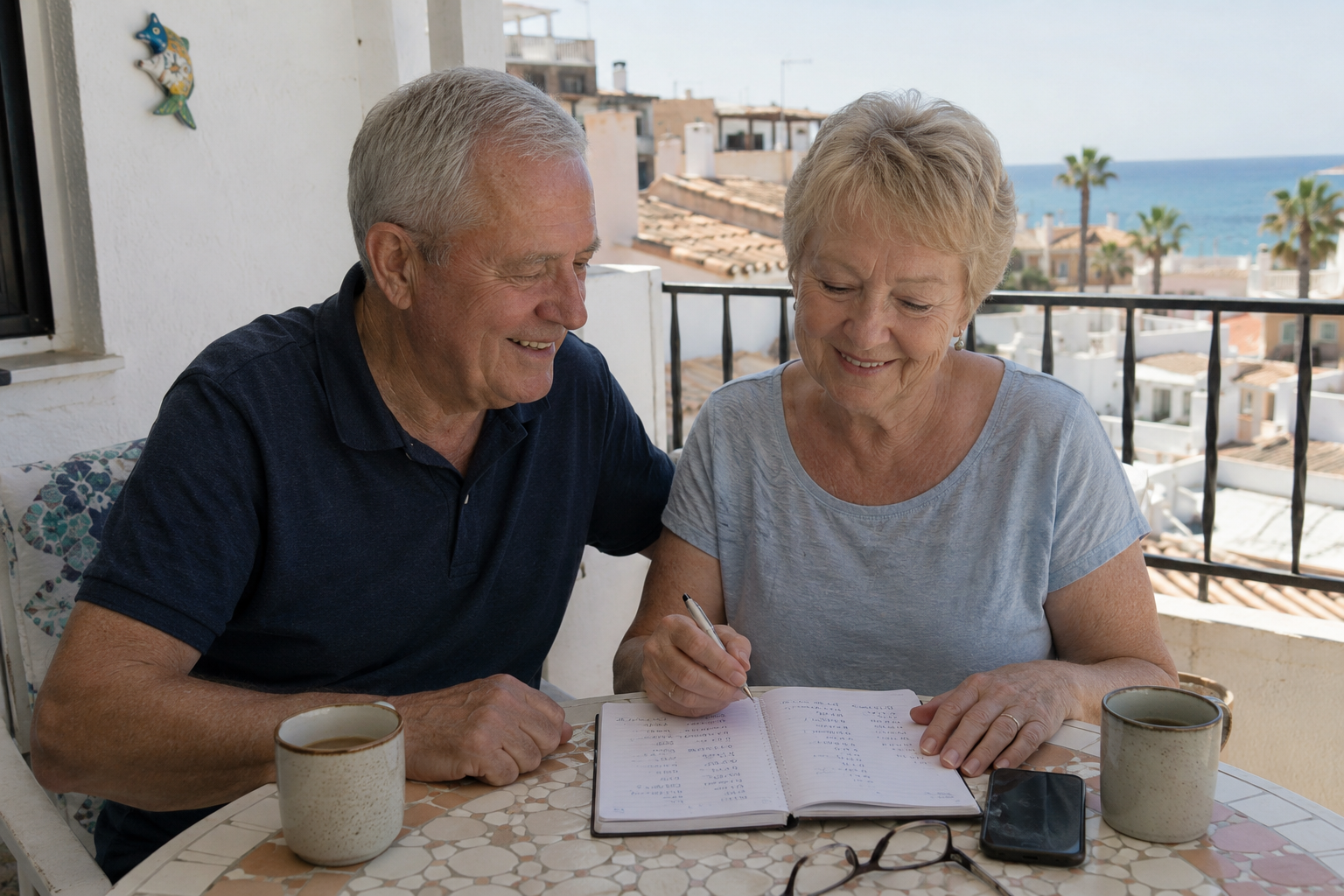
Here is where the two checks go in a representative month, for a couple renting rather than owning, in one of the more affordable coastal towns south of Alicante. Rent for a two-bedroom apartment near the sea runs about €750, roughly $880, and that single line is the biggest reason the whole thing works, since the same apartment in a comparable American coastal town would cost two or three times as much.
Utilities, the electricity and water and gas and internet together, come to around €140 a month, about $165, helped enormously by a climate that barely needs heating in winter and only occasional cooling in summer. Groceries for two run near €350, about $410, at Spanish supermarket prices, where fresh produce, bread, and local wine cost a fraction of what Americans are used to paying. Private health insurance, which non-EU retirees must carry, adds roughly €175 for the couple, about $205.
The softer categories fill in the rest. Eating out, a real pleasure here rather than a splurge, might take €275, about $325, at prices where a three-course menú del día lunch runs twelve to fifteen euros and a coffee is well under two. Local transport, phone plans, and the ordinary miscellany of clothing, household bits, and small health costs together add perhaps €300. Stack it up and the month lands somewhere around €1,990, roughly $2,340.
Set that against the €2,700 the checks provide and the picture is clear. The couple covers their life with a cushion of several hundred euros a month left over, money that goes toward travel, the occasional flight home, savings for the years ahead, or simply the peace of not counting every euro. It is not luxury. It is comfort with a margin, which on two Social Security checks is more than most of these couples expected.
Where the Money Goes Further
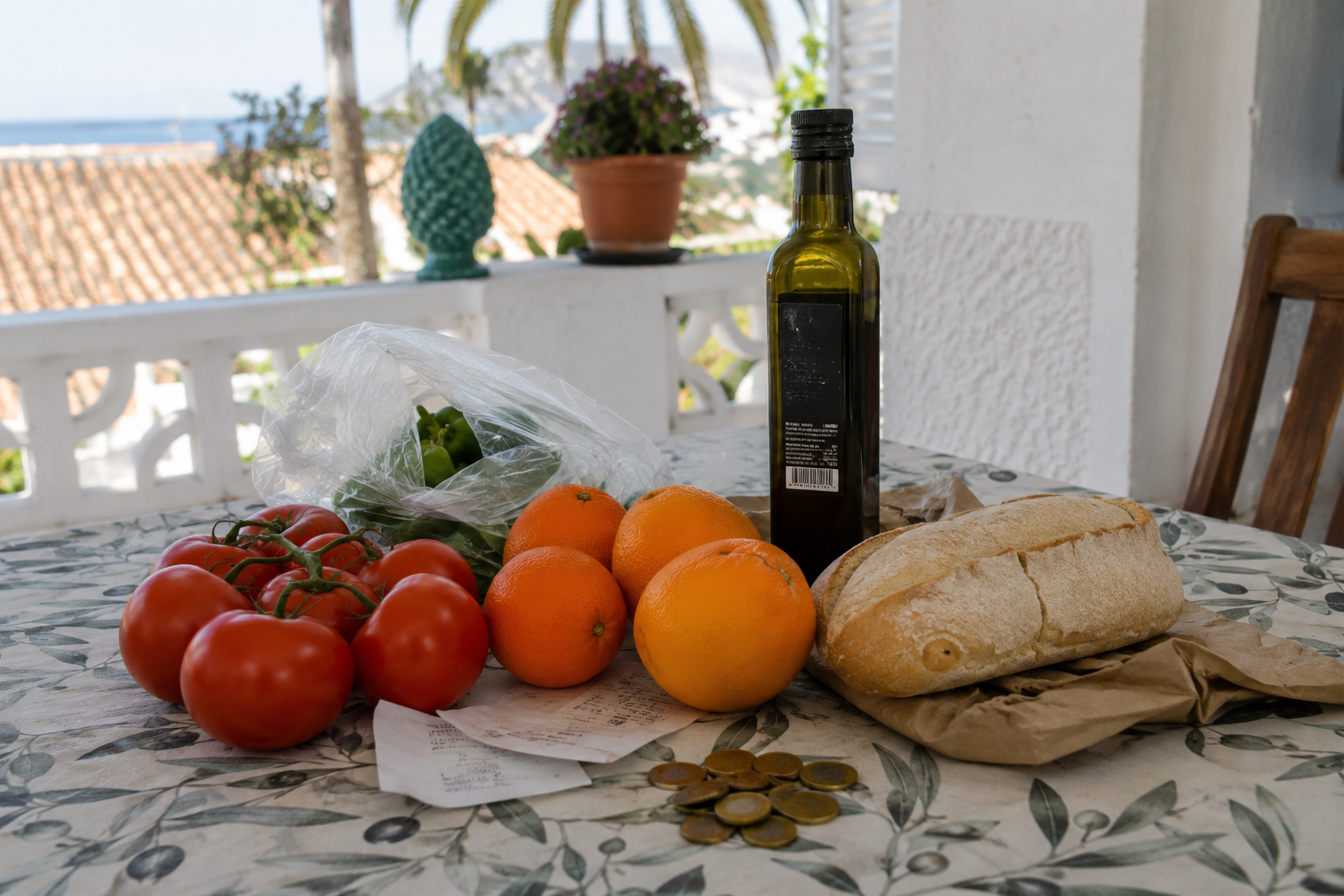
The reason the ledger balances so comfortably is not that the couple lives frugally. It is that several of the biggest costs of an American retirement are dramatically smaller on the Costa Blanca. Housing leads the list. Rents along this coast, particularly in the towns south of Alicante that draw the most retirees, remain low by the standards of any desirable American retirement spot, and a couple willing to rent rather than buy sidesteps the property taxes and upkeep that eat into a fixed income back home.
Healthcare is the second great saving, and it runs deeper than the insurance line suggests. Spain’s healthcare is inexpensive and excellent, and even the private cover that visa rules require costs a small fraction of what an American couple might pay before qualifying for Medicare, or in the gaps that Medicare leaves. A doctor’s visit, a specialist, a prescription, all cost strikingly little, and the fear of a medical bill that shadows so much American retirement simply lifts.
Then there is the daily texture of spending. A good meal out is affordable enough to be routine rather than an occasion. Fresh food from the market is cheap and central to the culture. The mild climate erases the heating bills that punish retirees in colder American states, and a life lived largely outdoors, walking, sitting in plazas, swimming, costs almost nothing at all. The Costa Blanca does not just lower the big bills. It lowers the small daily ones too, which is where a fixed income is usually nickel-and-dimed to death.
The upshot is that two Social Security checks buy a materially better daily life here than they would in most of the United States. The same money that funds an anxious, careful retirement in a high-cost American state funds a relaxed one on the Spanish coast, and the couples who make the move tend to describe the difference in exactly those terms.
It is worth putting a number on the housing gap, since it drives everything else. A two-bedroom near the sea that rents for around seven hundred and fifty euros on the Costa Blanca would command well over two thousand dollars a month in a comparable coastal town in California or Florida, and often a good deal more. That single difference, several hundred dollars every month, is most of what turns a tight American budget into a comfortable Spanish one.
Where on the Coast the Math Works Best
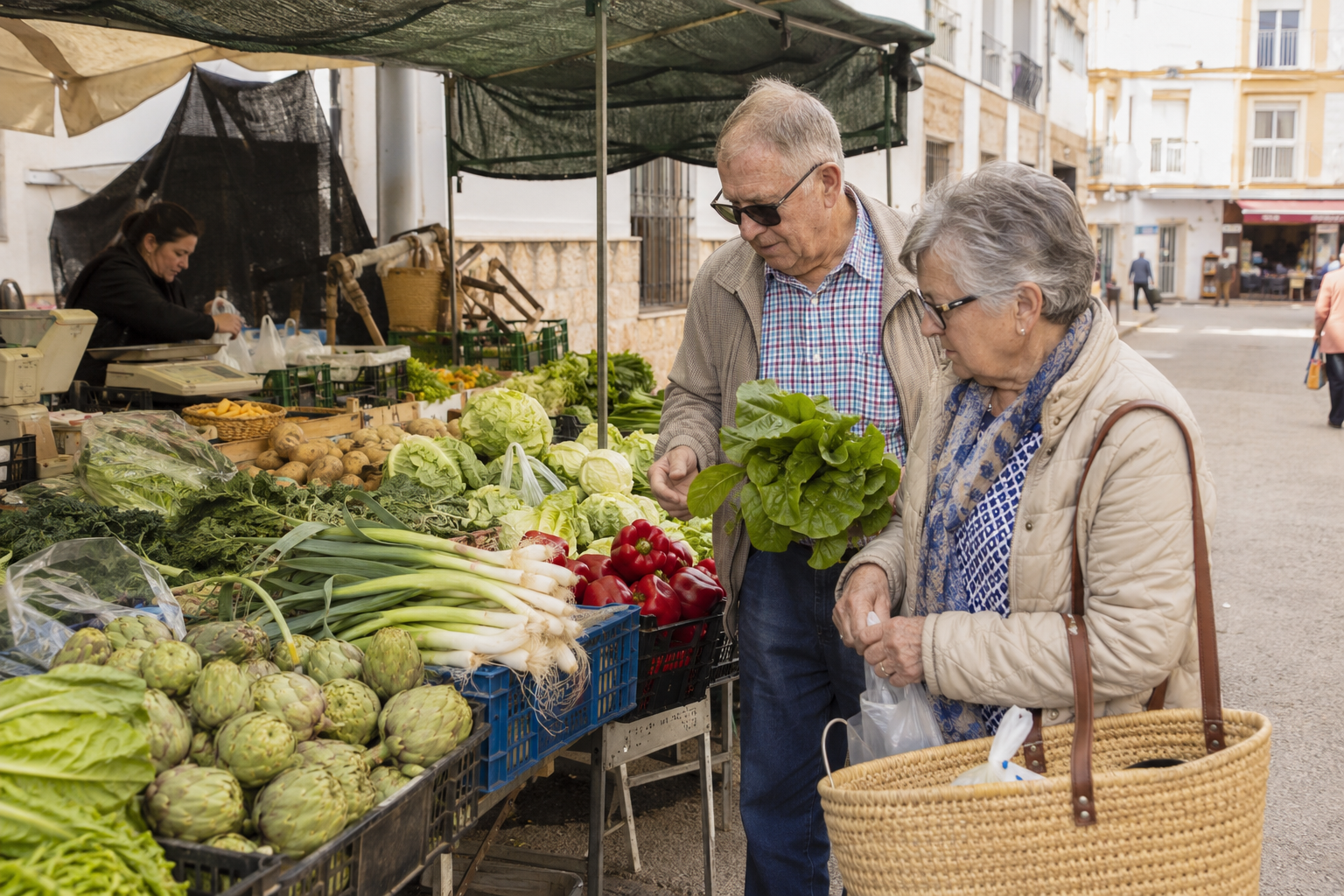
The Costa Blanca is not one price, and where a couple settles along it decides how far the checks stretch. The coast splits roughly into a cheaper south and a pricier north, and the retirees living most comfortably on two Social Security checks are almost all in the south.
The southern towns, Torrevieja above all, along with Guardamar del Segura, Orihuela Costa, and Pilar de la Horadada, are where the affordable version of this retirement lives. Rents run lowest here, the terrain is flat and easy on older knees, and the international communities are large and long-established, which means English is widely spoken, the paperwork is well-trodden, and a newcomer is never the first to have done any of it. Torrevieja in particular has been an expat retirement town for decades and wears the role comfortably.
Alicante city and the towns just around it, Santa Pola and El Campello, sit in the middle, a little more expensive but more urban, with the airport, the hospitals, and the transport links a car-free couple appreciates. This is the choice for retirees who want city amenities and do not mind paying somewhat more in rent for them.
The northern Costa Blanca, Javea, Denia, Moraira, Altea, and Calpe, is the prettier, greener, more dramatic stretch, and it costs accordingly. Rents there can run several hundred euros a month above the south for a comparable place, and the hillier landscape suits a fitter retiree better than a frail one. It is a lovely place to retire on a larger budget, but it is not where two average Social Security checks stretch furthest.
The rule of thumb is simple. The further south along the coast a couple looks, the more comfortably the same two checks cover the month, and the archetypal affordable Costa Blanca retirement is a flat, walkable, sun-drenched life in the towns below Alicante.
The Visa Bar Most People Miss

Here is the constraint the sunny version leaves out, and it is a big one. To retire in Spain as a non-EU citizen, an American couple needs the non-lucrative visa, the residency permit for people living on passive income rather than working, and that visa comes with an income requirement that is higher than a single Social Security check.
The threshold is tied to a Spanish benchmark called IPREM, and it works out to roughly €2,400 a month, about $2,800, for the main applicant, plus a further amount for a spouse, bringing the requirement for a couple to somewhere around €3,000 a month, about $3,500, in demonstrable income or savings. Note what that means. The average single Social Security check, at about $2,071, does not by itself clear the single-person bar, so a couple must combine both checks, and often show additional savings, to qualify at all.
This catches people out because the living costs and the visa costs point in opposite directions. A couple can plainly live well on the Costa Blanca for well under what the visa demands they prove, which feels contradictory until you realize the visa bar is a gatekeeping figure, not a cost of living. Spain wants assurance you will not become a burden, and sets the number high for safety, well above what a careful couple ever spends.
The practical consequence is that the two checks that comfortably fund the life may still need topping up with savings to satisfy the paperwork that grants the life. Couples close to the line often draw on a modest nest egg to clear the visa requirement, then live largely off the checks once they are settled. Getting past the bureaucratic bar, in other words, can take more income on paper than the day-to-day reality ever asks for.
What Changes After 18 Months

The ledger above is the steady state, but it takes a while to settle into it, and a few things shift once the honeymoon passes. The exchange rate is the constant background hum. Over eighteen months a couple watches their real income rise and fall with the dollar, and the ones who cope best are those who stopped converting money in a panic each month and started moving larger sums when the rate was favorable, holding euros for the lean stretches.
Two costs tend to grow rather than shrink. Private health insurance premiums climb with age, and a policy that was affordable at sixty-five costs more at seventy, which a fixed income has to absorb. And once a couple crosses into Spanish tax residency, by spending more than half the year in the country, they face an annual Spanish tax return on their worldwide income, Social Security included, softened but not erased by the treaty between the two countries. Neither is a catastrophe, but both are lines the first breezy budget forgot.
There are one-off costs that recur on a slow cycle, too. Residency permits need renewing, a gestor’s fee for handling the paperwork comes around, and flights home to see family are a real and emotionally non-negotiable expense that a purely local budget tends to leave out. The couples who thrive build a sinking fund for these rather than being ambushed by them.
None of it changes the headline. After eighteen months, the typical verdict is that the move worked, that two Social Security checks really do fund a good life on the Costa Blanca with room to spare, and that the surprises were manageable once they were understood. The retirement is real. It simply has a few more moving parts than the postcard suggested.
The Bottom Line
For an American couple with two Social Security checks and a tolerance for paperwork, the Costa Blanca delivers something increasingly hard to find at home, a secure, comfortable, outdoor retirement that the income genuinely covers, with a cushion left over most months. The daily numbers work, and they work more easily than they would in most of the United States.
The caveats are the visa income bar, which demands more on paper than the life costs in practice, the private insurance that grows with age, the exchange rate that never sits still, and the tax filing that follows residency. These are constraints to plan around, not reasons to stay home, and the couples who plan for them tend to be the ones still there and glad of it years later.

About the Author: Ruben, co-founder of Gamintraveler.com since 2014, is a seasoned traveler from Spain who has explored over 100 countries since 2009. Known for his extensive travel adventures across South America, Europe, the US, Australia, New Zealand, Asia, and Africa, Ruben combines his passion for adventurous yet sustainable living with his love for cycling, highlighted by his remarkable 5-month bicycle journey from Spain to Norway. He currently resides in Spain, where he continues sharing his travel experiences with his partner, Rachel, and their son, Han.