
There is an ingredient in a great many white-coated candies, chewing gums, frostings, coffee creamers, and salad dressings whose only job is to make the food look whiter. It has no flavour, no nutritional value, and no purpose beyond appearance. In the European Union it has been banned from food since 2022. In the United States it is still perfectly legal, sitting in the candy on American shelves right now.
That ingredient is titanium dioxide, listed on labels as titanium dioxide, TiO2, or E171. The story of how it came to be forbidden on one side of the Atlantic and permitted on the other is a clear, revealing example of how differently Europe and America decide what belongs in food, and it turns on a regulatory decision that took effect in 2022.
What Titanium Dioxide Is and Why It’s in Food

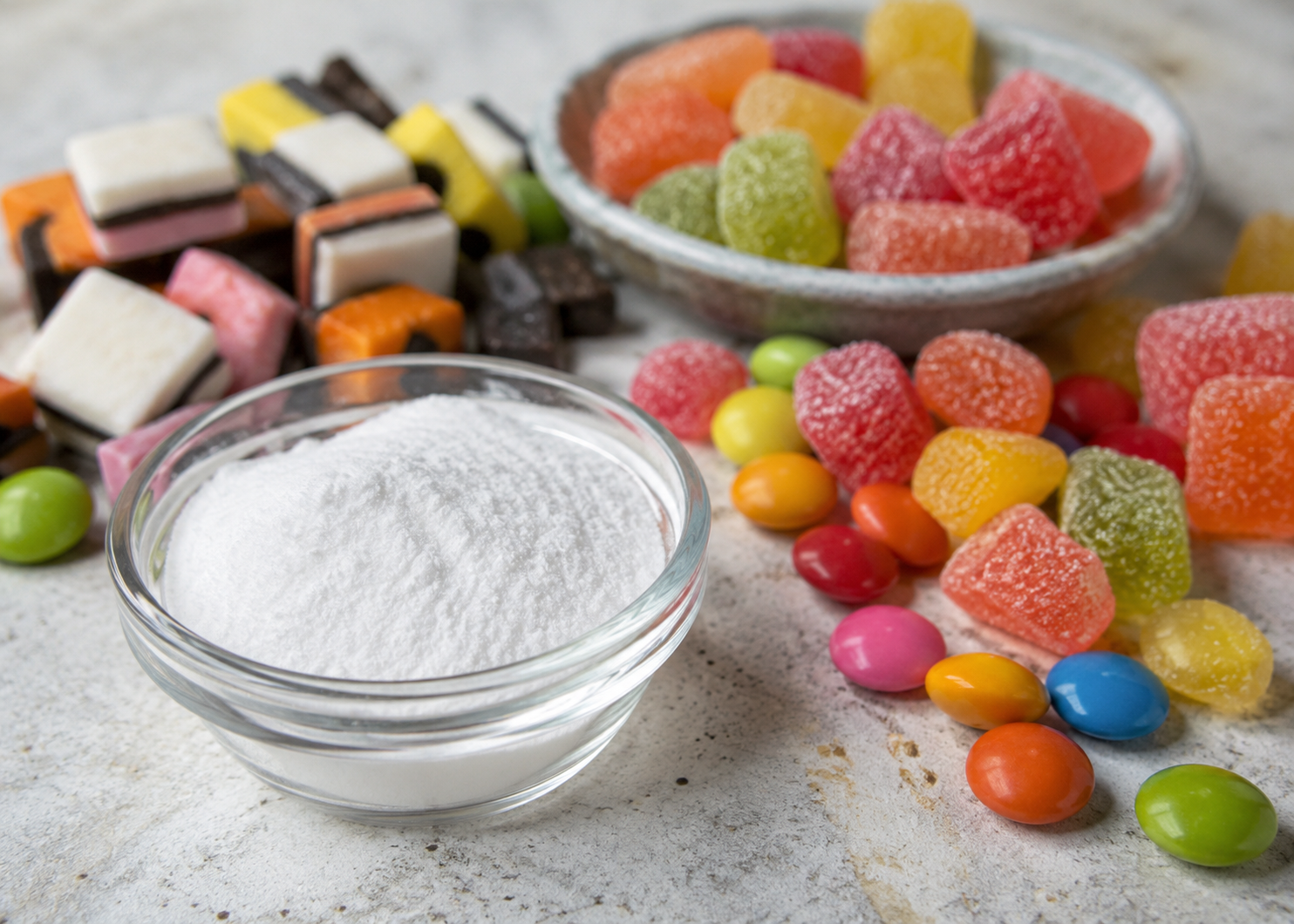
Titanium dioxide is a white, powdery mineral compound with remarkable light-scattering properties. It is the same pigment that makes house paint and sunscreen brilliantly white and opaque, and in food it does exactly the same job: it makes things look whiter and brighter than they otherwise would.
A candy shell coated over a titanium dioxide base looks porcelain-white rather than off-white. Vanilla frosting looks snow-bright. Coffee creamer looks creamier, mozzarella looks fresher, and coloured sweets look more vivid, because dyes applied over a bright white base appear cleaner and more intense. The ingredient is cheap, effective, and has been used this way for decades.
What it does not do is anything for taste, texture, or nutrition. It is a purely cosmetic additive, present solely to please the eye. That is central to the entire debate, because when regulators weigh a possible health concern against a benefit, the benefit here is only that the food looks nicer. There is no argument that titanium dioxide makes food safer, tastier, or more nourishing. It simply makes it whiter, which is why removing it strikes many people as an easy call and why its defenders have relatively little to defend.
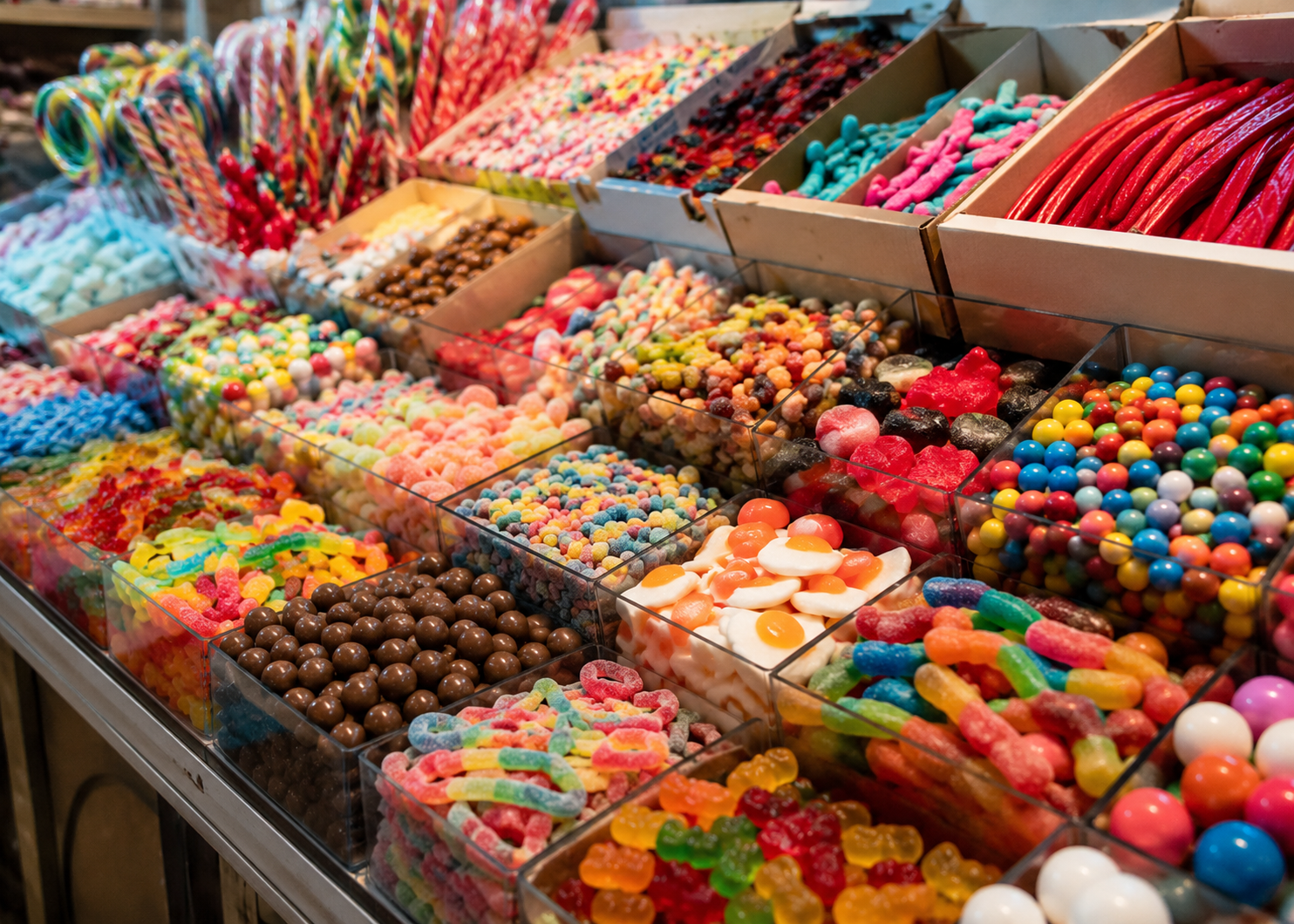
The scale is larger than most shoppers realise. By some industry estimates, titanium dioxide appears in the region of 11,000 individual food products on American shelves, and watchdog groups actively track thousands of specific items that contain it. It is not a rare specialty additive but a workhorse pigment woven quietly through the middle aisles of the supermarket.
What Changed in 2022

For years, titanium dioxide was a routine, unremarkable additive across Europe and America alike. The turning point came in 2021, when the European Food Safety Authority, the EU’s scientific body known as EFSA, published an updated safety assessment and reached a striking conclusion.
EFSA did not declare that titanium dioxide is toxic or that it causes any specific disease. What it said was more careful and, in regulatory terms, more decisive. Taking new studies into account, and applying updated guidance on nanoparticles for the first time, the panel concluded that it could no longer rule out a concern about genotoxicity, the potential to damage DNA. Because it could not exclude that risk, it could not establish a safe daily intake, and so it concluded that the additive could no longer be considered safe for use in food.
The European Union acted on that opinion quickly. On the fourteenth of January 2022 it adopted Regulation (EU) 2022/63, withdrawing the authorisation of titanium dioxide as a food additive. The regulation entered into force on the seventh of February 2022, with a six-month transition period allowing existing products to sell through, and a full ban applying from the seventh of August 2022. Since then, titanium dioxide has not been permitted in food sold in the EU, which is why European versions of familiar sweets are now made without it.
Why the EU Banned It but the FDA Didn’t

The most puzzling part, for many people, is that America looked at the same science and did the opposite. Shortly after the EU ban took effect, the United States Food and Drug Administration reaffirmed its long-standing position that titanium dioxide is safe for use as a colour additive within existing limits.
The disagreement is not really about the evidence. It is about two fundamentally different philosophies of regulation. The European system is built around the precautionary principle, written into EU food law, which holds that when meaningful scientific uncertainty exists, the default is to restrict rather than permit. If a safe level cannot be confirmed, the substance goes.
The American system runs the other way. Under US law, the burden falls on demonstrating harm, and ingredients with a long history of use are generally treated as safe until clear evidence shows otherwise. The FDA pointed to a 2023 review by JECFA, the joint expert committee of the World Health Organization and the Food and Agriculture Organization, which concluded that titanium dioxide is safe at current levels of use. Both agencies read broadly the same studies. The EU saw uncertainty it was unwilling to accept; the US and JECFA saw evidence that did not, in their judgement, prove harm to humans at realistic doses. Same science, opposite defaults.
It Is Not Just America That Still Allows It
The story is often told as Europe versus America, the enlightened continent against the lax one, but that framing is misleading and worth correcting. The United States is far from alone in still permitting titanium dioxide in food.
After EFSA’s opinion, other major regulators conducted their own reviews and largely disagreed with the European conclusion. Health Canada continues to permit it, having found no conclusive evidence of human harm. Food Standards Australia New Zealand reassessed it and judged it safe. Japan permits it, and so, notably, does the United Kingdom, which reviewed the additive after leaving the EU and chose to keep it legal rather than mirror Brussels. Several of the world’s most cautious food-safety regulators looked at the same data and did not ban it.
This matters because it reframes what actually happened. It is not that America is uniquely reckless while the rest of the developed world protects its citizens. It is that the European Union, applying its precautionary principle, became the notable outlier by banning an additive that most comparable authorities still consider acceptable. Reasonable, well-resourced scientific bodies genuinely disagree here, which is a more honest and more interesting situation than a simple tale of good and bad regulators.
What the Science Actually Says
It is worth being precise about the evidence, because both alarmism and dismissiveness distort it. The core concern that drove the EU decision is genotoxicity, and specifically the behaviour of titanium dioxide at the nanoscale, where particles are small enough to raise questions about whether they can accumulate in the body or interact with cells and DNA.
A number of studies, many in animals or in cell cultures, have reported effects that EFSA judged troubling enough that it could not certify a safe level. Researchers have found nanoparticles crossing the intestinal barrier in rodents and have raised questions about effects on gut bacteria. At the same time, critics of the ban point out that many of these studies used doses far higher than a person would ever consume, or conditions that do not translate cleanly to how humans actually eat the additive, which is why the FDA and JECFA reached a more reassuring conclusion.
The honest summary is that the science is genuinely unsettled. EFSA did not prove that titanium dioxide harms people; it concluded that safety could not be confirmed. The FDA did not prove it is harmless; it concluded that harm had not been demonstrated. Anyone claiming certainty in either direction is overstating the evidence. What is not in dispute is that the additive offers no benefit beyond appearance, which is why even cautious observers tend to feel that the case for keeping it is weak regardless of how the toxicology eventually resolves.
How to Spot It on a Label
For anyone who would rather avoid it while the debate continues, titanium dioxide is fairly easy to find on a label once you know the names. In the United States it usually appears as titanium dioxide, though it can also hide inside a vague phrase like colour added or artificial colour. In countries using the European numbering system it is E171, and its international codes include INS 171.
The products most likely to contain it are the ones where a bright, opaque white is doing visual work: white or pastel candy coatings, chewing gum, marshmallows, white frosting and cake decorations, coffee creamers, some sauces and dressings, and certain supplements and medications. White-coated and brightly coloured candies aimed at children are a particularly common home for it, which is part of why it draws such attention.
Reading the label is the only reliable way to catch it, since the additive is invisible once it is in the food. It changes neither flavour nor texture, so there is no detecting it by taste beyond the unnaturally bright white it creates. A sweet that looks a shade too porcelain to be natural is sometimes a clue, but the ingredient list is the real answer.
One wrinkle is worth knowing. Even in the EU, titanium dioxide remains permitted for now in medicines, where it is used to coat pills. Regulators kept that exception to avoid drug shortages while the pharmaceutical industry works on alternatives, and the position is under review. So a European consumer can find the same substance banned in their candy but still present in their prescription tablets, a reminder that these decisions balance many competing risks at once.
The Longer List Behind the Headline
Titanium dioxide is not an isolated case. It is one entry on a growing list of additives that are banned or restricted in European food while remaining legal in the United States, and seeing that list helps explain why the story struck such a chord.
The same transatlantic gap shows up across several ingredients. Potassium bromate, a flour treatment, and brominated vegetable oil, once used in citrus sodas, have long been restricted in Europe while lingering in America, though the US has recently moved against both. Propylparaben, a preservative, was pulled from EU food years ago over hormone-disruption concerns but is still used in some American baked goods. And where the EU requires a warning label on foods containing certain synthetic dyes, telling parents the colours may affect children’s attention, the US historically required no such notice, which pushed manufacturers to reformulate for European shelves while keeping the dyes in American versions of the same products.
That pattern is the real backdrop to the titanium dioxide debate. Again and again, faced with scientific uncertainty about a cosmetic or convenience additive, Europe has leaned toward restriction and labelling while America leaned toward permission. The interesting recent development is that the United States has begun to shift, with federal moves in 2025 and 2026 against synthetic dyes and a broader reassessment of legacy food chemicals. The gap is still real, but for the first time in a long while it appears to be narrowing rather than widening.
What Is Changing in America Now
The American position, static for years, has begun to move, and the direction of travel is toward the European stance rather than away from it. Consumer pressure, state action, and a shifting mood at the federal level are all pushing titanium dioxide out of the US food supply even without a national ban.
Several concrete things have happened. In 2023 a coalition of health and consumer groups formally petitioned the FDA to revoke its authorisation, and in May 2025 the agency announced that titanium dioxide is under an accelerated post-market safety review, making it one of the first additives placed in a new review queue for legacy chemicals. In early 2026 the FDA issued guidance letting companies label products as free of artificial colours if they drop such additives, creating a market incentive to reformulate. Manufacturers have moved on their own, too: after a 2022 class-action lawsuit, Mars reformulated Skittles in the United States to remove the additive by the end of 2024.
State governments are pushing as well. While California’s headline 2023 food-additive law ultimately did not include titanium dioxide, a separate California measure will require food served in the state’s public schools to be free of titanium dioxide and several synthetic dyes by the end of 2027. None of this is a nationwide ban, but together it signals that the transatlantic gap on this particular ingredient may be starting, slowly, to close.
The Bigger Picture on a Small Ingredient
Titanium dioxide is, in the grand scheme, a minor additive, a whitener with no nutritional stakes at all. Yet the argument over it captures something much larger about how two food cultures manage uncertainty, and that is why the story resonates well beyond the candy aisle.
The European Union decided that an ingredient offering only cosmetic benefit was not worth even an unresolved risk, and it removed it. The United States, along with the United Kingdom, Canada, Australia, and Japan, decided that unproven risk was not sufficient grounds to ban a long-used additive, and it stayed. Neither approach is obviously wrong. They are different answers to the genuinely hard question of what to do when the science cannot give a clean verdict.
It is also a rare case where the cautious choice costs the consumer nothing at all. With most contested additives there is a real trade-off, a preservative that prevents spoilage, a dye that makes food appealing, a sweetener that cuts sugar. Here the only thing lost by removing titanium dioxide is a slightly brighter white, which is why the ingredient has so few committed defenders even among those who doubt the underlying risk.
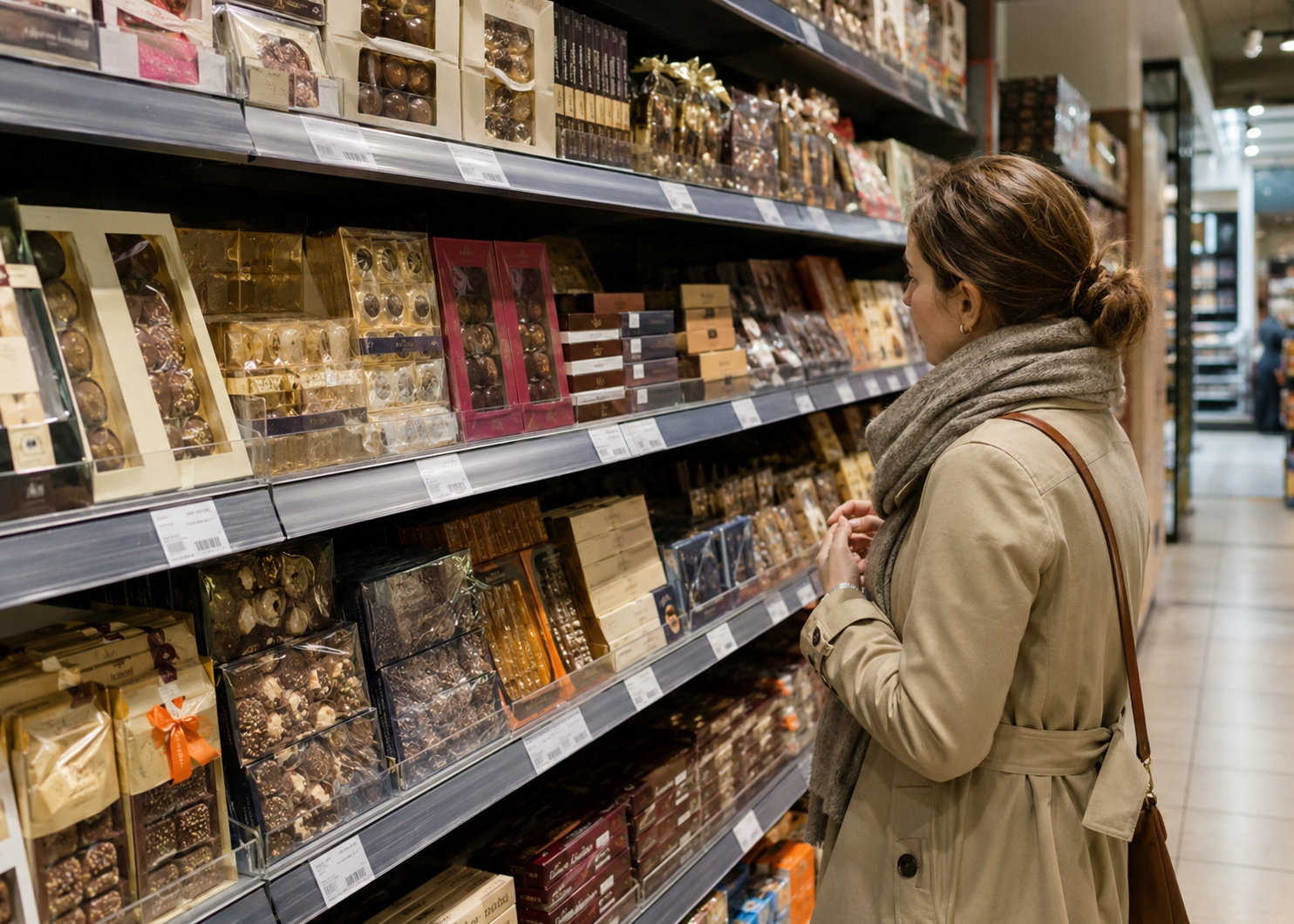
For a consumer, the practical takeaways are simple. Titanium dioxide is cosmetic, it is easy to identify on a label, and avoiding it costs nothing nutritionally since it never added anything nutritional in the first place. Whether it poses a real risk remains unresolved, but the momentum, on both sides of the Atlantic, is clearly running against it. What changed in 2022 was not that the science suddenly became certain. It was that Europe decided uncertainty was reason enough to act, and the rest of the world has been slowly, unevenly, catching up to that judgement ever since.

About the Author: Ruben, co-founder of Gamintraveler.com since 2014, is a seasoned traveler from Spain who has explored over 100 countries since 2009. Known for his extensive travel adventures across South America, Europe, the US, Australia, New Zealand, Asia, and Africa, Ruben combines his passion for adventurous yet sustainable living with his love for cycling, highlighted by his remarkable 5-month bicycle journey from Spain to Norway. He currently resides in Spain, where he continues sharing his travel experiences with his partner, Rachel, and their son, Han.