
The barista has read you before you reach the end of the sentence. Not from your accent, though that helps, and not from your clothes. From the order itself, which in Italy carries more about who you are than most people crossing the counter realize they are handing over.
Stand at the banco of a busy bar in Rome at eight in the morning and watch it happen to other people. The regulars arrive, say a word, get a nod, and a cup lands in front of them before the barista has visibly done anything. The visitors take longer, ask more, and get read in the pause.
An order in an Italian bar is a small test with a right answer everyone local already knows. Get it right and you are waved through as one of them. Get it wrong and nothing bad happens at all, except that the person behind the counter now knows exactly where you are from and how long you have been in the country, which is usually none of it.
Here is what they clock, in roughly the order they clock it.
You Said the Word Espresso
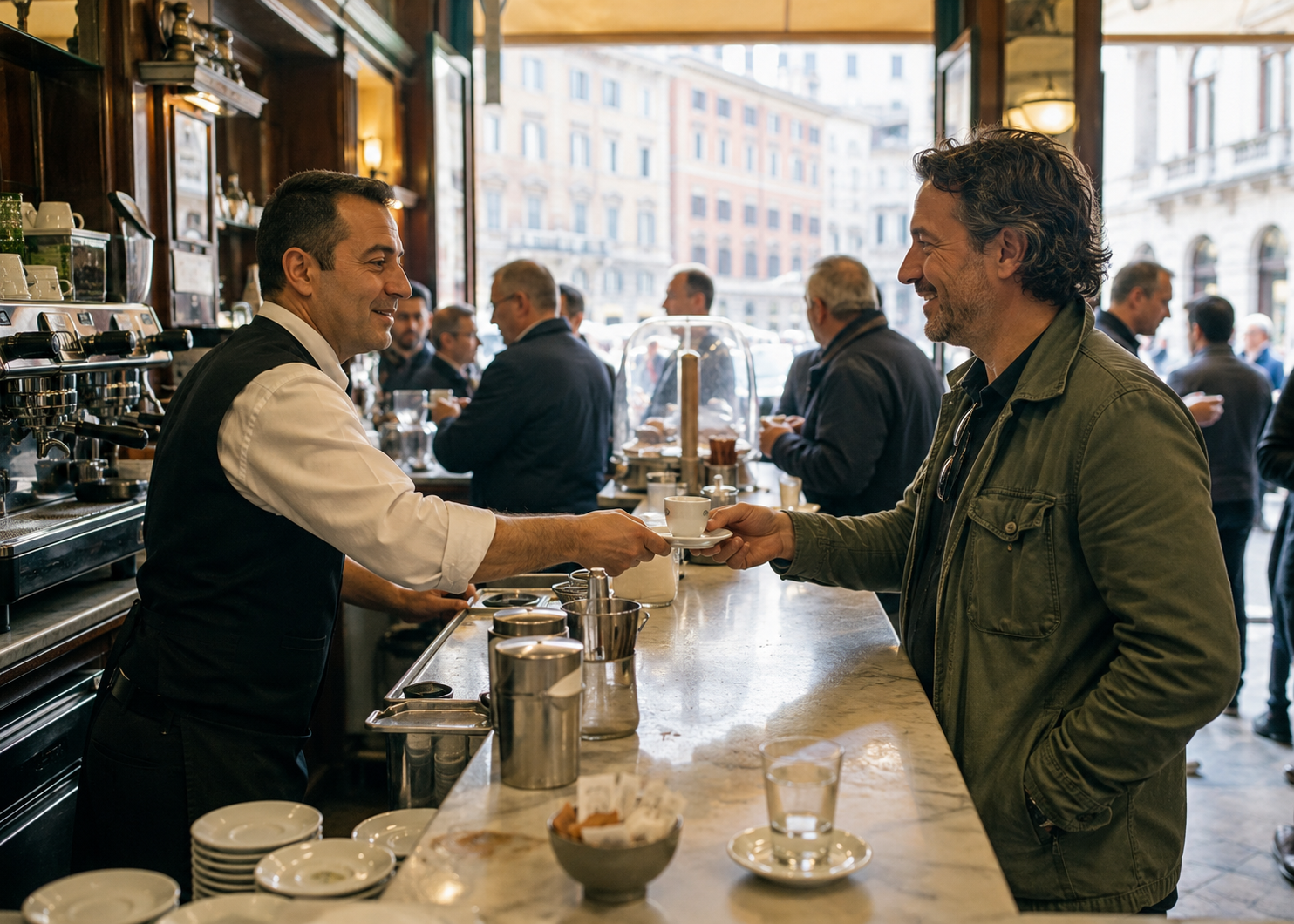
The first giveaway is asking for an espresso. Italians do not. The drink is simply un caffè, and when you want the standard small cup of black coffee the whole system is built around, that is what you say.
Saying “espresso” is not wrong the way a math answer is wrong. It just announces that your idea of Italian coffee was assembled somewhere other than Italy, most likely at a counter with a green logo. A barista hears it the way a Spaniard hears a visitor ask for a “Spanish omelette” instead of a tortilla.
Everything else is a caffè with a word attached. Un caffè doppio is a double. Un caffè lungo is pulled long, with more water through the machine, while a ristretto is pulled short and comes out thicker and darker. Un caffè corretto is one corrected with a splash of grappa or sambuca, which people order at eight in the morning while no one blinks.
The base word never changes. You are only ever adding to it, which is how the menu can be tiny and still cover everything on it.
The caffè arrives with two things an American counter would never think to add: a small glass of still water, drunk first to clear the palate, and no sugar in the cup at all. The sugar sits in a jar or in paper packets on the counter, and you add your own. A barista who watches you sweeten it before you have tasted it clocks that too.
The Cappuccino Clock
This is the big one, the single order that identifies a foreigner faster than a passport. A cappuccino after lunch is the tourist signal every Italian recognizes on sight.
Milk drinks in Italy belong to breakfast and stop around 11 a.m., noon at the very outside. The belief underneath it is about digestion. A cup of hot milk sitting on top of a real meal is considered heavy and wrong, the kind of thing that leaves you logy for the afternoon. Cappuccino, caffè latte, and latte macchiato all live under the same morning curfew.
The morning version has its own logic, and it is lovely. A cappuccino with a cornetto, the Italian cousin of the croissant, is the standard breakfast, taken standing, done in ten minutes. The drink even takes its name from the Capuchin friars, after the brown of their hooded robes, which tells you how long it has been part of the furniture here.
Nobody will refuse to make you one at three in the afternoon. The barista in a tourist café pours a hundred late cappuccinos a week for visitors and says nothing. The pouring is the point. They make it, they know, and the knowing is the whole transaction.
If you want milk after noon and would rather not broadcast anything, order a caffè macchiato. A stain of milk rather than a cup of it stays inside the rules, and you can order one at any hour of any day without a single eyebrow moving.
There are other ways to take milk that the afternoon forgives. A marocchino, an espresso with cocoa and a little foam in a small glass, passes without comment, and so does a caffè d’orzo, the barley coffee older Italians drink when they want the ritual without the caffeine. The country that made one hard rule about milk made a dozen quiet exceptions to live beside it.
You Asked for a Latte
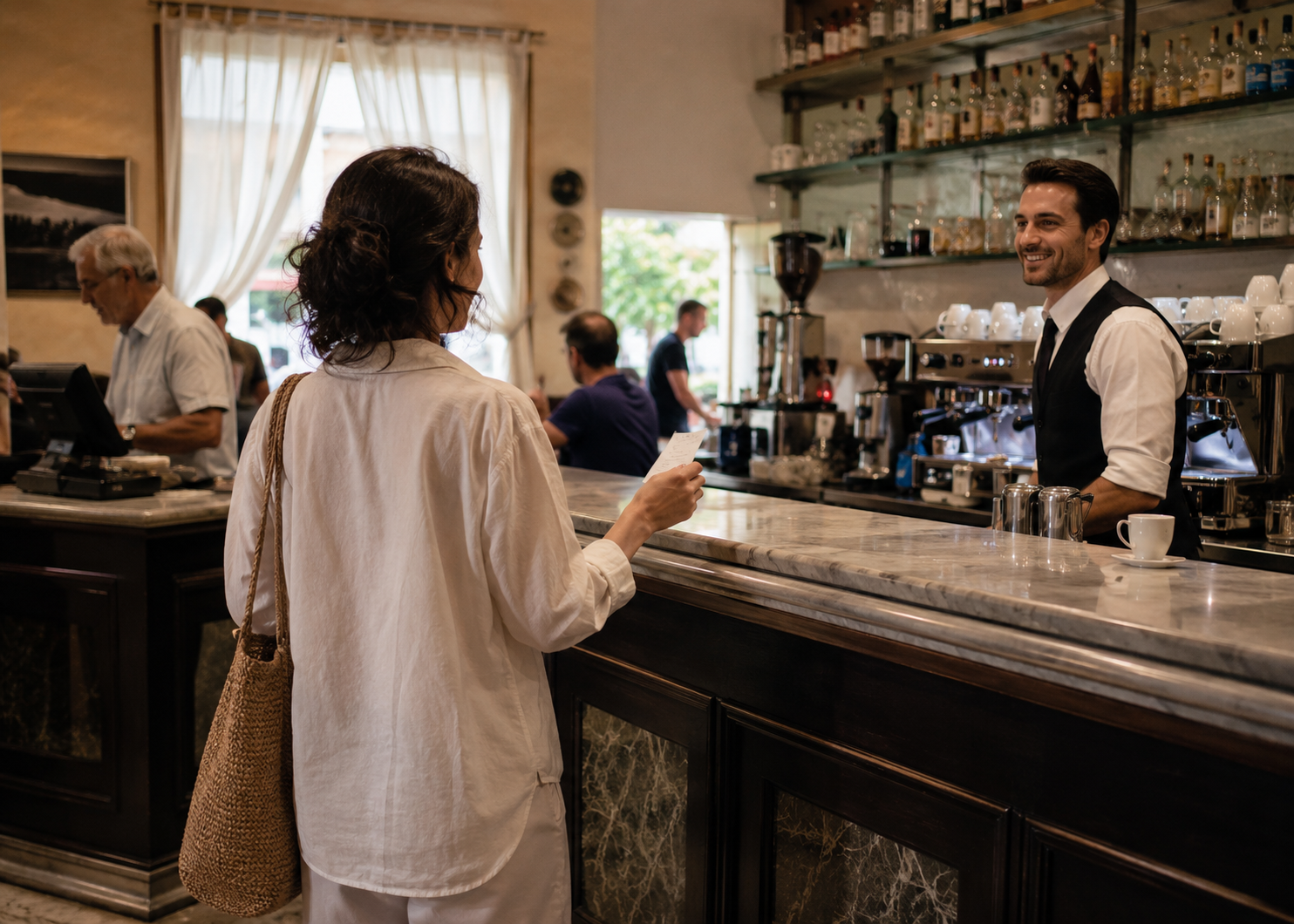
Walk in and ask for “a latte” the way you would at home and you will be handed a glass of warm milk, because latte is the Italian word for milk and nothing else. The barista is not being difficult. You asked for milk, so you got milk. There is a well-worn story, told in some version by half the Americans who have lived here, of ordering a latte, being asked caldo o freddo, hot or cold, answering hot, and receiving exactly that, a hot glass of milk.
The drink an American means is a caffè latte, and even that is a breakfast thing, usually made at home rather than ordered standing at a bar. The tall layered glass of mostly milk with a shot poured through it is a latte macchiato, and here it reads as a children’s drink, the thing a seven-year-old has beside a pastry.
None of this is a trap laid for visitors. The same handful of Italian words got shipped abroad, stretched over much larger cups, and handed back meaning something else entirely. The barista is watching that gap open in real time and doing the quiet arithmetic.
The one drink named for Americans admits it in the name. A caffè americano, espresso loosened with hot water, took its name from the soldiers who arrived in the 1940s and found the local coffee too strong to drink. Italians make it without judgment and almost never order it for themselves.
You Skipped the Buongiorno
Before any coffee word comes out, there is a smaller test, and plenty of people fail it without noticing. You greet the person first. Buongiorno in the morning, buonasera later, and only then the order.
Leading straight with “un caffè” is not a crime, but it lands flat, the way it would if you walked into a small shop anywhere and started talking with no hello. In a neighborhood bar where the barista knows every regular by name and by drink, the greeting is the door you come in through. Skip it and the coffee still arrives, a degree cooler than it needed to be.
This is the easiest thing on the list to get right and the most overlooked, because visitors treat the bar as a transaction and locals treat it as a room they are walking into. Two words fix it before you have ordered a thing.
You Wanted It to Go
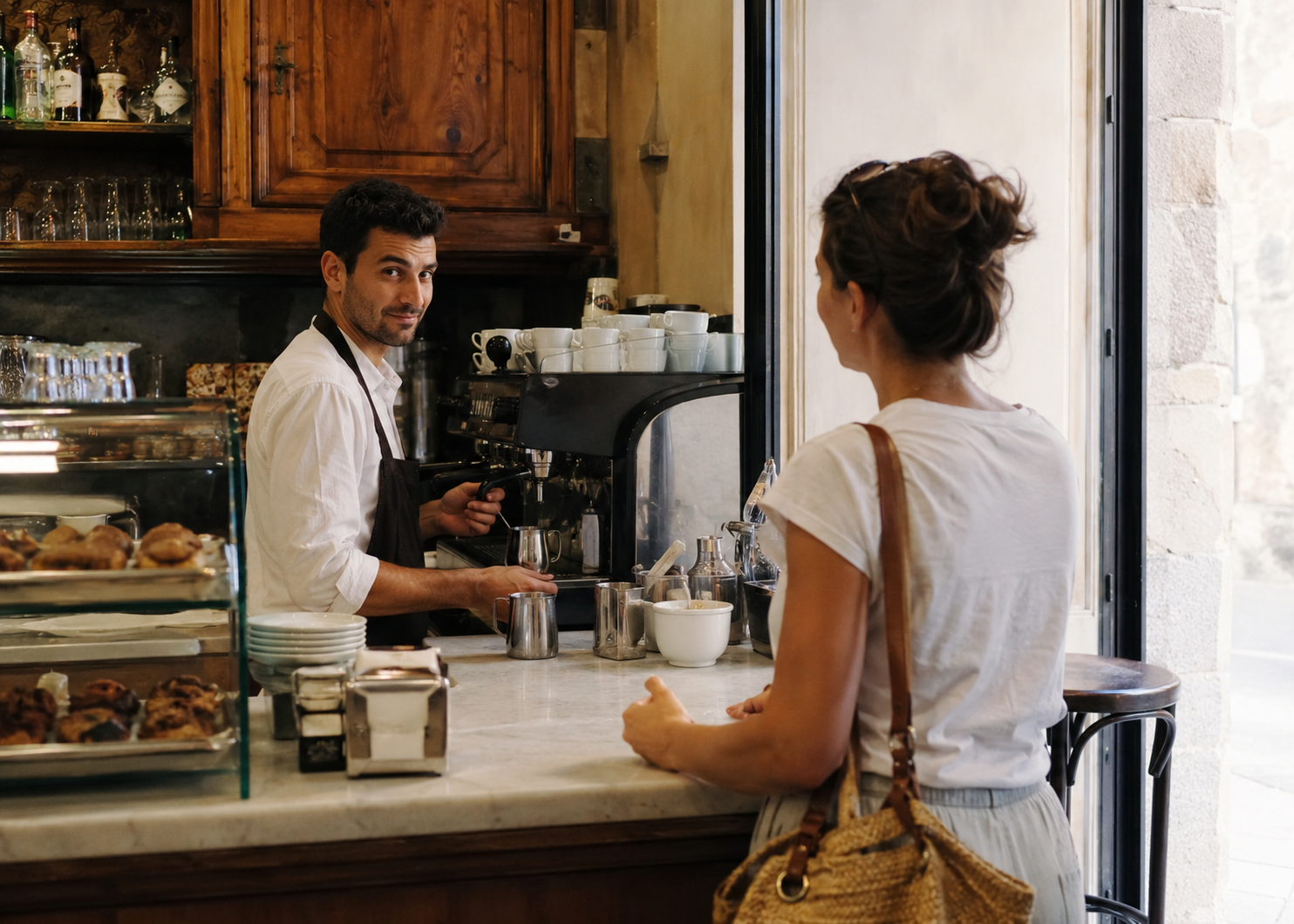
Ask for your coffee to go and you have flagged yourself as plainly as with any afternoon cappuccino. Italian coffee is made to be drunk on the spot, in a porcelain cup, in the two or three minutes it takes to stand at the counter and finish it hot.
The paper takeaway cup, the coffee carried down the street and sipped in traffic, is a habit that simply did not grow here. Some bars now keep cups for tourists who insist, but the request itself is the giveaway. A coffee is a pause you take standing still, not fuel you carry into the next thing.
There is a real logic to it once you drop to the Italian speed. The espresso is small and hot on purpose, and gone in three sips. The thick cup is even pre-warmed so it does not steal heat from the coffee. Pour all that into a tall paper cup for the road and you have thrown away the entire design. In Naples, where they drink more coffee than almost anywhere and the baristas are correspondingly exact, a coffee to go is close to unthinkable.
Part of why is that Naples takes coffee more seriously than anywhere. The water there is soft and the roast dark, and the city drinks so much coffee that its baristas get more practice in a week than most get in a year. Coffee made with that much care is not something you carry off under a plastic lid.
You Reached for Your Wallet at the Wrong Moment
The paying can catch you two different ways, and both are visible. In much of the country, especially in Naples and the south, you pay at the cassa first, take the little receipt, the scontrino, and carry it to the counter to order. Walk straight up to the barista with cash in hand and you have started in the wrong place.
In plenty of other bars it runs the opposite way. You drink first, standing at the banco, and settle at the end with a simple quant’è, how much. To an American raised on paying before receiving, drinking a coffee you have not yet paid for feels faintly like theft the first few times. It is not. It is the house trusting you, and that trust turns out to be one of the small daily pleasures of the place once you stop bracing against it.
The giveaway is the hesitation, the glance around for where the money is supposed to go. Regulars know which system their bar runs and move through it without thinking. There is no shame in asking si paga alla cassa, do I pay at the till, which is also the fastest way to stop looking lost.
The scontrino runs on the same trust in reverse. The receipt is proof you paid the cassa, and handing it over is how the barista knows to start your shot without ever touching money. It keeps the hands that make your coffee clean of cash. Regulars never think about it, and visitors notice it only when they fumble.
You Asked for a Size
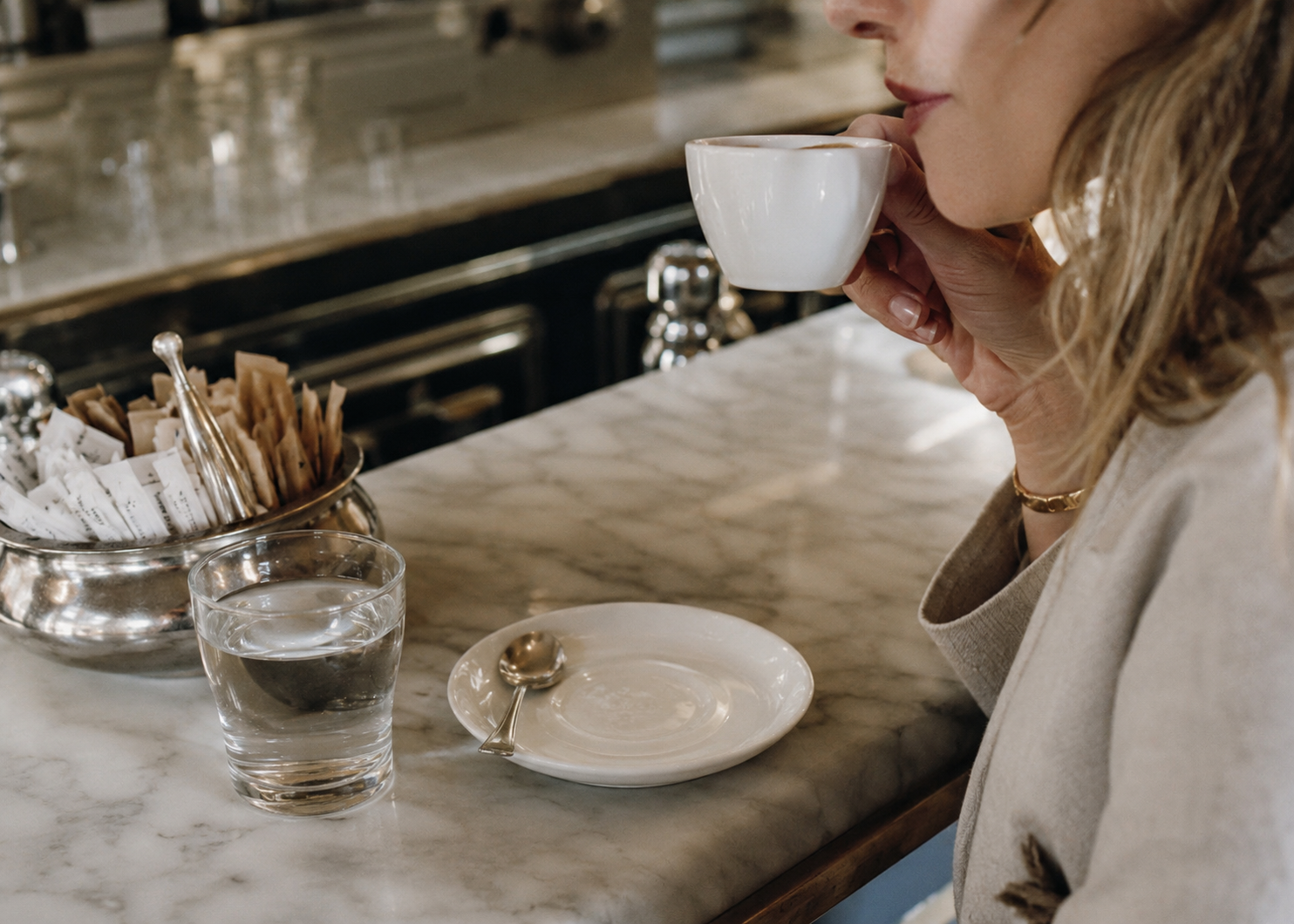
There is no small, medium, or large. A caffè is a caffè, one size, the size it comes in, and asking which sizes are on offer is a question the counter is not built to answer.
The same goes for the run of modifications an American café trains you to expect. There is no oat milk poured as a matter of course, no extra pump of syrup, no half-caff at a named temperature, no pumpkin spice anything. The menu is short and codified, maybe fifteen core drinks, each already exactly what it is. You choose one. You do not build one.
The size gap alone tells the story. An Italian coffee drink runs from about one to six ounces; the American versions of the same words run twelve to twenty-four. A barista handed a customization request usually just makes the nearest real drink and lets the rest go. The distance between a system where coffee is assembled to order and one where it arrives finished is wide, and standing at the machine asking for adjustments is the moment it shows.
What the country does instead of variety is regional specialty. Sicily has its granita di caffè, coffee frozen to a slush and eaten with a brioche on summer mornings, while the north keeps the bicerin, coffee layered with chocolate and cream in a small glass. The range is real. It is just set by geography rather than by the customer at the till.
You Settled In
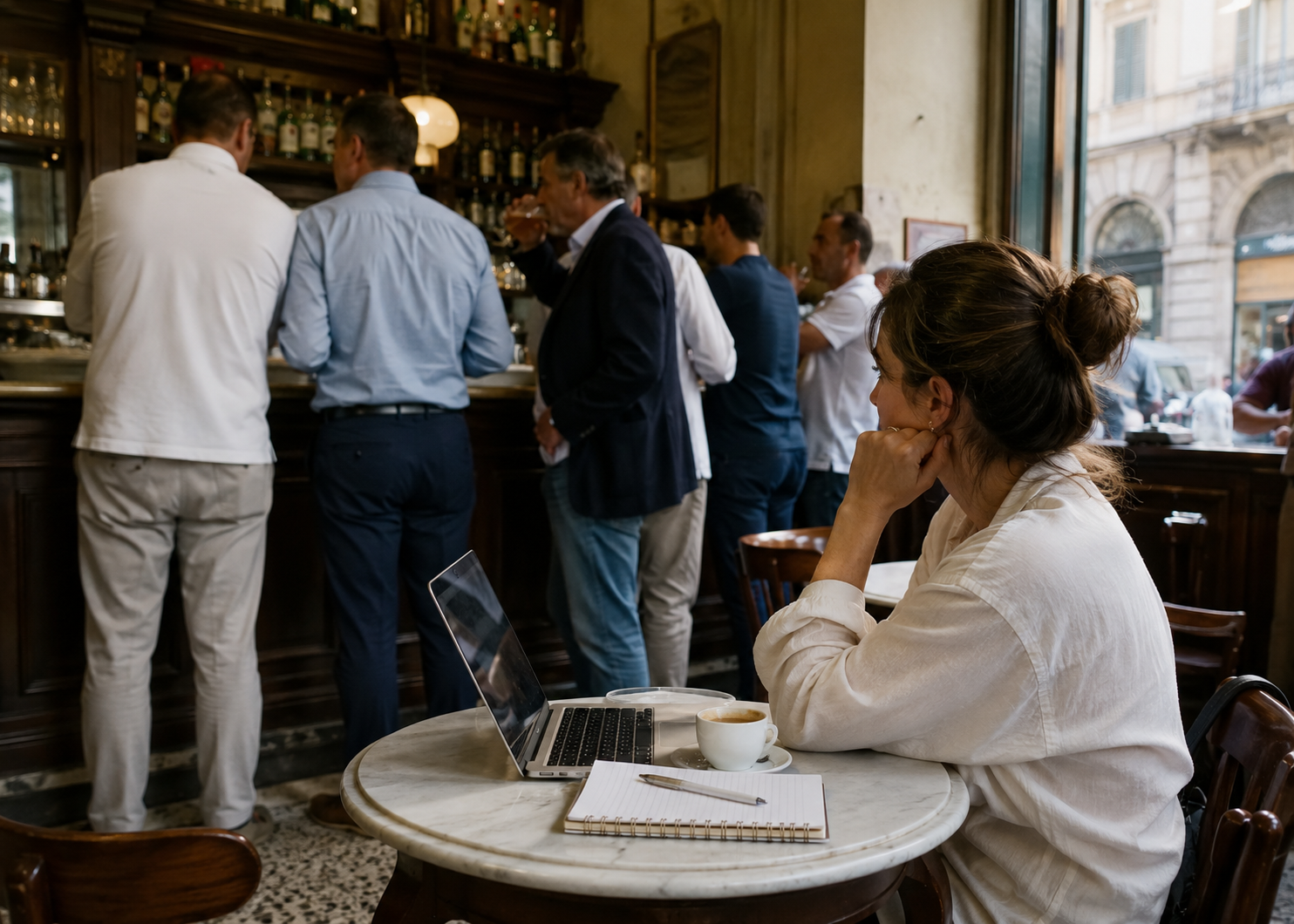
The last thing they notice is what you do once the coffee is in front of you. Carry it to a table, open a laptop, and set up for an hour, and you are doing something Italians almost never do with a coffee.
The bar is a place for a coffee and a conversation, both short. People drink standing at the counter and are gone inside two minutes. Sitting at a table is allowed and costs more, sometimes two or three times more, and it is perfectly fine to do it. What you will not see at that table is anyone treating the café as an office, nursing one cup through a morning of email. The same room often turns into the evening aperitivo spot after work, a spritz and a few snacks taken standing, which is the closest an Italian bar comes to lingering.
That evening shift is where the bar earns the rest of its keep. The same counter that sold espresso to commuters at seven in the morning pours Aperol spritz and small plates to the after-work crowd at seven at night, and the rhythm of the morning carries straight into the evening. A bar here is a whole day of the neighborhood passing through one doorway.
Here is the one caveat worth keeping, because the internet makes these rules sound stricter than the counter ever feels. In a tourist-heavy piazza in Rome or Venice, the barista has seen every version of every mistake ten thousand times and genuinely does not mind. The rules are real, but the judgment behind them is mild, closer to recognition than disapproval. You are not going to be thrown out for an afternoon cappuccino, only seen clearly, which for most people is the surprising part.
Italy also runs stricter than its neighbors on all of this. Across the border in Spain, where the writer of this blog does the daily shopping, a café con leche after lunch raises no eyebrow at all, and nobody is timing your milk. Italy is the country that turned coffee into a code.
What Flips the Read
There is one move that turns the whole thing around, and it costs nothing. When you finish, before you go, you say “ottimo caffè,” excellent coffee, and you mean it. Italian baristas think of themselves as craftsmen, and a real word about the coffee lands better than any perfectly ordered drink.
The other one is older and quieter. The caffè sospeso, the suspended coffee, is a Neapolitan habit where you pay for two and leave one on the books for whoever comes in next needing a coffee and short the euro for it. Order one of those and you are no longer being read as a tourist at all. You are being read as someone who understands what the bar is for.
None of it is hard. A greeting, milk kept to breakfast, and the cup drunk standing cover most of the code. The coffee costs about €1.20, a little over a dollar, and the good word on the way out is free.

About the Author: Ruben, co-founder of Gamintraveler.com since 2014, is a seasoned traveler from Spain who has explored over 100 countries since 2009. Known for his extensive travel adventures across South America, Europe, the US, Australia, New Zealand, Asia, and Africa, Ruben combines his passion for adventurous yet sustainable living with his love for cycling, highlighted by his remarkable 5-month bicycle journey from Spain to Norway. He currently resides in Spain, where he continues sharing his travel experiences with his partner, Rachel, and their son, Han.