
The American waits for the gown. The doctor has said to get undressed, the conversation has paused, and somewhere in the room there should be a folded paper or cloth gown with ties down the back, the thing you put on so you are covered while everything else happens. In a French or Spanish consulta, that gown is not coming, because it was never part of the visit.
You undress to the degree the examination needs, often with the doctor still in the room, and then you are examined. There is no garment in between, no ritual of covering up in order to be uncovered a moment later. For a great many Americans it is the single most disorienting thing about seeing a doctor in Europe, and it has nothing to do with the medicine itself.
The difference is not that European doctors are careless about dignity. It is that dignity here is arranged differently, built into the professionalism of the person across the desk rather than into a piece of disposable clothing.
The Room Is the Whole Appointment

In much of Europe the doctor’s office is one room, not the American sequence of waiting area, then a separate exam room, then a nurse, then the doctor arriving last. You walk into a single space that holds a desk on one side and an examination table on the other. You sit at the desk, you talk through what brought you in, and when it is time to be examined you cross the room to the table.
The médico de cabecera in Spain, the Hausarzt in Germany, and the médecin traitant you declare as your main doctor in France all tend to work this way. The same person who took your history walks you the two steps to the table. There is no handoff, no second staff member, no interval in which you are left alone in the room to change.
Picture a centro de salud in a suburb of Madrid on a Tuesday morning. The doctor sits at the desk with your history open on the screen, and the table waits against the wall a few steps away under a fresh strip of paper. No anteroom, no bell to ring when you are ready, no gown on a hook. When the moment comes, the doctor pushes back from the keyboard and the two of you simply turn toward the table.
That layout quietly removes the gown’s entire reason for existing. In the American model, the gown covers you during the gap, the stretch of minutes between the nurse leaving and the doctor knocking. Take away the gap, and the garment has no job left to do.
The American suite exists for reasons that made sense at home. A nurse rooms you and takes your vitals and leaves you to wait, the doctor arrives from another patient in another room, and the gown holds the space between them. It is an efficient assembly line when a practice is running six rooms at once. The European generalist runs one room and one queue, so the assembly line never formed, and neither did the costume it required.
You Undress Where You Stand
When the examination calls for it, you take off what needs to come off, right there beside the table, frequently with the doctor a few feet away finishing a note. In France and Germany especially, the expectation for a general physical is that you undress to the skin, or close to it, without much ceremony wrapped around the act.
Sometimes there is a curtain, a screen in the corner, a moment where the doctor turns to the sink to wash their hands while you get ready. Often there is not even that much. The cultural baseline is that a doctor has seen every kind of body many thousands of times, and that undressing in front of one is exactly as ordinary as that fact suggests.
The instruction, when it comes, is usually brief to the point of bluntness. A French GP will tell you to take off your clothes and turn back to the screen; a Spanish one might gesture at the table and keep typing. To an American ear trained on soft, apologetic phrasing around the body, the flatness can read as coldness at first, when it is really just the absence of a taboo that would otherwise need softening.
Spain tends to sit a little softer than its northern neighbors, more likely to expose the one area that matters and leave the rest of you dressed. The absence of the gown holds across all of them regardless. What changes from country to country is how much comes off, not whether a garment appears to bridge the moment.
The table itself gives the game away. In a Spanish centro de salud the examination bench is a plain padded surface with a roll of paper pulled fresh across it for each patient, no drawer of folded gowns underneath, none of the staging an American exam room carries as standard. It is hygiene at its cheapest honest form, a clean surface for each patient and nothing more, where the American room adds a gown and a whole changing routine on top. One approach dresses the visit. The other wipes the bench and moves on.
Why There Was Never a Gown

Europeans who meet the American gown for the first time tend to describe it as a strange piece of theater. It covers you and exposes you at once. It ties in a way you cannot manage without a second pair of hands. It gaps at exactly the spot you were hoping it would not. To a French or German eye it solves a problem that local modesty norms never treated as a problem to begin with.
Part of the difference is a plainer relationship to the body. Nudity in a medical, athletic, or bathing setting carries far less charge across much of continental Europe than in the United States. It is the same ease that fills the mixed saunas of Germany and Austria and gave the country its long FKK tradition of open-air nakedness. A topless stretch of Mediterranean beach draws no comment for the same reason. The body is not a thing to be stage-managed. It is just the thing being looked at.
The plainer body norm is mainstream and old, not a fringe habit. German and Austrian public pools have long had shared, sometimes mixed changing areas, and Finnish sauna custom treats nakedness among strangers as unremarkable. Children grow up seeing bodies as bodies rather than as things to be perpetually covered, and that upbringing walks into the exam room with them decades later.
This ease has limits and is not the same as exhibitionism. Europeans are as private as anyone in daily life, and the difference is narrowly about context. The clinical setting, like the changing room and the sauna, is understood as a place where the body is functionally rather than socially present, and that framing does the work the gown does in America. Change the setting and the ordinary reserve comes straight back.
The gown itself is not ancient either. The backless johnny gown is a nineteenth-century American hospital design built for wards and fast access, and the outpatient version, the one you change into for a routine check, spread through American offices across the twentieth century. Europe simply never adopted the outpatient half of the habit. The wards had their own garments, and the family doctor’s office never saw the need.
What Stuns the American Patient

For an American the shock is rarely the examination. It is the missing buffer. The paper gown back home is not really about warmth, or even modesty, so much as control, the small private window in which you manage your own exposure before anyone comes in. The European visit hands that whole sequence over to the doctor and the room.
The stories cluster around the same few beats. The doctor who says to undress and does not step out. The one who keeps chatting about your blood pressure while you take your shirt off. The slow realization, halfway through unbuttoning, that there is no gown folded on the table, because you already looked twice. Patients describe a specific held breath in that moment, the recalibration of a script they have followed their entire lives.
There is a second, quieter difference layered under the first. In the United States a nurse or assistant is often brought in as a chaperone for any intimate examination, a third body in the room as a matter of policy. In much of Europe that third person is the exception rather than the rule, present when the patient or doctor asks rather than by default. So the American who braced for both a gown and a witness can find neither, which sharpens the exposure in the first minute before it settles.
Some never fully make their peace with it, which is a reasonable response to a real difference in norms. Most report that it fades faster than they expected, usually by the second or third appointment, once the missing gown stops reading as an oversight and starts reading as simply the way things are done here.
The expats who write about it afterward tend to land in the same place once the jolt passes. They describe bracing for a violation that never comes, because nothing improper is happening, only something unfamiliar. A body being examined by a doctor is close to the least remarkable event in that room. The discomfort lives entirely in the staging, or rather in the staging that has gone missing, and staging is a habit a person can unlearn.
The Part That Works Better
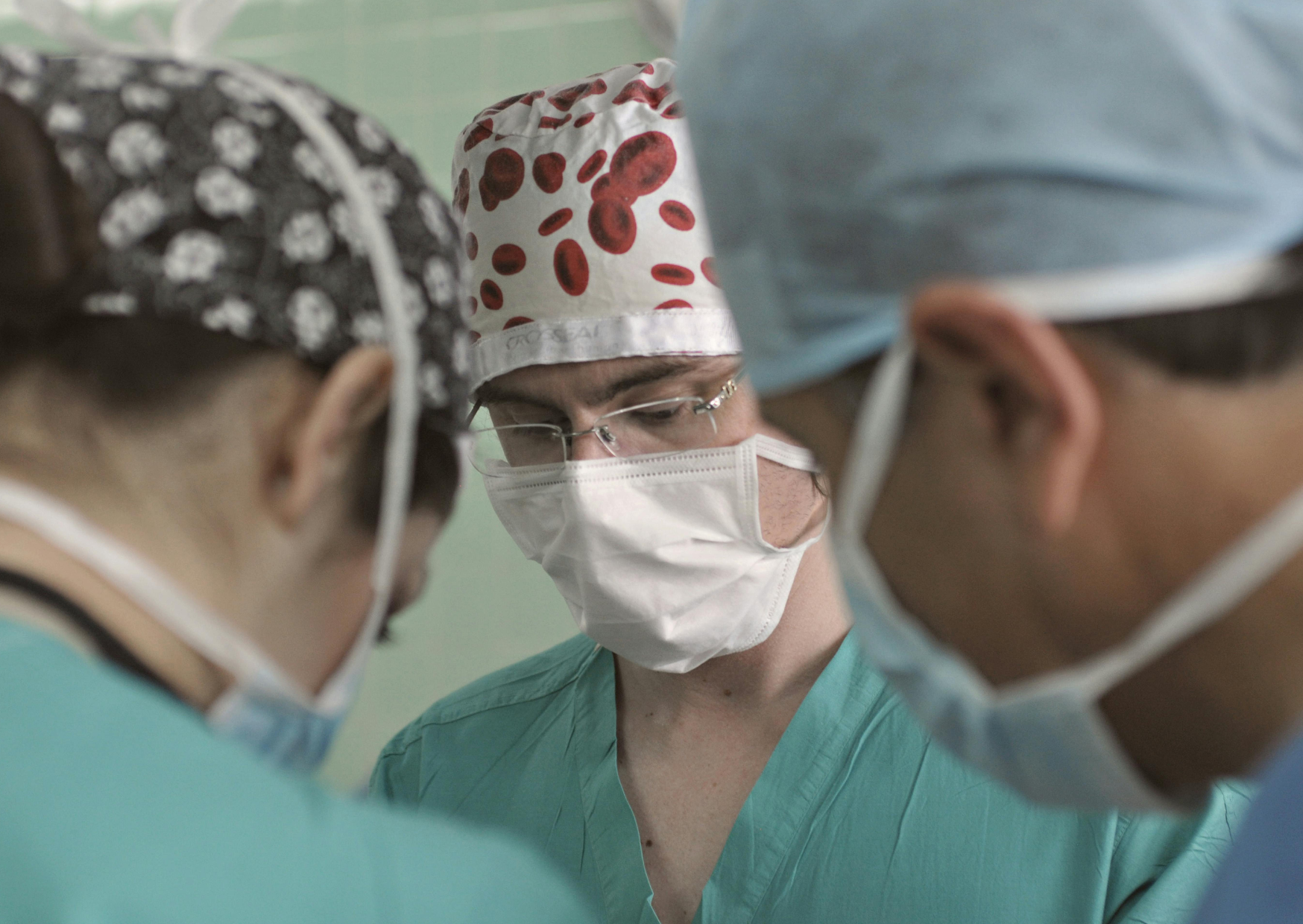
Once the strangeness wears off, several advantages surface that the gown was quietly costing. A doctor who watches you undress and move can read things a gowned, seated patient hides, the way you stand and how you climb on and off the table. Movement is information, and a gown covers a good deal of it.
Speed is not the same as rushing, which is the part that surprises people most. The appointment can be quick and still feel unhurried, because the minutes that would have gone to a changing ritual go to the conversation instead. A doctor who is not managing a costume change has more attention left over for the reason you came in. Patients used to the American rhythm often expect the brevity to feel abrupt and find instead that it feels focused, the whole visit pointed at the problem rather than at the production around it.
The money runs differently underneath all this, which is part of why the ritual never grew. In France, a standard consultation with your médecin traitant runs about €30, roughly $33, of which Assurance Maladie reimburses around 70 percent straight back to the card in your wallet. In Germany you hand over a Gesundheitskarte and pay nothing at the desk for a standard visit, and in Spain the tarjeta sanitaria makes the appointment free at the point of use under the Sistema Nacional de Salud.
When the visit itself is cheap or free and the volume is high, every minute of overhead gets questioned. A garment that adds four minutes and covers nothing useful is exactly the kind of overhead a public system trims first. Seen that way, the gown is less a cultural quirk than a small cost a crowded, low-fee system had every reason not to carry.
There is also a plainness many people come to prefer once they have acclimated. You are there to be examined by someone who does exactly this all day, and the whole encounter is arranged around that being an ordinary event rather than a delicate one. The absence of fuss turns out to be its own form of respect, once you stop mistaking the fuss for the respect.
It Is Not the Same in Every Office

The picture shifts by country and by doctor, and the kind of examination matters too, so the whole caveat is worth holding in one place rather than flattening into a single rule. A younger physician trained in a more patient-centered decade is likelier to offer a drape than an older one who never did. A gynecological or breast examination carries its own careful conventions everywhere. Private clinics that cater to international patients often keep gowns on hand precisely because they know the expectation their clientele walks in with.
A patient who wants more cover can nearly always ask for it. Requesting a sheet, a moment behind the screen, or a chaperone in the room is a normal thing to do and draws no strange looks. The absence of a default gown is not the absence of the option, and no one in a European office will think less of you for preferring one.
Gender plays into it too. A patient seeing a doctor of the opposite sex may feel the difference more sharply, and it is entirely acceptable to request a same-sex chaperone or to ask that an intimate exam wait until a nurse can be present. European offices accommodate this without drama. The norm is only that you ask, rather than that the room arranges it for you in advance.
How to Walk In Ready
The practical version is short. Wear layers that come off and go back on without a struggle, skip the fiddly fasteners and the one-piece outfits, and expect the desk-first, table-second flow of a single room rather than a separate changing routine. You will talk first, fully dressed, at the desk, and the undressing comes only once the doctor moves to the table, so there is no stripping down in the waiting room. If the doctor steps toward the sink to wash up, that is usually your cue to get ready.
If cover matters to you, say so at the start of the visit, when the doctor can plan around it without breaking stride, rather than mid-examination once the moment has arrived. The gown will not be on the table. Within a visit or two you stop looking for it, and the appointment turns out to have been shorter, plainer, and a shade more human for its absence. What felt at first like a missing courtesy reveals itself as one less thing standing between you and the person you came to see.

About the Author: Ruben, co-founder of Gamintraveler.com since 2014, is a seasoned traveler from Spain who has explored over 100 countries since 2009. Known for his extensive travel adventures across South America, Europe, the US, Australia, New Zealand, Asia, and Africa, Ruben combines his passion for adventurous yet sustainable living with his love for cycling, highlighted by his remarkable 5-month bicycle journey from Spain to Norway. He currently resides in Spain, where he continues sharing his travel experiences with his partner, Rachel, and their son, Han.