

On a Sunday afternoon in America, a familiar ritual plays out in kitchens across the country. Someone cooks a large batch of chicken, rice, and vegetables, then divides it into a row of identical plastic containers, one for each day of the week ahead. It is efficient, organised, and, to much of Europe, faintly baffling.
Across most of Europe, that row of containers largely does not exist, because the problem it solves is handled a completely different way. Instead of cooking once for the whole week, many Europeans simply shop for food almost every day, buying what they need for that evening’s meal and little more. The daily shop, not the Sunday cook-up, is the organising habit of the European kitchen. It is worth understanding why, and what each approach quietly says about how the two cultures live.
A Real Difference, With Real Exceptions
Before going further, it is worth being honest about the generalisation, because the truth is a pattern, not an absolute. Plenty of Europeans do batch-cook, meal prep has spread across the continent through the same viral videos everyone else watches, and a busy parent in Berlin or Manchester may well cook ahead on a Sunday. The claim is not that no European ever meal preps.
The claim is that the dominant, traditional rhythm across much of Europe, and especially around the Mediterranean and in dense cities, is frequent fresh shopping rather than weekly batch cooking. It is a matter of what is normal and default, not what is universal. Northern Europe leans a little more toward the big weekly supermarket run than the daily-market south, and suburban Europeans shop more like Americans than city dwellers do.
Income and age shade it further. Younger, time-poor professionals across Europe increasingly rely on supermarket delivery and the occasional batch-cook, while older generations and traditional households hold more firmly to the daily rhythm. The pattern described here is a strong central tendency, not a rule that binds every household on the continent.
With that said, the contrast is real and revealing. Step off a plane in Rome, Madrid, or Lyon, and the everyday relationship with food shopping genuinely is different from the American norm. People buy smaller amounts more often, lean on fresh ingredients bought close to when they are eaten, and treat the trip to the shops as a routine part of the day rather than a dreaded weekly chore. That difference is what the rest of this is about.
The Daily Shop
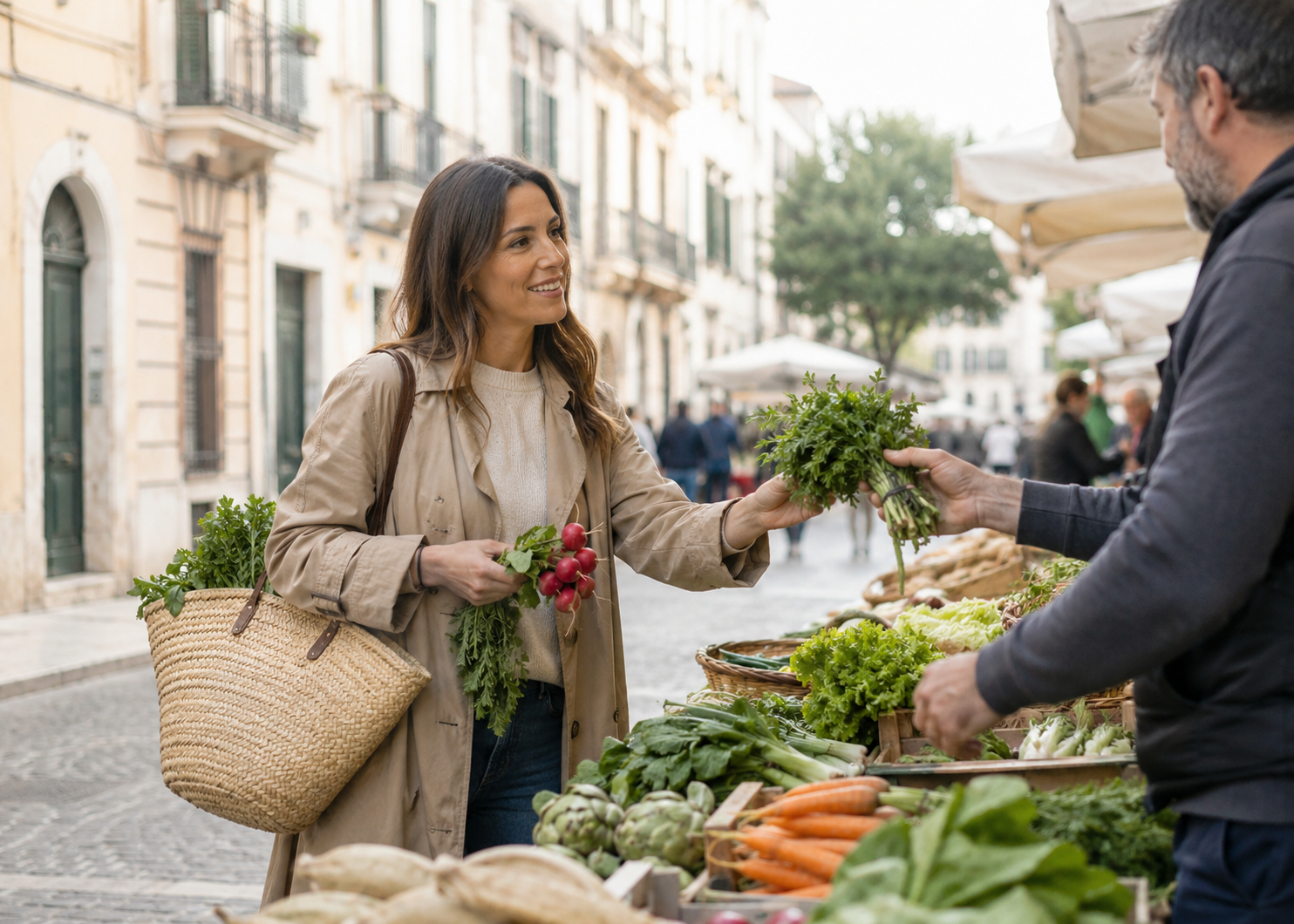
The heart of the European pattern is simple: you buy food for the meal you are about to cook, not for a week of meals you have planned in advance. Someone might decide in the late afternoon what they feel like eating that night, then stop on the way home to pick up exactly that.
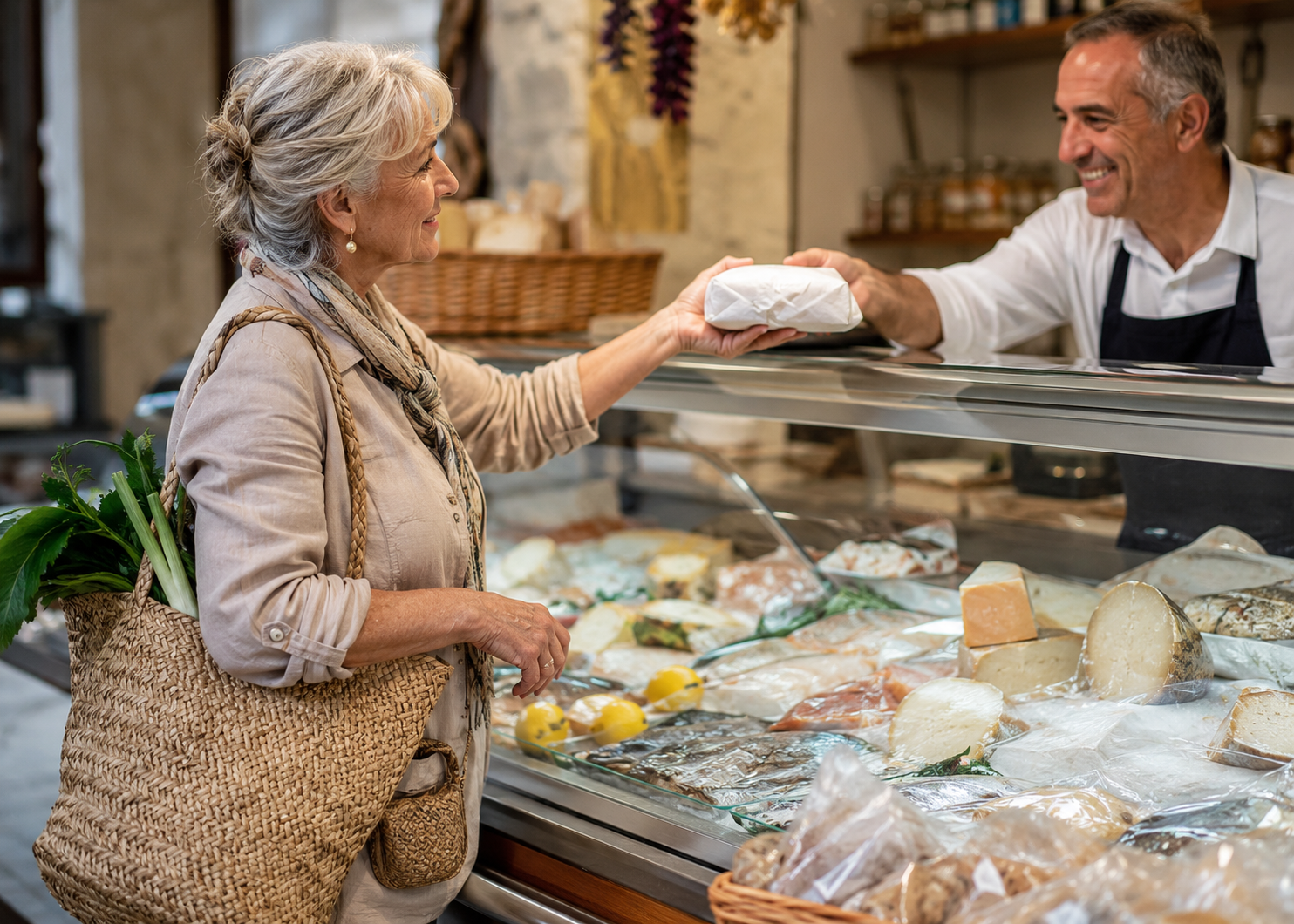
Often this means visiting more than one place. In much of Europe, the one-stop supermarket shop is not the default it is in America. A person might get their bread from the bakery, their meat from the butcher, their cheese from a cheese shop, and their fruit and vegetables from a greengrocer or an open-air market, each chosen fresh and in small quantities. Even where a supermarket does the job, the trip is small and frequent rather than large and rare.
The result is a kitchen stocked lightly and turned over quickly. There is no vast pantry of backup supplies, no chest freezer of batch-cooked dinners, no need to plan Wednesday’s meal on Sunday. What is bought today is largely eaten today or tomorrow, and tomorrow brings another short trip for whatever comes next. Cooking flows from what looked good at the market, not from a spreadsheet made three days earlier, and that changes the whole texture of eating.
Why the Fridges Are Small
It would be a mistake to see this as purely a lifestyle choice, a matter of Europeans being more virtuous about food. A great deal of it is driven by plain structural facts, starting with the size of the fridge. European refrigerators are famously compact, often a fraction the size of the American standard, and a small fridge simply cannot hold a week of bulk shopping.
That small fridge is itself a symptom of smaller kitchens and smaller homes, particularly in the dense, old cities where much of Europe lives. There is often no room for a big pantry, a second freezer, or a Costco-sized haul, so buying little and often is not a preference but a necessity. Happily, the same density that shrinks the kitchen also puts the shops within easy reach. When there is a bakery, a butcher, and a market within a short walk, popping out daily costs almost nothing in time, which is precisely what makes the habit sustainable.
There is one more practical driver, and it is a big one: shelf life. European food, especially fresh food, often contains fewer preservatives and additives than its American equivalent, so it spoils faster. Bread goes stale in a day or two, not a week; produce wilts sooner. That shorter shelf life makes bulk buying impractical and daily shopping close to mandatory, and it is also, not coincidentally, part of why so many travellers feel food simply tastes better in Europe. The freshness is not an accident; it is baked into how the whole system works.
The Market as a Social Place

There is a dimension to the daily shop that the efficiency comparison misses entirely, and it may be the most important one: it is social. Shopping little and often, at small shops and markets, means seeing the same people again and again, and that repetition builds relationships a weekly big-box run never could.
The daily shopper knows their butcher, who sets aside the cut they like. They know the woman at the fruit stall, who tells them the peaches are perfect today and the melons are not worth buying yet. They exchange a few words with the baker, the neighbour in the queue, the face behind the counter they have seen for years. The trip to buy dinner doubles as a small daily dose of human contact and local knowledge, woven into the ordinary business of feeding yourself.
This is a genuine loss in the American model, and one rarely counted. The efficient weekly shop at a giant anonymous supermarket saves time, but it strips out those small encounters, replacing a web of familiar faces with a solitary trolley and a self-checkout. The European daily shop is slower and less efficient precisely because it is more human, and for many people that inefficiency is not a cost at all but the whole point. Food shopping, done this way, is not merely provisioning. It is a thread of community.
The American Sunday Cook-Up
Meal prep, seen from Europe, can look like an odd way to treat food, but it is a perfectly rational response to American conditions, and it deserves to be understood on its own terms rather than mocked. The Sunday cook-up did not come from nowhere; it came from the specific shape of American life.
Americans, on the whole, work long hours, endure long commutes, and live farther from their shops, frequently in car-dependent suburbs where popping out for tonight’s dinner means a fifteen-minute drive rather than a two-minute walk. In that context, a single weekly shop and a batch of pre-made meals is not laziness but sensible engineering. It minimises trips, cuts the daily decision of what to cook, and guarantees that a healthy-ish meal exists even at the end of an exhausting day. Meal prep optimises cooking the way a business optimises a process, because American life often demands exactly that.
The big American fridge and pantry make it possible, and the abundance of long-life, preservative-stabilised food makes it work. Where the European system is built around freshness and proximity, the American one is built around efficiency and distance, and each is well adapted to its own environment. Neither culture is doing it wrong; they are solving different problems with the tools their circumstances hand them.
What Each Approach Costs and Buys
Once you see both systems as rational adaptations, the interesting question is what each one gives up and what it gains. Neither is simply better, and the honest answer is that they trade the same handful of things against each other in opposite directions.
The daily shop buys freshness, variety, and a certain daily pleasure. Food is eaten close to its peak, meals can follow the mood and the season rather than a plan, and the trip to the market can be a small social and sensory joy rather than a chore. What it costs is time and proximity: it only works if the shops are close and you have a spare ten minutes most days, which is a genuine luxury not everyone has.
Meal prep buys time, predictability, and mental relief. It collapses a week of cooking decisions into a single afternoon, frees weeknights entirely, and makes eating well far easier for people stretched thin by work and distance. What it costs is freshness and spontaneity: food cooked on Sunday and eaten on Thursday is never quite as good, and the row of identical lunches can make eating feel more like refuelling than pleasure. The trade is real in both directions, and which side you land on depends far more on your circumstances than on your character.
The Flavour and Waste Angle
Two areas deserve a closer look, because they are where the two systems differ most sharply: how the food tastes, and how much of it gets thrown away. On flavour, the daily shop has a clear edge, and it is not subtle. Ingredients bought fresh and eaten the same day, at the height of their season, simply taste better than the same items cooked in bulk and reheated across a week.
On waste, the picture is more interesting and less one-sided than it first appears. Buying only what you will eat tonight, as the daily shoppers do, can dramatically cut the food that rots forgotten at the back of a fridge, which is a major source of household waste. But meal prep has its own anti-waste logic, using up ingredients deliberately in planned quantities rather than letting odds and ends spoil. Both, done well, can be efficient; both, done badly, can waste plenty. The daily shop tends to waste less fresh food, while bulk shopping can mean less packaging and fewer trips, so the environmental scorecard is genuinely mixed.
What is not mixed is the sensory verdict. The European approach, whatever its inconveniences, keeps food closer to its best, and much of the pleasure travellers take in European meals traces straight back to that freshness. It is hard to batch-cook your way to a tomato that tastes of summer. That, more than any efficiency argument, is what the daily shoppers are really protecting.
It is a small daily commitment in service of a simple idea, that food is worth eating at its best rather than merely at its most convenient. That the two so rarely coincide is exactly the tension each system resolves in its own way.
Can You Do It in America?
For an American charmed by the idea, the natural question is whether any of this can be brought home, and the honest answer is: partly, with effort, depending entirely on where you live. The obstacles are structural, not personal, so the fix has to be structural too.
The single biggest barrier is proximity. The daily shop depends on having good food shops within an easy walk, and vast swathes of suburban America are simply not built that way, which is nobody’s individual failing. But the pattern can be approximated. Shopping a couple of times a week instead of once, hitting a local farmers market in season, buying fresh produce in smaller amounts, and planning a little less rigidly all borrow the spirit of the European approach without requiring a European city. Even keeping a smaller working stock of fresh food and topping up more often shifts things noticeably.
The deeper point is that this is less about willpower than about infrastructure and rhythm. Europeans shop daily not because they are more disciplined but because their cities, their fridges, and their food make it the path of least resistance. Change those conditions, even a little, and the habit follows. You cannot fully import a way of life built on dense neighbourhoods and corner markets into a car-dependent suburb, but you can borrow pieces of it, and the pieces are worth having.
None of it requires moving to Madrid. It requires only treating shopping as a slightly more frequent, slightly more local habit than the default weekly haul, and letting the food you actually feel like eating that night guide the trip.
Two Rhythms, Two Ways of Living
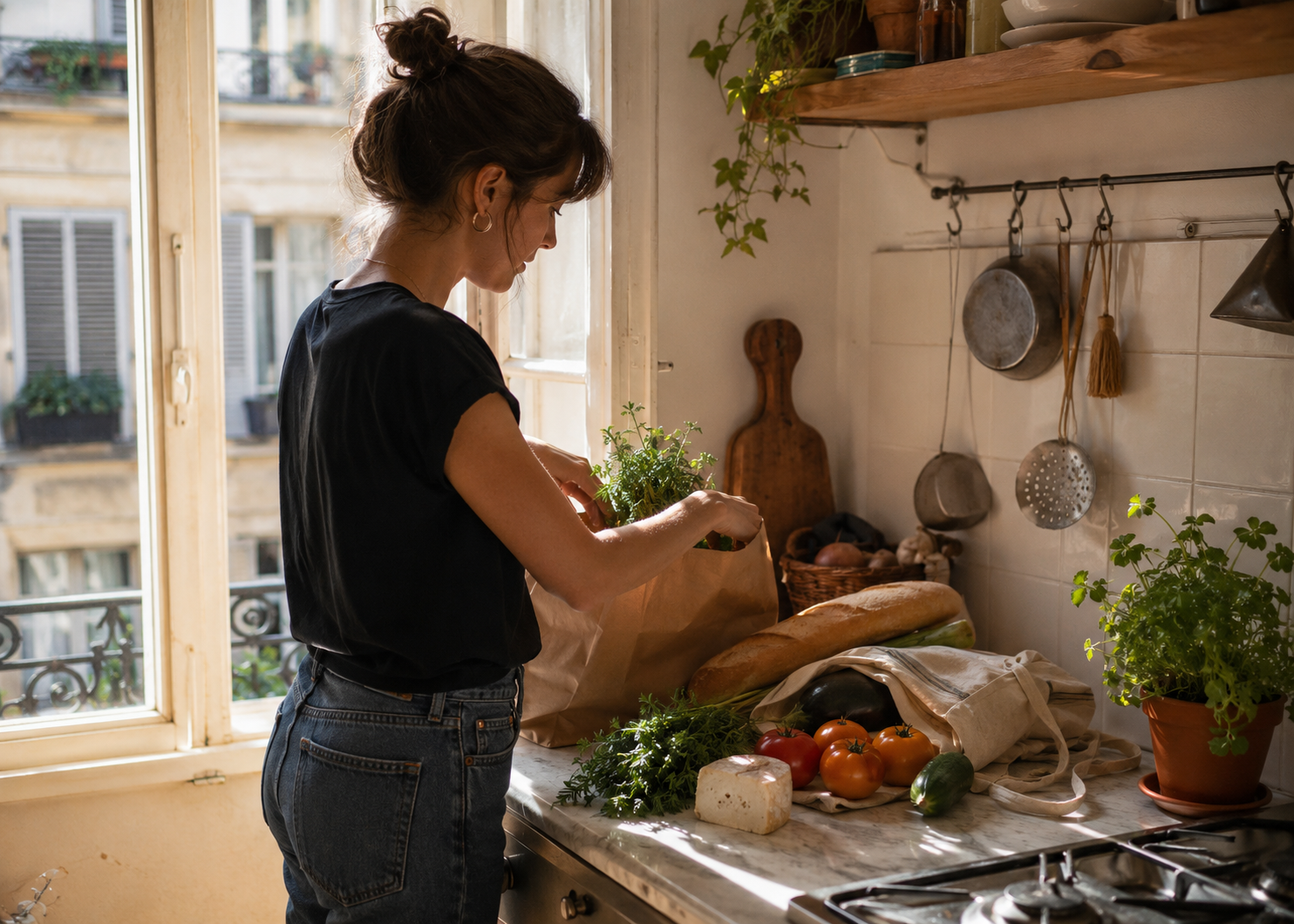
In the end, the difference between the daily shop and the Sunday cook-up is not really about food at all. It is about time, space, and the shape of a life, and the two habits are honest reflections of two different worlds. One is built around freshness and proximity, the other around efficiency and distance, and each makes complete sense where it grew up.
For the traveller or the curious, the value is not in declaring a winner but in seeing the trade clearly. The European daily shop offers fresher food, more variety, and a gentler daily rhythm, at the cost of time and nearby shops. The American cook-up offers freedom from weeknight cooking and a buffer against a punishing schedule, at the cost of some freshness and spontaneity. Knowing which you are choosing, and why, is more useful than pretending one is simply superior.
What travels best is the underlying idea: that how you shop shapes how you eat, and that both are worth a moment’s thought rather than pure habit. Whether you cook once a week or wander to the market each evening, the goal is the same, food you enjoy, eaten without stress. Europe just happens to have arranged its cities so that the daily version is the easy one, and there is a quiet lesson in that arrangement worth carrying home.

About the Author: Ruben, co-founder of Gamintraveler.com since 2014, is a seasoned traveler from Spain who has explored over 100 countries since 2009. Known for his extensive travel adventures across South America, Europe, the US, Australia, New Zealand, Asia, and Africa, Ruben combines his passion for adventurous yet sustainable living with his love for cycling, highlighted by his remarkable 5-month bicycle journey from Spain to Norway. He currently resides in Spain, where he continues sharing his travel experiences with his partner, Rachel, and their son, Han.