
On a July afternoon on a beach near Malaga, the sand is covered with people lying deliberately in the full midday sun, turning at intervals like something on a spit, chasing the deep brown tan that Spanish summer culture prizes. To an American dermatologist, the scene is close to a horror film: hundreds of people methodically doing the single thing their profession spends its life warning against. To the sunbathers, it is simply summer.
This is one of the sharper culture clashes a health-conscious American will meet in Spain. Mediterranean beach culture treats a tan as desirable, even wholesome, and treats hours in the sun as a pleasure rather than a hazard. American dermatology treats all of it as a serious, avoidable risk to health. Both cannot be fully right, and understanding the gap between them, and where the truth actually sits, matters more than it might seem, because it is your skin on the line.
The Cult of the Tan

To understand the Spanish beach, you have to understand how deeply a tan is woven into the culture’s idea of summer and beauty. In Spain, as across much of the Mediterranean, being tanned, moreno in Spanish, carries strongly positive associations. It reads as healthy, attractive, well-rested, and unmistakably as the mark of someone who has enjoyed their holidays.
Sunbathing, in this world, is not an incidental byproduct of a beach day but often the main event, a legitimate way to spend an afternoon. People arrive with towels and settle in for hours, turning to brown evenly, treating the acquisition of colour as a small summer project. A pale return from a coastal holiday can even be met with mild teasing, as though you failed to make proper use of the sun. The tan is a status symbol of leisure, and chasing it is a normal, sociable, entirely unremarkable thing to do.
None of this is unique to Spain; it is a broadly Mediterranean and indeed Western attitude with roots in the twentieth century, when a tan flipped from a marker of outdoor labour to a marker of affluent leisure. But it is especially visible on a Spanish beach in high summer, where the sheer devotion to browning oneself is on full, sprawling display. For the culture, the tan is not damage. It is the whole point of the day, and that is precisely where it collides with the science.
What American Dermatology Says
Against this cultural enthusiasm stands a medical consensus that is about as settled as science gets, and it is worth stating plainly because it is the heart of the matter. Exposure to ultraviolet radiation from the sun is the primary, and largely preventable, cause of skin cancer. That is not a fringe view; it is the mainstream position of dermatology worldwide.
The uncomfortable core of it is that there is no such thing as a safe tan. A tan is not a sign of health but the skin’s response to injury; it is what happens when ultraviolet radiation damages skin cells and the body produces pigment to try to protect itself. The colour that the culture prizes is, biologically, evidence of harm already done. Repeated over years, that harm accumulates and drives the three main skin cancers, melanoma, basal cell carcinoma, and squamous cell carcinoma, as well as premature ageing, wrinkles, and sun spots.
American dermatology has taken the most absolutist version of this message: minimise ultraviolet exposure, protect your skin whenever you are out, and abandon the idea of a healthy tan entirely. Sunburn is singled out as especially dangerous, with intense, intermittent burns of the kind you get on a beach holiday strongly linked to melanoma, the deadliest skin cancer, and sunburn earlier in life treated as a particular risk factor. From this standpoint, the Spanish beach is not a scene of leisure but a mass exercise in cumulative skin damage, and the profession says so without much hedging.
The Numbers Behind the Warning

This is not abstract caution; it rests on hard and worsening numbers, and they are worth making concrete because they explain why dermatologists sound so alarmed. Skin cancer is not a rare misfortune but one of the most common and fastest-rising cancers in the world.
The scale is striking. According to the World Health Organization, the incidence of skin cancers, both melanoma and non-melanoma, has climbed over recent decades, with well over one and a half million new cases estimated in a single recent year. Skin cancer incidence has been rising faster than that of almost any other malignancy. And in sunny Spain itself, which enjoys around three thousand hours of sunshine a year, melanoma carries a real and measurable mortality burden. These are not trivial risks buried in fine print; they are large, growing, and directly tied to the ultraviolet exposure that a beach day delivers in abundance.
The most important number, though, may be the hopeful one: by many estimates, up to eighty percent of skin cancers could be prevented by reducing ultraviolet exposure and using basic protection. That figure is what gives the dermatological warning its urgency and its optimism at once. The risk is serious, but it is also, to a remarkable degree, within your control. The damage is not fate; it is largely a function of behaviour, which means behaviour can change the outcome. That is the case American dermatology is really making, and on the science, it is a strong one.
The Case the Culture Makes
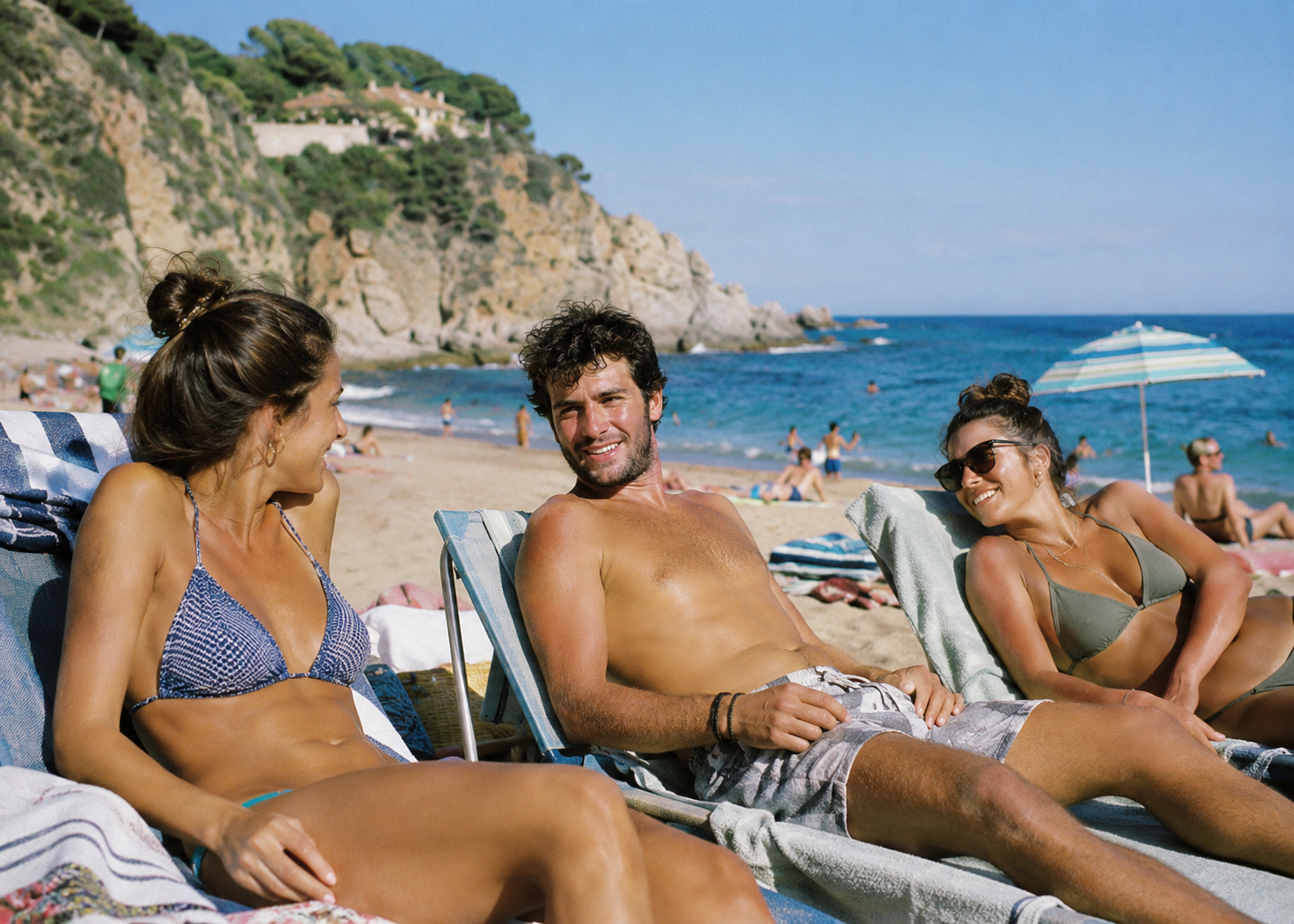
In fairness, the sunbathers are not simply wrong or ignorant, and an honest look has to give the other side its due. There are real arguments on the cultural side of the ledger, even if they do not overturn the core medical picture, and a fair account should lay them out.
The most substantive is vitamin D. Sunlight on skin is the body’s main natural source of vitamin D, which matters for bone health and other functions, and some argue that blanket sun avoidance carries its own health costs, particularly in populations that end up deficient. There is also a genuine European counter-tradition, sometimes called sensible sun, which holds that the enemy is burning and extreme exposure, not moderate, sunburn-free time outdoors, and that a total-avoidance stance overcorrects. And there is the matter of wellbeing: sunlight lifts mood, regulates sleep, and draws people outdoors and together, benefits that are real even if they are not the tan itself.
These points deserve to be taken seriously rather than dismissed, and the sharpest versions of the American no-sun message can indeed sound extreme to European ears. But they come with an important limit. None of them requires or justifies a deep tan or hours of unprotected midday exposure. Vitamin D needs only brief, incidental sunlight; the mood benefits do not depend on burning; and sensible sun, properly understood, is itself a call for moderation and protection, not for lying out for hours. The cultural case, taken at its best, argues against fanatical avoidance, not for the tanning ritual the science warns about. On the specific behaviour of the Spanish beach, the dermatologists still have the better of it.
Where the Tension Actually Lies

It would be easy, and wrong, to frame this as enlightened American medicine versus ignorant Mediterranean habit, and the real picture is more interesting than that. Spaniards are not unaware of the risks; awareness is, in fact, quite high, and Spain runs serious public-health efforts on sun safety.
Surveys find that the overwhelming majority of Spanish people associate poor sun habits with skin cancer, that most know to avoid the harshest midday hours, and that a large majority use sunscreen during the sunniest part of the year. Spain has active public-health campaigns, engaged dermatologists, and a population that broadly knows the message. The gap is not one of knowledge but of behaviour and aesthetics: people know the risks and often sunbathe anyway, because the cultural pull of the tan and the pleasure of the sun outweigh an abstract future danger in the moment. Sunscreen use is common, but proper use, reapplying every couple of hours, is far patchier, and younger people and men lag most.
So the tension is not really science versus superstition. It is a settled medical reality running up against a durable cultural aesthetic and ordinary human short-termism, complicated by a genuine debate over whether the strictest avoidance advice goes too far. That is a subtler and more honest framing than a simple clash of right and wrong. The dermatologists are correct about the biology; the culture is not stupid about it; and most actual sunbathers live in the gap between what they know and what they want, which is a very human place to be.
Protecting Yourself Without Hiding Indoors

The good news, and the practical heart of all this, is that you do not have to choose between enjoying a Spanish beach and protecting your skin. The whole point of modern sun protection is that it lets you be outside, in the sun, for hours, while sharply cutting the harm. You can have the beach without buying the damage.
The tools are simple and well established. Use a broad-spectrum sunscreen with a high protection factor, apply it generously, and, crucially, reapply it roughly every two hours and after swimming, since a single morning application wears off long before the day does. Seek shade during the most intense hours, generally late morning to mid-afternoon, when the ultraviolet is fiercest. Add a hat, sunglasses, and light long-sleeved or purpose-made sun-protective clothing, which shield far more effectively than lotion alone. None of this keeps you off the beach; it simply changes your relationship to the sun from passive exposure to managed enjoyment. Because sunscreen does so much of the heavy lifting here, and because using it correctly is less obvious than it looks, it is worth reading up properly on how to choose and apply it, which our full guide to sunscreen covers in detail.
The mindset that makes this work is the sensible-sun one, borrowed from the better part of the European attitude and married to the science. You are not hiding from the sun; you are enjoying it without letting it injure you. A well-protected afternoon on the beach, in the shade during the worst hours and under good sunscreen the rest of the time, delivers nearly all the pleasure of the day with a fraction of the risk. That, and not grim indoor avoidance, is the actual recommendation once the dust settles.
A Note for Visitors
There is one more reason travellers in particular should take the protection seriously, and it is easy to overlook. Many visitors to Spanish beaches, especially those from the United States and Northern Europe, have fair skin compared with the local Mediterranean population, and fairer skin burns faster and carries a higher risk of sun damage.
The sun on a Spanish coast in summer is also simply stronger than what many visitors are used to at home, higher and more direct, with ultraviolet levels that can catch out someone whose sense of a normal day in the sun was formed in a cooler, cloudier climate. The combination, less protective skin meeting more intense sun, means a tourist can burn badly in less time than they expect, sometimes within a single unhurried afternoon that felt entirely pleasant while it was happening. The burn shows up later.
So the visitor’s margin for error is smaller than the local’s, not larger, which is the opposite of how it often feels on a relaxed holiday. If anything, a fair-skinned traveller should be more careful on a Spanish beach than the Spaniards around them, not less, applying protection more diligently and treating the midday sun with extra respect. A holiday tan is a poor souvenir; a serious burn on the second day of a trip is a worse one.
The Tan Will Fade, the Damage Will Not
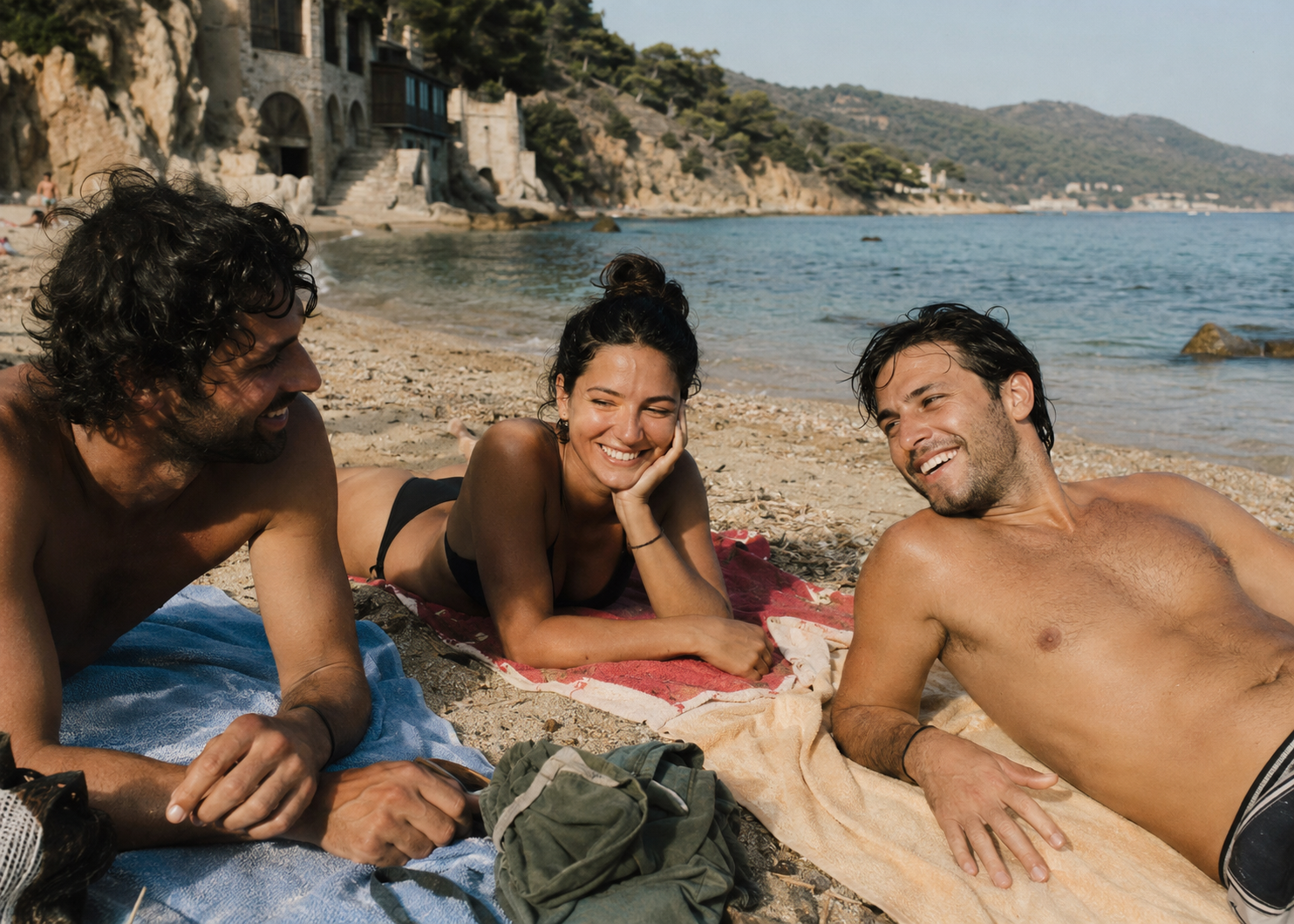
If there is one idea to carry off the beach, it is this asymmetry, because it cuts straight through the cultural appeal of the tan. The colour you work so hard for in July is gone by autumn. The ultraviolet damage that produced it does not fade; it accumulates, quietly, year after year, in the skin.
That is the honest problem with treating a tan as an achievement. You are trading a temporary cosmetic effect, one that lasts weeks, for a permanent biological cost that compounds over a lifetime and shows up decades later as ageing skin or, in the worst cases, as cancer. Put in those terms, the trade looks far less appealing than it does on the sand, where only the pleasant, immediate half of it is visible. The tan is the reward you can see; the damage is the bill that arrives much later.
None of this is a reason to fear the sun or to skip the beach, and it is certainly not a judgment on a culture that has its own real wisdom about enjoying life outdoors. It is simply a reason to protect the skin you are in while you enjoy it, and to keep an eye on it: knowing the warning signs of changing moles, and getting anything suspicious checked, is the cheap insurance that pairs with the sunscreen. Enjoy the sun like a Spaniard, by all means. Just protect yourself like your dermatologist would want, and you get the best of both.
Enjoy the Sun, Respect the Science
The Spanish beach and the American dermatologist are, in the end, arguing about something real, and the resolution is not to pick a side but to take the true part of each. The culture is right that the sun is a pleasure and that a life lived outdoors is a good one. The science is right that the tan is damage and that the risk is serious and rising.
The path between them is sun protection, which quietly dissolves the conflict. With good sunscreen, sensible timing, and a bit of shade, you can spend the afternoon on the beach exactly as the culture invites, while giving your skin the protection the medicine demands. You do not have to choose between the joy and the safety; you only have to be a little deliberate about combining them.
So lie on the Spanish sand and enjoy the summer, by all means, because that pleasure is worth having and the culture is not wrong to cherish it. Just do it with your skin protected, out of the worst of the midday glare, and with no illusions that the brown you are chasing is anything but damage dressed up as health. Respect the tradition, respect the science more, and the beach stays a pleasure rather than a gamble.

About the Author: Ruben, co-founder of Gamintraveler.com since 2014, is a seasoned traveler from Spain who has explored over 100 countries since 2009. Known for his extensive travel adventures across South America, Europe, the US, Australia, New Zealand, Asia, and Africa, Ruben combines his passion for adventurous yet sustainable living with his love for cycling, highlighted by his remarkable 5-month bicycle journey from Spain to Norway. He currently resides in Spain, where he continues sharing his travel experiences with his partner, Rachel, and their son, Han.