
The oldest building on our street here in Cuenca province grew an air-conditioning unit last summer, a white box drilled into a stone facade that predates the United States, installed by a family that spent twenty years telling every visiting relative that air conditioning gives you a sore throat and a stiff neck.
Here is the part an American would miss. That unit ran perhaps forty hours in its entire first summer. It switches on around four in the afternoon on the truly murderous days, runs two or three hours at 26 degrees, and goes silent again, because the house is actually cooled by a system much older than electricity: the persianas come down at ten in the morning, the windows open after dark, and the thick walls do the rest.
That is the real story of the American habits Europe has adopted, and it is stranger and funnier than simple copying. Europe is buying America’s products at full speed, the air conditioners, the iced coffees, the SUVs, the shopping holidays, and then running every one of them on European settings. They import the object and keep the operating system. Which means the teasing you sit through at a European dinner table is not hypocrisy at all. It is a culture pointing out, accurately, that it took your stuff without taking your habits.
Watching this from inside a Spanish household is one of the entertainments of living here, because the domestication happens in plain sight, one appliance and one habit at a time, and nobody involved considers it a contradiction. Here is the inventory, product by product, with the European settings noted.
Air Conditioning, Bought And Rationed
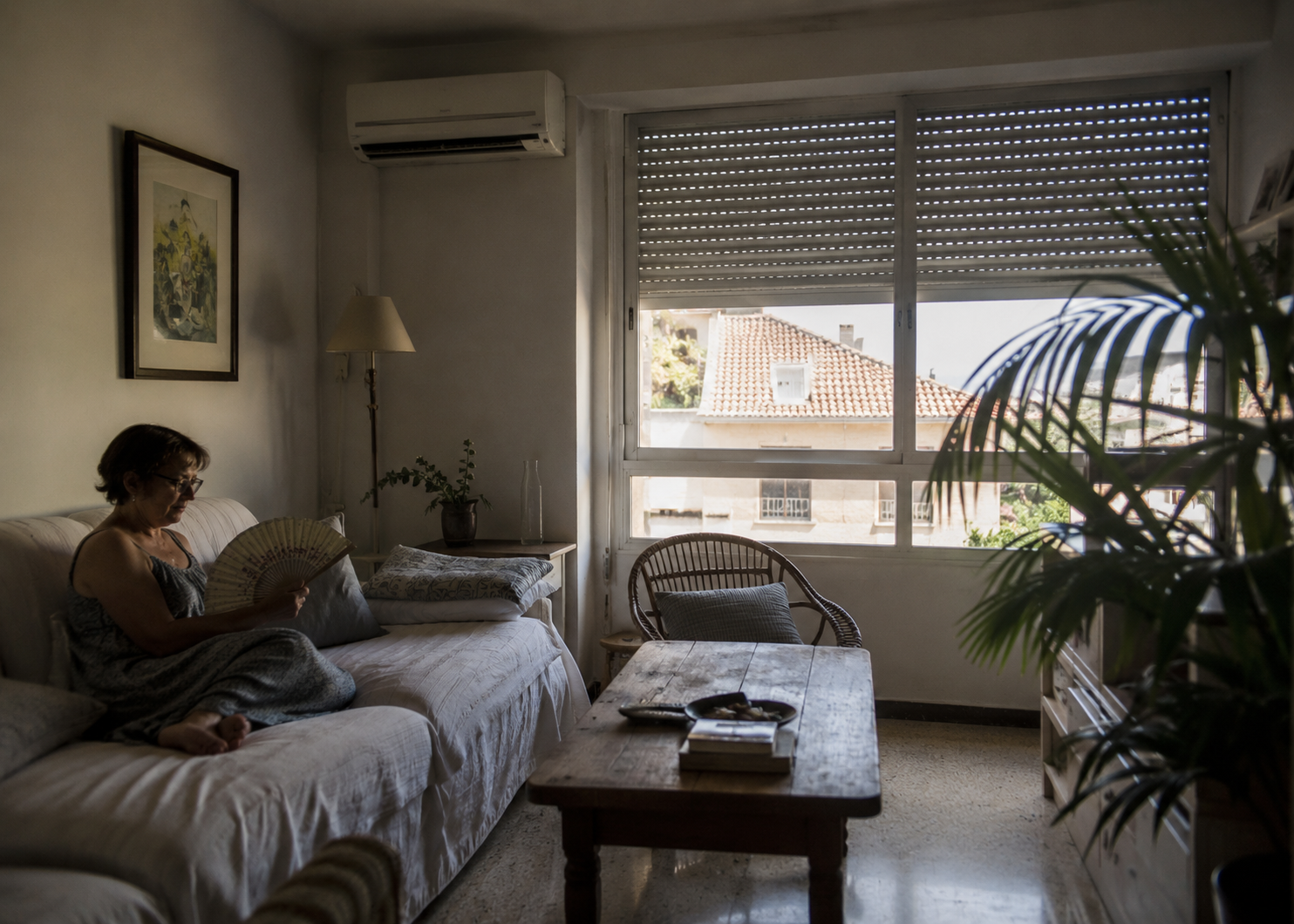
Every brutal summer now sets off a record wave of AC installations across Spain, Italy, and France, with installers booked out for weeks by July. The machines are marching into ordinary bedrooms in countries that swore for decades they would never need them, and the United Kingdom, where home cooling was practically a rumor, now empties the appliance shops of portable units by day two of a heatwave.
So the surrender is real, and it is measurable in the installer’s calendar every July. The usage is another country entirely. In the United States, where nearly nine in ten homes are cooled, the system runs as climate: switched on in June, set to a sweater-friendly 68°F, forgotten until October. In a Spanish home the aparato is a scalpel, deployed for the siesta hours of the worst days, set to 26 or 27 degrees, and turned off the moment the sun drops, usually accompanied by somebody’s mother announcing that it is fine now.
The heavy lifting still belongs to the persiana protocol, the shutter choreography every Spanish child absorbs without instruction: persianas down and windows shut by mid-morning to lock in the night’s cool, the house dim and tomb-quiet through the afternoon, then everything thrown open after ten at night to let the cool air wash through. It is free, it works astonishingly well, and it explains why a Spanish electricity bill in August, even with the new unit on the wall, would not cover an American one’s first week.
The persiana itself deserves a word, because most Americans have never met one. It is the exterior roller shutter fitted to virtually every window in Spain, and it does what no curtain can: stops the heat outside the glass before it enters. American visitors reliably ask about them twice, first what they are, then why American houses do not have them, and there is no good answer to the second question. A country that air-conditions nine homes in ten never installed the €200 device that makes most of the cooling unnecessary.
The usage discipline runs on money as well as custom. Spanish households live with hourly electricity pricing, the tariff that makes power cheap at 2pm and expensive at 8pm, and running the aparato is a decision made with one eye on the clock and the rate, the way the washing machine already waits for the cheap hours. An appliance that runs itself all summer unattended is not a comfort in this system. It is a leak.
The teasing has not stopped, in other words. It has just acquired a remote control, used sparingly, with the persianas down.
Cold Coffee In A Culture That Still Sits Down
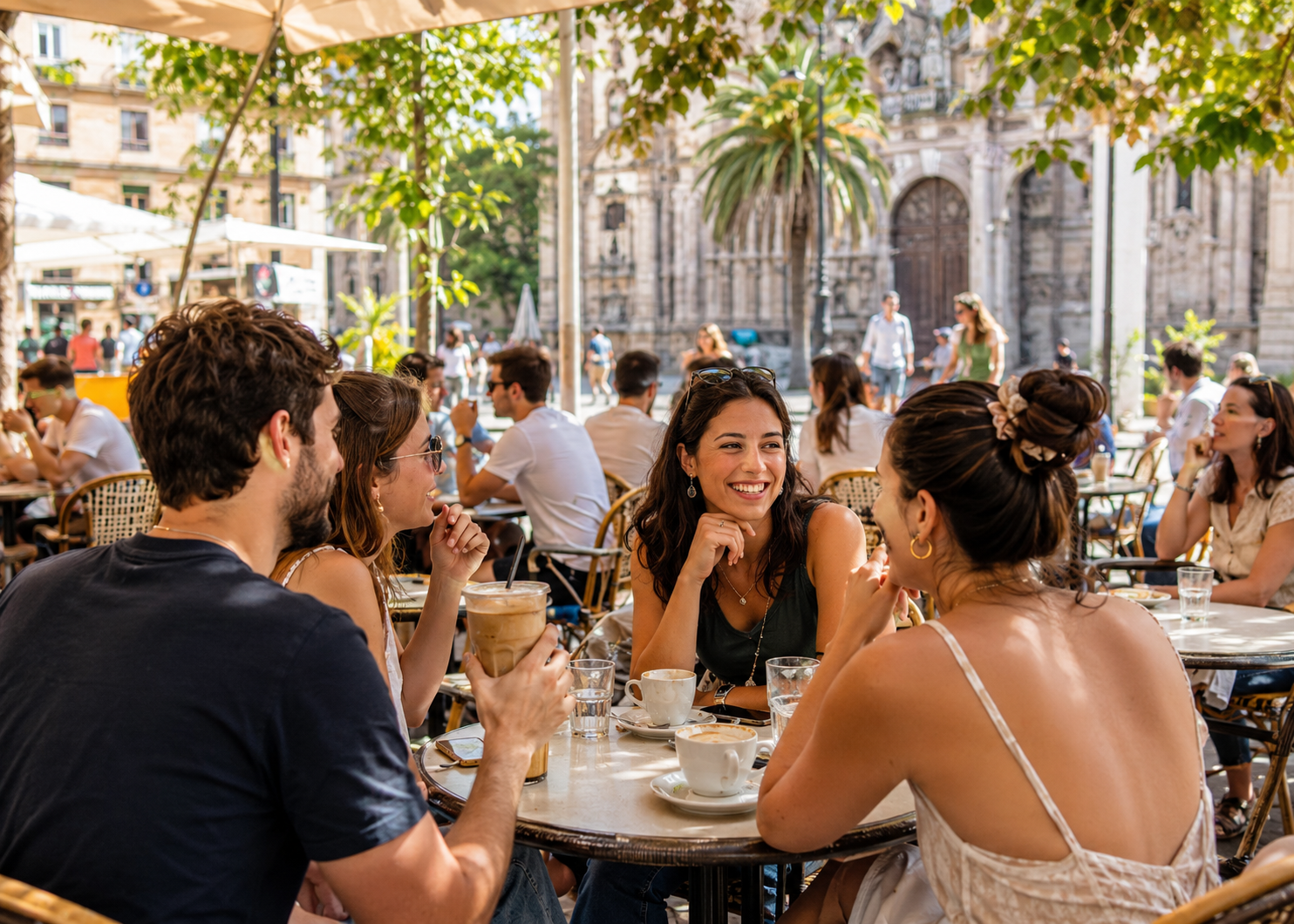
Fifteen years ago, walking a Spanish street with a lidded paper cup marked you as a tourist. Coffee was ninety seconds, ceramic cup, standing at the bar, and iced coffee meant café con hielo, an espresso and a glass of ice cubes handled with tongs.
The iced latte generation has genuinely arrived since. Takeaway cups travel every European high street, cold brew reached the provinces, and the international chains Europeans swore would never survive here have queues of local teenagers treating the cup as an accessory.
And yet watch what happens to the import once it lands. The paper cup is a between-things drink, carried to class or the train, and it has made no landing whatsoever on the sit-down occasions. The mid-morning coffee with a colleague still happens seated or standing at the bar, the after-lunch cortado still arrives in ceramic on a saucer, and the idea of bringing a takeaway cup to a table where other people are sitting still reads as vaguely tragic. Europe took the iced latte and scheduled it into the gaps of a day whose fixed points did not move an inch.
The terraza test settles it. The import that was supposed to portable-ize European coffee has not removed a single table from a single square, and the evening terrace, the €1.60 coffee nursed for an hour in the shade while the street goes by, remains the best-attended institution in the country. The cup learned to travel. The people mostly declined to.
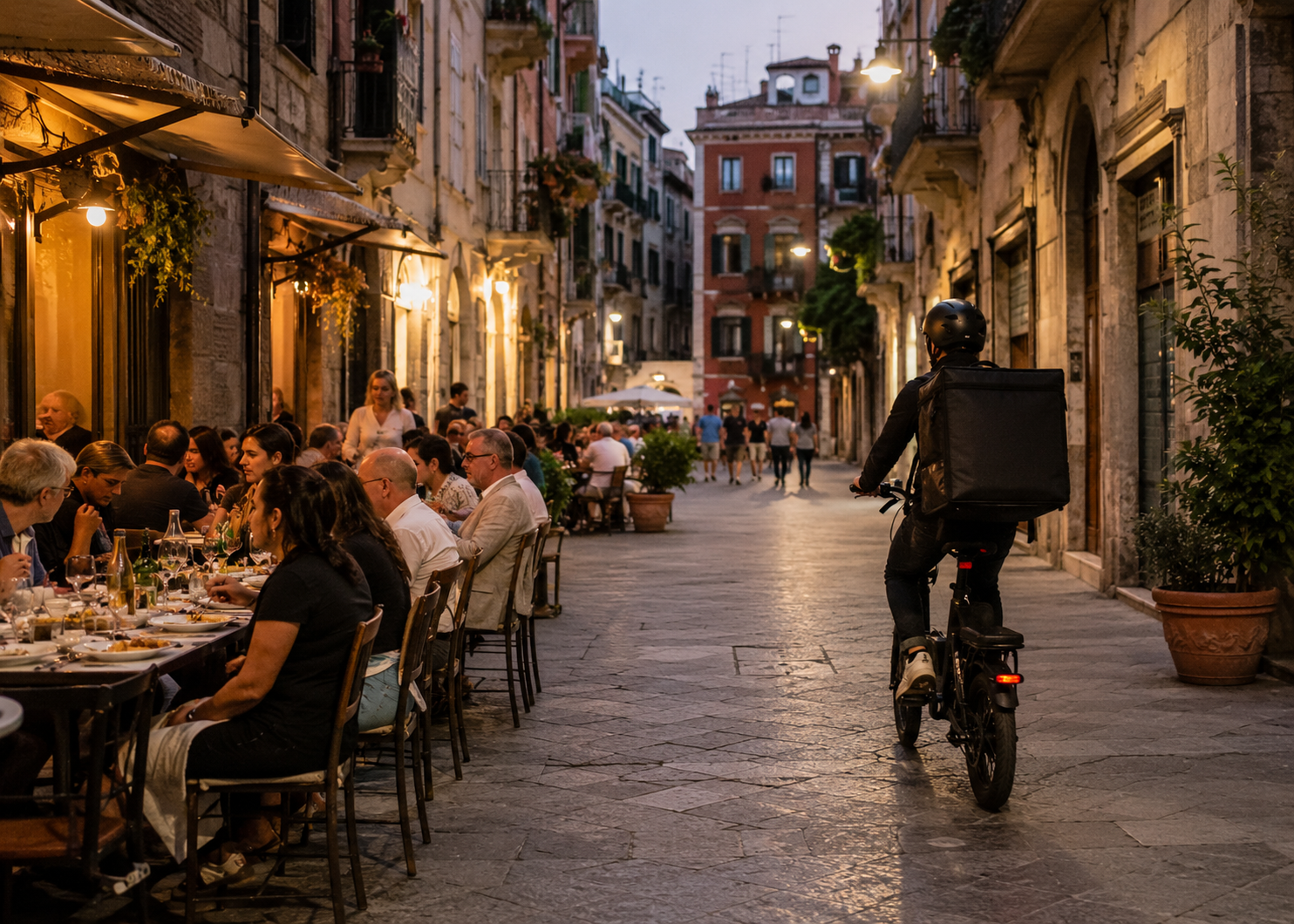
Food delivery tells the same story. Spain now has delivery riders crossing every plaza at dinner time, and the apps live on everyone’s phones. They live there for the random Tuesday. The Sunday lunch, the weekly family table that can run three hours, remains untouched and untouchable, and suggesting the family order in for it would be received roughly like suggesting they cancel Christmas. The app got the weeknight. The institution kept the week.
Brunch As An Event, Not A Habit
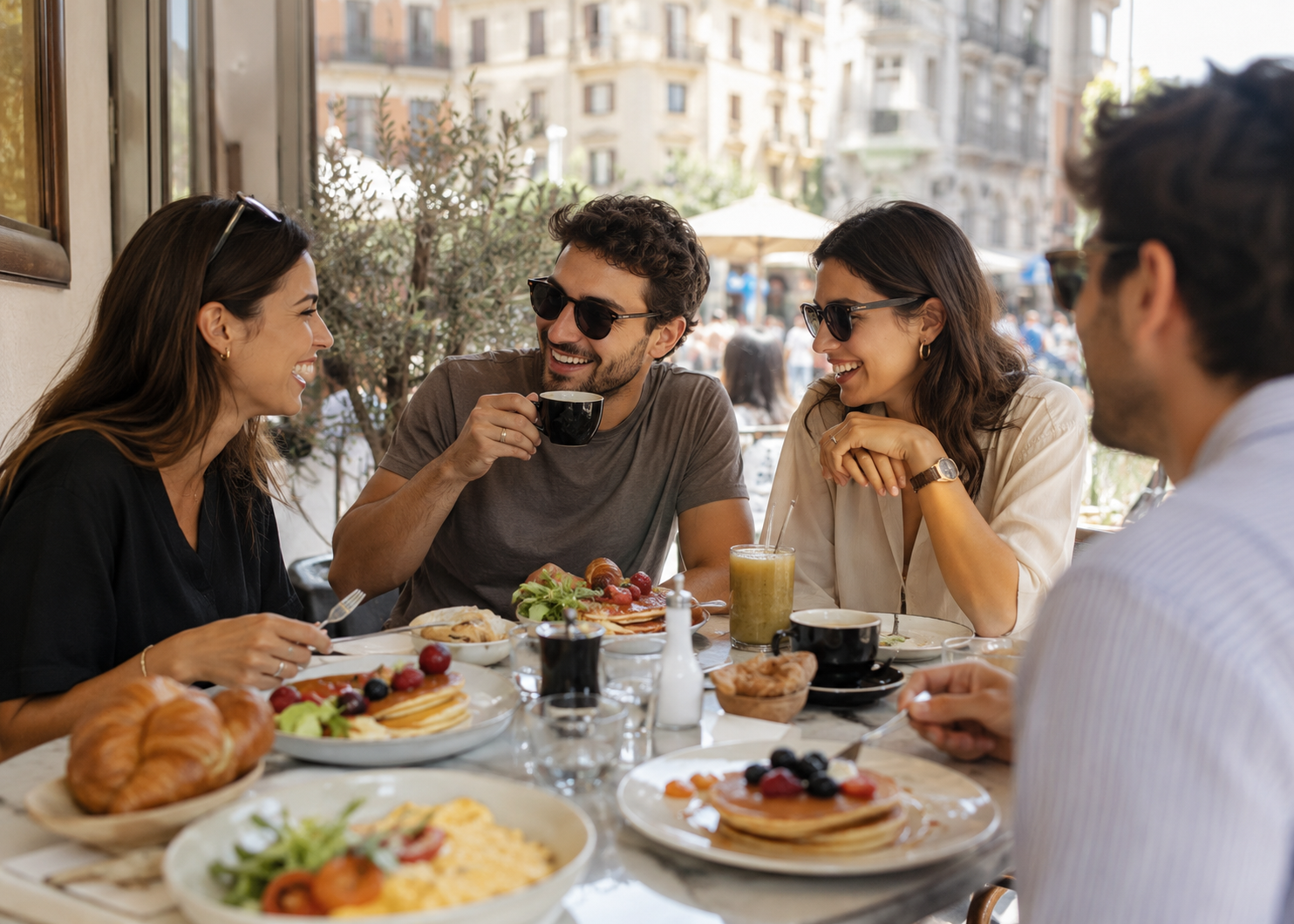
Brunch was an Anglo-American import that European food culture officially had no need for, and the brunch queues of weekend Madrid, Barcelona, and Milan say otherwise, with the word itself adopted into Spanish, French, and Italian unmodified.
But here too the settings changed in transit. American brunch is a default, the thing weekend mornings simply are. European brunch is an occasion, planned in the group chat, dressed for, photographed, and priced accordingly, €19 in cities where the full menú del día costs €14. It happens once or twice a month as an event, slotted into a weekend that still contains the vermut hour and the family lunch it was supposed to threaten, and it is aimed at friends, not family, which in the European weekend architecture makes it an addition rather than a replacement. Europe did not adopt the brunch habit. It adopted the brunch outing, which is a different animal wearing the same pancakes.
Halloween Stacked On Top, Not Instead
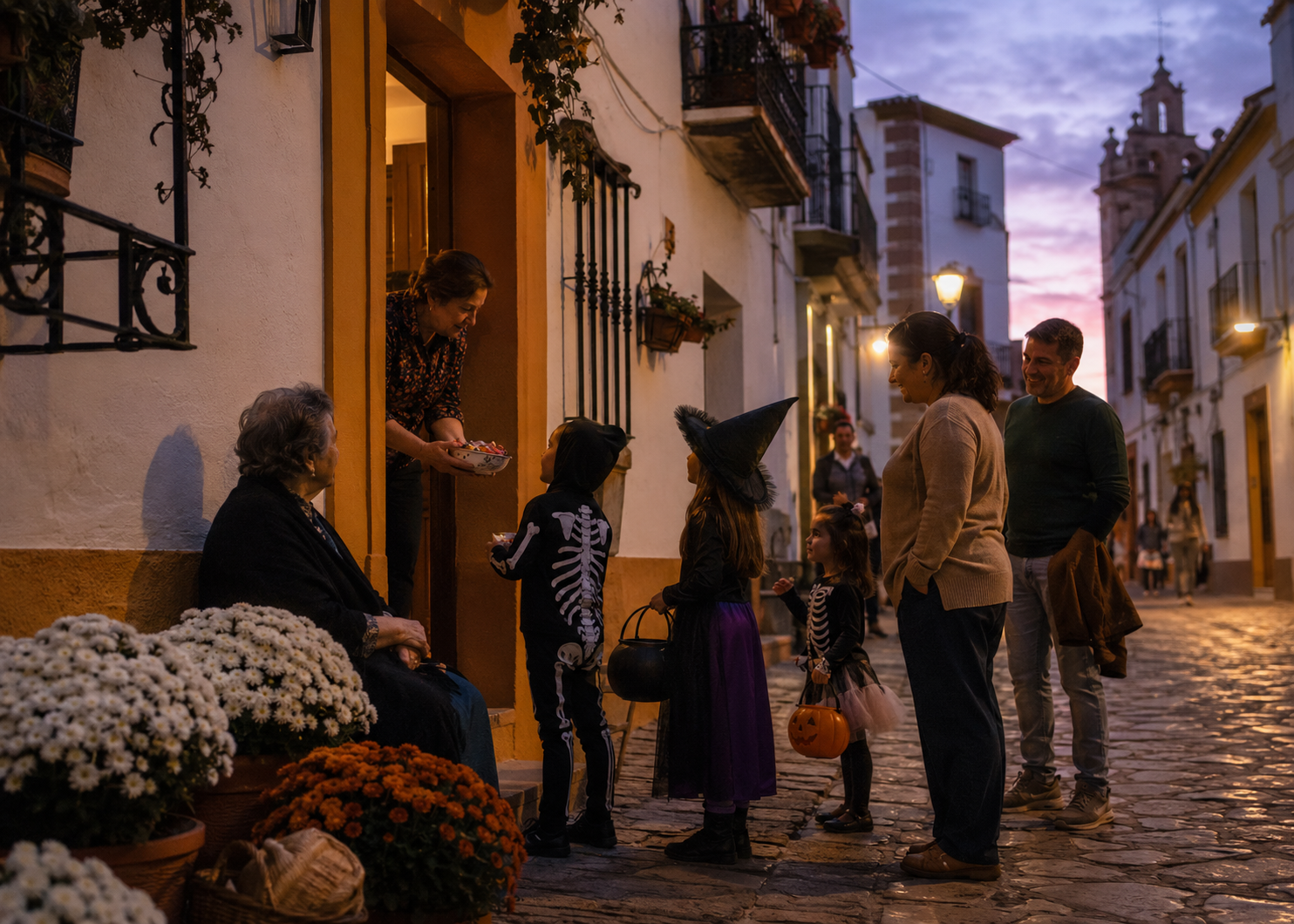
Watch a Spanish town in late October and you will see the pattern at its clearest, because the two calendars now run simultaneously and nobody chose between them.
The night of the 31st fills the streets with small skeletons and witches going door to door, the supermarket costume aisle appears by October 15 and grows every year, and the schools build their late-October week around a holiday that arrived by streaming service. Then the next morning, Todos los Santos, the bakeries sell out of huesos de santo and buñuelos, the florists do their biggest day of the year, and the same families who bought the costumes drive to the cemetery with chrysanthemums, exactly as their grandparents did.
Halloween did not replace anything. It got stacked on top, a bonus night for the children, who shout truco o trato at doors that mostly know the script by now, bolted onto a solemn day the adults kept, and the annual newspaper column fretting about the American invasion runs beside a photo of costumed children everyone agrees is adorable. The import took the evening. The tradition kept the day.
Black Friday is the honest exception in this inventory, the one import that arrived on American settings and stayed on them. It took roughly one decade to become the biggest retail event in Spain, it dethroned the once-sacred January rebajas, and it is celebrated with full-volume enthusiasm for a Thursday that means nothing here. Every rule has its leak, and Europe’s is apparently discounts.
SUVs, At European Scale
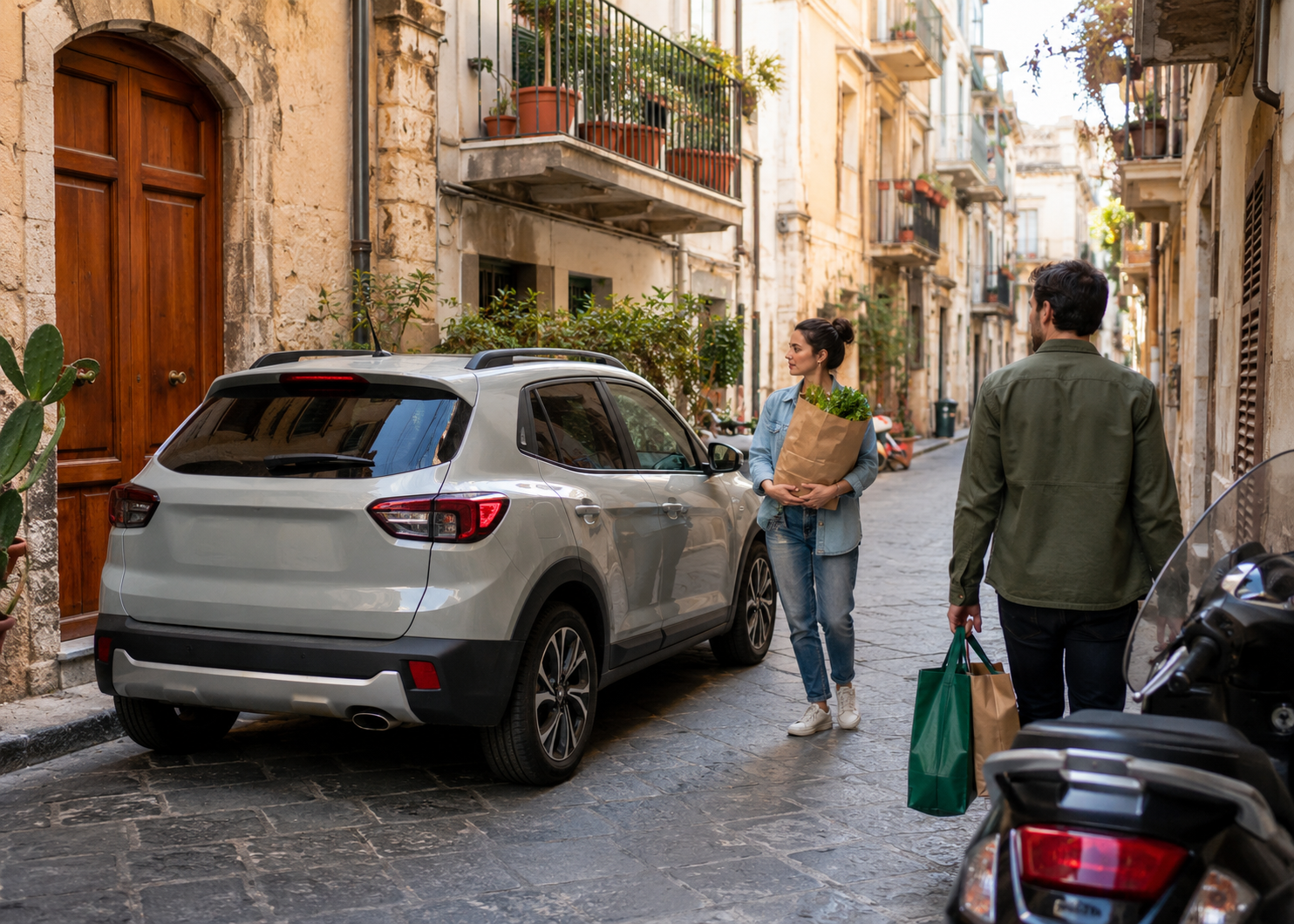
No American habit drew more reliable scorn than the vehicles, and Europe now buys SUVs as its default car, more than half of all new registrations, a share that has climbed for a decade while the average car grew heavier, taller, and wider. Paris voted in 2024 to triple parking fees for the heaviest of them, the kind of referendum that only happens once a trend has already won.
Then look at what Europeans actually mean by SUV. The best-sellers are compact crossovers, a size class an American dealership would file under modest, with small engines, hybrid badges, and manual gearboxes still in the mix, parked with two centimeters of grace into spaces drawn for a Fiat Panda. The American pickup, the actual flagship of the genre, has made no meaningful landing at all: it does not fit the streets, the parking, the fuel prices, or the self-image, in that order. Europe took the silhouette of the American car and printed it at 70 percent scale, which is somehow the most European possible way to copy something.
Fuel prices police the boundary better than any regulation. At European pump prices, roughly double the American ones, the honest full-size American SUV is not a status symbol but a standing donation to the petrol station, and the market sized itself accordingly.
The reasons drivers give are word-for-word the American reasons of twenty years ago, the sitting higher, the feeling safer, the everyone-else-has-one, so the direction is not in doubt. The scale is where the settings held.
Protein Shelves Next To The Lentils
The supermarket shelf shows the newest import mid-domestication. European stores now run whole American aisles, peanut butter in six variants where one dusty jar used to sit, and the gym generation buys it in kilo tubs. Low-cost gym chains have carpeted the cities, the protein section has sprouted yogurt, bread, and pudding variants, and the running boom has put more Europeans in race bibs than ever.
The numbers on the base layer have not moved to make room. The daily walking that the town layout supplies, the market shopping carried home by hand, the lunch that is still cooked, none of it retreated when the gym arrived, which is why the European gym-goer is training on top of a lifestyle an American trainer would prescribe as the program itself.
But the optimization culture landed on top of the old base, not instead of it. The protein yogurt sits one aisle from the dried lentils and chickpeas that still outsell it, the gym membership coexists with a daily step count the town layout provides for free, and the macro-tracking twenty-something still comes home to the family lunch where nobody has ever weighed an ingredient for any reason except baking. America supplied the upgrade pack. The base game stayed European.
Spain even ships one the other way: padel, the walled tennis that is practically the national pastime here, is currently colonizing American suburbs, which means that for once the teasing rights run east to west, and Spaniards are enjoying it enormously.
What They Refuse Outright
Some imports never clear customs at all, and the list is firm. Dinner is not moving to six o’clock. Tipping has not caught on and is actively resented where card machines suggest it. The clothes dryer remains an expensive machine for ruining what the sun handles free, drip coffee has made no landing on the breakfast table, and the August shutdown holds its line completely: whole industries close for the month, out-of-office replies are measured in weeks, and no quantity of American work culture has dented it.
Sunday holds too, in most of the continent. Outside the tourist centers, retail still largely closes, the American assumption that commerce is a seven-day utility never took root, and the streets on a Sunday belong to families walking off lunch rather than to errands. Even the delivery apps go quiet at the hour the paella comes out.
Put this column next to the imports and the selection principle is visible. Europe takes what saves time and refuses what costs the table. Everything adopted is consumed alone or in passing, the cooled bedroom, the carried coffee, the solo workout, the online cart. Everything refused would have to be subtracted from the shared meal, the long evening, the month off. The line could not be clearer if a border agent were drawing it.
The Part Worth Enjoying
So the next time the teasing starts at a European table, and it will, you are entitled to a private smile and a more precise inventory than the usual one. The house has acquired air conditioning, rationed like wartime sugar. The teenagers are drinking iced caramel something, carried to a two-hour lunch. The car outside is an SUV the size of your rental, the children have Halloween costumes for a night that precedes a cemetery visit, and somebody at the table did their Christmas shopping on Black Friday without apology.
The teasing survives because, on the evidence, they have a point. They took the products and declined the lifestyle, ran your inventions on their settings, and kept every institution the imports were supposed to erode. It is probably the most instructive thing about living among them: watching a culture prove, one rationed appliance at a time, that you can buy convenience without selling the afternoon.
Our neighbors with the stone facade report the unit works beautifully on the days it earns its electricity. The persianas still come down at ten. The jokes at this year’s fiesta will be the same as always, delivered in a house that is cool for every one of the old reasons and one new one, used sparingly.

About the Author: Ruben, co-founder of Gamintraveler.com since 2014, is a seasoned traveler from Spain who has explored over 100 countries since 2009. Known for his extensive travel adventures across South America, Europe, the US, Australia, New Zealand, Asia, and Africa, Ruben combines his passion for adventurous yet sustainable living with his love for cycling, highlighted by his remarkable 5-month bicycle journey from Spain to Norway. He currently resides in Spain, where he continues sharing his travel experiences with his partner, Rachel, and their son, Han.