
Add it up sometime and the number is sobering. A mid-range gym membership runs around a hundred dollars a month now. Stack on a shelf of supplements, a meditation app subscription, a couple of boutique fitness classes, a sleep-tracking ring with its monthly fee, the occasional massage or recovery session, and a typical American wellness routine clears three hundred dollars a month without much effort. Across a year that is several thousand dollars spent in pursuit of being well, and the average American now spends somewhere around five to six thousand dollars annually on wellness all told.
Meanwhile, a few thousand miles away, an average Spaniard does most of the same things for their health, and spends close to nothing on any of it. They are not buying wellness. They are simply living in a way that produces it, and the contrast between the two approaches says something uncomfortable about what the American wellness industry is actually selling.
The honest version is that a great deal of what Americans pay for, the movement, the calm, the connection, the good food, is built into ordinary Spanish life for free. The wellness industry did not invent these things. It noticed they had gone missing from modern American life and started charging admission to get them back.
We noticed it on ourselves. The monthly wellness spending that felt unavoidable back in the old life mostly evaporated here, not because we got disciplined, but because the things we used to pay for started arriving on their own, in the walk to the shops, the long lunch, the evening stroll nobody charges for.
The Three-Hundred-Dollar Routine, Itemized
It is worth laying out where the money actually goes, because the individual pieces all sound reasonable. That is how the total sneaks up on people.
The gym membership is the anchor, often eighty to over a hundred dollars a month for anything beyond a budget chain, more for a boutique studio. Supplements are the next big line, the vitamins and protein powders and various capsules that the average supplement user spends fifty or sixty dollars a month on. Then come the subscriptions, a meditation or mindfulness app, a fitness app, maybe a nutrition tracker, ten or fifteen dollars each and quietly recurring.
On top of the recurring costs sit the bigger occasional ones. A wearable tracker with a subscription model. Boutique classes that can run thirty dollars a session. Periodic massage, bodywork, or recovery treatments. None of it is crazy on its own, and all of it together is a car payment. This is the modern American wellness stack, and it is sold as an investment in yourself, which makes the cost feel less like spending and more like virtue.
The Scale Of What Is Being Sold
It helps to see how big this has become, because the individual routine is a drop in an ocean. Wellness is now one of the largest consumer categories on earth.
The global wellness economy is measured in the trillions of dollars and growing fast, and Americans are among its most committed customers, spending those thousands per person each year on gyms, supplements, apps, devices, classes, and an ever-expanding menu of longevity and biohacking products. Strikingly, surveys find Americans treat this spending as close to non-negotiable. Asked what they would cut in a tight month, people name dining out, travel, and entertainment long before they touch their fitness and wellness spending.
That tells you something. Wellness has been successfully repositioned from a luxury into a necessity, a thing you owe yourself, which is exactly the framing that keeps the money flowing even when budgets tighten. The genius of the industry is not the products. It is convincing people that buying health is the responsible thing to do, when much of what they are buying was free until fairly recently.
The Spanish Routine That Costs Nothing

Now look at how an ordinary Spaniard accomplishes most of the same health goals, and notice that almost none of it involves a transaction.
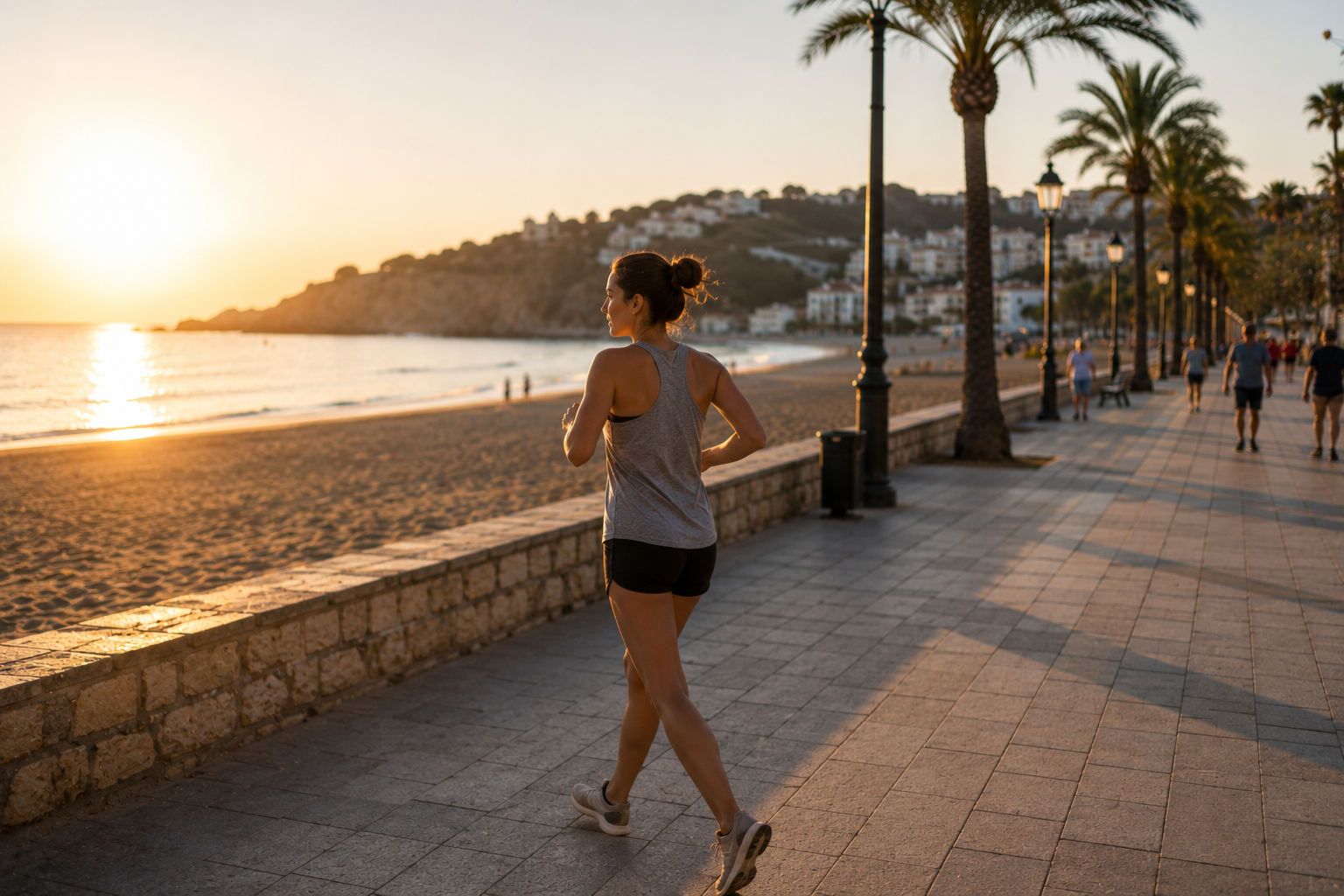
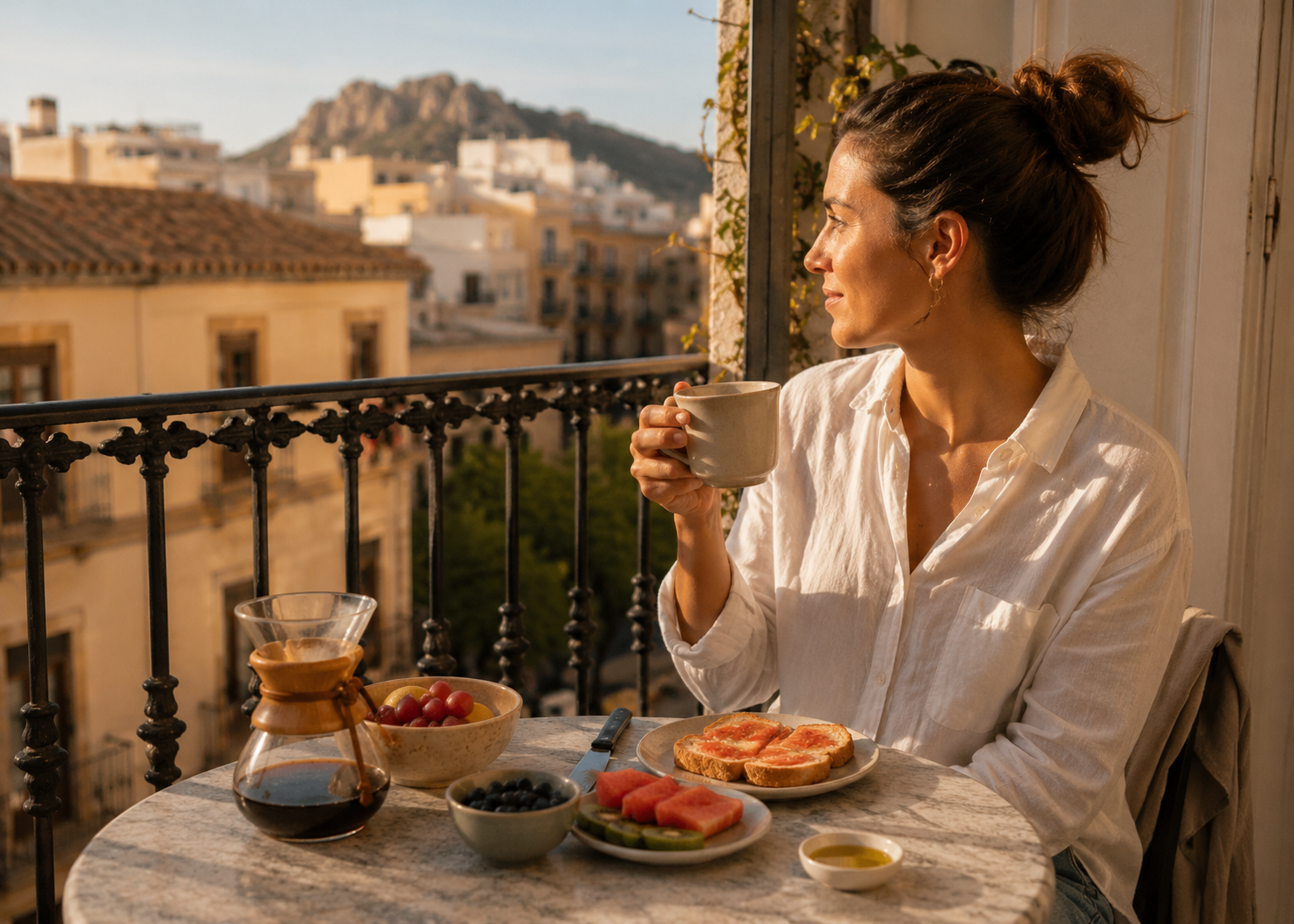
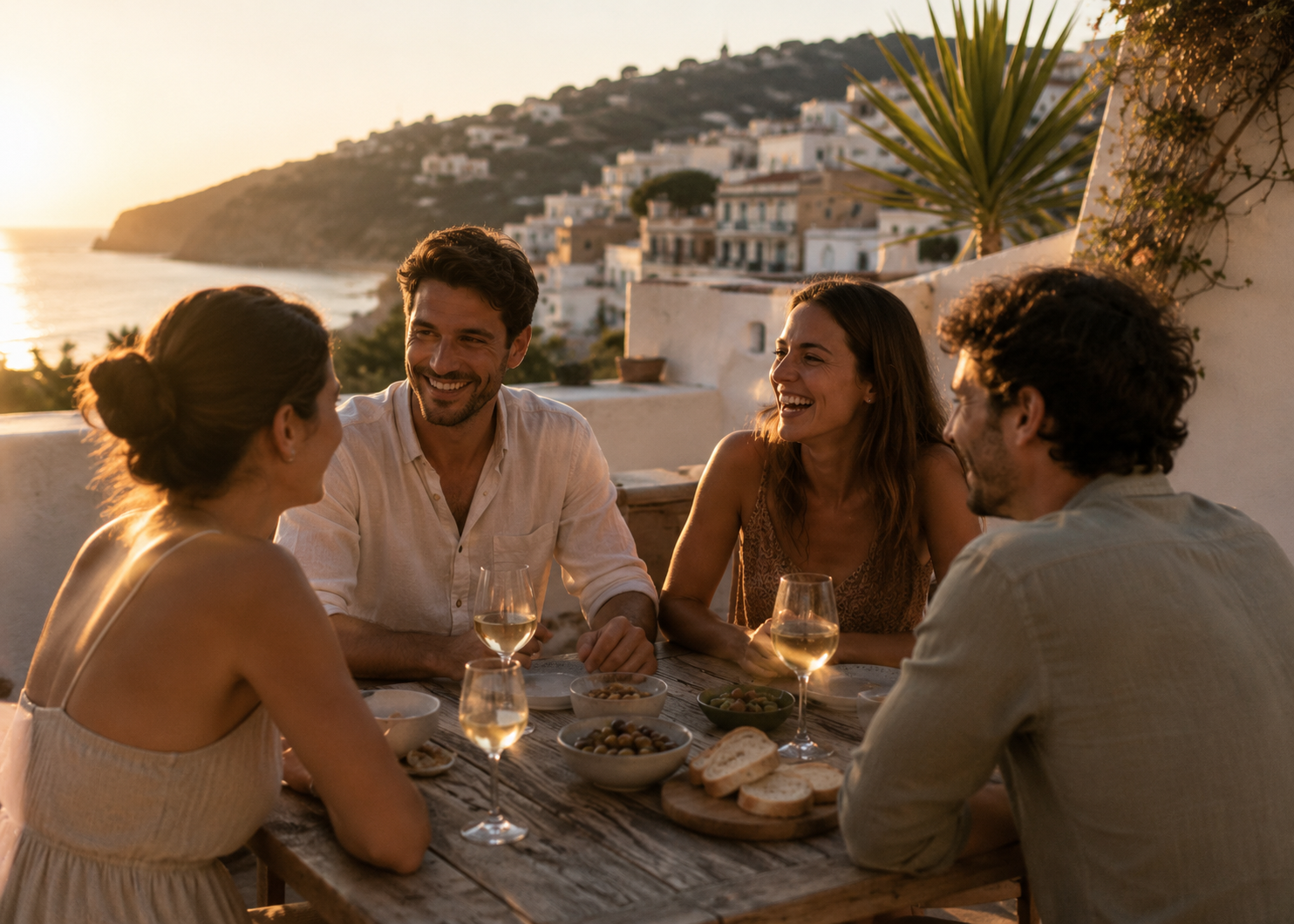
They walk, constantly, everywhere, because the town is built for it, which delivers the cardiovascular movement the gym membership is supposed to provide. They get sunlight daily, simply by being outside and living in public, which does for mood and circadian rhythm what the light therapy lamp and the vitamin D capsule are marketed to do. They eat real, simple food from markets and small shops, which is the whole point of the meal-kit and the supplement regimen. They sit over long meals with family and friends, which is the connection the therapy app gestures at. And they take the daily evening walk, the paseo, which is exercise, sunlight, and socializing folded into one free habit.
Add that up and a Spaniard is getting movement, sun, real food, social connection, and stress relief as a matter of ordinary daily life. They are hitting nearly every target the American wellness industry sells, and paying for none of it. The wellness is not a product they buy. It is a byproduct of how the society is arranged.
The Paseo Does Five Things At Once
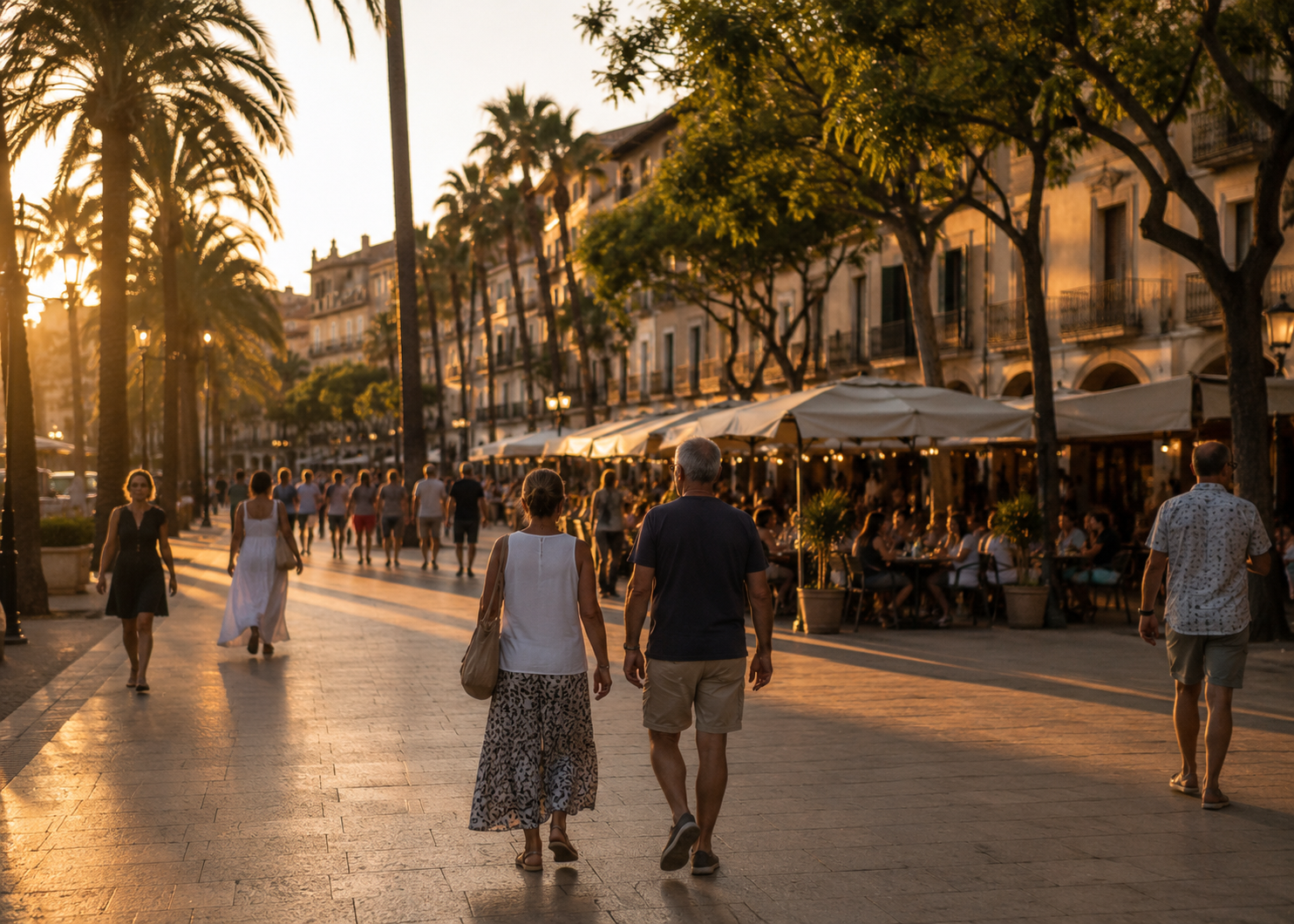
If you want a single image of how efficient the free version is, look at the Spanish evening walk, the paseo, because it quietly does the work of half the American wellness stack in one unpaid habit.
In the cooler hours, whole towns empty into the streets to walk, slowly, with no destination, often several generations together. In that one ordinary ritual a person gets gentle cardiovascular movement, exposure to evening light that helps regulate sleep, real social connection with neighbors and family, a decompression from the day’s stress, and a reliable daily routine. One free walk delivers what an American might assemble from a treadmill, a light lamp, a therapy app, and a social club.
Nobody in Spain thinks of the paseo as wellness. It is just what you do in the evening. But it is one of the most complete health practices imaginable, and it costs nothing, requires no equipment, and is so woven into the culture that skipping it would feel stranger than doing it. That is the whole free model in miniature, several health needs met at once by a single habit that the society simply built into the shape of the day.
Why The Free Version Works Better
Here is the part that should genuinely bother the wellness industry. The free Spanish version is not just cheaper. It often works better, and the reason is structural.
The American wellness routine is bolted onto a life that works against it. You drive everywhere, then pay to walk on a treadmill. You eat processed food, then buy supplements to replace what was stripped out. You live isolated, then subscribe to an app to manage the resulting stress. Every paid wellness product is a patch on a problem the daily environment created, and patches are easy to abandon, which is why most gym memberships go unused by February.
The Spanish version works because it is not bolted on at all. The movement, sun, food, and connection are woven into the structure of the day, so they require no willpower, no subscription, and no remembering. You cannot quit walking to the market the way you quit the gym, because it is just how you get your groceries. Wellness built into the architecture of daily life is wellness that actually happens, and that is the one thing money struggles to buy.
The Industry Is Selling You Back What Used To Be Free
Step back and the whole American wellness economy starts to look like an elaborate system for re-selling things that used to come standard with being alive.
Movement was free when towns were walkable and work was physical. Sunlight was free when life happened outdoors. Real food was the only food there was. Social connection was the unavoidable texture of community life. Rest was built into the day. Every one of these was once a default, and the modern American environment quietly removed them all, replacing walkable towns with car dependence, real food with engineered products, and community with isolation.
The wellness industry is what rushed in to fill the gap. It takes the things modern life stripped out and sells them back, one subscription at a time, as premium products. A gym sells back the movement the car took away. A supplement sells back the nutrition the processed food removed. A meditation app sells back the calm that isolation and overwork destroyed. It is a booming business precisely because the underlying life is so depleted, and the depletion is the market.
The newest frontier makes this even starker. The booming market for longevity and biohacking, the cold plunges, the supplement stacks, the optimization gadgets, is largely the wealthy paying premium prices to engineer the effects that a simple traditional life produced for free. People spend fortunes chasing the metabolic health of a Cretan villager who never bought a single thing. The further modern life drifts from the basics, the more elaborate and expensive the products required to simulate them become.
It Is Not That Spaniards Are Frugal
It would be a mistake to read this as a story about Spanish thriftiness, because that misses the actual point. The Spanish wellness routine is not cheap because Spaniards are careful with money. It is free because wellness there is structural rather than commercial.
A Spaniard walking to the market is not economizing on a gym. They have simply never needed a gym to get their daily movement, because the movement was already there. They are not skipping supplements to save money. They are eating food that does not require supplementing. The free version is not a budget choice. It is what wellness looks like when a society is built in a way that produces health as a side effect, so there is nothing left to buy.
This is why importing the Spanish approach is so hard for an American, and why it is unfair to frame it as a matter of personal discipline. You cannot simply decide to get free wellness in an environment designed to sell it to you. The walkable town, the daily sun, the food culture, the social rhythm, these are features of a place, and an American is swimming against an environment built to remove them and then charge for their return.
What Actually Travels
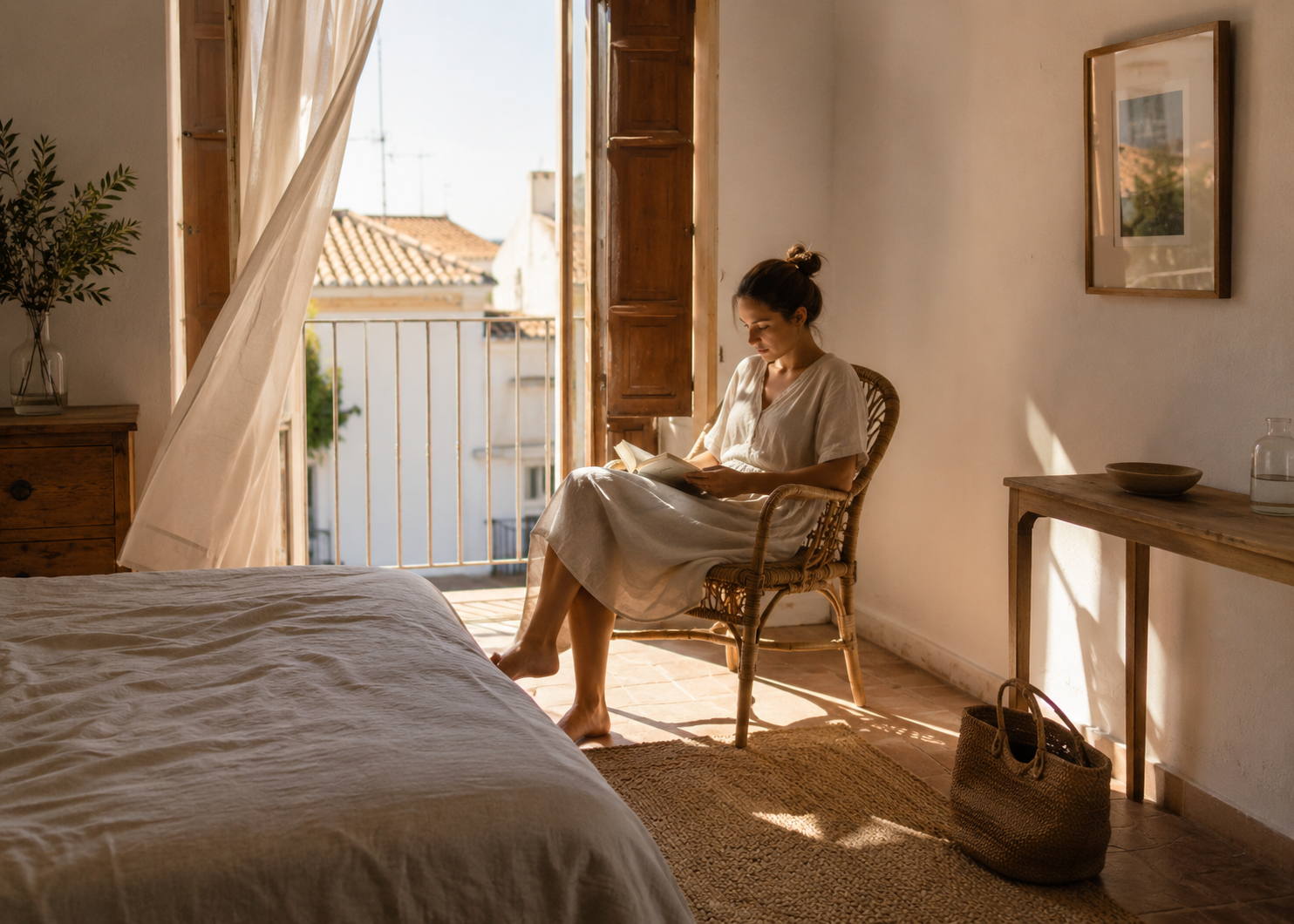
None of this means wellness spending is foolish or that you should cancel everything, and it would be dishonest to pretend the paid version has no value.
Some of it is genuinely worth the money. A gym is the right tool for real strength training, which matters enormously as people age and which a Spanish paseo does not provide. Therapy is valuable and often necessary. Certain supplements address real deficiencies. The point is not that paying for health is a scam. The point is about the baseline beneath the spending. The Spanish lesson is that the most valuable wellness habits are the free, structural ones, and that no amount of paid wellness fixes a daily life that is working against you.
So the portable move is to chase the free things first, before the paid ones. Build in the walking, get the daily sunlight, eat the real food, protect the social meals, take the evening stroll. Get the structural, no-cost foundation in place, the part the Spaniards get for nothing, and then spend money only on the genuine extras that the free life cannot provide. Most people do it backwards, buying the patches while neglecting the foundation, which is exactly the arrangement the wellness industry depends on.
The Real Cost Comparison
So the honest comparison is not three hundred dollars a month against nothing. It is a depleted life with expensive patches against a fuller life that never needed them.
The Spaniard spending nothing is not getting a worse version of American wellness for free. They are often getting a better version, because theirs is built into a life that supports it rather than bolted onto one that fights it. The three hundred dollars a month is, in a real sense, the bill for everything modern life took out, and the cheapest way to lower it is not a discount on the products. It is to put back, where you can, the free things that made the products necessary in the first place. The wellness was never supposed to cost anything. We just built a world that made us pay for it. The Spaniards did not find a clever discount. They simply kept the things the rest of us sold off, and held onto a life that hands them, for free, the very thing everyone else is buying.

About the Author: Ruben, co-founder of Gamintraveler.com since 2014, is a seasoned traveler from Spain who has explored over 100 countries since 2009. Known for his extensive travel adventures across South America, Europe, the US, Australia, New Zealand, Asia, and Africa, Ruben combines his passion for adventurous yet sustainable living with his love for cycling, highlighted by his remarkable 5-month bicycle journey from Spain to Norway. He currently resides in Spain, where he continues sharing his travel experiences with his partner, Rachel, and their son, Han.