
Some dishes are weeknight quick, and some are labors of love that ask for an afternoon and reward you tenfold, and both of the dishes in this comparison belong firmly to the second kind. Ethiopian doro wat and Indian chicken curry are two of the world’s great spiced chicken stews, each built on a deep foundation of aromatics and spice cooked slowly into something profound, each worth the real effort it asks. They are often lumped together in the Western mind as spiced stews, but they are quite different in technique, flavor, and soul, and understanding each, and the effort each demands, is a pleasure for any serious cook.
This is a comparison of Ethiopian doro wat and Indian chicken curry, an honest look at what makes each its own profound thing, how they differ, the effort each requires and why it is worth it, and how to make both at home. Neither is a quick dish, and that is part of their greatness, the slow building of deep flavor being the whole point. Here is Ethiopian doro wat versus Indian chicken curry, two spiced stews worth the effort, and how to make them both.
What Ethiopian Doro Wat Is
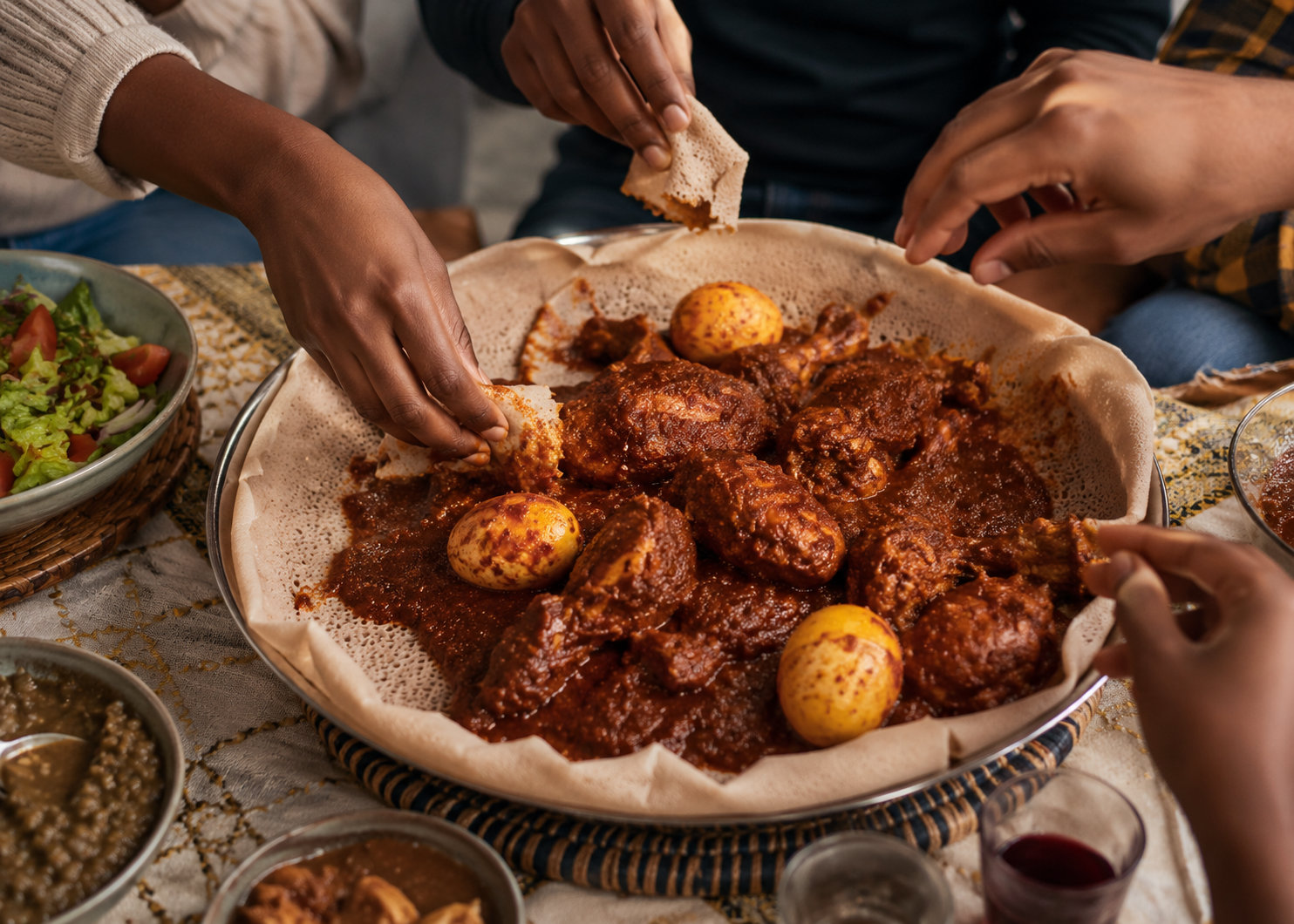
Start with doro wat, the great Ethiopian chicken stew, since its particular depth and technique are central to the comparison.
Doro wat is the iconic Ethiopian chicken stew, built on an enormous quantity of slowly cooked onions, the signature spice blend berbere, and spiced butter called niter kibbeh, the chicken cooked in this deeply spiced, rich, complex red stew, traditionally including hard-boiled eggs, the result a profound, intense, deeply layered stew of remarkable depth. The character is deep and rich and intensely spiced, the berbere bringing complex heat and aroma, the slow-cooked onions bringing body and sweetness, the niter kibbeh bringing rich spiced depth, the whole stew profound and layered and intense, one of the great dishes of African cuisine. This is doro wat, the deeply spiced berbere-and-onion chicken stew, rich and profound and intense, the iconic Ethiopian classic.
The technique that defines it, and demands the effort, is the very slow cooking of a large quantity of onions as the foundation, the onions cooked down slowly and patiently, often for a long time, into a deep base before the berbere and butter and chicken are added, this slow onion foundation being the secret and the labor of the dish. The seasoning is the berbere spice blend and the niter kibbeh spiced butter, the slow onions the body, so doro wat is about the deeply spiced stew built on the patient slow-cooked onion foundation, a profound laborious rewarding dish. Understanding doro wat, its berbere and niter kibbeh and its slow onion base, its deep intense profound character, is understanding one of these great stews, the laborious profound Ethiopian classic.
What Indian Chicken Curry Is
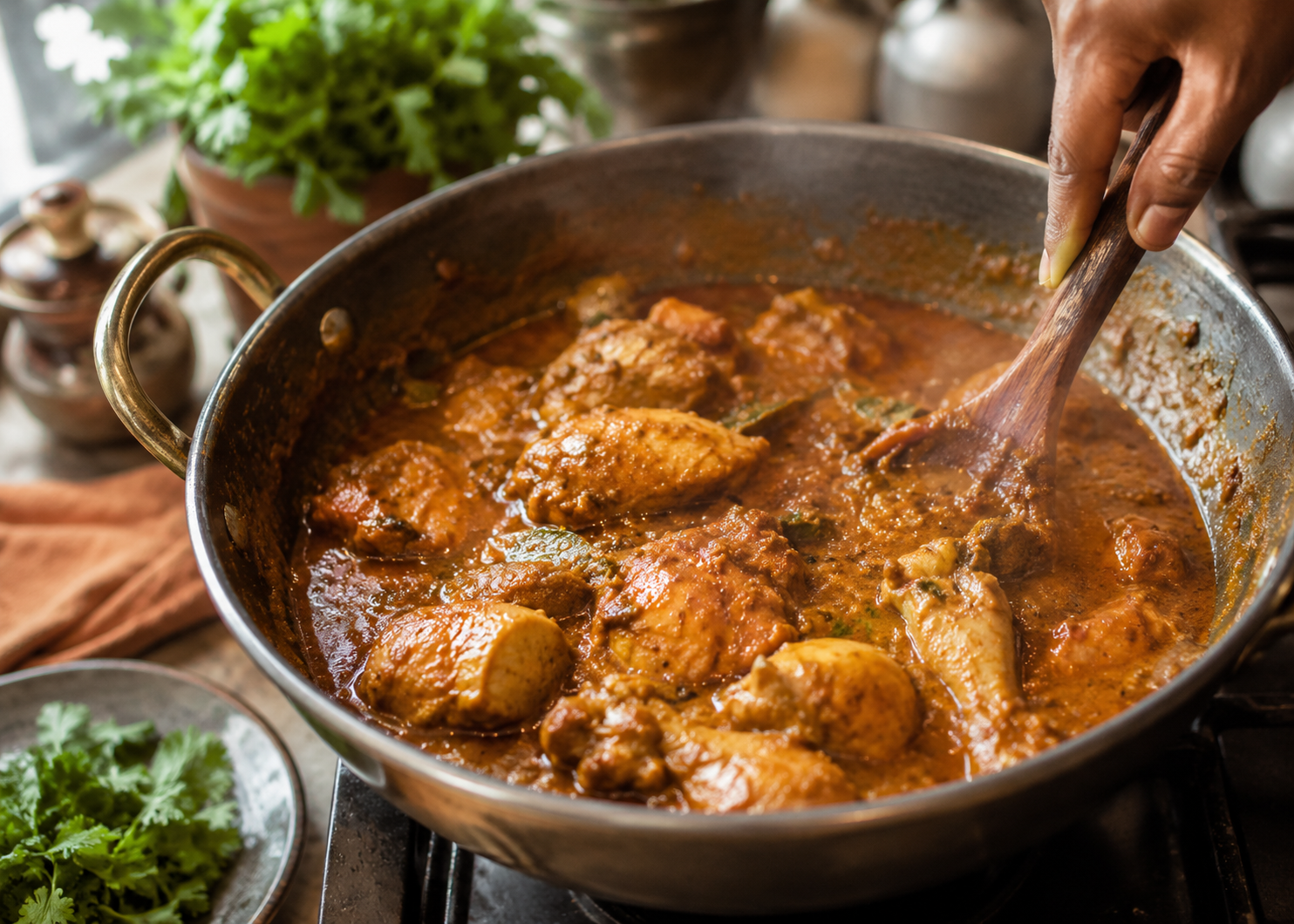
Now Indian chicken curry, itself a vast category, which shares the spiced-stew nature but differs in technique and flavor.
Indian chicken curry, while an enormous and varied category rather than a single dish, in its classic forms is built on a base of onions, garlic, ginger, and tomatoes cooked down with a complex blend of spices, the chicken simmered in this spiced sauce, often enriched with yogurt or cream or coconut depending on the style, the result a deeply spiced, aromatic, layered curry of great depth and variety. The character is aromatic and deeply spiced and varied, the spice blends and the onion-tomato-aromatic base giving complexity and depth, the particular spices and enrichments varying enormously by region and style, the whole a vast family of profound spiced chicken dishes. This is Indian chicken curry, the spiced onion-tomato-aromatic chicken stew, deep and aromatic and endlessly varied, a great category of Indian cooking.
The technique that defines it, and often demands real effort, is the building of the spiced base, the onions and aromatics cooked down, the spices bloomed and layered, the tomatoes and enrichments added, the whole base built carefully before and as the chicken simmers, this careful layering of the spiced foundation being the craft of the dish. The seasoning is the complex spice blends, bloomed and layered into the aromatic base, so Indian chicken curry is about the carefully built spiced aromatic base and the simmered chicken, a deep aromatic layered dish. Understanding Indian chicken curry, its spiced onion-tomato-aromatic base and its layered spices, its deep aromatic varied character, is understanding the other great stew, the deep aromatic Indian classic.
How They Differ, Berbere Depth Versus Aromatic Layering
The heart of the comparison is the difference between doro wat’s berbere-and-onion depth and Indian curry’s layered aromatic spicing, which distinguishes the two.
The two spiced stews differ in their flavor foundations and spice character, the doro wat built on the singular foundation of the vast slow-cooked onions, the berbere blend, and the niter kibbeh, giving a deep, rich, intense, distinctively Ethiopian flavor, while the Indian curry is built on the onion-garlic-ginger-tomato base with its own complex layered spice blends, giving a deep, aromatic, variously enriched flavor that differs by style. This is the core difference, the doro wat’s distinctive berbere-and-slow-onion Ethiopian depth against the Indian curry’s layered-spice aromatic-base character, the two using deep spicing and slow cooking in their own distinct directions, each profound but in its own way. The contrast in the spice foundations and flavor character is the defining difference.
The two also differ in their specific spices and enrichments, the doro wat defined by the particular berbere and the spiced butter, intense and distinctively Ethiopian, while the Indian curry draws on the vast Indian spice palette and the various enrichments of yogurt, cream, or coconut, more varied and often differently aromatic, so the two taste distinctly different despite their shared depth. The doro wat is singular and intense and distinctively Ethiopian, the Indian curry varied and aromatic and drawing on the huge Indian repertoire, so they differ in both their foundations and their specific flavors, the berbere intensity against the layered Indian aromatics. Understanding how they differ, the doro wat’s berbere-and-onion depth versus the Indian curry’s layered aromatic spicing, is the key to appreciating each, the two great stews being distinct in foundation and flavor.
The Effort Each Demands, And Why It Is Worth It
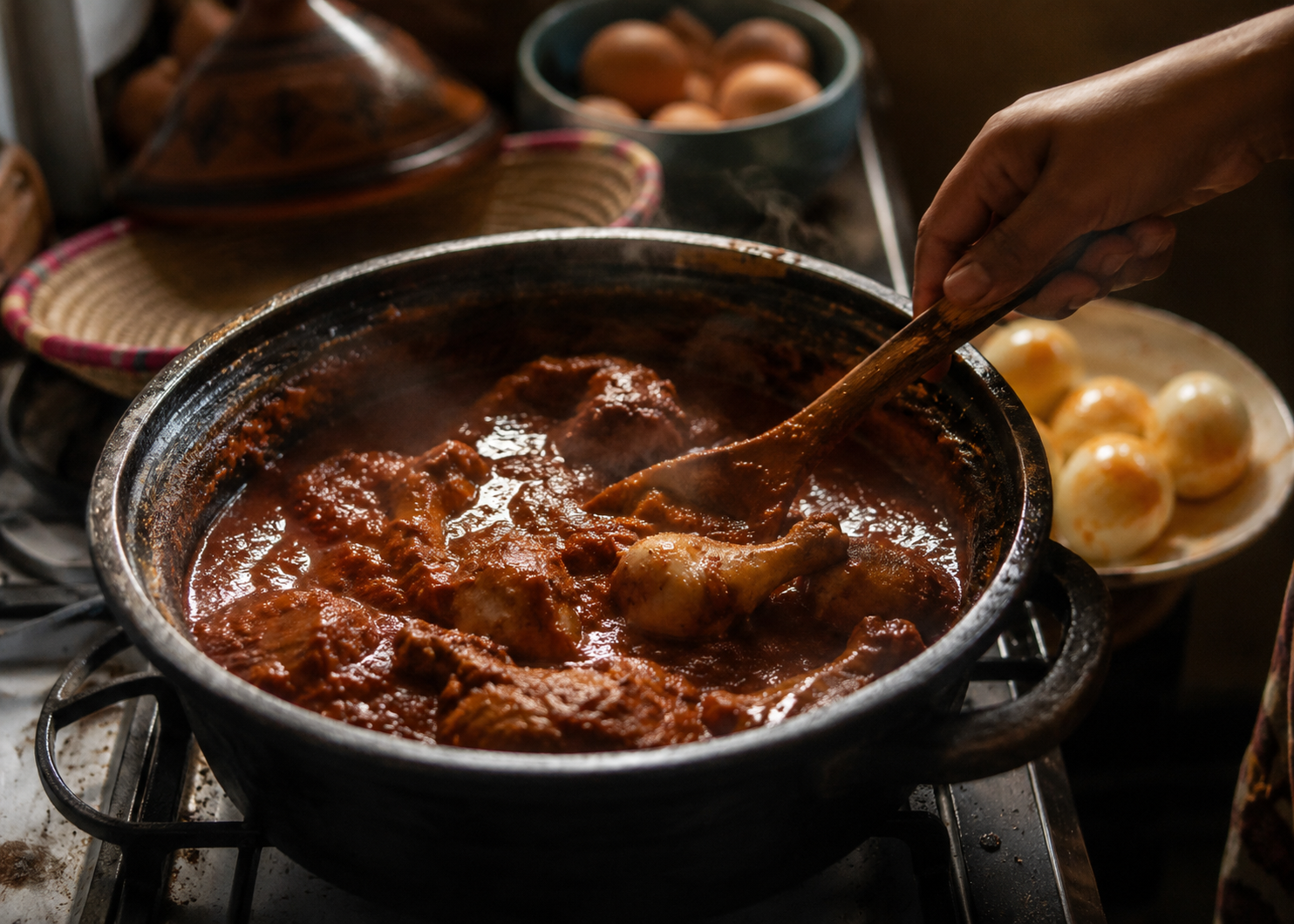
Since the title promises stews worth the effort, it is worth being honest about the effort each demands and why it pays off.
Both dishes demand real effort, and it is worth being honest about that, the doro wat requiring the very patient slow cooking of a large quantity of onions, often a long and attentive process, plus the making or sourcing of the berbere and the niter kibbeh, a genuinely laborious dish, while the Indian curry requires the careful building and layering of the spiced base, the blooming of spices, the patient cooking of the aromatics, also real work though varying by recipe. Neither is a quick weeknight dish, both asking for time and attention and care, the slow building of deep flavor being inherent to what they are, so the cook should approach each expecting to invest real effort rather than seeking a fast meal. The effort is real in both, the laborious onions of the doro wat and the careful layering of the curry.
But the effort is precisely what makes them worth it, since the depth and profundity of these stews comes directly from the slow careful work, the long-cooked onions and the layered spices producing a depth of flavor that no quick method could achieve, so the effort is not incidental but the very source of the greatness. This is the deal these dishes offer, real effort for real reward, the patient work yielding a profundity and depth of flavor that is deeply satisfying, the labor repaid many times over in the quality of the result, which is why these are dishes worth making despite, and indeed because of, the effort they demand. The effort is worth it because it is what creates the depth, the laborious slow cooking being the price and the source of the profound result, a deal any serious cook should be glad to make.
Which To Make When
Since both are wonderful and laborious, the practical question is which to make when, and the answer depends on what you seek.
The two stews suit different cravings and occasions, the doro wat being the choice when you want the intense, distinctive, profound Ethiopian experience, the deep berbere spicing and the rich slow-onion stew, perhaps served the traditional way on injera bread, for when you want something singular and intense and special, a real Ethiopian feast. The Indian curry is the choice when you want the aromatic, layered, varied Indian experience, and its great advantage is variety, since the vast category means you can make a mild creamy korma or a fiery vindaloo or countless others, choosing the specific curry to suit the mood, a flexibility the singular doro wat does not offer. So choose the doro wat for the singular intense Ethiopian profundity, the Indian curry for the varied aromatic flexibility, the two suiting different desires.
The variety of Indian curry is worth dwelling on as a practical point, since where doro wat is essentially one magnificent dish, Indian chicken curry is a whole universe, so it offers more range, a different curry for every mood and heat level and richness, which makes it perhaps the more versatile choice for regular cooking, while the doro wat is more of a special singular undertaking. Both reward the effort, but the Indian curry offers ongoing variety while the doro wat offers a singular profound experience, so the choice depends on whether you want range or that particular Ethiopian intensity. Choose according to whether you want the varied Indian universe or the singular Ethiopian profundity, both being worth the effort for their different rewards.
The Soul Of Each Dish
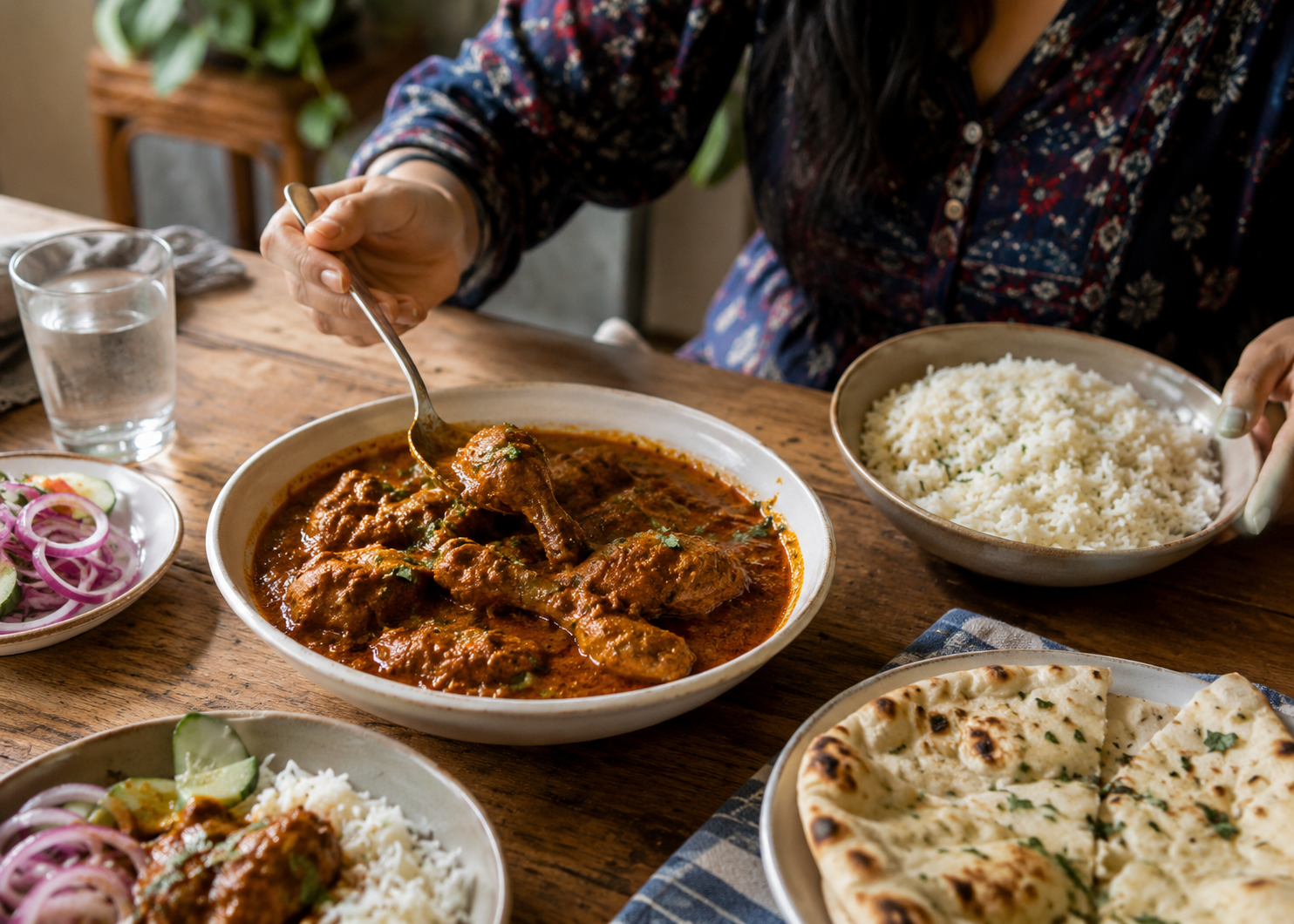
Beyond technique and flavor, each stew has a cultural soul worth knowing, which deepens the appreciation of both.
Doro wat is not merely a dish but a centerpiece of Ethiopian culture and celebration, the stew traditionally served at important occasions and gatherings, eaten communally from a shared platter of injera, the making of it, with its laborious slow onions and its berbere and spiced butter, being an act of care and celebration, the dish woven deeply into Ethiopian hospitality and festivity. The hard-boiled eggs, the rich spicing, the communal injera all reflect this celebratory cultural role, so doro wat carries a profound cultural meaning beyond its flavor, a dish of hospitality and occasion, which is part of why the effort is so willingly given. Understanding the soul of doro wat, its place at the heart of Ethiopian celebration and hospitality, deepens the appreciation of the dish beyond the plate.
Indian chicken curry, in its vast variety, carries the soul of an entire subcontinent’s cooking, the countless regional and family versions reflecting the immense diversity of Indian food culture, each curry a local or family expression, the dish woven into everyday life and special occasions alike across India and its diaspora. The variety itself is the cultural soul, the endless regional and personal variations expressing the richness and diversity of Indian cooking, so Indian chicken curry is not one dish but a living tradition of countless expressions, each carrying its own local meaning. Understanding the soul of Indian curry, its embodiment of the vast diversity of Indian food culture, deepens the appreciation of it as a whole world of cooking rather than a single dish, the two stews each carrying a profound cultural soul.
Recipe One, Ethiopian Doro Wat
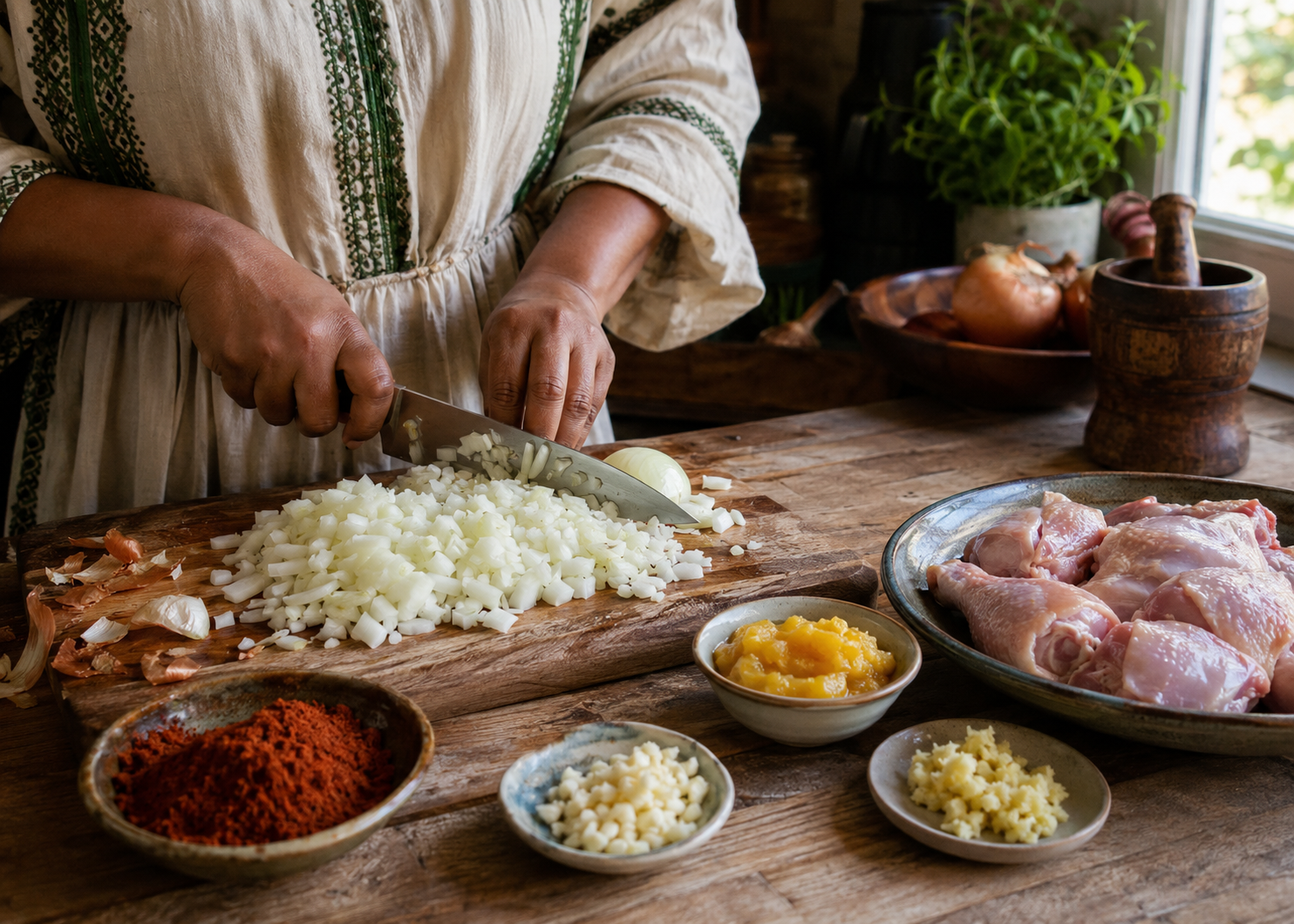
Serves 4 to 6. The slow-cooked onions are the soul, do not rush them. Berbere and niter kibbeh are key; both can be bought or made.
Ingredients
- 8 bone-in chicken thighs and drumsticks
- 4 large onions, very finely chopped
- 4 tbsp niter kibbeh (Ethiopian spiced butter) or butter
- 3 to 4 tbsp berbere spice blend
- 4 cloves garlic, 1 thumb ginger, grated
- 2 tbsp tomato paste
- Juice of 1 lemon
- 4 hard-boiled eggs
- Salt, water
Method
- In a dry heavy pot, cook the finely chopped onions over low-medium heat, stirring, for 20 to 30 minutes until deeply soft and reduced. This long slow onion cooking is essential, do not rush it.
- Add the niter kibbeh, garlic, ginger, and berbere, and cook for several minutes until fragrant and deep red.
- Stir in the tomato paste and a little water to form a thick rich sauce. Add the chicken, turning to coat, and the lemon juice.
- Cover and simmer gently for 40 to 45 minutes until the chicken is very tender and the sauce deep and thick. Add the peeled hard-boiled eggs for the last 10 minutes. Serve on injera.
Recipe Two, Indian Chicken Curry
Serves 4 to 6. Build the base patiently and bloom the spices. This is a classic everyday-style curry; adjust the chili to taste.
Ingredients
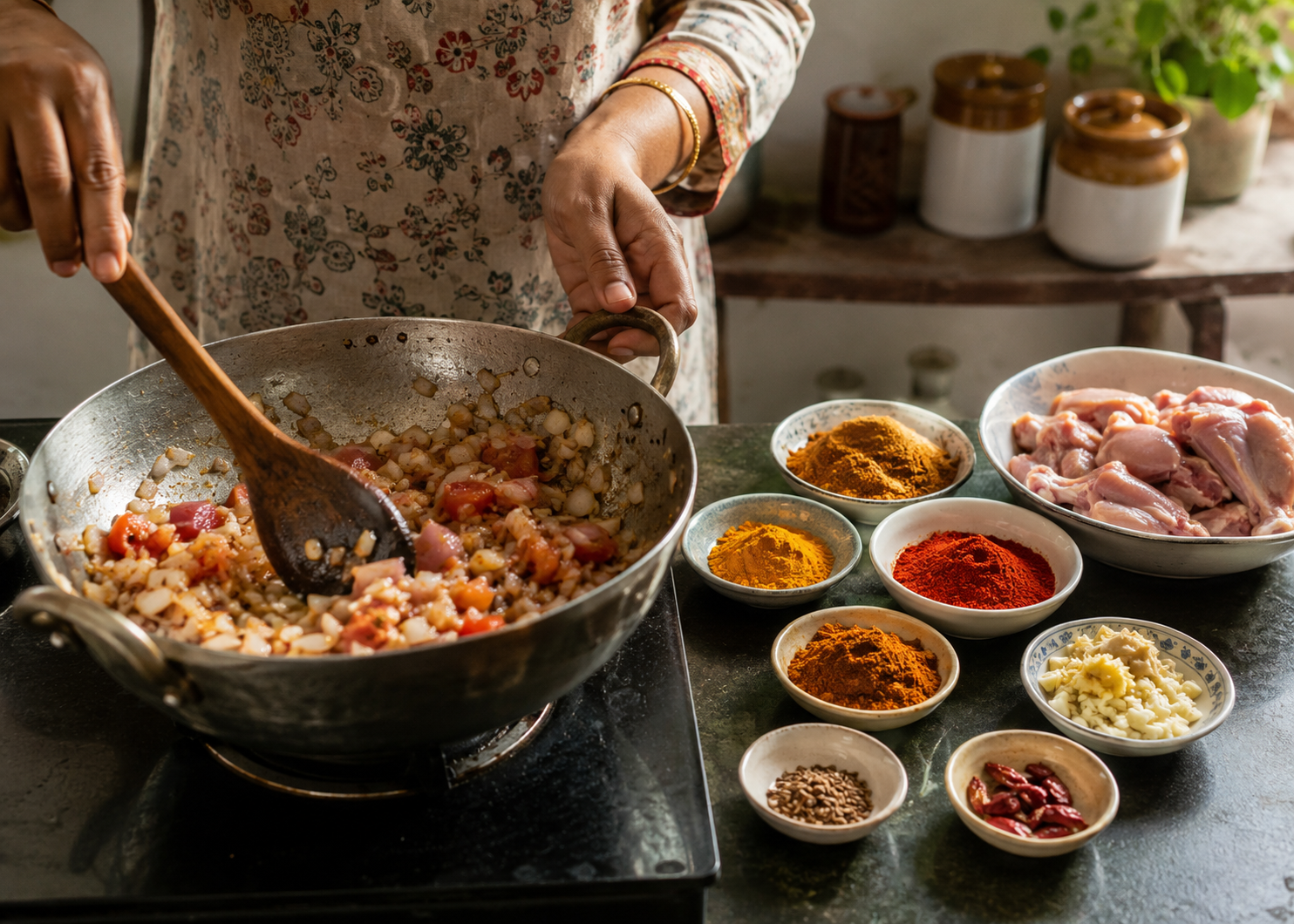
- 8 bone-in chicken pieces
- 2 large onions, finely chopped
- 4 cloves garlic, 1 thumb ginger, grated
- 2 tomatoes, chopped (or 3 tbsp puree)
- 3 tbsp oil or ghee
- 1 tsp each cumin, coriander, turmeric
- 1 to 2 tsp garam masala, chili powder to taste
- 1/2 cup yogurt (optional, for richness)
- Salt, water, fresh coriander
Method
- Heat the oil and cook the onions over medium heat for 10 to 15 minutes until deep golden, the foundation of the curry.
- Add the garlic and ginger, cook a minute, then add the ground spices and bloom them for a minute until fragrant.
- Add the tomatoes and cook down into a thick paste, the oil beginning to separate. Stir in the yogurt if using.
- Add the chicken, turning to coat, then add water to make a sauce. Simmer covered for 35 to 40 minutes until tender. Finish with garam masala and fresh coriander. Serve with rice or naan.
Serving And Choosing Between Them
Both reward the right accompaniments, and a final word helps you put them to use.
Serve the doro wat traditionally on injera, the spongy Ethiopian flatbread used to scoop up the rich stew, which is the proper and wonderful way to eat it, the bread and the deep stew together, perhaps with other Ethiopian dishes alongside. Serve the Indian curry with rice or naan or other Indian breads, the rice or bread soaking up the aromatic sauce, perhaps with other curries or sides for a fuller Indian meal. Each has its proper accompaniments, the injera for the doro wat, the rice and naan for the curry, which are part of how each is best enjoyed.
As for choosing, let your craving and your time decide, the doro wat for a singular intense Ethiopian undertaking, the Indian curry for the varied aromatic flexibility and the choice of style, both rewarding the real effort they demand with profound depth. Both are worth the afternoon they ask, so make the doro wat when you want that distinctive Ethiopian intensity and the Indian curry when you want the aromatic variety, and over time make both, two of the world’s great spiced chicken stews, each profound, each worth every minute of the effort, both belonging in the repertoire of any cook who loves deep flavor.

About the Author: Ruben, co-founder of Gamintraveler.com since 2014, is a seasoned traveler from Spain who has explored over 100 countries since 2009. Known for his extensive travel adventures across South America, Europe, the US, Australia, New Zealand, Asia, and Africa, Ruben combines his passion for adventurous yet sustainable living with his love for cycling, highlighted by his remarkable 5-month bicycle journey from Spain to Norway. He currently resides in Spain, where he continues sharing his travel experiences with his partner, Rachel, and their son, Han.